Why 2026 Is the Year to Plan a Saudi Arabia Trip From India
On February 1, 2026, a Saudia aircraft will lift off from Kozhikode International Airport bound for King Khalid International Airport in Riyadh — a route that didn’t exist a year ago and one that quietly says a lot about where Saudi Arabia’s tourism ambitions are headed. It’s the airline’s seventh Indian destination, joining Bangalore, Mumbai, Kochi, Delhi, Hyderabad and Lucknow, and it’s running four times a week to start. For a country that most Indian travellers still associate almost entirely with Hajj and Umrah, that’s a meaningful shift. Saudi Arabia is actively building the case for a Saudi Arabia trip from India that has nothing to do with pilgrimage — think ancient rock-cut cities, desert resorts that rival the Maldives on price and drama, and a capital city throwing itself a multi-month entertainment festival every winter.
We’ve been watching this shift for a couple of years now, and 2026 is the point where the pieces have actually come together — new flight capacity, an e-visa system, a genuinely world-class heritage site in AlUla, and resorts on the Red Sea that are now open for bookings rather than existing as renderings on a website. This piece walks through what’s actually changed, what a premium trip looks like, and the honest, unglamorous logistics — visa eligibility, alcohol, dress code — that most breathless “Saudi Arabia is opening up!” articles skip over.
Where This Guide Takes You
- The New Kozhikode–Riyadh Flight (and India’s Other Saudi Routes)
- Why Saudi Arabia Is Opening Up for Leisure Travel Now
- Saudi Arabia Visa for Indian Travellers
- Best Time to Visit Saudi Arabia
- A Premium 6-Day Saudi Arabia Itinerary
- Where to Stay: Mid-Range to Ultra-Luxury
- What a Saudi Arabia Trip Actually Costs
- Culture, Dress Code and Etiquette
- Food and Where to Eat
- Safety, Connectivity and Payments
- FAQs
The New Kozhikode–Riyadh Flight (and India’s Other Saudi Routes)
Here’s the news hook, in plain terms: Saudia, the national carrier, is starting direct flights between Kozhikode (Calicut) and Riyadh from February 1, 2026, operating four times a week. It’s a short-to-medium haul route — roughly four hours in the air — and it plugs a real gap. Kerala has one of India’s largest expatriate populations in Saudi Arabia and the wider Gulf, and Kozhikode International Airport has long been underserved relative to how much India-Gulf traffic actually originates there. Adding Riyadh gives Kerala travellers a direct line into the capital instead of routing through Kochi, Mumbai or Doha.
What matters for a leisure traveller, though, isn’t just the new route — it’s what it sits alongside. Saudia already flies to Bangalore, Mumbai, Kochi, Delhi, Hyderabad and Lucknow, and the airline has also expanded its codeshare partnership with Air India, which now opens up ticketing and baggage-through connections across roughly 25 Indian cities rather than just its own six-turned-seven gateways. IndiGo has been building out its own Saudi network too, with direct Bengaluru–Riyadh service and a cluster of Hyderabad routes into Riyadh, Dammam, Jeddah and Madinah. Add Air India Express and SpiceJet’s presence on the Gulf corridor, and you get a country that, quietly, now has more direct Indian air links than most of the “trending” Southeast Asian destinations we write about.
Insider tip: if you’re not flying out of Kerala, Hyderabad, Mumbai or Bangalore, don’t assume you need to route through Delhi. Depending on the month, connecting through Dubai or Doha on Emirates or Qatar Airways can actually land you in Jeddah or Riyadh faster and cheaper than a same-country connection — worth comparing both before you lock in a fare, especially if you’re combining Saudi Arabia with a Gulf stopover.
Why Saudi Arabia Is Opening Up for Leisure Travel Now
Saudi Arabia’s tourism pivot isn’t new — the country opened to leisure tourists for the first time in 2019 — but 2026 is when the infrastructure has caught up to the ambition. Three things are doing the heavy lifting.
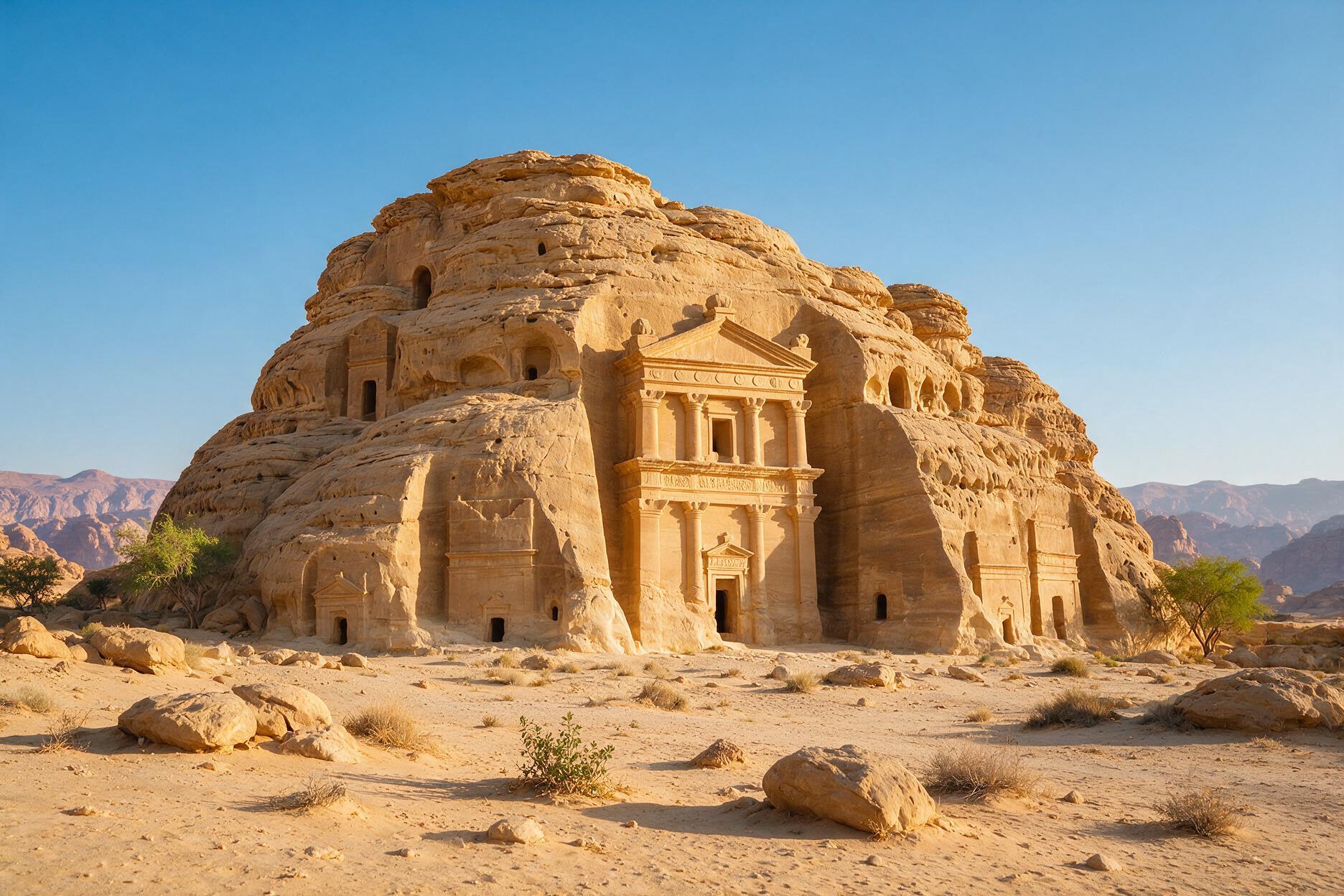
AlUla is the clearest proof of concept. This is a 200,000-hectare region in the northwest of the country built around Hegra, Saudi Arabia’s first UNESCO World Heritage Site and the southern capital of the ancient Nabataean kingdom — the same civilisation that carved Petra into the rock in neighbouring Jordan. Hegra has 111 monumental tombs cut into sandstone cliffs, dating back to the 1st century CE, and unlike Petra, you’re not sharing the site with a few thousand other people at any given time. AlUla International Airport expanded its capacity again in January 2026, and the region now runs a full winter events calendar — Winter at Tantora (mid-December through early January), followed by the AlUla Arts Festival running into mid-February 2026.
The Red Sea Project is the second pillar, and it’s arguably the more surprising one. This is a string of ultra-luxury resorts strung across islands, lagoons and desert mountains along Saudi Arabia’s west coast, and as of 2026 there are 11 properties actually open and taking bookings — not renderings, not “coming 2027.” That includes The St. Regis Red Sea Resort and Nujuma, a Ritz-Carlton Reserve on Ummahat Island, Six Senses Southern Dunes inland, and newer arrivals like the Four Seasons Resort and Residences on Shura Island, which opened in May 2026 alongside The Red Sea EDITION, SLS The Red Sea and an adults-only Miraval retreat. The dedicated Red Sea International Airport now connects directly to Riyadh, Jeddah, Dubai, Doha and even Milan.
Riyadh Season is the third piece, and it’s the one that reframes the capital itself as a destination rather than a stopover. Running through the winter months, it turns Boulevard City and Boulevard World into a sprawling entertainment district — concerts, theme-park-style attractions, international pop-up dining — while Diriyah, the mud-brick birthplace of the Saudi state and a UNESCO site in its own right, sits a short drive away offering the historical counterweight.
Layer onto that a specific, current push: Saudi Arabia’s “Saudi, Welcome to Arabia” campaign launched Ramadan 2026 offers explicitly aimed at the Indian market, with discounts as steep as 45% at Our Habitas AlUla, 42% at Banyan Tree AlUla and 20% at Red Sea properties like Desert Rock and Shebara, running across more than 35 packages. That’s a tourism board actively courting Indian travellers by name, not just leaving the door open.
Saudi Arabia Visa for Indian Travellers
This is the part most articles gloss over, and it’s worth getting right before you get attached to a set of travel dates. Saudi Arabia does run an e-visa system through the official portal, visa.visitsaudi.com — but India isn’t on the list of nationalities that can apply for it with just a passport. Indian applicants fall into what the system classifies as a secondary eligibility tier: to get the tourist e-visa, you generally need to already hold a valid (or recently used) US, UK or Schengen visa, or a GCC residence permit with at least three months of validity remaining. If you’ve travelled to the US, UK or Europe in the last couple of years and have an entry stamp to show for it, this is straightforward — the e-visa itself is genuinely quick once you’re eligible, often approved within an hour, and it’s a one-year, multiple-entry visa allowing stays of up to 90 days per visit.
If you don’t hold one of those visas, you’re not shut out — you apply for a regular tourist visa through the Saudi embassy or consulate instead, which takes longer (allow anywhere from four to five working days up to three weeks) and involves submitting documents rather than a fully online process. It’s a genuinely different track, and it’s the kind of detail that trips people up if they’ve only read the “instant e-visa!” headlines.
Budget around SAR 535 (roughly ₹12,000, inclusive of mandatory travel health insurance and VAT) for the e-visa route. You’ll need a passport valid for at least six months, a recent photo, proof of your qualifying visa or residence permit, and ideally a return flight and hotel booking on hand even if they’re not always strictly checked at the application stage.
Mistake to avoid: don’t apply for the e-visa the week before you fly assuming it’ll sail through in an hour just because you’ve read that it can. If you’re on the embassy track because you don’t hold a US/UK/Schengen visa, start the process at least three to four weeks out — cutting it close is the single most common way we’ve seen a well-planned Saudi trip fall apart at the booking stage.
Best Time to Visit Saudi Arabia
Saudi Arabia is a proper desert climate, and that means the calendar matters more than it does for, say, coastal Southeast Asia. Summer (June through September) regularly pushes past 45°C in Riyadh and the interior — genuinely punishing, not “hot but manageable.” That’s when you’ll find the steepest hotel discounts, but we wouldn’t recommend it for a first trip.
The sweet spot is November through March, when daytime temperatures in Riyadh and AlUla settle into a comfortable 20–28°C range, dropping noticeably at night — pack a light jacket for AlUla’s desert evenings, which get colder than people expect. December and January are peak season for a reason: this is when Winter at Tantora and the bulk of Riyadh Season programming happen, so expect higher prices and more company at the marquee sites. October and November hit a genuinely good middle ground — strong weather, AlUla’s Ancient Kingdoms Festival programming, and noticeably lower rates than the December crush. The Red Sea resorts run more evenly year-round thanks to sea breezes moderating the heat, though even there, spring and autumn are more pleasant for anything outdoors.
A Premium 6-Day Saudi Arabia Itinerary
This is the itinerary shape we’d build for a first-time Get Tripped traveller wanting the full arc — history, capital-city energy and a genuine beach-resort close.
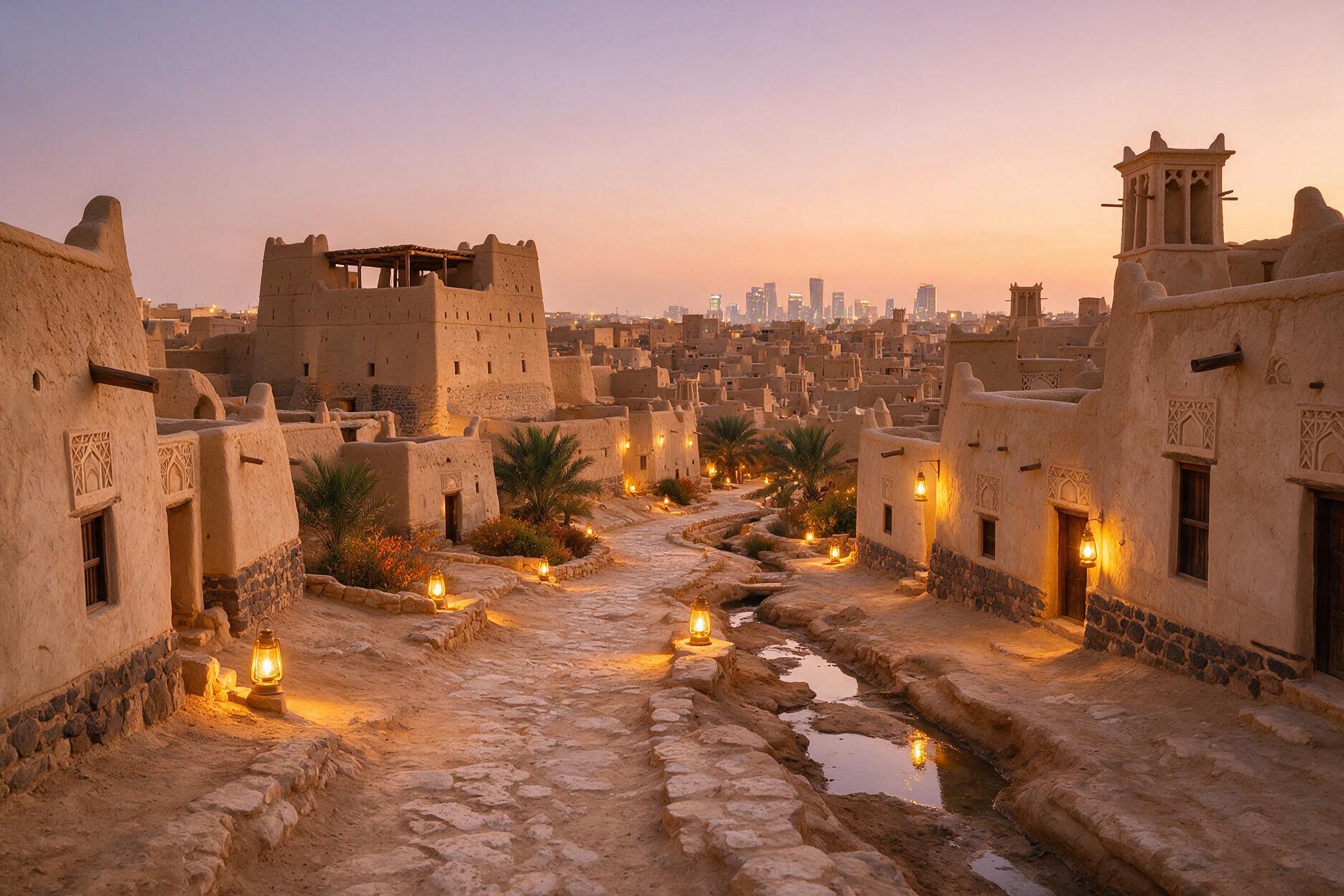
Days 1–2 — Riyadh. Land, settle in, and spend your first full day in Diriyah — At-Turaif’s mud-brick alleys and the King Abdulaziz Historical Center give you real context for modern Saudi Arabia before the flashier stops. In the evening, walk (or take the Sky Bridge at) Kingdom Centre for the skyline view, then head into Boulevard City or Boulevard World if you’re travelling during Riyadh Season.
Days 3–4 — AlUla. A short domestic flight (Saudia or flynas, under two hours, fares from around SAR 260) gets you into AlUla. Give Hegra a full morning with a guide — walking among 2,000-year-old tombs that most of the world still hasn’t heard of is genuinely one of the more startling travel experiences on offer right now. Spend the afternoon at Elephant Rock for golden hour, and if your dates allow, splurge on the sunrise hot air balloon flight over the valley — at roughly SAR 995 per person it’s not cheap, but it’s consistently the highest-rated experience in the region for a reason.
Days 5–6 — The Red Sea. Fly into Red Sea International Airport (connections run via Riyadh) for two nights of pure decompression — a private villa, a house reef, and genuinely nothing to plan. This is the segment where the trip goes from “interesting” to “actually restful.”
Prefer a shorter trip? Cut it to four days and do Riyadh plus AlUla only — it’s the stronger cultural pairing and doesn’t demand the extra domestic flight leg to the coast.
Where to Stay: Mid-Range to Ultra-Luxury
In Riyadh, international chains dominate the upper tier — Four Seasons, Ritz-Carlton and the Kingdom Centre-adjacent hotels all put you within reach of Olaya’s business district and, with a short drive, Diriyah.
In AlUla, this is where the region shows off. Our Habitas AlUla — 96 low-impact villas built from bamboo and canvas, ranked the top AlUla property on TripAdvisor — runs around SAR 7,500 a night in peak season. Banyan Tree AlUla’s tented villas in Ashar Valley, each with a private pool and sandstone cliff views, start from roughly SAR 4,200. For something that doesn’t require remortgaging the trip, Shaden Resort is a solid Accor-run four-star with a hammam and pool, around SAR 770 a night — the honest mid-range pick in a region that otherwise skews hard toward “special occasion” pricing.
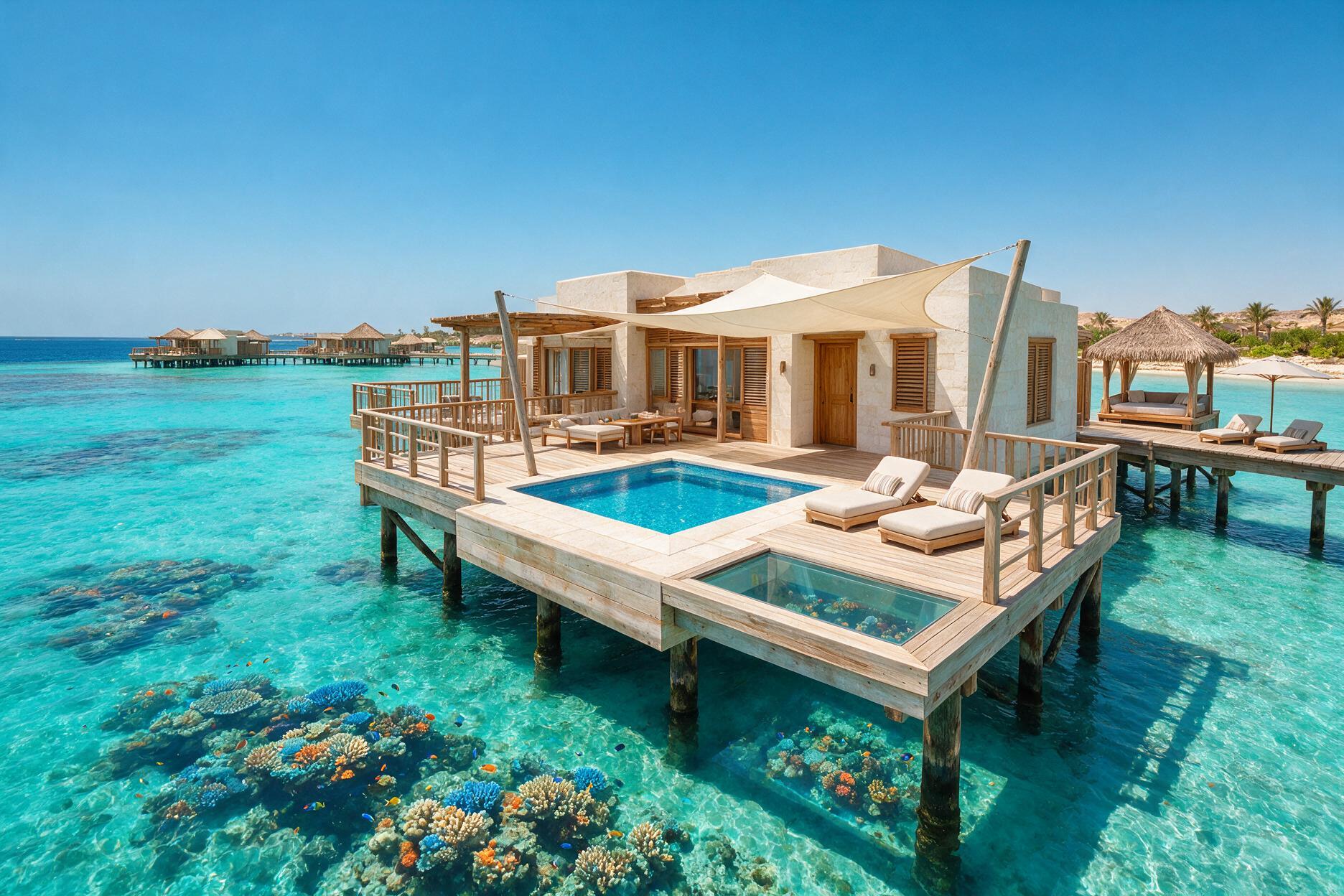
On the Red Sea, we won’t pretend this is budget-adjacent even at the low end. Properties like Desert Rock and Shebara sit at the ultra-luxury tier, and St. Regis Red Sea Resort and Nujuma (Ritz-Carlton’s reserve brand) are priced accordingly — this is a genuine Maldives-and-Seychelles competitor, not a value alternative to them. If the Red Sea leg is the part of the trip you’re most excited about, it’s worth building the rest of the itinerary around a shorter Riyadh/AlUla stay so the budget lands where the experience is.
What a Saudi Arabia Trip Actually Costs
Realistic per-day figures for two travellers, excluding flights and the Red Sea resort leg (which we’ve broken out separately since it skews the average so hard):
- Mid-range (Riyadh + AlUla): roughly SAR 1,200–2,000/day (₹28,000–46,000) covering a four-star hotel, private airport transfers, a couple of guided experiences and restaurant meals.
- Luxury (Riyadh + AlUla): SAR 3,500–8,000+/day (₹80,000–1,85,000+), which is where the Habitas/Banyan Tree tier and the hot air balloon experience live.
- Red Sea resort stay: add SAR 5,000–15,000+ per night depending on property and room category — this is genuinely the most expensive leg of the trip and should be budgeted for as its own line item, not averaged into a daily figure.
Domestic flights (Riyadh–AlUla, Riyadh–Red Sea) run SAR 250–500 each way. Private guided experiences in AlUla and Diriyah typically land between SAR 300–900 per person depending on group size and whether it’s a shared or exclusive tour.
Culture, Dress Code and Etiquette
This part causes more pre-trip anxiety than it needs to, so let’s be direct about it. Neither an abaya nor a headscarf is legally required for tourists in public spaces anymore — head coverings are expected in mosques, not on the street. That said, modest dress is still the social norm and the comfortable choice: shoulders and knees covered, loose-fitting clothing, nothing sheer or low-cut. A lot of women travellers still choose to pack a light abaya as a practical layer for cities and heritage sites, then switch to normal resortwear once they’re inside a private Red Sea resort, where the dress code relaxes considerably. Men are fine in trousers or smart-casual shirts; shorts are acceptable in resort settings but less so in central Riyadh or religious sites.
The honest caveat that generic listicles tend to skip: alcohol is still not available to tourists as a rule. Saudi Arabia remains dry nationwide for the general public — there’s been ongoing discussion about limited exceptions at select resort zones and developments like Sindalah Island, but as of 2026 nothing has been formally rolled out at scale, so plan the trip assuming a completely dry itinerary rather than counting on a policy change landing before you travel. It’s a genuine adjustment if you’re used to a resort trip with a beach bar attached, and worth mentioning to anyone in your travel party for whom that matters.
Prayer happens five times a day, and shops and some restaurants in more conservative areas may pause briefly during calls to prayer — it’s rarely disruptive to a well-planned itinerary, but don’t schedule something time-sensitive right around midday or sunset prayer without checking. Photography of people, especially women, should always be with permission; government buildings and military sites are off-limits for photos, which is standard practice across the Gulf.
Food and Where to Eat
Saudi food doesn’t get anywhere near the international attention Lebanese or Emirati cuisine does, and that’s part of the appeal — you’re eating things that haven’t been adapted for a tourist palate. Kabsa, the spiced rice-and-meat dish that functions as the national centerpiece, shows up everywhere from roadside stalls to hotel restaurants, and it’s worth having it more than once because the spice balance varies enormously by region and kitchen. In Riyadh, Najd Village in the historic quarter near Diriyah is the one we’d point a first-timer to — floor seating, Najdi hospitality, and a menu built around the dishes locals actually grew up eating rather than a “greatest hits of the Gulf” tourist menu.
AlUla’s food scene is smaller but has real standouts — Maraya Social, inside the mirror-clad Maraya concert hall, does farm-to-table fine dining with a view unlike anywhere else in the country, and the SALT food truck near Elephant Rock is the low-key, high-value alternative for a casual sunset dinner. On the Red Sea, resort dining is largely self-contained and priced accordingly — expect strong seafood programs and, unsurprisingly, no wine list to go with them.
Safety, Connectivity and Payments
Saudi Arabia consistently rates as one of the safer countries in the region for travellers, with low petty-crime rates in the areas tourists actually visit. The currency is the Saudi riyal (SAR), pegged to the US dollar, which makes it easy to estimate costs on the fly if you’re used to dollar pricing. Cards are widely accepted in hotels, malls and most restaurants in Riyadh, Jeddah and the resort properties — mada is the local debit network but Visa and Mastercard work everywhere that matters for a tourist. Carry some cash for smaller vendors in Jeddah’s Al-Balad old town or AlUla’s Old Town market stalls, where card machines aren’t always reliable.
An eSIM is the easiest connectivity option if your phone supports it — several providers now sell Saudi-specific eSIMs that activate before you land, which beats hunting for a local SIM counter after a long flight. Wifi is solid across hotels and resorts; connectivity in the more remote parts of AlUla and along Red Sea transfer roads can dip, which is honestly part of the appeal if you’re there to disconnect.
Frequently Asked Questions
Is Saudi Arabia open to non-Muslim tourists?
Yes. Saudi Arabia opened its tourist visa program to travellers of all faiths in 2019, and leisure tourism — separate from Hajj and Umrah — has been actively expanding since. Non-Muslim visitors can travel throughout the country with the exception of the holy cities of Mecca and Medina, which remain restricted to Muslims.
Do I need a visa to visit Saudi Arabia from India?
Yes. Indian passport holders need a visa — either the e-visa (if you hold a valid or recently used US, UK or Schengen visa, or a qualifying GCC residence permit) or a standard tourist visa applied for through a Saudi embassy or consulate if you don’t. See the visa section above for the full breakdown.
How long does the Saudi Arabia e-visa take for Indians?
For eligible applicants using the online e-visa route, approval is often granted within an hour. If you’re applying through the embassy track instead, expect four to five working days at minimum, and allow up to three weeks to be safe.
Is alcohol available anywhere in Saudi Arabia for tourists?
No, not as a general rule. The country remains officially dry for the public. There has been talk of limited resort-zone exceptions in future, but nothing is confirmed or widely operational as of 2026 — plan your trip around a dry itinerary.
Do women need to wear an abaya in Saudi Arabia?
No, it’s no longer a legal requirement for tourists, and headscarves are needed only inside mosques. Modest dress — shoulders and knees covered, loose fitting — is still the social expectation in public, and many women travellers pack a light abaya as a practical option for cities and heritage sites.
How many days do you need for AlUla and Riyadh?
Four days is the comfortable minimum for Riyadh plus AlUla — two nights each. Add two to three more nights if you’re extending to a Red Sea resort, which we’d genuinely recommend if your dates and budget allow it.
Is the Kozhikode to Riyadh flight direct?
Yes. Saudia’s new route launching February 1, 2026 flies directly between Kozhikode International Airport and King Khalid International Airport in Riyadh, four times a week, with no stopover.
Is Saudi Arabia expensive to visit?
It depends heavily on which part of the trip you’re weighting. Riyadh and AlUla can be done comfortably at a solid mid-range budget, but the Red Sea resorts are priced at genuine ultra-luxury levels — closer to the Maldives than to a typical Gulf city break. Budgeting the Red Sea leg separately, as outlined in the costs section above, gives a more realistic picture than averaging it into a daily figure.
The Bottom Line
Saudi Arabia isn’t a destination that’s about to open up — it already has. What’s new in 2026 is that the logistics have finally caught up: a direct flight from Kerala into the capital, resorts on the Red Sea that are actually taking guests instead of pre-selling renderings, and a tourism board putting real discount money behind reaching Indian travellers specifically. The parts that make a trip here genuinely worthwhile — Hegra’s tombs, Diriyah’s mud-brick alleys, a private villa over a house reef with nobody else in sight — haven’t needed convincing. What’s changed is how easy it now is to actually go.
If you’re weighing a Saudi Arabia trip from India for this winter or next Ramadan season, this is a good year to move before the December–January window gets fully booked out at the properties that matter. Get Tripped’s Saudi Arabia trip packages are built around exactly this arc — Riyadh, AlUla and a Red Sea close — with the visa-eligibility groundwork sorted before you commit to dates. Reach out and we’ll help you build the version that fits your travel window and budget.