Thailand 7 Nights 8 Days Itinerary: Bangkok, Krabi & the Islands for Indian Travelers
Seven nights in Thailand gives you just enough time to feel like you’ve actually been somewhere rather than just transited through it. Bangkok for the city chaos and temple-hopping, then south to Krabi or Phuket for the kind of water that turns your photos into screensavers — this is the classic sequence, and it works because the geography cooperates.
This itinerary covers Bangkok (3 nights), Krabi (2 nights), and Koh Phi Phi with a Pattaya beach day (2 nights), structured for travelers flying from major Indian cities. Swap order or drop a stop based on your preference — the principles stay the same.
Table of Contents
- Before You Go: Flights and Logistics
- Days 1-2: Bangkok — Temples, Markets, and Street Food
- Day 3: Bangkok — Floating Markets and Chao Phraya
- Days 4-5: Krabi — Railay and the Limestone Cliffs
- Days 6-7: Koh Phi Phi and Koh Samui Island Days
- Day 8: Pattaya or Bangkok Departure
- Costs and Budget Breakdown
- Practical Tips
- FAQs
Before You Go: Flights and Logistics
Direct flights connect several Indian cities to Bangkok. IndiGo, Air India, Thai Airways, and Bangkok Airways all operate this route. Mumbai to Bangkok Suvarnabhumi takes around 3.5-4 hours; from Delhi it’s closer to 4.5-5 hours; Chennai and Kolkata are about 3 hours. Don Mueang airport, slightly further from central Bangkok than Suvarnabhumi, handles many low-cost carriers including the Bangkok-Krabi domestic legs — check which airport your international flight arrives at.
Flying into Bangkok and out of Phuket (or vice versa) avoids backtracking. Book this as two one-way international tickets rather than a round-trip if you plan to finish the trip in a different city. The Bangkok-Krabi domestic flight runs about 1 hour 15 minutes and costs ₹4,000-8,000 depending on how far in advance you book.
Fill out your Thailand Digital Arrival Card (TDAC) before departure — it’s required on arrival and takes 5 minutes to complete online.
Days 1-2: Bangkok — Temples, Markets, and Street Food
Day 1: Most India-Bangkok flights land in the evening, so your first Bangkok night is mostly about getting there and getting settled. Stay in the Sukhumvit or Silom area for easy BTS access. Grab a bowl of tom yum from a street stall — the ones outside BTS stations are surprisingly decent — and call it an early night.
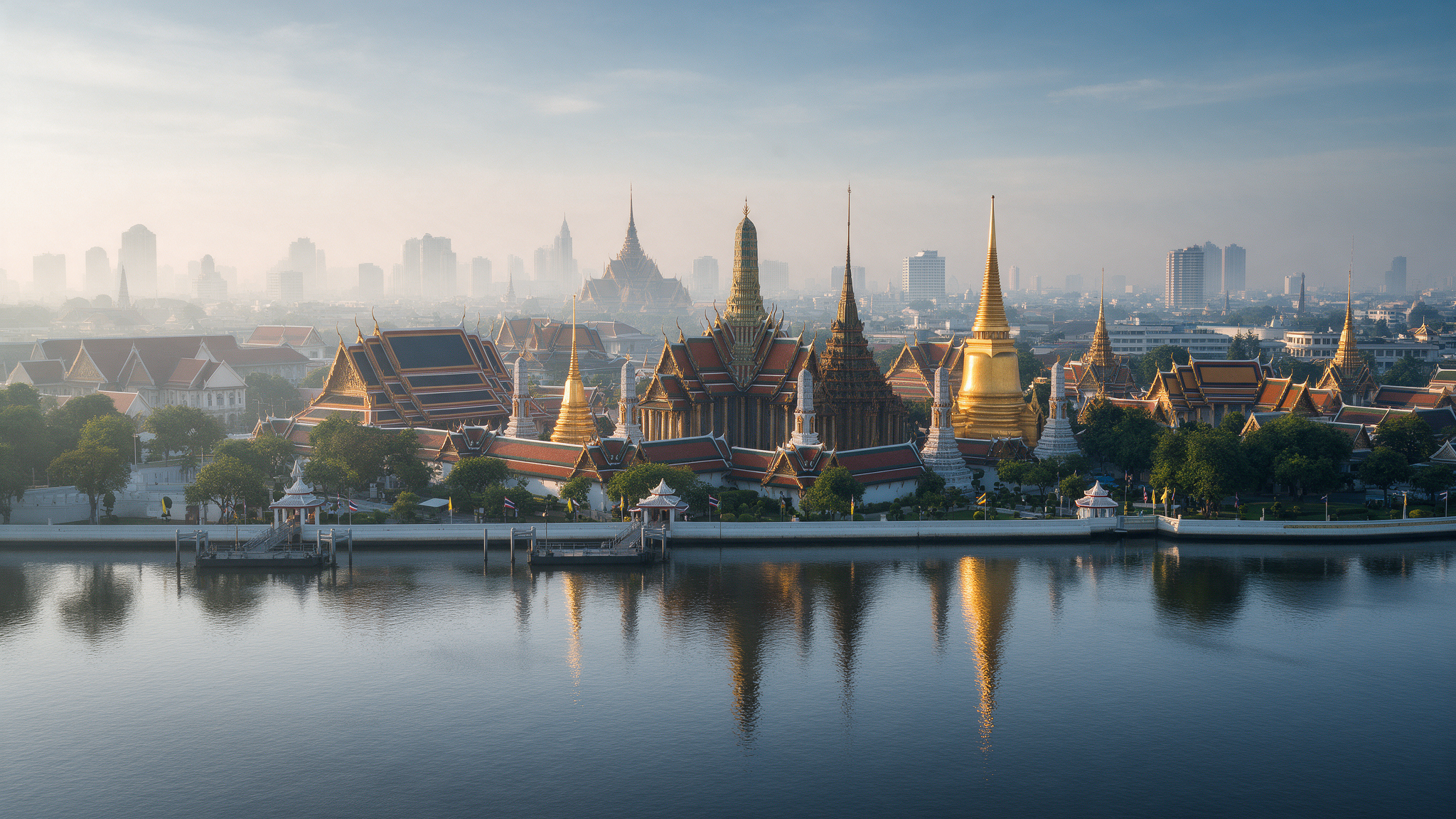
Day 2: Start early at the Grand Palace complex. Gates open at 8:30 AM and the difference between arriving at 8:45 and 10:30 is enormous in terms of crowd density. Inside is Wat Phra Kaew, the Temple of the Emerald Buddha — the most sacred Buddhist site in Thailand. The Buddha statue itself is small, but the surrounding murals depicting the entire Ramakian epic (Thailand’s version of the Ramayana) are extraordinary. Budget 2-3 hours here.
Across the Chao Phraya by ferry: Wat Arun, the Temple of Dawn. The ceramic-encrusted spires look best from the water, actually — the view from the ferry beats the view from inside the grounds, which is worth keeping in mind. Cross back, pick up lunch at a riverside restaurant — the river crab curry at most Chao Phraya spots runs 250-350 baht and is usually good.
Afternoon: Chinatown (Yaowarat). Bangkok’s Chinatown is one of the oldest in Asia and the street food density per square meter is probably unmatched. Go hungry. Roasted chestnuts, grilled pork skewers, mango sticky rice from the cart near the Odeon roundabout, milk toast from the stalls that have been running since the 1970s. The area is best explored on foot between 5 PM and 9 PM when the vendors are all set up.
Evening: Khao San Road if you want backpacker energy and cheap drinks; Asiatique riverfront for something more relaxed with river views.
Day 3: Bangkok — Floating Markets and Chao Phraya
The Damnoen Saduak Floating Market is the famous one — 100 km outside Bangkok, organized tours run early morning and are back by lunch. It’s worth doing once for the visual spectacle, though be clear-eyed about the fact that it’s primarily a tourist market now rather than a working local one. The boats are real, the vendors are real, the produce is real; the experience is more choreographed than spontaneous.
A more genuine alternative: Taling Chan Floating Market, a 30-minute cab from central Bangkok. Weekends only. Local vendors selling home-cooked food on floating platforms. Less photographed, more authentic, and you can be back in Bangkok by noon.
Afternoon in Bangkok: Jim Thompson House (the museum of the American silk trader who disappeared mysteriously in Malaysia in 1967) or the Bangkok National Museum. Both are worth a few hours and are genuinely interesting, not just obligatory. If you’d rather skip museums: a long afternoon of window shopping at Siam Paragon or Central World, which are worth a walk through for the scale alone even if you’re not buying.
Evening: Rooftop bar at any of the hotels near Silom or Sukhumvit for Bangkok’s skyline. The view is legitimately beautiful at night, especially from around the 50th floor.
Days 4-5: Krabi — Railay and the Limestone Cliffs
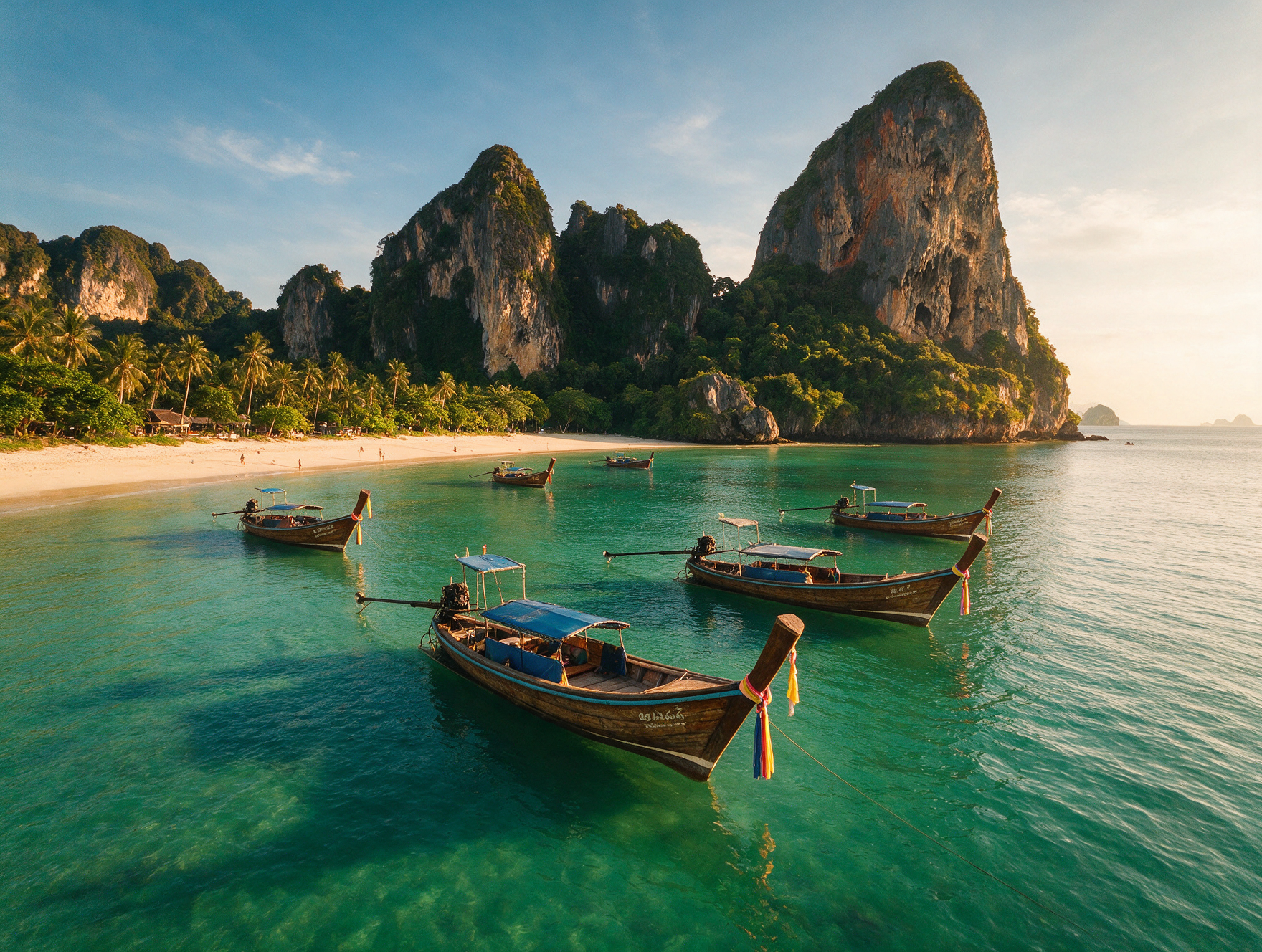
Morning flight Bangkok to Krabi (1 hour 15 minutes). Take a Grab or an airport taxi to the pier at Ao Nang. From here, longtail boats run to Railay Beach — a 15-minute crossing that gets you to a beach only accessible by water. The limestone cliffs that rise from Railay’s shores make for one of those views that looks like a fabrication even when you’re standing in front of it.
Railay has two sides: the crowded western beach (West Railay, calmer water, better for swimming) and the eastern side (mangroves, mostly used as an arrival point). Stay on the western side. It’s one of the few areas in Thailand where the accommodation to beach ratio is low enough that it doesn’t feel overwhelmed in the early morning.
Day 5: Four Islands Tour from Krabi or Ao Nang. A longtail boat takes you to Koh Poda (an uninhabited island with extraordinary underwater visibility, good for snorkeling), Tup Island (a sandbar that connects two islands at low tide), and the Emerald Cave. Tours run approximately 1,200-1,800 baht per person and include equipment. Book through your hotel or any of the operators along Ao Nang beach — prices are roughly standardized. Morning departure and back by 5 PM.
Days 6-7: Koh Phi Phi and Koh Samui
Koh Phi Phi: The ferry from Krabi to Koh Phi Phi takes about 90 minutes. Phi Phi is two islands — Phi Phi Don (the inhabited one, with hotels and the party scene) and Phi Phi Leh (uninhabited, where you take day trips). Phi Phi Leh is the one with Maya Bay, the beach from “The Beach.” Maya Bay is beautiful and heavily managed — you can swim there but the boat traffic makes it less serene than it looks in photos. Worth visiting once.
Phi Phi Don has a short strip of bars and restaurants along Tonsai Bay that runs lively until 2 AM. If you want a genuinely quieter experience, stay on the northern or eastern end of the island rather than the main strip.
Koh Samui alternative: If Koh Phi Phi feels too much like a party island, Koh Samui is easier to reach from Bangkok (direct flight, 1 hour) and offers more range — from quiet north coast beaches to the busier Chaweng strip. The Full Moon Party at nearby Koh Phangan is a separate overnight trip if that’s your thing.
Day 8: Pattaya or Bangkok Departure
Pattaya is 150 km from Bangkok — two hours by road. As a final day before your evening flight, it works well if you’re flying from Suvarnabhumi: you can stop in Pattaya for the beach and lunch, then continue to Bangkok for your flight. Pattaya’s beach itself isn’t Thailand’s best, but the area around Naklua (north Pattaya) is quieter and more pleasant than the busy Walking Street zone. Koh Larn, an island accessible by ferry from Pattaya pier, has genuinely clear water and makes for a relaxed half-day if your flight is after 7 PM.
If you’re flying from Don Mueang, skip Pattaya and spend the morning at the Chatuchak Weekend Market (weekends only) or the Siam area of Bangkok before heading to the airport.
Costs and Budget Breakdown
Thailand trip cost from India varies significantly based on accommodation tier and activities. For a mid-range trip on this itinerary:
- International flights (round-trip): ₹25,000-45,000 from most Indian cities
- Domestic Bangkok-Krabi flight: ₹4,000-8,000
- Accommodation: ₹4,000-9,000/night for comfortable mid-range hotels; ₹15,000+ for resort-style properties in Krabi or Phi Phi
- Food: ₹1,500-3,000/day eating at proper restaurants (not street stalls exclusively)
- Activities and transport: ₹3,000-5,000 per person per day across the trip
A 7N/8D trip from India typically runs ₹80,000-1,40,000 per person for mid-range, and ₹1,80,000+ for luxury stays with private tours. Thailand tour packages from India often include flights and hotels together and come out more cost-effective than booking separately, especially during the October-April peak season.
Practical Tips
Thai baht is widely accepted. ATMs dispense baht across tourist areas, though the foreign transaction fee is usually 220 baht per withdrawal — take out a larger amount at once rather than making multiple withdrawals. Credit cards work at most restaurants and all hotels but are rarely accepted at street food stalls or local markets.
The best time to visit Thailand for this itinerary is November through March — the cool, dry season. April and May are very hot (38-40°C is not unusual in Bangkok). June through October is monsoon season; the south’s west coast (including Krabi and Phuket) gets the heaviest rain. If you’re going during June-September, consider switching to the east coast of the peninsula (Koh Samui, Koh Tao) which has a different monsoon timing and is drier.
SIM card: Buy a tourist SIM at the airport on arrival. AIS and DTAC both offer 7-day unlimited data packages starting at 299 baht. Much cheaper and faster than buying at a tourist shop in the city.
FAQs
Is 7 nights enough for Thailand?
Yes, if you focus. Seven nights covering Bangkok and one island region works well. Spreading across more islands in 7 days means more transit time than beach time.
Should I start in Bangkok or the islands?
Starting in Bangkok makes logistical sense if you’re flying directly there (most India-Bangkok flights go to Bangkok). Save the islands for the second half of the trip.
What’s the best time to visit Thailand?
November to March is peak season and the most comfortable. The rain shadow pattern means December-February is reliably dry in both Bangkok and the south.
How do I get from Bangkok to Krabi?
Domestic flight is the most practical option — about 1 hour 15 minutes. Overnight bus or train also runs but takes 10-12 hours. For 7 nights, the flight is worth the cost.
Is Thailand safe for Indian families?
Generally yes. Tourist zones are well-policed and the Thai government invests significantly in tourist safety. Areas to avoid: the far south provinces of Yala, Pattani, and Narathiwat. All destinations on this itinerary are safe.
Do I need travel insurance for Thailand?
Not mandatory, but strongly recommended. Medical care in Thailand is excellent but costs can add up fast without insurance — a hospital stay in Bangkok can run ₹20,000-50,000 per day for a private hospital.
Plan Your Thailand Trip
Thailand rewards travelers who have a plan — not a rigid minute-by-minute schedule, but a clear backbone so you’re not making flight-booking decisions at the guesthouse reception. The itinerary above gives you that structure while leaving room for the spontaneous detour, the extra afternoon at the beach, the restaurant someone recommended at breakfast.
Browse Get Tripped’s Thailand packages to see how we structure these trips with curated hotels, domestic transfers, and local experiences built in — the kind of trip that doesn’t require a spreadsheet to manage.