Best Evening & Sunset Spots on the Great Barrier Reef
At Tongue Bay, the dinghy driver kills the engine early and lets the boat drift the last hundred metres into shore, because the wake from the motor is enough to smudge the tide lines below. That’s the first thing that tells you the Hill Inlet lookout runs on its own schedule, not yours: get the tide wrong by an hour and the swirl of white sand and turquoise water that everyone photographs just looks like a regular beach. Get it right, ideally with the low sun coming in sideways, and it’s genuinely one of the more striking things you’ll see in Australia. The Great Barrier Reef doesn’t have streets or rooftop bars, so “evening spots” here means something different — it means knowing exactly where the light does something the middle of the day never shows you, and being there when it happens. This guide covers the real ones: an island lookout, a sunset sail, a beach town waterfront, and the honest caveats that come with all three, useful whether you’re weighing Australia vacation packages or building a trip from scratch.
Quick Contents
- Choosing Your Gateway Town: Cairns, Port Douglas or Airlie Beach
- Hill Inlet Lookout, Whitsunday Island
- A Sunset Sail Out of Port Douglas or Cairns
- Airlie Beach Waterfront and the Island Silhouette
- Best Time to Visit Australia for Reef Evenings
- An Honest Look at Reef Health
- A Mistake to Avoid
- What It Actually Costs
- Getting There from India
- FAQs
Choosing Your Gateway Town: Cairns, Port Douglas or Airlie Beach
The reef itself has no address, so every trip starts by picking a base, and this decision shapes your evenings more than almost anything else you’ll book. Among the best places to visit in Australia, these three towns cover the reef’s northern and central stretch, and each has a completely different personality after 4pm.
Cairns
Cairns is the big, practical hub — most international flights connect through here, the Esplanade lagoon fills up with families around sunset, and the marina has more boat operators than any other town on this coast. It’s less pretty than Port Douglas but it’s the easiest base if your itinerary also includes rainforest day trips or the Skyrail, and it’s cheaper for accommodation across the board.
Port Douglas
Port Douglas is smaller, slower, and where most honeymooners end up. Four Mile Beach faces roughly north-east, so you won’t get a classic beach sunset here, but Sunset Point at the northern tip of the beach, right by the Low Isles viewing area, catches the colour spilling over the Coral Sea. The town itself — Macrossan Street, the marina — has a quieter, more resort-y feel than Cairns, which matters if you’re trying to relax rather than tick off a checklist.
Airlie Beach / the Whitsundays
Airlie Beach is the gateway to the Whitsunday Islands and, for evening views specifically, probably the strongest of the three. It sits on the mainland facing the islands, so the sunset drops behind them rather than into open ocean, which gives you silhouettes instead of a flat horizon. It’s also the base for reaching Whitehaven Beach and Hill Inlet, which is the single most photographed sunset scene in this part of Australia — and among things to do in Australia after dark, watching the light change over a chain of islands is hard to top.
Hill Inlet Lookout, Whitsunday Island
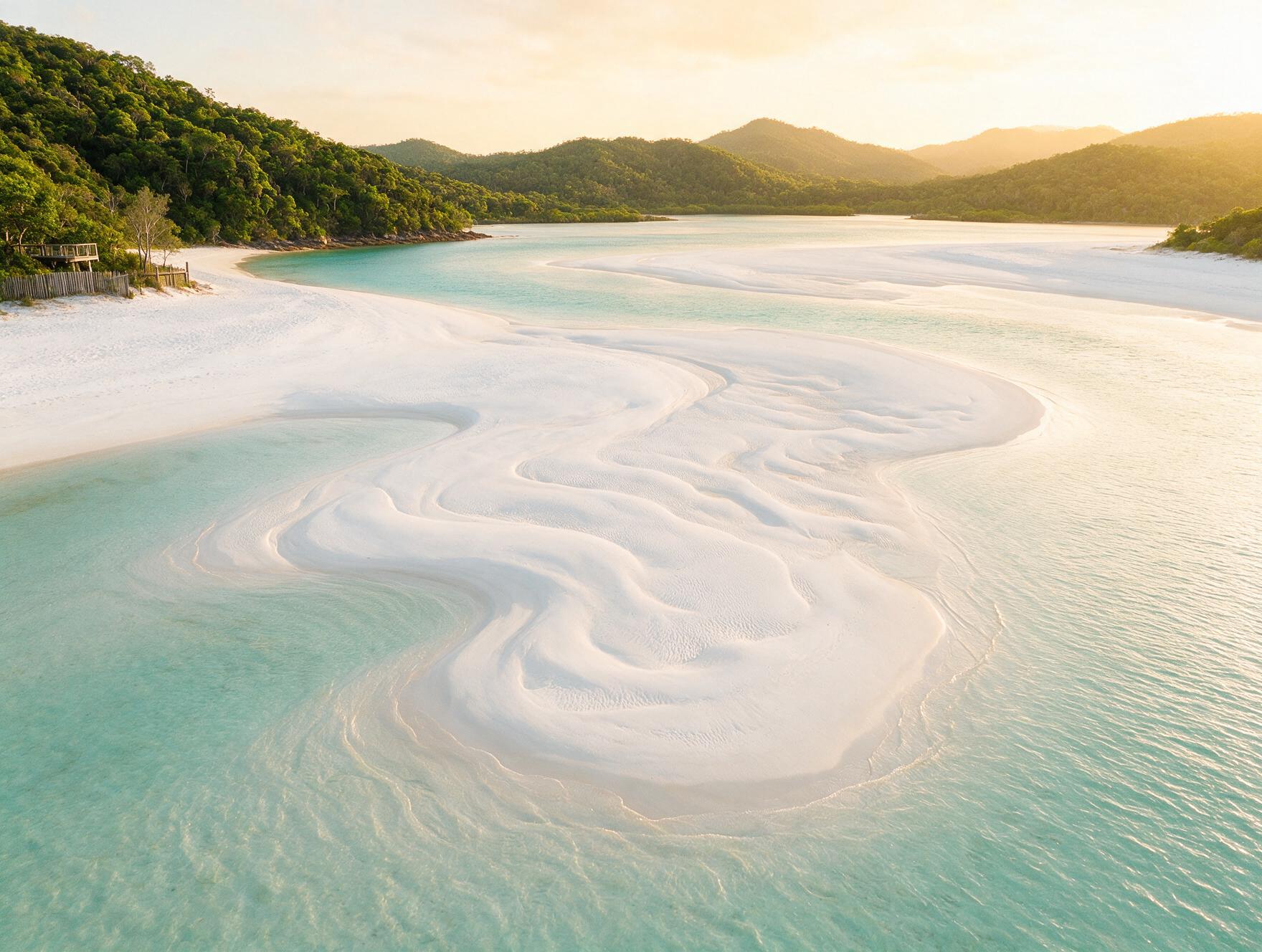
Hill Inlet sits at the northern tip of Whitehaven Beach on Whitsunday Island, and the lookout — a short, steepish walk up from Tongue Bay — gives you the view from above rather than at sea level, which is the whole point. As the tide moves, the pure silica sand (it’s over 98% silica, which is why it stays a powdery white instead of yellowing like most beach sand and why it never gets uncomfortably hot underfoot) blends into channels of blue and green water in a pattern that’s genuinely different every time. Late afternoon light, low and warm, makes the colour separation more dramatic than the flat white light of midday. Most day-tour boats visit around midday for swimming time on Whitehaven itself; getting the lookout at golden hour usually means booking an overnight sail or a scenic flight that times the landing later in the day, or asking your operator directly whether their itinerary allows a late-afternoon stop — not all of them do, and it’s worth confirming before you book, not after. Tourism Whitsundays recommends timing the walk to low tide specifically, since that’s when the colour separation between sand and channel is sharpest.
A Sunset Sail Out of Port Douglas or Cairns
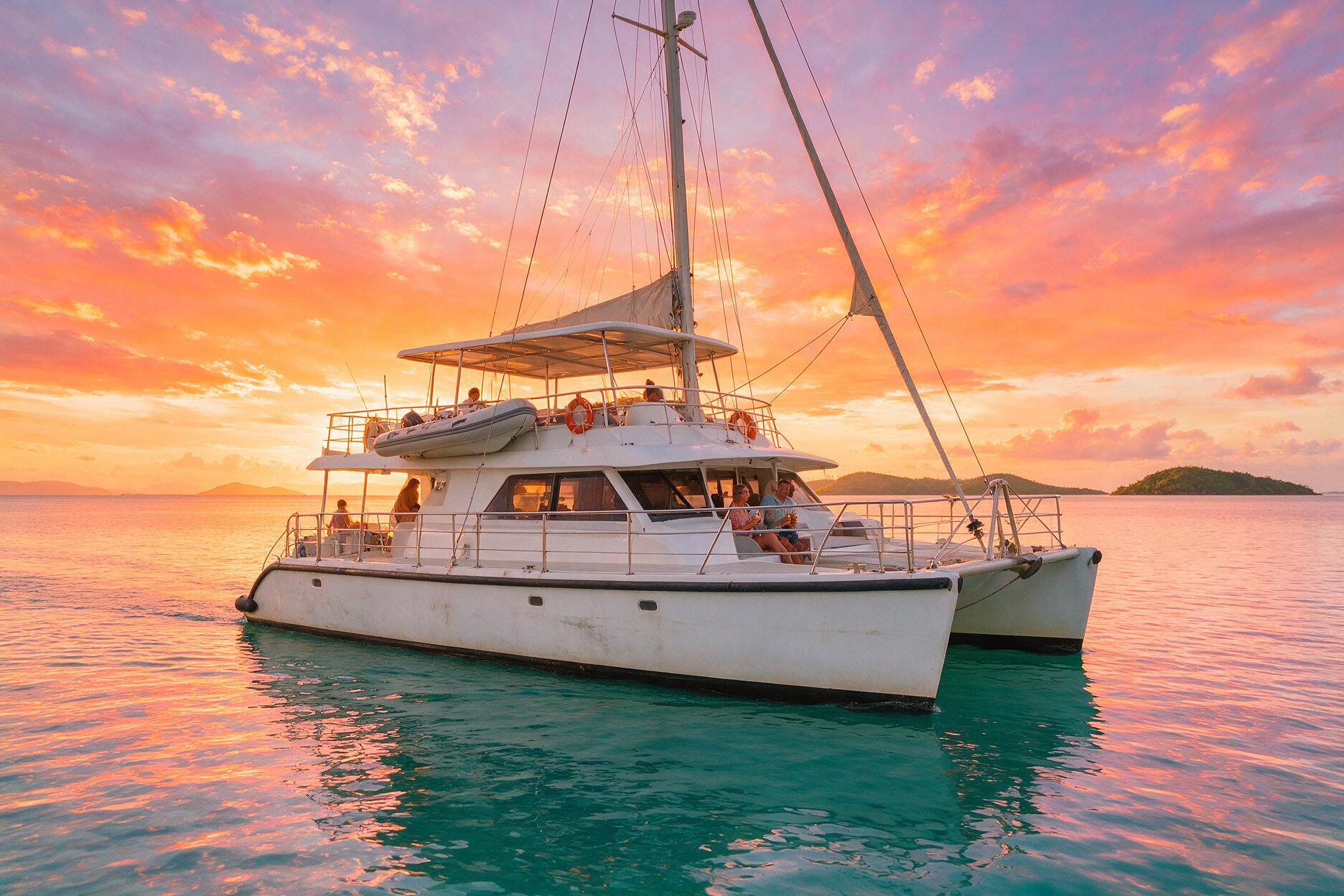
Separate from the daytime reef-diving and snorkelling trips, both Cairns and Port Douglas run dedicated afternoon and evening sailing cruises that are really about the water and the sky rather than what’s underneath it. A typical Cairns sunset harbour cruise runs a couple of hours in the early evening on a sailing catamaran through Trinity Inlet, with a welcome drink and open deck space to watch the light change over the mangroves and hills behind the city — it’s regularly listed among Cairns’s afternoon and evening cruise operators as one of the more popular short activities in town, and it’s easy to see why: no wetsuit, no snorkel gear, just deck chairs and a slow float. Port Douglas runs a longer version that sails out toward the Low Isles in the afternoon and returns after sunset, which suits couples wanting something quieter than a big day-tour boat. If you get seasick easily, ask specifically about the vessel size and whether it’s a sheltered inlet route or open water — the harbour cruises stay calm, the open-sea ones can get choppy even on a clear evening.
Airlie Beach Waterfront and the Island Silhouette
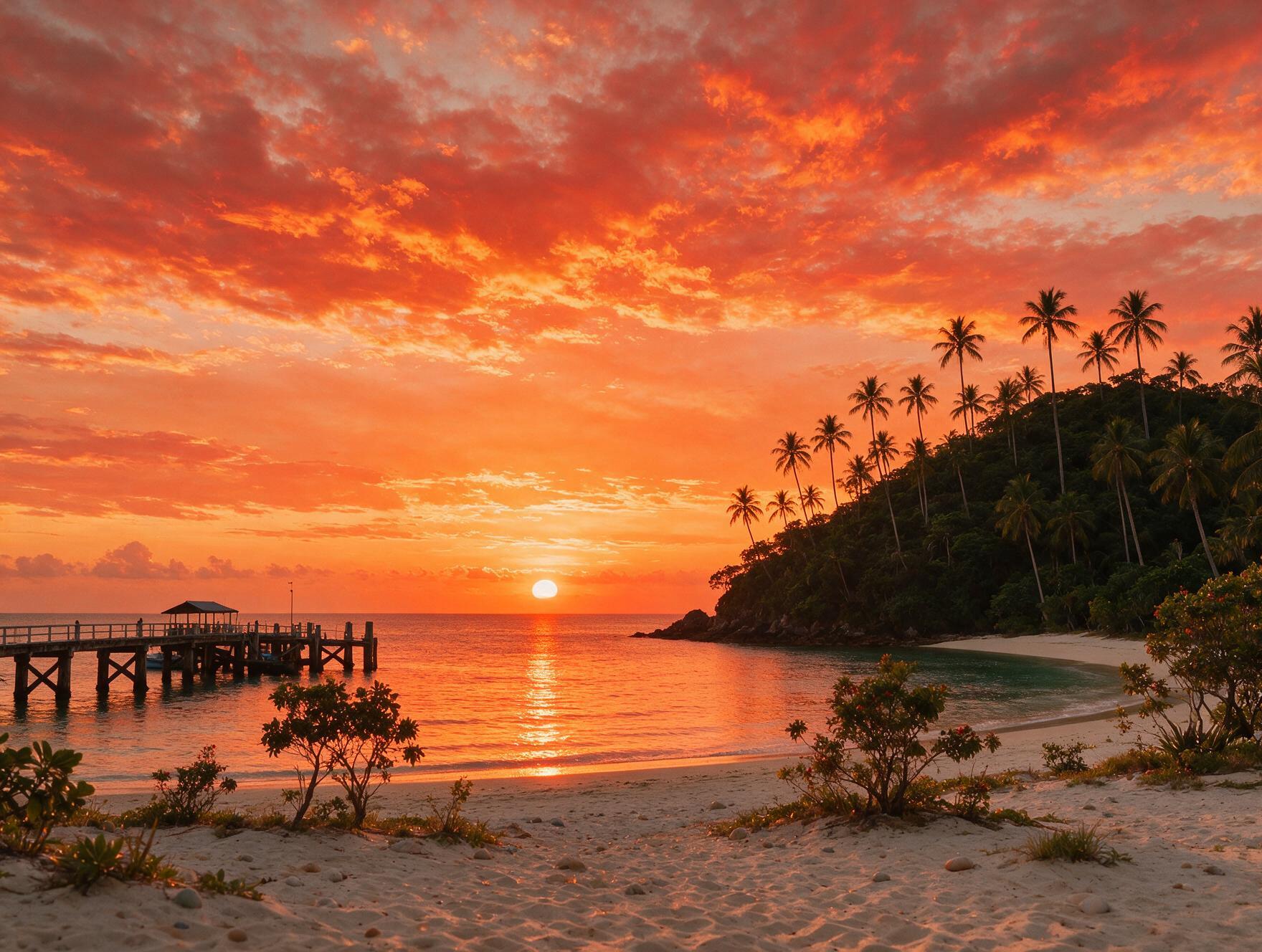
You don’t need to book anything for this one, which makes it the easiest entry on this list. Airlie Beach’s foreshore boardwalk and the lagoon area face west-ish toward the cluster of Whitsunday Islands, so instead of the sun sinking into a flat line of ocean, it drops behind actual island shapes — headlands, tree lines, the odd yacht mast cutting across the colour. Grab a drink from one of the bars along the main strip, or just sit on the grass by the lagoon, and you get a free, reliable version of the same evening light that people pay for on a boat. It’s a good option on a night when the wind’s too high for a cruise, or when you’ve already spent the budget on a full-day reef trip and just want to watch the sky do its thing without another booking.
Best Time to Visit Australia for Reef Evenings
The dry season, roughly May through October, is the reliable window — clear skies, lower humidity, and the steady afternoon breeze that sailors actually want rather than the gustier, more unpredictable wind of the wet months. June to August gives the best visibility for daytime reef trips (20 to 30 metres out on the outer reef isn’t unusual) and calmer evening conditions for a sunset sail. The wet season, November through April, brings warmer water and fewer crowds but also marine stinger season in the far north, meaning swimming without a protective suit isn’t advisable at spots like Cairns and Port Douglas beaches, and cyclone risk peaks around January and February, which can disrupt boat schedules with little warning. Shoulder months — March, April, October, November — are a reasonable middle ground: prices drop, crowds thin out, and the weather is usually fine, just less guaranteed. If you’re mapping this against a wider Australia itinerary, our packing guide by season goes into what to actually bring for each window, since a reef evening in July needs a light jacket and a reef evening in January needs almost nothing but sunscreen and a stinger suit.
An Honest Look at Reef Health
It would be dishonest to write about the reef without addressing this directly: 2024 brought a serious mass bleaching event, and monitoring data from the Australian Institute of Marine Science released through 2025 showed real declines in coral cover across all three reef zones, with the southern and northern sections hit hardest — some of the steepest annual drops on record. That’s not a small thing, and it’s fair to feel uneasy about it. But it’s also not the full picture. Coral cover in most surveyed reefs still sits in a moderate range, plenty of central and northern reefs remain above their long-term historical average even after last year’s losses, and the reef is not, contrary to some headlines you may have seen, dead or dying wall to wall — it’s a 2,300-kilometre system with huge variation from one reef to the next, and a good operator will know which sites near their base are currently in better shape. The Great Barrier Reef Marine Park Authority publishes ongoing reef health updates if you want to check conditions yourself before booking. Ask your tour company directly which reef or island they’re visiting that day and how it’s looking; most crews who work the water daily are candid about it, and a five-minute conversation before you book beats guessing.
A Mistake to Avoid
The single most common mistake: booking a day-tour boat assuming it’ll get you to Hill Inlet at golden hour, when almost all standard day trips from Airlie Beach or Cruise Whitsundays run on a midday schedule built around lunch and swim time, and are back at the marina well before sunset. If the sunset lookout view is the actual goal, you need an overnight sailing charter, a scenic flight timed for late afternoon, or explicit confirmation from the operator that their itinerary includes a late stop — check this before paying, because refund policies on Whitsundays cruises are usually unforgiving once you’re within 24 hours of departure.
What It Actually Costs
Standard full-day reef trips from Cairns or Port Douglas — two snorkel sites, lunch, gear included — generally run somewhere between AUD 220 and 350 per person, with premium options that add a scenic helicopter transfer or extra island stop climbing toward AUD 500-600. Dedicated evening cruises are usually cheaper: a short sunset harbour cruise in Cairns can come in under AUD 100, while a longer Port Douglas sunset sail with a full afternoon of sailing runs higher, closer to AUD 350-400. None of this includes flights or accommodation, and Australia trip cost from India varies hugely depending on season and whether you’re pairing the reef with Sydney, Melbourne or the Gold Coast — which is really the more useful number to plan around, and one a proper Great Barrier Reef travel packages quote will lay out clearly rather than leaving you to add up boat fares one by one.
Getting There from India
Most Indian travellers fly into Sydney, Melbourne or Brisbane and connect onward to Cairns, which has the most direct domestic links to the reef region; there’s no need to route everything through a single city if your trip covers more ground. Indian passport holders need a visa arranged in advance — our Australia visa guide for Indian travellers covers the current process and documents required, and it’s worth starting that paperwork early since processing times shift. If the reef is one stop on a longer loop, our 7 nights, 8 days Australia itinerary shows how a reef base slots in alongside Sydney or the Gold Coast without the trip feeling rushed. This is exactly the kind of multi-city, multi-interest planning where a custom Australia trip built by a luxury travel agency for Australia earns its fee — matching flight timings, boat schedules and hotel checkouts across three or four cities takes more coordination than it looks like from the outside.
Frequently Asked Questions
How many days do I need for the Great Barrier Reef?
Three to four days lets you fit in one full-day reef trip, one evening cruise or lookout visit, and a buffer day in case weather cancels a booking — which does happen, more often than most itineraries account for.
Is the Great Barrier Reef dying?
No, though it has taken real damage — 2024’s bleaching event caused significant coral loss in parts of the reef, especially in the south and north. Large sections remain healthy, and reef health varies a lot by specific site, so ask your operator which reef they’re visiting and how it’s currently doing.
Can non-swimmers still experience the reef?
Yes. Glass-bottom boats, semi-submersibles and pontoon platforms let you see coral and fish without getting in the water, and most evening cruises don’t involve swimming at all — they’re about the boat, the deck and the sky.
Is Cairns or the Whitsundays better for a first reef trip?
Cairns is easier logistically with more direct flights and boat options; the Whitsundays, based from Airlie Beach, gives you Whitehaven Beach and Hill Inlet, which is the more visually striking experience if you have the extra travel day to spare.
Do I need a visa to visit Australia from India?
Yes, Indian passport holders need to apply for an Australian visa in advance — there’s no visa-on-arrival option, so build in processing time before you travel.
What should I pack for a reef evening cruise?
A light jacket even in the dry season, since it cools quickly on open water after sunset, plus reef-safe sunscreen, sunglasses, and a dry bag for your phone if you’re on an open-deck boat.
Is a sunset cruise worth it if I get seasick?
Choose a harbour or inlet cruise over an open-sea one — Cairns’s Trinity Inlet routes are sheltered and far calmer than boats heading out toward the outer reef or Low Isles.
What’s the best month to see the reef looking its healthiest?
June through August tends to show the best underwater visibility and the least storm disruption, though reef condition also depends on how recent bleaching events have affected the specific site you’re visiting.
Before You Book
None of these spots need a five-star resort or a week of free time — Hill Inlet is a short walk, the Airlie Beach waterfront costs nothing, and a sunset sail is a two-hour add-on to a trip you’re probably already planning. What they do need is timing, because the reef runs on tides and weather rather than a printed schedule, and the operators who get this right aren’t always the ones with the biggest marketing budget. If you’re weighing Australia tour packages from India and want someone who’ll actually match a lookout visit or a sunset sail to the days it makes sense, rather than bolting it onto a generic day-tour, get in touch with Get Tripped and we’ll build it around your dates — whether that’s one of our Australia honeymoon packages from India built around the Whitsundays, or a custom Australia trip that treats the reef as one stop among several. Book Australia holidays with people who’ve actually checked the tide tables.