Australia’s public transport is genuinely good in its major cities and genuinely inconvenient the moment you leave them — which surprises Indian travellers used to either extreme being consistent nationwide. Here’s how to actually get around Sydney, Melbourne, the Gold Coast, Tasmania, the Great Barrier Reef region, and Perth, city by city, plus which card to buy where.
Sydney: The Opal Card
Sydney runs on the Opal card, a tap-on tap-off contactless card covering trains, buses, ferries, and light rail across the metro area. You can buy one at the airport, at any newsagent displaying the Opal sign, or from station vending machines, and top-ups work the same way. A genuinely useful detail: Opal has a daily fare cap (so a big day of sightseeing by train and ferry never costs more than the cap) and a weekly cap that kicks in after eight paid trips. The Manly ferry, in particular, is worth using as transport rather than a tourist add-on — it’s one of the best harbour views in Sydney for the price of a normal Opal fare, cheaper than any harbour cruise doing the same route.
One thing to know: contactless bank cards and phone payment (Visa, Mastercard, Apple Pay, Google Pay) work directly on Sydney’s transport network without needing a physical Opal card at all, capped the same way — genuinely the easiest option if your card supports contactless payments internationally, since it skips the queue for a physical card entirely.
Melbourne: Myki
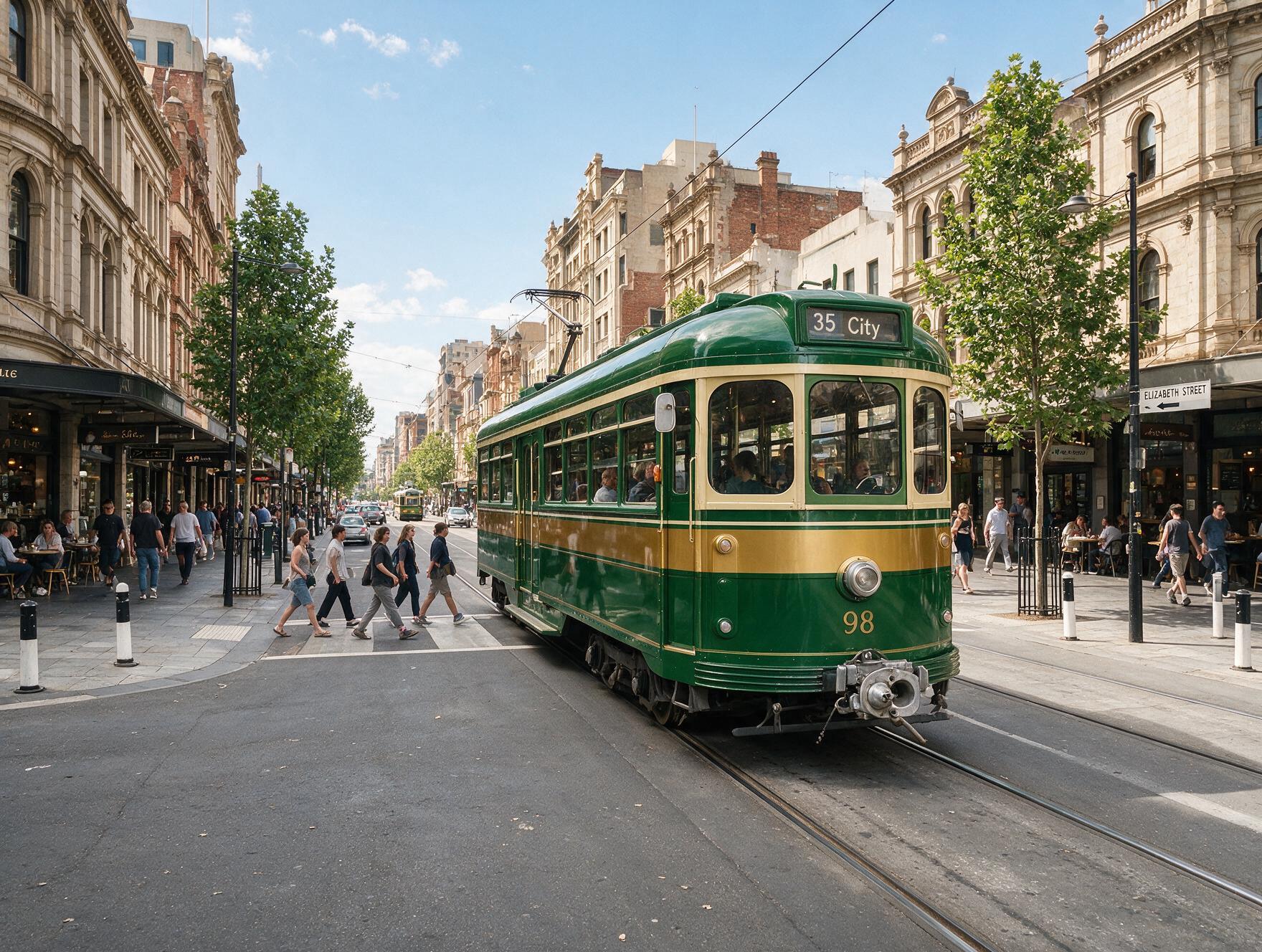
Melbourne’s transport card is Myki, covering trams, trains, and buses. The one thing every visitor needs to know: Melbourne’s CBD trams are free within the Free Tram Zone, which covers most of the city centre including Flinders Street, the Bourke Street Mall, and the Docklands loop — you genuinely don’t need to touch on for short hops within this zone. Outside the free zone, tap on and off with a Myki card, purchased from 7-Elevens, station machines, or the airport. Trams are Melbourne’s signature transport mode and one of the largest tram networks in the world, so hopping on one just to see where it goes is a legitimate way to spend an hour in the city.
Gold Coast: TransLink Go Card
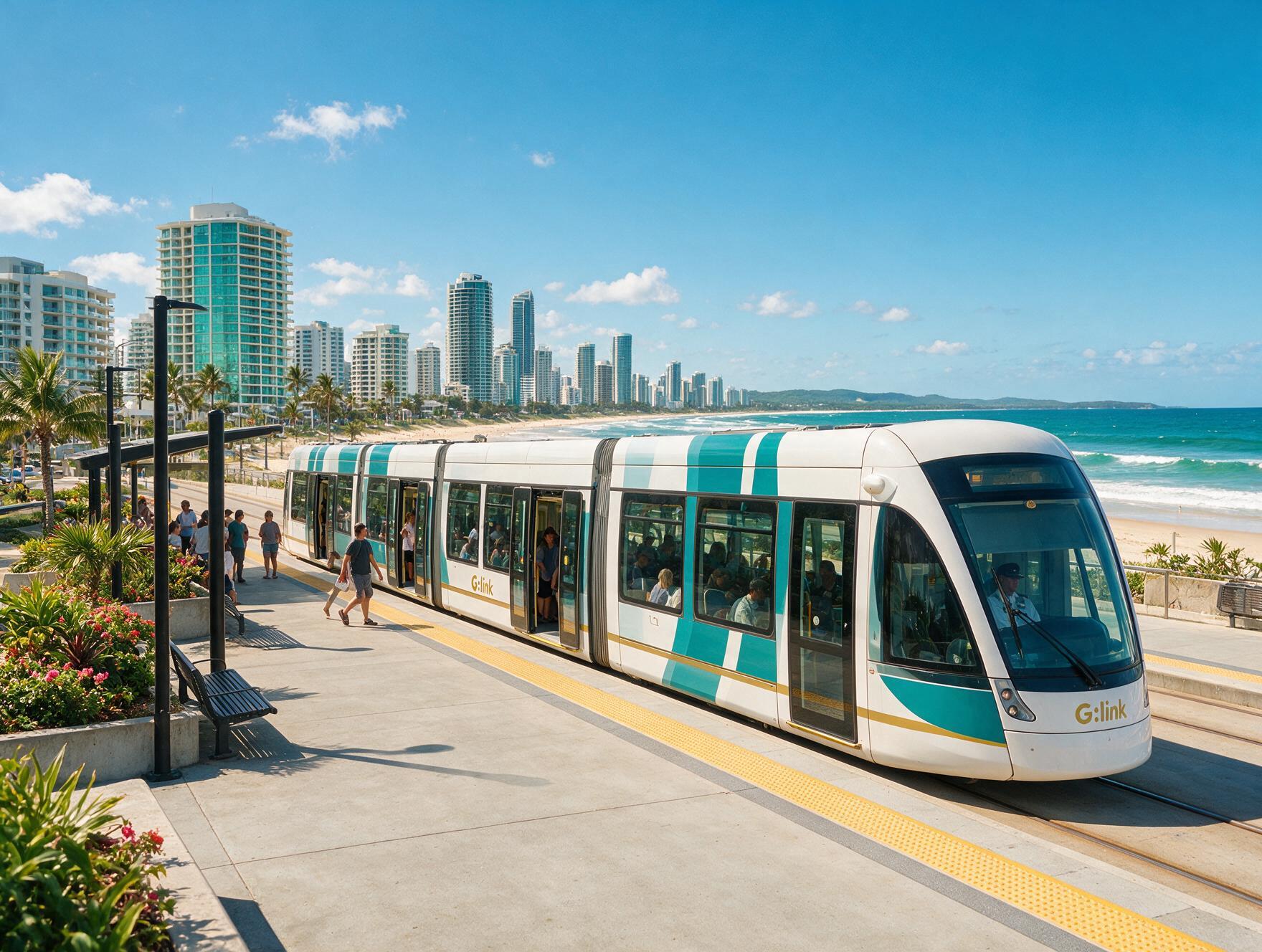
The Gold Coast uses the same Go card system as Brisbane and the rest of South East Queensland’s TransLink network, covering buses and the G:link light rail that runs along the coastal strip from Helensvale down to Broadbeach and Burleigh Heads. For a beach-hopping day — Surfers Paradise to Burleigh to Coolangatta — the light rail is genuinely the easiest way to move without a car, and a Go card gets you a lower fare than paying cash on board. Cards are available at convenience stores and the airport; contactless bank card payment is also supported on Gold Coast transport, same as Sydney.
Tasmania (Hobart): Buses Are Now Free
Here’s a genuinely useful, checkable fact that’s changed recently: Metro Tasmania buses across the state — including all of Hobart’s urban network — are now free to ride, with no fare or Greencard required. This is a real, current policy, not a promotional gimmick, so budget nothing for Hobart’s buses and just hop on. That said, Hobart is compact enough that a lot of the central sights (Salamanca, Battery Point, the waterfront) are genuinely walkable, and buses become most useful for reaching kunanyi/Mount Wellington’s lower slopes or Richmond, which are a longer haul from the centre.
Great Barrier Reef Region (Cairns): Sunbus
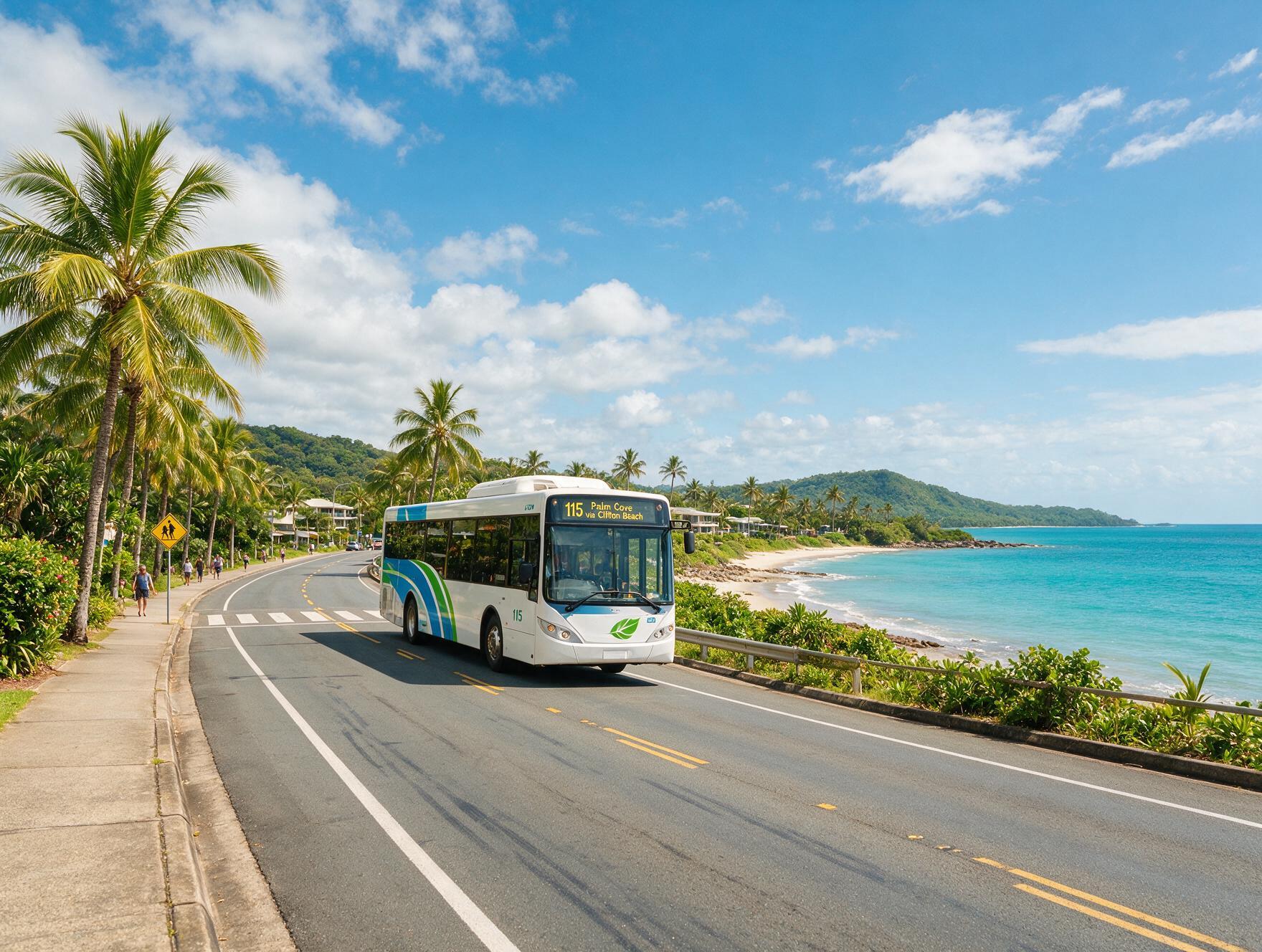
Cairns’ local bus network is run by Sunbus, covering the city and northern beaches suburbs, with cash or card payment on board. In practice, most visitors use Cairns’ buses far less than in the other cities on this list — the Esplanade, the Night Markets, and the CBD are walkable from most accommodation, and reef trips depart directly from the marina, which is itself walkable from the centre of town. Where Sunbus is genuinely useful is reaching the northern beaches (Palm Cove, Trinity Beach) if you’re staying there rather than in central Cairns, or getting to the Skyrail Rainforest Cableway terminal for a Kuranda day trip.
Perth: SmartRider
Perth’s Transperth network runs on the SmartRider card, covering trains, buses, and ferries across the metro area. As of 2026, Perth has simplified to a flat “Go Anywhere” fare of AUD 3.50 per trip, replacing the old zone-based pricing — genuinely one of the easier systems to understand as a visitor, since you don’t need to calculate zones before boarding. Cards cost AUD 10 plus a minimum AUD 10 top-up, available from SmartRider hubs at major stations, the Transperth InfoCentre, or newsagents. The free CAT (Central Area Transit) buses loop through the Perth CBD without needing a card at all — useful for short hops between the city centre and Northbridge.
Getting In From the Airport
Sydney Airport connects directly to the Opal network via the Airport Link train, though note it carries a separate station access fee on top of the normal fare — worth knowing so the first tap of your trip doesn’t feel like a rip-off. Melbourne is the outlier among the big cities: there’s no train line to Tullamarine Airport yet, so the SkyBus coach service (a fixed fare, not part of Myki) is the standard route into the CBD, running every 10 minutes around the clock. Perth Airport has a proper train connection on the Airport line, tapped on with SmartRider like any other station. Cairns and Hobart airports are both close enough to their city centres that a taxi or rideshare is the practical option — Cairns Airport is barely a ten-minute drive from the Esplanade, so it’s rarely worth waiting for a bus with luggage.
Ride-Hailing and Taxis as a Backup
Uber and Ola operate in all six of these cities, and they’re a genuinely reasonable backup when public transport doesn’t quite reach where you’re going, particularly late at night or with luggage straight from the airport. They’re not especially cheap by Indian standards, so we’d treat them as a convenience option rather than your primary transport for a multi-day city stay — public transport passes work out significantly cheaper across a full day of sightseeing.
A Mistake to Avoid
Don’t buy a fresh transport card in every city — Opal, Myki, Go card, and SmartRider are all separate, non-transferable systems, and there’s no national Australian transit card that works everywhere. Budget a small amount for a new card in each city rather than assuming your Sydney Opal card will tap on in Melbourne (it won’t). The one universal workaround, where supported, is your own contactless bank card or phone wallet, which works across Sydney, the Gold Coast, and increasingly other networks — check before you rely on it exclusively, since not every city has rolled this out for every mode yet.
Frequently Asked Questions
Can I use one card across all Australian cities?
No — Opal (Sydney), Myki (Melbourne), Go card (Gold Coast/Brisbane), and SmartRider (Perth) are separate systems. A contactless bank card or phone wallet works across several of them and is the closest thing to a universal option.
Is public transport safe to use at night?
Yes, generally, in all six cities — Australian public transport is well-lit and monitored, though as anywhere, staying aware of your surroundings late at night is sensible.
Do I need an international driving permit to self-drive between cities?
If you’re planning to drive (common for a Great Ocean Road extension out of Melbourne, or exploring Tasmania beyond Hobart), Indian licence holders generally need an International Driving Permit alongside their Indian licence — check current requirements for the specific state before you travel, since rules vary slightly.
Getting Around, Sorted
We map out exactly which cards you’ll need and where for every Australia itinerary we build, so you’re not figuring out five different transit systems on arrival. Check our Australia destination page for itinerary ideas, or reach out and we’ll build the transport logistics into your trip from day one.