A Day in Sydney: How to Spend 24 Hours in Australia’s Harbour City
The first time you see the Opera House’s sails catch the 7am light from a Circular Quay ferry pontoon, with a flat white going lukewarm in your hand because you stopped walking to stare, you understand why every Australia trip itinerary puts Sydney on day one. It’s not subtle. The sails genuinely do look like they’re mid-motion, caught between a shell and a sailboat, and no photo you’ve seen before quite prepares you for how the light changes their colour every twenty minutes.
This guide is built around one full day — because that’s often all a first Sydney stop gets on a broader Australia holiday, sandwiched between the Great Barrier Reef and Melbourne or the Gold Coast. If you’re wondering how many days are enough for Australia, the honest answer is that Sydney alone rewards three or four, but this single day covers the essentials without feeling like a checklist: the Opera House, the Harbour, a proper neighbourhood walk, food that isn’t a tourist trap, and one beach moment before the sun goes down.
Quick Answer: What This Day Looks Like
- 7:00 AM – Circular Quay at sunrise, ferry views of the Opera House and Harbour Bridge
- 9:00 AM – Sydney Opera House guided tour
- 11:00 AM – The Rocks: laneways, sandstone terraces, and the weekend market
- 1:00 PM – Lunch at Sydney Fish Market, Pyrmont
- 3:00 PM – Ferry or train to Bondi, start the coastal walk to Bronte
- 5:30 PM – Bondi Icebergs sunset, dinner in Bondi or Coogee
- Evening – Back to the city, optional harbour night walk
Table of Contents
- Morning: Circular Quay and the Opera House
- Late Morning: The Rocks
- Lunch: Sydney Fish Market
- Afternoon: Bondi to Bronte Coastal Walk
- Evening: Sunset and Dinner
- Getting Around: Opal Cards and Ferries
- Best Time of Year for This Day
- FAQs
7:00 AM – Circular Quay and the Sydney Opera House
Get to Circular Quay before 7:30 if you can. This is the one window where the ferry commuters haven’t arrived in force and the light is doing something worth photographing — low, orange-gold, hitting the Opera House sails at an angle that makes the tiles look almost pink. Grab a coffee from one of the quayside kiosks (skip the ones directly facing the water; they charge harbour-view prices for average coffee) and just watch the ferries come in for ten minutes. It sounds like filler advice. It isn’t — this is genuinely one of the better free things to do in the city, and locals commuting past you clearly don’t notice anymore what you’re seeing for the first time.
Book the standard guided tour of the Sydney Opera House for a 9am or 9:30am slot. It runs about 60 minutes, covers roughly 2.5 kilometres of walking inside the building and around 300 stairs, and is offered in seven languages including English, Mandarin, Japanese and Korean — useful if you’re travelling with family members more comfortable in another language. Expect to pay somewhere in the low-to-mid A$40s per adult; prices move year to year, so check the official site before you book rather than trusting a random blog’s number, including this one.
Mistake to avoid: don’t book the first available tour slot without checking whether it’s the standard 1-hour walk-through or the longer Backstage Tour (about 135 minutes, and pricier). They cover very different ground — the standard tour is front-of-house and architecture-focused, the Backstage Tour gets you into rehearsal spaces and green rooms but eats a much bigger chunk of your one day. For a single-day visit, the standard tour is the better fit.
11:00 AM – The Rocks
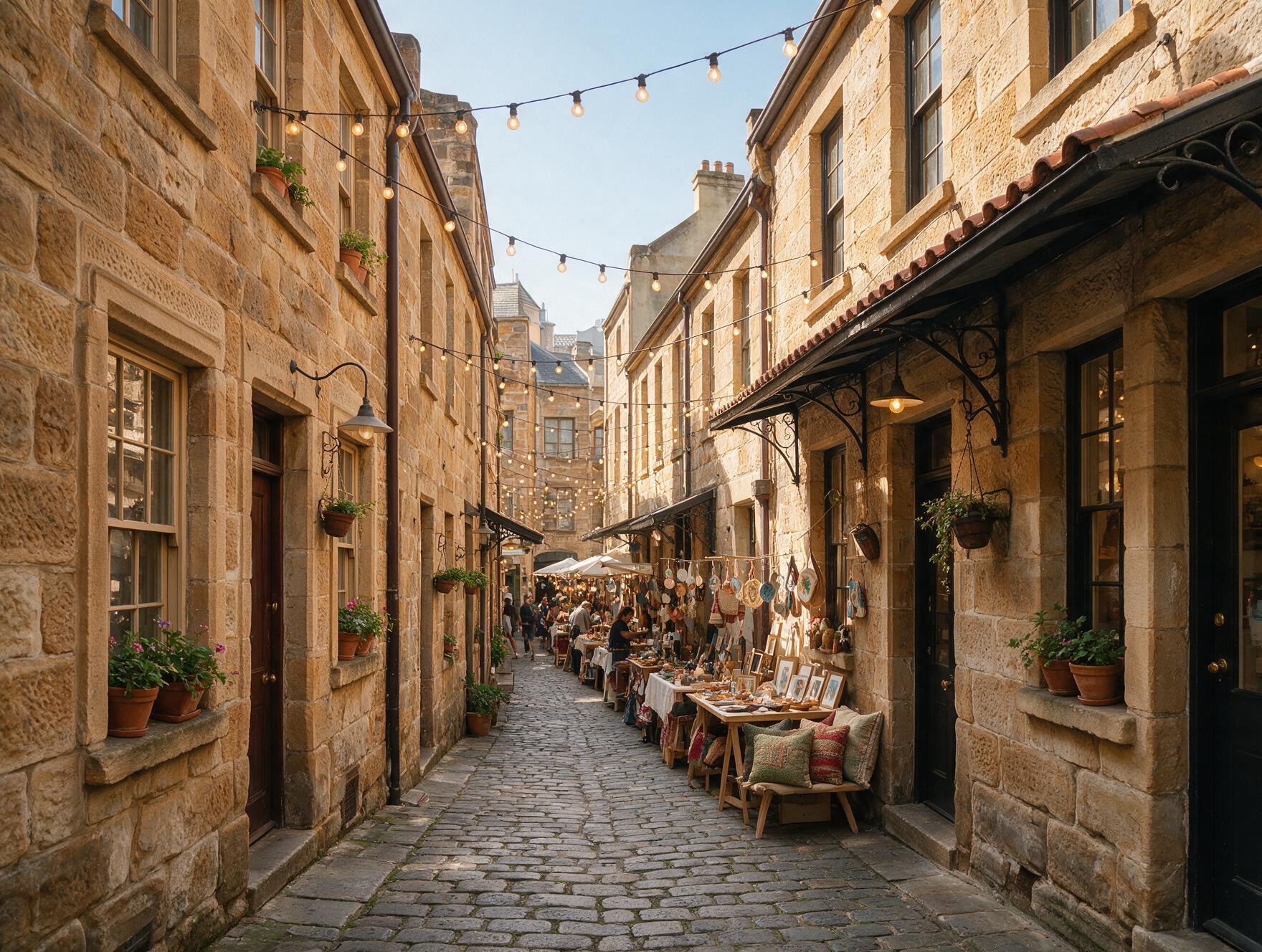
Walk west from the Opera House along the harbour promenade and you’re in The Rocks within fifteen minutes — Sydney’s oldest neighbourhood, a tangle of sandstone warehouses, narrow lanes, and pubs that have genuinely been pouring beer since the 1840s. This is where the colony’s first streets were laid out, and unlike a lot of “historic quarter” claims in younger cities, it’s not exaggerated for tourists — the cobblestones and convict-era buildings are the real thing.
If your day falls on a Friday, Saturday or Sunday, The Rocks Markets will be running — Fridays 10am–3pm, weekends 10am–5pm, with stalls selling handmade jewellery, art, and a genuinely good spread of street food, from dumplings to artisanal chocolate. It’s touristy in the sense that most visitors end up there, but the stallholders are mostly independent makers rather than mass-produced souvenir sellers, which is a distinction worth caring about.
Local tip that doesn’t make the top-10 lists: duck into Nurses Walk or Suez Canal, two of the narrowest original lanes in The Rocks — they’re a minute off the main market strip, nearly empty of tourists, and give you a much better sense of what the 1800s streetscape actually felt like than the wider, market-lined roads do.
1:00 PM – Lunch at the New Sydney Fish Market
Take the light rail or a 15-minute walk/short taxi to Pyrmont for lunch at the Sydney Fish Market — and here’s a genuinely useful, very current fact: this isn’t the old market building anymore. A new A$800 million facility opened at Blackwattle Bay in January 2026, about 20% larger than the original, staying open until 10pm, with roughly 40 traders including some new restaurant additions from well-known Sydney chefs. It’s one of the largest fish markets in the Southern Hemisphere by trading volume, and you can watch the day’s catch being auctioned in the early hours if you’re an early riser on a different day.
Mistake to avoid: if you’re navigating by an old map or an app that hasn’t updated, don’t look for a “Fish Market” light rail stop — it was renamed “Bank Street” when the new site opened, and the Wentworth Park stop about 400 metres away is now the main access point. More than a few visitors have gone in circles over this exact naming change in the months since it happened.
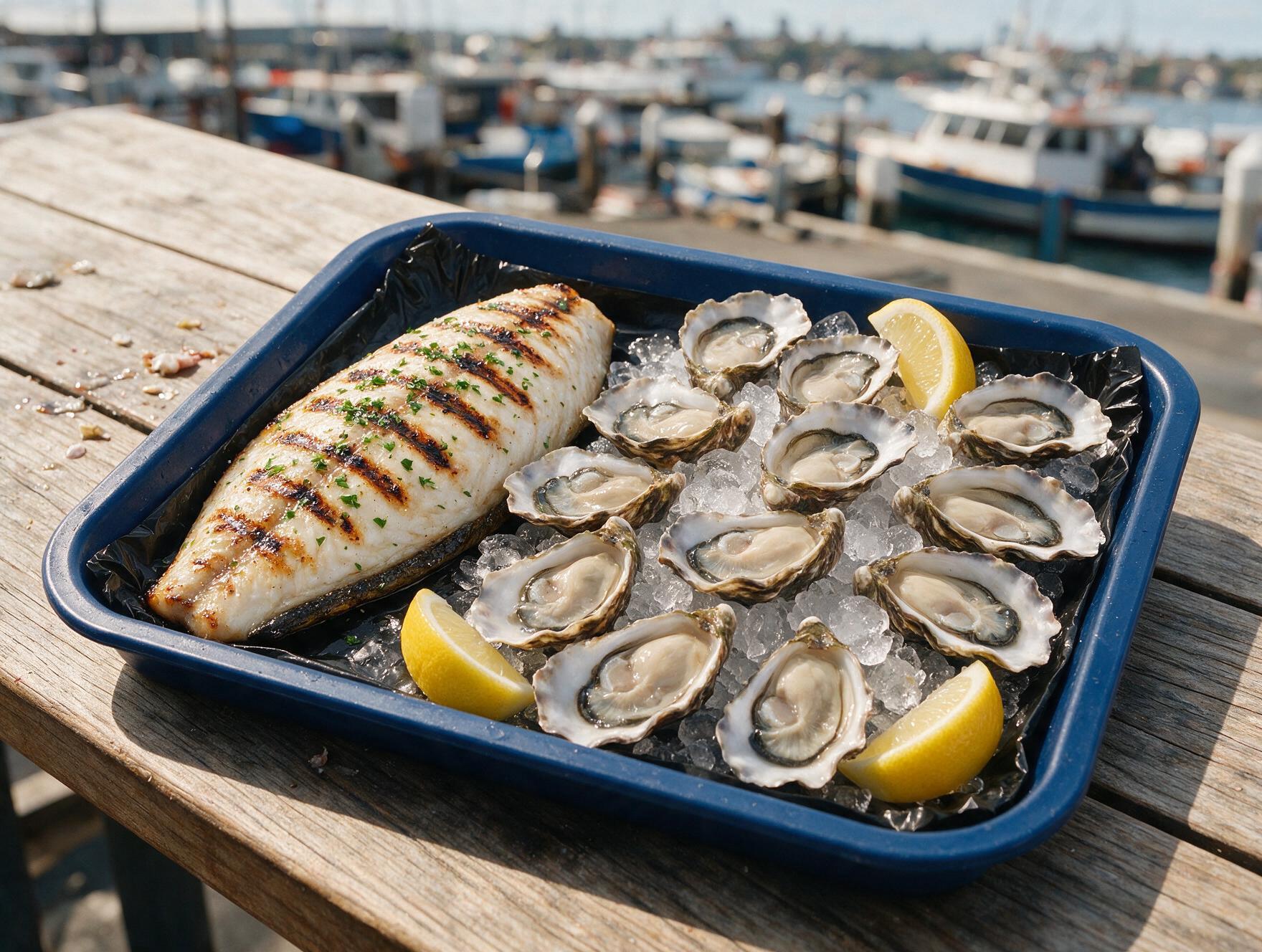
Order a grilled barramundi or a dozen natural oysters and eat them at the outdoor tables looking over the working fishing wharves — plastic tray, plastic fork, and easily one of the best-value meals in the city for what you get. If you’re vegetarian or travelling with family who keep a vegetarian diet, it’s worth planning this stop with our Australia vegetarian and vegan food guide before you go, since a seafood market isn’t naturally veg-friendly territory, but there are a couple of workable options if you know where to look.
3:00 PM – Bondi to Bronte Coastal Walk
From the city, a bus or a taxi gets you to Bondi Beach in 20–30 minutes. This is the point in the day where the itinerary shifts gears completely — from sandstone history to open Pacific coastline — and it’s worth the transition. Bondi itself is often overrated as a photo stop and underrated as a starting point: the beach is pretty but crowded, and the real reward is the Bondi to Coogee coastal walk, a roughly 6-kilometre clifftop path that takes 2–3 hours end to end and is rated an easy-to-moderate Grade 2 track, meaning most fitness levels can manage it comfortably.
You don’t need to walk the whole thing in one day. Doing just the Bondi-to-Bronte stretch (about 2.5km, 45 minutes at an easy pace) fits neatly into an afternoon and takes you past the Bondi Icebergs ocean pool, along the cliffs above Tamarama — a small, steep-sided beach locals call “Glamarama” half-jokingly — and down into Bronte, where there’s a genuine ocean pool carved into the rock and a strip of cafes right on the sand.
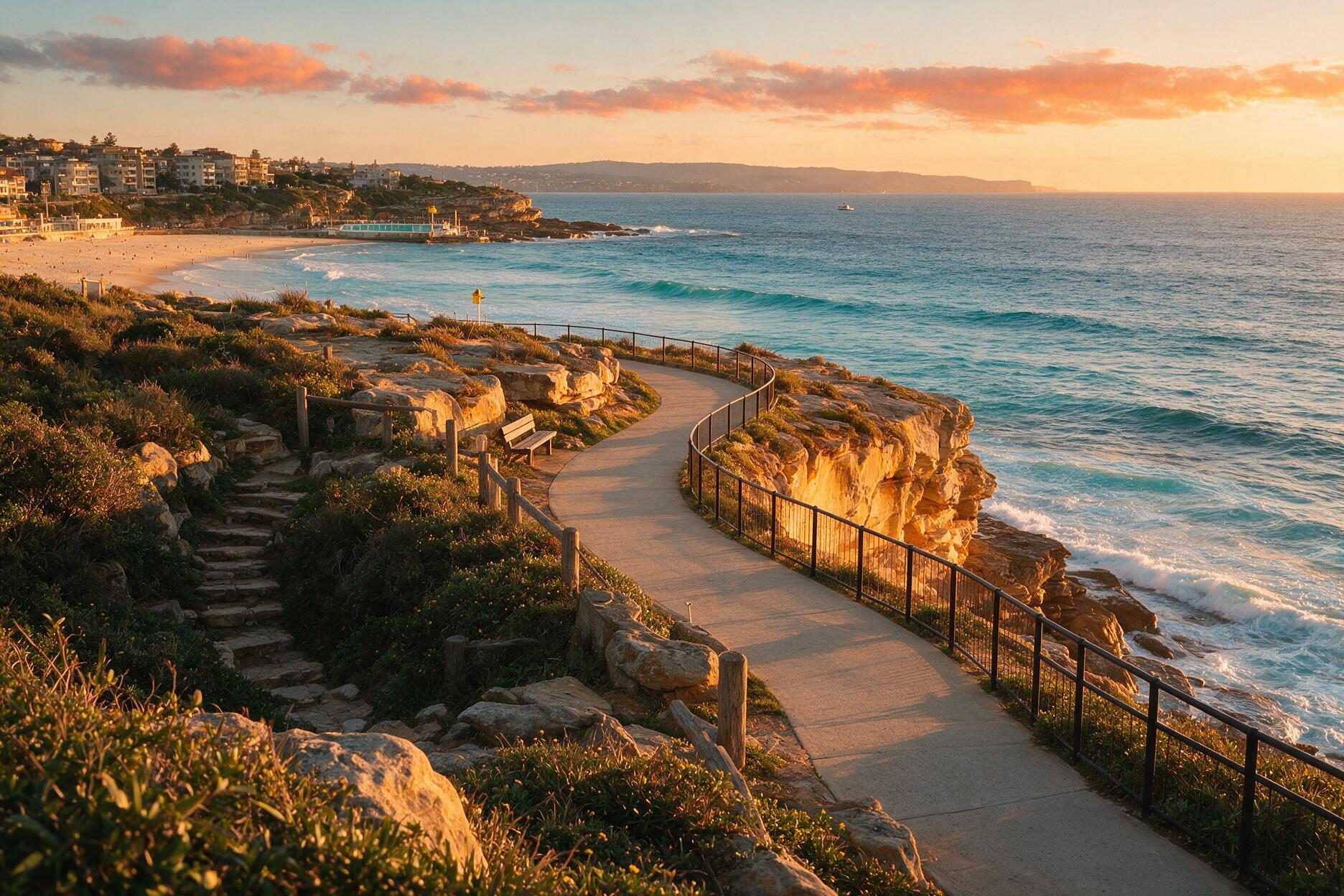
Honest caveat: the walk is stunning, but it’s also completely exposed to sun and wind with almost no shade for long stretches. Skip the middle of a January afternoon if you’re doing this in Australian summer — the reflected glare off white sandstone paths is brutal, and there are surprisingly few refill-water points along the route. Carry your own bottle.
5:30 PM – Sunset at Bondi Icebergs and Dinner
Loop back to Bondi for sunset — technically Bondi faces east, so you won’t get a classic ocean sunset here, but the late afternoon light on the sandstone headlands and the Icebergs pool (the famous saltwater pool built right into the rocks, with waves breaking over its edge at high tide) is its own kind of photogenic. Order a drink at the Icebergs Club terrace if you want the view, or walk two minutes back from the beach to Campbell Parade for a more everyday, less view-taxed dinner — good Thai, Lebanese and modern Australian options are all within a five-minute walk of the beach.
Fun fact: the Bondi Icebergs Swimming Club, founded in 1929, requires members to swim at least five times over the winter months across five years to maintain membership — an unusually literal commitment for a beach that most tourists visit for a couple of hours and never return to.
If you’d rather head back into the city for dinner, a ferry or train gets you to Circular Quay within 30–40 minutes, and the harbour looks completely different at night — the Opera House sails lit up, the Harbour Bridge outlined in string lights, and considerably fewer crowds than the daytime version of the same view.
Getting Around: Opal Cards, Ferries and Costs
Sydney’s public transport runs on the Opal card system (or tap-and-go with an international contactless card or phone wallet — no need to buy a physical Opal card if your bank card supports contactless). A single ferry ride under 9km costs around A$7.35, longer routes around A$9.20, and — usefully for a one-day itinerary that mixes ferries, buses and light rail — daily spending is capped, so you can’t be charged more than roughly A$19.30 Monday to Thursday or about A$9.65 on Friday, Saturday, Sunday and public holidays, regardless of how many trips you take. Full detail on fares and card options is on the official Transport for NSW Opal site, and our own Australia public transit guide covers how this fits into a longer multi-city trip.
For a day like this one — ferry to the Quay, a short walk, light rail to Pyrmont, bus to Bondi, ferry or train back — you’ll likely hit the weekend daily cap early and travel free for the rest of the day, which is one of the more pleasant surprises for first-time visitors used to per-trip fares.
Best Time of Year for a Day Like This
Sydney’s seasons run opposite to India’s, which trips people up more often than you’d expect. Australia holidays from September to November (Sydney’s spring) hit a genuine sweet spot — mid-to-high 20s°C by day, jacaranda trees blooming purple across the eastern suburbs by late October, and none of the peak-summer crowding or pricing. December to February is Sydney summer: warmer, livelier, but also the most expensive and crowded stretch, coinciding with Australian school holidays and Christmas-New Year. If beach weather matters more to you than crowd levels, that’s still the better window; if you’d rather have Bondi’s coastal walk mostly to yourself, aim for spring or autumn (March–May) instead.
Winter (June–August) is mild by most standards — daytime highs around 16–18°C — and it’s whale-watching season along the coast, which is a legitimate reason to visit rather than a consolation prize.
Where This Fits Into a Longer Australia Trip
Most travellers we work with aren’t doing Sydney alone — it’s one stop on a broader Australia travel itinerary, often 10 to 14 days covering Sydney, the Gold Coast, and sometimes Melbourne or the Great Barrier Reef. If you’re weighing a Sydney and Gold Coast tour package against building your own route city by city, both work; the trade-off is mostly about how much flexibility you want on food and pacing versus having flights, hotels and a few key experiences pre-booked. Before you fly, it’s worth reading up on entry requirements — Indian passport holders need a visitor visa (subclass 600), applied for online through the Australian Department of Home Affairs — and our own Australia visa guide for Indian travellers walks through the documents and timelines in plain terms.
For food beyond this one day, our Australia food trail post goes deeper into what’s worth eating city by city, and if you’re building a longer stay, the full 7 nights, 8 days Australia itinerary shows how a Sydney day like this one slots into a bigger trip.
FAQs: A Day in Sydney
Is one day enough to see Sydney?
One day is enough to hit the essentials covered here — the Opera House, Circular Quay, The Rocks, and a beach — but it won’t cover the Blue Mountains, Taronga Zoo, or a proper harbour cruise. If Sydney is your only Australian stop, plan on 3–4 days minimum.
What is the best time to visit Australia, and Sydney specifically, for this kind of day?
September to November (spring) or March to May (autumn) give the most comfortable weather with fewer crowds than the December–February peak summer season.
Do I need to book the Opera House tour in advance?
Yes — tours run daily but sell out, especially on weekends and around 9–10am slots. Book at least a few days ahead through the official Sydney Opera House site.
Is Sydney walkable without a car?
Very much so. Circular Quay, The Rocks and the CBD are compact and walkable, and ferries, buses, trains and light rail (all on the Opal system) cover everywhere else, including Bondi.
What should I avoid doing in Sydney on a short visit?
Don’t try to cram Bondi, the Blue Mountains and a harbour cruise into the same single day — the travel time between them alone eats hours. Pick one coastal walk and one city-side experience per day instead.
Is Bondi Beach worth visiting if I’m not swimming?
Yes — the coastal walk toward Bronte and Coogee is arguably the better reason to go, even more than the beach itself, especially outside of the hottest midday hours.
How much should I budget for a day like this?
Excluding accommodation, figure roughly A$150–250 per person for a mid-range day: Opera House tour, transport day cap, a seafood lunch, and a sit-down dinner. It scales up quickly with premium harbour-view dining or private tours.
What is Australia trip cost from India typically, if Sydney is one stop on a longer holiday?
It varies widely by season and trip length, but a mid-range 10–14 day multi-city Australia holiday from India, including flights, typically runs into the low-to-mid lakhs per person — visa and flight costs are usually the biggest swing factors, so it’s worth getting a custom quote rather than relying on a generic average.
Planning Your Own Day in Sydney
A single day in Sydney can genuinely work — but it works best when it’s built around two or three real experiences instead of a rushed checklist of ten. This one favours the Opera House, a proper walk through The Rocks, a fish market lunch, and a coastal walk that most first-timers never get to because they’re busy trying to see everything at once.
If you’d rather not stitch the ferries, tour bookings and transfers together yourself, Get Tripped puts together custom Australia trips and Australia tour packages from India that handle exactly this kind of day-by-day logistics — book your Australia vacation package with a Sydney day built in properly, whether that’s a quick stopover or the anchor of a longer Australia travel itinerary. Get in touch to start planning your Australia holiday, and we’ll build the day-by-day around what you actually want to see.