The email that stresses people out most in our inbox isn’t “how much does Australia cost” — it’s “my visa interview is in three weeks and I haven’t started my documents.” Australia doesn’t actually do visa interviews for most tourist applicants anymore, and that one piece of outdated information is usually the root of the panic. So let’s start there and work through the whole process properly, because getting the Australia visa for Indians right the first time is less about paperwork magic and more about not giving the case officer a reason to ask a follow-up question.
This is the current process for the Visitor visa (subclass 600) — Tourist stream — as it stands for Indian passport holders applying in 2026, plus the mistakes we see most often on real applications.
Which Visa Do You Actually Need
For a holiday, honeymoon, or family visit to Australia, Indian passport holders apply for the Visitor visa (subclass 600) under the Tourist stream. It’s a single visa category regardless of whether you’re going for ten days or ten weeks, though the stay period granted varies by application. This is different from the subclass 601 or eVisitor visas, which are only available to passport holders from specific countries — India isn’t one of them, so subclass 600 is your visa, full stop.
If you’re transiting through Australia on the way to New Zealand or the Pacific and not leaving the airport, a separate Transit visa (subclass 771) applies, and it moves much faster — usually inside three weeks rather than the six-plus weeks a tourist visa can take.
Documents You’ll Actually Need
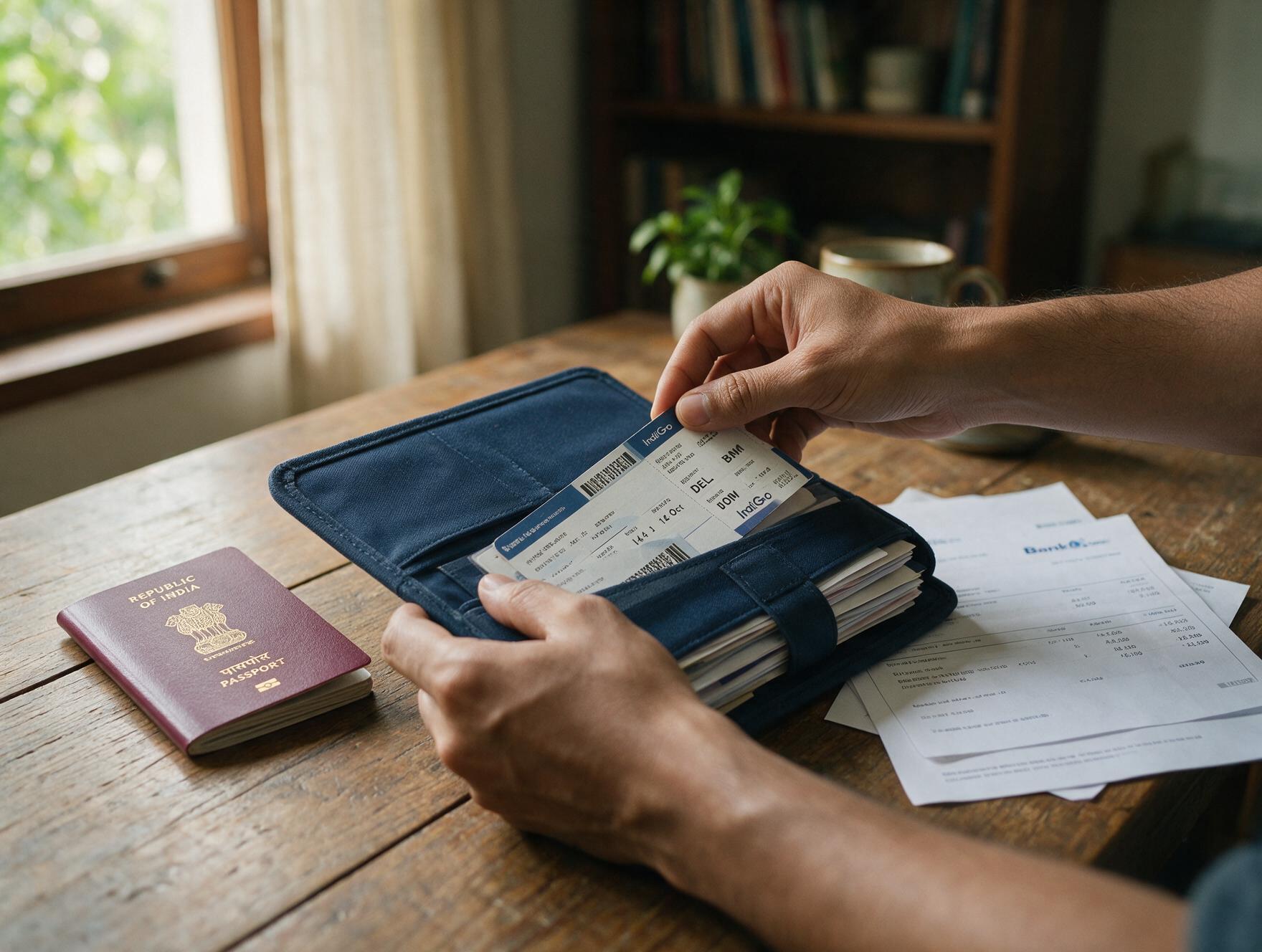
The Department of Home Affairs’ checklist is long, but in practice a well-prepared Indian applicant needs these pulled together before starting the online form:
- Passport with at least six months’ validity beyond your intended return date, plus a scan of every used page (not just the photo page — old visa stamps from other countries genuinely help your case)
- Recent passport-sized photographs meeting Australian visa photo specifications
- Bank statements for the last three to six months — savings account, not just a salary account, and it should show a stable balance rather than a lump sum that appeared the week before you applied
- Income proof: salary slips, ITR for the last two years, or business registration and financials if you’re self-employed
- A day-by-day travel itinerary — this doesn’t need to be a locked-in schedule, but vague itineraries (“visiting Australia for tourism”) get more scrutiny than one that names Sydney, Melbourne, and the Great Barrier Reef with rough dates
- Accommodation booking confirmations, even if refundable
- Return flight itinerary (you don’t need to have paid for it, but a hold or quote helps)
- Employment leave letter, or in the case of business owners, a letter confirming you’ll return to run the business
- Evidence of ties to India — property documents, family details, ongoing obligations — anything that supports genuine visitor intent
One honest note: the single biggest reason we see visas delayed rather than refused is inconsistent financials — a bank balance that doesn’t match the declared income, or a joint account where it’s unclear whose money it actually is. If a parent or spouse is sponsoring the trip, include a notarised letter explaining the relationship and their own bank statements, not just a transfer receipt.
The Application Process, Step by Step
- Create an ImmiAccount on the Department of Home Affairs website — this is the only official portal, and it’s free to register.
- Fill in Form 1419 (the online visitor visa application) with your travel dates, purpose, and personal details.
- Upload supporting documents — you can attach up to 60 files per applicant, so scan everything as separate, clearly named PDFs rather than one giant combined file.
- Pay the visa application charge online — currently AUD 250 (roughly ₹14,000–14,500 depending on the exchange rate on the day, so check the live conversion rather than budgeting off an old number).
- Biometrics — Indian applicants are usually asked to provide fingerprints and a photo at an Australian Visa Application Centre, and you’ll get instructions through your ImmiAccount if this applies to you.
- Wait and track — check your ImmiAccount rather than emailing for updates, since that’s where any request for additional documents will appear first.
Processing Time — Plan Around This, Not Around the Best Case
Official processing time for the Tourist stream typically runs four to six weeks, but during peak booking periods — roughly July through September for the December–January travel season — it can stretch longer. We tell clients to apply at least eight weeks before their planned departure, and if you’re travelling during Christmas, Diwali, or the Australian summer school holidays, push that to ten to twelve weeks. Applying early costs you nothing extra and removes the single biggest source of trip-planning stress.
A mistake worth naming directly: booking non-refundable flights before your visa is granted. We’ve had clients do this to lock in a fare, then need to rebook at a much higher price when the visa took longer than expected. Hold a fare, don’t pay for it in full, until the visa is in hand.

Visa Validity and Length of Stay
Most tourist stream grants for Indian applicants allow a stay of up to three months per visit, with the visa itself often valid for multiple entries over twelve months — useful if you’re combining Australia with a New Zealand leg and want to fly in and out more than once. Some applicants with strong travel history get longer stay periods, but three months is the number to plan around rather than assume you’ll get more.
What the Visa Actually Costs You, Beyond the Base Fee
The AUD 250 application charge is the headline number, but budget for a few extras that catch first-time applicants off guard. If Home Affairs requests biometrics, there’s a separate service fee payable at the Australian Visa Application Centre, usually in the ₹1,500–2,500 range depending on the city. If you use a visa consultant to review documents rather than doing it yourself, that’s a separate service fee entirely unrelated to the government charge — and no consultant can waive or reduce the AUD 250, since it goes straight to Home Affairs. Travel insurance isn’t mandatory for the visa itself, unlike some Schengen countries, but we’d never send a client to Australia without it — a hospital visit in Sydney can run into tens of thousands of dollars for anyone without cover, and a good policy costs a small fraction of that.
Health and Character Requirements
Most tourist applicants don’t need a medical exam — that requirement generally kicks in for longer stays or if you’ve spent extended time in a country with specific health risk flags. You will be asked standard health and character declaration questions on the form itself (past convictions, tuberculosis history, and similar), and answering these honestly matters more than the answer itself; a “yes” with a clear explanation rarely sinks an application, but a “no” that later turns out to be false absolutely will. Occasionally Home Affairs requests Form 80 (Personal Particulars for character assessment) as a follow-up — if you get this request, it’s routine rather than alarming, and it just means answering more detailed background questions.
Applying as a Family or Group
Each traveller, including children, needs their own ImmiAccount application and pays the fee individually — there’s no family bundle discount. What you can do is submit linked applications so a case officer reviews the family unit together, which we’d recommend over four separate, disconnected submissions. For a family trip, one parent’s bank statements and income proof can support the whole group’s financial capacity, but say so explicitly in each dependent’s application rather than assuming the case officer will connect the dots.
Doing It Yourself vs. Getting Help
We’ll be straight with you: the ImmiAccount system is genuinely usable by an individual applicant, and plenty of people navigate it themselves without issue, especially if their documents are already clean and consistent. Where it gets harder is when your situation isn’t textbook — self-employed income that’s hard to document neatly, a previous visa refusal from any country, a sponsor who isn’t a direct family member, or travel dates that need to align with a cricket tour or a wedding on the other side of the world. In those cases, a second set of eyes before you hit submit is worth far more than the small fee it costs, because a refusal on record follows you into every future visa application, anywhere, forever — it’s one of the only immigration outcomes that doesn’t fade with time.
What Actually Gets Applications Refused
Refusals for genuine tourists are less common than people fear, but they do happen, usually for one of these reasons: financial documents that don’t add up, an itinerary that looks copy-pasted with no destination-specific detail, incomplete answers on the form (leaving fields blank rather than writing “not applicable”), or a previous visa refusal or overstay anywhere in the world that wasn’t disclosed. Always disclose — Home Affairs cross-checks, and an undisclosed prior refusal reads as far worse than the original issue.
A Few Things Nobody Tells You
You don’t need a travel agent or visa consultant to apply — the ImmiAccount system is built for individual applicants, and paying a middleman doesn’t speed up government processing. Where a good agent earns their fee is in reviewing your documents before submission and catching the gaps we’ve listed above, not in having some backdoor channel to Home Affairs, because that doesn’t exist.
Also: kids need their own ImmiAccount application even if travelling with parents, and unaccompanied minors or children travelling with one parent need extra consent documentation — sort this early if it applies to your family.
Frequently Asked Questions
Do Indian citizens need a visa for Australia?
Yes. There’s no visa-on-arrival or e-Visa-free arrangement for Indian passport holders — every traveller needs an approved Visitor visa (subclass 600) before departure.
How much does the Australia tourist visa cost from India?
The base application charge is AUD 250, which converts to roughly ₹14,000–14,500 depending on the day’s exchange rate. This is a government fee, not a service charge, and it’s non-refundable even if your visa is refused.
Can I apply for an Australia visa without a travel agent?
Yes, directly through ImmiAccount. Many travellers do this successfully on their own; others prefer a second pair of eyes on their documents before submission, which is where a travel consultant adds value.
How long before my trip should I apply?
At least eight weeks. During peak season (July–September applications for a Dec–Jan trip), aim for ten to twelve weeks.
Is a visa interview required?
Not for most tourist stream applicants. Biometrics at a visa application centre are common, but a formal interview is rare unless the case officer has specific questions about your application.

Planning the Rest of Your Trip
Once your visa is sorted, the real fun starts — deciding how many days to split between Sydney’s harbour, Melbourne’s laneways, and whichever wilder corner of the country pulls you in. Our Australia destination page has our full range of curated itineraries if you’d rather start from a framework than a blank page.
If your dates are firm and you’d like a second set of eyes on your visa documents before you submit, get in touch with our team — we review applications for clients booking their Australia trip with us, and it costs you nothing to have someone catch a gap before Home Affairs does.