Stand on the Stradun at 11am in July and you’ll understand why some travelers leave Dubrovnik saying it was overrated. Cruise groups move through in slow-moving walls, tour guides hold up numbered flags, and every second person is filming a Game of Thrones reference point instead of looking at the actual city. It’s a fair complaint. But it’s also a complaint about maybe 400 meters of a town that has a coastline running for kilometers in both directions, and most of that coastline is nearly empty even in August.
Dubrovnik’s Old Town, a UNESCO World Heritage Site, earns its reputation — the limestone streets, the city walls, the honey-colored light in the evening are genuinely something you won’t see anywhere else on the Adriatic. But if that’s all you see, you’ve paid for maybe sixty percent of what the destination actually offers. This guide is about the other forty percent: the beach the tour buses don’t stop at, the bar you reach through what looks like a hole in a wall, the viewpoint with nobody else on it. It pairs well with our broader look at Croatia’s 7-night, 8-day itinerary if you’re still mapping out the full trip.
Table of Contents
- Why It’s Worth Leaving the Old Town
- Plaza Dance: The Beach Locals Actually Use
- The Buza Bars: Drinking on the Rocks
- Lapad and the Šetnica Coastal Walk
- The Sunset Plateau Nobody Photographs
- Lokrum Island, Minus the Peacock Selfies
- Hotel Belvedere: Dubrovnik’s Strangest Viewpoint
- A Basketball Court With a View That Shouldn’t Work
- Getting Around: What Actually Works
- Best Time to Visit Dubrovnik
- FAQs
Why It’s Worth Leaving the Old Town
Dubrovnik’s Old Town is a UNESCO World Heritage Site and a genuinely small one — you can walk the full loop of the city walls in about two hours, and the walled area itself is barely a kilometer across. That’s not a criticism of the city; it’s just math. When a cruise ship docks 5,000 people into a town this size, even for a few hours, the ratio tips hard. The upside is that almost nobody who’s spent one day here goes back for a second look at what’s just outside the walls, which means the rest of Dubrovnik stays quiet by comparison.
This isn’t a budget-backpacker angle either — some of the best experiences below are the ones with a driver, a private beach club membership, or a dinner reservation attached. The point isn’t to avoid spending money in Dubrovnik. It’s to spend it on the parts of the city that actually earned the reputation, instead of standing in a queue for a photo everyone else is also taking.
Plaza Dance: The Beach Locals Actually Use
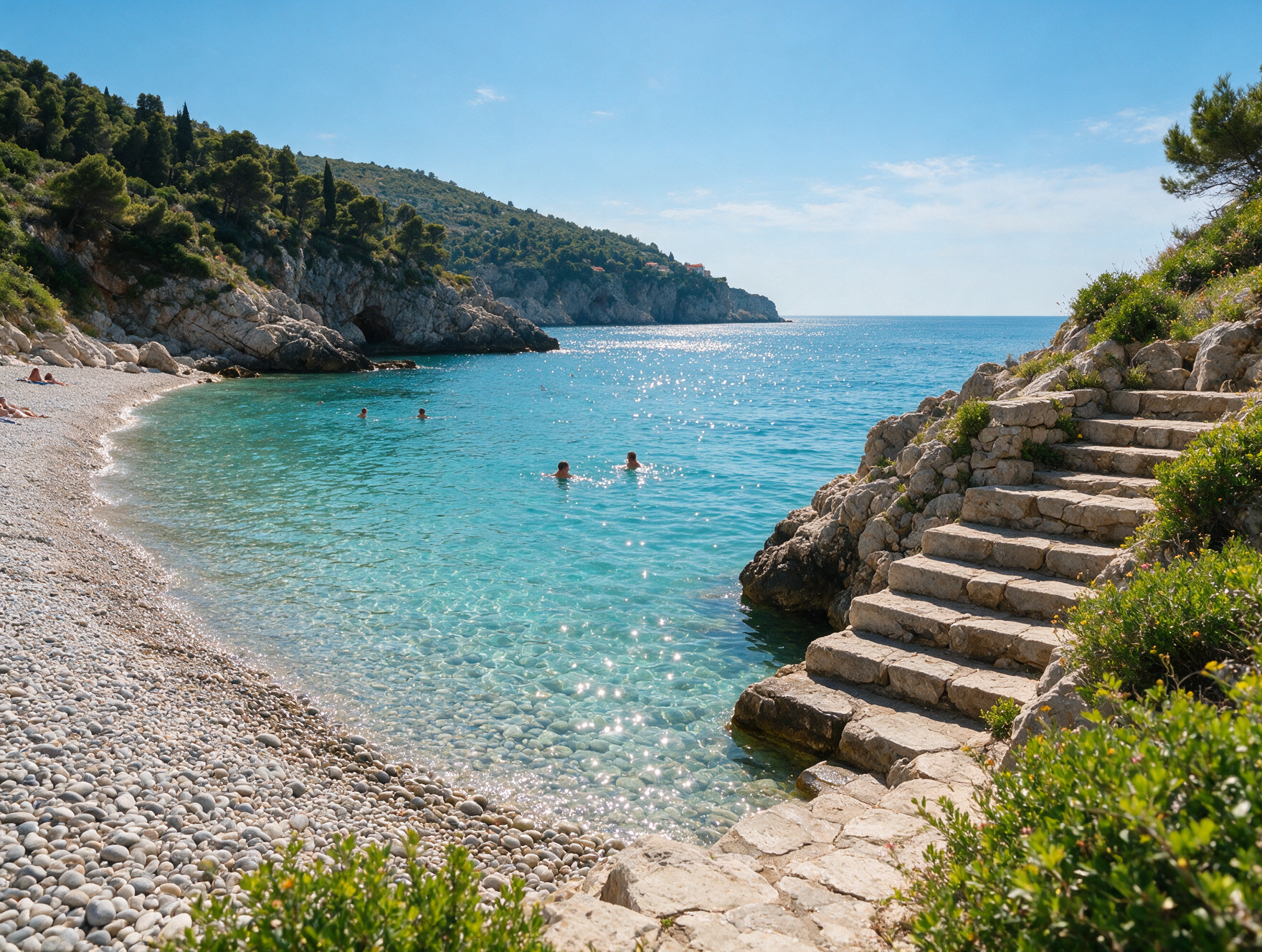
Most first-time visitors end up at Banje Beach, right below the Old Town walls, because it’s the one every hotel concierge mentions first. It’s pretty. It’s also the most crowded stretch of pebble in the city by 10am. Plaza Dance sits past the university area near Lapad, and it functions as the unofficial locals’ beach — smaller, rockier in places, with none of the sun-lounger sales pitch you get at Banje.
The honest caveat: there’s less infrastructure here. Don’t expect a beach bar with a full cocktail menu. What you get instead is clear water without fifty swimmers doing laps around you, and a much better shot at actually hearing the sea instead of a beach club’s playlist. Go in the late afternoon, after the day-trip crowds have moved on to dinner reservations back in the Old Town.
The Buza Bars: Drinking on the Rocks
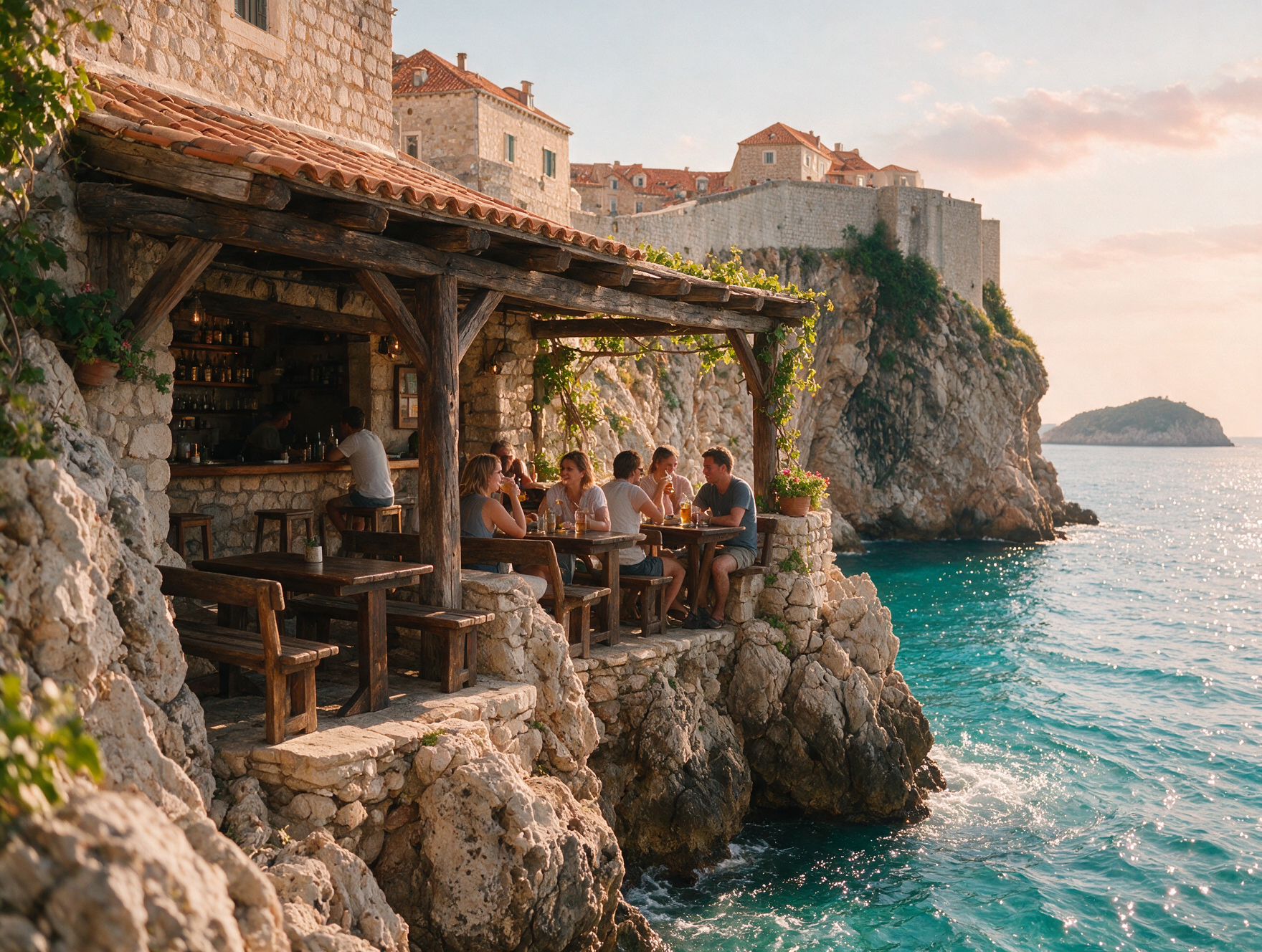
There are technically two “Buza” bars built into the cliffs on the seaward side of the Old Town walls, accessed through gaps in the stone that look more like smuggling routes than official entrances — which, depending who you ask, is close to the truth of how they started. Buza Bar itself has been doing this for decades: plastic chairs wedged onto rock ledges, a menu of cold drinks, and a view straight out over open water with zero buildings in frame. There’s also a smaller, less-signposted spot near BARD coffee shop that locals point tourists toward when Buza gets full.
Here’s the honest opinion: it’s not a place for a quiet romantic dinner, and the service is exactly as relaxed as you’d expect from a bar built into a cliff face. But there is nowhere else in Dubrovnik where you can nurse a drink with your feet a few meters above the Adriatic and no railing pretending to protect you from the drop. Go for sunset if you don’t mind sharing the view; go at 4pm if you want the rocks closer to yourself.
A mistake to avoid
Don’t wear flip-flops or anything without grip when you’re navigating down to the Buza ledges — the rock gets polished smooth from decades of foot traffic and it’s genuinely slick near the waterline. A twisted ankle here means a long, unglamorous walk back up through the Old Town to find a pharmacy.
Lapad and the Šetnica Coastal Walk
Lapad is where a chunk of Dubrovnik’s non-tourist life actually happens — residential streets, mid-range hotels that don’t advertise a sea view they don’t have, and the Šetnica, a raised coastal promenade that runs along the peninsula with staircases down to small coves along the way. It’s the kind of walk that rewards having no particular plan: you pass a quiet swimming spot, then a pine grove, then another cove, and none of it appears on the standard Dubrovnik itinerary graphic that gets shared around.
If you’re staying in Lapad rather than inside the walls (which, for families and anyone wanting more space for the price, is a reasonable call), this walk is your evening routine rather than a special outing. It’s also one of the few flat, stroller-friendly stretches of coast in a city that is otherwise built almost entirely on stairs.
The Sunset Plateau Nobody Photographs
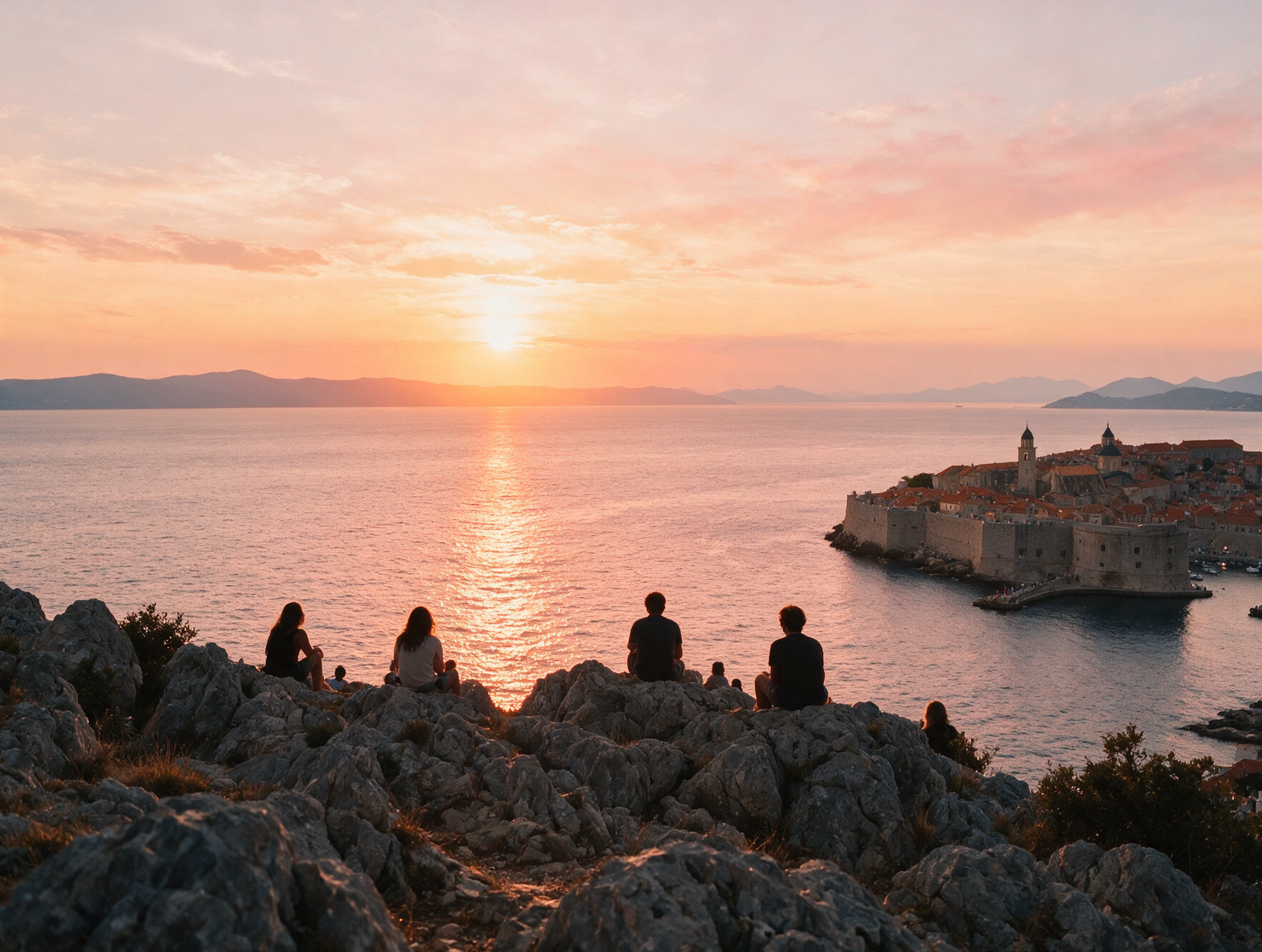
Near the Ulica don Franca Bulica car park, above the Old Town, there’s a rocky open plateau that functions as a free, unofficial sunset viewpoint. It doesn’t have a name that shows up on tourist maps, no ticket booth, no rooftop bar markup on the drinks. It just has a wide, unobstructed view west over the water as the sun goes down, with the walls and rooftops of the Old Town visible off to one side.
This is the spot to send a couple celebrating an anniversary who don’t want to fight for a table reservation timed to sunset, or anyone who’d rather sit on a rock with a bottle of wine from a nearby shop than pay a cover charge for the same view with a cocktail markup attached. The honest caveat: there’s no seating, no shade, and no facilities, so bring a light blanket or jacket if you’re staying past dusk.
Lokrum Island, Minus the Peacock Selfies
Lokrum is a 15-minute ferry ride from the Old Town harbor and most people visit for the botanical garden, the ruined monastery, and the resident peacocks (descendants of a pair brought over in the 19th century, and yes, they roam freely and will walk right up to you). What fewer visitors do is head to the “Dead Sea,” a natural saltwater pool on the far side of the island connected to the open sea through rock channels. It’s calmer than actual open water and dramatically less crowded than the swimming spots near the ferry dock.
A fun fact worth knowing before you go: Lokrum closes to overnight visitors entirely and, according to local legend, this dates back centuries to a supposed curse tied to the island’s monastery. True or not, it makes for a good story on the ferry ride over. Bring your own water and snacks — the island has limited food options and they’re priced for a captive audience.
Hotel Belvedere: Dubrovnik’s Strangest Viewpoint
This one is polarizing, and worth flagging honestly: the former Hotel Belvedere was a five-star resort until it was destroyed during the 1990s war and it has sat abandoned since, accessible via the Sveti Jakov car park. Some travelers find walking through a bombed-out luxury hotel while looking out over the same Adriatic view it was built to sell deeply moving, a physical reminder of what the region went through in living memory. Others find it uncomfortable or feel it’s not their place to wander through. Both reactions are reasonable, and it’s worth going in with that awareness rather than treating it purely as an Instagram backdrop.
Practically: the site is unmaintained, so watch your footing on broken glass and unstable structures, and this isn’t a spot for young kids to run around.
A Basketball Court With a View That Shouldn’t Work
In the northwest corner of the Old Town, a small public basketball court has picked up an odd bit of internet fame for having one of the more striking backdrops of any sports court in Europe — terracotta rooftops falling away toward the sea wall, all visible from the sidelines. It’s a two-minute stop, not a destination in itself, but it’s a good example of the kind of detail you only notice when you’re not rushing between the Rector’s Palace and the cathedral on a guided walking tour schedule.
Getting Around: What Actually Works
Dubrovnik’s local buses (run by Libertas) connect the Old Town to Lapad, Plaza Dance, and most of the spots in this guide for a couple of euros a ride, and they run frequently enough in season that you rarely wait more than 15 minutes. Taxis and private transfers are easy to arrange through your hotel and worth it for the Sveti Jakov car park sunset spot or the Hotel Belvedere visit, since both sit on a hill with a genuinely steep walk back down. For Lokrum, the only way across is the public ferry from the Old Town harbor, running roughly every half hour in peak season. The official Visit Dubrovnik tourist board site keeps an updated cruise-ship arrival schedule, which is genuinely useful for planning around the busiest hours.
If you’re planning a longer Croatia trip that pairs Dubrovnik with Split, most Dubrovnik and Split tour packages already build in a private driver for exactly these kinds of out-of-town stops, which is the easiest way to see the Sveti Jakov viewpoint and Lokrum without wasting half a day figuring out bus timetables.
Best Time to Visit Dubrovnik
Late May, June, and September give you warm water and long daylight hours without the full peak-July crush of cruise ship days, when the Old Town can see multiple ships dock in a single morning. If your dates are flexible, checking the daily cruise ship schedule (published online by the Dubrovnik port authority) and planning your Old Town walking tour around the quieter days is a genuinely useful, slightly nerdy trick that repeat visitors use. Winter is beautiful in its own stripped-back way — empty streets, dramatic stormy light — but several restaurants and the cable car close for the season, so it suits a different kind of trip.
FAQs
Is it safe to swim at the Buza bars?
Some visitors do swim from the rocks near Buza Bar, but there are no lifeguards and the entry points are steep rock, not a beach. If you want to swim, Plaza Dance or Banje are the safer, easier options with proper access into the water.
How many days do you need to see “beyond” Dubrovnik’s Old Town?
One extra day is enough to add Lokrum, the Šetnica walk, and a sunset at the plateau near Sveti Jakov. Two extra days lets you add Hotel Belvedere and a slower half-day at Plaza Dance without rushing.
Is Plaza Dance beach free?
Yes, it’s a public beach with no entry fee, though sunbeds and umbrellas (where available) are typically rented separately.
Can you visit Lokrum in the evening?
No — Lokrum has no overnight accommodation and the last ferry back typically leaves around sunset in peak season, so plan your visit as a half-day trip.
Is Hotel Belvedere legal to visit?
Access isn’t formally restricted, but it’s an unmaintained structure, so visit carefully, avoid unstable areas, and treat it with the respect the site’s history deserves.
Dubrovnik’s Old Town will always be the headline, and it should be — it’s one of the best-preserved medieval cities on the Mediterranean. But the version of Dubrovnik worth telling your friends about is usually the one you found an hour after you stopped following the main crowd. If you’d rather have someone else handle the logistics of stitching together the Old Town, Lokrum, the coastal walks, and a private driver for the viewpoints, that’s exactly the kind of Dubrovnik day Get Tripped builds into its Croatia tour packages from India — get in touch and we’ll put together a Dubrovnik stay that isn’t just the postcard version. Planning the rest of the trip too? Browse all our Croatia stories for more on Split, Hvar, Plitvice, Rovinj, and Zadar.