Every photo of Plitvice Lakes National Park you’ve seen before booking your Croatia trip was almost certainly taken from the same three or four boardwalk spots — the ones nearest Entrance 1, closest to the parking and the shuttle stop. Which means that on any given day in July, several hundred other people are trying to take the exact same photo you are, elbow to elbow on a wooden walkway with nowhere to step aside. The park is genuinely one of the most beautiful places in Croatia. It’s also, at its busiest, one of the most congested single-file walking experiences in the country.
The good news is that Plitvice, a UNESCO World Heritage Site, is a big park — roughly 300 square kilometers, with 16 terraced lakes connected by waterfalls and a network of trails that most day-trippers never touch because they only have a few hours before their bus back to the coast leaves. Here’s where the park actually opens up. It’s usually paired with a stop in Zadar on the way to or from the coast.
Table of Contents
- Start at Entrance 2, Not Entrance 1
- Programs E and F: The Routes Tour Groups Skip
- The Viewpoint Outside the Official Park Boundary
- Arriving Before 8am
- Why Staying Near the Park Changes Everything
- Tickets, Hours, and What They Actually Include
- Getting to Plitvice
- Best Time of Year to Visit
- FAQs
Start at Entrance 2, Not Entrance 1
Most tour buses and most independent visitors funnel through Entrance 1, near the Lower Lakes, simply because it’s the one that shows up first on the map and the one closest to the main hotel cluster. Entrance 2 sits a short drive further along the same road and puts you closer to the Upper Lakes instead — which tend to be quieter earlier in the day, with more forest and fewer of the flat, wide boardwalks that create bottlenecks.
Coming in through Entrance 2 and walking the Upper Lakes downhill toward the Lower Lakes, rather than the reverse, also has a practical advantage: gravity. You’re not climbing at the point in the day when you’re tired and the crowds have thickened, you’re winding downhill toward the most photographed waterfalls as a finale rather than an opener.
Programs E and F: The Routes Tour Groups Skip
Plitvice organizes its suggested routes into lettered programs (A through K depending on season), and the vast majority of day-tour itineraries default to Programs A, B, or C, which loop through the most iconic lower-lake viewpoints. Programs E and F, which start from Entrance 2, get a fraction of that traffic while still including boat rides across Kozjak Lake and the boardwalks through the Upper Lakes complex.
The honest caveat: Programs E and F take longer and cover more ground, so they’re not the move if you’ve only got two or three hours before you need to be back on a coach to Zadar or Split. Budget a full day — six hours minimum — if you want to do one of these properly instead of rushing it.
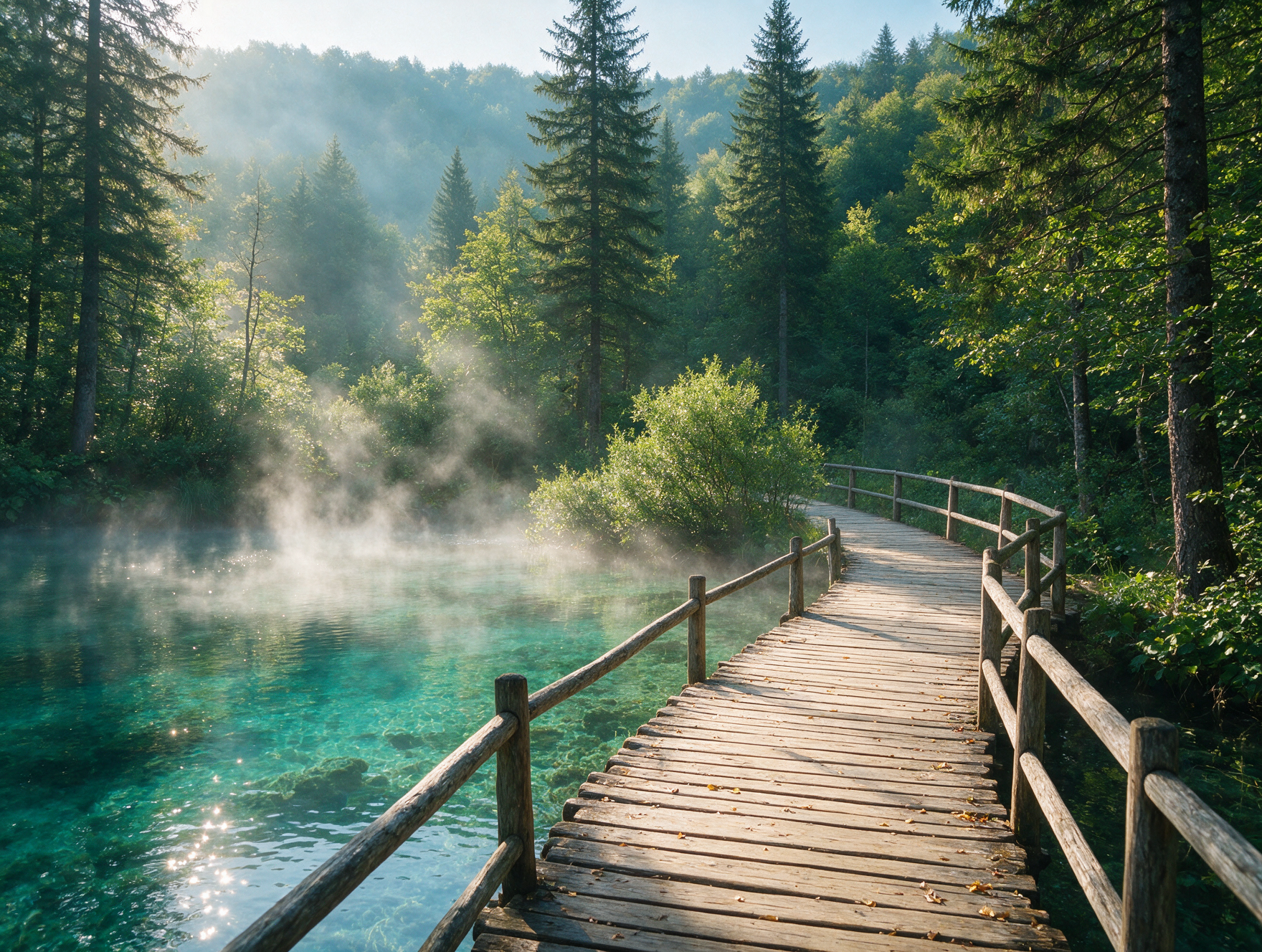
The Viewpoint Outside the Official Park Boundary
This is the genuine hidden gem, and it’s one almost nobody doing a single-day visit ever finds: starting from Pier P3, a paved road leads out toward the village of Selo Plitvica. A short way along, an opening in the roadside vegetation leads to an informal trail running parallel to the road, and following it brings you to a handful of panoramic viewpoints looking back down over the terraced lakes from above — a totally different angle than anything you get from inside the park’s official boardwalk network.
A mistake to avoid here: this trail isn’t signposted or officially maintained by the park, so it’s not the spot for flip-flops or a stroller, and you should treat it the way you’d treat any unmarked trail — sturdy shoes, daylight only, and a phone with the location saved before you set out, since signal can be patchy.
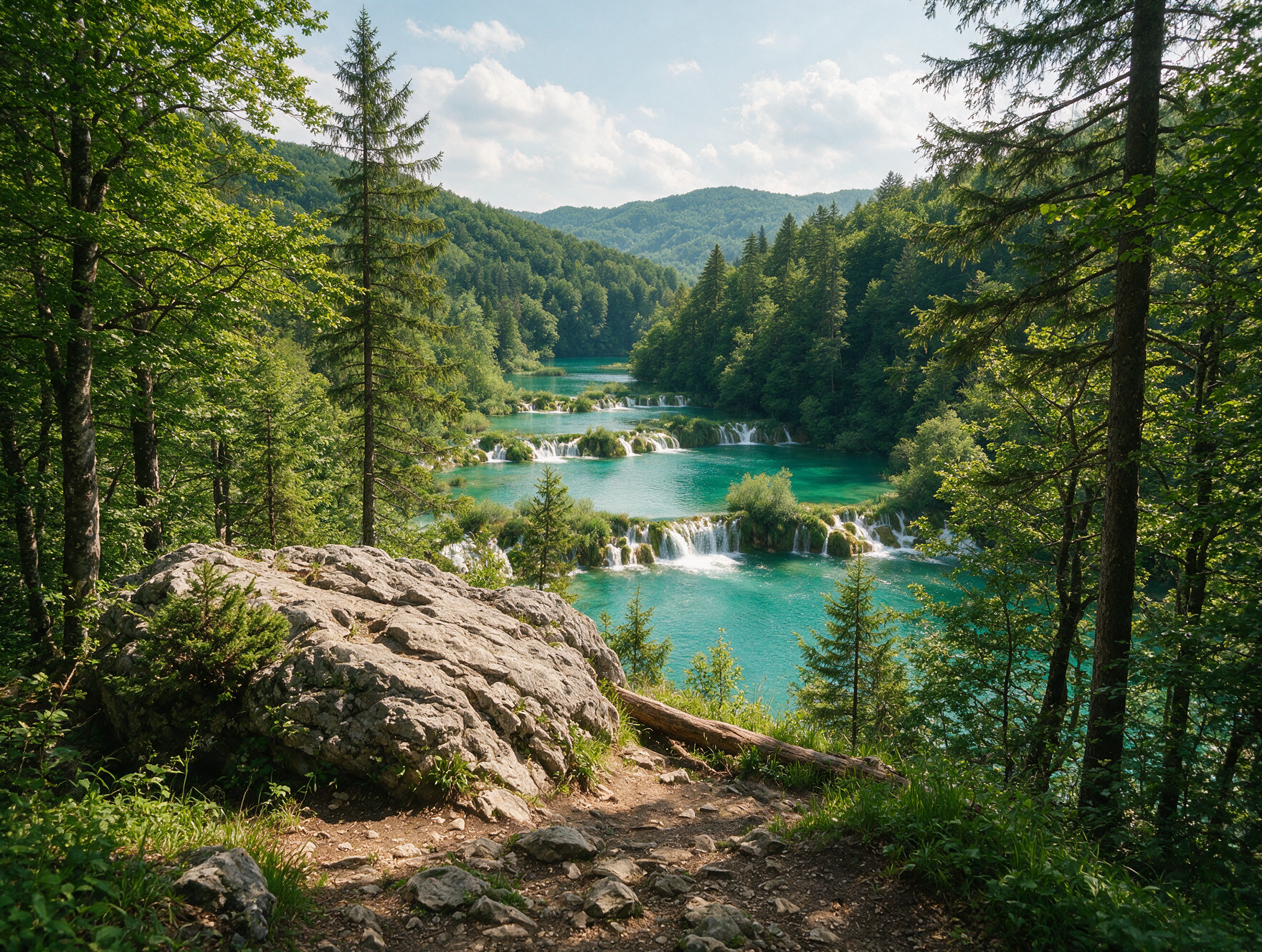
Arriving Before 8am
Most organized day tours from Zagreb, Split, or Zadar arrive between 9:30 and 10:30am, which means the window between the park opening (as early as 7am in summer) and mid-morning is genuinely quiet. If you’re staying overnight nearby, this is the single highest-value thing you can do: walk the main lower-lake boardwalks — yes, the famous ones — while they’re still empty, then let the crowds have them for the rest of the day while you head up toward the quieter Upper Lakes.
Why Staying Near the Park Changes Everything
Plitvice is usually sold as a day trip bolted onto a Zagreb-to-coast drive, and for a lot of itineraries that’s a reasonable trade-off. But if the park is a priority rather than a box to tick, one night at a hotel near the park entrances buys you both the early-morning quiet and the late-afternoon light after the tour buses have pulled out, which by most accounts is when the water color is at its most striking — the low sun brings out a deeper turquoise in the lower lakes than the flat light of midday does.
This is also, honestly, where a private driver earns their keep. Self-driving to Plitvice is straightforward, but a lot of travelers on a tighter timeline end up doing it as an exhausting round trip from the coast in a single day. A custom Croatia trip that builds in an overnight near the park, rather than treating it as a pit stop, is a small change that makes a real difference to how much of this list you can actually see.
Tickets, Hours, and What They Actually Include
Plitvice runs a tiered pricing structure by season. Adult tickets run roughly €10 in the low season (January, February, March, November, December), around €23.50 in the shoulder months (April, May, October), and about €40 during peak season (June through September). Children under 7 enter free, and multi-day and group tickets are available at a discount. All tickets include the park’s internal shuttle buses and the boat crossing on Kozjak Lake, so there’s no separate fee for those once you’re inside.
Opening hours shift by season too — roughly 7am to 8pm in June, July, and August with last entry around 6pm; 8am to 7pm in spring and early autumn; and a shorter 8am to 4pm window in winter, with last entry at 2pm. Winter weather can also force partial closures if snowfall is heavy, so it’s worth checking the park’s official status the day before if you’re visiting between November and March. The official Plitvice Lakes National Park website publishes current hours, ticket prices, and any closures directly.
Getting to Plitvice
Plitvice sits roughly halfway between Zagreb and the Dalmatian coast, which is exactly why it gets bolted onto so many itineraries as a stopover. From Zagreb it’s about a two-hour drive; from Zadar or Split, figure closer to three. Regular bus services run from both Zagreb and Zadar, though a private transfer is worth the extra cost if you’re trying to time your arrival for that early quiet window rather than whenever the public bus happens to get you there.
A Photography Note Worth Knowing
The famous turquoise color of Plitvice’s water comes from dissolved minerals and algae in the lakebed, and it shifts noticeably with the light — deeper blue-green under direct midday sun, softer and more silvery under overcast skies, and at its most saturated in the hour or two before sunset. If you’re chasing the postcard color, plan your walk so you’re near the Lower Lakes’ main viewpoints in the late afternoon rather than midday, when the same water can look comparatively flat. A polarizing filter, if you’re shooting with a proper camera rather than a phone, cuts the glare off the surface and makes a genuinely noticeable difference to how the color reads in photos.
A Mistake Worth Avoiding: Footwear and Pacing
The main boardwalks are flat and manageable in ordinary walking shoes, but they can get slick when wet, and several sections have no railing on the water side. Trainers or light hikers are the right call over sandals, even in peak summer heat. The bigger mistake is pacing — a lot of visitors try to do the full Programs A-through-F loop in a single afternoon and end up exhausted and rushing the last third of the walk. Build in a proper lunch break at one of the park’s cafeterias near the lake crossings rather than pushing straight through; the park is genuinely large enough that treating it like a museum you have to finish in one go takes the enjoyment out of it.
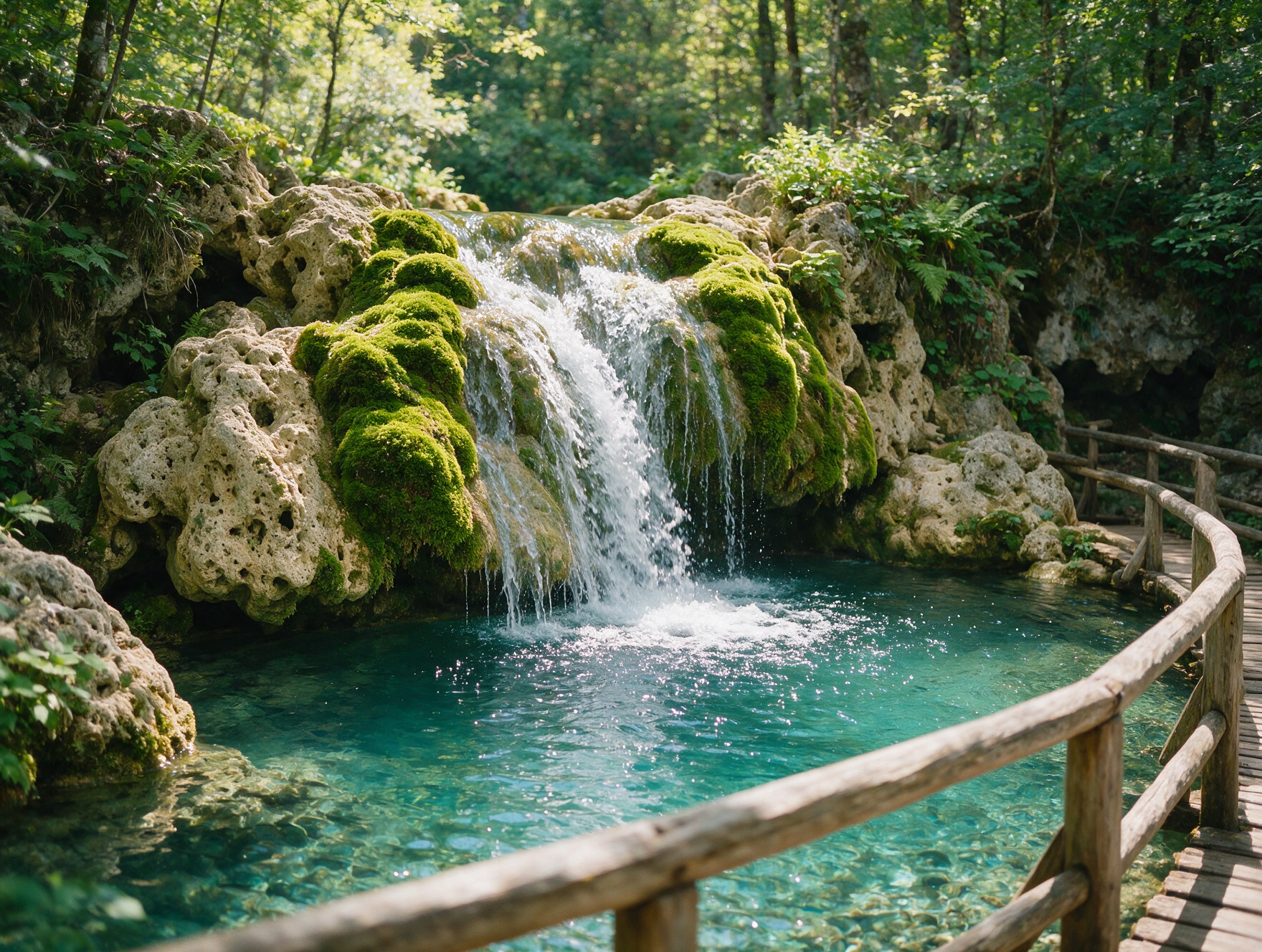
Best Time of Year to Visit
Late spring (May, early June) brings the waterfalls to their fullest flow from snowmelt, and autumn (September, October) brings the forest color change reflected in the lakes, which a lot of repeat visitors argue is the single best time to photograph the park. Summer is the most crowded and most expensive by ticket price, but also the only season with the longest opening hours, giving you more flexibility to spread your visit across a quiet early morning and a quiet late afternoon on either side of the midday crowd.
What to Pack for a Full Day at the Park
Beyond sturdy shoes, layer for temperature swings — the forested Upper Lakes trails run noticeably cooler and damper than the open lower boardwalks, even on a hot day, thanks to the tree cover and the constant mist off the waterfalls. A light rain jacket earns its space in your bag regardless of forecast; the spray off the larger falls reaches the boardwalk in several spots. Bring more water than you think you need, since the cafeterias inside the park are limited in number, and refillable bottles are the better call both for cost and for the park’s own sustainability efforts. Cash in small denominations is useful for anything outside the main ticket purchase, since not every small vendor near the park takes cards reliably.
FAQs
Can you swim in Plitvice Lakes?
No, swimming has been prohibited throughout the park for years to protect the travertine formations and water quality that make the lakes’ color possible.
How long do you need at Plitvice Lakes National Park?
A rushed visit can cover the main lower-lake highlights in about three to four hours. A full, unhurried day — six or more hours — is what it takes to properly do Programs E or F and reach the Upper Lakes without feeling rushed.
Is Plitvice a day trip from Zagreb or better as an overnight?
Both work, but an overnight near the park gives you access to the quiet early-morning and late-afternoon windows that a single-day round trip from Zagreb simply doesn’t allow for.
Do I need to book Plitvice tickets in advance?
During peak season (June to September) advance booking is strongly recommended, since daily visitor numbers are capped and walk-up tickets can sell out, particularly for popular time slots.
Is Plitvice Lakes suitable for families with young children?
Yes, the main lower-lake boardwalks are flat, wide, and manageable with a stroller, though the Upper Lakes trails involve more elevation change and are better suited to older kids.
Which entrance is better, Entrance 1 or Entrance 2?
Entrance 2 puts you closer to the quieter Upper Lakes and lets you walk downhill toward the more famous Lower Lakes later in the day, while Entrance 1 is more convenient if you’re short on time and want to prioritize the classic lower-lake viewpoints first.
Can you visit Plitvice Lakes in winter?
Yes, though hours are shorter (roughly 8am to 4pm with last entry at 2pm) and heavy snowfall can force partial closures, so it’s worth checking the park’s official status the day before a winter visit.
Plitvice doesn’t need a hidden-gem angle to be worth visiting — the main boardwalks earn their fame honestly. But if you’d rather spend your day at Entrance 2 with the Upper Lakes mostly to yourself than shuffling through a crowd at Entrance 1, that’s a five-minute change to how your trip is planned. Get Tripped builds Plitvice into its custom Croatia itineraries exactly this way — with the right entrance, the right timing, and an overnight nearby when the schedule allows for it, so this stop feels like the highlight it should be rather than a rushed stopover. Get in touch to build it into your route.