Ask a Croatian what makes their food special and most won’t mention a single dish. They’ll mention a place — a grandmother’s kitchen in Split, a tavern that’s been curing its own prosciutto since before the war, a fisherman in Banjole who still hauls his own catch. Croatia’s food culture isn’t a cuisine you can pin down with ten bullet points, because the coast alone spans Venetian-influenced Istria, Ottoman-touched Dalmatia, and a mountainous interior that eats almost nothing like either. A proper Croatia travel guide for food has to move — the same way you would on a real trip — from a highland lamb roast near Plitvice to a truffle omelette outside Rovinj to a plate of black risotto on Split’s waterfront.
This is a food trail across Croatia’s six most-visited places: Dubrovnik, Plitvice Lakes, Hvar, Split, Rovinj, and Zadar. It covers the dishes worth planning a meal around, the markets worth setting an alarm for, and — because not everything on a coastline this popular is actually good — a few things we’d skip. If you’re mapping this against Croatia’s other regions and cities, treat this as the layer that goes underneath every stop on your itinerary.
- Croatia’s Coffee Culture (and the Art of Sitting Still)
- Dubrovnik: Peka, Market Mornings, and the Streets Behind Stradun
- Plitvice Lakes: Mountain Lodges, Lamb, and River Trout
- Hvar Island: Cliffside Coves and the Catch of the Day
- Split: Two Markets, a Palace, and Black Risotto
- Rovinj and Istria: Truffles, Olive Oil, and a Michelin Star by the Sea
- Zadar: Burek at Sunrise, Seafood at Sunset
- The Must-Try Dishes Cheat Sheet
- Gelato and Sladoled: Croatia’s Other National Obsession
- A Few Honest Notes Before You Go
- Frequently Asked Questions
Croatia’s Coffee Culture (and the Art of Sitting Still)
Before you eat anything in Croatia, you’ll drink coffee — and you’ll do it slower than you’re used to. Along the Dalmatian coast, ordering a kava isn’t really about caffeine, it’s an appointment with a chair. Locals call the state that follows fjaka, a kind of pleasant midday inertia that descends after lunch and makes hurrying feel slightly rude. One espresso can occupy a table for two hours, and nobody at the café will hint that you should leave.
The order itself has its own small vocabulary: a plain espresso is just kava, coffee with milk is kava s mlijekom, and what much of the world calls a flat white is closer to what a Zagreb café calls bijela kava. On the coast, you’ll also see kava na leru — coffee served with the milk poured tableside over ice, popular in summer. None of this is showy specialty coffee culture in the Melbourne sense, though Split and Zadar both now have a handful of proper third-wave roasters tucked into side streets. The real culture is the ritual, not the bean.
Dubrovnik: Peka, Market Mornings, and the Streets Behind Stradun
Dubrovnik’s Old Town is small enough that you can eat badly within thirty seconds of eating well, and the difference is almost always which street you’re standing on. Restaurants with a direct view of Stradun, the marble-paved main street, tend to charge tourist prices for food built for turnover, not flavor. Walk one or two lanes back into the tangle of stone alleys and the same budget buys a much better meal. That’s not a rule unique to Dubrovnik, but it’s more pronounced here than almost anywhere else on this list, simply because so much foot traffic funnels through one street.
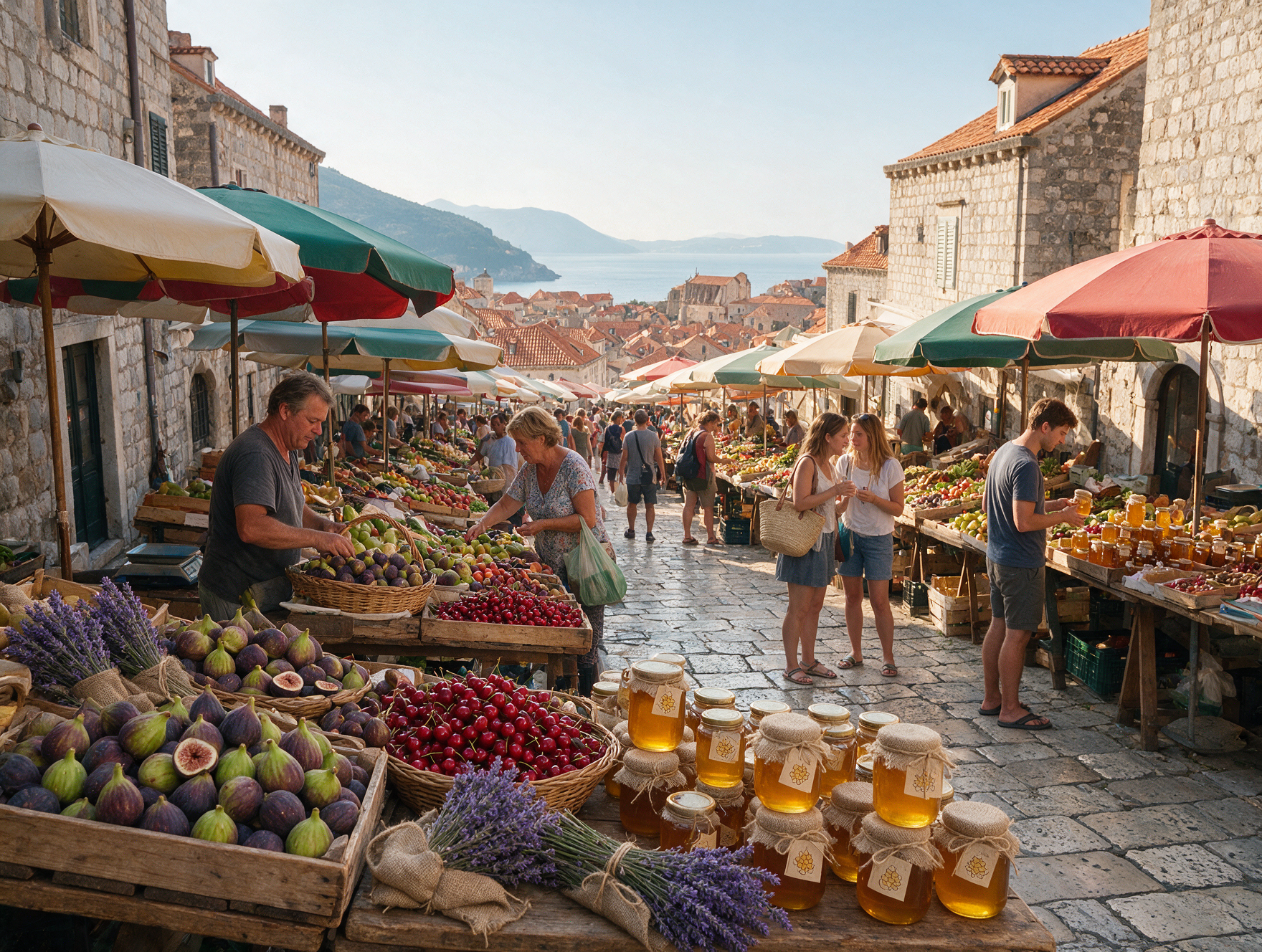
Start your mornings at Gundulićeva Poljana (Gundulić Square), the open-air market that sets up daily in Old Town — stalls of figs, cherries, homemade rakija, lavender sachets, and honey from the surrounding hills, run by growers who’ve often had the same spot for decades. It’s small compared to Split’s markets, but it’s the clearest window into how locals actually shop, and it’s gone by early afternoon.
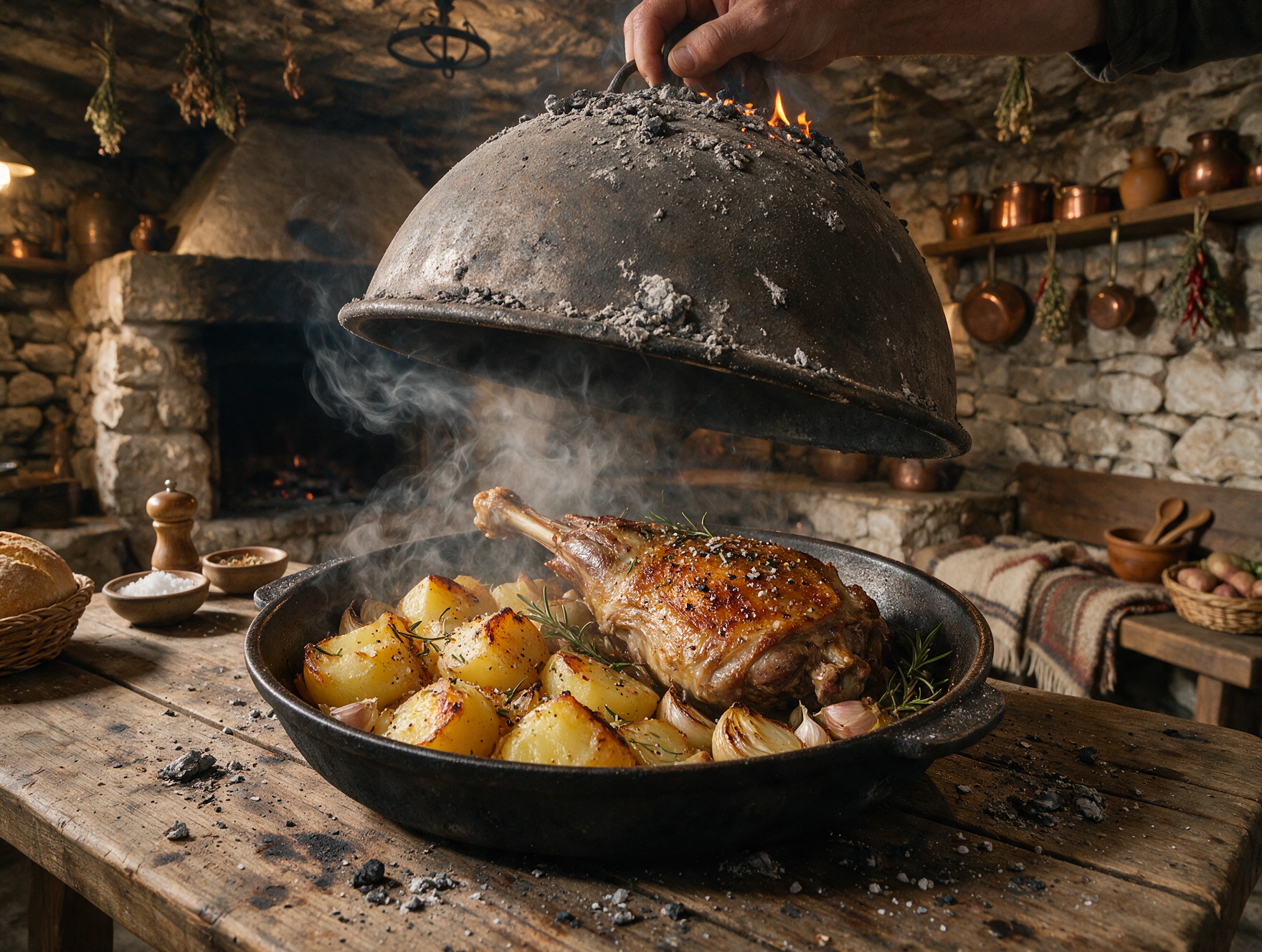
For the meal Dubrovnik is genuinely known for, book a table at a konoba that serves peka — meat or octopus and potatoes, slow-roasted for hours under a metal dome buried in hot embers. Konoba Dubrava, a short drive above the Old Town, has built its reputation on exactly this (“meals under the bell,” as the menu puts it), and Konoba Pjatanca inside the walls does a more home-style version alongside other Dalmatian staples. Either way, call ahead — peka isn’t a dish you can walk in and order, and that’s worth understanding before you plan an evening around it.
One small, specific moment worth having: climbing down to Buža Bar, a cliffside bar built directly into a gap in the city walls, and nursing a coffee or a glass of wine while the Adriatic does the work of thirty feet below your table. It’s cash-only, there’s no food menu to speak of, and it’s still one of the best-value seats in the city — a local tip that doesn’t usually make the standard top-ten list because it’s technically a bar, not a restaurant, and easy to walk right past.
Plitvice Lakes: Mountain Lodges, Lamb, and River Trout
Plitvice Lakes National Park doesn’t have a food scene in the way a city does — there’s no old town to wander for dinner, and that’s by design; this is protected forest and sixteen terraced lakes, not a village. What it has instead is mountain cooking from the Lika region, hearty and built for cold weather even in shoulder season, served at the handful of places clustered around the park entrances.
The one to know is Lička kuća (the “national restaurant”), a large wooden lodge near Entrance 1 in the hamlet of Rastovača, with a fireplace, exposed beams, and a menu built around what the region actually produces: lamb and other meats roasted ispod peke — under the same bell-shaped lid used across Dalmatia, just filled with mountain rather than coastal ingredients — plus trout pulled from the cold local rivers and štrukli, the rolled cheese pastry that’s more central-Croatian than coastal. It’s touristy in the sense that most of its guests are visiting the park that day, but the food itself is genuinely regional rather than generic hotel buffet fare.
The honest caveat here: don’t expect a long, lingering dinner like you’d get in Dubrovnik or Split. Most travelers eat at Plitvice around a hike through the park, so service is brisk and the dining rooms can get loud with tour groups at midday. Aim for an early lunch before the coach groups arrive, or a later dinner once the day-trippers have left for Zagreb or the coast.
Hvar Island: Cliffside Coves and the Catch of the Day
Hvar’s reputation is built on its harbor scene — yachts, waterfront cafés, a fortress glowing at sunset — but the more interesting food is often a short drive from the main town. In the village of Sveta Nedjelja, on the island’s less-visited south coast, Bilo Idro sits in a small stone cove reached through a short tunnel cut into the hillside, with tables practically at the waterline. It’s the kind of place you plan an afternoon around rather than pass on the way to somewhere else — the fish comes straight off boats working that stretch of coast, and the house specialty is gregada, a Dalmatian fish stew simmered slowly with potatoes, white wine, and garlic.
Back in Hvar Town, the harborfront konobas do reliable grilled fish and squid, priced for the island’s reputation as Croatia’s most glamorous stop — this is genuinely the most expensive place on this list, and it’s worth budgeting for accordingly rather than being surprised by the bill. One thing we’d skip: the handful of clubs and beach bars marketing themselves purely on nightlife rather than food tend to serve the weakest kitchens on the island, at prices that assume you won’t compare notes with the konoba two streets over. If a menu photo looks better than the smell coming out of the kitchen, that’s usually a sign.
Hvar is also the sunniest island in Croatia by recorded hours of sunshine, which matters more for food than you’d think — the local vineyards around Jelsa and Stari Grad get enough heat to produce genuinely good, often underrated whites like Bogdanuša, which pairs better with a plate of fresh fish than most imported wine lists give it credit for.
Split: Two Markets, a Palace, and Black Risotto
Split does something no other stop on this trail can: it lets you eat inside a 1,700-year-old Roman palace. Diocletian’s Palace isn’t a ruin behind a fence — it’s the living core of the city, and its basement halls and surrounding lanes are packed with konobas serving food that ranges from excellent to phoned-in, often within the same block.
Two markets frame how Split eats. Pazar, the green market just outside the palace’s Silver Gate, is where locals buy produce, cheese, and prosciutto every morning, and it’s worth a slow walk even if you’re not cooking — the stallholders are used to tourists and mostly indifferent to them, which is a good sign. Down toward the harbor, Peškarija, the fish market, sells the morning’s catch in the open air; because Split’s air famously carries no flies near the fish stalls (locals credit the sulfur springs nearby, and it’s one of those local facts that sounds invented until you notice it’s true), it’s one of the more pleasant fish markets in the Mediterranean to actually walk through.
For a sit-down meal, two names come up again and again from people who actually live in Split rather than pass through it: Konoba Fetivi, tucked away from the tourist strip with a short, honest menu of grilled fish and Dalmatian classics, and Villa Spiza, a tiny no-reservations spot with counter seating and a menu that changes daily based on what’s fresh — get there before 7pm or expect to wait. Both are the kind of places locals recommend specifically because they haven’t changed their approach to chase tourist volume.
This is also the place to order crni rižot, black cuttlefish-ink risotto, and pašticada, a beef stew marinated for days in wine, vinegar, and prunes and traditionally served with gnocchi — historically a Sunday or celebration dish, not everyday food, though most restaurants now serve it daily for visitors. A genuine opinion: pašticada is worth seeking out specifically, but the version served at high-volume restaurants near the Riva promenade is often over-thickened and short on the wine depth that makes the dish worth the wait in the first place. Ask where a place sources its meat before ordering it, or take the risk at a smaller konoba over a big one.
Rovinj and Istria: Truffles, Olive Oil, and a Michelin Star by the Sea
Rovinj is the most photogenic town on this list — pastel houses stacked toward a bell tower on a peninsula — and its food matches the setting more than you’d expect from a place this pretty. In the old town, Puntulina is built directly into the sea wall on Grisia Street, with a wine cellar carved into the rock and tables that step down toward the water; it’s a wine bar as much as a restaurant, and a good one to end an evening rather than start it. For something more formal, Monte, overlooking the Church of St. Euphemia, holds a Michelin star and builds its tasting menus around Istrian produce — this is the splurge night of the trip, not a place to squeeze into a packed day.
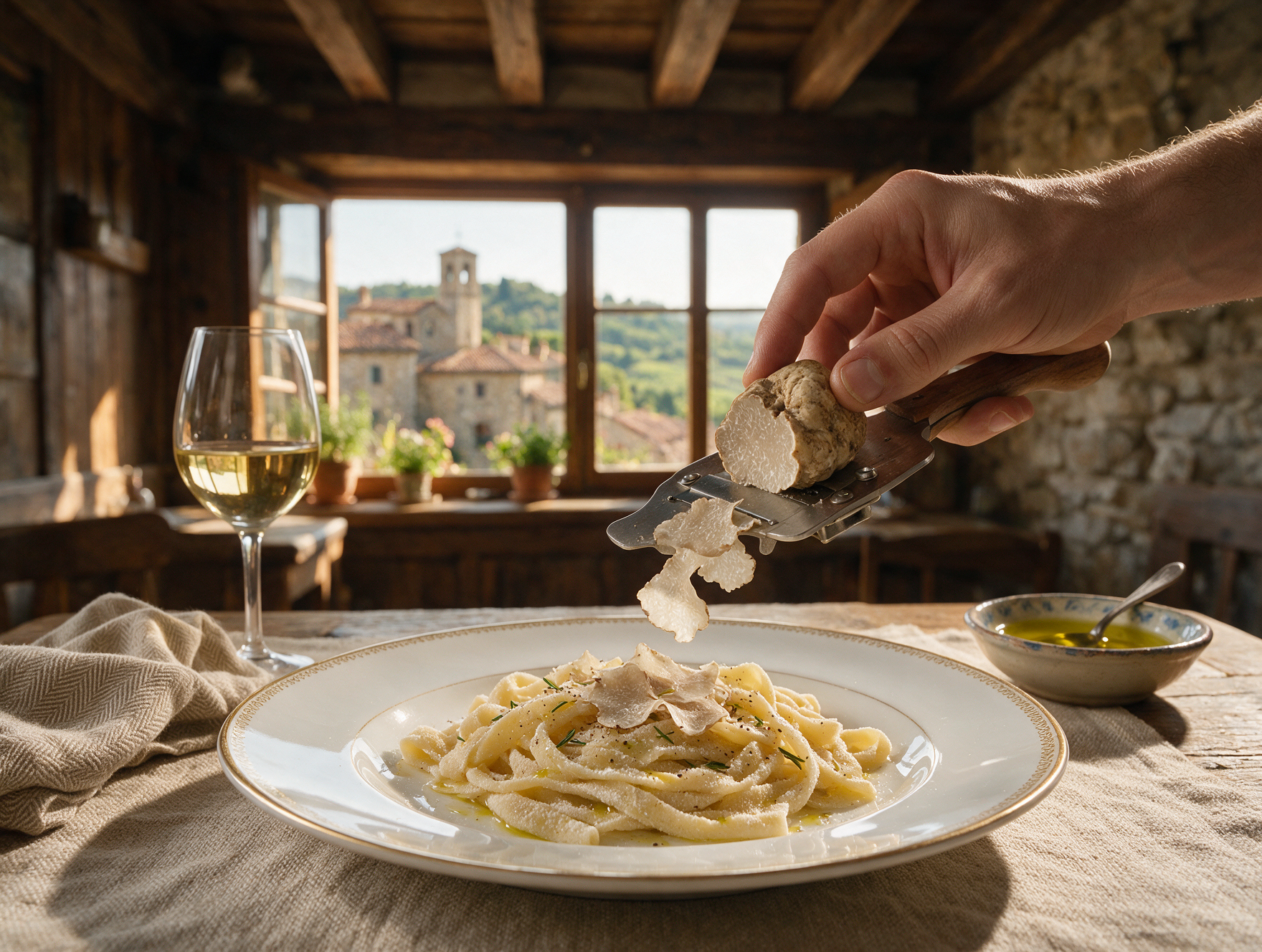
The real reason to build extra time into a Rovinj stop, though, is the Istrian interior. An hour or so inland, the hill towns of Motovun and Livade sit at the center of Croatia’s truffle country, and autumn — roughly September through November — is white truffle season, when restaurants shave fresh truffle over fuži pasta, scrambled eggs, or simple beef tagliata. Zigante, the restaurant attached to Croatia’s best-known truffle house, runs Truffle Days events through the season and is worth the detour even if you only stop at the attached shop. A genuinely fun, checkable fact: the world’s largest recorded white truffle, weighing just over 1.3 kilograms, was dug up near Buje in Istria in 1999 and is recognized in the Guinness World Records — a regional point of pride that Istrian restaurants will mention without much prompting.
Istria also produces some of the best olive oil in the Mediterranean — its oils have topped international rankings for several years running — so a tasting at a family estate near Rovinj (many offer short visits with advance notice) is a better use of an afternoon than it sounds. If you’re planning this leg around a honeymoon or anniversary trip, Rovinj’s combination of quiet coastal dinners and inland truffle country is one of the more romantic pairings on the Croatian coast.
Zadar: Burek at Sunrise, Seafood at Sunset
Zadar runs on a different rhythm than Dubrovnik or Split — smaller crowds, a genuinely lived-in old town, and a habit of starting the day with burek, the flaky, coiled pastry filled with meat or cheese that’s sold hot from bakeries along and just off Kalelarga, the main pedestrian street, from early morning. Eat it the local way, with a cup of plain yogurt on the side to cut the richness, standing up, the way most people actually eat it before work rather than sitting down to a plated version.
For dinner, Foša, right on the old town’s harbor moat near the marina, has built a strong reputation — including recognition in the Michelin guide — for seafood served with a direct view of the boats it likely came off that morning; book ahead in peak summer months. Kalelarga itself is worth an evening coffee stop for people-watching alone — it’s the social spine of the old town, and cafés along it stay busy well past dinner.
Time at least one evening around the Sea Organ, the architectural installation that turns waves into ambient music, and the Sun Salutation beside it — this is where locals and visitors both gather for sunset, and grabbing a scoop of gelato beforehand from one of the gelaterias near the waterfront is close to a Zadar tradition at this point, even if it isn’t written on any official list.
The Must-Try Dishes Cheat Sheet
If you only have room to remember six dishes across the whole trip, here’s the shortlist and where each one tends to be done best.
| Dish | What it is | Best place to try it |
|---|---|---|
| Peka | Meat, octopus, or vegetables slow-roasted under an ember-covered dome; requires advance ordering | Dubrovnik or Plitvice |
| Crni rižot (black risotto) | Risotto colored and flavored with cuttlefish ink | Split |
| Pašticada | Wine-and-prune-marinated beef stew with gnocchi, traditionally a celebration dish | Split, Dubrovnik |
| Burek | Coiled flaky pastry with meat or cheese, eaten with plain yogurt | Zadar, any old-town bakery |
| Ćevapi | Grilled minced-meat sausages served in flatbread with kajmak and onion, a Balkan-wide staple adopted into everyday Croatian eating | Any city, usually at a grill counter rather than a sit-down restaurant |
| White truffle dishes | Shaved fresh over pasta, eggs, or beef, roughly September to November | Motovun and Livade, near Rovinj |
Gelato and Sladoled: Croatia’s Other National Obsession
Every coastal town on this list treats ice cream — sladoled — as a genuine evening ritual rather than an afterthought, and the Italian-leaning influence is obvious in Istria especially, where Rovinj’s gelaterias would not look out of place in Venice. Dubrovnik, Split, and Zadar all have at least one artisanal shop worth seeking out over the generic cones sold from Old Town kiosks — look for handwritten flavor boards and short ingredient lists rather than the backlit photo menus, which is usually a decent proxy for quality anywhere on the coast. A scoop after dinner, walked slowly along a promenade, is close to compulsory in summer; locals do it even in cooler months, just with a jacket on.
A Few Honest Notes Before You Go
A mistake worth avoiding: ordering peka on a whim. It’s cooked for hours under embers and most konobas need at least a few hours’ notice, sometimes a full day for larger groups — a restaurant offering to bring it out in twenty minutes is almost certainly reheating something made earlier, not making it fresh. Call or message ahead, especially in Dubrovnik and around Plitvice.
Cash still matters more than you’d expect for a European Union country — most restaurants take cards, but small konobas, market stalls, and cliffside bars like Buža often don’t, so carry euros in smaller notes. Croatia adopted the euro in 2023, which simplifies budgeting if you’re coming from elsewhere in the eurozone, but it also means prices on the coast have crept up in tourist-heavy months, so Croatia trip cost from India planning should build in a bit more cushion for peak-season dining than older blog posts suggest.
If you’re trying to figure out best time to visit Croatia around food specifically, September and October are close to ideal — the summer crowds thin out, seafood is still excellent, and it overlaps with the start of Istria’s truffle season. High summer means better weather for outdoor dining but real competition for tables at the well-known konobas.
Frequently Asked Questions
What is the one dish I should try in every Croatian city?
There isn’t one dish that spans all six places well, which is really the point of a Croatia food trail — peka and pašticada are Dalmatian, truffle dishes are Istrian, and Lika’s lamb-and-trout cooking around Plitvice is its own thing. If you want a single throughline, fresh seafood grilled simply with olive oil and lemon shows up everywhere along the coast and is rarely a bad order.
Is Croatian food expensive compared to the rest of Europe?
It sits in the middle. Coastal tourist zones in Dubrovnik and Hvar can charge Western European prices for a seaside table, but a short walk inland or a market lunch brings costs down noticeably. If you’re weighing is Croatia expensive to visit against other Mediterranean trips, dining is usually one of the more reasonable line items compared to accommodation in peak summer.
Do I need to book restaurants in advance?
For anything serving peka, yes, always — it’s cooked to order over hours. For well-known spots like Foša in Zadar, Monte in Rovinj, or the harborfront konobas in Hvar Town during July and August, a same-day or next-day reservation is a good habit rather than an optional extra.
What should vegetarians expect on this trail?
Croatian coastal cooking leans heavily on seafood and grilled meat, so vegetarians will rely more on market produce, cheese, olive oil, and pasta dishes than on standout meat-free specialties — it’s manageable with some planning, but it’s a fair caveat rather than something to gloss over.
Is tap water safe, and what about drinks with meals?
Tap water across Croatia’s cities and islands is safe to drink. With meals, a local wine is usually the better order than imported options — Dalmatian reds and Hvar’s whites are priced fairly and pair naturally with the region’s food.
How many days should I budget if food is a priority on the trip?
If you’re building a Croatia 7 days travel itinerary around eating well rather than rushing between sights, plan at least one full unhurried day each in Dubrovnik, Split, and the Rovinj–Istria area, since those three carry the most food-specific detours worth the time.
Can I do this food trail alongside the standard sightseeing route?
Yes — none of this requires a separate itinerary. Dubrovnik and Split tour packages typically already route through these towns; the food trail is really about which specific market, konoba, or coastal detour you slot into a day you were taking anyway.
Croatia rewards travelers who build in slack for food rather than treating meals as a gap between sights — a market morning in Split, a pre-booked peka in Dubrovnik, an afternoon chasing truffles outside Rovinj. If you’d rather have someone else handle the logistics of where and when to book, Get Tripped’s Croatia trip planners can build a route around exactly this kind of eating, if you want custom Croatia trips, a full Croatia vacation package, or a Croatia honeymoon built around slow dinners on the coast. Related Croatia guides — including city-specific itineraries and practical planning posts — are also live on the Get Tripped blog if you want to keep building out the trip from here.