Everyone’s Croatia travel guide starts with the same six places, and for good reason: Dubrovnik’s walls, the turquoise cascades at Plitvice Lakes, the harbour bars of Hvar, Diocletian’s Palace in Split, the alleyways of Rovinj, the Sea Organ in Zadar. What most of those guides skip is the part in between — how you actually move from one to the next without wasting a day of your trip standing at the wrong bus stop. Croatia’s coastline is long and stretched out, its islands are only reachable by boat, and its road network doesn’t always match up with its train network. Once you understand the shape of it, though, getting around is straightforward, and often the best part of the trip in its own right.
This guide covers the whole system as it actually works in September 2026 — buses, ferries, the (limited) trains, driving, and ride-hailing — with real fares and journey times for the routes travellers actually use. If you’re still deciding which places to visit in Croatia, this should help you sequence them sensibly; if you’ve already got a route in mind, use it to book the right ticket the first time. For anything time-sensitive, cross-check against the Croatian National Tourist Board’s official site before you travel.
- How Croatia’s Transport Actually Fits Together
- Intercity Buses: The Real Workhorse
- Trains: Limited, But Worth Knowing About
- Ferries and Catamarans: Reaching the Islands
- Getting Around Dubrovnik, Split, Zadar and Rovinj
- Renting a Car: Driving Norms and When It’s Worth It
- Taxis, Uber and Bolt
- What It Actually Costs
- Frequently Asked Questions
How Croatia’s Transport Actually Fits Together
Croatia is shaped like a comma curling down the Adriatic, and its transport map follows that curl. Zagreb sits inland at the top, connected to the rest of the country mostly by motorway and a couple of rail lines. From there, the coast runs south through Zadar, Split, and Dubrovnik, with Istria (Rovinj, Pula) sitting off on its own peninsula in the northwest. The islands — Hvar, Brač, Korčula, Vis — are a separate layer entirely, reachable only by ferry or catamaran from mainland ports.
The practical result: buses are the backbone for anything on land, ferries are non-negotiable for anything on an island, trains cover exactly one useful intercity route for tourists, and a rental car earns its cost mainly in two specific places — Plitvice Lakes National Park and the Istrian countryside around Rovinj. Nobody needs to drive to see Dubrovnik’s Old Town; in fact, you’d be better off without a car there. Keep that split in mind and most of your logistics decisions make themselves.
Intercity Buses: The Real Workhorse
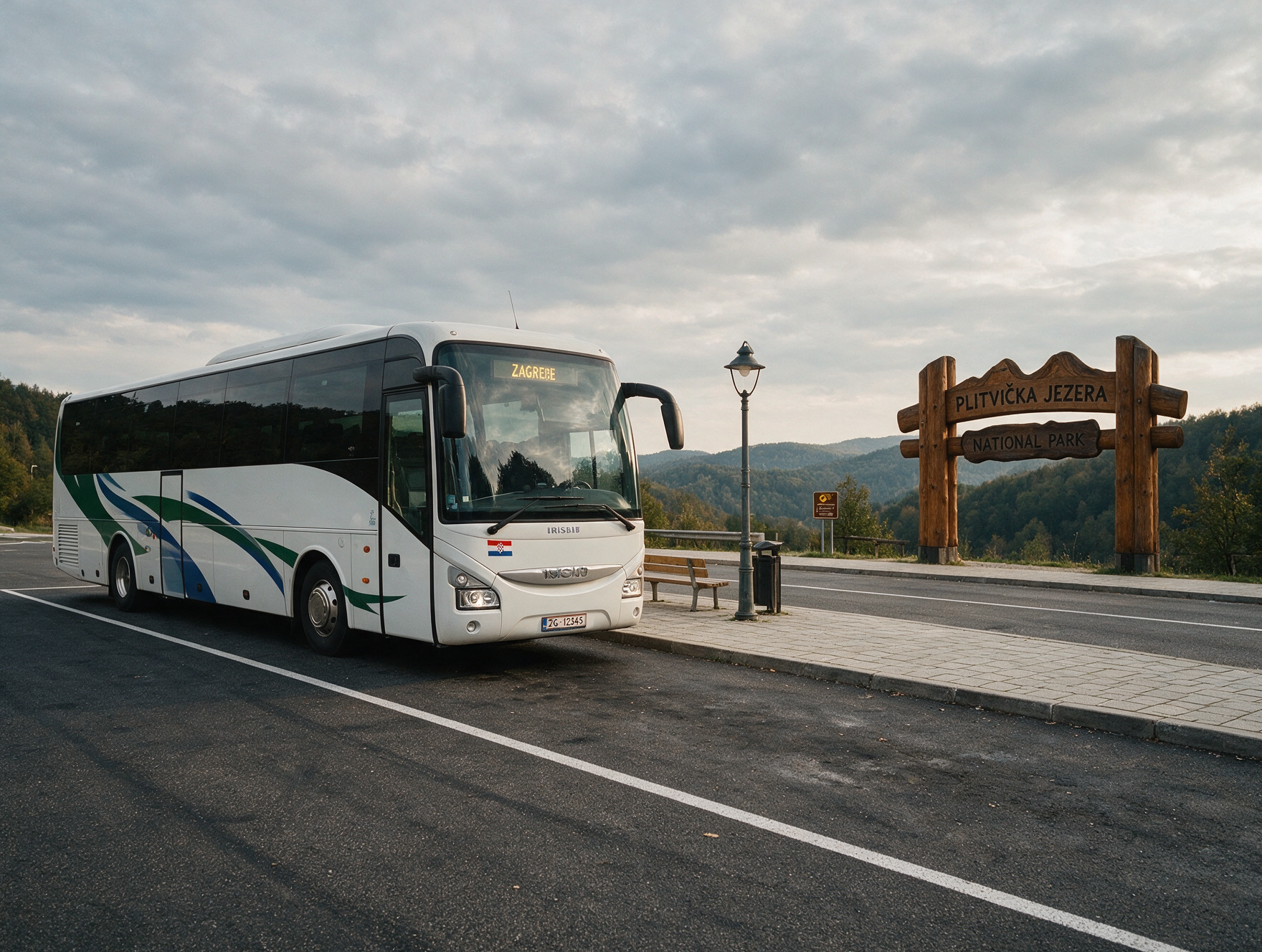
If there’s one mode of transport that does the heavy lifting for a Croatia trip, it’s the intercity bus. FlixBus has expanded aggressively on the mainland routes over the last few years and now covers Zagreb–Split, Zagreb–Zadar, Zagreb–Plitvice, and Split–Dubrovnik, usually several times a day in high season with air-conditioned coaches and onboard WiFi that mostly works. Alongside FlixBus, Croatian operators like Autotrans and Arriva (which absorbed several regional companies) run a dense network of routes that FlixBus doesn’t bother with — smaller coastal towns, connections timed to ferry departures, and the routes locals actually use to get to work.
The Zagreb–Plitvice run is a good example of how well this works: FlixBus covers the roughly 130 km in a bit under two and a half hours, with multiple daily departures in summer, dropping you right at Entrance 1 of the park. Book a morning departure if you want to beat the tour-bus crowds that arrive around 10am.
Split to Dubrovnik is the one route worth flagging in advance, because of a geography quirk rather than a transport one: the coastal road passes through about nine kilometres of Bosnia and Herzegovina at Neum, a narrow strip of coastline that splits Croatia’s own territory in two. Since Croatia joined the Schengen Area in 2023 but Bosnia and Herzegovina hasn’t, your bus will stop at two short border checks — bring your passport in your bag, not buried in the hold. It adds maybe fifteen minutes, not a real delay, but it catches people off guard every summer who assumed they’d left passport control behind at the airport.
One honest caveat on buses generally: schedules thin out drastically outside June–September. A route that runs eight times a day in August might run twice in February. If you’re travelling in the shoulder season, check the actual day-of-week timetable rather than assuming last summer’s frequency still applies.
Trains: Limited, But Worth Knowing About
Croatia’s rail network is the one part of this system that doesn’t match the “just wing it” approach that works elsewhere. HŽ (Hrvatske željeznice, Croatian Railways) runs a genuinely useful service between Zagreb and Split — two daytime trains plus an overnight sleeper — but that’s essentially the only intercity line a coastal-hopping visitor will ever use. There’s no passenger rail to Dubrovnik, Zadar, Rovinj, Hvar, or Plitvice at all; the line stops at Split and the rest of the coast is bus-and-boat territory.
On the Zagreb–Split route itself, a summer-only tilting diesel train covers the roughly 410 km in around seven hours, while the standard year-round afternoon service takes closer to eight. Neither is fast by comparison to Western European rail, but the tilting train is genuinely more comfortable and includes a first-class option. Standard second-class fares run from about €15 booked in advance up to around €28 at full price, plus a small seat reservation fee. The overnight train includes sleeper compartments if you’d rather lose the travel time to sleep than to daylight. Seat61’s route guide keeps a more current timetable than most booking sites, so it’s worth a check before you buy.
If Dubrovnik is on your route from Zagreb, the honest answer is that you take the train (or bus) to Split and then a separate bus for the remaining four hours down the coast — there’s no single ticket that does the whole journey, and most people don’t realise this until they’re already looking at booking screens. It’s not a dealbreaker, just something to build into your itinerary rather than discover at a ticket counter.
Ferries and Catamarans: Reaching the Islands
This is where Croatia earns its reputation as one of Europe’s better-connected island nations, and where island-hopping between places like Hvar and the mainland actually happens. Two operators run the show: Jadrolinija, the long-standing state ferry company, and Krilo (operated by Kapetan Luka), a private high-speed catamaran line that’s carved out a strong position on the busier tourist routes.
Split to Hvar is the route most visitors will use at least once, and it comes in two distinct forms that people often confuse. The fast catamaran — run by both Jadrolinija and Krilo — gets foot passengers into Hvar Town in about an hour, for roughly €18–22 one way, with four to six sailings a day in peak season. If you’re bringing a rental car, that’s a different boat entirely: Jadrolinija’s vehicle ferry lands at Stari Grad, on the other side of the island, and takes closer to two hours, after which you still need to drive about 45 minutes to reach Hvar Town itself. Don’t buy a car-ferry ticket assuming it drops you at the harbour where the yachts are — it doesn’t.
A mistake worth avoiding entirely: showing up at the Split ferry terminal in late July or August without a ticket booked in advance. The Split–Hvar catamaran routinely sells out days ahead in high season, and standing on the dock watching a full boat pull away is not how you want to start an island day. Book online the moment your dates are fixed.
Jadrolinija made a genuinely useful change for 2026: several of its busiest lines — including Split–Supetar to Brač — dropped the old reduced off-season timetable entirely and now run high- and low-season schedules year-round, coordinated more closely with connecting bus times. It’s a small operational detail, but it means shoulder-season travellers get a dependable timetable instead of a skeleton service — worth knowing if crowds bother you more than swimming weather does, since that’s the best time to visit Croatia by most locals’ reckoning.
There’s also a seasonal coastal ferry connecting Rijeka, Split, and Dubrovnik by sea — slow, running mostly overnight, covering in twelve-plus hours what a bus does in four or five. Take it once for the experience if you have a spare day; don’t build an itinerary around it otherwise.
One fun fact that surprises people: Jadrolinija has been operating continuously since 1947, which makes it one of the older ferry companies still running in Europe, and its ships still carry the company nickname “the lifeline” among islanders — for a lot of small Adriatic communities, that boat genuinely is the only regular connection to the mainland, not just a tourist convenience.
Getting Around Dubrovnik, Split, Zadar and Rovinj
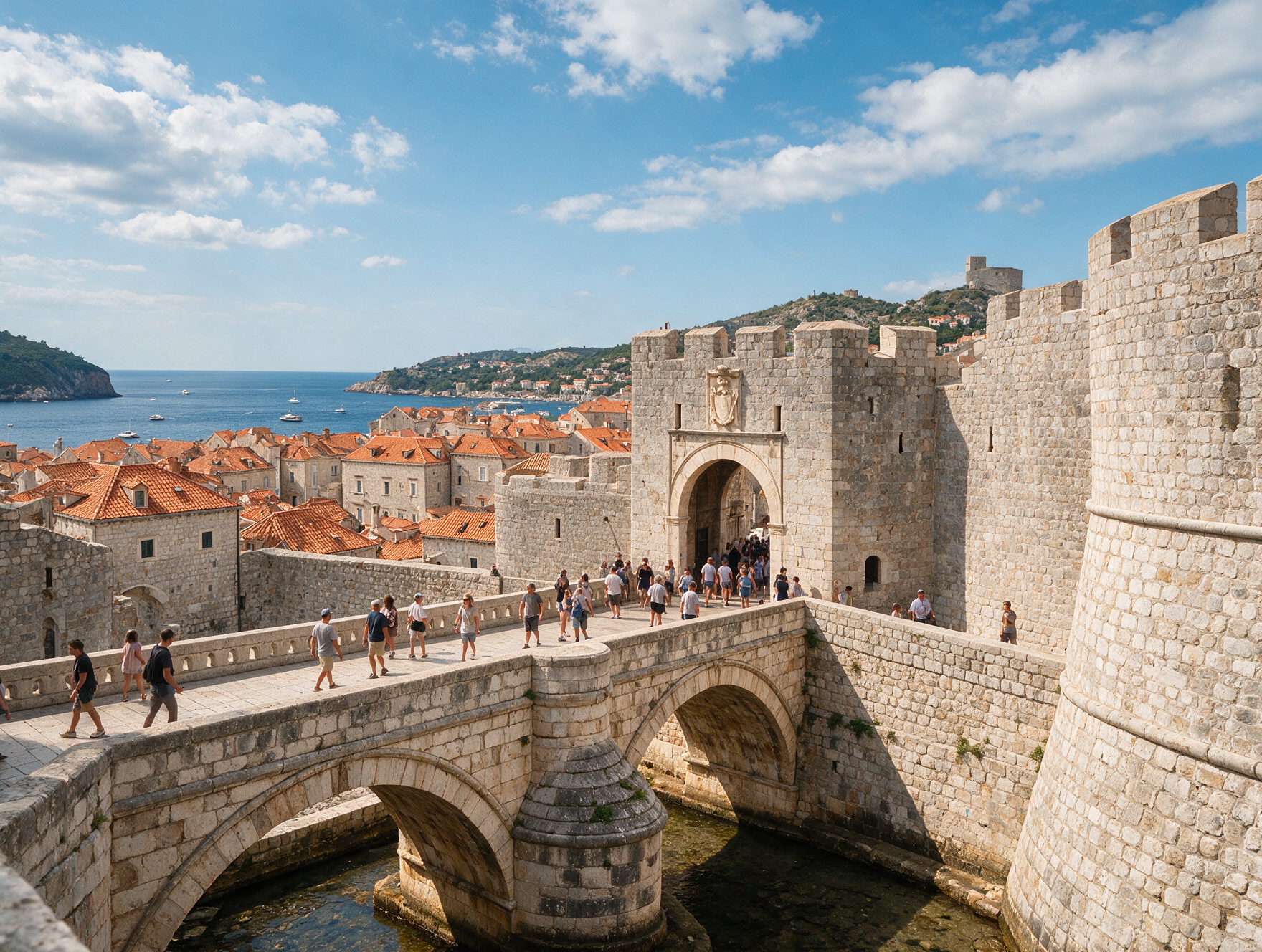
Here’s the thing nobody tells you clearly enough: the historic cores of Croatia’s most-visited cities are, without exception, places you walk through, not drive through. Dubrovnik’s Old Town is entirely closed to private vehicles — the only cars allowed inside the walls have a special resident or delivery permit, and everyone else gets dropped at the Pile or Ploče gates and walks. Split’s old centre is built inside and around Diocletian’s Palace, whose narrow Roman-era streets were never meant for cars in the first place. Rovinj’s waterfront alleys are similarly too tight, and honestly too pretty to want to drive through even if you could. Zadar’s old town is the same story, though its polished stone streets are worth a specific warning: they’re lovely to walk on and genuinely miserable to wheel a hard-shell suitcase over, so plan your arrival accordingly.
For getting to and around these cities, local buses fill the gap. Dubrovnik’s city bus network, run by Libertas, is well used and reasonably frequent — lines 1A and 1B connecting Pile, Gruž, and Mokošica are the ones most visitors end up on, running every 10–15 minutes in peak season. A single ride bought from the driver costs €2.50; buy it in advance from a kiosk instead and it drops to about €1.73, with day passes around €5.31 and three-day passes near €12. Tickets are valid for a full hour regardless of transfers, which matters if you’re bouncing between the Old Town and a Lapad beach in one afternoon. From Dubrovnik Airport, the shuttle bus (about €10, 30–40 minutes, stopping at both Ploče and Gruž) is the sensible option — a taxi runs €40–50 for the same trip.
Split runs its own city buses through Promet Split; line 37 connects the airport to the city centre for about €3, though budget a full hour given how many stops it makes along the way. A dedicated airport shuttle costs more (around €9) but shaves the trip to roughly 45 minutes and actually has luggage storage, which the city bus doesn’t. Zadar’s equivalent is the Liburnija network — a single-zone ticket covers the whole city on a 60-minute validity, and buying it at a kiosk rather than from the driver saves a bit and avoids the driver surcharge. The Pleso Prijevoz airport shuttle gets you into central Zadar in about 20 minutes for a modest fare.
Rovinj is the odd one out — it has no airport of its own, so you’ll fly into Pula, about 9 km away and roughly 40 minutes by shuttle. Two smaller operators, Brioni and FILS, run shuttles timed to flight arrivals on alternating days, worth checking before you land rather than after. A local tip that doesn’t make most top-ten lists: if your flight lands outside the shuttle window, it’s often cheaper to split a taxi into Pula (about €20) and catch a regional bus onward, rather than booking a private transfer straight from the airport.
Hvar Town itself is entirely walkable once you’re off the boat — the harbourfront, the main square, and most hotels sit within a ten-minute stroll of each other. If you want to see the other side of the island, Stari Grad or the lavender fields inland, a local bus timed loosely to ferry arrivals covers it, though it runs far less often than you’d expect from an island this popular, so check the timetable before you plan a full day around it.
Renting a Car: Driving Norms and When It’s Worth It
Croatia drives on the right, roads are generally in good condition on the coast and motorways, and the national speed limits follow the standard European pattern — 130 km/h on motorways, 90 on open roads, 50 in towns, with a lower blood-alcohol limit (effectively zero) for drivers under 25. None of that is unusual if you’ve driven in Western Europe before.
What is worth knowing: Croatia doesn’t use a vignette system like Slovenia or Austria. Instead, motorways run on a distance-based toll — you take a ticket entering the highway and pay based on distance when you exit, in cash, by card, or via an electronic ENC transponder if you’re renting long-term (transponder users get a meaningful discount, up to about 21% on some routes). A one-way Zagreb–Split run on the A1 costs roughly €26 in tolls, which is a real line item worth factoring into a road-trip budget rather than an afterthought. Rental cars in Croatia also come with a mandatory kit — warning triangle, reflective vest, first-aid box — that’s standard issue from any agency but worth checking is actually in the boot before you drive off.
If you’re coming from India, don’t assume your domestic licence alone will satisfy every rental counter — bring an International Driving Permit alongside it. Some agencies won’t ask, but the ones that do won’t budge, and it’s a five-minute application back home versus a ruined morning at the rental desk.
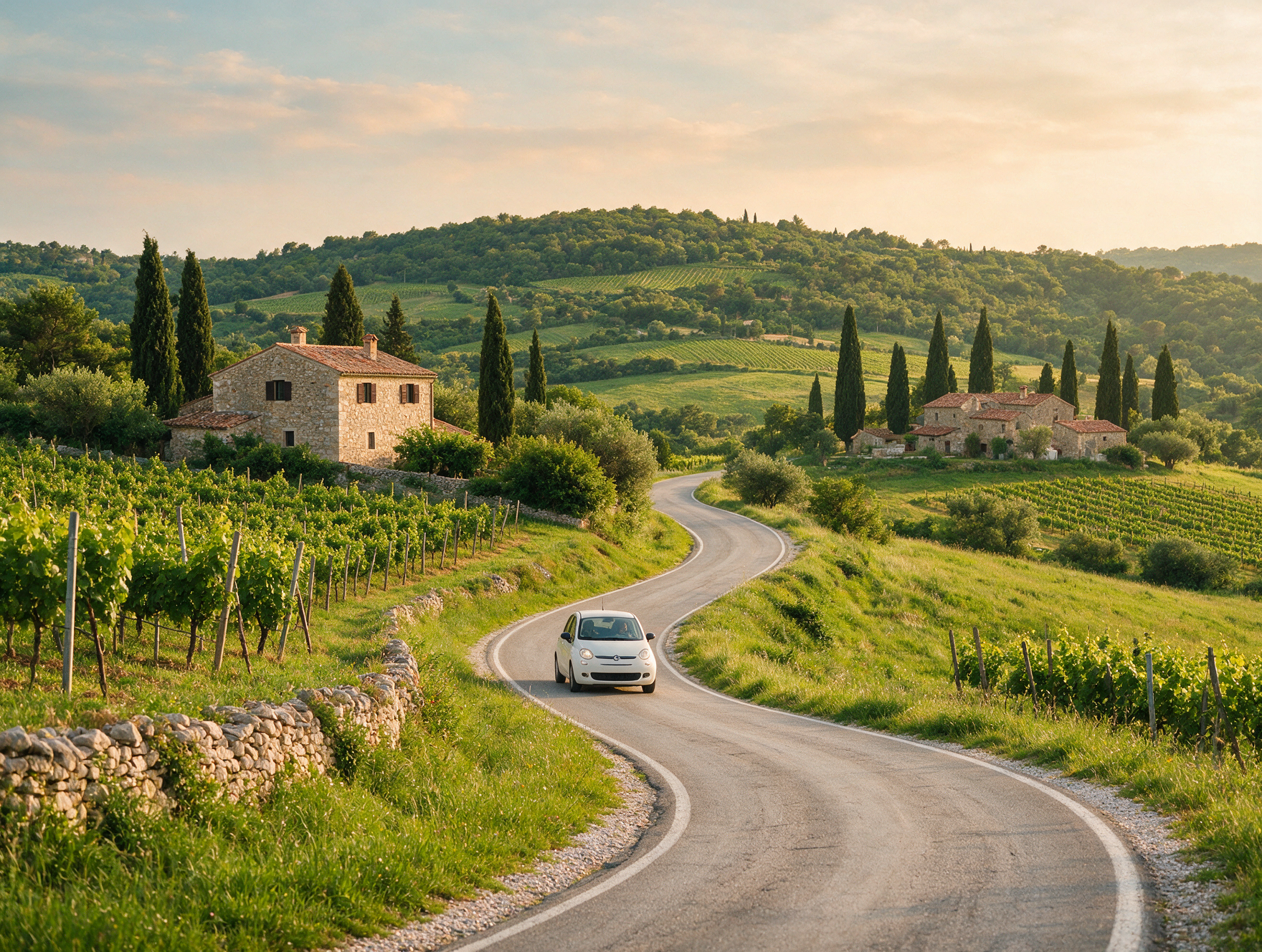
Here’s my honest take on when a car is worth it and when it isn’t. For Dubrovnik, Split’s old core, Rovinj’s town centre, or Hvar Town, skip it entirely — you can’t drive into any of these places anyway, and parking just outside the walls is expensive and often full by mid-morning in summer. Where a car genuinely earns its cost is Plitvice Lakes National Park, where public transport gets you to the gate but a car lets you time your visit around the crowds and combine it with a stop at Rastoke village on the way; and the Istrian countryside around Rovinj, where the hill towns, wineries, and truffle villages inland are basically unreachable without your own wheels or an expensive private tour. If your Croatia 7 days travel itinerary includes both the coast and Istria, splitting the trip into a bus-and-ferry leg for the islands and a rental-car leg for Plitvice and Istria is usually the most comfortable way to do it, rather than trying to drive the whole loop.
Taxis, Uber and Bolt
Yes, ride-hailing works in Croatia, and it’s expanded well beyond Zagreb over the past couple of years. Uber operates through licensed local taxi partners in Zagreb, Split, Dubrovnik, Rijeka, Zadar, Pula, Šibenik, and Osijek, among other towns. Bolt has a slightly narrower but still solid footprint, officially serving nine cities: Dubrovnik, Karlovac, Osijek, Pula, Rijeka, Šibenik, Split, Zadar, and Zagreb. A local ride-hailing app called Wizi has also picked up ground, mainly in Zagreb and coastal towns, and — as of mid-2026 — across the whole of Krk island, which most people don’t expect from an app that started as a Zagreb taxi tool.
The honest caveat here is coverage, not price. A city being “listed” as served doesn’t guarantee a car shows up fast, especially late at night, outside town, or on an island other than Krk. Compare the fare estimate in the app before you commit, since both Uber and Bolt show upfront pricing that can shift if the destination or route changes, or if tolls apply. And remember the Dubrovnik quirk: because the Old Town is fully pedestrianised, no ride-hailing car — Uber, Bolt, or a standard taxi — can drop you inside the walls. You’ll be walking the last stretch from Pile or Ploče gate regardless of which app you used to get there, so there’s rarely a reason to pay the Uber premium over the €2.50 Libertas bus for that leg.
What It Actually Costs
For anyone budgeting a Croatia trip cost from India, transport is one of the more predictable line items once you know the ranges. Is Croatia expensive to visit compared to, say, Italy or France? Generally no — transit costs sit noticeably lower, even if accommodation and dining in Hvar or Dubrovnik in August can rival anywhere in the Mediterranean.
| Route / Service | Typical Cost | Typical Time |
|---|---|---|
| Split–Hvar catamaran (foot passenger) | €18–22 | ~1 hour |
| Zagreb–Split train (2nd class, advance) | €15–28 | 7–8 hours |
| Zagreb–Plitvice bus (FlixBus) | €10–20 | ~2.5 hours |
| Split–Dubrovnik bus | €15–25 | ~4 hours |
| Dubrovnik Libertas single bus ride | €1.73–2.50 | — |
| Dubrovnik airport shuttle | ~€10 | 30–40 minutes |
| Split airport city bus (line 37) | ~€3 | ~60 minutes |
| Zagreb–Split motorway toll (car, one-way) | ~€26 | — |
| Uber/Bolt, city-centre short ride | €5–15 | varies |
None of these figures are going to make or break a trip budget on their own, but they add up quickly across a two-week loop of six or seven places, so it’s worth planning the transport line item with the same care you’d give hotel rates. This is also, frankly, where a lot of Croatia tour packages from India earn their keep — a good operator has already worked out which combination of ferry, bus, and private transfer saves you both money and the kind of dead time you spend refreshing a timetable page in a beach café.
Frequently Asked Questions
Do I need a visa to visit Croatia as an Indian traveller?
Yes. Croatia joined the Schengen Area in January 2023, so Indian passport holders need a Schengen visa to enter, applied for through the same process used for other Schengen countries. Check current requirements before booking, since visa rules and processing times shift periodically.
Can I get around Croatia without renting a car?
For most of the classic route — Zagreb, Split, Hvar, Dubrovnik, Zadar — yes, easily, using buses and ferries. The one place where public transport genuinely struggles is the Istrian countryside beyond Rovinj’s town centre and the more remote corners around Plitvice, where a car or a private transfer makes life noticeably easier.
How do I get from Split to Hvar Island?
Take the Jadrolinija or Krilo fast catamaran from the Split ferry terminal, which lands directly in Hvar Town in about an hour. If you’re travelling with a car, you’ll need the separate Jadrolinija vehicle ferry to Stari Grad instead, which takes closer to two hours and lands on the other side of the island.
Is there a train from Zagreb to Dubrovnik?
No direct train exists. The realistic route is train (or bus) from Zagreb to Split, then a separate bus for the remaining four hours down the coast to Dubrovnik — there’s no single through-ticket for the full journey.
Do Uber and Bolt work in Croatia?
Both operate in most major cities and coastal towns, including Zagreb, Split, Dubrovnik, Zadar, and Pula. Coverage thins out on islands (aside from Krk, where a local app called Wizi has expanded) and in smaller towns, so don’t count on instant pickup everywhere.
What’s the best way to reach Plitvice Lakes National Park?
A FlixBus from Zagreb takes under two and a half hours and drops you at the park entrance, which works well if Zagreb is your starting point. A rental car gives you more control over timing and lets you combine the visit with nearby Rastoke village, and is generally the better option if you’re also planning to continue on to Split by road.
Do I need cash for buses, ferries, and tolls in Croatia?
Cards are widely accepted for tickets, tolls, and city buses now, but it’s still worth carrying some euros for small local buses, kiosks, and the odd rural stop where card machines are unreliable.
Reading about ferry schedules and toll booths is one thing; actually stitching together a route across six places without losing half a day to a missed connection is another. That’s the part Get Tripped’s Croatia travel guide and trip planners spend their time on — sequencing the bus, ferry, and driving legs so the logistics disappear into the background and what’s left is the actual trip. If you’re comparing Croatia vacation packages, weighing a custom Croatia trip against a fixed itinerary, or just trying to work out whether Dubrovnik and Split tour packages make more sense than booking each leg yourself, it’s worth a conversation with Get Tripped’s Croatia trip planners before you lock in flights — they’ve mapped this transport puzzle enough times to save you the parts that aren’t worth figuring out on your own.