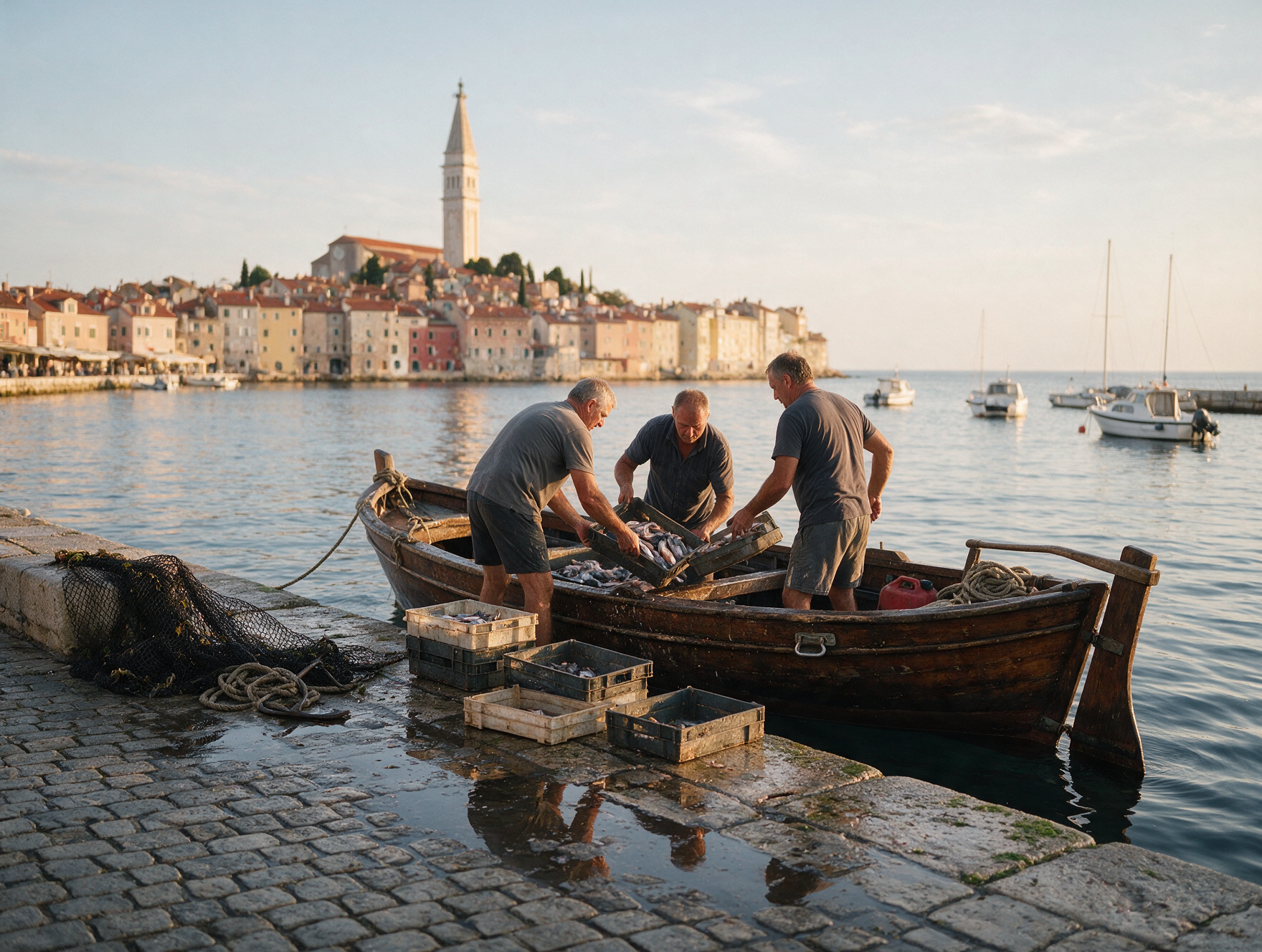
Rovinj doesn’t perform for visitors the way some Croatian coastal towns have learned to. Walk down to the harbor here at 6am and you’ll find fishermen unloading the night’s catch straight off wooden boats, not a staged photo opportunity for a tour group — just the same routine that’s happened here for generations, tourists or no tourists. That’s the thing that makes Rovinj worth slowing down for: this is an Istrian fishing town that still functions as one, and the “local life” isn’t a marketing angle, it’s just what’s actually happening if you show up at the right time of day.
Table of Contents
- Harbor Mornings and the Batana Tradition
- Valdibora Market
- Grisia Street and the Artists
- Eating Like a Local: Konoba Culture
- The Old Town’s Daily Rhythm
- Where Rovinj Locals Actually Swim
- Getting Around and When to Go
- FAQs
Harbor Mornings and the Batana Tradition
Rovinj’s identity is built on the batana — a traditional flat-bottomed wooden fishing boat unique to this stretch of the Istrian coast, still used by local fishermen today. The Batana Eco-Museum, right by the harbor, preserves this heritage properly rather than as a token display, and it earned UNESCO recognition in 2016 for protecting the intangible cultural traditions tied to the boats. You can watch boats being built and repaired at the small “Little Shipyard” nearby, and in season you can actually ride out in an authentic batana guided by local “barkarioli” — the fishermen themselves, not a tour company actor playing the part.
The honest tip: go to the harbor early, ideally before 8am. That’s when the working boats are actually coming in with the day’s catch, crates being hauled off right onto the dock. By mid-morning it’s just yachts and tour boats, and the sense that this is a functioning fishing port rather than a backdrop mostly disappears until the next morning.
What’s easy to miss if you’re only passing through for a night is how much of Rovinj’s economy and identity still run through this harbor, even with tourism now the dominant industry. Talk to anyone running a konoba in the old town and there’s a decent chance their family has fished these waters for generations — the food on your plate later that evening likely has a more direct line to this exact stretch of harbor than in most coastal towns where “fresh catch” has become more of a menu phrase than a literal supply chain.
Valdibora Market
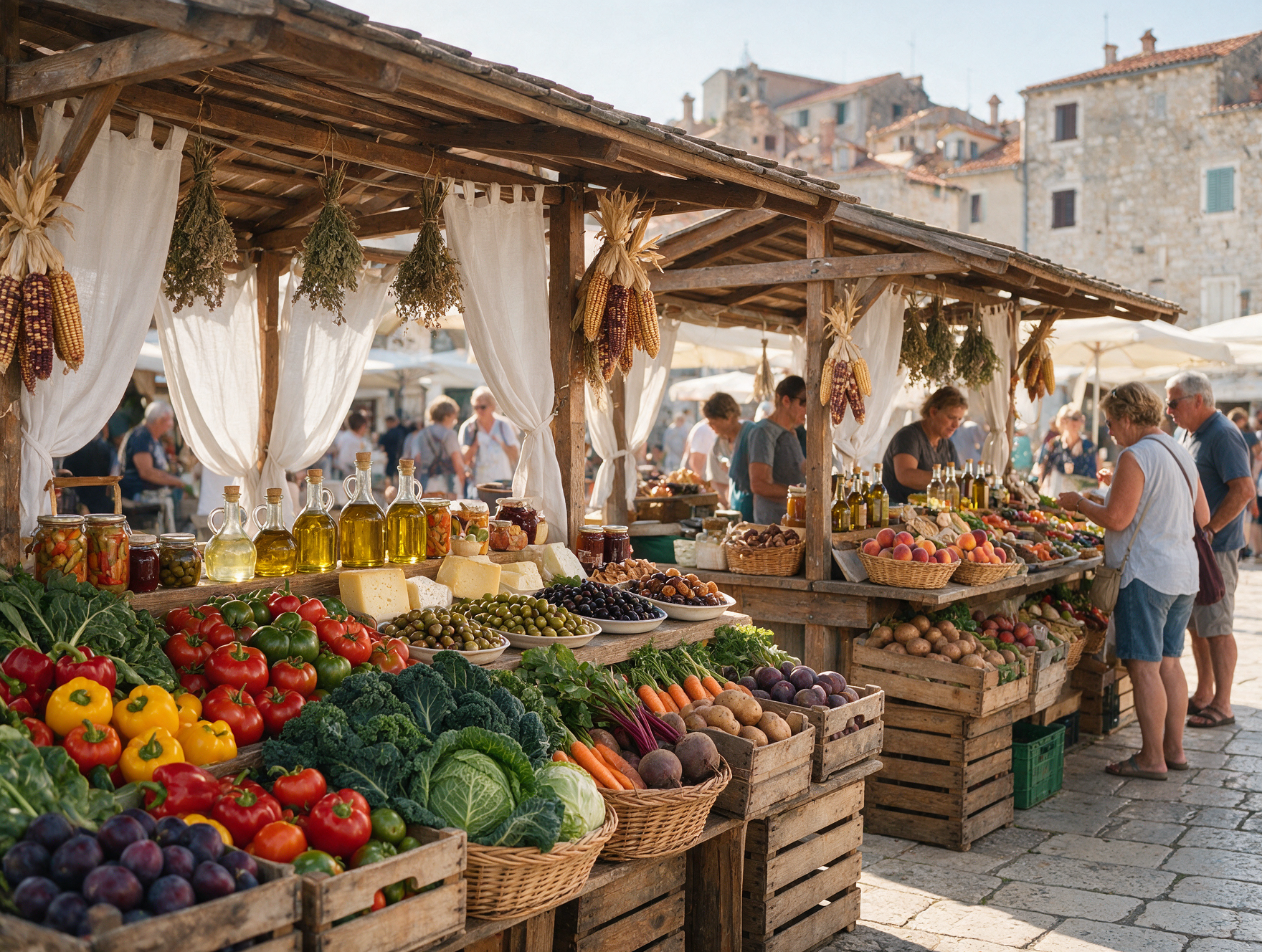
Just at the edge of the old town, Valdibora Market is where Rovinj actually shops — colorful stalls of fresh produce, fish straight off the boats, local olive oil, wine, and handicrafts, with prices set for residents rather than tourists. It’s small enough to wander through in twenty minutes, but it’s one of the better places in town to pick up truffle products, olive oil, or local wine to take home, and to get a sense of what Istrian households are actually cooking with day to day.
Grisia Street and the Artists
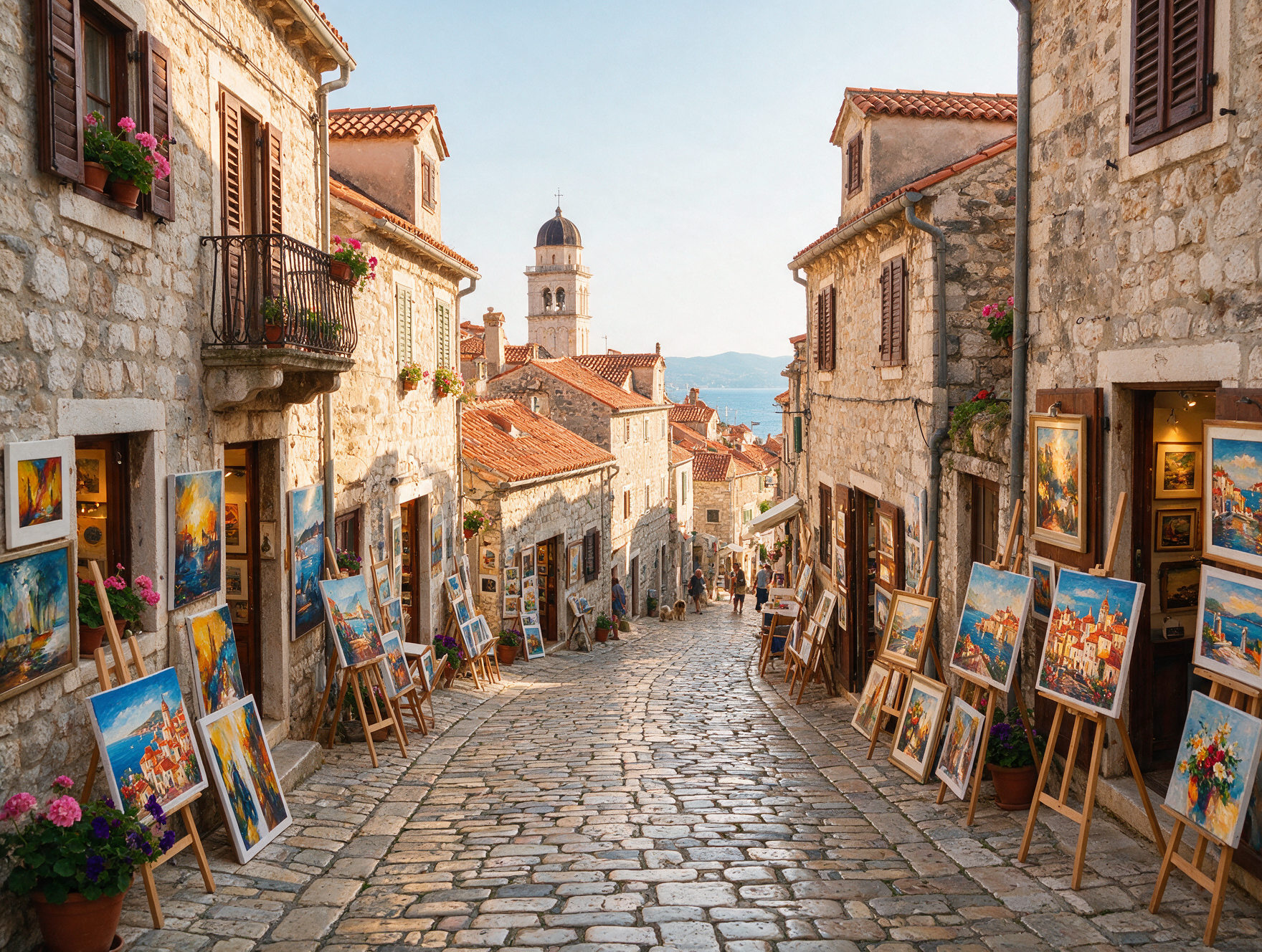
Grisia is the steep, cobbled main street climbing up through the old town toward the hilltop church, and it’s earned the nickname “the street of artists” — small galleries, easels, and open studios lining both sides. It’s at its most alive during the annual August art festival, when the street becomes an open-air exhibition drawing serious collectors alongside families out for an evening walk. Outside festival dates, it’s still worth the climb: quieter, but the same working galleries are open, and it’s a genuinely different texture of street than the souvenir-shop strips found in busier Croatian old towns.
Eating Like a Local: Konoba Culture
A konoba is a traditional Istrian tavern, and Rovinj’s old town has several tucked into side streets away from the harborfront’s more tourist-facing restaurants. These are gathering spots built around regional cuisine — Istrian truffles, fuži pasta, fresh Adriatic fish, local Malvazija white wine — and the good ones don’t bother with photo menus or multiple languages. A genuine opinion worth stating plainly: the harborfront restaurants with the best views are rarely the ones with the best food in Rovinj. Walk two streets back for the konoba locals actually eat at, and expect the view to be a plain stone wall instead of the sea — the trade-off is worth it.
The Old Town’s Daily Rhythm
Rovinj’s old town sits on what was once an island, and its pedestrian streets — narrow, cobbled, lined with tall Venetian-era houses in fading pastel shades — follow a rhythm that’s easy to fall into if you’re staying more than a night or two. Mornings belong to the harbor and the market. Midday quiets down considerably as the heat sets in and shops take a break. Evenings bring everyone back out for a slow walk along the waterfront as restaurant terraces fill up. It’s less about seeing a specific list of sights and more about matching your own schedule to the town’s.
Where Rovinj Locals Actually Swim
The Lone Bay area, a short walk or bike ride south of the old town through pine forest, is where a lot of Rovinj residents go to swim rather than the more central town beaches, which get busier with day visitors. The water’s clear, the rocky coves are shaded by pine trees, and it has none of the beach-club sales pitch found at more commercialized swimming spots along the coast. A mistake to avoid: bring proper water shoes, since much of this coastline is rock and pebble rather than sand, and bare feet on sun-baked rock get old fast.
Getting Around and When to Go
Rovinj’s old town is entirely walkable and largely car-free at its core, which is part of what keeps its everyday rhythm intact — there’s no traffic noise competing with the harbor sounds. The town connects easily to the rest of Istria by car, with Pula about 40 minutes south and the Slovenian border around an hour north, making it a reasonable base for exploring the wider peninsula rather than a single-stop destination. May, June, and September offer the clearest sense of Rovinj’s actual daily life, since July and August bring a heavier tourist presence that dilutes some of what makes the mornings and market feel genuinely local.
A Fun Fact Worth Knowing
Rovinj was still technically an island until 1763, when the narrow channel separating it from the mainland was filled in to connect it properly to the Istrian peninsula. That history explains the old town’s tightly wound, almost defensive layout — streets built for an island community that needed to make the most of a small footprint, which is part of why walking it today still feels distinct from the more sprawling old towns elsewhere on the coast.
Day Trips That Fit the Same Rhythm
The Lim Fjord (technically a limestone karst bay rather than a true fjord, but everyone calls it that anyway) sits about a 20-minute drive north of Rovinj, and it’s where a lot of the region’s prized oysters and mussels are farmed. A boat tour through it, often paired with a tasting straight from the water, is a natural half-day extension of Rovinj’s whole food-and-fishing identity rather than a detour from it. Inland, the hilltop towns of Motovun and Grožnjan — both built during the same Venetian-era stretch of Istrian history — are reasonable day trips if you want to see how the coast’s architecture and culture carry inland, with Motovun in particular known for truffle hunting in the surrounding oak forests during autumn season.
What a Day in Rovinj Costs
Rovinj is kinder to a travel budget than Dubrovnik or Hvar, without feeling like a compromise. A konoba lunch for two, with wine, typically runs €40–60; a proper seafood dinner at a well-regarded restaurant runs closer to €80–120 for two. A batana boat ride with a local fisherman guide is a modest add-on, usually well under €20 per person, and the Batana Eco-Museum’s entry fee is similarly low. The bigger cost variable is accommodation — old-town stone townhouses command a real premium in July and August, while the same standard of stay just outside the core, near Lone Bay, comes in noticeably cheaper.
Where to Stay in Rovinj
Staying inside the old town itself, in one of the converted stone townhouses that make up much of its accommodation, puts you in walking distance of the harbor, Grisia, and Valdibora Market, and it’s genuinely the best way to catch that early-morning fishing activity without needing transport. The trade-off is noise from evening restaurant terraces below your window in peak season and, in most cases, no direct car access to your door, since the core is pedestrian-only. Properties just outside the old town, closer to Lone Bay, trade a few minutes of walking distance for quieter nights and easier parking, which suits families or longer stays better than a short romantic visit.
Photography Spots Worth the Extra Walk
The classic Rovinj photo — tall, tightly packed pastel houses rising straight from the water, the Church of St. Euphemia’s bell tower behind them — is best shot from the small breakwater near the old town’s southern edge, ideally in the last hour of daylight when the stone facades pick up warm light. Fewer visitors make the walk out to the Zlatni Rt (Golden Cape) forest park, just south of the old town, where the pine-lined coastal path gives you the same silhouette from further back, with boats in the foreground and none of the crowd that gathers at the closer, more obvious viewpoint. The bell tower itself, climbable in season, adds a genuinely different rooftop-level view over the old town’s terracotta roofs and the scattered islands offshore — worth the narrow stairwell if you don’t mind tight spaces.
FAQs
What is a batana boat?
A batana is a traditional flat-bottomed wooden fishing boat specific to Rovinj and the surrounding Istrian coast, still used by local fishermen and preserved as a UNESCO-recognized intangible cultural tradition through the town’s Batana Eco-Museum.
What time should I visit Rovinj’s harbor to see the fishermen?
Before 8am is your best window — that’s when working boats are actually coming in with the day’s catch, before the harbor shifts over to yachts and tour boats for the rest of the day.
Is Rovinj walkable?
Yes, the old town is compact, largely pedestrianized, and easy to explore entirely on foot, with most sights within a 15-20 minute walk of each other.
What should I eat in Rovinj?
Istrian specialties like fuži pasta, truffle dishes, and fresh Adriatic fish, ideally at a konoba tavern a street or two back from the harborfront rather than the most visible waterfront restaurants.
Is Rovinj good for a Croatia honeymoon?
Yes — Rovinj is frequently described as one of Croatia’s most romantic towns, with a quieter, more intimate feel than Dubrovnik or Split, making it a strong pairing for couples wanting fewer crowds.
How many days should I spend in Rovinj?
Two to three days is enough to properly settle into the town’s rhythm — one day for the old town, harbor, and market, and at least one more for a Lim Fjord boat trip or an inland day trip to Motovun.
Is Rovinj expensive compared to other Croatian coastal towns?
It sits in a similar mid-to-upper range as Split, generally less expensive than Hvar’s peak-season prices but slightly above smaller inland Istrian towns, particularly for old-town accommodation in July and August.
Rovinj rewards the kind of trip where you’re not racing between checklist sights — an early harbor walk, a slow market browse, dinner at a konoba you found by wandering rather than searching. If a slower, more local-feeling stop like this is what you want built into a wider Croatia itinerary, that’s exactly the kind of custom trip Get Tripped puts together, pairing Rovinj’s pace with the rest of the Adriatic coast. The official Rovinj tourism portal is worth a browse for the August art festival dates before you book. Get in touch to start planning.