Croatia’s food scene runs on grilled fish, cured ham, and slow-cooked meat stews, and if you’re vegetarian or vegan and searching for a Croatia travel guide that’s honest about that, most guides skip right past it. Here’s the short version: you won’t go hungry, but you will need to ask more questions at the table than you would in, say, Thailand or India. Menus along the coast are built around what the Adriatic provides, and inland kitchens run on pork and veal. “Vegetarian” as a marked menu category is still a fairly new idea outside Zagreb and the bigger tourist towns.
None of that is a reason to skip Croatia. The coastline around Dubrovnik and Split is worth the trip on its own, and once you know which dishes are naturally meat-free and which three sentences to say to a waiter, eating well here gets a lot easier. This guide covers the phrases that actually get you a safe plate, the dishes that don’t need any substitution at all, and — because generic top-10 lists rarely check whether a place is still open — a short, verified list of restaurants currently serving vegetarian and vegan food in each of Croatia’s six most-visited spots: Dubrovnik, Plitvice Lakes National Park, Hvar Island, Split, Rovinj, and Zadar. If you’re piecing together a Croatia 7 days travel itinerary or comparing Croatia tour packages from India, save this list. It’ll spare you more disappointing “just the pasta, hold the meat” moments than any packing checklist will.
- Why vegetarian travel in Croatia takes a little planning
- Croatian phrases every vegetarian and vegan traveler should know
- What’s naturally vegetarian on a Croatian menu
- Vegetarian and vegan restaurants, city by city
- Where to find familiar Indian food
- Markets, grocery stores, and self-catering
- Tips and mistakes worth knowing before you go
- Frequently asked questions
Why vegetarian travel in Croatia takes a little planning
Croatian food splits roughly into two traditions, and which one you’re eating depends on where you are. Along the coast — Dubrovnik, Split, Hvar, Rovinj, Zadar — it’s Mediterranean and seafood-heavy: grilled fish, black risotto made with cuttlefish ink, mussels buzara-style. Inland, especially around Zagreb and the Plitvice region, the food turns Central European: pork, veal, cabbage rolls, game stews. Neither tradition was built with vegetarians in mind, and it’s more useful to say that plainly than to paper over it with a “there’s something for everyone” line.
Here’s the honest caveat: vegetable soup in an older-school konoba (a traditional Croatian tavern) is sometimes made with a meat or fish stock base even when nothing meaty is visible in the bowl, and a “vegetarian pasta” occasionally arrives with the pancetta bits picked out rather than never added in the first place. This isn’t malice — plenty of Croatian cooks genuinely don’t think of stock as “meat” the way an Indian vegetarian would, since the flesh itself isn’t on the plate. The fix is simple: ask “je li to napravljeno na mesnoj ili ribljoj juhi?” (is this made with a meat or fish stock) rather than just “is this vegetarian,” because the second question gets a well-meaning “yes” more often than it should.
Tourist-facing restaurants in Dubrovnik, Split, and Zadar have caught up faster than smaller island villages, mostly because the volume of German, Israeli, and now Indian and Southeast Asian tourists over the past decade has pushed menus to add a marked vegetarian or vegan section. Where that hasn’t happened yet — a lot of Plitvice’s roadside restaurants, for instance — you’ll be leaning on the naturally meat-free dishes covered below rather than a dedicated menu.
Croatian phrases every vegetarian and vegan traveler should know
You don’t need fluent Croatian. You need about eight phrases, said slowly, ideally while pointing at the menu. Croatian is a Slavic language and English is widely spoken in tourist areas, but restaurant staff appreciate the attempt, and it genuinely changes how carefully your order gets handled in the kitchen.
| English | Croatian | Rough pronunciation |
|---|---|---|
| I am vegetarian | Ja sam vegetarijanac (m) / vegetarijanka (f) | ya sahm veg-eh-tar-ee-YAH-nats |
| I am vegan | Ja sam vegan (m) / veganka (f) | ya sahm VEH-gahn |
| Without meat | Bez mesa | bez MEH-sah |
| Without fish or seafood | Bez ribe i plodova mora | bez REE-beh ee PLO-do-vah MOH-rah |
| Without cheese / dairy | Bez sira / bez mliječnih proizvoda | bez SEE-rah / bez mlee-YECH-nih pro-EEZ-vo-dah |
| Does this contain meat or fish stock? | Je li ovo napravljeno na mesnoj ili ribljoj juhi? | yeh lee OH-vo nah-PRAV-lyeh-no nah MES-noy EE-lee REEB-lyoy YOO-hee |
| Is there an egg in this? | Ima li jaja u ovome? | EE-mah lee YAH-yah oo OH-vo-meh |
| Thank you | Hvala | HVAH-lah |
One local tip that doesn’t show up in generic phrase lists: if you say “vegetarijanac” and the waiter still brings something with prosciutto shavings on top, it’s usually not a language failure — pršut (Dalmatian cured ham) is treated by a lot of Croatian kitchens the way parmesan is treated in Italy, as a garnish rather than “meat.” Ask specifically about pršut and bacon (slanina) if a dish looks suspiciously plain.
What’s naturally vegetarian on a Croatian menu
This is the list to screenshot before you land. None of these need special requests or substitutions — they’re standard dishes that happen to be meat-free already.
- Ajvar — a roasted red pepper and eggplant relish, usually vegan, served as a spread with bread. It’s on almost every table in the country and it’s genuinely good, not just a fallback.
- Burek sa sirom or sa špinatom — flaky pastry filled with cheese or spinach and cheese. Vegetarian, not vegan (the dough usually has butter or the filling has cheese and sometimes egg). The meat version (burek sa mesom) looks almost identical, so always ask which one you’re being handed at a bakery counter.
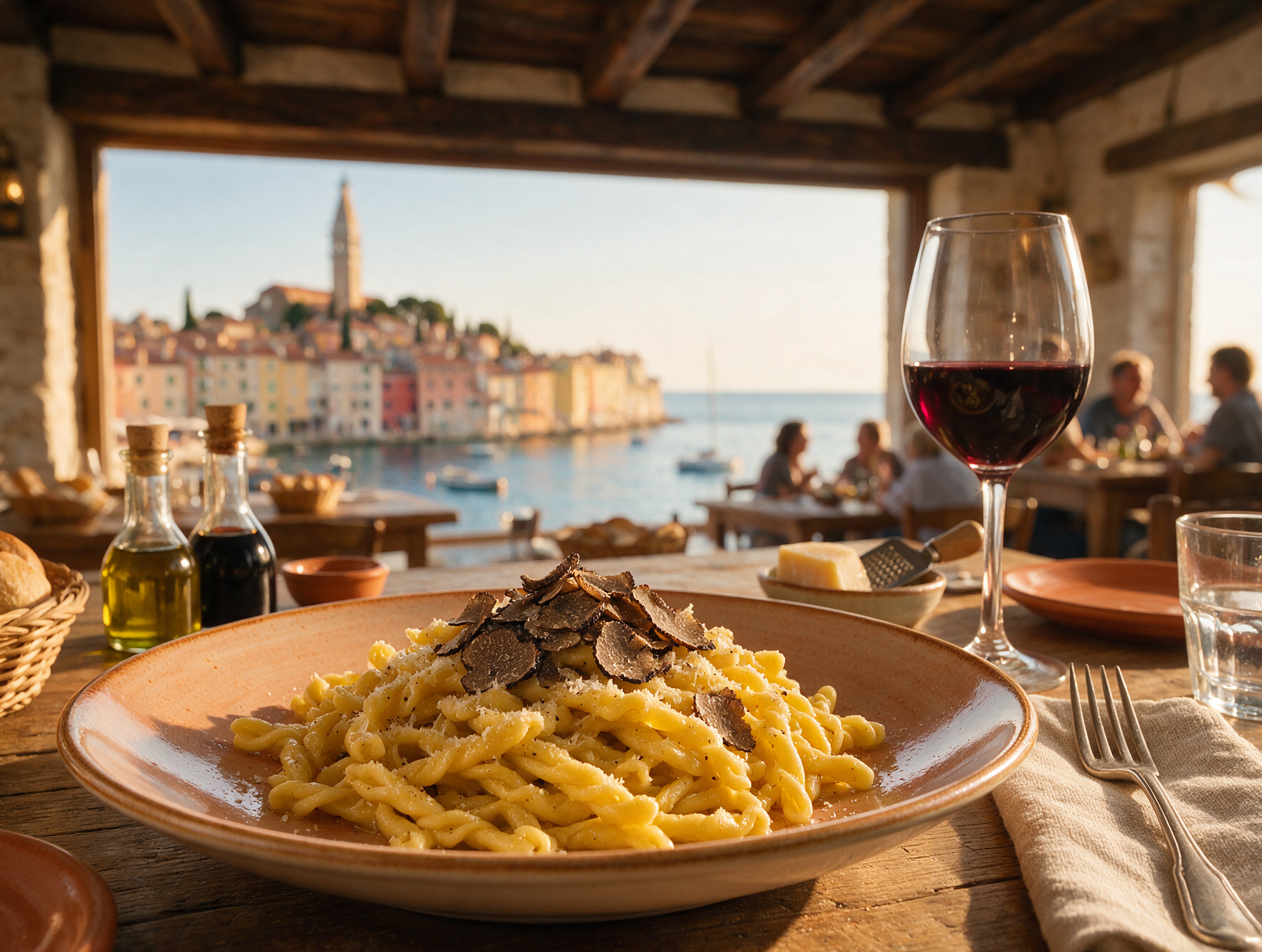
- Fuži s tartufima — Istrian hand-rolled pasta with truffle sauce, from the truffle-hunting region around Motovun and Rovinj. This is one of Croatia’s genuinely world-class dishes and it happens to be vegetarian by default in most versions (ask if cream or butter matters for a vegan diet).
- Rižoto without seafood — mushroom, vegetable, or Istrian truffle risotto is common on menus that also serve the seafood version, so just specify which one.
- Blitva sa krumpirom — Swiss chard and potatoes, usually finished with olive oil and garlic. A classic Dalmatian side dish that’s naturally vegan and shows up alongside grilled fish, so it’s easy to order on its own as a light meal.
- Soparnik — a savoury flatbread stuffed with Swiss chard, from the Poljica region near Split. It’s naturally vegan, rarely appears on tourist-menu translations, and is worth actively seeking out rather than settling for as a backup.
- Manistra od bobići or grah — Istrian corn-and-bean or bean stew, closer to a thick soup, traditionally vegetarian though some versions add smoked meat for flavour, so ask.
- Grilled vegetables (povrće na žaru) — zucchini, eggplant, peppers — a reliable order at almost any grill-focused restaurant, usually vegan.
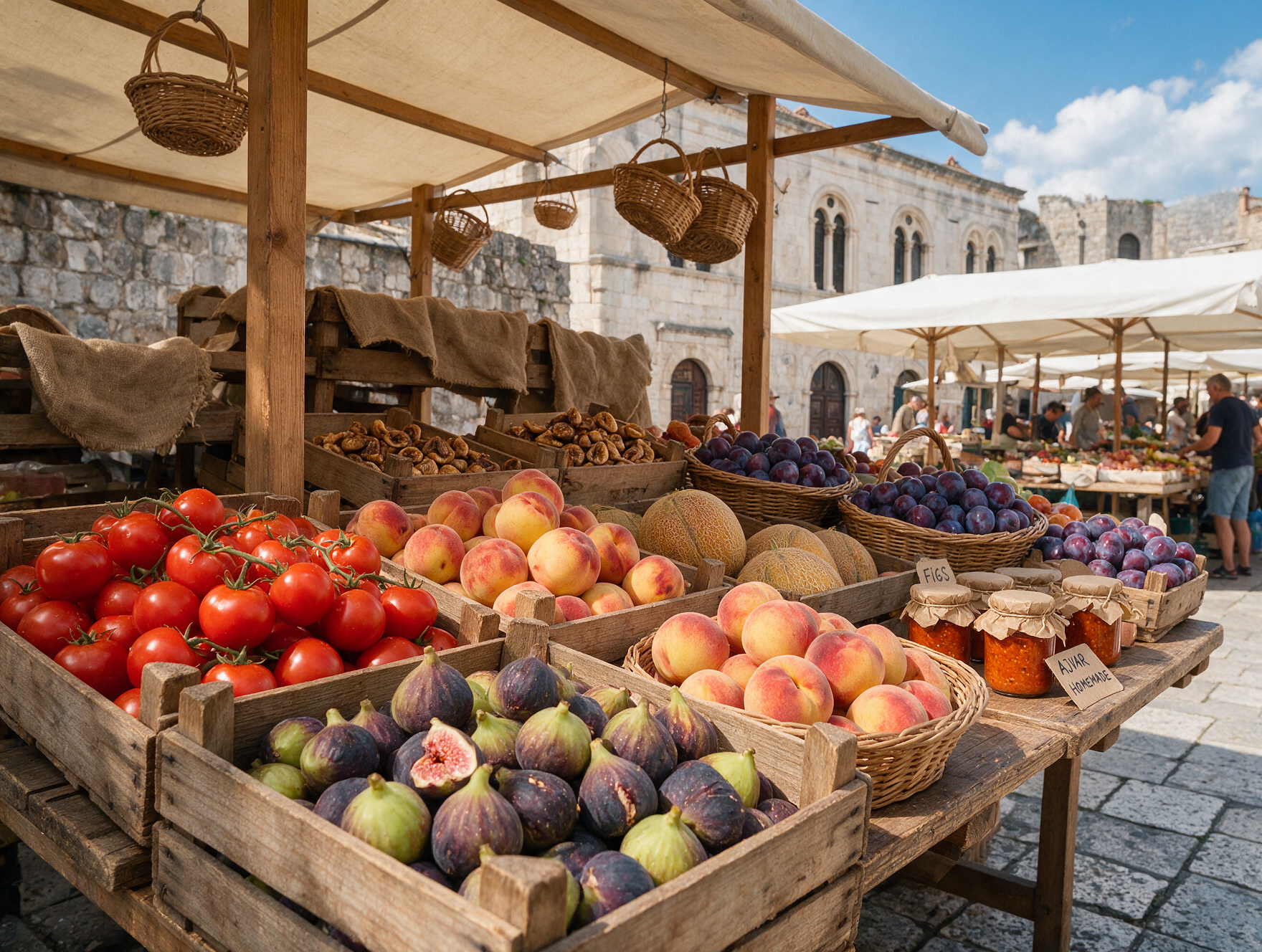
- Fresh market produce — peaches, figs, cherries and tomatoes from coastal markets in season are some of the best food you’ll eat on the trip, and they cost almost nothing.
Here’s the genuine opinion part: skip the “vegetarian pizza” at most tourist-strip pizzerias near the big sights in Dubrovnik and Split. It’s usually a thin excuse for a margherita with a few frozen vegetables thrown on, priced the same as the seafood version, and it’s the most overrated “vegetarian option” in the country. You’ll eat far better ordering fuži s tartufima or a proper vegetable risotto at a sit-down konoba than a rushed pizza a few steps from the city walls.
Vegetarian and vegan restaurants, city by city
These are real, currently operating places we checked against recent reviews and, where available, their own websites — not a recycled top-10 list. A couple of notes before you go in: opening hours in smaller coastal towns shrink outside peak season (roughly November to March), and several of these places are cash-friendly rather than card-only, so keep some kuna-era habits in mind even though Croatia now uses the euro.
Dubrovnik
Dubrovnik’s Old Town has more marked-vegetarian options than almost anywhere else on this list, largely because it sees the highest volume of international tourists. VegeDub (Vetranićeva 2) is a fully vegetarian fast-casual spot inside the Old Town walls doing vegan burgers, pizzas, gyros, tacos and falafel — the pizzas are all vegan by default, which is unusual to see stated outright. Urban & Veggie (Obala Stjepana Radića 13, just outside the Pile Gate) runs a more seasonal, ingredient-led menu with plant-based mains built around whatever’s fresh that week, including desserts using carob, which grows wild across the region. Book ahead in July and August — both places are small and popular with the cruise-ship lunch crowd.
Plitvice Lakes National Park
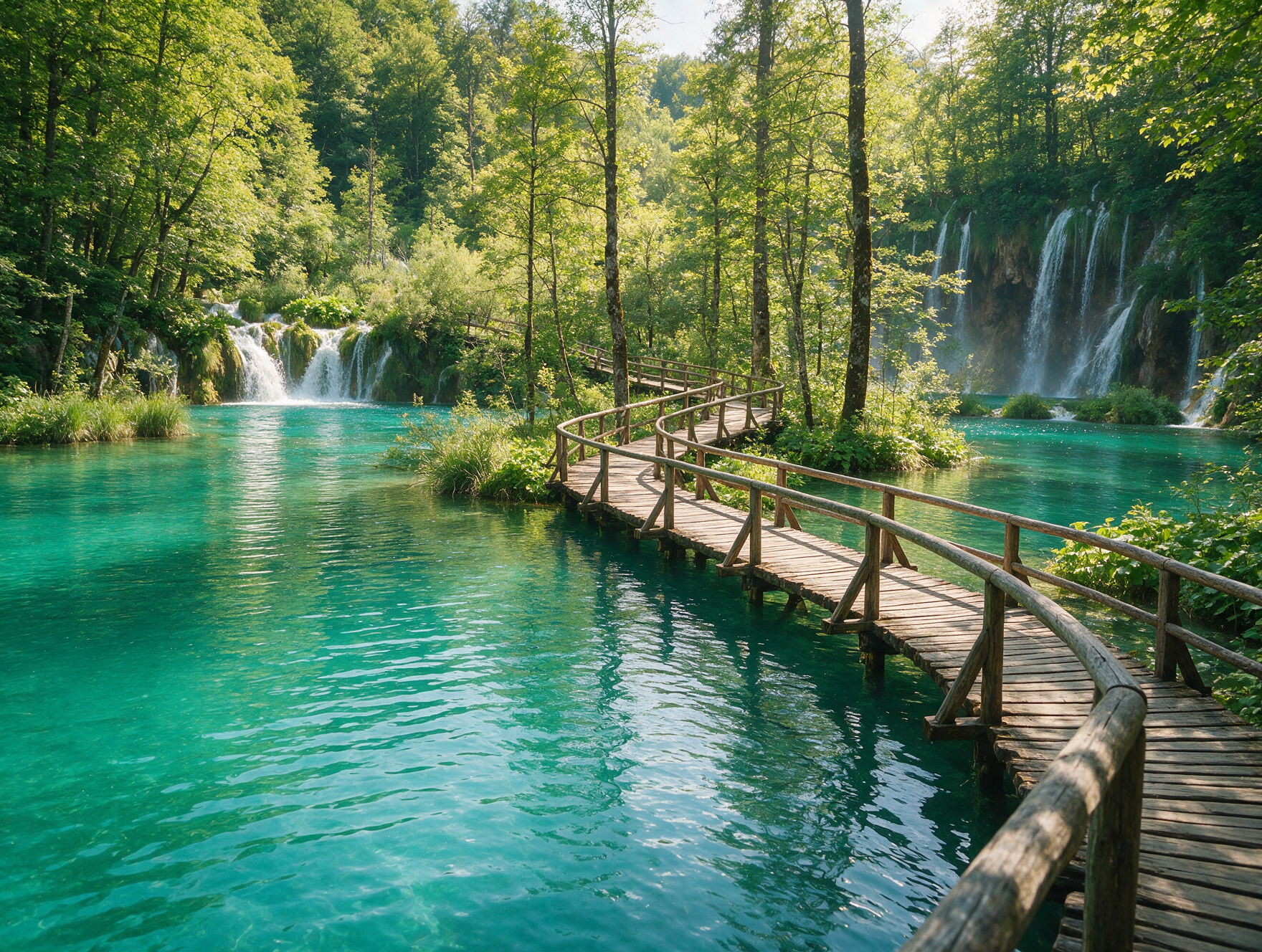
This is the honest gap on the list, so we’re not going to paper over it. There is no standout dedicated vegetarian or vegan restaurant inside the park itself — the two official park restaurants (Poljana and Licanka, near Entrance 1 and Entrance 2) serve buffet-style Croatian food where vegetarian options exist but rotate day to day and rarely include vegan-marked dishes. Your best bet, if you’re staying nearby rather than doing a rushed day trip, is 16 Lakes Restaurant in Grabovac, about 12 km from the park entrance, which keeps a dedicated vegetarian section on its menu alongside its grilled meat and fish (worth calling ahead to confirm current hours, since it’s a smaller village operation). Inside the park itself, Lička kuća near Entrance 2 will do štrukli (a cheese pastry) and can leave meat out of a few dishes on request, even though it isn’t set up as a vegetarian venue. Realistically, pack fruit, nuts, and bread from a Zagreb or Zadar grocery stop before you arrive — it’s the most reliable plan for a full day of hiking the wooden trails.
Hvar Island
Hvar town leans heavily into seafood and cocktail-bar glamour, but there are two solid options. Kod Kapetana (Obala Fabrika 30, on the harbour) is primarily a seafood restaurant, but it’s known for accommodating vegan requests well beyond the usual afterthought — reviewers specifically mention vegetable risotto with smoked tofu and handmade pasta in truffle sauce, though these aren’t always printed on the standard menu, so ask your server directly. Fig (Ivana Frane Biundovića 3) is a café-bar with vegan options clearly marked on the menu, including a chickpea-patty burger, a vegan korma curry (a nice, if unexpected, nod for Indian travelers), and a babaganoush flatbread. Fig tends to get busy at breakfast, so go early if you want a table with a view.
Split
Split has the most developed vegan scene of the six, unsurprising given its size and permanent population. Barakokula (Ul. Kralja Petra Krešimira IV 3) is a fully vegan bistro whose truffle pasta gets called out repeatedly in reviews as the dish to order, alongside a Caesar salad with plant-based toppings and a solid burger. Vege Fast Food (Nadhodnik b.b.), a short walk from Diocletian’s Palace, bills itself as Croatia’s first vegan street food stall, open since 2012, serving soya steak, seitan and tofu sandwiches, and burritos at street-food prices — it’s cash only, and hours can shrink outside peak season, so treat posted hours as approximate rather than fixed.
Rovinj
Rovinj’s Istrian setting means truffle and mushroom dishes are everywhere, which works in a vegetarian traveler’s favour. Balbi Restaurant (Ul. R. Devescovija) keeps a dedicated vegan section on its regular menu — vegan “polpette” (meatball-style) with vegetables and fries, an eggplant-tomato pasta, roasted fennel, and a zucchini-avocado salad. It’s a proper sit-down restaurant rather than a purely vegan concept, which some travelers find easier when eating with a mixed group. Wok.about (Carera 56) is an Asian fast-casual spot doing tofu pad thai, vegetable curry, and gyoza — just say “vegan, no egg” clearly when ordering, since the default recipes sometimes include egg.
Zadar
Zadar has quietly become one of the better vegan food cities on the Adriatic. The Botanist (Ul. Mihovila Pavlinovića 4) is a fully plant-based restaurant built around Dalmatian herbs and produce, with a rotating seasonal menu that includes dishes like a chickpea stew with kale chips and a mushroom “wellington” in puff pastry — it’s built up an unusually strong review base for a small city, and it’s worth booking rather than walking in. La Famiglia (Ulica admirala Jakova Šubića od Cezana 9) is a mostly Italian menu with a small vegan section — worth knowing honestly that recent reviews mention it’s genuinely limited, closer to two or three dishes (a falafel bowl, a vegan burger, a quinoa gnocchi in truffle sauce) rather than a full separate menu, so it’s a solid backup rather than a destination in itself.
Where to find familiar Indian food
If you’re three days into grilled vegetables and want something that tastes like home, options exist but they’re concentrated in the bigger cities. ROOH in Split serves North Indian food — curries, tandoor items, and a proper vegetarian thali-style spread — and is the most consistently well-reviewed Indian kitchen on the Dalmatian coast, so it’s worth a stop if you’re spending more than a night in Split. Zagreb has a small but growing handful of Indian restaurants as well, useful if your itinerary includes a stopover there before or after the coast. Dubrovnik, Hvar, and Rovinj don’t currently have a standout Indian restaurant we could verify as reliably open, so don’t build your itinerary around finding one there — treat Split (and Zagreb, if you’re passing through) as your reset point instead.
Markets, grocery stores, and self-catering
Every coastal town on this list runs a morning green market (tržnica), and they’re worth building into your day even if you’re not cooking. Split’s Pazar market, right behind the eastern wall of Diocletian’s Palace, sells tomatoes, stone fruit, olives, and homemade ajvar straight from producers — genuinely better than most of what’s on nearby restaurant menus, and cheap. Zadar and Rovinj have smaller versions of the same thing near their old towns, usually busiest before 10am.
Supermarkets — Konzum and Spar are the two big chains you’ll see everywhere — stock plant milks, hummus, tofu (labelled tofu or occasionally sojini sir), and a decent range of pulses and pasta, so a self-catered breakfast or lunch is easy even in a rented apartment with a basic kitchenette. If your Croatia trip cost from India planning has you watching the budget, this is one of the easier places to save without sacrificing food quality — a market lunch of bread, ajvar, tomatoes and cheese costs a fraction of a restaurant meal and is arguably better.
Tips and mistakes worth knowing before you go
A small moment worth mentioning: at the Split green market, one of the ajvar sellers near the palace wall’s eastern side remembers regular customers’ orders by the jar size they buy, not their face — a genuinely small-town touch in a city that otherwise feels built for tourists. It’s the kind of interaction that doesn’t happen if you only eat inside restaurant walls.
The mistake to avoid: don’t assume “riblja juha” only means fish soup and is therefore obviously avoidable — Croatian kitchens sometimes use fish or meat stock as a flavour base in dishes that look entirely vegetable-based on the plate, particularly older-style vegetable soups and some risottos. Always ask about the stock, not just the visible ingredients.
A fun fact to file away: Plitvice Lakes became Croatia’s first UNESCO World Heritage Site back in 1979, decades before Dubrovnik’s Old Town joined the list — which is part of why the park protects its trails so strictly and won’t let you bring in glass bottles or swim in the lakes, rules that catch a surprising number of visitors off guard.
One more honest note on timing: if you’re weighing the best time to visit Croatia around food access specifically, shoulder season (May, June, or September) is genuinely better for vegetarians and vegans than peak July-August. Restaurants are less rushed, staff have more patience for a slower conversation about what’s in a dish, and market produce (stone fruit especially) is at its best. Peak summer gets you the liveliest beach towns but the least attentive kitchens.
Frequently Asked Questions
Is Croatia hard for vegetarians?
Not hard, but it takes more planning than a country like India or Thailand. Coastal menus lean seafood and inland menus lean meat, so you’ll rely on a smaller set of reliably meat-free dishes — pasta, risotto, ajvar, cheese or spinach burek, grilled vegetables — more often than you’d expect, alongside a growing number of dedicated vegetarian and vegan restaurants in the bigger towns.
Is Croatian food mostly meat and seafood?
Yes, broadly. Coastal Dalmatian and Istrian cuisine centers on grilled fish and seafood risottos, while inland and continental Croatian food (closer to Zagreb) is built around pork, veal, and game. Vegetarian dishes exist in both traditions but aren’t usually the centerpiece of the menu.
Can vegans eat well in Croatia?
Vegans can eat well in Split, Dubrovnik, and Zadar, where dedicated vegan restaurants now exist and are genuinely good. It gets harder in smaller spots like Plitvice or rural Istria, where you’ll lean more on grilled vegetables, salads without cheese, ajvar, bread, and market produce rather than a full vegan menu.
What Croatian dishes are naturally vegan?
Ajvar, blitva sa krumpirom (chard and potatoes), soparnik (a chard-filled flatbread from near Split), grilled vegetables, and most bean or vegetable soups are naturally vegan, provided the stock isn’t meat or fish-based — always ask.
Is it easy to find vegetarian food in Dubrovnik?
Yes, more so than most of Croatia. Dubrovnik’s Old Town has multiple restaurants with dedicated vegetarian or vegan menus, largely because it handles the country’s highest volume of international tourism, alongside plenty of the naturally meat-free dishes covered above.
Do I need a visa from India to visit Croatia?
Croatia is part of the Schengen area, so Indian passport holders need a Schengen visa arranged in advance — check current Croatia visa for Indians requirements before booking flights, since processing times and document checklists shift periodically.
Is Croatia expensive to visit from India?
It sits in the mid-range for Europe — pricier than Southeast Asia, generally cheaper than Switzerland or the UK. Whether Croatia is expensive to visit depends heavily on season and how many islands you’re hopping between; self-catered meals and market food (as covered above) are an easy way to manage the food budget specifically.
What are the best vegetarian-friendly cities to base a Croatia trip around?
Split and Dubrovnik, for the combination of dedicated vegetarian and vegan restaurants, market access, and easy day trips to Hvar or Plitvice. If you’re building a Croatia 7 days travel itinerary, anchoring two or three nights in each keeps you within easy reach of the food options in this guide.
Croatia rewards a bit of homework at the table more than most European destinations do, but it’s genuinely doable — and honestly, some of the naturally vegetarian dishes here (soparnik and fuži s tartufima especially) are worth the trip on their own. If you’d rather not build the logistics yourself — figuring out which towns to base in, matching restaurant timing to your sightseeing days, and working dietary needs into a full itinerary — Get Tripped’s Croatia trip planners can put together a custom route that accounts for all of it, from Dubrovnik’s walls to Plitvice’s waterfalls, without you having to cross-check restaurant hours at midnight before a flight. Related Croatia guides, including full destination and itinerary breakdowns, are also on the Get Tripped blog if you want to keep planning from here.