If you’re an Indian passport holder planning next spring on the Dalmatian coast, the first item on your to-do list — before flights, before a hotel in Split, before you even open a packing list — is the Croatia visa for Indians paperwork. Croatia joined the Schengen Area on 1 January 2023, and that single change rewired how Indians apply: it’s no longer a standalone “Croatia visa,” it’s a Schengen visa that happens to be issued through Croatia’s consulate or its outsourced visa centre. That distinction matters more than it sounds like it should, and we’ll get into why below.
This guide walks through who actually needs a visa, which Schengen visa category applies, the exact documents to gather, how the VFS Global application process works step by step, current fees in INR, realistic processing times heading into 2026, the mistakes that get applications rejected, and what happens once you land — because yes, there’s a registration step almost nobody mentions until it’s too late. If you haven’t settled on an itinerary yet, our Croatia travel guide is a good place to sort out the “where” before you tackle the “how.”
- Do Indian Citizens Need a Visa for Croatia?
- Which Schengen Visa You Actually Need
- Documents Checklist
- How to Apply: VFS Global and the Embassy
- Visa Fees for Indians in 2026 (INR)
- Processing Time
- Tips to Improve Your Approval Odds
- Common Reasons Applications Get Rejected
- The Travel Insurance Requirement
- What to Do Once You Land in Croatia
- Frequently Asked Questions
Do Indian Citizens Need a Visa for Croatia?
Yes, with one narrow exception. Every Indian ordinary passport holder needs a visa to enter Croatia, whether the trip is a week in Dubrovnik or a long weekend in Zagreb. The only carve-out, per the Embassy of the Republic of Croatia’s own guidance, is for Indian diplomatic or official passport holders, who can enter, transit, and stay up to 30 days without a visa. If your passport says “ordinary” on the cover — which covers every leisure traveller reading this — that exception doesn’t apply to you.
There’s no e-visa and no visa-on-arrival for Indians, despite what a few visa-mill websites imply when they advertise “instant Croatia e-visa” services. Croatia doesn’t run one. Every application goes through the standard Schengen visa process, and it has to be submitted in person, for biometrics, before you fly.
Fun fact worth knowing: Croatia switched from the kuna to the euro on the exact same day it joined Schengen — 1 January 2023 — pulling off a currency change and a border-control change simultaneously. Land and sea border checks dropped that day; air and sea-port checks with other Schengen states followed a few months later, on 26 March 2023.
Mistake to avoid: some travellers assume that because Croatia joined the EU only in 2013 and Schengen as recently as 2023, it might still run its own separate visa system, the way a few newer EU members do before Schengen accession. It doesn’t anymore. Croatia checks passports exactly like France or Germany would, which means a rejected or overstayed Schengen visa anywhere else stays on your record and can complicate your Croatia application too.

Which Schengen Visa You Actually Need
For a standard holiday, honeymoon, or business trip, you need a Schengen Type C visa — the short-stay visa that permits up to 90 days of travel within any 180-day period, across all Schengen member countries, not just Croatia. This is the same visa category for a Croatia-only trip or one combined with Slovenia, Austria, or Italy in one loop.
A few other categories exist depending on your purpose:
- Type C — Tourism/Business: the one almost everyone reading this needs. Covers holidays, visiting family or friends, conferences, and short business meetings.
- Airport Transit Visa (Type A): only relevant if you’re connecting through a Croatian airport without officially entering the Schengen area — uncommon, since most Indian travellers reach Croatia via a connection in Doha, Istanbul, or a Western European hub that’s already inside Schengen.
- Type D — National/Long-Stay Visa: for study, work, or family reunification lasting longer than 90 days. Handled separately from the tourist process, with its own document list and a longer timeline.
One rule trips people up on multi-country itineraries: if Croatia isn’t the only Schengen country on your route, you apply through the consulate of your main destination — wherever you’re spending the most nights, or where your specific purpose of travel is concentrated. If the trip is evenly split, you apply at the consulate of whichever country you enter first. So a two-week trip with eight nights in Croatia and six in Slovenia means you apply for the Croatia visa; flip those numbers and you’d apply through Slovenia instead, even if Dubrovnik was the whole reason you booked the trip.
Croatia Visa Documents Checklist
Gather these before booking a VFS appointment — showing up with even one item incomplete usually means rebooking, and slots during peak season don’t open up quickly.
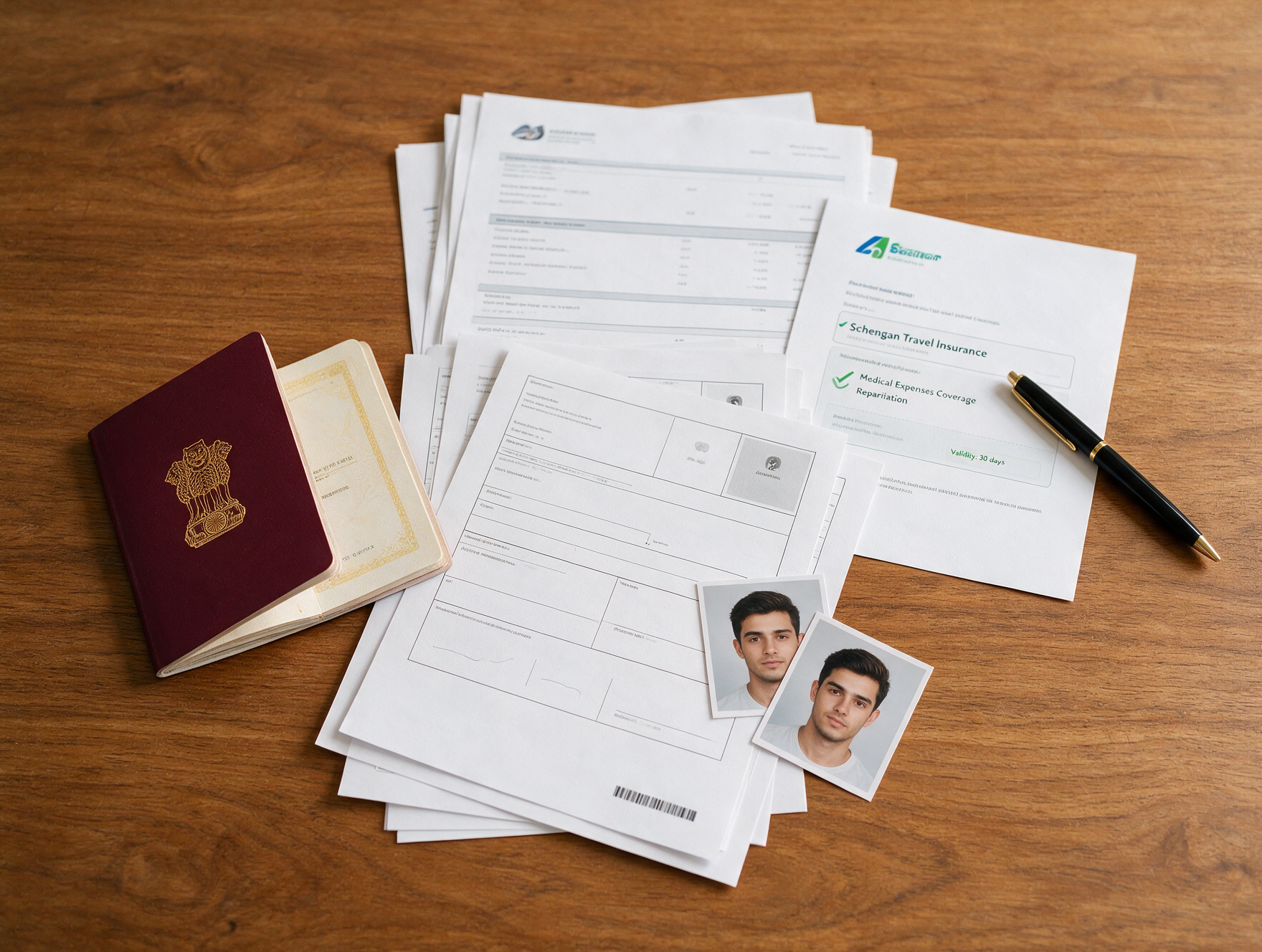
- Passport issued within the last 10 years, valid for at least 3 months beyond your planned departure from the Schengen area, with a minimum of two blank pages
- Completed and signed Schengen visa application form, filled online via Croatia’s official visa portal and then printed
- Two recent passport-style photographs, 35mm x 45mm, plain light background, taken within the last six months
- Round-trip flight reservation — a confirmed booking, not necessarily a non-refundable ticket; check with your VFS centre on whether a “reservation hold” is accepted
- Proof of accommodation for every night of the trip: hotel confirmations, or a signed invitation if staying with someone
- Travel medical insurance with a minimum of €30,000 coverage, valid across the entire Schengen area for the entire trip (more on this below)
- Proof of financial means: bank statements from the last 3-6 months, plus salary slips or IT returns for salaried applicants, and business financials for self-employed applicants
- A No Objection Certificate and approved leave letter from your employer, on letterhead
- A cover letter, in your own words, explaining the purpose of travel, dates, and your intent to return to India
- Proof of civil status where relevant: a marriage certificate for couples travelling together, or a notarised consent letter from the non-travelling parent if a minor is travelling with only one parent or a relative
If you’re staying with friends or relatives in Croatia rather than a hotel, your host needs to get the invitation letter stamped by their local police station before you apply. Croatian authorities call this an overena pozivnica, a certified invitation. It’s an easy step to forget, because nothing about a generic Schengen checklist prepares you for “ask your cousin to visit the police station on your behalf” — but skipping it is one of the more common paperwork gaps for people planning a homestay instead of hotel bookings.
How to Apply: VFS Global and the Croatian Embassy
Croatia doesn’t take walk-in visa applications from India directly. The Ministry of Foreign and European Affairs of Croatia outsources the in-person part of the process to VFS Global, which runs Visa Application Centres in New Delhi, Mumbai, Bengaluru, Chennai, Hyderabad, and Kolkata. The Embassy of the Republic of Croatia itself sits in New Delhi’s diplomatic enclave and handles the actual decision on your application, but you won’t visit it in person for a standard tourist visa.
The process, step by step:
- Fill the application form online through Croatia’s official visa portal, then print and sign it.
- Book a VFS Global appointment at the centre matching your jurisdiction. Through May-September, slots fill up two to three weeks in advance, so don’t wait until a month before your trip.
- Assemble your documents in the order VFS specifies, with originals plus a photocopy set. Most centres are strict about this and will send you home to reorganise a messy folder.
- Attend your appointment, where staff verify your documents and take biometrics: ten fingerprints and a digital photo. If you’ve given Schengen biometrics within the last 59 months for a previous visa, you may be exempt from repeating this step — worth mentioning to the officer.
- Pay the visa fee and the VFS service charge at the counter, and keep every receipt.
- Track your application online using the reference number VFS gives you.
- Collect your passport once a decision is made, and check the visa sticker’s dates and entry count before you leave the counter.
Small detail worth knowing before you go: the biometric room at most VFS centres runs like a production line — a fingerprint scanner captures all ten fingers one at a time, then you stand against a plain backdrop for the photo, and the whole thing takes under five minutes once you’re called in. The waiting beforehand is the slow part, not the biometrics themselves.
Genuine opinion here: VFS sells add-ons — premium lounge access, “Prime Time” priority slots, home biometric collection — and unless you’re genuinely pressed for time or travelling with someone who can’t easily reach a centre, most of these are skippable. They don’t affect your visa outcome or your embassy processing time at all; you’re paying purely for a shorter wait in a nicer chair. You don’t need a Croatia travel agency in India to get this part right on your own, but if the paperwork itself is the part of trip planning you’d rather hand off, that’s a fair reason to use one.
Croatia Visa Fees for Indians in 2026 (INR)
Schengen visa fees are set EU-wide, not by Croatia alone, and they went up in June 2024 — a change that’s still catching out people relying on older blog posts quoting the previous €80 rate. Here’s what applies now:
| Category | Fee (EUR) | Approx. Fee (INR)* |
|---|---|---|
| Adult (Type C, short-stay) | €90 | ₹8,300 – ₹8,700 |
| Child, 6-11 years | €45 | ₹4,150 – ₹4,350 |
| Child under 6 years | Free | Free |
| VFS Global service charge (per applicant) | — | ₹2,000 – ₹2,700 approx. |
*INR conversions move with the exchange rate on the day you pay at the VFS counter, so treat these as a planning estimate rather than a fixed number, and budget slightly above rather than below.
All-in, expect to pay somewhere around ₹10,500-₹11,500 per adult once the consular fee and VFS service charge are both counted, before travel insurance is added. That’s worth folding into your overall Croatia trip cost from India planning alongside flights, hotels, and daily spending — and if you’ve been wondering is Croatia expensive to visit compared with, say, Italy or France, the visa cost itself is roughly the same across all three, since the fee is set at EU level rather than by each country.
A handful of applicants qualify for a fee waiver on the €90 consular charge (the VFS service charge still applies): children under 6, students and teachers travelling for study-related purposes, researchers on EU-recognised scientific programmes, and representatives of non-profits aged 25 or under attending conferences or cultural events. None of these waivers are automatic. You need supporting documentation proving eligibility, submitted with the rest of your file.
Processing Time
The standard turnaround for a Schengen Type C visa is up to 15 calendar days from the date of a complete application. In practice, most straightforward Indian tourist applications for Croatia come back in that window or a little under it — Croatia’s consulate handles a smaller volume from India than the bigger Western European posts, which tends to work in applicants’ favour.
That said, 15 days is a floor, not a guarantee. The rules allow up to 30 days if a file needs a closer look, and up to 45 in rarer cases. Peak season, roughly May through September, is when both appointment availability and processing time stretch furthest, simply from volume. Apply too close to your travel date during that window and you’re gambling with a trip you’ve likely already put a deposit on.
A reasonable rule of thumb: book your VFS appointment 6-8 weeks before you plan to travel. You can apply as early as six months before your trip, so there’s no real upside to leaving it until the last month — earlier gives you a buffer if anything needs correcting or resubmitting. If your dates fall under Croatia winter holidays or the quieter Croatia trips November to March window, you can work with a somewhat tighter timeline, since appointment slots and consular processing both move faster off-season.
Tips to Improve Your Approval Odds
- Match your bank statements to your story. If your cover letter says you’re self-funding a 10-day trip, your statements should show steady balances and regular salary credits, not a lump sum that appeared two weeks before you applied.
- Build a specific itinerary, not a vague one. “Visiting the islands” reads as unconvincing. Naming actual ferry operators — Jadrolinija between Split and Hvar, for instance — and specific hotel addresses reads as someone who has actually planned a trip.
- Include prior travel history if you have it. Even an expired Schengen visa, or stamps from the UK, US, Australia, or Japan, helps establish that you’ve travelled abroad before and returned home without incident.
- Get your NOC and leave letter right. They need to be on company letterhead, signed, and dated close to your application, not a generic template your HR department reuses for everyone.
- Don’t lock in non-refundable bookings before your visa is approved. Refundable hotel reservations and a flight “hold” or fully refundable fare protect you if the timeline slips or the visa is delayed.
- Apply where your itinerary says you should. Consulates do check whether your stated main destination matches where you’re actually applying, and inconsistency here is an easy, avoidable red flag.
Local tip that doesn’t show up on most checklists: if you’ve had Schengen biometrics taken in the past 59 months, mention it upfront at the VFS counter rather than waiting to be asked. It can shave a few minutes off your appointment, and it’s one less step to get wrong.
Common Reasons Applications Get Rejected
Most Croatia visa rejections for Indian applicants trace back to a handful of repeat causes:
- Insufficient or unconvincing proof of funds — either too little in the account, or funds that look borrowed rather than earned
- Weak ties to India — nothing showing a stable job, property, or family reason to return, which raises overstay concerns regardless of how genuine the travel plans actually are
- Inconsistent information — dates, addresses, or names that don’t match across the application form, passport, and supporting documents
- Incomplete documentation — missing a single required item is enough on its own
- Travel insurance that doesn’t meet the requirement — wrong coverage amount, a policy that expires before the trip ends, or one that excludes part of the Schengen area
- A vague or generic itinerary — especially for multi-city or island-hopping plans without concrete bookings
Honest caveat: even a well-prepared application can occasionally get refused or delayed for reasons that have nothing to do with your paperwork — a busy season, a random compliance check, or an officer with a question your documents don’t fully answer. If that happens, you have eight days from the refusal notice to file an appeal, and it’s usually worth doing if you believe the decision was made on incomplete information rather than a genuine gap in your file.
The Travel Insurance Requirement, Explained
This one is non-negotiable, not a formality. Every Schengen visa applicant needs travel medical insurance with at least €30,000 (roughly ₹27-28 lakh) in coverage, valid for every day of the trip and valid across the entire Schengen area, not just Croatia. The policy needs to cover emergency medical treatment, hospitalisation, and repatriation, including repatriation of remains in a worst-case scenario.
Most major Indian insurers — ICICI Lombard, Tata AIG, HDFC Ergo, Bajaj Allianz, and Care Health among them — sell Schengen-compliant policies built specifically to meet this threshold, and they’re inexpensive relative to the rest of your trip cost: generally a few hundred to a couple of thousand rupees depending on trip length and age. Buy it before you submit your application, since the policy document is part of the required file. Double-check that the certificate explicitly states the €30,000 figure and Schengen-area validity — some cheaper generic travel policies don’t spell this out clearly enough for a visa officer to accept at a glance.
What to Do Once You Land in Croatia
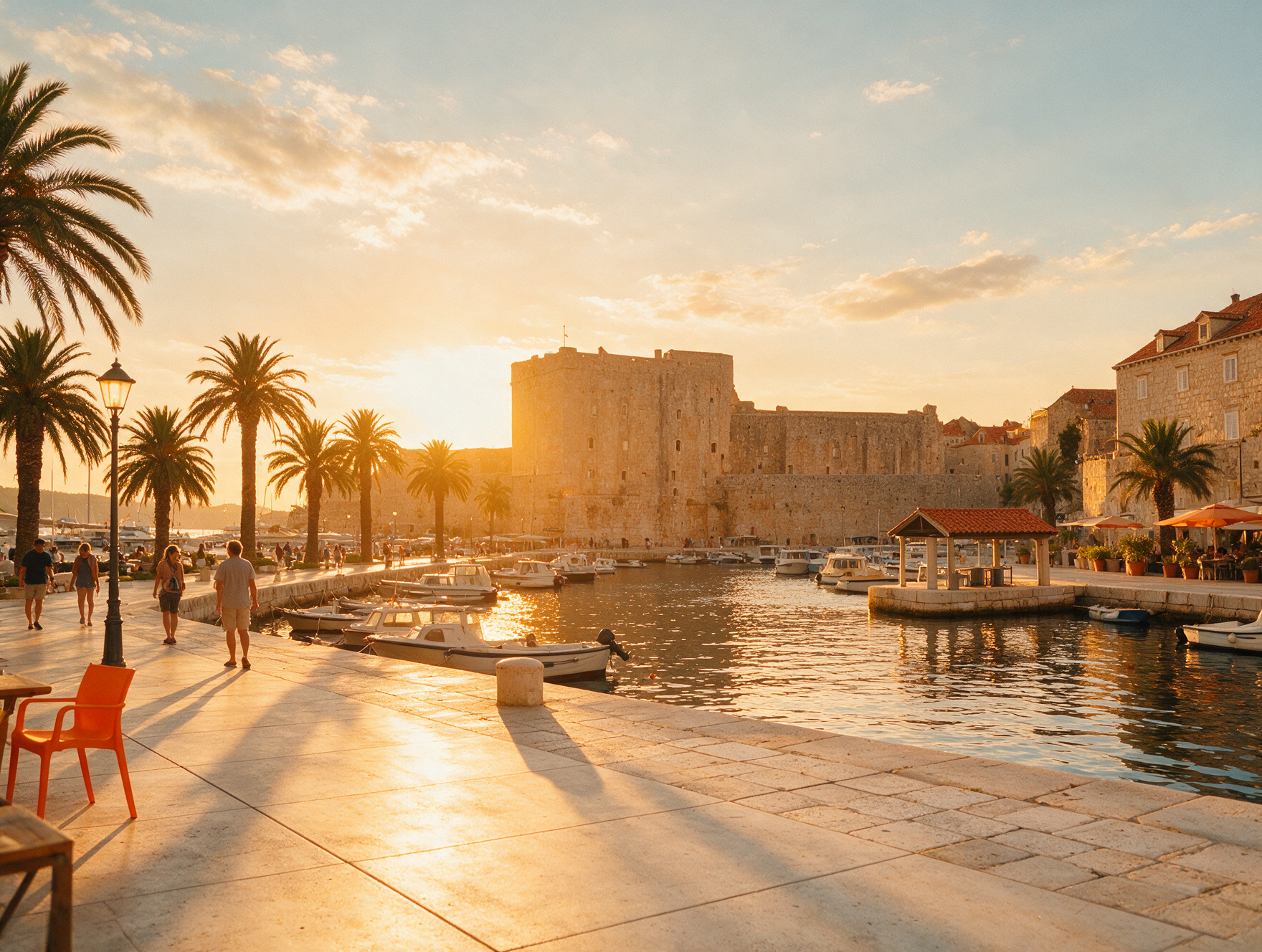
Here’s the part almost nobody mentions until you’re already there: Croatia requires every foreign visitor to be registered with the police within 24 hours of arrival. The good news is that you, the tourist, don’t do this yourself. A hotel, licensed apartment, or rental agency registers you automatically through a government system called eVisitor as part of check-in. If you’re staying somewhere properly licensed, this happens in the background and you’ll likely never notice it.
Where it becomes your problem is if you’re staying with friends or family rather than licensed accommodation. Your host is then responsible for registering you at the nearest administrative police station, sometimes called the “foreigners’ desk,” within that same 24-hour window — a tourist cannot register themselves. If you’re heading straight to a relative’s home from the airport, confirm beforehand that they know this step exists, rather than finding out on day three that nobody’s done it.
One practical flag: if a host or short-term rental owner doesn’t ask for your passport within a day of check-in, that’s often a sign the property isn’t properly licensed — worth a second thought before you hand over payment.
Beyond registration, keep an eye on your 90-day Schengen clock. It counts every day spent anywhere in the Schengen area, not just Croatia, within a rolling 180-day window, so a week in Croatia followed by a long weekend in Vienna three months later both draw from the same running total. Overstaying, even briefly, can complicate or block your next Schengen application.
Frequently Asked Questions
Can Indians get a Croatia visa on arrival?
No. Croatia doesn’t offer visa-on-arrival or e-visa options for Indians. The Schengen Type C visa must be obtained in advance, through VFS Global and the Croatian Embassy’s process, before you fly.
Does ETIAS mean Indians don’t need a visa anymore?
No, and this is a common point of confusion. ETIAS is a travel authorisation for nationalities that are already visa-exempt in the Schengen area, like the US, UK, or Japan. Indian citizens aren’t visa-exempt, so ETIAS has no bearing on the Croatia visa process either way. As of late 2026, ETIAS still hasn’t launched EU-wide and its timeline keeps slipping, but it wouldn’t apply to Indian travellers even once it does.
How long does it take to get a Croatia visa from India?
Standard processing is up to 15 calendar days, though it can extend to 30 or occasionally 45 days depending on the season and the individual file. Applying 6-8 weeks before travel gives you a comfortable buffer.
Can one Croatia visa be used to visit other Schengen countries?
Yes. A Croatia-issued Schengen visa lets you travel across all Schengen member countries for up to 90 days within any 180-day period, provided Croatia was genuinely your main destination or point of first entry when you applied.
What’s the minimum bank balance needed for a Croatia visa?
There’s no single official fixed figure published by the Croatian authorities — the requirement is “sufficient means,” assessed case by case. Most successful applicants show a healthy, consistent balance over the past 3-6 months rather than hitting a specific number, alongside proof of income back home.
Is travel insurance really mandatory for a Croatia visa?
Yes, without exception. You need coverage of at least €30,000, valid across the whole Schengen area for the entire trip, covering medical emergencies, hospitalisation, and repatriation. Applications submitted without a compliant policy are treated as incomplete.
Can I apply for a Croatia visa if I’m also visiting Italy or Slovenia on the same trip?
Yes, but only if Croatia is where you’re spending the most nights, or your first point of entry into the Schengen area if nights are split evenly.
How far in advance should I apply?
Up to six months before travel. Six to eight weeks ahead is a sensible target for most travellers, and earlier still during the May-September peak season.
Getting the visa sorted is honestly the least enjoyable part of a Croatia trip — everything after this gets more fun. Once your passport is back with the visa sticker in it, you still get to work out places to visit in Croatia, how many nights go to Dubrovnik’s old town versus Hvar’s waterfront cafés, and when to time your trip against the best time to visit Croatia for better weather and thinner cruise-ship crowds. Get Tripped’s Croatia trip planners handle both sides of that — from custom Croatia trips to full Croatia tour packages from India built around a Croatia 7 days travel itinerary or a longer loop through the Adriatic — so if you’d rather hand off the logistics, visa guidance included, get in touch and we’ll help you get from “do I need a visa” to actually boarding the flight.