Best Evening Spots in Lapland for the Northern Lights
Nobody can promise you the Northern Lights. Any guide that tells you otherwise is either lying or hasn’t spent enough nights standing in minus-twenty cold squinting at a sky that refuses to cooperate. What I can tell you, after a handful of Lapland winters, is where you actually have a fair shot — and where the resort marketing gets ahead of the real geography. This guide covers the specific evening spots across Finnish Lapland worth building your night around, not just the general “look up and hope” advice most articles settle for.
All of these sit within Finnish Lapland, the northern third of the country that forms the backbone of most Finland winter trips, and they range from easy resort-adjacent options to genuinely remote dark-sky locations worth the extra travel.
Table of Contents
- Best time to see the Northern Lights in Lapland
- How aurora viewing actually works
- Inari and Lake Inari
- Kilpisjärvi
- Levi’s fell, away from the resort lights
- Glass igloos: Kakslauttanen and similar properties
- A mistake to avoid
- What to wear and bring
- Where to stay
- FAQs
- Final word
Best time to see the Northern Lights in Lapland
The viewing season runs from roughly September through late March, with the long, dark winter months of December through February giving you the most hours of darkness to work with each night. Activity itself depends on solar conditions rather than the calendar, but statistically your odds improve the more nights you have and the darker your sky is — a single night in Rovaniemi is a much weaker bet than four nights out near Inari. Lights typically show, when they show at all, somewhere between 8pm and 3am, so this is a late-night activity, not an early-evening one.
How aurora viewing actually works
The aurora forecast (the Finnish Meteorological Institute’s aurora service and apps like Aurora Alerts are both reliable) tells you solar activity levels, but cloud cover matters just as much, and it’s the variable most first-timers forget to check. A strong solar forecast under total cloud cover gets you nothing. A guide who checks both, and who knows which nearby spots tend to have clearer skies on a given night, is worth the money if you’re only in Lapland for a short window and want to maximize your odds.
Inari and Lake Inari
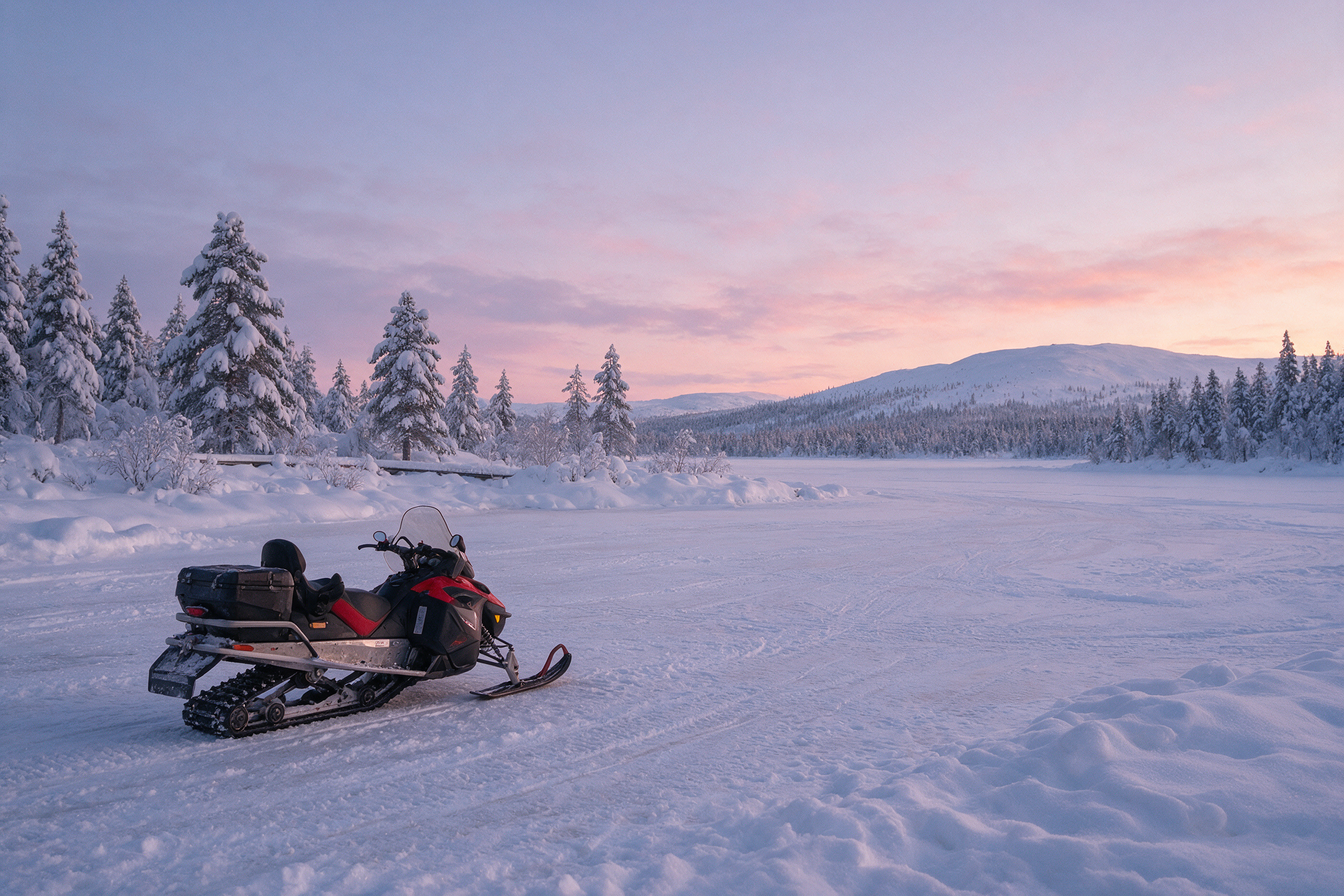
Inari, roughly 45 minutes north of Ivalo, sits far enough from any significant town that light pollution genuinely isn’t a factor once you’re a short drive from the village centre. Frozen Lake Inari itself, accessible by snowmobile tour in winter with hot drinks typically included, opens up a completely unobstructed horizon in every direction — one of the best wide-open vantage points in Finnish Lapland for catching lights that stretch across the whole sky rather than a narrow gap between trees. I’ve had one of my best aurora nights ever standing on that ice, and it wasn’t a fluke of luck so much as the location genuinely being that dark.
Kilpisjärvi
At Finland’s northwestern tip, wedged between Sweden and Norway, Kilpisjärvi is further north and further from anywhere than most travelers are willing to go, which is exactly why it delivers. Minimal light pollution, a dramatic fell backdrop, and a reputation among aurora researchers (there’s a genuine atmospheric research station here) for some of the clearest, most consistent viewing conditions in the country. It’s a serious detour to reach, but for a traveler whose whole trip is built around seeing the lights rather than fitting them in alongside other activities, it’s worth the extra distance.
Levi’s fell, away from the resort lights
Levi doubles as a genuinely solid aurora base, provided you get away from the village’s own lighting, which is more significant than people expect from a resort this far north. A short guided trip up onto the fell itself, or out to one of the surrounding forest clearings, puts you back in proper dark sky within a twenty-minute drive — a useful option if you’re already based in Levi for skiing and don’t want to add a separate long-distance aurora trip on top.
Glass igloos: Kakslauttanen and similar properties
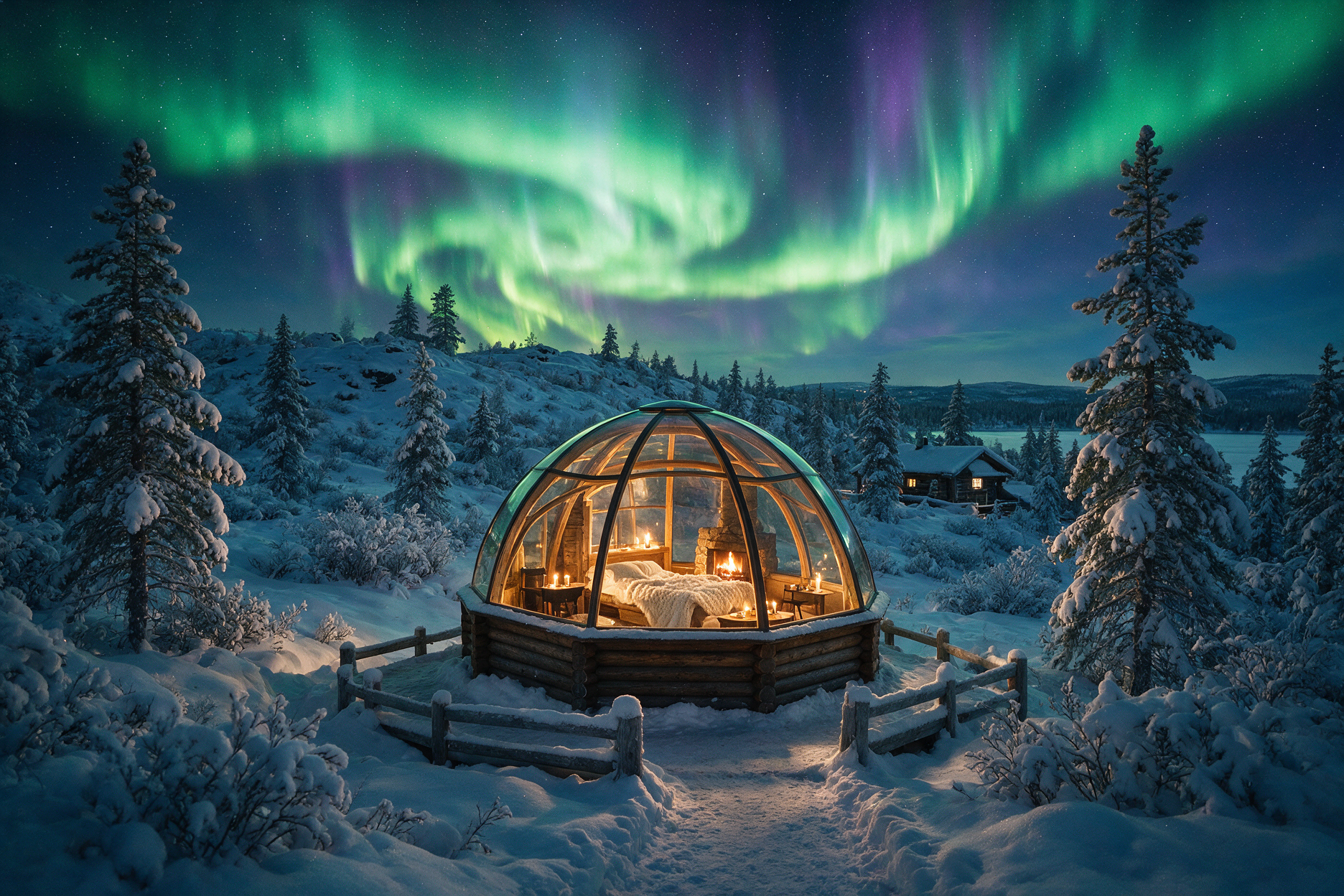
Glass-roofed igloo cabins have become the signature Lapland aurora experience, and properties like Kakslauttanen Arctic Resort and the Wilderness Hotel Inari do it well — waking up in the night to check the sky without leaving your bed has a genuine appeal, particularly in the coldest weeks of deep winter. I’ll be honest about the trade-off, though: I still preferred being outside actively chasing the lights over watching passively through glass, since the best displays often move and shift in ways that are more dramatic experienced directly in the cold than filtered through a window. Book the glass igloo for the comfort and the novelty, but don’t assume it replaces an actual night out if conditions are strong.
A fun fact worth knowing before you go
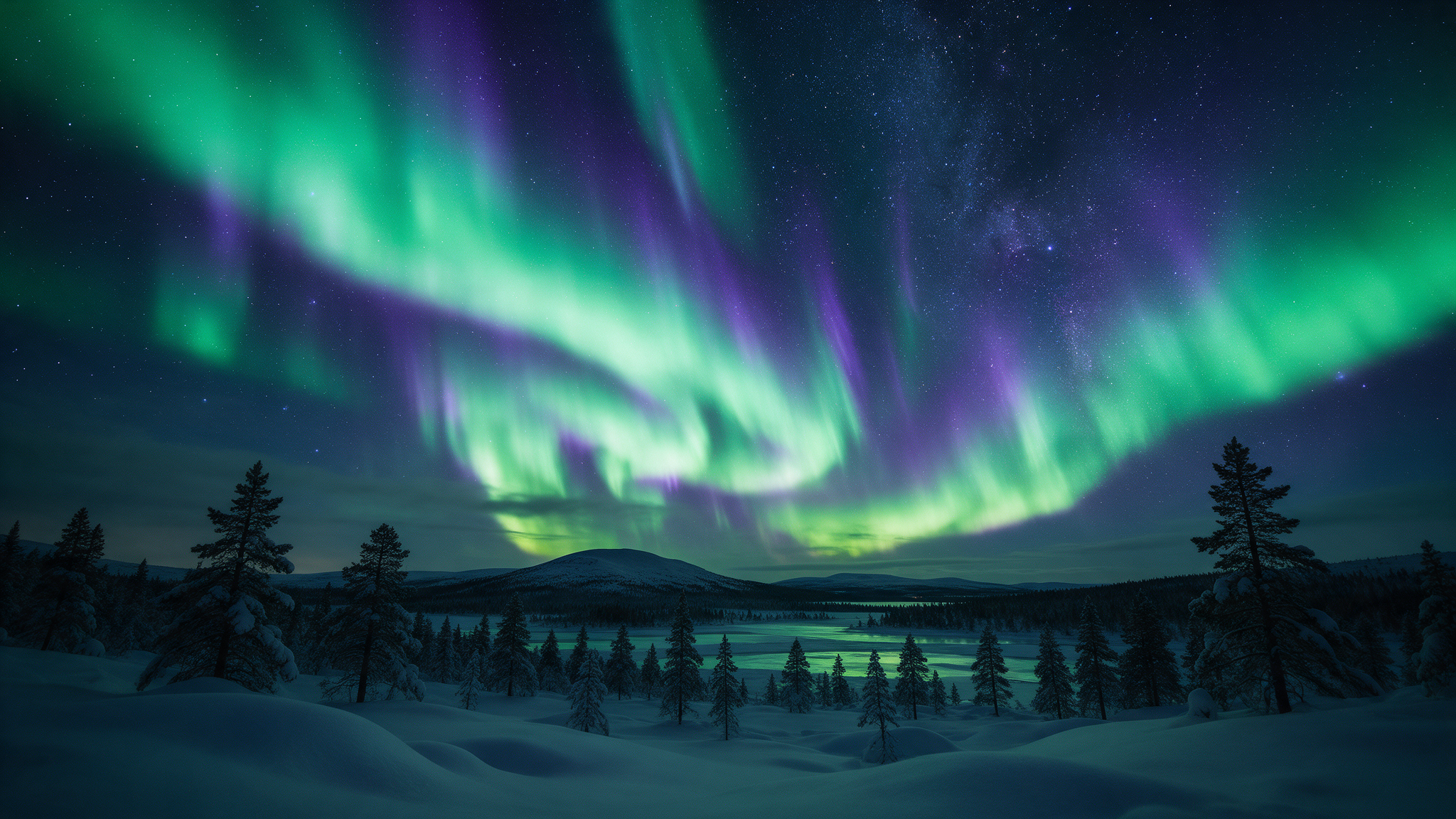
The aurora borealis isn’t random — it’s driven by charged particles from the sun colliding with Earth’s magnetic field, and solar activity runs on an 11-year cycle that genuinely affects how strong and frequent displays are in a given year. We’re currently past the peak of the most recent solar maximum, which has meant unusually strong and frequent aurora activity in the last couple of winters even at Lapland’s relatively southern latitude for this kind of viewing. It’s worth checking where the current cycle stands before you travel, since a strong solar year can noticeably shift the odds in your favour compared to a quiet one.
A mistake to avoid
Don’t book a single night anywhere in Lapland expecting a guaranteed sighting — I’ve watched too many travelers plan one aurora-hunting night as the centrepiece of an entire trip, only to hit total cloud cover. Build in at least three to four nights at a genuinely dark-sky location if seeing the lights is a priority, and treat any single clear night as a bonus rather than a plan.
What to wear and bring
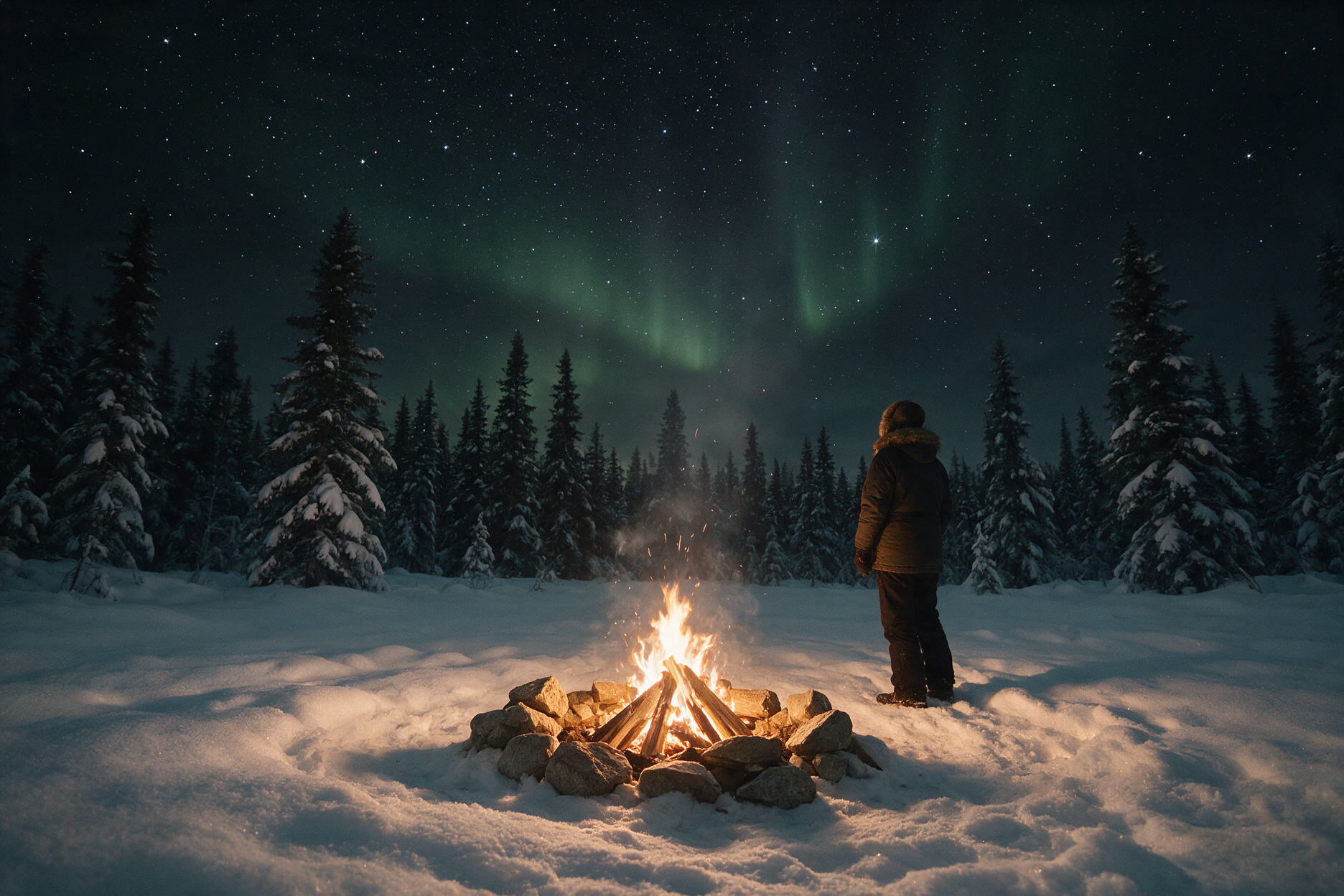
Expect temperatures between -20°C and -30°C on a clear winter night, which is exactly when the sky is most likely to cooperate. Layer heavily, choose mittens over gloves for better insulation while still being able to operate a camera, and bring hand and toe warmers — standing still for an hour in that cold is a different experience from moving around during the day. Our full Finland packing guide by season covers exactly what to bring for a Lapland winter trip.
Where to stay
Ivalo and Inari give the most direct access to Lake Inari’s dark skies, while Levi and Rovaniemi work better if aurora viewing is one part of a broader trip rather than the sole focus. Glass igloo properties around Saariselkä and Inari offer a middle ground — comfortable, dedicated aurora accommodation without the extra remoteness of Kilpisjärvi. Whichever base you choose, ask directly about the property’s light pollution and its typical aurora-viewing success rate through the season you’re travelling in — a good operator will give you a straight, unembellished answer rather than a marketing figure.
Practical notes: money, connectivity, and who this suits
Cards work everywhere, including at remote lodges and glass igloo properties, and cash is rarely necessary. Mobile coverage is patchy the further out you go toward Kilpisjärvi or onto Lake Inari’s ice, which is exactly why aurora tours run with an experienced guide rather than relying on a phone signal to coordinate — download offline maps in advance regardless. A smart-spending approach is booking two or three nights at a mid-range base near Inari rather than one night in an expensive glass igloo; you’ll see more aurora activity across multiple attempts than you will from a single premium night with no guarantee attached.
For photography, a wide-angle lens, a sturdy tripod, and a camera capable of manual long exposures matter far more than an expensive telephoto — the aurora fills a huge portion of the sky, not a narrow point. Couples and honeymooners are drawn to the glass igloos for good reason, and it’s a genuinely memorable setting even on a night with only faint activity. Solo travelers should stick to guided tours after dark rather than heading out alone on unfamiliar ice or fell terrain. Families with kids will find the wait-and-hope nature of aurora hunting tests younger children’s patience, so pairing it with a daytime husky or reindeer activity keeps the day balanced. Luxury travelers have strong options through the premium glass-cabin properties, though as noted above, comfort and visibility aren’t always the same thing.
Safety-wise, the main risk in Lapland’s dark, cold winter nights is exposure, not crime — the region is very safe from a personal-safety standpoint, but cold-weather precautions are non-negotiable, including always letting someone know your plans if you’re heading out independently.
FAQs
What’s the best month to see the Northern Lights in Lapland?
December through February gives the most hours of darkness, though late September to early October and March also offer good odds with milder temperatures.
Can I see the Northern Lights from Rovaniemi itself?
It’s possible on a strong night, but the town’s own light pollution reduces visibility significantly compared to Inari, Kilpisjärvi, or a guided trip outside the town.
Do I need a guide to see the aurora?
Not strictly, but a local guide who tracks both solar activity and real-time cloud cover, and knows which nearby spots are currently clearest, meaningfully improves your odds on a short trip.
Are glass igloos worth the extra cost?
They’re worth it for comfort and the experience itself, but treat them as a complement to, not a replacement for, an active night outside if conditions look strong.
How cold does it get during aurora season?
Clear nights, which are also the best viewing nights, commonly drop to -20°C to -30°C in deep winter, so serious cold-weather gear is essential, not optional.
Is Kilpisjärvi worth the extra travel time?
For a trip built specifically around aurora viewing, yes — it’s among the most consistently dark and clear locations in Finland, though it requires real commitment to reach.
Can I combine aurora viewing with skiing at Levi?
Yes, and it’s one of the more efficient ways to do both — daytime on the slopes, a guided evening trip out to darker sky nearby, without needing to relocate to a separate aurora-only base.
Do I need special camera gear to photograph the aurora, or will my phone work?
Modern smartphones with a dedicated night mode can capture a strong, bright display reasonably well if held steady, but a proper camera with manual exposure control, a wide-angle lens, and a tripod will consistently outperform a phone, especially for fainter or more distant activity.
Final word
The Northern Lights reward patience and darkness over any single perfect location, and Lapland gives you several genuinely strong options depending on how far you’re willing to travel and how much comfort you want along the way. None of them come with a guarantee, and any operator who implies otherwise is overselling the experience — but stacking the right location, enough nights, and a guide who actually checks the forecast gives you real, honest odds. If you’re planning a Lapland trip built around aurora viewing, our team can help sequence the right base and the right number of nights for your Finland itinerary.
Planning a Northern Lights trip to Finland? Get Tripped Travels builds custom Lapland itineraries that give the aurora a real chance, not just a single hopeful night.