Every second cab driver in Frankfurt will tell you the same thing without being asked: nobody comes here on purpose. They land at FRA for a connecting flight, take the train into town for a half-day meeting, snap one photo of the half-timbered houses on Römerberg square with the skyline behind them, and leave. That photo is real — the square is pretty, the skyline is genuinely one of the more dramatic in Europe for a city this size — but it’s also the entire Frankfurt experience for most visitors. Fifteen minutes, then gone.
That’s a shame, because Frankfurt is one of the few German cities where a single extra day changes your whole impression of it. This is a Germany travel guide entry built specifically for the traveler who has that day — someone with a genuine layover, a pre- or post-conference stopover, or a couple of nights tacked onto a longer Germany itinerary, who wants to see what the city looks like once you get past the banking towers and the postcard square.
We’re going to Sachsenhausen for apple wine served the way it’s actually been served for two centuries, to the quieter end of the Museumsufer where the crowds thin out but the collections don’t get any less interesting, into the glasshouses of the Palmengarten, and out to Bornheim, the neighborhood where Frankfurt residents actually spend their Saturday mornings. None of this requires a car, a tour guide, or more than a transit pass and a decent pair of shoes.
In This Guide
- Why Frankfurt Deserves More Than a Layover
- Best Time to Visit and How Many Days You Need
- Sachsenhausen and the Apfelwein Tavern Tradition
- The Museumsufer’s Quieter Museums
- The Palmengarten: Frankfurt’s Green Escape
- Bornheim: Where Frankfurt Actually Lives
- A Skyline View Nobody Photographs
- Getting Around and a Simple Two-Day Plan
- Where to Stay
- Visa, Flights and Planning From India
- Frequently Asked Questions
- Final Word
Why Frankfurt Deserves More Than a Layover
Frankfurt gets filed under “business hub” in most people’s heads, and it’s not wrong to file it there — the skyline exists because of banking, the trade fair grounds host some of the largest conventions in Europe, and the airport is the busiest in Germany. But a city built on money is also a city with the budget to fund excellent museums, keep centuries-old taverns in business, and maintain one of the largest botanical gardens in the country. The infrastructure that makes Frankfurt convenient for a work trip is the same infrastructure that makes it easy to see a lot in a short amount of time.
It also sits at the center of the country’s rail network, which matters if Frankfurt is one stop on a longer trip. If you’re weighing a Germany 7 days travel itinerary that also covers Munich, the Romantic Road, or Berlin, Frankfurt is usually the least-planned leg simply because everyone assumes there’s nothing to plan for. That assumption is the gap this guide fills.
Best Time to Visit and How Many Days You Need
The best time to visit Germany for outdoor sightseeing — May through September — applies to Frankfurt too, with the Palmengarten and the riverside Museumsufer parks at their best from late April onward. July and August bring long daylight (sunset past 9 pm) and warm, occasionally muggy, afternoons; this is peak season for Germany summer holidays in July and August, so book taverns and hotel rooms a little ahead. December has its own case to make: Frankfurt’s Christmas market on Römerberg has run since 1393 and is one of the oldest in the country, and Apfelwein taverns get considerably cozier once it’s cold enough to want the wood-paneled dining rooms.
For the itinerary in this guide, budget one full day at minimum and two if you can get them. One day covers the Museumsufer highlights and an evening in Sachsenhausen. Two days let you add the Palmengarten and Bornheim without rushing either, which is how we’d recommend doing it if Frankfurt is part of a longer Germany trip and not the whole trip.
Sachsenhausen and the Apfelwein Tavern Tradition
Cross the Main from the old town and you’re in Sachsenhausen, and within about ten minutes of walking you’ll notice the district has a drink of its own. Apfelwein — apple wine, called Ebbelwoi in the local Hessian dialect — is not cider in the sweet, carbonated sense most Indian travelers might expect. It’s dry, tart, faintly sour, and sits around 5-6% alcohol. The first sip can be a genuine surprise. By the second glass, in the right tavern, it makes sense.
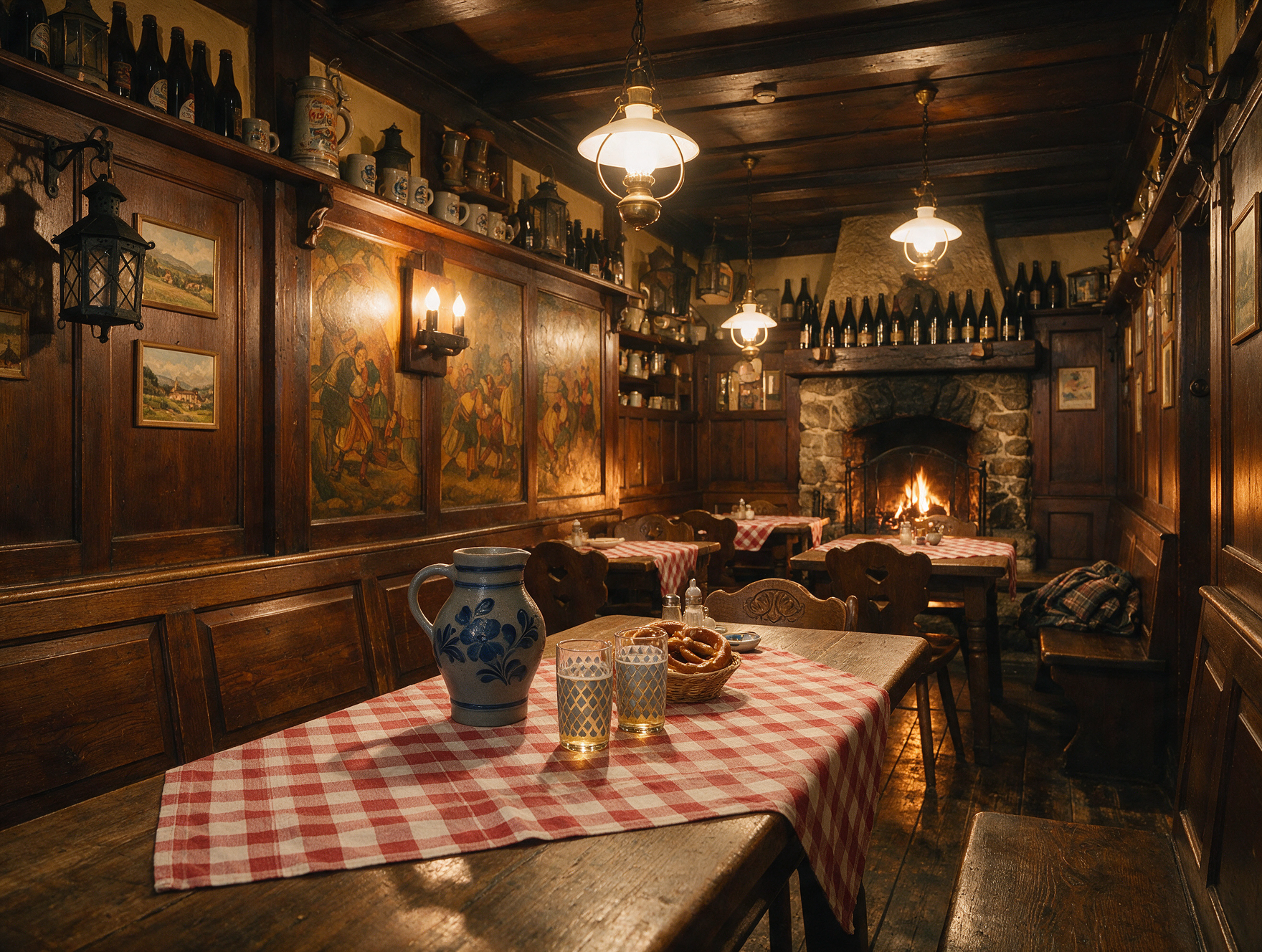
The tavern itself matters as much as the drink. Sachsenhausen’s Apfelwein houses — Apfelweinwirtschaften — are dark-wood rooms with painted murals on the walls, long communal tables, and a kitchen that’s been cooking the same handful of Hessian dishes for generations: Handkäse mit Musik (a marinated cheese dish, not for the faint-hearted — the “music” refers to the onions and caraway that follow you around for a while), Grüne Soße (a cold herb sauce over boiled eggs and potatoes), and Rippchen mit Kraut (pork ribs with sauerkraut). A few worth seeking out by name: Apfelwein Wagner, one of the oldest and most photographed; Zum Gemalten Haus, named for the murals painted directly onto its exterior; Dauth-Schneider on the lively Affentorplatz; and Frau Rauscher, a smaller, quieter option a few streets over.
The Bembel, the Geripptes, and How to Order
Apple wine arrives in a Bembel, a grey salt-glazed stoneware jug with blue cobalt detailing, and gets poured into a Geripptes — a squat glass with a diamond-cut pattern pressed into the surface. That pattern isn’t decorative flourish; it dates back to when innkeepers’ hands were greasy from the kitchen, and the ribbed surface kept the glass from slipping. It’s a small, checkable fact that most visitors never learn, and it’s the kind of detail that makes ordering a second round feel less like a tourist transaction and more like you’ve been let in on something.
You can order it pur (straight, the traditional way) or sauergespritzt (cut with sparkling water, a gentler entry point if the straight version is too sharp for your taste). One honest caveat: don’t order it ice-cold expecting something refreshing and fruity the way you might approach a cocktail — it’s served cool, not cold, and the flavor profile is closer to a dry, slightly funky cider than to juice. Go in expecting that and you’ll enjoy it a lot more than if you go in expecting apple juice with a kick.
Pair the tavern crawl with the Germany food trail ideas from our companion guide if you want to build out a full day of eating around the city, and if you’re traveling with someone who doesn’t eat meat, our vegetarian and vegan food guide to Germany has workable options for the Handkäse-averse.
The Museumsufer’s Quieter Museums
The Museumsufer — literally “museum riverbank” — is a stretch along the Main’s southern bank in Sachsenhausen where more than a dozen museums sit within a comfortable walk of each other. The Städel Museum gets almost all the attention, and deservedly so; its collection runs from Dürer to Picasso, and current adult admission is €19 (Tuesdays 3–6 pm it drops to €10). But the Städel is also where every tour group and cruise-day visitor ends up, and the museums on either side of it are frequently near-empty on the same afternoon.
A few worth your time instead of, or alongside, the Städel:
- Liebieghaus — a sculpture collection spanning ancient Egypt and Greece through the Renaissance and beyond, housed in a 19th-century villa with a genuinely pleasant riverside garden café.
- Museum Angewandte Kunst — design and applied arts from the 10th century to now, in a building by architect Richard Meier; adult admission runs €14 (€7 concession), and it stays open until 8 pm on Wednesdays if you want an evening visit.
- Deutsches Filmmuseum — a compact, well-curated history of film with a working art-house cinema attached, worth it on its own if a rainy afternoon shows up.
- Ikonen-Museum — a specialist collection of Russian, Greek and Bulgarian icons that most visitors have never heard of and that takes about 45 focused minutes to see properly.
If you’re planning to see three or more of these, the MuseumsuferTicket covers admission to all 39 participating museums across two consecutive days for €21 (€12 concession) — cheaper than paying for the Städel and one other museum separately, and it removes the pressure to cram everything into a single afternoon. Confirm current hours and any temporary closures on the Städel Museum’s official ticket page and the Museum Angewandte Kunst site before you go, since German museums are strict about Monday closures and this stretch is no exception — most of the Museumsufer shuts entirely on Mondays.
The Palmengarten: Frankfurt’s Green Escape
A short U-Bahn ride from the center, the Palmengarten is one of Germany’s largest botanical gardens, and it doesn’t get mentioned in the average “places to visit in Germany” roundup nearly as often as it should. The Victorian-era glasshouses hold a genuine tropical palm collection — humid, dense, and a strange contrast to whatever the weather is doing outside the glass — alongside a Mediterranean house, a rose garden, and enough open lawn that Frankfurt families treat it as their default weekend park rather than a tourist attraction.
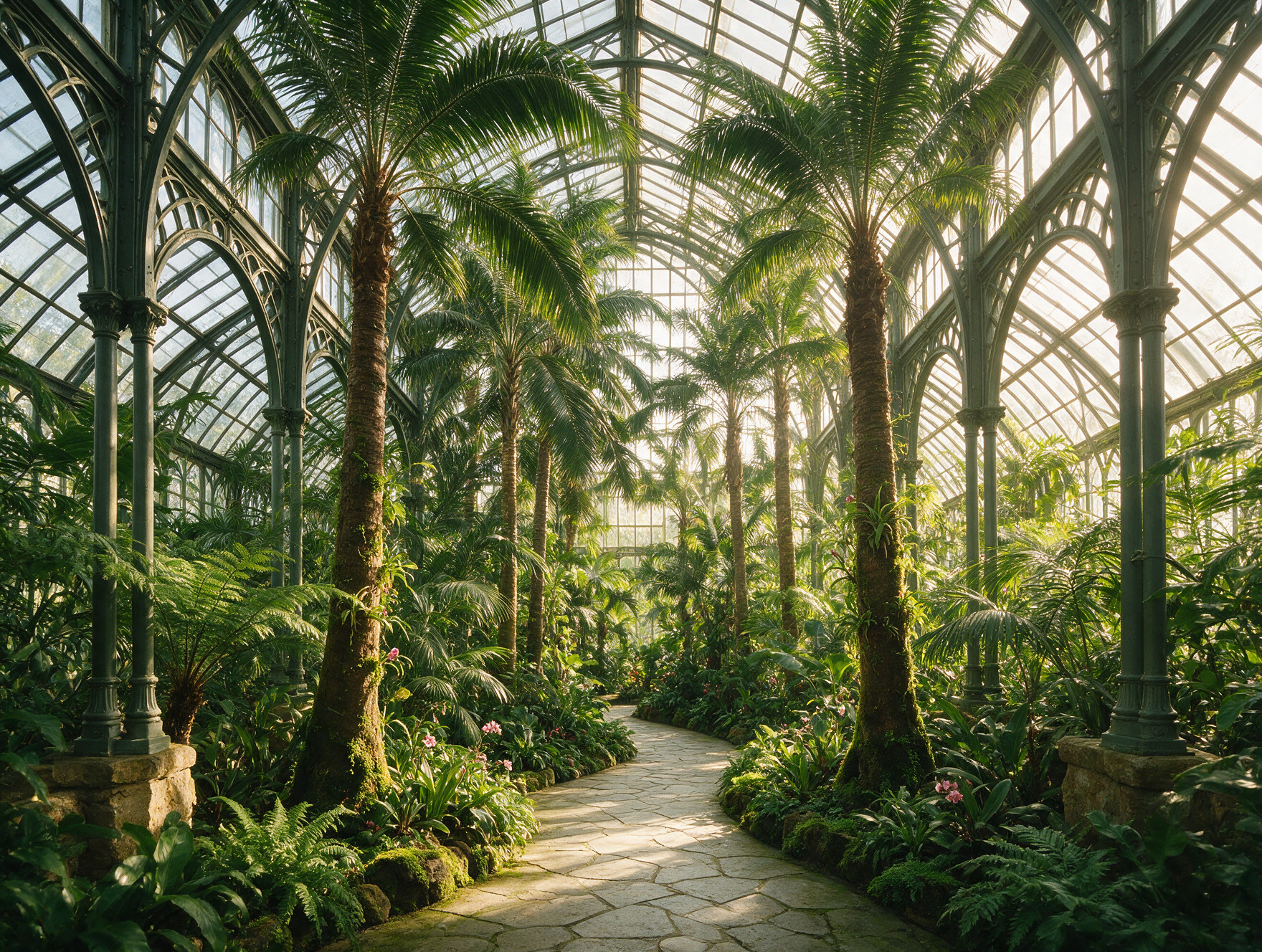
It’s open daily except December 24 and 31 — March to October, 9 am to 7 pm; November to February, 9 am to 4 pm, with the glasshouses closing an hour before the main gate. Adult admission is €9, and there’s a €5 “after work” ticket on weekdays from 6:30 pm, which is a genuinely good deal if you land in Frankfurt with a free evening and want somewhere calmer than a bar to decompress. Full details are on the Palmengarten’s official site. A mistake to avoid: don’t show up right at closing expecting a quick look — the show houses lock up an hour early, and that’s usually the part people actually came for.
Bornheim: Where Frankfurt Actually Lives
If Sachsenhausen is where Frankfurt drinks and the Museumsufer is where it shows off its culture, Bornheim is where it just lives. Locals call it “das lustige Dorf” — the merry village — a nickname that predates any tourism marketing and has stuck because it’s accurate. Reach it on the U4, get off, and walk up Berger Straße, reputedly the longest shopping street in Frankfurt, where the upper stretch is lined with independent bookshops, secondhand clothing racks, small delis, and cafés that have no interest in being Instagrammable.
The neighborhood’s rhythm centers on the Bornheimer Wochenmarkt, a Wednesday-and-Saturday market that’s run since 1980 around the small clock tower locals call the Uhrtürmchen. It’s produce, cheese, flowers, and coffee, and it’s shopping as a social occasion rather than an errand — plan to stand around and people-watch for twenty minutes even if you’re not buying anything. Bornheim keeps its own Apfelwein tradition going too, separate from Sachsenhausen’s more visited scene: Apfelwein Solzer has reportedly been pouring cider since the 16th century, and Gasthaus Zur Sonne has stood for more than 250 years, both serving the same Hessian staples to a crowd that’s mostly neighborhood regulars rather than visitors.
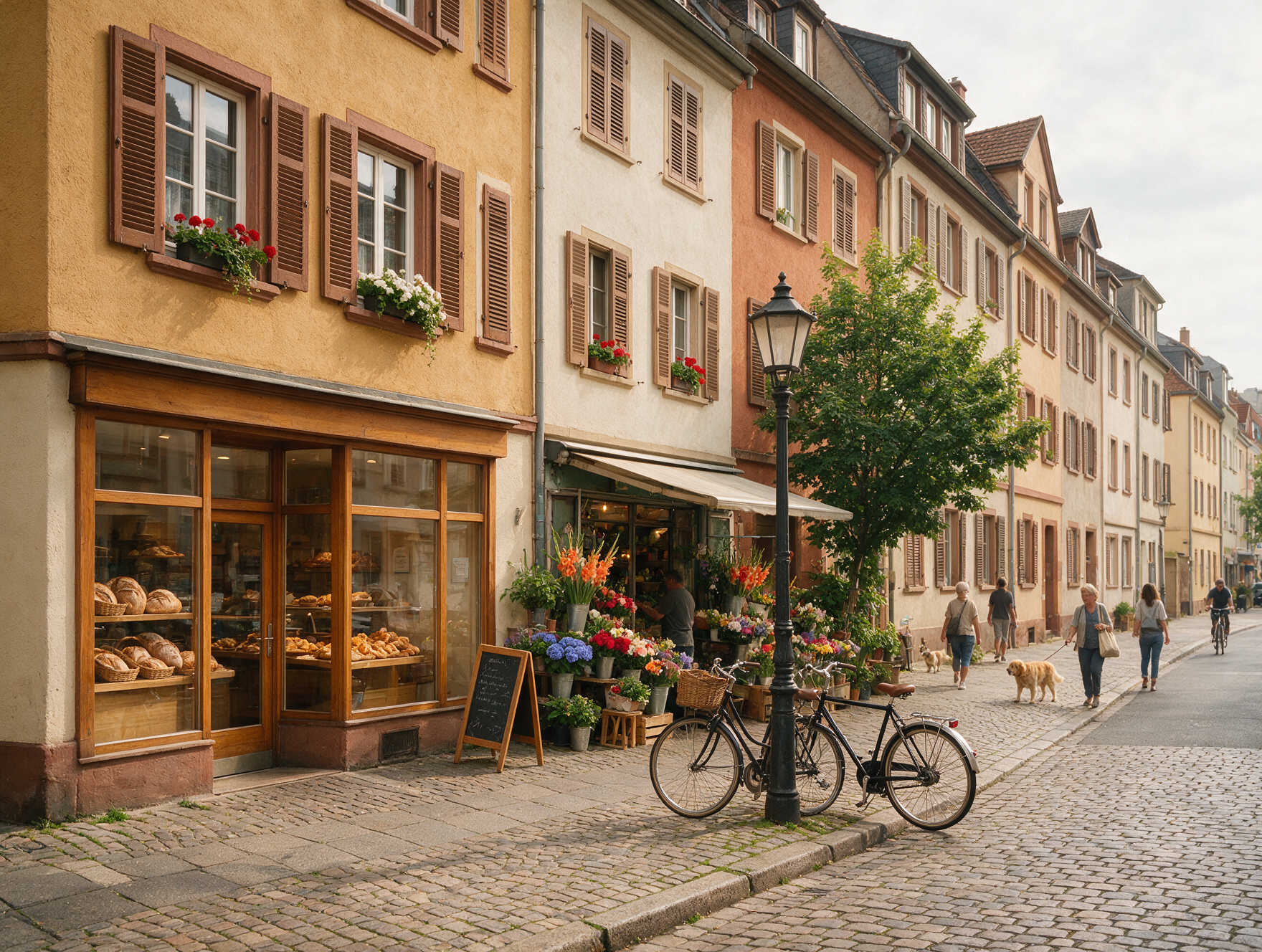
This is the neighborhood to send a curious traveler who’s already done the Römerberg photo and wants to see a version of Frankfurt with no landmark in the frame at all — just a normal Tuesday morning in a German city.
A Skyline View Nobody Photographs
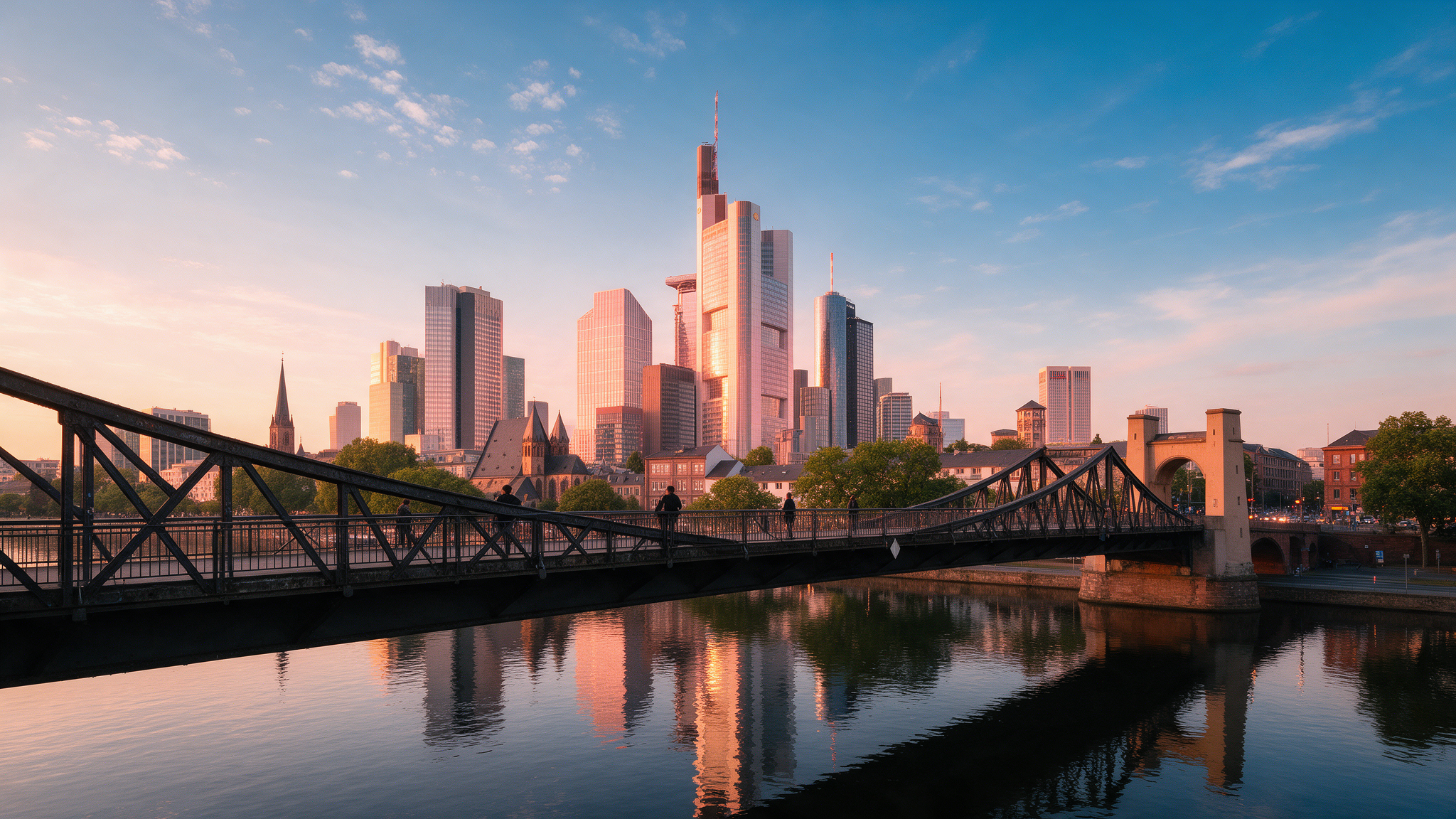
Everyone who visits Frankfurt eventually ends up at the Main Tower observation deck, and it’s a fine view — but it’s also crowded, ticketed, and the same photo everyone else on the deck is taking at the same time. The better alternative costs nothing: the Deutschherrnbrücke, a pedestrian and rail footbridge connecting Sachsenhausen to the Ostend district. Locals use it to commute. Visitors barely know it exists. From the middle of the bridge, the “Mainhattan” skyline — Commerzbank Tower, Main Tower, and the rest of the cluster — lines up across the water with none of the queue, the ticket counter, or the gift shop at the bottom. There’s also a small acoustic art installation on the bridge, Sonic Vista, that turns ambient city sound into an odd little soundscape while you’re taking photos. Go around golden hour for the best light on the glass towers, and it’s a five-minute walk from most of the Apfelwein taverns in Sachsenhausen, so it slots naturally into an evening that starts with dinner and ends with the skyline lighting up. More on the spot is available via Frankfurt’s official tourism site.
Getting Around and a Simple Two-Day Plan
Frankfurt’s public transit — a combined U-Bahn, S-Bahn, tram and bus network run by RMV — is efficient enough that a car is a genuine liability rather than a convenience within the city. Buy a day pass if you’re moving between neighborhoods more than twice; our Germany public transit guide walks through ticket types and validation rules that trip up a lot of first-time visitors (validate paper tickets before boarding — inspectors do check, and “I didn’t know” isn’t an accepted excuse).
A workable two-day version of everything above:
- Day 1 morning: Römerberg and old town, quickly, then across the river to the Museumsufer for two or three museums using the MuseumsuferTicket.
- Day 1 evening: Dinner and Apfelwein in Sachsenhausen, then a walk to the Deutschherrnbrücke for the skyline at dusk.
- Day 2 morning: Palmengarten, especially if the weather’s uncertain — the glasshouses work rain or shine.
- Day 2 afternoon: U4 to Bornheim, the Wochenmarkt if it’s a Wednesday or Saturday, and a slow walk up Berger Straße.
If Frankfurt is a standalone stop rather than part of a longer trip, this is close to a complete custom Germany itinerary on its own. If it’s one leg of something bigger, it plugs in cleanly at the start or end of a route that also covers the Romantic Road, Munich, or a Berlin and Munich tour package.
Where to Stay
Skip the airport hotel cluster unless you have a genuine early flight. For a mid-range to luxury stay with actual character, look at the Westend for a quieter, residential base close to the Palmengarten, or Sachsenhausen itself if you want to walk home from dinner rather than take transit. The city center around the old town works well if museums and the Römerberg are your priority and you don’t mind a livelier, more commercial street scene outside your window. Frankfurt’s hotel stock skews business-traveler-heavy, which is good news for weekend rates — Friday and Saturday nights are frequently cheaper than midweek, the opposite of most leisure destinations.
Visa, Flights and Planning From India
Frankfurt Airport (FRA) is the primary gateway for most Europe tour packages including Germany that start from India, with direct Lufthansa flights from Delhi, Mumbai and Bengaluru. Indian passport holders need a Schengen visa in advance — apply at least three to four weeks out, since Germany’s visa appointment slots tighten up considerably during the April-to-October travel season. Our Germany visa guide for Indian travelers covers the document checklist and appointment process in more detail, since getting this wrong is the single most common reason a Germany trip gets delayed.
On cost: a Germany trip cost from India varies a lot by season and travel style, but Frankfurt itself is mid-priced by German standards — a comfortable mid-range day (hotel, meals, a museum ticket or two, local transit) typically lands somewhere in the €120-180 per person range, more if you’re doing multiple museums or a nicer dinner in Sachsenhausen. If you’re building a custom Germany itinerary that includes Frankfurt alongside other cities, a Germany travel agency in Mumbai or a full-service planner can usually get you better combined pricing on the FRA-based flights and rail connections than booking each city separately. Indian food in Germany for tourists is easier to find than most expect, incidentally — Frankfurt has a reasonable spread of Indian restaurants near the city center for anyone who wants a familiar meal between Apfelwein tavern visits.
You can browse Get Tripped’s full Germany destination page for package options that route through Frankfurt, and our free things to do in Germany guide is worth a look if you want to pad out the itinerary without adding to the ticket budget.
Frequently Asked Questions
Is Frankfurt worth visiting, or is it really just a layover city?
It’s worth a day or two on its own merit. The Museumsufer alone justifies a full day for anyone interested in art or design, and Sachsenhausen’s tavern culture is a genuinely distinct food-and-drink tradition you won’t find replicated elsewhere in Germany.
How many days do you need in Frankfurt?
One full day covers the essentials — old town, one or two museums, and an evening in Sachsenhausen. Two days let you add the Palmengarten and Bornheim comfortably.
Is Frankfurt walkable?
The old town, Museumsufer and Sachsenhausen are walkable from each other across the river. Bornheim and the Palmengarten are better reached by U-Bahn — both are a short, easy ride from the center.
What is Apfelwein and is it worth trying if I don’t usually drink cider?
It’s a dry, tart apple wine, distinct from sweet commercial ciders, served in a Bembel jug and Geripptes glass in Sachsenhausen’s traditional taverns. It’s worth trying at least once as a cultural experience even if it’s not to your taste — order it sauergespritzt (cut with sparkling water) if the straight version is too sharp.
Do I need a car to see Frankfurt beyond the city center?
No. The RMV public transit network (U-Bahn, S-Bahn, trams, buses) covers everything in this guide, including Bornheim and the Palmengarten, and parking in the center is expensive and limited.
Is the Museumsufer worth it if I only have time for one or two museums?
Yes — pick based on interest rather than fame. The Städel is the best-known, but Liebieghaus, Museum Angewandte Kunst and the Deutsches Filmmuseum are strong on their own and considerably less crowded.
What’s the best time of year to visit Frankfurt specifically?
Late spring through early autumn (May to September) for outdoor time in the Palmengarten and along the river, or December for the historic Christmas market and the Apfelwein taverns’ cold-weather atmosphere.
Do Indian travelers need a separate visa for Frankfurt, or does the Schengen visa cover it?
A standard Schengen visa covers Frankfurt along with the rest of the Schengen area — no separate permit is needed, but it should be applied for well ahead of a summer travel date given seasonal demand.
Final Word
Frankfurt’s reputation as a business layover isn’t undeserved — it genuinely is one of Europe’s busiest transit hubs, and most visitors do treat it that way. But that same reputation is exactly why it stays uncrowded in the places that matter: a MuseumsuferTicket afternoon with half-empty galleries, a Bembel of apple wine in a 200-year-old tavern, a Saturday morning market in a neighborhood most guidebooks skip entirely. None of it requires more than a day or two, a transit pass, and a willingness to walk past the Römerberg photo spot instead of stopping at it.
If Frankfurt is one stop on a bigger Germany trip, our team at Get Tripped can build it into a full custom Germany itinerary alongside Munich, the Romantic Road, or Berlin — reach out and we’ll put together a route and cost estimate based on when you’re planning to travel.