Germany Packing Guide by Season: What to Actually Bring for Every Month
A friend flew into Frankfurt in what she called “European summer” — a linen kurta, sandals, and one thin cotton scarf for the whole trip. It was 14°C and raining sideways by the time she reached the train platform. She spent her first two days in Germany buying a rain jacket and closed shoes she could have packed from home for a third of the price. This happens constantly with Indian travelers, and it’s not really about packing wrong — it’s about assuming Germany’s seasons behave like a slightly cooler version of ours. They don’t. Spring can feel like Delhi’s winter. Summer can turn into a 12°C evening with no warning. And Bavaria in May is a different climate entirely from Berlin in May, because altitude changes everything once you’re near the Alps.
This guide breaks down exactly what to pack for Germany month by month — spring, summer, autumn, winter — plus the cross-cutting stuff (adapters, footwear, layering, laundry) that matters no matter when you go. If you’re still deciding the best time to visit Germany for your trip, the seasonal breakdowns below should help you pick a window and then pack correctly for it, rather than the other way around. This matters as much as your itinerary — whether you’re mapping out places to visit in Germany for a two-week loop or working out your Germany trip cost from India including gear, packing for the wrong season can mean buying a coat in Munich you could have brought from home for a fraction of the price.
Table of Contents
- Spring in Germany (March–May): What to Pack
- Summer in Germany (June–August): What to Pack
- Autumn in Germany (September–November): What to Pack
- Winter in Germany (December–February): What to Pack
- Adapters and Electronics
- Footwear: Cobblestones, Castles, and Everything Between
- The Layering Strategy That Actually Works
- Laundry on a Multi-City Trip
- What to Buy in Germany Instead of Carrying It
- FAQs
- Final Word
Spring in Germany (March–May): What to Pack
Spring is the season Indian travelers get wrong most often, because “spring” in our heads means mild and pleasant. German spring is a mood swing. Berlin in March is still hovering around 3–10°C with a raw wind off the Spree, and by May it’s climbed to a genuinely nice 9–20°C range — but that’s the northern lowlands. Head south to Munich and Bavaria and April is a different story: roughly half the days in April in the foothills near Neuschwanstein still dip below freezing overnight, and average daytime temperatures there hover around 8°C well into the month. People land in Munich in late April dressed for a mild European spring and end up shivering on the Marienbrücke bridge looking at the castle, wind cutting through a light jacket that was fine in the city an hour earlier.
The upside: this is cherry blossom season, and it’s genuinely lovely. Bonn’s Heerstraße turns into a tunnel of pink blooms in early-to-mid April, and Berlin has its own smaller blossom pockets. Germany’s tourism board has a good rundown of where and when it peaks each year if you want to time a visit around it.
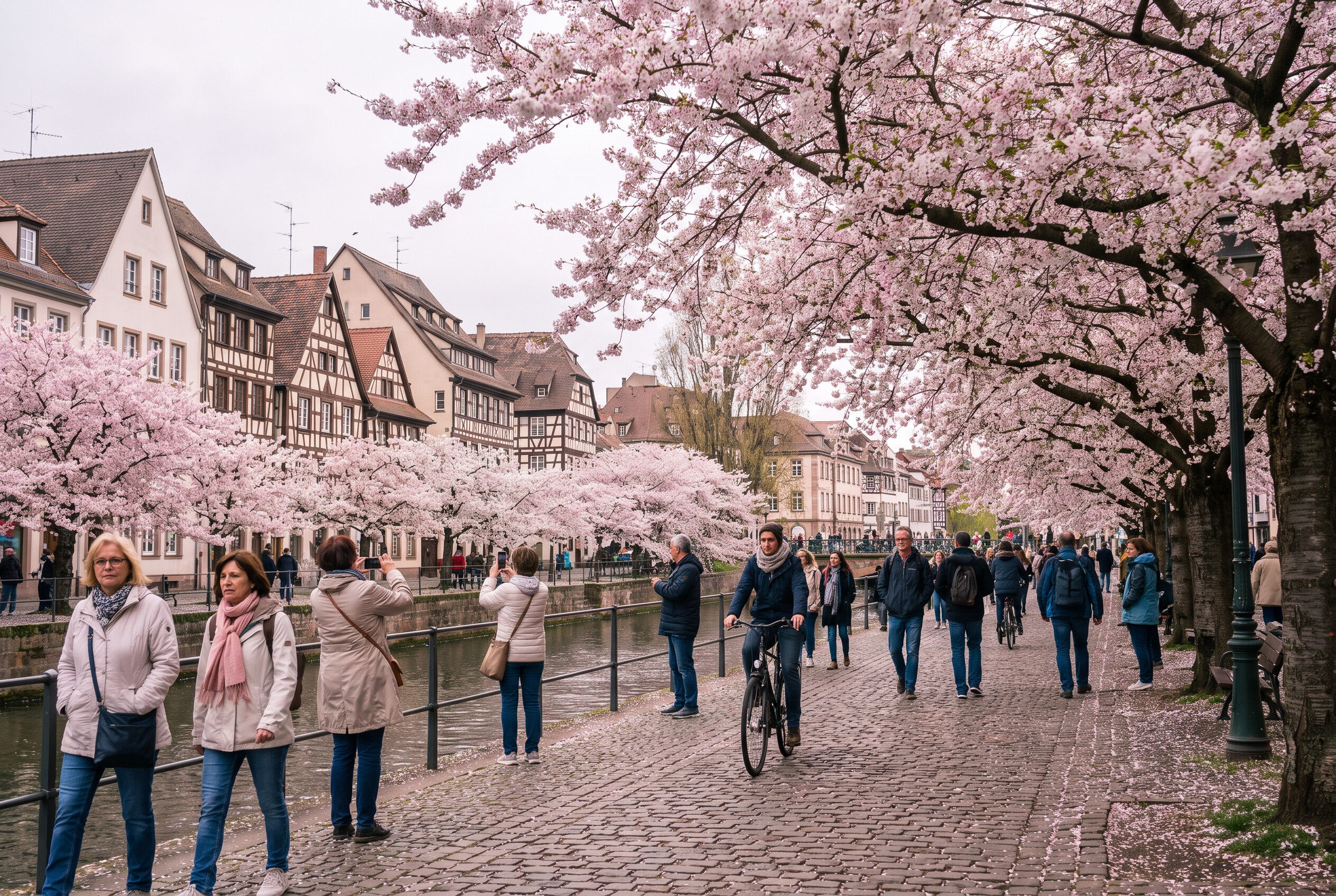
What to pack for spring:
- 2–3 long-sleeve base layers (thin merino or cotton-blend, not thick)
- A mid-layer fleece or wool jumper — pack at least one even if you’re only visiting cities
- A proper windproof, water-resistant jacket (not just a cotton hoodie under a rain shell)
- One warmer jacket or a packable puffer if you’re going anywhere near Bavaria or the Alps in March/April
- Closed shoes with actual grip — spring rain plus cobblestones is slippery
- A scarf and light gloves for early mornings, especially at altitude
- An umbrella that survives wind (the small collapsible ones flip inside out constantly)
Good for: cherry blossoms, thinner crowds than summer, castle visits with clearer light for photos before the summer haze sets in.
Bad for: anyone who packs light because they assume “spring equals mild” — March especially still bites, and alpine regions stay cold well past what the calendar suggests.
Summer in Germany (June–August): What to Pack
This is where the opposite mistake happens. Travelers hear “European summer” and pack like it’s a uniform 25°C everywhere for three months straight, then either roast in a heatwave with nothing breathable, or freeze on a 13°C evening because they left every layer at home. Germany’s summer swings both ways. Berlin regularly hits 22–26°C during the day in July and August, and heatwaves pushing past 30°C aren’t rare anymore. But the moment the sun dips, especially outdoors at a beer garden or river cruise, it can drop into the low teens, and a sudden evening thunderstorm can knock ten degrees off in twenty minutes.
Germany trips from April to October generally get the most stable, plannable weather, and Germany summer holidays in July and August specifically line up with German school vacations — which means popular sites like Neuschwanstein, the Rhine valley towns, and Munich’s old town get genuinely crowded. If you’re booking a summer trip, plan for both the heat during the day and the fact that early mornings and late evenings still call for a light layer.
What to pack for summer:
- Breathable cotton or linen shirts and dresses — but at least 2 of them long-sleeved for sun and mosquitoes near lakes/rivers
- One light rain jacket, always — summer storms in Germany arrive fast and leave fast
- A packable light cardigan or hoodie for evenings, trains (German air-conditioning runs cold), and beer gardens after dark
- Comfortable walking shoes that breathe — you will be on cobblestones and in museums for hours
- Sunglasses and a hat — summer sun in northern Europe at these latitudes stays strong well past 7pm
- A reusable water bottle (tap water is safe and free refill points are common)
Good for: long daylight hours (sunset around 9:30pm in Berlin in June), beer gardens, river cruises, the Rhine and Moselle valleys in full green.
Bad for: anyone chasing quiet, empty photos — this is peak tourist season and peak price season for flights and hotels from India.
Autumn in Germany (September–November): What to Pack
September starts warm and finishes cold, and the swing across these three months is the widest of any season. Early September in Berlin can still touch 19–21°C, but by November the daytime high has dropped to around 7–9°C with the wind making it feel colder. Munich, again, runs a notch chillier and earlier — by late October you’re looking at highs around 13–14°C and mornings near freezing in the foothills.
This is also Oktoberfest season — the 2026 festival runs from 19 September to 4 October at Munich’s Theresienwiese, and if you’re headed there, pack for genuinely variable weather: warm afternoons in the tents but cold nights walking back, especially since the festival grounds are outdoors. We’ve covered the planning details, tent reservations, and timing specifics in our full Oktoberfest 2026 Munich guide if that’s part of your trip.
The Black Forest in autumn is where this season really shows off — the beech and larch turn gold and copper against dark pine, and it’s worth building a day or two around. Just know that the region’s weather changes fast with elevation; you can have full sun on a ridge while the valley below sits in cold fog for days, which is a known pattern locals just call the inversion. Bring a layer you can add or remove quickly rather than one heavy coat that’s wrong for half the day.
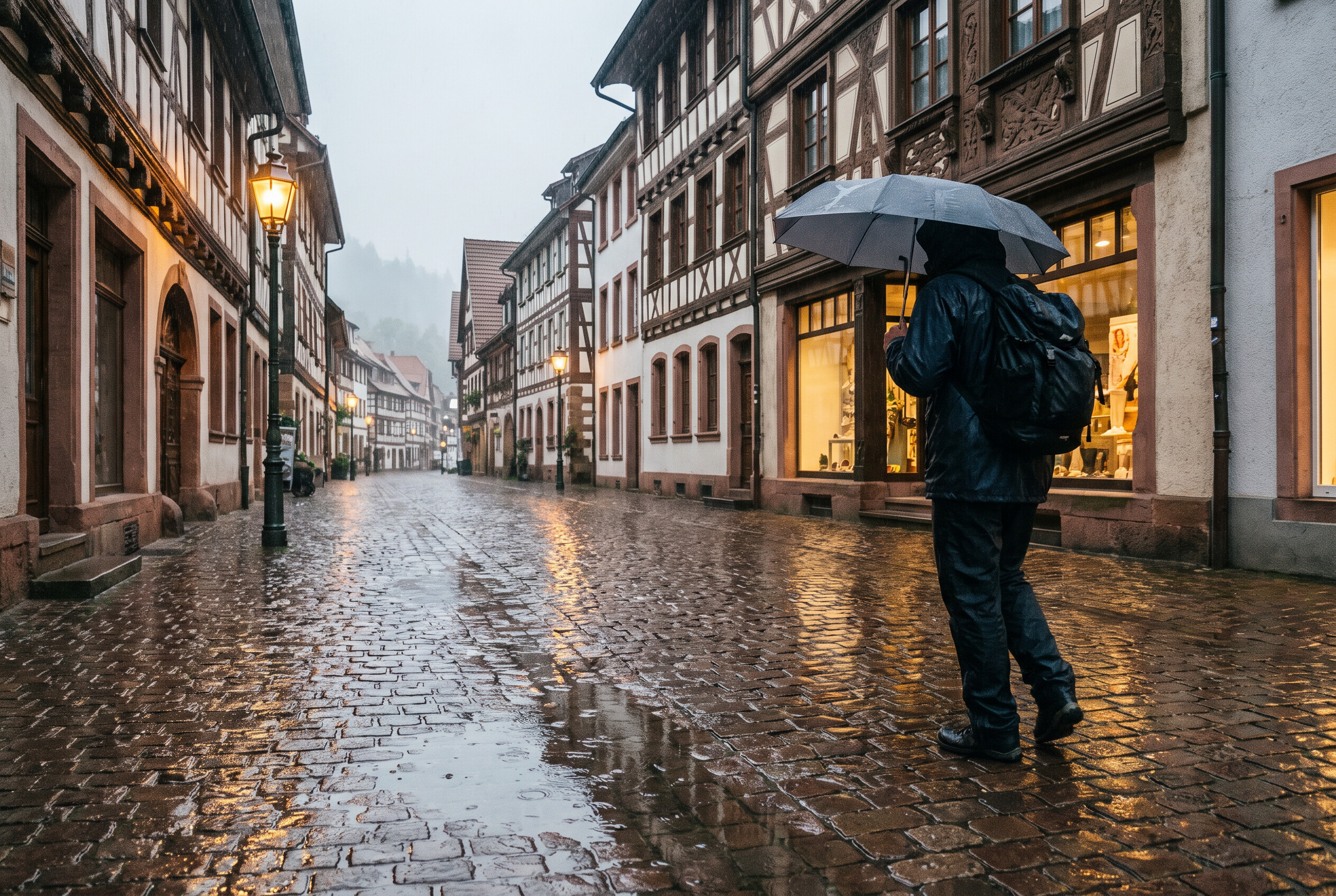
What to pack for autumn:
- A proper insulated jacket by mid-October, not just a fleece
- Waterproof, broken-in shoes — Black Forest trails and Rhine towns both get wet underfoot
- Thermal base layer for November trips, especially early mornings
- A packable rain shell, kept accessible, not buried in checked luggage
- A warm hat and gloves once you’re into late October
- Layers you can peel off — sunny midday can still hit the high teens even as mornings turn cold
Good for: Oktoberfest, Black Forest colour, fewer crowds than summer, still-decent daylight in September.
Bad for: anyone who packed only a light jacket assuming “October isn’t winter yet” — Bavaria disagrees.
Winter in Germany (December–February): What to Pack
Winter is where under-packing actually gets uncomfortable rather than just inconvenient. Berlin’s daytime highs sit around 2–4°C from December through February, with nights regularly below freezing, and the wind is the part people don’t expect — it’s a flat, damp cold that goes through a normal jacket in a way dry cold doesn’t. Munich runs colder still; January there averages close to freezing during the day and well below it at night, and this is the one season where Bavaria’s Alpine closeness works in a traveler’s favour if you like snow, and against you if you didn’t pack for it.
Munich’s Christkindlmarkt at Marienplatz runs from 20 November to 24 December 2026, and it’s one of the better reasons to visit Germany in winter at all — mulled wine, wooden stalls, a lit Christmas tree, and a city that feels genuinely festive rather than performing it for tourists. Just dress like you mean it: standing outside browsing stalls for two hours is a different challenge than walking briskly between indoor stops.
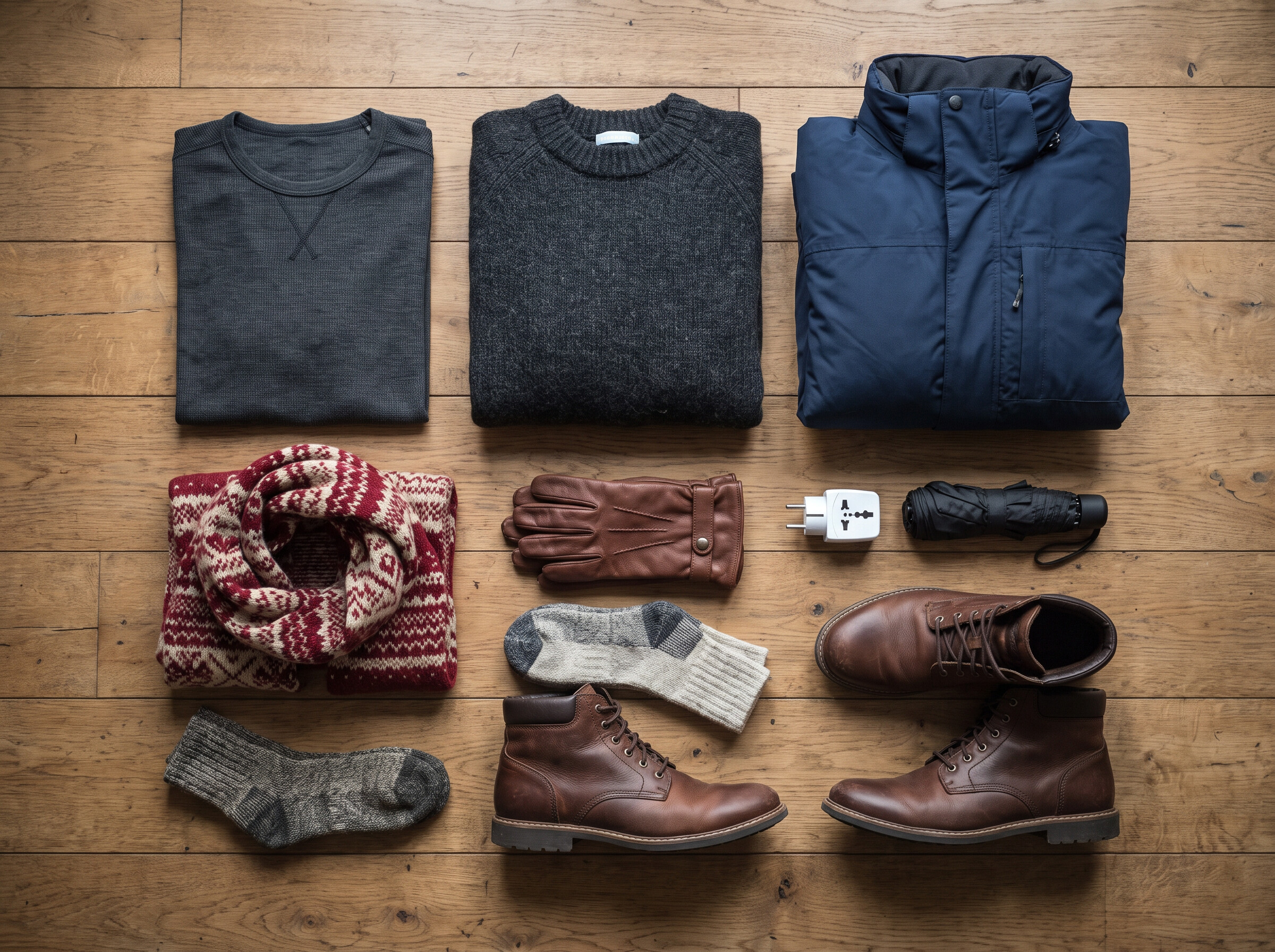
What to pack for winter:
- A proper insulated, windproof winter coat — not the “city coat” that’s fine for a 30-minute commute but not two hours outdoors
- Thermal base layers, top and bottom — this is not optional in December/January
- A wool sweater or two as a mid-layer
- Waterproof, insulated boots with real tread — icy cobblestones near Christmas markets are genuinely slippery
- A warm hat that covers your ears, plus gloves and a scarf
- Wool or thermal socks — cotton socks get cold fast standing around outdoor markets
- Hand warmers if you run cold — small, cheap, and worth it for a full evening at a market
Good for: Christmas markets, snow in Bavaria and the Alps, a quieter, moodier version of cities that are slammed in summer, genuinely good hotel rates outside the market weekends.
Bad for: short daylight hours (sunset around 4pm in December) and anyone who thinks a single wool coat covers “winter in Germany” the way it might cover a mild Indian winter.
Adapters and Electronics
Germany runs on 230V, 50Hz, using Type F sockets (the two-round-pin “Schuko” plug) — Type C Europlugs also fit, since Type F sockets accept both. India also runs at 230V, so your Indian chargers, laptop bricks, and camera chargers will work fine on the voltage side; you just need a plug shape adapter, not a voltage converter. One universal travel adapter covers Germany and most of the rest of continental Europe you might add to the trip. Carry a small power strip or a multi-port adapter if you’re travelling with two people and a phone, camera, and laptop each — hotel rooms in older German buildings often have fewer sockets than you’d expect, sometimes just one near the desk.
Footwear: Cobblestones, Castles, and Everything Between
Footwear is the single most under-planned item on an Indian traveler’s Germany packing list. Old towns in Cologne, Frankfurt, and Bavaria are built on real cobblestone, not the flat decorative kind — uneven, occasionally wet, and hard on thin-soled shoes or heels. Add hiking sections (Neuschwanstein’s approach path, Black Forest trails) and you need actual grip, not just “comfortable sneakers.”
Bring one pair of broken-in, closed, waterproof walking shoes or boots with decent tread, and treat them as your default for the whole trip. A second pair — something dressier for dinner, or sandals if you’re travelling in peak summer — is fine, but don’t pack three pairs of “just in case” shoes; you’ll wear the one comfortable pair every single day and regret the suitcase space the others took.
The Layering Strategy That Actually Works
Forget packing “for the season” and think in layers instead, because Germany’s daily temperature swing is often bigger than the difference between two seasons back home. The system that works:
- Base layer: thermal or moisture-wicking, against the skin. Thin merino wool works across nearly the whole year — surprisingly cool in mild weather, genuinely warm layered up in winter.
- Mid layer: a fleece, wool jumper, or light down layer that traps heat. This is the layer most Indian travelers skip in spring and autumn, and it’s the one that matters most.
- Outer layer: windproof and water-resistant, minimum. In winter, this needs actual insulation too.
Pack so you can add or remove one layer without needing to reopen your suitcase — a jacket you can tie around your waist, a fleece that stuffs into a daypack. Germany’s weather changes across a single afternoon more often than people expect, especially near the Alps or the Black Forest, and the traveler who’s comfortable is the one who planned for a 10-degree swing, not the average temperature on a chart.
Laundry on a Multi-City Trip
Most Get Tripped Germany itineraries run 8–12 days across 3–4 cities, and the honest packing advice is: don’t pack for every day. Pack for 5–6 days and plan one laundry stop, ideally at a mid-trip hotel with a self-service or hotel laundry service — most 3-star-and-above hotels in Germany offer next-day laundry, and it’s genuinely reasonably priced compared to a lot of Western Europe. Laundrettes (Münzwäscherei) exist in every German city if you want to do it yourself for a few euros. A pack of detergent sheets or a small bar of travel soap in your bag covers a quick sink-wash of base layers if you’d rather not hunt for a laundrette on a short stop.
What to Buy in Germany Instead of Carrying It
A few things are genuinely easier and often cheaper to pick up once you land, rather than adding weight to checked luggage from India:
- A proper winter coat if you’re travelling in December/January — German outdoor and outlet stores (Decathlon, Karstadt, local outlet malls) stock serious cold-weather gear built for the actual climate, often at prices comparable to what you’d pay for a lesser jacket at home.
- An umbrella — cheap, sold everywhere, not worth the suitcase space.
- Rain ponchos for a one-off hike or market visit, from any drugstore (dm, Rossmann).
- Basic toiletries — dm and Rossmann drugstores are everywhere and stock everything from sunscreen to cold medicine, usually cheaper than what you’d pack.
- SIM cards / eSIMs — easy to sort at the airport or online before landing, no need to carry anything physical from India except your phone.
What’s worth bringing from home: any medication you rely on (German pharmacy stock and brand names differ), a universal adapter (cheaper and more reliable bought in India than at an airport kiosk in Frankfurt), and any specific skincare or grooming products you’re particular about — German drugstores are excellent but stock European brands, not necessarily your usual ones.
FAQs
Is Germany cold in summer?
Not usually during the day — Berlin and most of the country sit in a comfortable 22–26°C range through June to August, with occasional heatwaves past 30°C. But evenings can drop into the low teens, and summer thunderstorms bring a sudden temperature dip, so one light layer for evenings is worth packing even in July.
Do I need a heavy coat in October?
Early October, generally no — a good insulated jacket and layers cover it, especially in northern cities. By late October, especially in Bavaria or anywhere near the Alps, yes: mornings regularly approach freezing and a proper coat matters, not just a fleece.
What is the best time to visit Germany for pleasant weather?
Late April through early October covers the most reliably comfortable stretch, with June and September often cited as the sweet spot — warm enough for sightseeing, without the peak-summer heat or crowds. This is also the window most Germany tour packages from India are built around.
Final Word
The real skill in packing for Germany isn’t guessing the average temperature for your travel month — it’s packing for the swing within that month, and being honest about the fact that Bavaria and the Black Forest run colder and wetter than the northern cities at the same time of year. Layer, bring one proper waterproof shell no matter the season, and don’t over-trust the word “summer” or under-trust the word “spring.” Everything else — the umbrella, the extra socks, the winter coat if you’re going in January — you can sort out once you land, and often for less than you’d spend carrying it from home.
Explore our full Germany travel guide for itineraries, city breakdowns, and more on planning your trip, and get in touch with our team to put together a Germany family holiday package, a couple’s itinerary, or a custom multi-city route. From cherry blossoms in April to mulled wine at a Christmas market in December, our Germany vacation packages are built around the weather you’ll actually get, not the one you’re assuming — reach out and let’s book Germany holidays that fit your season, your pace, and your comfort level.