Our first attempt at a connection in Germany was in Mannheim, changing from a delayed ICE to a regional train with four minutes to spare. We made it, barely, because the platform display told us exactly which of the twelve cars to be near before the train even arrived. That’s the thing about German public transit that nobody tells you in advance: it’s not just extensive, it’s legible. Once you learn to read the signs, the system does most of the thinking for you.
This Germany travel guide to public transit is written specifically for Indian travelers who are used to flagging an auto or booking a cab app, and are now facing a transit map with U-Bahn, S-Bahn, tram, bus, ICE, IC, and RE lines layered on top of each other. We researched current 2026 fares, ticket rules, and the honor-system reality (including the fine) so you can move through Berlin, Munich, Cologne, and Frankfurt, plus reach places like the Black Forest and Neuschwanstein, without wasting a single day figuring out ticket machines.
Table of Contents
- Deutsche Bahn Intercity Trains: ICE, IC, and RE Explained
- The Deutschlandticket: Is It Worth It for a Short Trip?
- Getting Around Berlin
- Getting Around Munich
- Getting Around Cologne
- Getting Around Frankfurt
- Airport Transfers: Frankfurt and Munich
- Black Forest, the Romantic Road, and Neuschwanstein Without (or With) a Car
- Apps, Tickets, and How to Pay
- Transit Etiquette Nobody Explains to Tourists
- FAQs
Deutsche Bahn Intercity Trains: ICE, IC, and RE Explained
Deutsche Bahn (DB) runs three tiers of trains that matter for a visitor. ICE (InterCity Express) is the fast one — up to 300 km/h, comfortable seats, power sockets at most seats, a bistro car, and genuinely quiet coaches if you book the right one. IC (InterCity) is the older, slower cousin, capped around 200 km/h, still perfectly comfortable but with fewer frills. RE and RB (Regional Express and Regionalbahn) are the slow, no-reservation, stop-at-every-town trains — the ones that cost almost nothing and take twice as long, useful mainly for short hops or for scenic routes where slow is the point.
Booking works through int.bahn.de or the DB Navigator app, and you don’t need a German address or bank account to buy a ticket as a foreigner — a regular credit card works fine. There are two fare types on long-distance trains. Flexpreis is the full-price, fully flexible fare, valid on any train that day; it’s expensive (Frankfurt to Berlin can run past €125) and mostly makes sense if your plans might change same-day. Sparpreis is the advance-purchase discount fare, starting around €17.99–€22 for Frankfurt–Berlin or Munich–Berlin if you book a few weeks out, but it locks you to one specific train — miss it and you’re buying a new ticket, not just hopping the next one.
Our honest opinion: book Sparpreis fares as soon as your itinerary is fixed, ideally 4-8 weeks ahead, and treat the exact departure time as fixed too. Seat reservations cost an extra €5.50–€6.90 and are worth it for any journey over two hours, especially in summer or around Oktoberfest weekends when ICE trains fill up and you’ll otherwise be standing in the vestibule with your luggage.
Here’s the caveat nobody puts in the marketing copy: Deutsche Bahn’s long-distance punctuality has been rough. Industry reporting put 2025 on-time performance for long-distance trains at around 60%, and some months dipped into the low 50s. If you’re building a Germany 7 days travel itinerary with a tight connection before a flight home, don’t schedule the train that arrives 40 minutes before your check-in closes. Build in a buffer, or take an earlier train than strictly necessary. It’s not a reason to avoid the trains — it’s a reason to plan like a local who’s been burned once already.
BahnCard discount cards (BahnCard 25 at roughly €62.90/year for 25% off Flexpreis, BahnCard 50 at around €244/year for 50% off Flexpreis and 25% off Sparpreis) only pay for themselves if you’re taking several long-distance legs on one trip — say, a multi-city circuit through Berlin, Munich, and Cologne. For a single round-trip or two, skip it; the annual fee eats the savings. DB does run short-term promotional pricing on BahnCard 25 occasionally (we saw a €29.99 autumn offer), so it’s worth a quick check before you assume it’s not worth it.
The Deutschlandticket: Is It Worth It for a Short Trip?
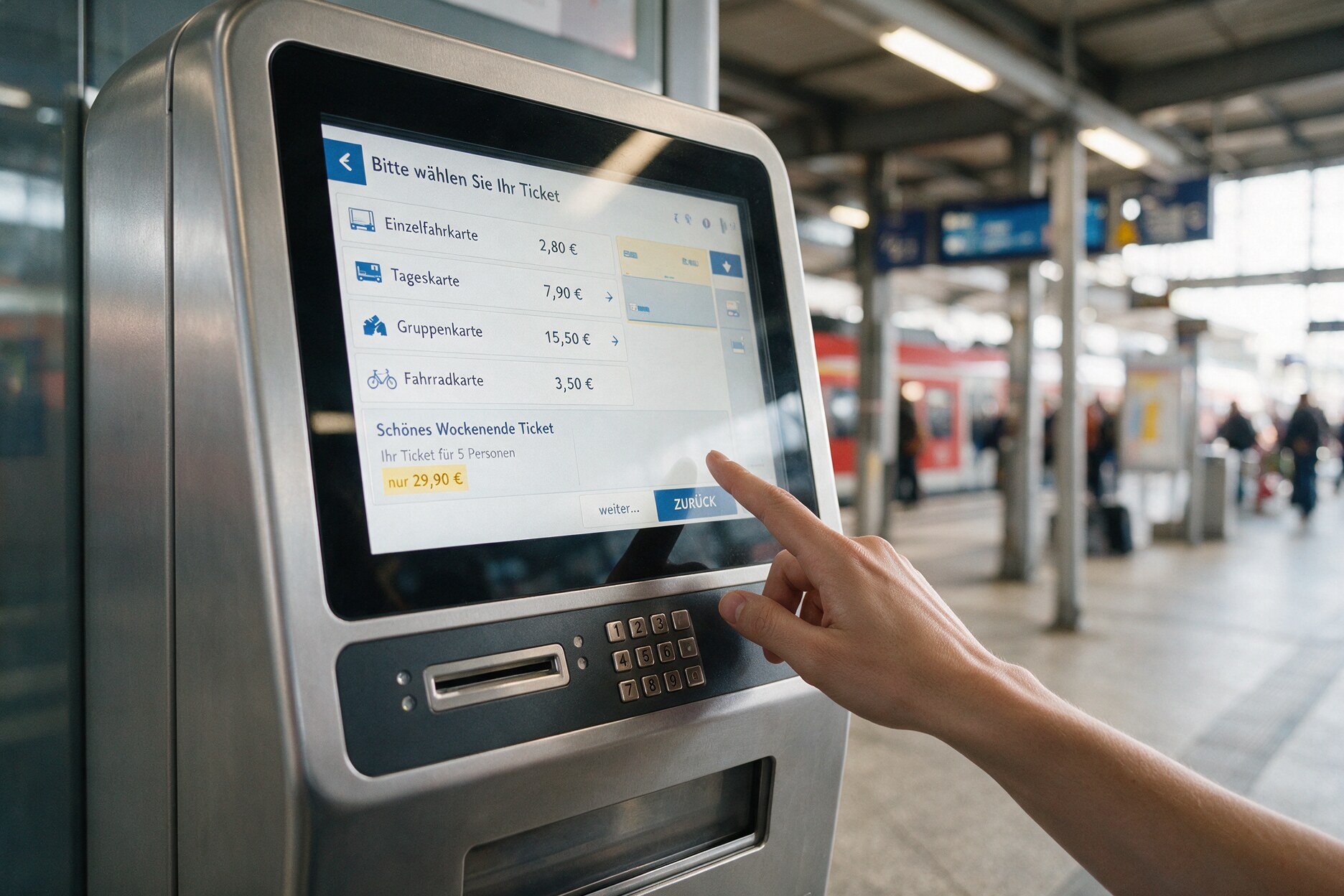
The Deutschlandticket is Germany’s flat-rate subscription for regional and local public transport nationwide — every U-Bahn, S-Bahn, tram, bus, and RE/RB regional train in the country, no zone restrictions. From January 1, 2026, it costs €63 per month, up from €58. It does not cover ICE or IC long-distance trains, which is the detail that trips people up most.
For a visiting Indian traveler, the honest math looks like this: it’s a monthly subscription, billed for a full calendar month regardless of how many days you actually use it, and it auto-renews unless canceled with notice. If you’re spending two to three weeks in Germany and moving mostly by regional/local transit — city sightseeing plus the occasional regional train instead of ICE — one month at €63 can beat buying individual city day passes over and over, especially across three or four cities. If your trip is under a week, or you’re relying heavily on ICE for the big city-to-city hops, you’ll likely spend less on individual city tickets and Sparpreis train fares. Buying it requires the DB Navigator app or a regional provider’s app, a photo, and a payment method — doable as a tourist, but budget 15-20 minutes to set it up and note that some providers want it purchased by the 10th of the month for that month’s validity.
Getting Around Berlin
Berlin’s transit authority is BVG, and the network — U-Bahn, S-Bahn, tram, and bus — covers the city thoroughly enough that you genuinely don’t need a car for things to do in Berlin, from the Museum Island to Kreuzberg’s late-night food scene. A standard single ticket (AB zone, which covers the whole city core) runs around €4.00, a short-trip ticket for quick hops is about €2.80, and a 24-hour day ticket is roughly €11.20 — worth it the moment you’re taking three or more rides in a day. A 7-day pass runs somewhere in the €43-45 range and makes sense for a full week of sightseeing.
Here’s the part that surprises first-time visitors: there are no ticket gates. You buy a ticket, validate it yourself at a small stamping machine on the platform or tram (or it self-validates instantly if bought on the BVG app), and walk straight onto the train. It runs entirely on trust — until it doesn’t. Plain-clothes fare inspectors do routine checks, especially on S-Bahn lines toward the airport and other tourist-heavy routes, and they will fine you €60 on the spot for an unvalidated or missing ticket. “I’m a tourist, I didn’t know” doesn’t work as an excuse; they’ve heard it. Validate every single-ride paper ticket before you board — it’s the single most common mistake we see visitors make.
Getting Around Munich
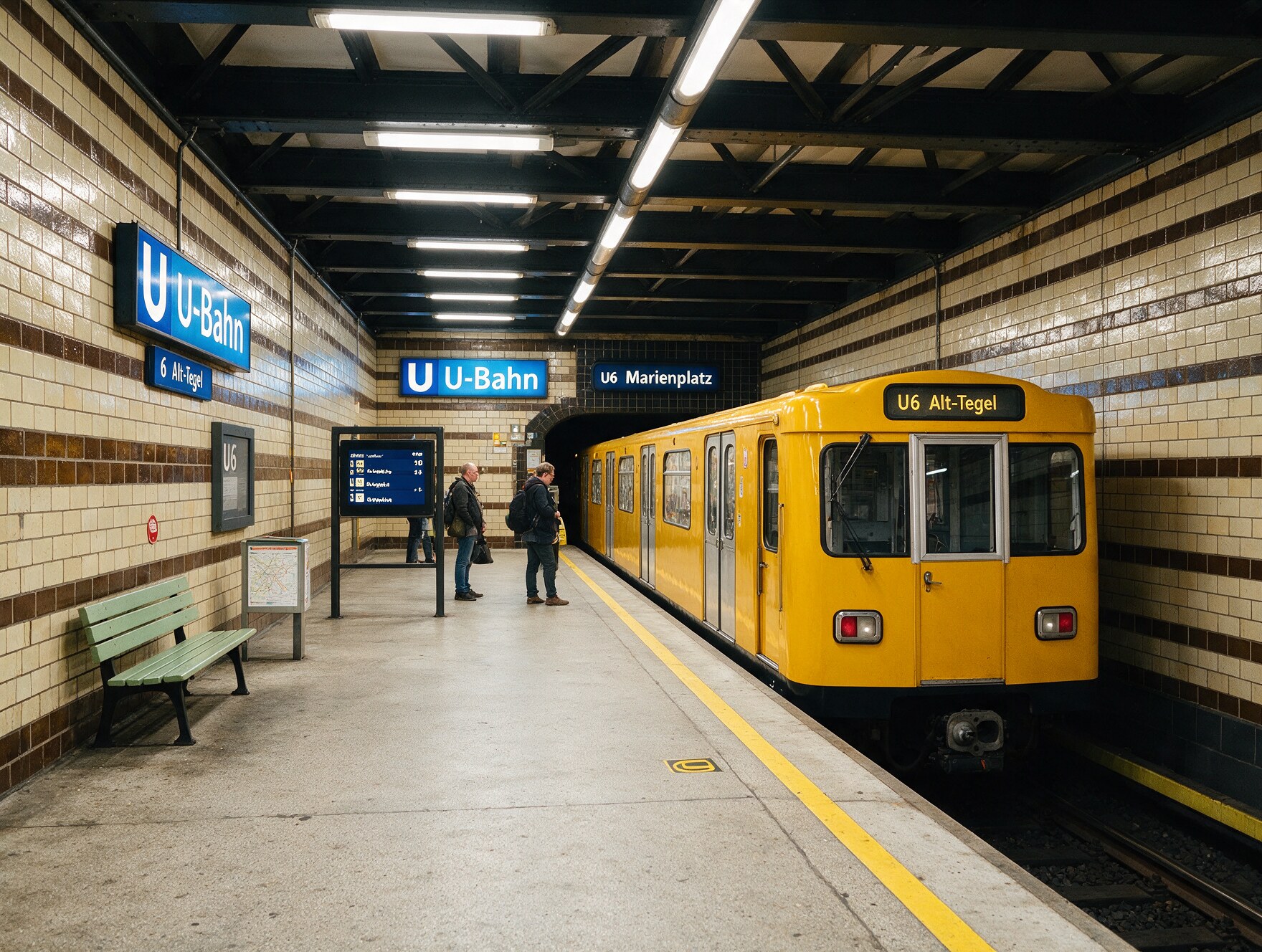
Munich’s MVV network is zone-based, and the city center sits within a compact core that’s easy to walk once you’re in it — but the U-Bahn and S-Bahn are how you’ll cover distance efficiently, including the trip out to the airport (Zone M-5). A single-zone day ticket runs about €8-9 for the city core; the wider M-5 day ticket that includes the airport zone costs around €16.30 per person, or €30.50 for a group of up to five, which is a genuinely good deal if you’re traveling with family. The CityTourCard (M-6 zone) adds discounts at attractions on top of transit and costs around €29.50 solo or €45.90 for a group.
Munich’s trams and buses fill the gaps the U-Bahn/S-Bahn don’t reach, particularly useful for getting to the English Garden’s northern end or out toward Nymphenburg Palace. Same honor-system rules apply here as in Berlin — validate paper tickets at the small blue boxes on board.
Getting Around Cologne
Cologne (Köln) is smaller and more walkable than Berlin or Munich, but the KVB network of Stadtbahn (a light rail/tram hybrid that runs underground downtown and street-level further out) is worth using if you’re staying outside the old town or day-tripping to the cathedral from a hotel near the trade fair grounds. A single ticket in the central Zone 1b runs roughly €3.20, and a day ticket is around €9 — reliable enough for planning, though we’d recommend confirming the exact figure on the KVB app or a station machine, since regional VRS tariff zones get adjusted more often than the big-city networks. The KölnCard, sold through VRS, bundles transit with discounts at the cathedral treasury, museums, and the chocolate museum.
Getting Around Frankfurt
Frankfurt is where most Indian travelers land, and its RMV/VGF network is compact by German standards — the Altstadt, the Museumsufer along the river, and the financial district are all within a 20-minute tram or U-Bahn ride of each other. A single city ticket costs about €3.80, and a day ticket (Tageskarte) is around €7.75, which pays for itself after two rides. If you’re traveling with a small group, the day group ticket at roughly €14.80 for 2-5 people is the better buy.
Airport Transfers: Frankfurt and Munich
Frankfurt Airport has its own regional train station right under the terminal. A regional train (S-Bahn or RE) to Frankfurt Hauptbahnhof takes about 13 minutes and costs around €6.90 for a single ticket, with trains roughly every 15 minutes from early morning to late night. If you’re continuing on to sightsee the same day, the all-day RMV ticket at about €13.50 covers the airport transfer plus onward local travel, which is usually the smarter buy. Long-distance ICE and IC trains also stop at Frankfurt Airport’s separate long-distance station, letting you skip Frankfurt city entirely if Berlin or Munich is your real destination.
Munich Airport connects via the S1 and S8 S-Bahn lines, each running every 20 minutes (10 minutes combined) to the Hauptbahnhof, in about 40-45 minutes. It’s tariff Zone M-5, so the MVV day ticket (around €16.30 single, €30.50 for a group) is usually better value than a one-way single fare if you’ll use transit again that day. Both airports make a taxi look expensive by comparison — Munich Airport to the city center by taxi runs close to €90-100, versus roughly a sixth of that by train.
Black Forest, the Romantic Road, and Neuschwanstein Without (or With) a Car
This is the one section of this guide where the honest answer is “it depends on your itinerary.” Neuschwanstein Castle is reachable entirely by public transport: a regional train from Munich Hauptbahnhof to Füssen (direct services roughly every two hours, about a two-hour ride), then local bus 73 or 78 for the last ten minutes to Hohenschwangau. The Bayern-Ticket (around €34 for one person, plus roughly €8 per additional traveler up to five) covers the entire round trip on regional trains and buses within Bavaria — it just doesn’t work on ICE/IC, and on weekdays it only becomes valid from 9 AM, which matters if you wanted an early start.
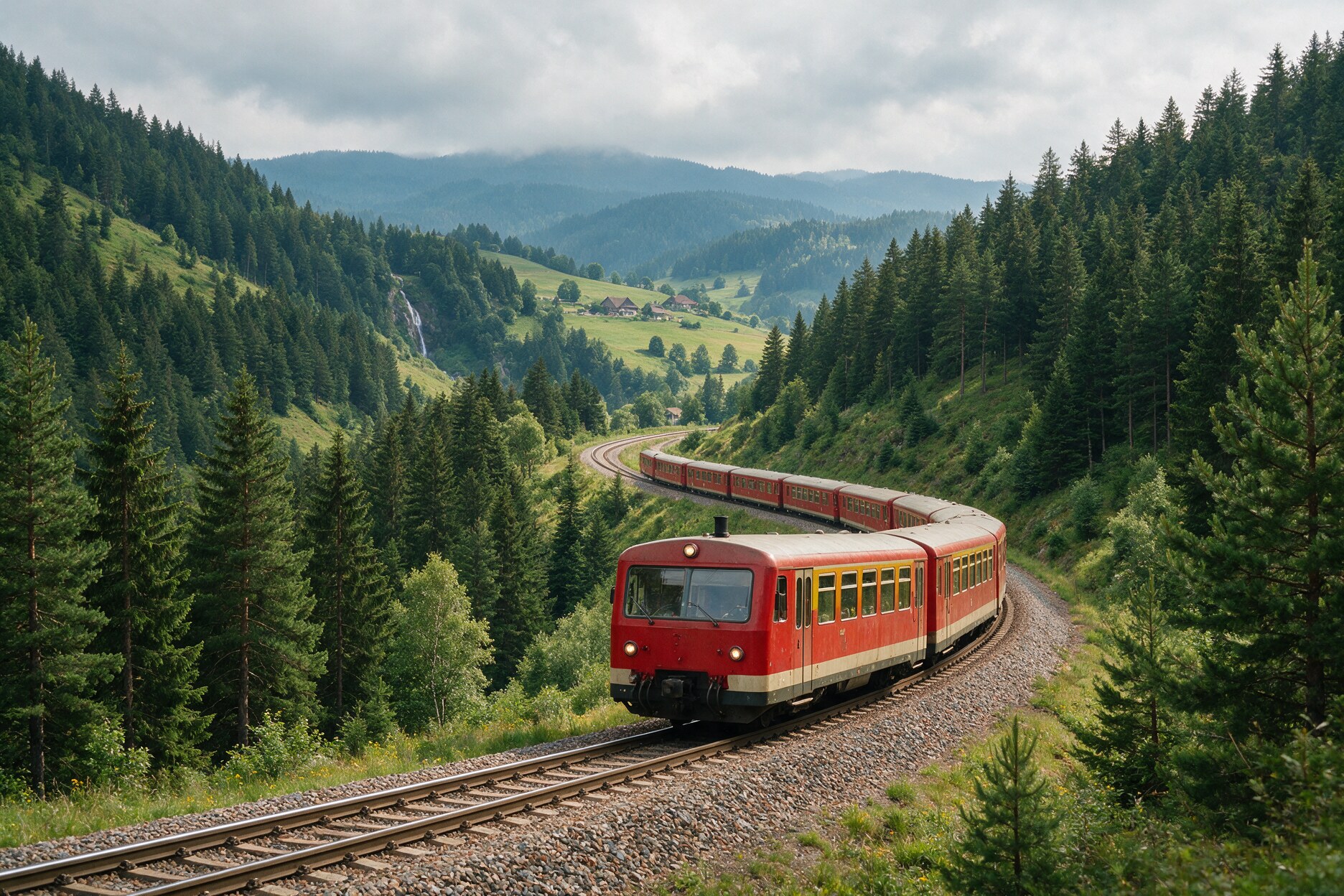
The Black Forest is trickier. The Schwarzwaldbahn (Black Forest Railway) is a genuinely scenic regional line connecting Offenburg through to towns like Triberg and on to Konstanz, and it’s a lovely ride in its own right. But the smaller villages, waterfall trailheads, and the classic half-timbered towns scattered off the main line are patchy at best by bus — some run just a handful of times a day. If your plan includes more than one or two fixed Black Forest towns, or you want to actually get into the hiking trails rather than just the train-accessible town centers, renting a car for two or three days there is the more comfortable choice, and it’s what we’d generally recommend building into a custom Germany itinerary rather than forcing the region into a public-transit-only route.
If you do rent: an Indian driving license alone isn’t sufficient here — bring an International Driving Permit (IDP) issued in India alongside your original license, since India isn’t on Germany’s list of license-reciprocity countries. Driving is on the right, which is the actual danger point for Indian drivers, not the Autobahn myth — most accidents involving foreign drivers happen at roundabouts or when pulling out of a petrol station, not at high speed. On the Autobahn itself, many stretches genuinely have no fixed speed limit (just an advisory 130 km/h), but plenty of sections near cities and construction zones are camera-enforced at 100-120 km/h, and fines apply. The one rule that matters most: the left lane is for overtaking only. Undertaking (passing on the right) is illegal and dangerous at Autobahn speeds — get back into the right lane the moment you’ve passed. Most rental cars already carry the Umweltplakette (environmental sticker) needed for city center low-emission zones, but confirm at pickup.
Apps, Tickets, and How to Pay
Download DB Navigator before you land — it handles national and regional train bookings, live platform and delay information, and doubles as your ticket (just show the QR code to a conductor or inspector, no printing needed). For city transit, each network has its own app (BVG’s app in Berlin, MVGO in Munich, the KVB app in Cologne, RMV’s app in Frankfurt), though most also sell tickets through machines and, increasingly, contactless tap-in/tap-out readers on trams and buses. Contactless card payment is widely accepted now, but carry some cash — smaller regional buses and older ticket machines outside major cities sometimes don’t take cards. One practical note: a ticket bought on an app is generally pre-validated with a timestamp, but a paper ticket from a machine almost always needs a separate stamp at a small validation box before you board — skipping that step is treated exactly like not having a ticket at all.
Transit Etiquette Nobody Explains to Tourists
A few unwritten rules will make you look like you’ve done this before. Stand on the right on escalators and keep the left side clear for people walking up — this is taken seriously, and standing two-abreast on a busy escalator during Frankfurt or Munich rush hour will get you an audible sigh, sometimes a tap on the shoulder. On ICE trains, look for the small “quiet” symbol on some coaches — phone calls and loud conversation are genuinely frowned upon there, headphones are expected everywhere else. Let people off the train before you step on; Germans queue to the side of the doors rather than crowding the center, and pushing forward before the doors fully open marks you as someone who doesn’t know the drill. Priority seats near the doors are for elderly, pregnant, or disabled passengers — give them up without waiting to be asked.
FAQs
Do I need to book Deutsche Bahn tickets in advance, or can I just show up?
For regional trains (RE/RB), you can buy on the day with no downside. For ICE/IC long-distance trains, book Sparpreis fares a few weeks ahead for real savings — walking up on the day usually means paying the full Flexpreis, which can be 3-5x more.
Is the Deutschlandticket worth buying for a 7-10 day trip?
Usually only if you’re relying heavily on regional trains and city transit across multiple cities. For a shorter trip using mostly ICE between cities plus city day passes, individual tickets often work out cheaper and are far simpler to buy as a first-time visitor.
What happens if a fare inspector catches me without a validated ticket?
You’ll be fined on the spot, typically €60, and asked for ID. Being a tourist unfamiliar with the honor system is not an accepted excuse. Always validate paper tickets before boarding.
Can I use my Indian driving license to rent a car in Germany?
Bring an International Driving Permit (IDP) obtained in India along with your original Indian license — Germany doesn’t have license reciprocity with India, so the IDP (essentially an official translation) is expected by rental agencies and police.
What’s the best time to visit Germany if I want to avoid crowded trains?
The best time to visit Germany for comfortable transit is late spring (May) or early autumn (September-early October) — mild weather, and you avoid both the peak summer crush on ICE trains and the Oktoberfest-season crowds converging on Munich’s transit network in late September.
Is it cheaper to fly or take the train between German cities?
For most major city pairs (Frankfurt-Berlin, Munich-Berlin), a booked-ahead Sparpreis train fare beats flying once you factor in airport transfer time and check-in buffers, and it’s far more comfortable. The exception is when you’re short on time and only found last-minute Flexpreis train fares — at that point a budget flight can genuinely work out faster and cheaper.
Do I need cash for German public transport, or is card enough?
Card and contactless work at most machines and on BVG/MVV/RMV/KVB apps now, but carry small cash bills and coins as backup, especially for standalone bus ticket machines in smaller towns near the Black Forest or Romantic Road.
Getting Around Isn’t the Hard Part — Planning the Route Is
Germany’s public transit system rewards a little upfront homework: know the difference between Sparpreis and Flexpreis, validate every paper ticket, pad your connections, and decide early whether the Deutschlandticket or city-by-city tickets fit your specific route. Do that, and the trains, trams, and U-Bahns stop being a logistics puzzle and start being one of the more enjoyable parts of the trip — especially the ride through the Black Forest, which is worth doing slowly.
The harder part is usually deciding places to visit in Germany and stitching them into a route that doesn’t waste your limited vacation days on backtracking. That’s the part we do for a living. If you’d rather hand off the fare comparisons, connection timings, and city-hopping logistics, our team builds Germany tour packages from India and fully custom Germany itineraries — including ones structured around a Germany 7 days travel itinerary that actually accounts for real train schedules, not idealized ones. Get a sense of routes, seasonal pricing, and a realistic Germany trip cost from India on our Germany destination page, and when you’re ready, book Germany holidays with a team that’s actually mapped these train connections in person.