Germany Schengen Visa for Indians: The Complete 2026 Guide
Germany’s borders changed quietly this year. On April 10, 2026, the EU’s new Entry/Exit System went fully live, which means the passport stamp your parents remember from their Europe trip is being phased out in favour of a fingerprint-and-face scan at the border. If you’re applying for a Germany Schengen visa for Indians right now, you’re applying into a system that’s mid-transition — and most of the advice floating around online hasn’t caught up.
This guide is current as of September 2026. It covers exactly what an Indian passport holder needs to apply for a German tourist Schengen visa: the real fee breakup in rupees, the documents that actually get checked, the appointment booking mess, why applications get rejected, and what changed with EES and ETIAS. We pulled this from the German Missions in India’s own visa pages, VFS Global’s Germany India portal, and germany.travel — not from memory, because visa rules are one of the few travel topics that go stale in months, not years. For a broader Germany travel guide beyond visas — best time to visit, city breakdowns, itinerary ideas — see Get Tripped’s Germany destination page.
One honest note before we start: the visa fee itself is a small line item. Once you add flights, hotels, and the mandatory insurance, your total Germany trip cost from India will run well past the visa charge — so budget for the trip, not just the paperwork.
Table of Contents
- What Visa Do You Actually Need
- Who This Guide Is For
- Step-by-Step: How to Apply
- Documents Checklist
- Visa Fees and What They Actually Cost in Rupees
- Processing Times and the Appointment Booking Reality
- Common Rejection Reasons — and the One Mistake We See Most
- Travel Insurance: The €30,000 Rule
- What Happens at Your VFS Appointment
- The 90/180 Rule and Multiple-Entry vs Single-Entry
- EES and ETIAS: What Actually Changed in 2026
- FAQs
- Final Word and How Get Tripped Can Help
What Visa Do You Actually Need
For a holiday, a family visit, or a short business trip, you need what Germany calls a Schengen “C visa” — a short-stay visa valid for stays of up to 90 days within any 180-day period, across all 29 Schengen countries, not just Germany. If Germany is where you’ll spend the most nights, or the first country you land in, you apply at a German mission rather than, say, the French or Italian consulate. That’s the “main destination” rule, and it’s the same across the whole Schengen area.
There’s no separate “tourist visa” category with a different name — tourism, visiting family and friends, and short business trips all fall under this same Schengen visa umbrella, just with different supporting documents attached to the application.
Who This Guide Is For
This is written for Indian passport holders applying from India for a short holiday, a family/friends visit, or a short business trip to Germany — not for long-stay visas (study, work, family reunification), which go through a completely different process with mandatory in-person interviews at the consulate and no VFS shortcut. If your plan is longer than 90 days or involves a job offer or university admission, this article isn’t the one you need.
Step-by-Step: How to Apply
The process hasn’t changed structurally in years, but the details inside each step have, so here’s what it looks like right now.
1. Figure out which mission has jurisdiction over you
Germany has five diplomatic missions handling visas in India: the Embassy in New Delhi, and Consulates General in Mumbai, Bengaluru, Chennai, and Kolkata. Each covers a specific set of states based on your place of residence, not where you’d prefer to apply. Get this wrong and your appointment gets cancelled — the German Missions in India site is explicit that applying to the wrong jurisdiction results in rejection of the appointment itself, before your visa is even assessed.
2. Fill the VIDEX application form
Germany uses an online system called VIDEX to generate the application form. You fill it in online, then print it — the printout has a barcode that VFS scans, which is why a blurry home-printer copy can actually cause delays. Sign every page.
3. Book your VFS appointment
All Schengen visa applications for Germany from India go through VFS Global visa application centres. You book online, choosing the centre that matches your jurisdiction. This is the step most people underestimate — more on that in the appointment section below.
4. Assemble your documents and attend your appointment
You submit the physical documents, get your biometrics captured (fingerprints and photo — unless you’ve had fingerprints taken for a Schengen visa in the last 59 months, in which case they may carry over), and pay the visa fee plus VFS service charge.
5. Wait for processing
Your file physically has to reach the German Consulate General in Mumbai, which handles the adjudication for applications routed through VFS — this transit alone can take up to six working days. Processing then starts, officially, only once your file reaches the consulate, not from the day you submitted at VFS. That distinction trips a lot of people up when they’re counting days against a flight date.
Documents Checklist
This is the checklist for the visit/tourism/family & friends category, based on the German Missions in India’s own published list. Bring everything — missing one document is one of the fastest ways to get your file sent back incomplete rather than assessed.
- VIDEX application form, printed with the barcode intact, signed
- Signed declaration of true and complete information, plus the travel/insurance declaration
- Passport — valid for at least 3 months beyond your planned return date, with a minimum of two blank pages, issued within the last 10 years
- Photocopies of your passport’s biometric page, address page, and (for Indian passports) the last page
- One biometric photograph, 35x45mm, white background, taken within the last 6 months
- Flight reservation — a confirmed booking, not necessarily a paid ticket (more on why that distinction matters below)
- Accommodation proof — hotel bookings for the full trip, or an invitation letter from a host if you’re staying with family or friends
- Day-by-day itinerary covering your full trip, with a cover letter explaining the purpose of travel
- Proof of relationship, if visiting family — birth or marriage certificates, OCI card, or similar
- Financial documents — your last 3 months of bank statements (bank-stamped), plus ITR/Form 16, salary slips, or a sponsor letter with the sponsor’s bank statements and ID if someone else is funding the trip
- Employment proof — an office leave-approval letter or, for the self-employed, business registration documents
- Travel medical insurance covering at least €30,000, valid across the entire Schengen area for your full trip dates
- Certified translations for any document not already in English or German
On the itinerary specifically: a Germany 7 days travel itinerary is about the sweet spot we see work well for a first Schengen application — long enough to look like a genuine holiday, tight enough that every day has a plausible plan behind it. An itinerary that lists eight cities in ten days, with a night train between each, tends to raise more questions than it answers. If you’re still deciding on places to visit in Germany for that itinerary, pick a base — Berlin, Munich, or the Rhine Valley — and build day trips around it rather than trying to see the whole country in one visa’s worth of days.
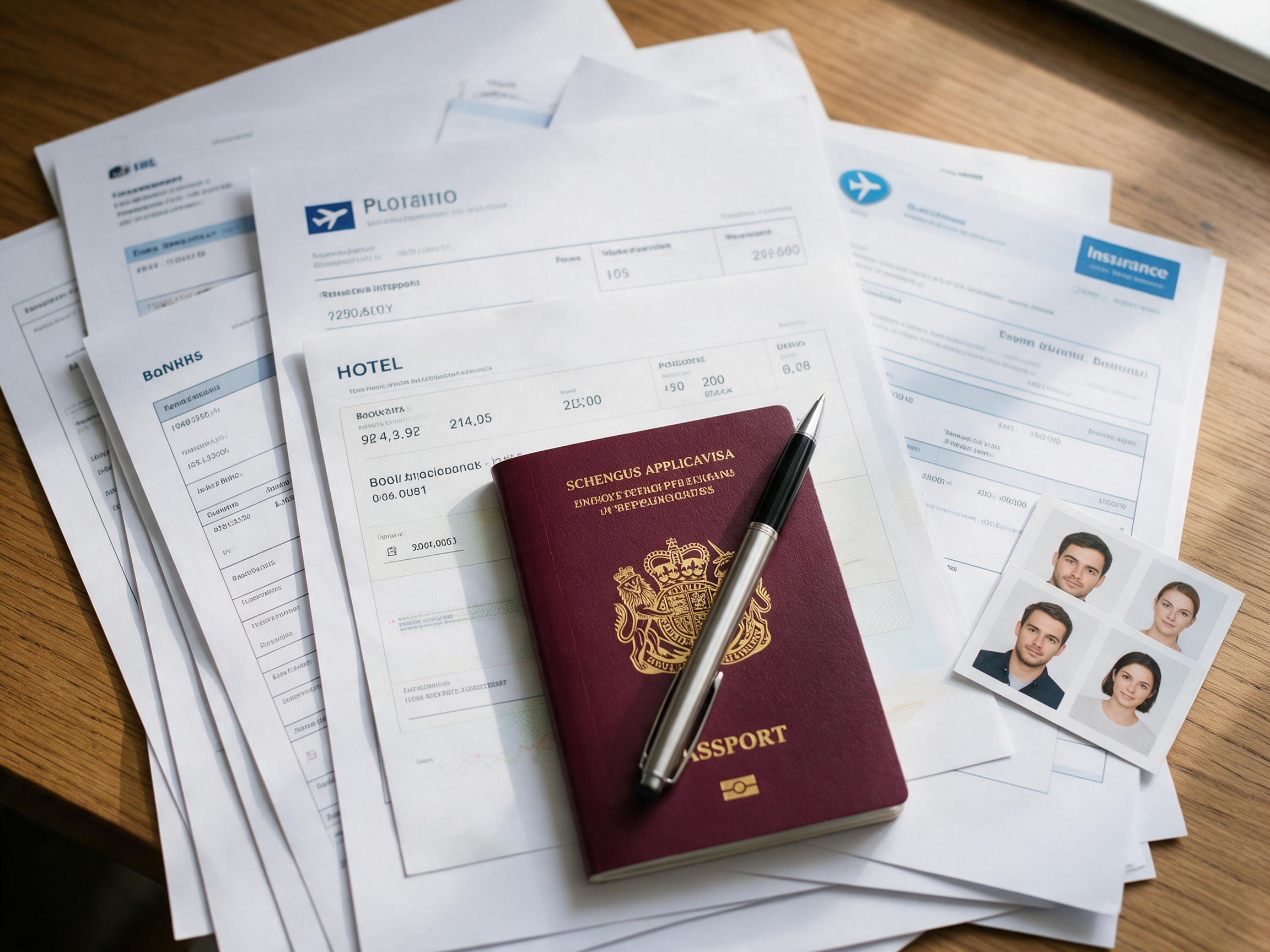
Source checklist: German Missions in India — Schengen visa checklist for visit/family & friends.
Visa Fees and What They Actually Cost in Rupees
The Schengen visa fee is set in euros and is the same across all Schengen states: €90 for adults, €45 for children aged 6 to 11, and free for children under 6. On top of that, VFS Global charges its own service fee for handling the application in India.
Converted and charged in India, VFS’s published figures put the short-term visa fee at roughly ₹7,100–₹9,100 depending on the exchange rate at the time, plus a VFS service charge of about ₹1,674–₹1,933 per applicant. The euro fee itself is published by the Federal Foreign Office’s visa fee schedule. So budget somewhere around ₹9,000–₹11,000 per person all-in for the fee and service charge — and note that exchange rates move, so treat this as a working range, not a fixed number.
A few things worth knowing about the money side:
- The fee is non-refundable, whether your visa is approved, rejected, or you withdraw the application. This is stated plainly on VFS’s own site.
- VFS accepts cash, credit cards, RuPay, demand drafts, and UPI at most centres.
- If you want someone to collect your biometrics at home or office instead of visiting the centre, VFS offers a mobile/premium biometric service — but it costs extra, roughly ₹8,400–₹11,800 depending on group size, which only makes sense for larger families or people who genuinely cannot get to a centre.
Processing Times and the Appointment Booking Reality
Officially, processing takes about 15 working days once your application reaches the consulate — plus up to 6 working days for the file to travel from VFS to the German Consulate General in Mumbai. Add those together and a clean application, submitted with no back-and-forth, can realistically take 3 weeks from your VFS appointment to a decision.
That’s the official number. In practice, during peak season — broadly May through September, when the weather’s best for a trip and everyone else has figured that out too — the German Missions themselves have flagged that average processing can stretch to 15 days or more purely due to application volume. You can apply up to 6 months before your travel date, and the missions explicitly recommend not cutting it close: if your travel date is within 15 calendar days of your application, your passport may be returned unprocessed rather than rushed.
The appointment itself is often the harder part. Slots at VFS centres get booked out days or weeks in advance, especially at the bigger centres serving Delhi and Mumbai. The German Missions in India note they’ve added dedicated appointment categories for business and trade-fair travelers to cut wait times for that segment — if that’s your travel purpose, it’s worth checking whether you qualify for that lane instead of the general tourist queue. For everyone else, the practical advice is blunt: check the booking portal daily, book the moment you see an open slot, and don’t wait until a month before your trip to start looking.
Our rule of thumb for anyone we help plan a Germany trip: start your visa paperwork the day you commit to travel dates, not after you’ve booked flights. Best time to visit Germany for pleasant weather is also, unhelpfully, the exact window when appointment slots are scarcest — so if you’re flexible, a shoulder-season trip in April-May or late September-October gets you both good weather and an easier booking process.

Book and track your appointment directly through VFS Global’s Germany India portal.
Common Rejection Reasons — and the One Mistake We See Most
Visa officers aren’t looking for reasons to reject you, but they are trained to spot inconsistency. The recurring patterns behind rejections are fairly predictable:
- Weak or unclear financial proof — bank statements with large unexplained deposits right before the application, or a balance that doesn’t credibly cover the trip.
- Itinerary and document mismatches — your insurance covers dates that don’t match your flight dates, or your hotel bookings don’t cover every night of the stated trip.
- Incomplete documentation — missing a bank stamp, an unsigned declaration, or a photo that doesn’t meet the exact size specification.
- Unclear purpose or ties to India — the officer isn’t convinced you intend to return, especially for younger applicants with thin travel or employment history.
The mistake we’d actually flag above the rest: booking non-refundable flights before your visa is approved. We get why people do it — fares climb the closer you get to a date, and a confirmed ticket feels like it strengthens your application. It doesn’t need to be paid in full; a confirmed reservation or a refundable hold is enough for the visa file. Booking and paying for a non-refundable flight, and then having the visa take longer than expected or get rejected outright, is a genuinely expensive way to learn this lesson. We’ve seen it happen. Hold the booking, don’t pay for the non-refundable fare, until you have the visa in hand.
One more procedural note: the German Missions abolished the formal remonstration (appeal) process as of January 1, 2024. If your application is refused now, your route forward is a fresh application with stronger documentation, not a written appeal to the same consulate.
Travel Insurance: The €30,000 Rule
Every Schengen visa applicant needs travel medical insurance with a minimum coverage of €30,000, valid across all Schengen countries and for the entire duration of your stay — this is a hard requirement, not a suggestion, and VFS will check the policy document at submission. It needs to cover medical emergencies, hospitalisation, and repatriation.
Buy this only after your travel dates are close to final. An insurance certificate that shows dates different from your flight itinerary is a mismatch an officer will flag, and it’s an easy one to avoid — just buy the policy last, once your dates are locked, not first.
What Happens at Your VFS Appointment
You’ll arrive with a printed appointment confirmation and go through a document check at the counter first — this is where an incomplete file gets caught early, sometimes before you’re even called for biometrics. If everything is in order, you’ll have your fingerprints and photograph captured (skipped if you have valid biometrics on file from the last 59 months), pay the visa fee and service charge, and get a receipt with a tracking reference. The whole visit typically runs 30-60 minutes depending on how busy the centre is that day. From there, your file is packaged and sent to the Consulate General in Mumbai for the actual visa decision — VFS itself doesn’t decide anything, it’s purely the collection and logistics layer.
The 90/180 Rule and Multiple-Entry vs Single-Entry
The 90/180 rule is simple to state and easy to miscalculate: you can spend up to 90 days in the Schengen area within any rolling 180-day window, counting all Schengen countries together, not per country. It’s not “90 days per calendar year” and it’s not reset by leaving and re-entering — the 180-day window is a sliding one, counted backward from any given day.
First-time applicants are usually issued a visa matched closely to their actual trip dates, sometimes single-entry, sometimes a limited multiple-entry. Where Indian applicants get a real advantage is on repeat travel: under the current cascade rules, if you’ve used two Schengen visas correctly within the past 3 years, you can qualify for a 2-year multiple-entry visa (C2), and from there, a 5-year visa (C5) at the visa officer’s discretion. This is more generous than the general rule for most other nationalities, which requires three correctly used visas within 2 years for even a 1-year visa. “Correctly used” means you respected your visa’s dates and didn’t overstay — the single biggest lever you have for getting easier, longer visas next time.
EES and ETIAS: What Actually Changed in 2026
Two systems get confused constantly, and it’s worth being precise about both since they’re both mid-rollout this year.
EES (Entry/Exit System) is now live. It began phasing in from October 12, 2025, and became fully operational across the Schengen area on April 10, 2026. It replaces manual passport stamping with an electronic record — your entry and exit dates, plus a fingerprint and facial image on first registration, are logged digitally instead of stamped in your passport. It applies automatically to non-EU travelers on short stays; there’s nothing extra to apply for, but expect the first border crossing after this to take a little longer than the ones you remember from before, since it’s registering you into the system.
ETIAS is a different thing entirely and, as of this writing, is still not operational — current guidance points to late 2026 for launch. When it does go live, it will be a €20 online travel authorisation required for visa-exempt nationalities visiting the Schengen area, similar in spirit to the US ESTA. It does not apply to Indian passport holders in the way people sometimes assume, because Indians are not visa-exempt for Schengen travel — you’ll still need the actual Schengen visa covered in this guide regardless of when or whether ETIAS launches. Be wary of any site charging you for an “ETIAS application” right now; the official EU guidance is explicit that no website currently issues valid ETIAS authorisations, because the system isn’t live yet.
FAQs
How long does a Germany Schengen visa take from India in 2026?
Budget 3-4 weeks from your VFS appointment to a decision, accounting for the file transit time to the Mumbai consulate plus processing. During peak season (May-September), it can run longer. Apply well before your travel dates — the missions themselves discourage applying within 15 days of travel.
Can I apply for a Germany visa without a confirmed, paid flight ticket?
Yes. A confirmed flight reservation is enough; you don’t need to purchase a non-refundable ticket before applying. Many travel agents and airlines can issue a hold or dummy reservation for visa purposes specifically to avoid this risk.
What is the minimum bank balance required for a Germany Schengen visa?
There’s no single published minimum figure — officers assess whether your funds credibly cover your trip’s cost (flights, hotels, daily expenses) relative to your income and history, not a fixed threshold. Consistent statements over 3 months matter more than a large one-time deposit right before applying.
Can I get a multiple-entry Schengen visa on my first application?
It’s possible but not guaranteed — first-time applicants are more often issued visas closely matched to their trip dates. Multiple-entry, longer-validity visas (2-year, then 5-year) become more likely once you’ve correctly used a couple of Schengen visas within a few years.
Do I need a separate visa for Germany if I’m also visiting France or Italy on the same trip?
No — apply at the mission for whichever Schengen country is your main destination (most nights spent, or first point of entry if nights are equal). One Schengen visa covers travel across all 29 Schengen countries within its validity.
What happens if my Germany visa gets rejected?
Since the remonstration/appeal process was abolished in January 2024, your option is to reapply with stronger or corrected documentation rather than formally appeal the same decision. Take the rejection reason seriously and address it directly in the new application.
Do I need to do anything for the new EES system as an Indian traveler?
No separate application — EES is automatic and happens at the border when you enter. Just expect your first crossing after the April 2026 rollout to involve a fingerprint and photo capture at the kiosk or booth, which may add a few minutes compared to what you’re used to.
Is travel insurance really mandatory, or can I skip it if I have a company health policy?
It’s mandatory and specific — your policy needs to explicitly show at least €30,000 coverage valid across the Schengen area for your travel dates. A general Indian health insurance policy usually won’t meet this without a dedicated international/Schengen travel rider, so check before assuming your existing cover works.
Final Word and How Get Tripped Can Help
None of this is complicated once you’ve done it once — it’s just unforgiving of small mistakes, and the cost of a mismatched date or a missing bank stamp is weeks of delay, not a quick fix. The Germany Schengen visa for Indians process rewards people who start early, keep their documents consistent, and don’t pay for anything non-refundable before the visa is actually in hand.
If you’re building out the rest of the trip — deciding between a Munich-based week and a longer loop through the Rhine Valley and the Black Forest, or timing it around something like Oktoberfest in Munich — that’s the part we actually enjoy. Get Tripped is a Germany travel agency in Mumbai working with travelers across India, and visa documentation support comes as part of any Germany tour package from India that you book with us: we help build the day-by-day itinerary your visa application needs, match your hotel and flight bookings to your dates, and make sure your paperwork is internally consistent before it ever reaches VFS.
Whether you want a custom Germany itinerary built around your own list of places to visit in Germany, one of our best Germany guided tours, or a broader Europe tour package including Germany alongside Austria or Switzerland, we’ll help you book Germany holidays with the visa groundwork already handled. Explore our Germany destination page for full Germany vacation packages, or get in touch and we’ll help you plan a Germany 7 days travel itinerary — or longer — that’s built to match what your visa application needs to show.