Most people arriving in Jakarta are already halfway to Bali in their heads — it’s the layover city, the one you land in and leave within a day. That’s a genuine shame, because Jakarta runs on a food clock that most visitors never get to see: bubur ayam at dawn, noodles and coffee through the Chinatown afternoon, satay smoke drifting down Jalan Sabang by evening, and seafood stalls that don’t even open until most tourists are heading to bed. Spend one real day moving through that clock instead of straight through the airport, and Jakarta stops being a layover.
Table of Contents
- Early morning, 7-10am — Menteng and Cikini’s breakfast circuit
- Midday, 11am-3pm — Glodok’s Chinatown noodle-and-coffee crawl
- Evening, 8pm onward — Jalan Sabang’s satay and Pecenongan’s late-night seafood
- Which neighborhood to actually base yourself in
- Getting around, paying, and the mistake to avoid
- A note on vegetarian food along this circuit
- Pairing this with a walk through Kota Tua
- A note for luxury travelers
- FAQs
Early morning, 7-10am — Menteng and Cikini’s breakfast circuit
Jakarta eats breakfast seriously and early, and Menteng — the old Dutch-era garden district with wide, tree-lined streets — is where the city’s best-regarded breakfast stalls have operated for decades. Bubur Ayam Cikini Sudimampir does a rice porridge with poached chicken, fried soybeans, and crispy shallots that costs around IDR 20,000–35,000 and has built a loyal following precisely because it hasn’t changed the recipe to chase trends. A few minutes away, Nasi Uduk Kebon Kacang Zainal Fanani serves coconut-infused rice with fried chicken and sambal (IDR 25,000–50,000) — order it with an extra side of the sambal, which is noticeably sharper than what gets served to tourists in Bali.
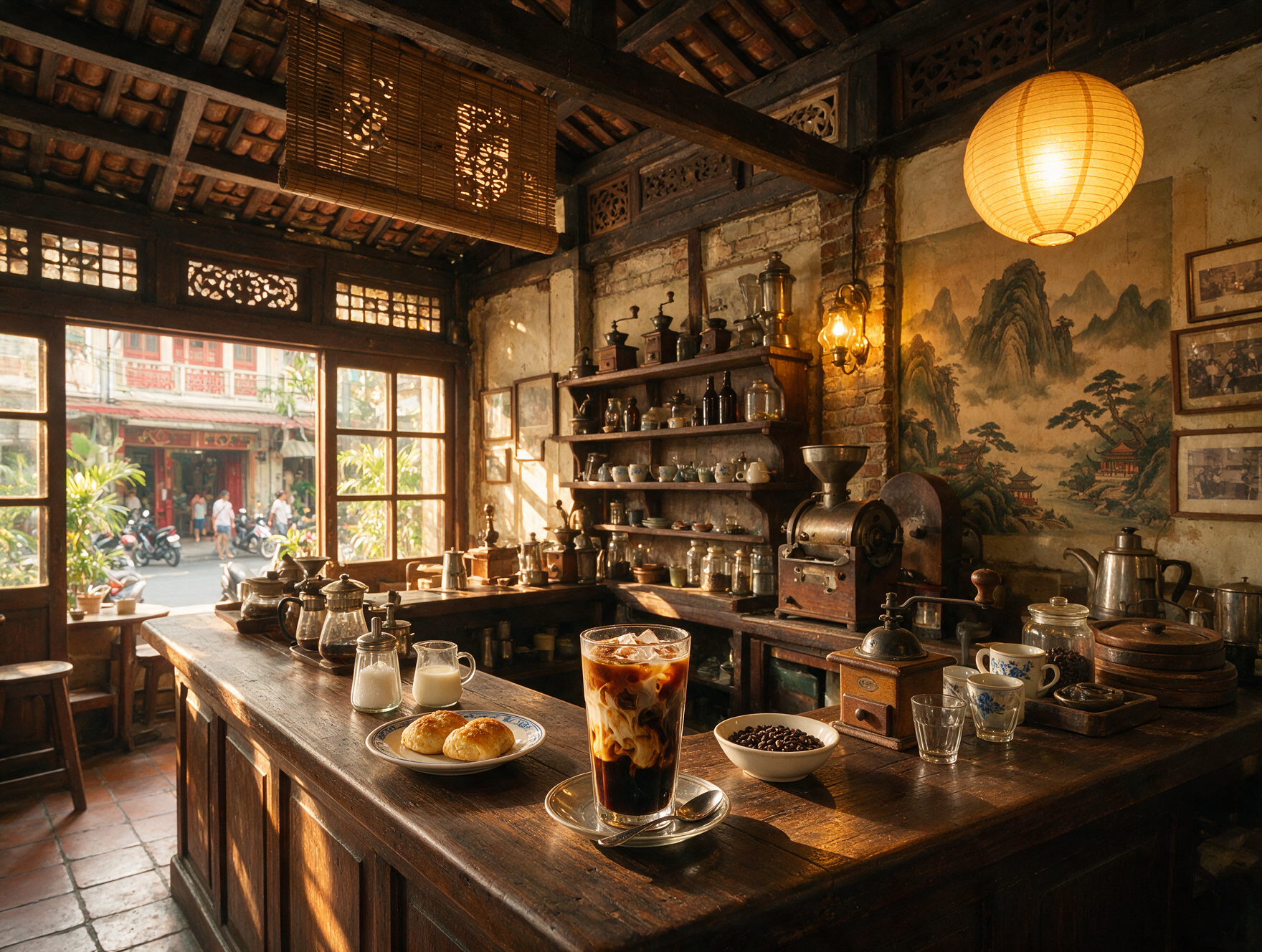
Near Sarinah, look for the street cart selling kerak telor — a crispy glutinous rice cake cooked with egg and dried shrimp directly over hot coals, a dish specific enough to Jakarta that you genuinely won’t find a good version of it anywhere else in Indonesia. It runs IDR 25,000–45,000 and is worth eating hot, straight off the cart. If you’d rather sit down, Gado-Gado Bonbin in Cikini does a vegetable salad with handmade peanut sauce and crackers (IDR 35,000–55,000) that’s one of the better vegetarian options on this whole circuit.
Midday, 11am-3pm — Glodok’s Chinatown noodle-and-coffee crawl
Glodok is Jakarta’s Chinatown, and it’s been serving Hokkien-influenced food to this city since well before “food tourism” was a phrase anyone used. Kopi Es Tak Kie has been pouring the same traditional iced coffee with condensed milk since 1927 — walk in, order the iced version even if it’s not particularly hot outside, and notice how different it tastes from the overly sweet iced coffee served in most tourist cafes. It costs next to nothing, IDR 10,000–20,000, which tells you something about who this place is actually serving.
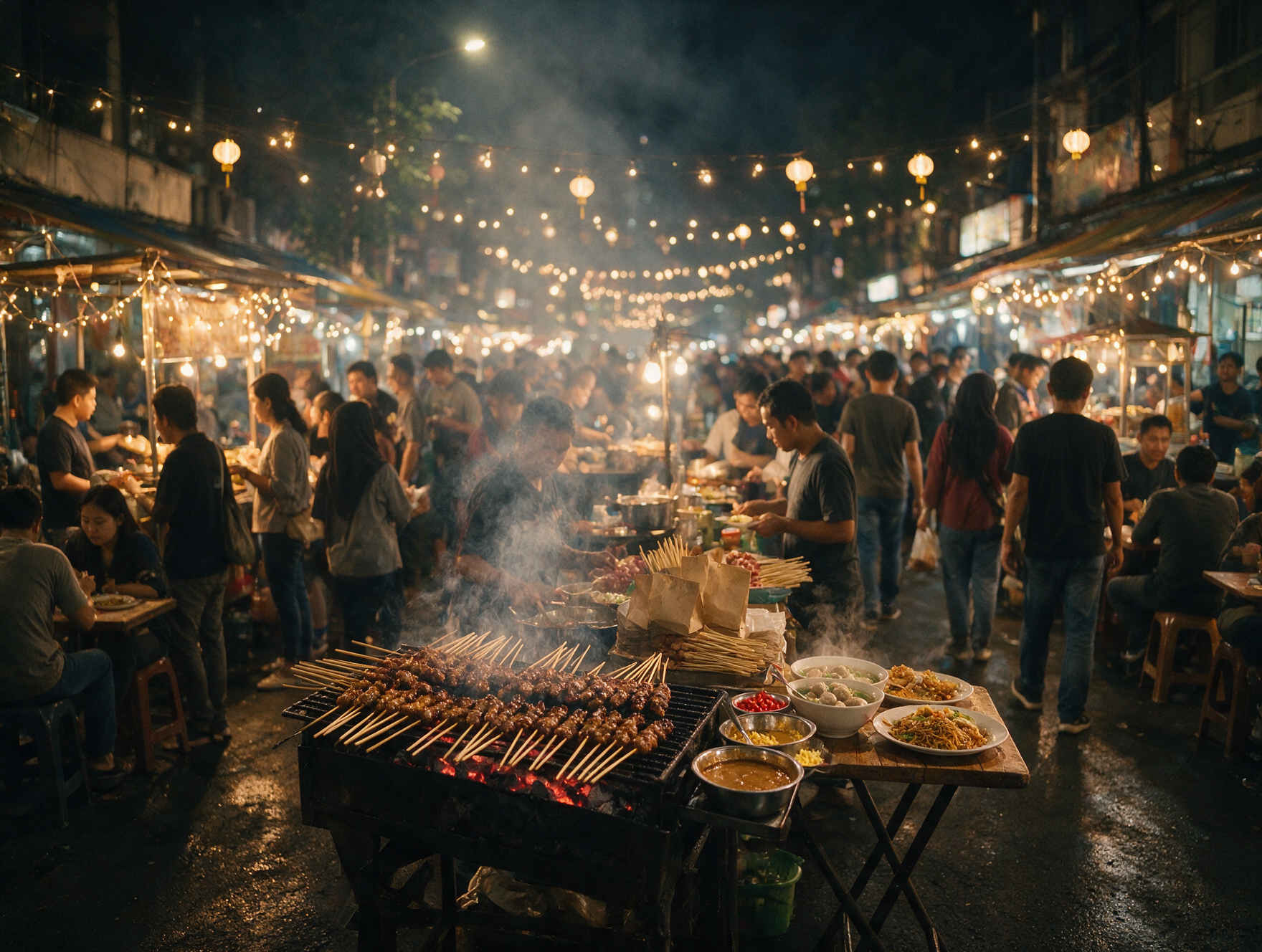
Bakmi Amoy, inside the Petak Enam food hall, does Hokkien noodles with charcoal-grilled pork (IDR 35,000–55,000) that draws a lunch queue from local office workers, not tour groups — a reliable sign the food’s worth the wait. Soto Betawi Afung nearby serves Jakarta’s own creamy beef-and-coconut soup (IDR 40,000–60,000), a dish specific to this city rather than Indonesia broadly, and different enough from the soto you’d find in Bali or Yogyakarta that it’s worth trying here specifically.
A fun fact: Glodok’s food stalls and the surrounding shophouses date back to Dutch colonial-era Chinese settlement policy, which is part of why the food here reads as distinctly Hokkien-Indonesian rather than the more generalized “Indonesian” flavors most travelers expect — it’s its own regional cuisine hiding inside a single Jakarta neighborhood.
Evening, 8pm onward — Jalan Sabang’s satay and Pecenongan’s late-night seafood
By evening, the action shifts to Sabang and Pecenongan, two streets that essentially transform into open-air food markets after dark. On Jalan Sabang, Sate Ayam Pak Kumis grills chicken skewers with peanut sauce and lontong (rice cake) for IDR 40,000–60,000, while Nasi Goreng Kambing Kebon Sirih does a lamb fried rice with a fried egg on top (IDR 50,000–80,000) that’s heartier and spicier than the tourist-menu nasi goreng most people know from Bali resorts.
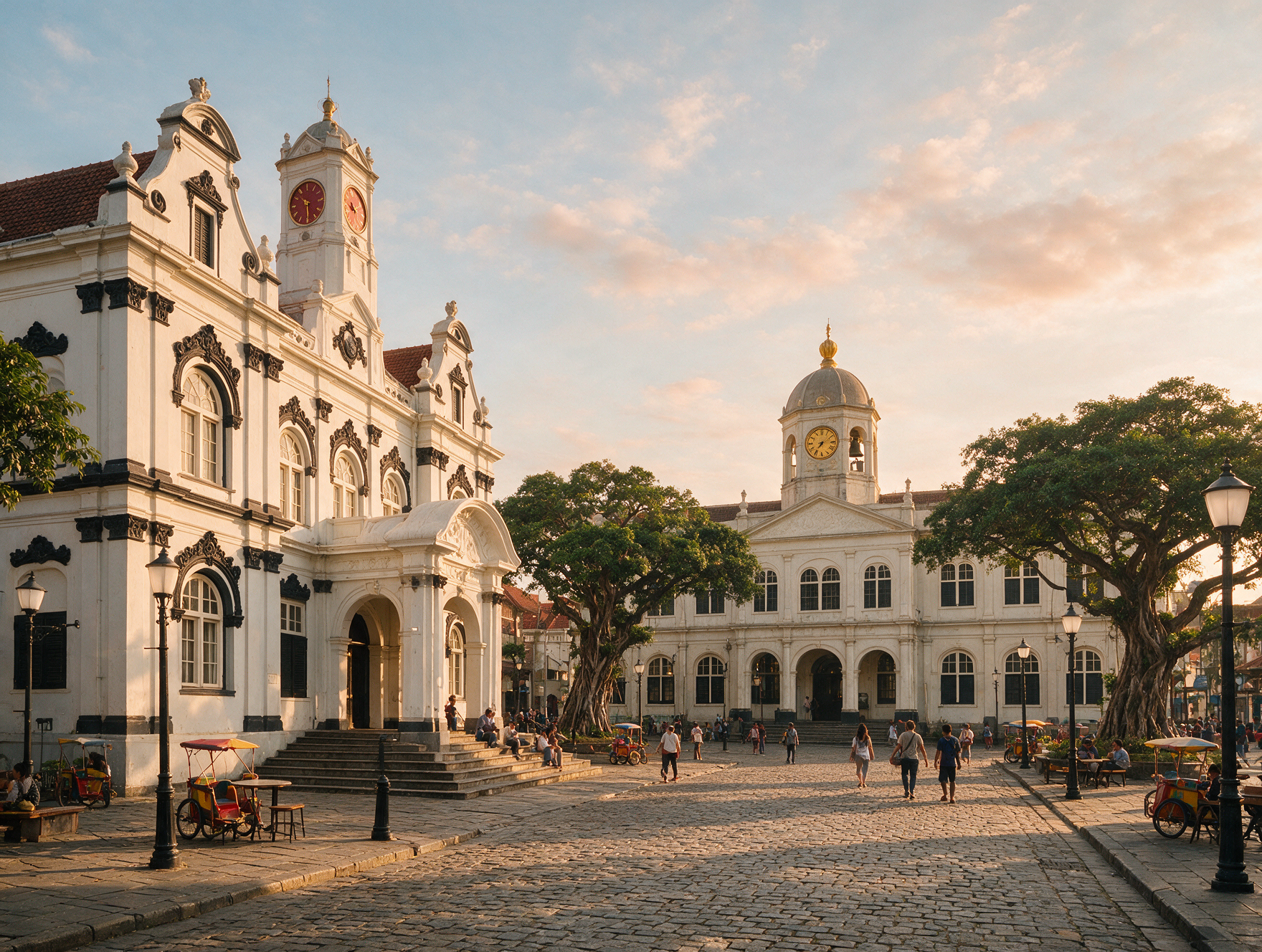
Pecenongan’s seafood stalls set up specifically for the late-night crowd, grilling fresh fish, crab, and shrimp to order — expect to pay IDR 150,000–300,000 per person for a proper seafood spread, still well below what the same quality would cost at a sit-down restaurant. For dessert, Martabak Pecenongan 78 does a stuffed sweet pancake with chocolate and cheese (IDR 75,000–250,000 depending on size and fillings) that’s a genuine Jakarta institution — locals will argue passionately over which martabak stall is best, and this is consistently in the conversation.
Budget roughly IDR 200,000–500,000 (about ₹1,000-2,600) per person for a full 6-8 stop eating circuit across a day like this — which, for the volume and variety of food involved, is remarkable value even against Get Tripped’s usual mid-range-and-up positioning.
Which neighborhood to actually base yourself in
Menteng and Cikini suit a quieter, more residential base with easy access to the morning food scene and a genuinely pleasant walkable district — this is where a lot of Jakarta’s colonial-era architecture survives, and an early walk here before the heat sets in is worth doing for its own sake. Glodok itself isn’t really a hotel base (it’s dense, commercial, and best visited rather than stayed in), but it’s a short ride from most central Jakarta hotels. Sabang and Pecenongan sit close to the Thamrin/Menteng corridor, so a hotel in that central strip puts the whole day’s circuit within a reasonable taxi or ride-share hop.
Getting around, paying, and the mistake to avoid
Grab and Gojek both work reliably in Jakarta and are the easiest way to move between these neighborhoods without wrestling with the city’s genuinely difficult traffic — Jakarta’s congestion is no joke, and a trip that Google Maps says is 15 minutes can easily become 45 during rush hour. The Jakarta MRT and TransJakarta bus network cover the main corridors well if you want to skip traffic on longer legs, and both are cheap, clean, and easy for a first-time visitor to use.
Cash still rules at most street stalls — many of the vendors named here don’t take cards, and QRIS (Indonesia’s unified QR payment system) coverage is growing but inconsistent at the smallest carts. Carry rupiah in small denominations; nobody at a IDR 25,000 kerak telor cart wants to make change for a large note.
Mistake to avoid: trying to do this entire circuit — breakfast through late-night seafood — in one single day if you’re also trying to sightsee. It’s a full day of eating and walking on its own. If Jakarta is a one-day stop on a longer Indonesia trip, pick two of the three time blocks rather than forcing all three; you’ll enjoy each stop more without racing the clock.
A note for different kinds of travelers
Solo travelers will find this circuit unusually easy to do alone — street food stalls in Jakarta are built around quick, individual orders, not shared tables, so there’s none of the awkwardness solo diners sometimes feel at sit-down restaurants. Couples doing a Jakarta layover before Bali should prioritize the Menteng morning and Sabang evening blocks, skipping Glodok’s midday heat if time is tight, since those two bookend the day with the most atmosphere per stop.
A note on vegetarian food along this circuit
Jakarta’s street food scene leans heavily on meat and seafood, which can make this circuit tricky for vegetarian travelers if you’re not selective. Gado-gado (the peanut-sauce vegetable salad from the Menteng morning stop) is the most reliable vegetarian anchor on this route, and most warungs can also do a version of nasi goreng or mie goreng without meat if you ask — Indonesian kitchens are generally accustomed to the request, even if it’s not on the printed menu. Tahu and tempeh dishes are widely available as sides at almost any stall here and are worth ordering alongside whatever else you’re trying.
Pairing this with a walk through Kota Tua
Kota Tua, Jakarta’s old town, sits close enough to both the Glodok and Sabang stops that it’s worth folding into the same day rather than treating as a separate outing. The Dutch colonial square (Fatahillah Square), the old Jakarta History Museum, and the surrounding restored buildings give the midday food stop some actual context — Glodok’s Chinatown grew up as a direct extension of this same colonial-era trading district, and walking between the two makes the history click in a way that reading about it beforehand doesn’t quite manage. Go in the late afternoon once the midday heat has eased, before heading to Sabang for dinner.
A note for luxury travelers
Jakarta’s fine-dining scene has grown fast, and it’s tempting to skip the street stalls entirely in favor of a hotel restaurant. That’s a real loss here specifically — several of the city’s best hotel chefs openly cite Glodok and Sabang as their own reference points, and a few upscale Jakarta restaurants now run elevated tasting versions of exactly the dishes described above. If a street-food circuit genuinely isn’t your style, ask your hotel concierge for a guided food-tour version that hits the same stalls with a translator and a bit more hand-holding — the food itself doesn’t change, only the experience of getting to it.
FAQs
Is Jakarta worth visiting or just a layover city?
It’s genuinely worth a full day if you have one — the food culture alone justifies it, and Jakarta’s colonial architecture in Menteng and Kota Tua rewards a proper walk rather than a drive-by. It’s not a beach destination, and nobody’s claiming it should replace Bali, but as a one or two-day stop it earns its place.
Is street food in Jakarta safe for tourists?
Generally yes, with the usual common-sense rules — eat where there’s a visible queue of locals, choose stalls cooking food fresh to order rather than food that’s been sitting out, and carry basic stomach medication as you would in any country with unfamiliar cuisine.
What is the best area to stay in Jakarta for food and walkability?
The Menteng/Thamrin corridor is the best balance — walkable, central, close to the morning breakfast circuit, and a reasonable ride-share hop from both Glodok and the Sabang/Pecenongan evening scene.
Do I need cash or cards in Jakarta?
Both — carry cash for street stalls and smaller vendors, and expect cards and QRIS to work fine at malls, hotels, and sit-down restaurants. ATMs are widely available in central Jakarta.
How many days should I spend in Jakarta on an Indonesia trip?
One to two days is enough for most travelers using Jakarta as a stop en route to Bali, Flores, or elsewhere — enough time for this food circuit plus a walk through Kota Tua’s old town, without cutting significantly into beach or island time.
Jakarta rewards travelers who treat it as a real stop rather than a connection, and the food scene here is honestly reason enough on its own. If you’re routing an Indonesia trip through Jakarta and want the layover turned into a proper day, talk to Get Tripped about building it into your custom Indonesia itinerary.