Kelingking Beach’s T-Rex-shaped cliff has become so synonymous with Nusa Penida that a lot of visitors do exactly one thing on the island — queue for the viewpoint photo, maybe attempt the brutal descent to the beach below, and leave. Which is a shame, because Nusa Penida is a genuinely large, rugged island, and Kelingking is really just the most Instagrammed corner of it. Here are five spots that don’t come with the same crowds, the same queue, or — in a couple of cases — the same easy access, which is exactly why they’re worth the extra effort.
Table of Contents
- 1. Paluang Cliff — Kelingking’s view, without the crowd
- 2. Smoke Beach — where the tide puts on its own show
- 3. Suwehan Beach — the hike that keeps the crowds away
- 4. Peguyangan Waterfall — down the blue staircase
- 5. Diamond Beach — Atuh’s quieter neighbor
- Planning a day (or two) around these five
- A photography tip nobody mentions
- A mistake to avoid
- What to budget
- Staying connected on the island
- FAQs
1. Paluang Cliff — Kelingking’s view, without the crowd
Paluang Cliff sits close enough to Kelingking that you could walk between the two, and it gives you a genuinely different angle on the same T-Rex-shaped formation everyone’s fighting for space to photograph at the main viewpoint. From here you’re looking at Kelingking from the other side, which reframes the whole formation and — because almost nobody makes the short detour — gets you that view without elbowing for a spot on the increasingly crowded main platform. There’s a small, slightly quirky temple, Pura Paluang, just a two-minute walk away, worth a quick look if you’re already out this way.
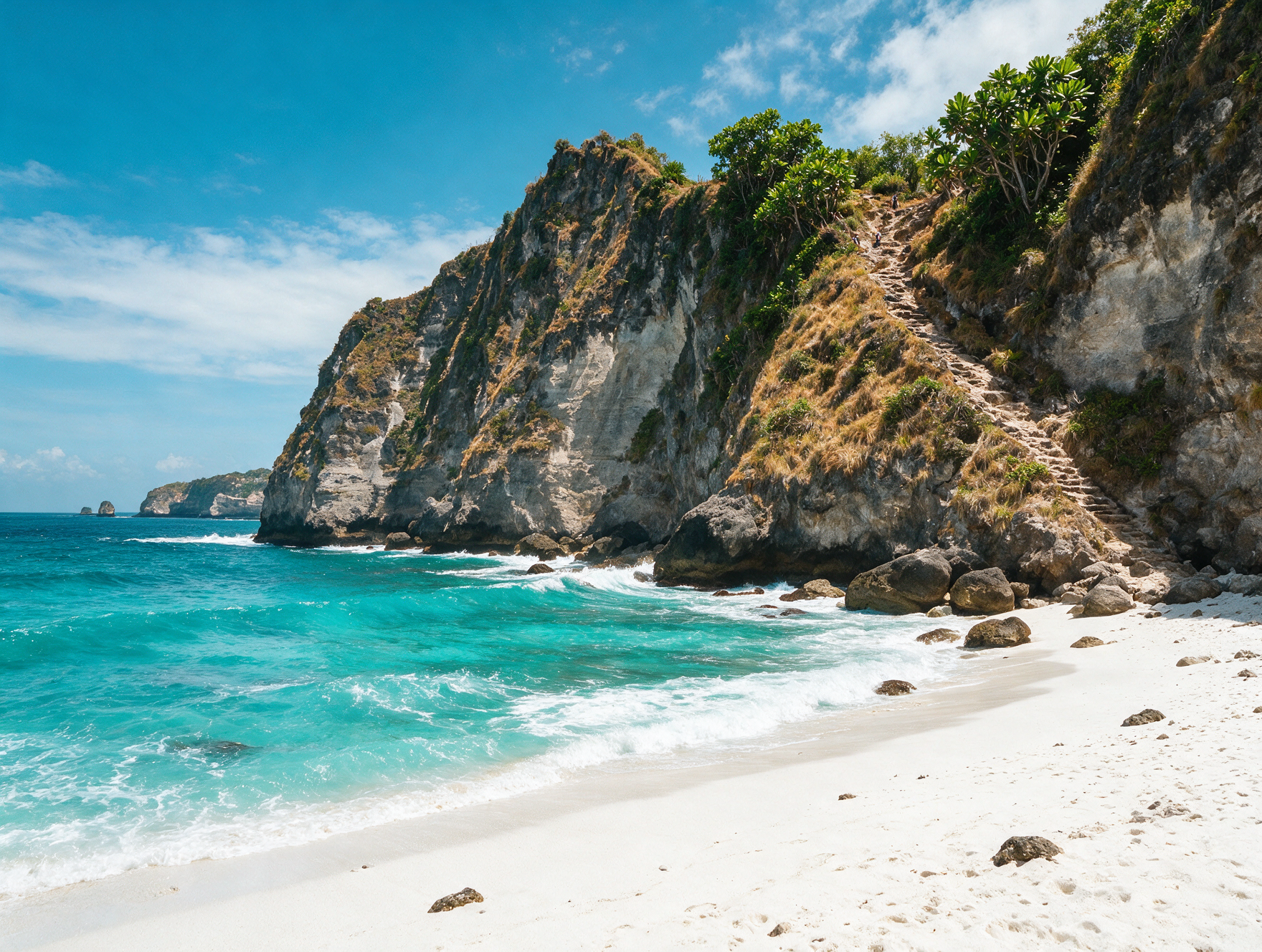
2. Smoke Beach — where the tide puts on its own show
About 20 minutes from Kelingking, Smoke Beach earns its name from what happens when the tide comes in: waves hit the jagged coastal rocks with enough force that they throw up a genuine cloud of sea mist, like the coastline is smoking. It’s less a beach for swimming and more a dramatic viewpoint for watching that process happen, ideally timed around an incoming tide rather than dead low or dead high water, when the effect is strongest. Bring a jacket if there’s any wind — the mist carries further than you’d expect.
3. Suwehan Beach — the hike that keeps the crowds away
Suwehan requires a roughly 30-minute hike down a genuinely steep trail, and that alone filters out a large share of the day-trippers who’ll happily queue for Kelingking’s viewpoint but won’t commit to a proper descent. The reward is white sand and turquoise water that’s noticeably less crowded than anywhere else on this list, plus a distinctive rock formation locals point out as looking like a Christmas tree from certain angles. If you want to stay longer than a day trip allows, a handful of simple tree-house-style accommodations went up near the cliffs here in 2018, giving you sunrise access before the hike-in crowd even arrives.
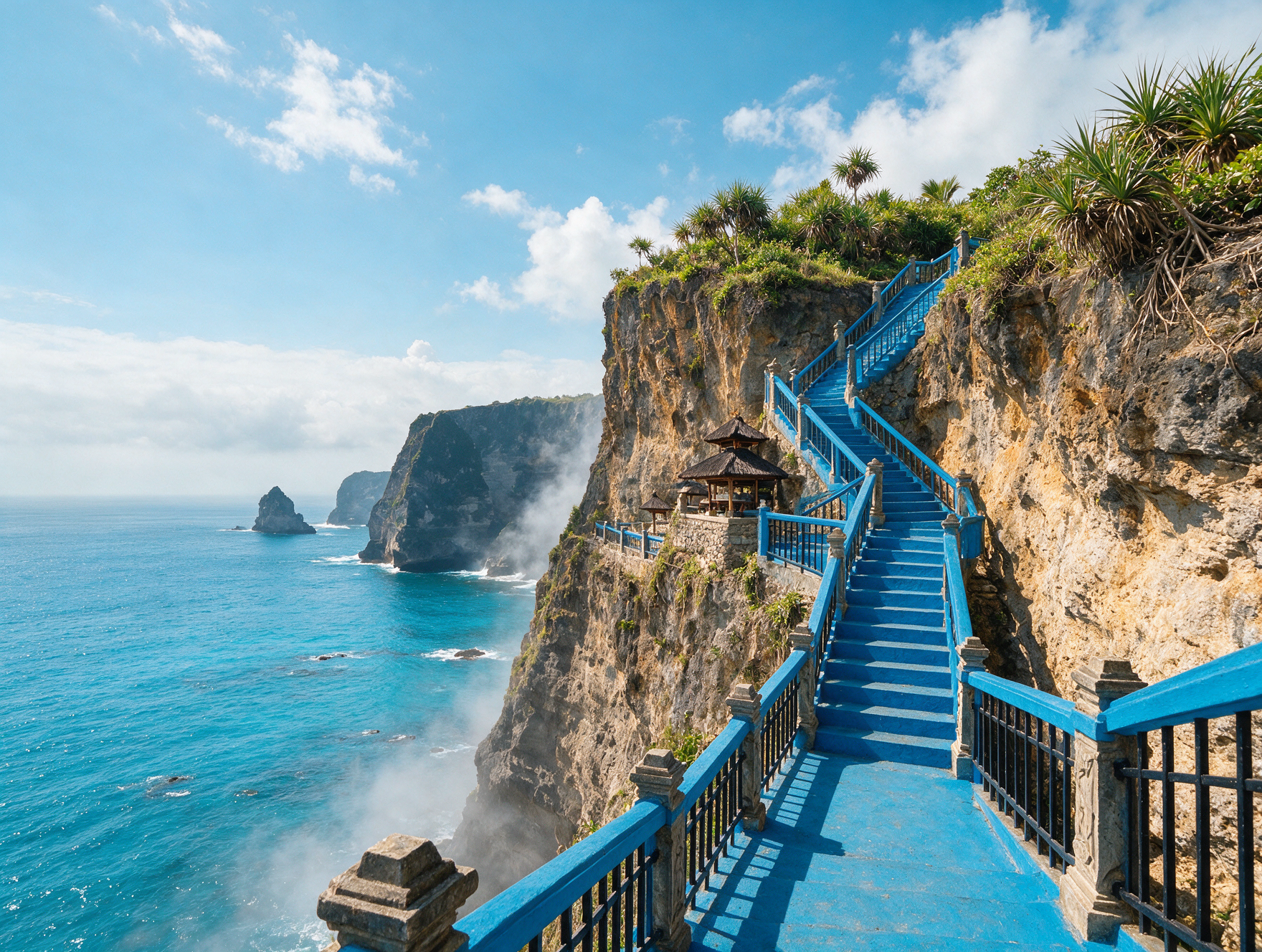
Honest caveat: the hike back up is the same steep 30 minutes in reverse, in full sun, with no shade on most of the trail. Bring more water than you think you need, and don’t attempt this one in the flattest heat of midday if you can help it.
4. Peguyangan Waterfall — down the blue staircase
Peguyangan is less a waterfall hike and more an event in itself: getting there means climbing down hundreds of steps along a bright blue stairway cut into the cliff face, which is a striking enough structure that it’s worth the visit even before you reach the bottom. The payoff is a small waterfall and natural pool tucked against the cliffs, with genuinely dramatic ocean views on the way down that most people are too focused on their footing to fully appreciate on the descent — take it slow and actually look up and out periodically.
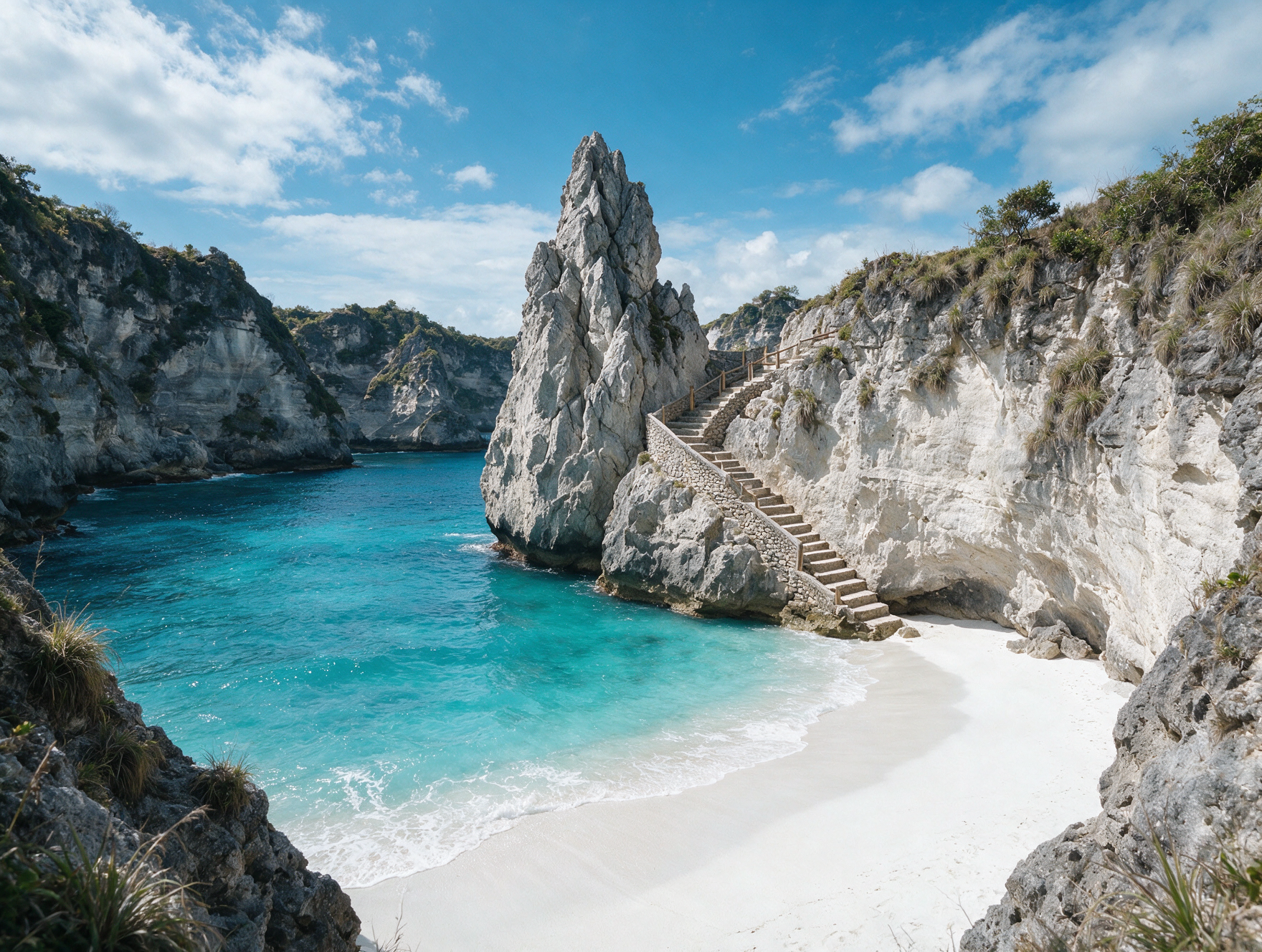
Mistake to avoid: underestimating the return climb. Hundreds of steps down is hundreds of steps back up, in coastal heat, and this is not the spot to attempt in flip-flops or without a decent bottle of water. Pace yourself and take breaks on the way up rather than pushing straight through.
5. Diamond Beach — Atuh’s quieter neighbor
Diamond Beach sits right beside the better-known Atuh Beach, sharing the same dramatic cliff-backed cove setting and the same steep staircase access, but pulling a noticeably smaller crowd simply because Atuh gets named first on most itineraries. The white sand and the limestone pillars rising out of the water here are every bit as photogenic as its more famous neighbor — this is very much a case of the “second” beach being just as worth the visit as the one everyone talks about first. A handful of simple warungs near the top of the staircase serve coconuts and basic meals if you want to make a longer stop of it rather than a quick photo visit.
Planning a day (or two) around these five
Nusa Penida is genuinely large and its roads are rough — most of the island’s real attractions, including everything on this list, sit on the east side, while Kelingking and the main viewpoints cluster in the west and south. Renting a scooter (if you’re licensed and comfortable riding on unpaved, pothole-heavy roads) or hiring a driver for the day are the two realistic ways to cover multiple spots on this list without losing hours to slow, bumpy transit. Most visitors do Nusa Penida as a day trip by fast boat from Sanur, but with five worthwhile detours beyond the standard Kelingking stop, an overnight on the island genuinely earns its keep — it also means catching sunrise at Suwehan or Diamond Beach before the day-trip boats even arrive.
A smart-spending note: day-trip boat-plus-driver packages from Sanur are widely available and reasonably priced for what they cover, but the drivers on the cheapest packages tend to run a fixed, well-worn Kelingking-Angel’s Billabong-Broken Beach loop. If any of these five spots matter to you specifically, say so when booking — a slightly more expensive private driver who’ll actually detour to Paluang Cliff or Suwehan is worth the difference.
Who this itinerary suits
Adventurous couples and photographers get the most out of this list — several of these spots (Suwehan, Peguyangan) demand a proper hike, which rewards people who want the photo and don’t mind earning it. Families with young children are better served sticking to Nusa Penida’s easier, more accessible viewpoints; several of these five involve genuinely steep, unshaded climbs that aren’t kid-friendly. Solo travelers should ideally pair up with a driver or small group for the more remote spots like Suwehan, simply because cell signal thins out on the island’s rougher eastern roads.
A photography tip nobody mentions
Every Kelingking shot is taken from the main viewpoint looking down at the T-Rex head. From Paluang Cliff, shoot the formation side-on instead, low, with the water and the smaller boats passing below in frame for scale — it reads as a completely different, less-seen image of the same famous rock, and you’ll have far more room to actually set up the shot without someone else’s elbow in your frame.
A mistake to avoid
Trying to fit all five of these into one day alongside the standard Kelingking-Angel’s Billabong-Broken Beach loop. Nusa Penida’s roads are slower than they look on a map, and the east-side spots on this list (Suwehan, Diamond Beach, Peguyangan) are a genuine detour from the western viewpoints most day-trip boats are timed around. Pick either the west-side classics or the east-side list above for one day, not both — trying to cram everything in is how people end up rushing the actual hikes that make these spots worthwhile in the first place.
What to budget
A day-trip boat-and-driver package from Sanur typically runs IDR 400,000-800,000 per person depending on group size and inclusions; an overnight stay in a simple guesthouse near Suwehan or Atuh/Diamond runs considerably less than equivalent Bali beachfront accommodation, generally IDR 300,000-700,000 a night. Entry fees at most of these five spots are minimal or donation-based (typically IDR 5,000-15,000), a notable contrast to the more commercialized entry structure at Kelingking’s main viewpoint.
Staying connected on the island
Mobile coverage on Nusa Penida is patchier than Bali proper, especially once you’re on the rougher east-side roads near Suwehan and Diamond Beach — Telkomsel generally holds a signal furthest out of the major Indonesian carriers, which is worth knowing if you’re relying on maps to navigate between these spots. Download offline maps of the island before you take the boat over; you’ll likely need them at some point on the eastern loop.
FAQs
Is Nusa Penida a day trip or worth staying overnight?
Most visitors do it as a day trip from Sanur by fast boat, and that works fine for the headline spots. If you want to properly see the five places on this list, an overnight stay is worth it — it also avoids the tightest part of the day-trip schedule, where boat return times cut hikes short.
Are these hidden gems difficult to reach?
Some are easy detours (Paluang Cliff, Smoke Beach); others (Suwehan, Peguyangan, Diamond Beach) involve genuinely steep hikes or long staircases. None require technical skill, but all reward reasonable fitness and proper footwear.
Do I need a guide or driver for Nusa Penida?
Not strictly required, but strongly recommended — the island’s roads are rough and poorly signed in places, and a local driver knows which of these spots are worth the detour on a given day depending on tide and weather.
What should I pack for a day exploring Nusa Penida’s hidden gems?
More water than feels necessary, proper closed-toe shoes or sturdy sandals, reef-safe sunscreen, a hat, and a light rain layer in the wetter months (roughly November to March).
Is Nusa Penida safe to explore independently?
Generally yes, though the steep staircases and cliff-edge viewpoints demand real care, especially after rain when steps get slippery. Sticking to marked trails and avoiding the very edge for photos is the main safety consideration here.
Nusa Penida rewards travelers who go past the first viewpoint, and these five spots are exactly where that extra effort pays off. Get Tripped can build a proper overnight Nusa Penida stop into your Bali itinerary rather than squeezing it into a rushed day trip — ask us about adding it to your custom Indonesia trip.