On a Friday morning in Jabal al-Weibdeh, half of Rainbow Street is still shuttered at 10am — not because anyone’s being lazy, but because Friday runs on its own clock here, built around the midday prayer rather than a 9-to-5. Keep walking two minutes downhill, though, and you’ll find a bakery that’s already sold out of its morning samoon, the owner waving off the last disappointed customer with a free piece of knafeh instead. That contradiction — shuttered doors next to a sold-out counter — is a better introduction to Amman than any photo of the Roman Theatre. This is a city that runs on its own rhythm, not a tourist timetable, and the best way to enjoy it isn’t to tick off sights in order. It’s to slow down enough to notice how the city actually works.
Most Jordan tour packages from India still treat Amman as a one-night layover before Petra and the Dead Sea. That’s a missed opportunity. Whether you’re booking a straightforward Jordan vacation package or a longer, more considered luxury Jordan travel package, give the capital a real day — two, if you can spare them — and use it to live in the city rather than just photograph it. Here’s what that actually looks like.
Table of Contents
- Why Amman Rewards Travelers Who Slow Down
- Amman’s Coffee and Café Culture, Beyond Rainbow Street
- Downtown Amman (Al-Balad): How Locals Actually Shop the Souks
- The Neighborhood Worth Wandering: Jabal Amman and Jabal al-Weibdeh
- How Ammanis Actually Eat Out
- Getting Around Like a Local: Careem, Taxis and Amman’s Hills
- Friday Rhythms: What’s Open, What’s Not, and Why
- Ancient Amman in the Middle of Everyday Life
- Practical Notes: Visa, Money, Safety and Connectivity
- Amman for Solo Travelers, Couples and Families
- Frequently Asked Questions
Why Amman Rewards Travelers Who Slow Down
Amman doesn’t have a single center. It’s built across what locals will tell you were originally seven hills — the city now sprawls over nineteen of them — which is why neighborhoods here are named for the jabal (hill) or wadi (valley) they sit in: Jabal Amman, Jabal al-Weibdeh, Wadi Saqra. Settlement in this area goes back to the Neolithic site of ‘Ain Ghazal on the city’s outskirts, inhabited around 7000 BC. The city itself cycled through names: Rabbath Ammon under the Ammonite kingdom, Philadelphia under the Greeks, back to its Semitic name under the early Islamic caliphates. None of that history stays behind glass. It’s stacked underneath apartment blocks, cut through by six-lane roads, visible from a plastic chair outside almost any corner café.
That’s the real case for spending time here beyond the standard list of places to visit in Jordan. Amman isn’t trying to be a museum piece. It’s a working Arab capital of roughly 4 million people where the ruins are incidental to daily life rather than the point of it — and once you see that, a lot of the “what to do in Amman” question answers itself: you watch, you eat, you let a shopkeeper talk to you longer than you planned.
Amman’s Coffee and Café Culture, Beyond Rainbow Street
Rainbow Street gets the Instagram attention, and it earns some of it — on a weekend evening the strip from the old cinema down toward the Duke’s Diwan is genuinely full of life, with strings of lights over narrow balconies and a mix of shisha lounges, juice stalls and sit-down cafés that stay loud until well past midnight. Go once for the atmosphere. But treat it as the entrance to café culture here, not the whole of it.
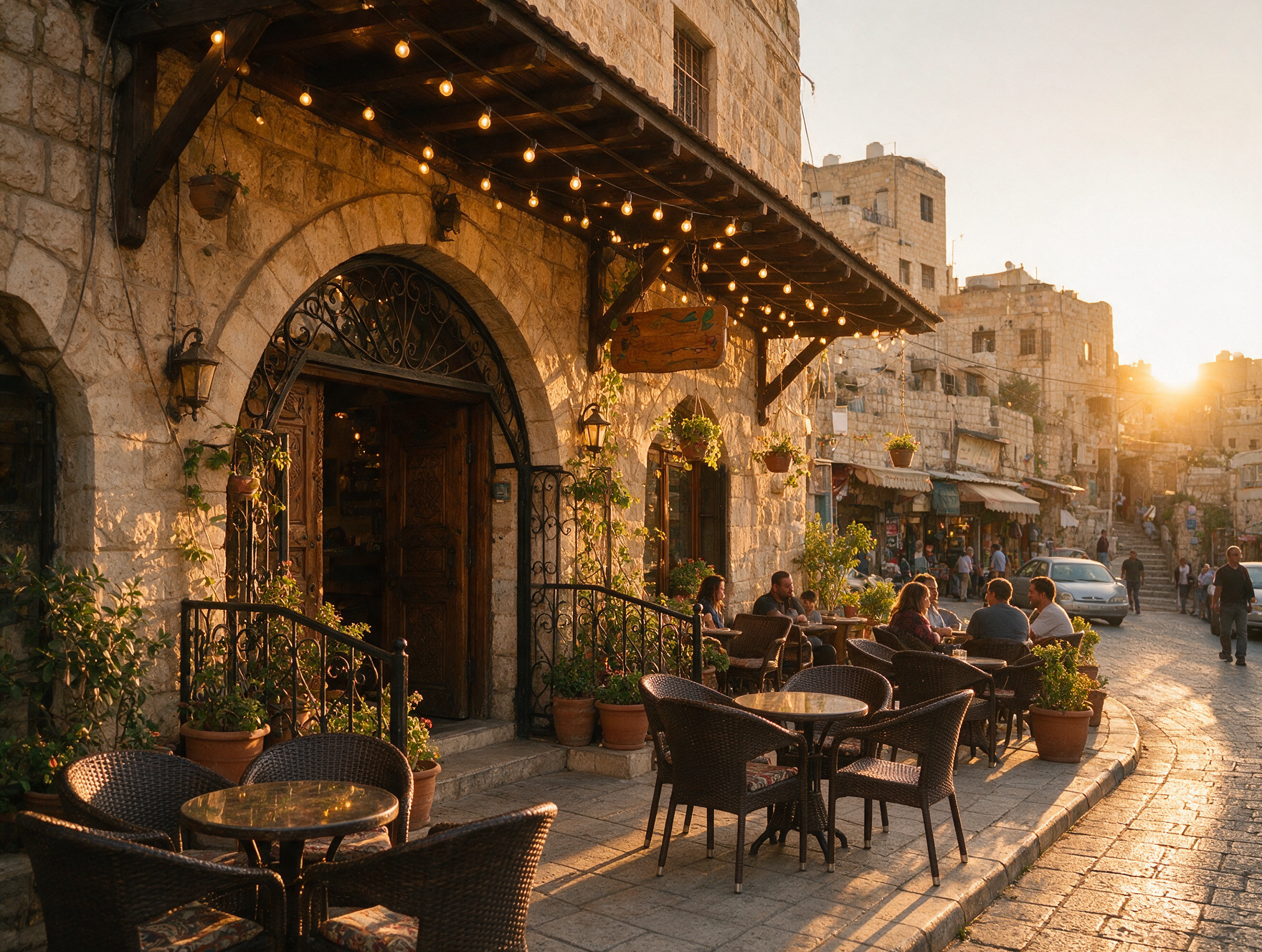
Walk ten minutes uphill into Jabal al-Weibdeh and the volume drops. This is Amman’s old arts neighborhood — colorful 1920s-era houses, the Jordan National Gallery of Fine Arts, and streets quiet enough that a single barista calling out an order carries half a block. One real hidden gem here, and it’s a strange one to call hidden since it’s been open since the 1990s: Darat al-Funun, a free contemporary art foundation built into a hillside off Al Malek Al Hussein Street. You climb a flight of stairs near the old Riviera Hotel sign, pass restored Mediterranean-style villas and a small excavated 6th-century Byzantine church, and end up at a quiet café terrace looking out over the city — free to enter, usually open from mid-morning, and almost never mentioned in a standard Amman itinerary. Most tourists never make the climb. That’s exactly why it’s worth it.
A photography tip worth knowing: skip the obvious wide shot of Rainbow Street’s entrance arch. The better frame is from one of the upper café balconies looking down the slope at an angle, which actually shows the layering of the hill instead of flattening the street into one straight line. Shoot it around 5pm, before the evening crowd fills the frame but while the light’s still warm.
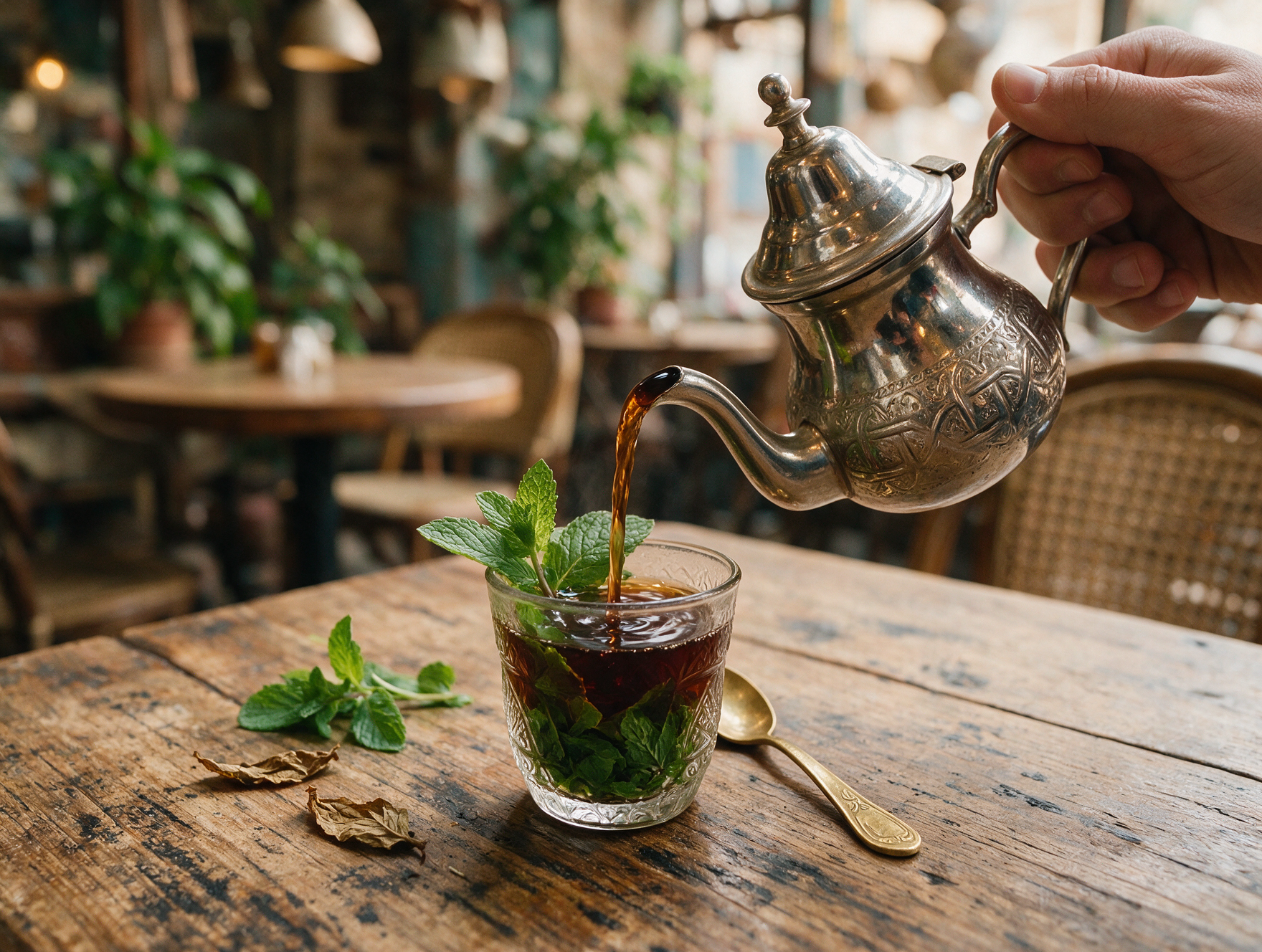
Order-wise: Arabic coffee (qahwa) is thick, usually cardamom-spiced, and served in small cups — it’s a ritual, not a caffeine hit, so don’t expect filter coffee at most traditional spots unless you ask for “coffee Americano” specifically. Mint tea (shay bi na’na) is the other constant, poured strong and sweet, and it’s what most Ammanis are actually drinking at 4pm, not coffee.
Downtown Amman (Al-Balad): How Locals Actually Shop the Souks
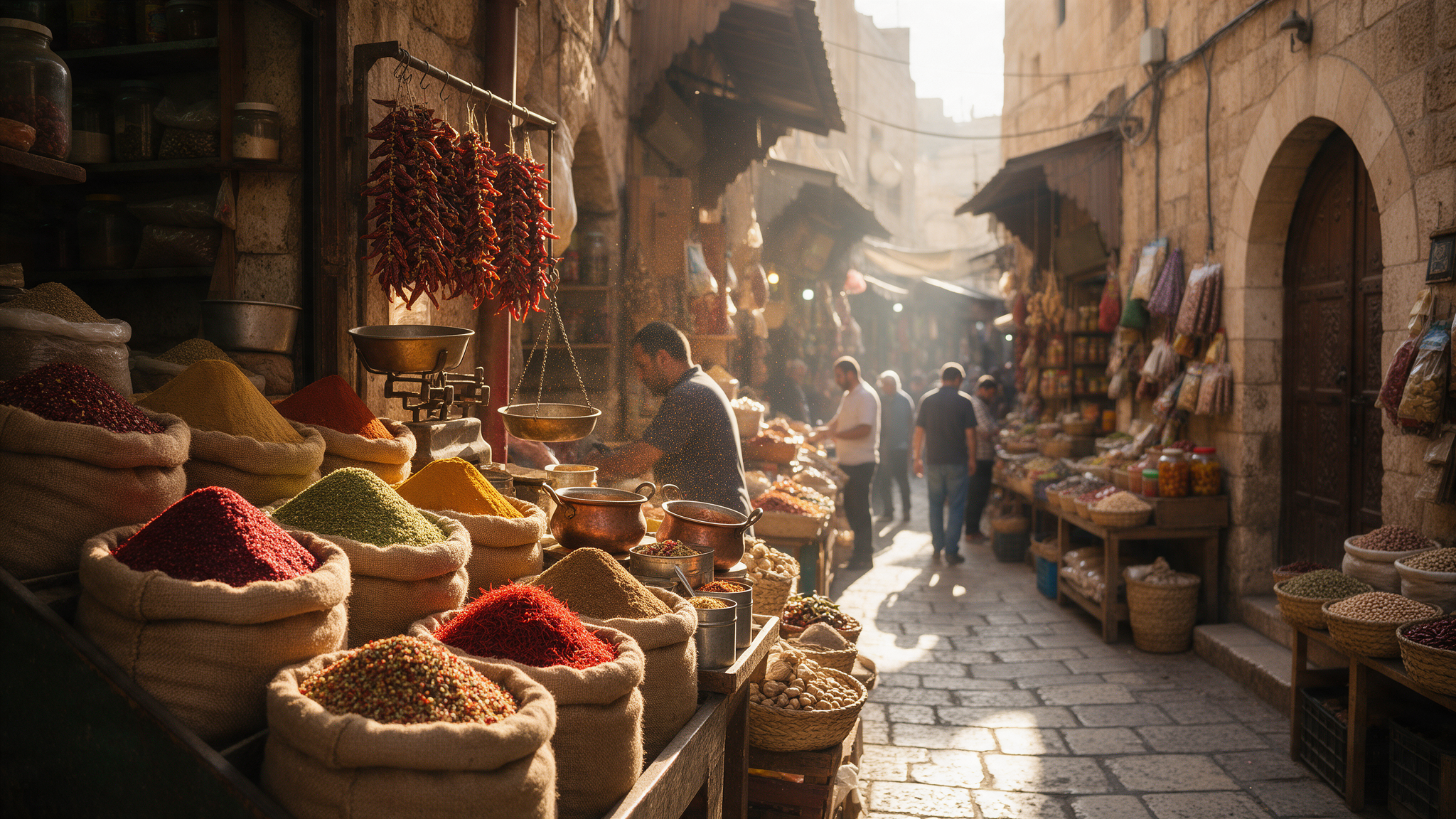
Downtown — locals just call it al-Balad — is where Amman stops performing for visitors and gets on with its actual commerce. The souks here aren’t curated for tourists the way some Marrakesh-style markets are; they’re where Ammanis buy spices, gold for weddings, and sweets for Friday family lunches.
The spice souk along Al-Malek Al-Faisal Street and the surrounding alleys is sold by weight, not by the tourist-trinket portion — sumac, za’atar blended specifically for manaqeesh, dried limes, saffron of wildly varying quality. The gold souk nearby is serious business: Jordanian families buy gold as a form of savings as much as jewelry, and shops weigh pieces on digital scales in front of you, pricing largely off the day’s gold rate rather than haggled from a markup. Don’t expect deep discounts here the way you might in a general souvenir market — the margins are already thin.
What you should absolutely do is walk to Habibah Sweets on Al-Madina Al-Munawwara Street, in business since 1947 and still the city’s reference point for knafeh — the semolina-and-cheese pastry soaked in sugar syrup. It’s takeaway-by-weight downstairs, seating upstairs, and by evening the queue genuinely does stretch out the door. Go late morning instead of at night if you want to skip the wait.
A mistake to avoid: aggressive haggling in the downtown souks the way you might in Cairo or Marrakesh. Prices in Amman’s markets are generally closer to fixed than performative — spice and gold sellers especially aren’t expecting a 50% opening counter-offer, and pushing hard can come across as rude rather than savvy. A polite “is that your best price?” gets you further than a theatrical walk-away.
The Neighborhood Worth Wandering: Jabal Amman and Jabal al-Weibdeh
If you only wander one neighborhood properly, make it the pairing of Jabal Amman and Jabal al-Weibdeh rather than ticking off Rainbow Street and moving on. Jabal al-Weibdeh in particular rewards an aimless hour: it was one of the first areas built after Amman’s founding in the 1920s, and it still has that scale — low buildings, Paris Square with its small Wallace-fountain replica at the center, the Jordanian Writers Society housed in an old villa, and enough independent galleries that it functions as the city’s unofficial arts district. Worth saying honestly: a tragic building collapse here in September 2022 killed 14 people, a reminder that some of the neighborhood’s charm — old, under-maintained structures — comes with real risk. It hasn’t stopped the area from being one of the most atmospheric in Amman to walk through; it’s just a fact of the place, not a reason to avoid it.
Jabal Amman itself, just downhill, blends diplomatic residences, boutique guesthouses converted from old villas, and the kind of mid-range to upscale restaurants that make it a sensible base if you’re not staying downtown. Walking between the two neighborhoods takes maybe 15–20 minutes and covers more of “real Amman” than most guided half-day tours manage.
How Ammanis Actually Eat Out
There’s a real split between where regulars eat and where first-time visitors get steered, and it’s worth knowing the difference. Tourist-facing restaurants cluster around Rainbow Street and major hotels, with English menus, higher prices, and solid but unremarkable food. Regulars go to smaller, often unsigned-in-English spots for a single specialty done well — a hummus place that’s only open until the pot runs out around 2pm, a grill that does nothing but shawarma and does it fast, a bakery that sells manaqeesh by the piece to office workers on their way in.
Mansaf — lamb cooked in a fermented dried-yogurt sauce called jameed, served over rice with almonds and pine nuts — is the dish Jordanians consider genuinely theirs, usually eaten communally from a shared platter at family gatherings rather than ordered solo at a restaurant table. If you want to try it properly, ask your hotel or a local guide which restaurant serves it the way a family would, rather than picking the first “traditional Jordanian food” listing you find online.
For a deeper dive into where to eat across the whole country, not just the capital, Get Tripped’s Jordan food trail guide covers the regional specialties worth seeking out between Amman, Petra and Wadi Rum. And if you’re traveling with vegetarian or Jain dietary needs — a common question from Indian travelers — our vegetarian and vegan food guide to Jordan goes into which dishes are naturally meat-free (hummus, moutabal, fattoush, and most mezze are a safe, often excellent, default) and how to communicate dietary restrictions clearly.
Getting Around Like a Local: Careem, Taxis and Amman’s Hills
Careem is the ride-hailing app Ammanis actually use, operating in Jordan since 2015 with real-time tracking and the option to pay cash, card or wallet credit. Uber, Jeeny and Petra Ride also run here, but Careem has the deepest driver network outside the main tourist corridors. Download it before you land — it works the same way it does across the Gulf and South Asia, so there’s no learning curve if you’ve used it before.
Traditional yellow taxis are everywhere too, and perfectly fine for short hops — just confirm the driver is running the meter (ask for the “addad”) rather than quoting a flat fare, since meters tend to get skipped after 11pm specifically. Drivers generally speak enough English for directions, and solo women travelers should know the back seat is the default expectation, not an imposition.
The transit tip that actually matters: don’t assume walking is faster just because somewhere looks close on a map. Amman’s hills are steep and the street grid downtown wasn’t built for easy pedestrian cuts between jabals — what looks like a 10-minute walk on Google Maps can be a genuine uphill slog in 35°C heat. Use Careem for anything connecting two different hills, and walk only within a neighborhood once you’re there. For the full picture on buses, JETT coaches between cities, and private drivers, see Get Tripped’s Jordan public transit guide.
Friday Rhythms: What’s Open, What’s Not, and Why
Friday is Jordan’s weekly holiday and the day built around midday prayer, and it changes the city’s schedule in ways that catch first-time visitors off guard. Government offices and many smaller downtown shops stay shut or open late — often not until early afternoon. Malls, hotels, major restaurants and most tourist sites run close to normal, but the souks and smaller downtown businesses genuinely follow a different clock.
The mistake to avoid: planning your one downtown souk morning for a Friday. You’ll find Habibah Sweets and the bigger attractions open, but a frustrating number of the smaller spice and gold stalls shuttered until the afternoon, which defeats the point of a souk walk. Saturday through Thursday is the safer window for that specific plan; save Friday for a long café afternoon in Jabal al-Weibdeh instead, when the quiet actually works in your favor.
Ancient Amman in the Middle of Everyday Life
What makes Amman unusual isn’t that it has Roman ruins — plenty of cities do — it’s that the ruins sit directly inside the working city rather than on its outskirts. The Roman Theatre, carved into a hillside and still used for concerts today, sits at street level downtown with apartment blocks and shopfronts visible on the hills rising around it on every side. Climb to the top tier and the view is genuinely strange: 2,000-year-old stone seating, and behind it, satellite dishes and laundry lines on modern rooftops.
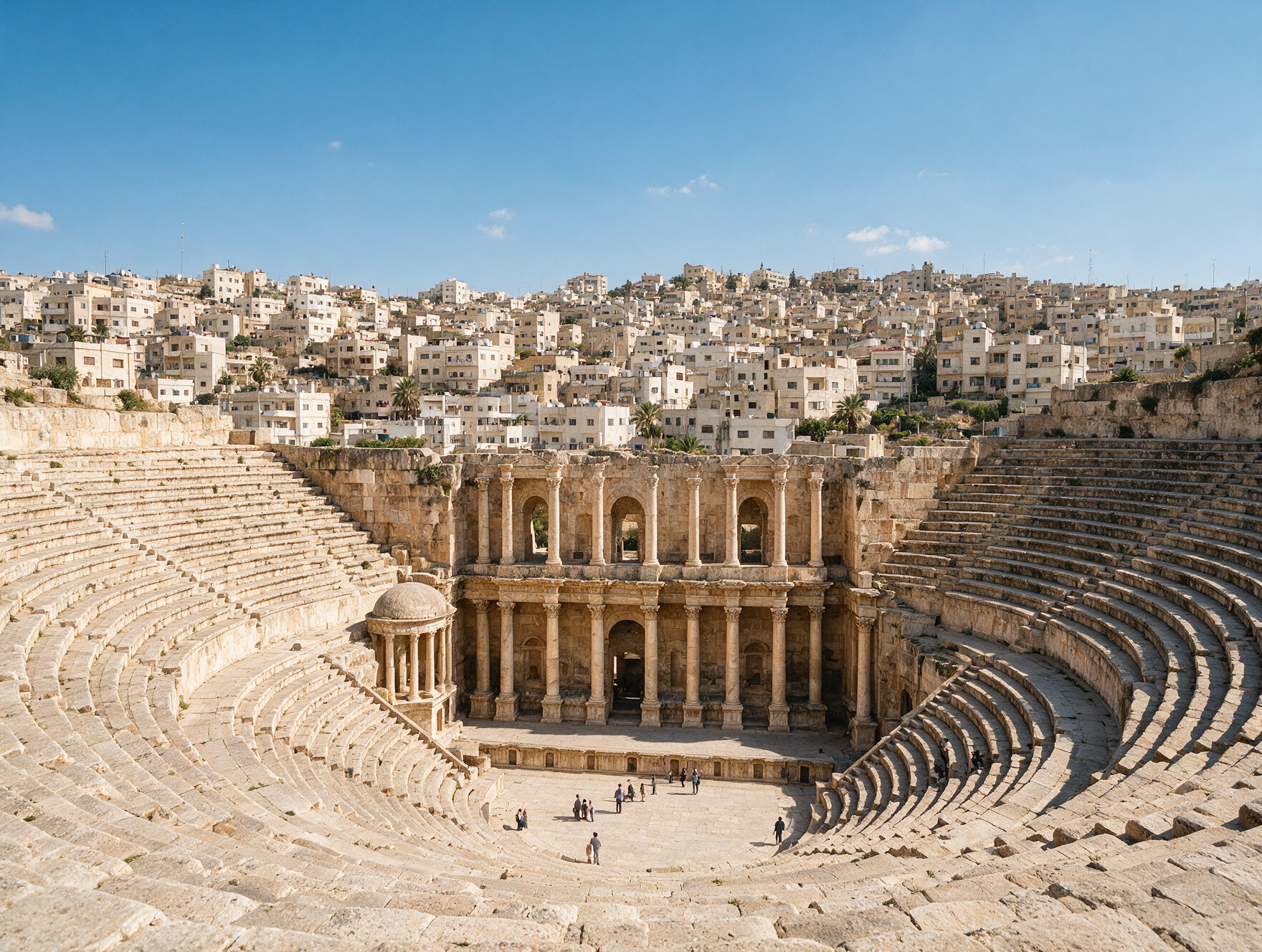
The Amman Citadel, up on Jabal al-Qal’a, is the better spot for the reverse view — the whole sprawl of cream and sandstone buildings climbing every hill in sight, with the green dome of King Abdullah Mosque breaking the pattern in the middle distance. Entry is a modest few Jordanian dinars including the small on-site museum, and both the Citadel and Roman Theatre are typically included if you’ve bought a Jordan Pass, which bundles entry to Petra and dozens of other sites and is worth comparing against paying individually if Amman is one stop on a longer trip. Hours shift seasonally, so confirm the current schedule before you go rather than assuming the previous year’s timing still holds.
If you want the classic hour-by-hour version of this — Citadel at sunrise, theatre mid-morning, a food crawl at midday, Rainbow Street by evening — Get Tripped has already mapped that out in A Day in Amman: Roman Ruins, Rainbow Street and a Falafel Trail. This guide is deliberately the slower companion to that one: less a schedule, more a way to see the same city without racing a clock.
Practical Notes: Visa, Money, Safety and Connectivity
Visa: Jordan visa on arrival for Indians is available for tourism purposes, arranged at entry points including Queen Alia International Airport, with a standard tourist visa typically valid for a 30-day stay. Fees are payable in Jordanian dinars and do change, so confirm the current rate before you travel rather than relying on an old number. One genuinely useful shortcut: buying a Jordan Pass online before you fly can waive the visa fee entirely for Indian travelers staying three nights or more in the country — on top of bundling entry to the Citadel, Roman Theatre and Petra. It has to be purchased in advance, not after arrival, so sort it before you leave India.
Money: The Jordanian dinar (JOD) is a strong currency relative to the rupee, so mentally multiply prices accordingly rather than assuming Middle East prices track Indian ones. Cards are widely accepted at hotels, malls and larger restaurants; carry cash for souks, small cafés and taxis. On a mid-range Jordan trip cost from India basis, Amman runs noticeably cheaper per day than Petra or Wadi Rum — a sensible place to budget slightly less and spend more later in the trip.
A smart-spending tip: eat your one “nice” sit-down dinner in Jabal Amman rather than directly on Rainbow Street itself — the food quality is comparable or better, and you’re not paying the location premium of the single most photographed strip in the city.
Safety: Is Jordan safe for Indian tourists? Overwhelmingly yes, and Amman specifically is one of the more relaxed capitals in the region to walk around in, including at night in central neighborhoods like Jabal Amman and Jabal al-Weibdeh. Normal city precautions apply — mind belongings in crowded souks, agree on taxi fares or confirm the meter, and dress modestly in religious sites and downtown rather than beachwear-casual. Solo women travelers generally report feeling comfortable here, though the usual sense checks that apply anywhere unfamiliar still apply.
Connectivity: Local SIMs (Zain, Orange, Umniah) are easy to pick up at the airport with a passport, and eSIM options are increasingly available if you’d rather set up data before landing. WiFi is standard and reliable in Amman’s cafés and hotels, less consistently so once you’re out toward Petra or Wadi Rum.
Amman for Solo Travelers, Couples and Families
Solo travelers will find Amman’s café culture genuinely easy to slot into alone — a single person reading at a corner table in Jabal al-Weibdeh draws no attention at all, and Careem removes most of the friction around getting between neighborhoods safely after dark.
Couples get real mileage out of the slower version of the city: a long lunch in Jabal Amman, an unhurried afternoon at Darat al-Funun’s terrace café, dinner somewhere away from the main Rainbow Street crush. It reads less like a sightseeing stop and more like a city you could imagine actually living in for a week.
Families traveling on a Jordan family holiday package should know the Citadel and Roman Theatre are both manageable with kids — flat-ish paths, nothing that demands serious fitness — and that downtown’s food stalls (fresh juice, knafeh, falafel) are an easy way to keep children fed without a sit-down restaurant commitment. Friday’s quieter pace, oddly, can work in a family’s favor: fewer crowds at the major sites, provided you’ve planned around the souk closures mentioned above.
Frequently Asked Questions
Is Jordan safe for Indian tourists, particularly in Amman?
Yes. Amman is generally considered one of the calmer, more walkable capitals in the region, and Indian travelers are a familiar, welcomed presence. Standard precautions — securing valuables in crowded markets, confirming taxi fares, dressing modestly at religious and downtown sites — are enough for most trips.
How many days should I spend in Amman specifically?
One full day covers the Citadel, Roman Theatre and a downtown food walk comfortably. Two days lets you add Jabal al-Weibdeh’s café and gallery scene without rushing, which is the version this guide is really written for.
Do I need a visa on arrival, and does it cost a lot?
Indian passport holders can get a tourist visa on arrival at Jordan’s main entry points. Fees are payable in dinars and do change, so verify the current amount before departure — and check whether a pre-purchased Jordan Pass waives it for your trip length, since it can for stays of three nights or more.
What’s the best time of year to visit Amman?
Spring (March–May) and autumn (September–November) are the most comfortable, with mild days and cool evenings. Jordan trips June to October run hot in Amman and genuinely hot in Petra and Wadi Rum, so if you’re traveling then, plan your souk and walking time for morning or early evening rather than midday.
Is Careem better than a regular taxi in Amman?
For predictability, yes — fixed upfront pricing and no meter disputes. Street taxis are fine for short, familiar routes, especially before 11pm when meters are reliably used, but Careem removes the guesswork, particularly useful if you don’t speak Arabic.
Can I visit downtown Amman’s souks on a Friday?
You can, but expect a meaningfully quieter, partly shuttered version until early afternoon, since Friday is Jordan’s main day of prayer and rest. If a full souk walk is the priority, Saturday through Thursday is the more reliable window.
Is Amman worth visiting beyond a stopover before Petra?
Genuinely, yes. Most Jordan 7 days travel itinerary plans treat Amman as a one-night arrival point, but giving it a real day or two — the café culture, the souks, the neighborhoods — adds a different texture to the trip than Petra and Wadi Rum alone provide.
What should I absolutely not do in Amman’s markets?
Don’t haggle aggressively the way you might elsewhere in the region. Spice and gold prices in Amman’s souks run closer to fixed, and an overly theatrical negotiation tends to read as rude rather than canny.
The Amman You Don’t See From a Tour Bus
Amman isn’t a city that performs for visitors, and that’s exactly its appeal. The Roman Theatre doesn’t rope off its modern backdrop; the souks don’t dress up their prices for tourists; Friday doesn’t pause for anyone’s itinerary. Spend a real day or two here, slow down enough to drink the tea instead of just photographing it, and you’ll leave with a better sense of Jordan than a one-night layover could ever give you — which is, really, the whole case for places to visit in Jordan beyond the postcard three.
If you’re building a custom Jordan itinerary and want Amman treated as more than a layover, Get Tripped can design the trip around it — from a short Petra and Dead Sea tour package to a longer, fully guided journey across the country. Explore our Jordan trips, or get in touch to book Jordan holidays that actually give the capital its due before you head south.