By 9:30 in the morning, the courtyard in front of Petra’s Treasury is a wall of tour groups, camera phones, and horse-drawn carriages jostling for space in the same forty square metres of sand. Three kilometres and roughly 800 rock-cut steps deeper into the site, at the base of the Monastery, you can stand in front of a facade twice the size of the Treasury with maybe a dozen other people for company. Most visitors never make that walk. They do the Siq, the photo, the camel selfie, and they leave — often inside four hours, for a UNESCO World Heritage site that covers over 260 square kilometres.
This guide is for the part of Petra that happens after the Treasury: the Monastery climb, the High Place of Sacrifice, the Royal Tombs at the hours nobody else chooses, Little Petra fifteen minutes up the road, and the candlelit Petra by Night show that runs on its own separate ticket. If you’re already looking at Jordan tour packages from India or building a 7-day Jordan itinerary, this is the section of the trip worth protecting an extra half-day for.
Table of Contents
- Why Petra Deserves More Than the Treasury
- Petra Entry Fees, Hours, and the Jordan Pass in 2026
- The Monastery (Ad-Deir): The Climb That Earns the View
- The High Place of Sacrifice: A Shorter Climb, Fewer Crowds
- Royal Tombs at the Hours Everyone Else Skips
- Little Petra (Siq al-Barid): The Free Detour
- Petra by Night: A Different Treasury After Dark
- Getting to Petra from Amman
- Who Should Prioritize What
- A Mistake to Avoid, a Smart-Spending Tip, and a Fun Fact
- FAQs
Why Petra Deserves More Than the Treasury
Petra was carved and built by the Nabataeans starting around the 1st century BCE, as the capital of a trading kingdom that controlled the incense and spice routes between Arabia, Egypt, and the Levant. UNESCO’s listing for the site describes it as “half-built, half-carved into the rock,” which undersells how much of it is still unexcavated — archaeologists estimate less than a sixth of Petra has been uncovered. The Treasury (Al-Khazneh) is the single facade everyone recognizes because it’s the first thing you see after the narrow Siq canyon opens up, but it’s one tomb among hundreds, and not even the largest.
The spots in this guide are a 15-minute stroll to a half-day hike further in. None of them require technical climbing gear or a guide, though a local guide is genuinely useful for the history you’d otherwise miss on the way up.
Petra Entry Fees, Hours, and the Jordan Pass in 2026
Get this part right before you plan the rest of the day, because ticket rules shape how many days you can actually spend inside the site.
- Entry fees for international visitors are tiered by number of days: 50 JD for one day, 55 JD for two days, and 60 JD for three days — and multi-day tickets have to be used on consecutive days, not spread across a trip. Children under 12 enter free.
- Opening hours run roughly 6:00 am to 6:00 pm in summer and 6:30 am to 5:00 pm in winter, though hours shift around public holidays and Ramadan — check Jordan Tourism Board’s site or with your hotel in Wadi Musa the day before.
- The Jordan Pass bundles Petra entry with 40-plus other attractions and, if you stay at least three consecutive nights in Jordan, waives the 40 JD visa-on-arrival fee entirely. The three tiers (Wanderer, Explorer, Expert) correspond to 1, 2, and 3 days of Petra access — buy it online before you fly, since it has to be used to enter the country. Full current pricing is on the official Jordan Pass site.
- What the Pass doesn’t cover: Petra by Night is a separate ticket, always, regardless of which Jordan Pass tier you’re holding.
If the goal is to actually see the Monastery, the High Place, and Little Petra without rushing, buy at least the two-day ticket. One day is enough for the Treasury, the Royal Tombs, and one climb — not both.
The Monastery (Ad-Deir): The Climb That Earns the View
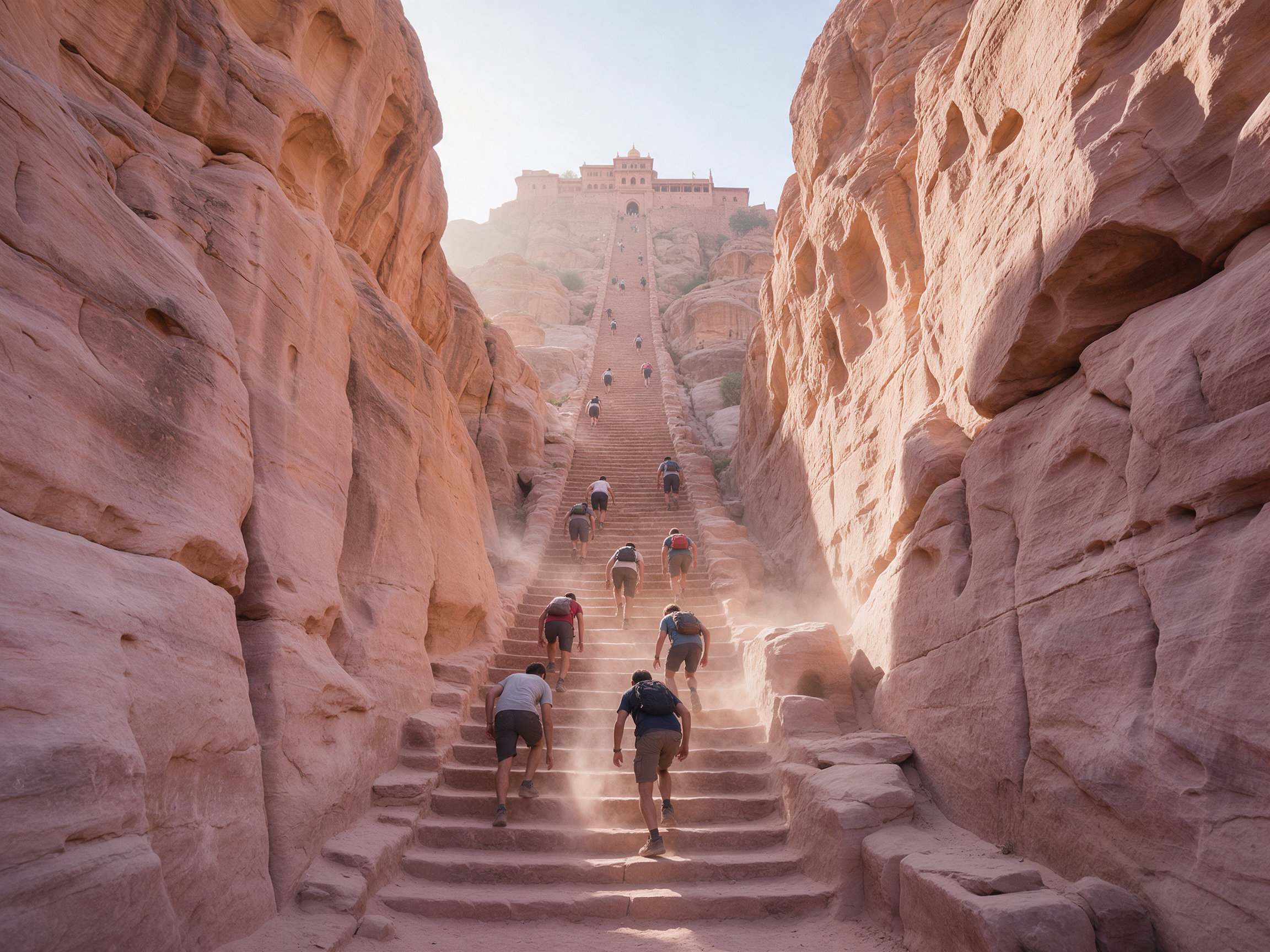
The Monastery is the largest monument in Petra — bigger than the Treasury — and it sits at the top of a staircase of roughly 800 steps cut directly into the sandstone, starting from near the Basin restaurant area past the Royal Tombs. Budget 45 minutes to an hour of actual climbing if you’re reasonably fit, but give yourself closer to two hours with water breaks, because the sun on that exposed rock by mid-morning is no joke.
The steps themselves are wide and not slippery, which surprises a lot of visitors expecting a scramble — it’s a sustained climb, not a technical one. Mules are available at the base for visitors who’d rather ride up, though plenty of people find the walk itself part of the point.
Photography tip: the Monastery faces roughly east, so it’s lit best in the morning — arrive by 8 or 9 am and you’ll get warm, direct light on the facade and a mostly empty courtyard in front of it, instead of the midday crowd that builds from about 11 am onward.
A mistake to avoid: starting the climb after 11 am in summer. There’s almost no shade on the staircase, and the small Bedouin tea stalls along the way (handy for a break and a fresh mint tea) also mean it’s tempting to linger when the heat is already working against you. Start early, carry more water than feels necessary, and you’ll have the climb done before the day gets properly hot.
The High Place of Sacrifice: A Shorter Climb, Fewer Crowds
If the Monastery sounds like too much, the High Place of Sacrifice is the better-value climb: 30 to 40 minutes up a clearly marked staircase that starts near the Street of Facades and the Roman theatre, with no scrambling and safe footing at every tricky point. The summit holds a Nabataean altar platform with sweeping views over the whole valley — it’s a genuinely different vantage point from anything you see at ground level.
For a longer version, you can continue down the far side into Wadi Farasa toward Qasr al-Bint instead of retracing your steps back down — that loop runs closer to 2.5 hours total and passes a handful of tombs most day visitors never reach, including the Garden Tomb and the Lion Monument. This is a good option for families with older kids or anyone short on time who still wants a proper hike with a payoff view.
Royal Tombs at the Hours Everyone Else Skips
The Royal Tombs — the Urn Tomb, Silk Tomb, Corinthian Tomb, and Palace Tomb lined up along the eastern cliff face — are a five-minute walk from the main path and get a fraction of the Treasury’s foot traffic simply because they’re not the postcard shot. Visit them either right after the site opens (before 8 am) or in the hour before closing, when the low sun turns the striated sandstone inside the Silk Tomb into bands of red, purple, and white that are washed out in harsh midday light. Late afternoon is also when the tour buses have mostly cleared out for the day, so you get the terrace in front of the Urn Tomb largely to yourself.
Little Petra (Siq al-Barid): The Free Detour
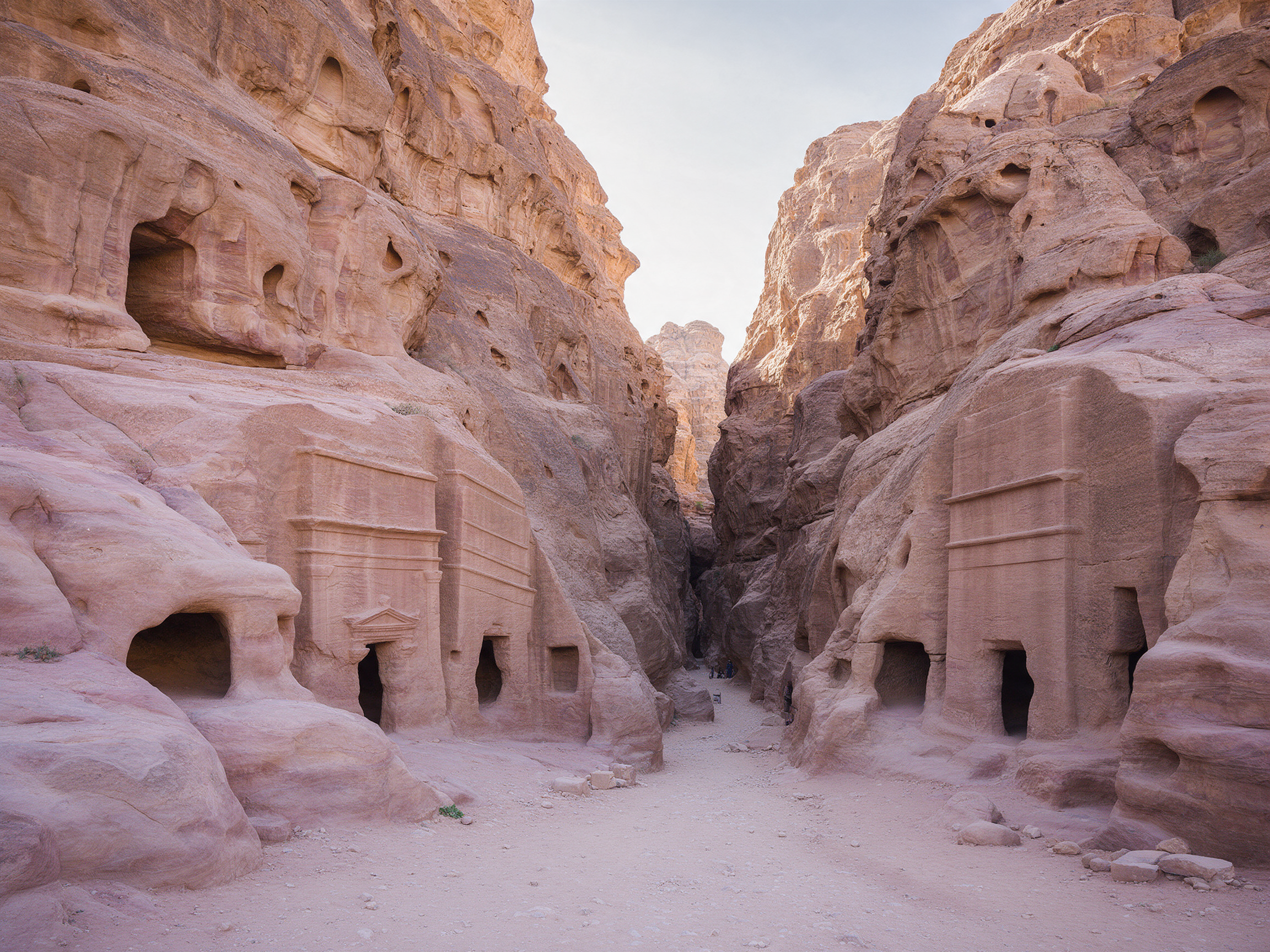
About 15 minutes by car north of the main Petra entrance, near the village of Beidha, sits Little Petra — a miniature version of the same Nabataean rock-cut architecture, minus the entry fee and minus the crowds. It’s completely free to visit, and an hour or two is enough to walk the narrow canyon and duck into the carved triclinium chambers on either side.
There’s no public transport out here, so you’ll need a taxi, a tour, or your own rental car — most hotels in Wadi Musa can arrange a return trip for a modest fee. For serious hikers, there’s also a roughly 6-kilometre “back door” trail connecting Little Petra to the Monastery, which lets you enter Petra’s main site from a direction almost no one else uses — worth it only if you’ve got a full day and don’t mind a long, hot walk with your bags.
Petra by Night: A Different Treasury After Dark
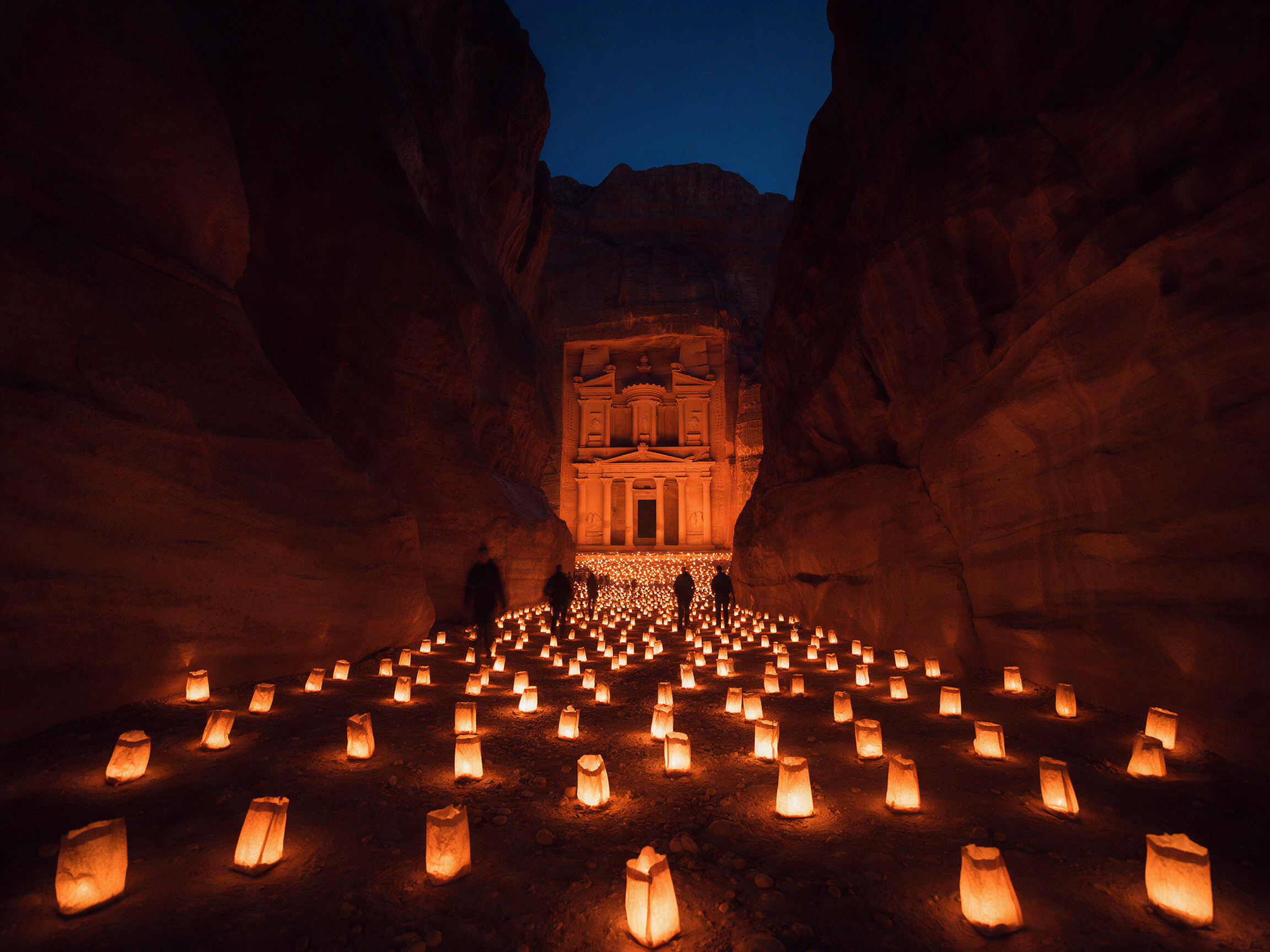
Petra by Night is a separate evening experience: the walk through the Siq is lined with hundreds of candles in paper bags, and it ends at the Treasury courtyard, lit entirely by candlelight, for about half an hour of traditional Bedouin music. It’s a genuinely different way to see the one monument everyone already photographed that morning — quieter, slower, and without a single selfie stick in the frame.
Tickets run around 30 JD per person, with children under 10 free, and you’ll need a valid daytime Petra ticket to attend (the Jordan Pass does not cover this show under any tier). It starts at 8:30 pm and runs roughly two hours. One honest caveat: published schedules for which nights it runs are inconsistent right now — historically it ran Monday, Wednesday, and Thursday, and some current sources describe an expanded Sunday-to-Thursday schedule instead. Confirm the actual nights with your hotel concierge or the ticket office in Wadi Musa once you’re in Jordan, since this is the kind of detail that changes with the season and shouldn’t be assumed from an old blog post.
Getting to Petra from Amman
Wadi Musa, the town that sits at Petra’s entrance, is about 230 km south of Amman — a 3 to 4 hour drive depending on route and traffic. The JETT bus runs a daily service, typically departing Amman around 6:30 am and arriving by mid-morning, with a return service in the late afternoon; a round trip runs roughly 11 JD, but book a day or two ahead since seats go fast. A private transfer costs more (roughly $70 to $100 for the car, not per person), which works out reasonably priced for a group of three or four splitting the cost.
Given how much there is to see beyond the Treasury, day-tripping from Amman is the wrong call if you can avoid it. Basing yourself in Wadi Musa for one or two nights means you can do the Monastery climb at sunrise before the heat builds, and still make it to Petra by Night the same evening without a four-hour drive hanging over your head. If you need the bigger picture of how Petra fits into a longer trip, our guide to Jordan’s hidden gems beyond Petra and the Dead Sea and our day in Amman itinerary both cover the rest of a well-paced Jordan trip.
Who Should Prioritize What
Solo travelers get the most out of the Monastery climb — it’s the kind of walk that’s genuinely nicer alone, at your own pace, with nobody to negotiate breaks with. Go early and you’ll likely have long stretches of the staircase to yourself.
Couples should prioritize Petra by Night over almost everything else on this list — the candlelit Siq and the quiet is about as close to a private moment with the Treasury as you’ll get, short of chartering the whole site.
Families with kids are usually better served by the High Place of Sacrifice than the full Monastery climb — it’s shorter, well-marked, and the loop option through Wadi Farasa gives older kids a sense of adventure without the full exposure of 800 steps in open sun. The Royal Tombs, a flat five-minute walk, are an easy win for families traveling with grandparents too.
Luxury seekers can skip the shared mule queue and book a private Bedouin guide for the Monastery or High Place climb, stay at one of the cliff-view boutique properties in Wadi Musa, and combine Petra with a private transfer straight to Wadi Rum or the Dead Sea rather than retracing the Amman road. This is exactly the kind of day-by-day sequencing Get Tripped builds into a custom Jordan itinerary rather than a fixed group tour.
A Mistake to Avoid, a Smart-Spending Tip, and a Fun Fact
Mistake to avoid: trying to fit the Treasury, the Monastery, the High Place of Sacrifice, Little Petra, and Petra by Night into one calendar day. Each of the two climbs alone deserves a half-day with breaks, and cramming everything into one day means doing all of it in the worst light and the worst heat. Two full days inside Petra, with an evening for Petra by Night on top, is a far better pace than one marathon day.
Smart-spending tip: the jump from a one-day to a two-day Petra ticket is only 5 JD — about ₹400 — for an entire extra day inside one of the most significant archaeological sites on the planet. That’s not a “do it cheap” tip, it’s a value one: paying slightly more upfront to actually see the Monastery and the High Place of Sacrifice, instead of rushing out after the Treasury, is the better use of the money either way.
Fun fact: Petra was essentially unknown to the Western world until 1812, when Swiss explorer Johann Ludwig Burckhardt talked his way past local guides by posing as a Muslim pilgrim to reach the site — centuries after it had been a major Nabataean trading capital, and long after its importance faded once sea trade routes bypassed it.
FAQs
How many days do you need in Petra beyond just the Treasury?
Two full days is the realistic minimum if you want the Monastery, the High Place of Sacrifice, the Royal Tombs at good light, and Little Petra, without rushing any of them. One day covers the Treasury, the Royal Tombs, and one climb.
Is the Monastery climb difficult if you’re not very fit?
It’s long rather than technical — about 800 wide, stable steps with no scrambling required. Most moderately active adults manage it in under an hour each way, though going slower with water breaks is completely normal, and mules are available for anyone who’d rather not walk the whole thing.
Can you visit Little Petra without a guide?
Yes — it’s free, open, and small enough to explore independently in an hour or two. You’ll still need your own transport (taxi, rental car, or a tour) since there’s no public transport link from Wadi Musa.
Is Petra by Night worth the extra ticket?
If you’ve already seen the Treasury by day, yes — it’s a different atmosphere entirely, slower-paced and with none of the daytime crowds. It’s less essential if you’re tight on budget or only have one evening and would rather rest before an early Monastery climb.
Is Jordan safe for Indian tourists, including around Petra?
Jordan is consistently one of the more stable and tourist-friendly countries in the region, and Petra itself, inside Wadi Musa, is a well-managed tourist zone with a steady police and tourist-police presence. As with any trip, keep an eye on current government travel advisories closer to your travel dates given the wider region’s situation.
Do Indian travelers need a visa before arriving in Jordan?
Indian passport holders can get a visa on arrival at Queen Alia International Airport and most land borders, currently around 40 JD, or skip that fee entirely by buying a Jordan Pass and staying at least three consecutive nights in the country.
What’s the best time of year to visit Petra if you want to do the climbs?
Spring (March–May) and autumn (September–November) are the most comfortable for the Monastery and High Place of Sacrifice climbs — summer heat (June through October) makes the exposed staircases genuinely tough by late morning, so if you’re traveling in that window, plan both climbs for first thing after opening.
Should I book a guided tour or explore Petra independently?
Both work, but a local guide for at least the first half-day pays for itself in context you’d otherwise miss — which tomb belonged to which Nabataean era, why the water channels run where they do, which side trail actually leads somewhere. After that, the climbs and Little Petra are easy to do independently.
Plan It Properly
The Treasury photo is worth taking. It’s just not the reason to fly to Jordan. The Monastery, the High Place of Sacrifice, Little Petra, and a candlelit night in the Siq are the parts of Petra that actually stay with you after the trip — and they’re the parts a rushed one-day group tour tends to cut first.
If you’re mapping out Jordan vacation packages or want a Petra schedule built around the climbs instead of around a bus timetable, Get Tripped puts together custom Jordan itineraries — solo, couples, family, or fully luxury — that give Petra the two days it actually needs. Check our Jordan visa guide for Indian travelers next if you haven’t sorted entry requirements yet, and get in touch for a custom Jordan itinerary built around how you actually want to see it.