Netherlands 7 Nights 8 Days Itinerary: Amsterdam, Rotterdam, Utrecht & Beyond
The first thing that catches you off-guard in the Netherlands isn’t the canals or the tulip fields — it’s the scale. Everything is remarkably close together. You can spend the morning at Keukenhof watching a million tulips bloom, eat lunch in Haarlem’s medieval centre, and be back on an Amsterdam canal boat by 4pm. This 8-day Netherlands itinerary is built around that logic: covering Amsterdam, Zaanse Schans, Keukenhof, Utrecht, Rotterdam, and Giethoorn without any heroic travel days or wasted time in transit.
Table of Contents
- Itinerary Overview
- Day 1: Arrive Amsterdam — Jordaan & First Canal Walk
- Day 2: Amsterdam — Museums & the City Proper
- Day 3: Zaanse Schans & Volendam Day Trip
- Day 4: Keukenhof or Haarlem (Seasonal)
- Day 5: Utrecht — Dom Tower, Canals & Student Energy
- Day 6: Rotterdam — Modern Architecture & Markthal
- Day 7: Giethoorn Day Trip
- Day 8: Return to Schiphol & Depart
- Practical Tips for the Itinerary
- Where to Stay
- FAQs
Netherlands Itinerary Overview
This 8-day Netherlands itinerary covers 3 base cities with day trips built in. Amsterdam gets 4 nights (the city warrants it), with Utrecht and Rotterdam getting 1 night each. Giethoorn, Zaanse Schans, and Keukenhof are all done as day trips — they’re beautiful but don’t need overnight stays.
Best time for this itinerary: March through May for Keukenhof and tulip season. The itinerary works year-round, but Keukenhof is only open from late March to mid-May. Outside that window, swap Day 4 for a Haarlem day trip instead — still worth the hour.
Budget context: Amsterdam and Rotterdam are genuinely expensive. A mid-range hotel in Amsterdam costs €120–180 per night; sit-down restaurants average €25–40 per person. Budget roughly €200–250 per person per day for accommodation plus food. Transport within the Netherlands is efficient via train (OV-chipkaart or NS app) and costs €10–25 per intercity journey.
Day 1: Arrive Amsterdam — Jordaan & First Canal Walk
Most direct flights from India (Air India, IndiGo codeshares, KLM) land at Amsterdam Schiphol. Immigration is typically 30–45 minutes; Schiphol has a direct train to Amsterdam Centraal that runs every 10 minutes and takes 15 minutes. Grab a paper OV-chipkaart from any NS ticket machine — you’ll use it across all trains, trams and metro for the whole trip.
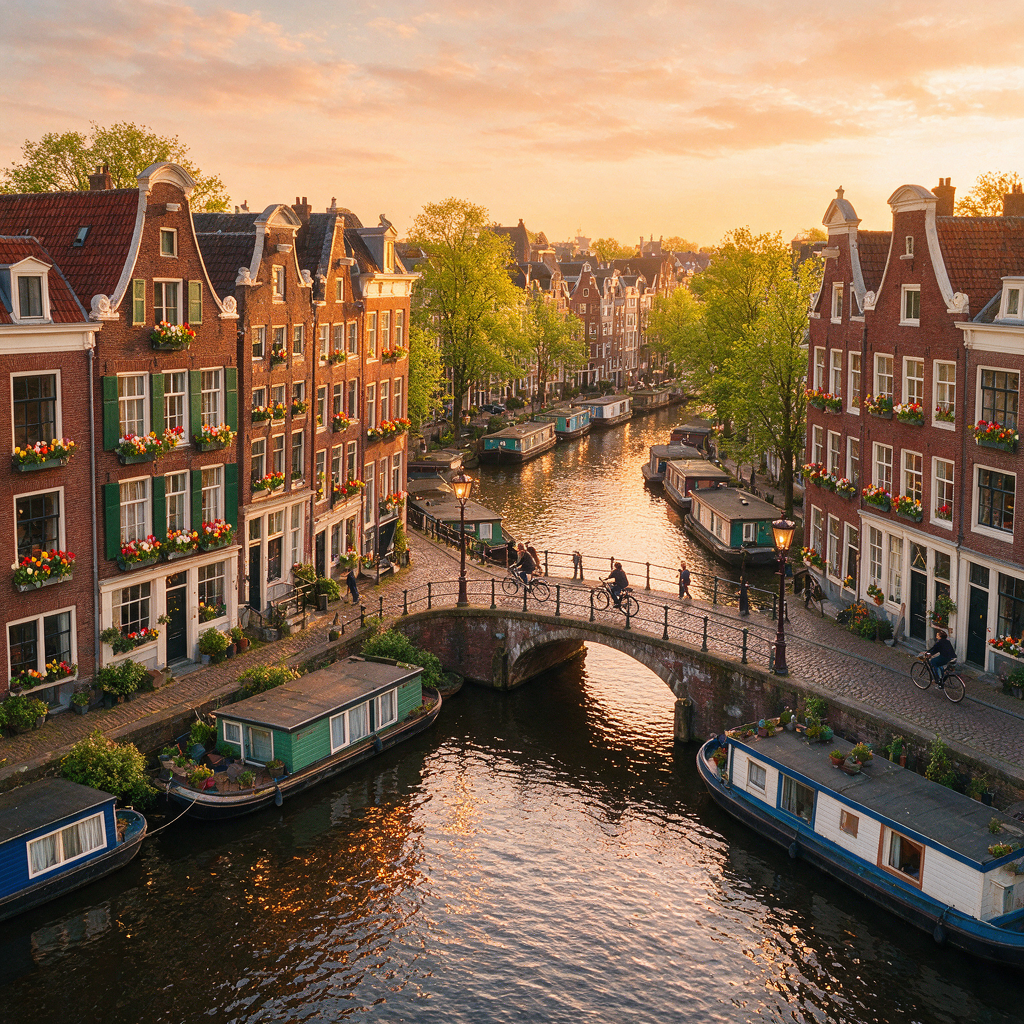
Check in, drop your bags, then spend the afternoon on foot in the Jordaan. This is the neighbourhood to walk first — narrow streets, independent boutiques, Amsterdam’s best brown cafés (bruine kroeg), and residential canal houses with tilted façades. If you’re landing before 2pm, the Albert Cuyp Market in De Pijp is worth a detour; it closes around 5pm and sells everything from stroopwafels and herring to Dutch cheese and flowers.
For dinner, De Belhamel on Brouwersgracht is reliably good — Art Nouveau interior, Dutch-French menu, canal views. Book ahead if you’re visiting in summer. Otherwise, the Jordaan is full of smaller neighbourhood restaurants that don’t require a reservation.
Where to stay in Amsterdam: Stay in or near the Jordaan, Canal Ring, or Museum Quarter. These put you within walking distance of the main sights and the tram network. The Amsterdam area around Leidseplein is also central and has good food options nearby.
Day 2: Amsterdam — Museums & the City Proper
Start at Rijksmuseum when it opens at 9am — the crowds build fast after 10:30am, and the Golden Age Dutch masters (Vermeer, Rembrandt’s Night Watch) are worth seeing without a crowd pressing in. Book tickets online the night before; walk-up queues in summer are 45+ minutes.
From Rijksmuseum, the Van Gogh Museum is a 5-minute walk. Again, book in advance. The permanent collection is arranged chronologically and tells Van Gogh’s story more coherently than any biography. The Starry Night isn’t here (that’s MoMA in New York), but the Bedroom and the Sunflowers series are.
Afternoon options: the Anne Frank House on Prinsengracht (buy tickets weeks in advance — this one sells out furthest ahead), or a canal boat cruise if you haven’t done one. The hop-on-hop-off boats are fine, but a private canal tour from Boats & Bikes or Black Bikes is a better use of an hour. The city looks completely different from the water.
In the evening, explore Leidseplein and the streets around it. This is Amsterdam’s main bar and restaurant district — busy, but not aggressively touristy once you get a block off the square. Café Americain on the square itself is worth a drink for the Art Deco interior alone.
Day 3: Zaanse Schans & Volendam Day Trip
Take the train from Amsterdam Centraal to Zaandijk-Zaanse Schans station (20 minutes, €4 each way). Zaanse Schans is an open-air museum with working 18th-century windmills, traditional green-painted wooden houses, clog workshops, and a cheese farm. It’s genuinely photogenic — especially early morning before the tour coaches arrive, which is around 10am.
The windmills are functional and you can climb inside most of them for €4–6 each. The clog workshop (Klompenmakerij de Zaanse Schans) is free to enter and worth 20 minutes — watching someone turn a log into a clog on a hand-operated lathe is oddly satisfying.
After Zaanse Schans, catch a bus (line 391) to Volendam — a traditional fishing village on the Markermeer lake, 20 minutes away. It’s a bit touristy but the harbour is pretty, the smoked eel is excellent, and it’s a pleasant contrast to Amsterdam’s urban pace. Traditional Dutch fish stalls along the harbour sell herring with raw onion for €3–4 — eat it standing up, the way locals do.
Return to Amsterdam by 5–6pm. This is a good night to rest — Day 4 involves an early start for Keukenhof.
Day 4: Keukenhof or Haarlem (Seasonal)
If visiting late March to mid-May: Get to Keukenhof when it opens at 8am. The floral gardens outside Lisse (45 minutes from Amsterdam Centraal by train + shuttle bus) contain 7 million bulbs across 32 hectares. The scale is genuinely hard to grasp until you’re standing inside it. The main gardens are beautiful; the greenhouse pavilions are even better — orchids, dahlias, lilies arranged at ceiling height. Ticket is €22 in advance (required — no walk-ups). The surrounding bulb fields visible from the road between Lisse and Keukenhof are free and arguably more impressive than the gardens themselves.
If visiting outside tulip season: Take the train to Haarlem (15 minutes from Amsterdam Centraal, €4.50). This is what a Dutch city looked like before Amsterdam got crowded — a medieval market square with the 15th-century St. Bavo church at its centre, smaller museums, good independent restaurants, and no overtourism. The Frans Hals Museum has one of the better collections of Golden Age Dutch painting outside Amsterdam, and it’s rarely busy.
Return to Amsterdam by afternoon. Pack for tomorrow’s transfer to Utrecht.
Day 5: Utrecht — Dom Tower, Canals & Student Energy
Take the Intercity train from Amsterdam Centraal to Utrecht Centraal (30 minutes, €7.50). Check in and spend the day exploring what might be the Netherlands’ most underrated city.
Dom Tower is the tallest church tower in the Netherlands (112 metres) and the defining feature of Utrecht’s skyline. Access is by guided tour only (€16, 45 minutes, book at the tourist office on Domplein). The views from the top on a clear day stretch to Amsterdam. The Gothic nave of Dom Church next to it fell down in a storm in 1674 and was never rebuilt — you can walk through the gap between the tower and the remaining choir, which creates one of the stranger sight lines in Dutch architecture.
Utrecht’s canals are a level below street level, lined with cellars that have been converted into restaurants and café terraces. This is the thing that separates Utrecht from Amsterdam — its canal life happens underground, at water level, rather than from street bridges. The area around Oudegracht (the main canal) has Utrecht’s best concentration of restaurants. Try Cafe Olivier, a Belgian beer bar in a deconsecrated church on Achter Clarenburg, for an afternoon drink.
The city has a large university population, which keeps restaurant prices lower than Amsterdam and gives the streets genuine evening energy without the tourist-bar atmosphere. Neude square is where the locals go on weekends.
Day 6: Rotterdam — Modern Architecture & Markthal
Train from Utrecht to Rotterdam Centraal (40 minutes, €9). Rotterdam was bombed flat in 1940 and rebuilt from scratch after the war, which means it has none of Amsterdam’s preserved historic fabric and all of the Netherlands’ most interesting contemporary architecture instead.
Start at Markthal — a horseshoe-shaped market hall with an arched mural ceiling (the largest artwork in the Netherlands) and 100 food stalls inside. Open from 10am, it’s a good late morning stop. The Indonesian and Turkish stalls are better than the tourist-facing Dutch ones.
Walk to the Cube Houses (Kubuswoningen) on Overblaak, 5 minutes from Markthal. These are tilted yellow cubes perched on concrete pylons, designed by Piet Blom in the 1970s as a way of creating liveable units at an angle. One cube is open to visitors as a show house (€3). Strange to look at; stranger to be inside — the walls are the floor, which the residents apparently get used to.
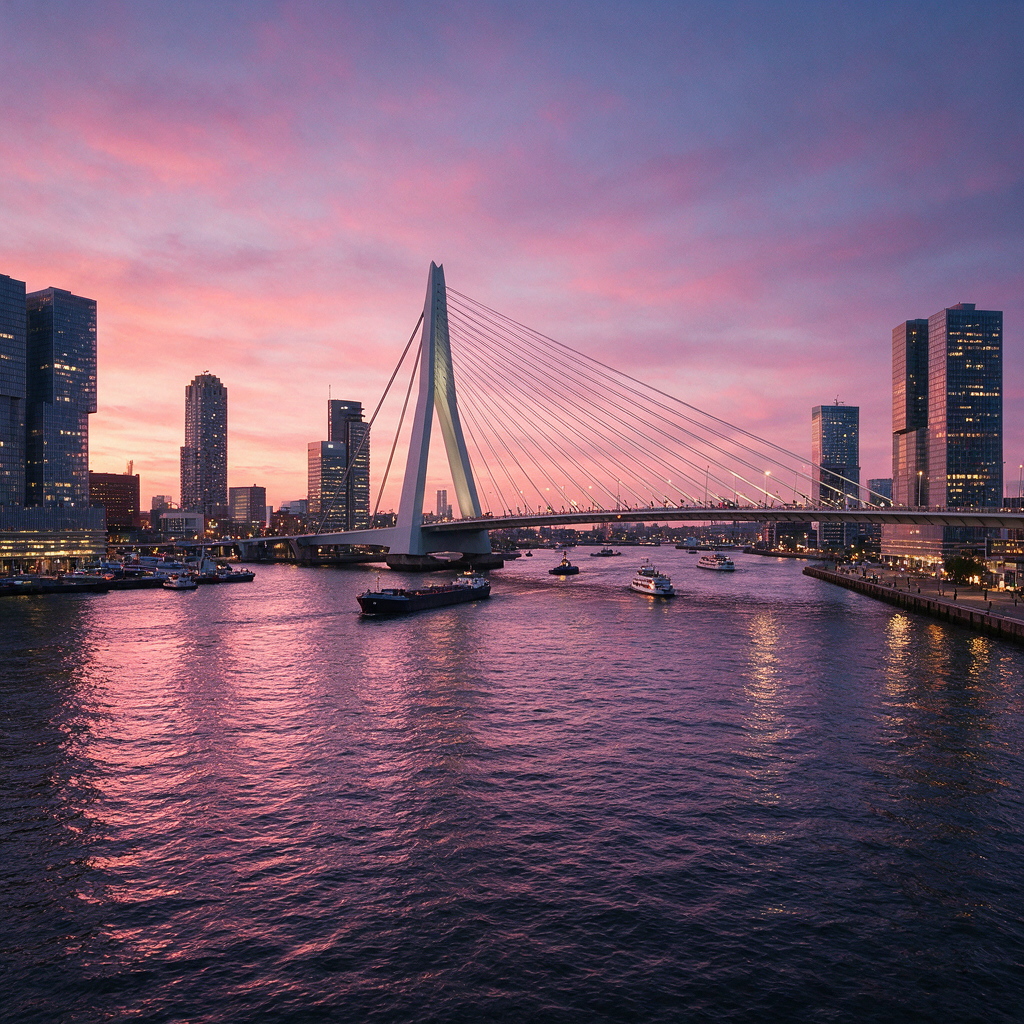
The Erasmus Bridge is a 10-minute walk south. The 800-metre cable-stayed bridge opened in 1996 and locals call it “the Swan” for the white asymmetric pylon shape. The view back toward Rotterdam’s skyline from the south bank is the city’s best photograph.
Dinner at Fenix Food Factory in the Katendrecht neighbourhood — a collection of independent food producers in an old warehouse, with everything from craft beer (Rotterdam’s Kaapse Brouwers brewery is based here) to artisan bread and Dutch cheese. It’s the kind of place that’s open late on weekends and attracts Rotterdam’s actual residents rather than just visitors.
Day 7: Giethoorn Day Trip
This is the most logistically involved day, but it’s manageable. Train from Rotterdam to Steenwijk takes about 2 hours with one change at Amersfoort or Zwolle (€20–25). From Steenwijk, a local bus or taxi (€8) covers the 7km to Giethoorn. Total travel time: about 2.5 hours each way.
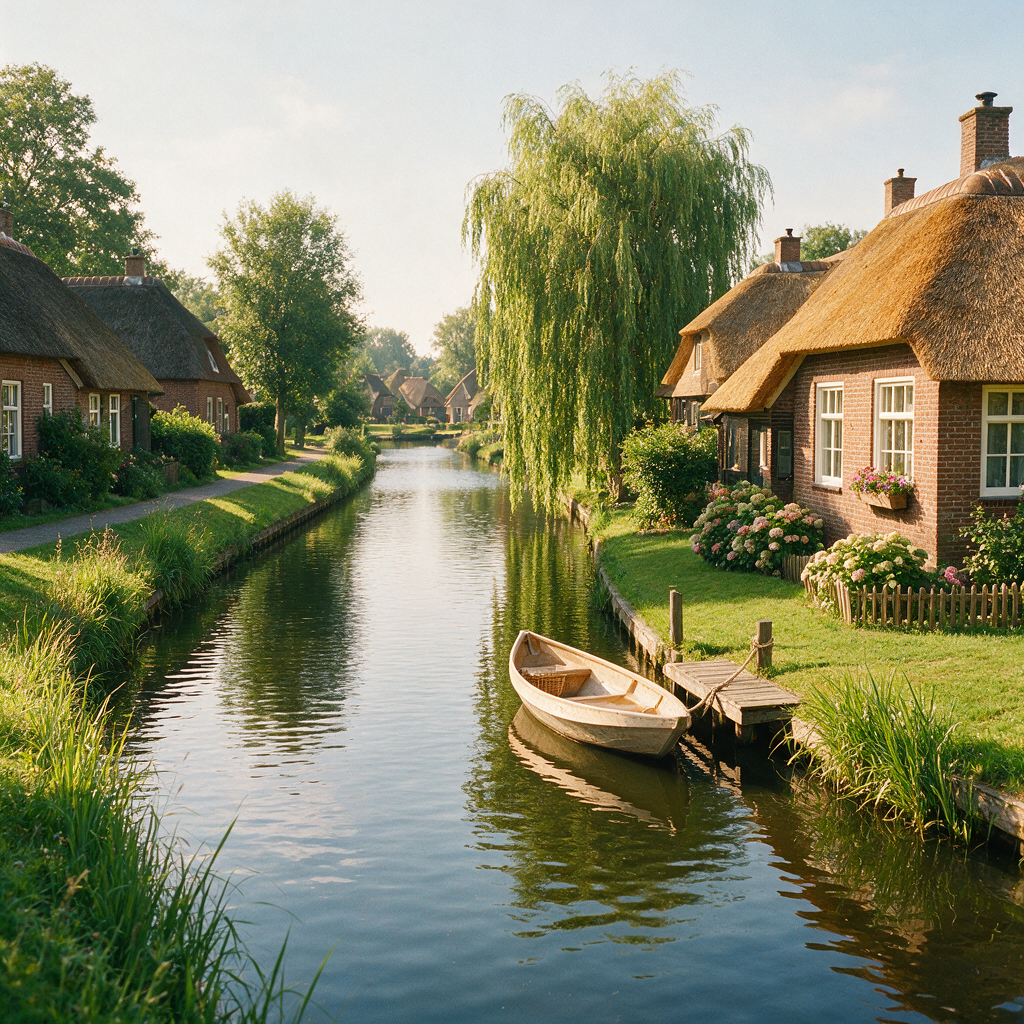
Giethoorn is a village of about 2,600 people with no roads — only 7.5km of canals, connecting 176 islands via 176 wooden bridges. Getting around means either walking the main towpath or renting a flat-bottomed “punter” boat for €12–18 per hour. The boats are easy to operate; you steer with a long pole and the canal is shallow enough that you can’t capsize anything important.
The village is genuinely picturesque — thatched farmhouses, weeping willows, glass-clear water, no car engines. It’s also genuinely popular in summer, so arrive early (before 11am) to get boats without queuing and to see the village at its quietest. The northern part of the village, beyond the main De Jonge Schoolstraat stretch, is quieter and has fewer tourists.
Have lunch at one of the canalside restaurants (Fanfare or Restaurant De Lindenhof are reliable), then head back to Rotterdam by late afternoon. Pack your bags tonight — tomorrow is a transfer day.
Day 8: Return to Schiphol & Depart
Intercity train from Rotterdam Centraal to Schiphol Airport takes 30 minutes and runs every 15 minutes. If your flight is in the afternoon, a morning visit to Rotterdam’s Museum Boijmans Van Beuningen depot is worth the time — a publicly accessible art storage building with 150,000 works on transparent shelves, open for tours at fixed times (book in advance). It’s unusual architecture and unusual access; most museum storage is invisible.
For early flights: Rotterdam Centraal to Schiphol first train runs around 5:30am. Allow 2 hours before departure at Schiphol for international check-in.
Practical Tips for This Netherlands Itinerary
Getting around: The NS (Dutch Railways) app lets you buy tickets on your phone without a physical card. Buy an OV-chipkaart at Schiphol for trams and metro within cities. Trains are punctual; the 10:06 to Utrecht will leave at 10:06.
Cycling: Amsterdam and Utrecht are built for bikes. Renting one for a day in Amsterdam (€15–20/day from MacBike or StarBikes) gets you 3x faster around the city. Skip it in Rotterdam — the cycling infrastructure is excellent but the traffic patterns are less intuitive if you haven’t ridden in a Dutch city before.
Tipping: Service is included in Dutch restaurants. A 5–10% tip is appreciated but not expected. Card payment is the norm; cash is accepted almost everywhere but you’ll rarely need it.
Language: Dutch, but English proficiency in the Netherlands is effectively universal. You will not need to speak Dutch.
Museum passes: The Museumkaart (€69.95, valid 31 days) covers entry to 400+ Dutch museums including Rijksmuseum, Van Gogh, and Stedelijk. If you plan to visit 4+ major museums, it pays for itself. Buy at any participating museum or online.
Weather: The Netherlands is famously unpredictable. Pack a light rain jacket regardless of season. Summers (June–August) are warm but not hot (17–23°C). Spring (March–May) is the best season overall: tulips, longer days, fewer peak-summer crowds.
Where to Stay
Amsterdam (4 nights): Jordaan or Canal Ring area puts you in walking distance of almost everything. For mid-range, Hotel V Nesplein (near Spui square) and INK Hotel Amsterdam are well-regarded. For a more upscale option, the Pulitzer Amsterdam — 25 canal houses connected into a single hotel — has some of the best breakfast rooms in the city.
Utrecht (1 night): Mary K Hotel on Oudegracht is a charming boutique option literally on the canal. NH Hotel Utrecht for reliable mid-range with easy access to the station and centre.
Rotterdam (2 nights): Hotel New York, in the former Holland America Line headquarters, is the most atmospheric option — an Art Nouveau building on the Maas waterfront with a good restaurant. ss Rotterdam (a retired ocean liner converted to a hotel) is an unusual alternative if you want something more distinctive.
Frequently Asked Questions
Is 8 days enough for the Netherlands?
8 days is enough to see the main highlights without rushing. Amsterdam alone could absorb a week, but 4 nights gives you time for the key museums and day trips. If you want more depth in one city, cut the Giethoorn day trip (Day 7) and spend that extra time in Amsterdam or Rotterdam.
What’s the best time of year for this itinerary?
Late March to mid-May is ideal for tulip season and Keukenhof. June to August is pleasant weather but peak crowds. September and October have fewer tourists and good weather — a fair trade. December brings Christmas markets and ice-skating rinks in Amsterdam’s squares, which is its own version of magic.
Can I do this itinerary without a rental car?
Yes — this itinerary is entirely doable by public transport. The NS train network is excellent, and all cities are walkable once you’re there. Giethoorn requires a train plus short bus/taxi connection, but it’s straightforward.
How much should I budget for 8 days in the Netherlands?
For a comfortable mid-range trip (3-4 star hotels, sit-down meals, activities): budget €200–250 per person per day, so roughly €1,600–2,000 per person for 8 days, excluding flights. Couples sharing a room can reduce the accommodation cost per person. This is not a cheap destination.
What’s the difference between Amsterdam and Rotterdam?
Amsterdam has the historic canals, the Golden Age architecture, and most of the famous museums. Rotterdam was rebuilt from scratch after WWII and has a very different energy — contemporary architecture, a cooler food scene, fewer tourists, and a working port culture. Both are worth visiting; they’re 40 minutes apart by train.
Is Giethoorn worth the trip from Rotterdam?
Yes, but manage expectations. It’s a genuinely beautiful village, but the round-trip from Rotterdam is 5+ hours of travel for a few hours on the water. If your schedule is tight, skip it and spend more time in Rotterdam or Utrecht. If you have the time, it’s unlike anywhere else in Europe.
Do I need to book museums in advance?
Yes, for Amsterdam’s major museums. Rijksmuseum, Van Gogh Museum, and Anne Frank House all require advance booking. The Anne Frank House especially — it sells out 4–6 weeks ahead in summer. Keukenhof also requires advance ticket purchase; no walk-up sales.
Start Planning Your Netherlands Trip
Eight days in the Netherlands rewards anyone willing to move between cities rather than staying put in Amsterdam. The train network makes it easy, and each city — Amsterdam’s canals, Utrecht’s underground café culture, Rotterdam’s architecture, Giethoorn’s silent waterways — adds something different to the overall picture.
If you’d rather have someone build the logistics for you — hotels booked, transport sorted, a day-by-day itinerary with confirmed reservations — Get Tripped’s Netherlands packages are designed for Indian travelers who want the full experience without spending weeks researching it. Explore Netherlands tour packages from India and let us know what kind of trip you have in mind.