Netherlands 7 Nights 8 Days Itinerary: Canals, Windmills and Dutch Countryside
Seven nights gets you a genuinely well-rounded Netherlands trip — not just Amsterdam. It leaves room for the design-forward harbour city of Rotterdam, the storybook canals of Giethoorn, the working windmills of Zaanse Schans, Utrecht’s beautifully preserved medieval waterfront, and the tulip fields of Keukenhof if your timing is right. This itinerary is built around realistic travel days rather than aspirational checklists — not six cities and twelve museums in eight days, but each place given enough time that you actually experience it rather than photograph it and leave.
Planning a Netherlands trip from India? Here’s how to structure your time.
Table of Contents
- Trip Overview
- Day 1: Arrive in Amsterdam — Settle In, Canal Walk
- Day 2: Amsterdam — Museums, Jordaan, Cheese
- Day 3: Zaanse Schans + Amsterdam Evening
- Day 4: Rotterdam — Architecture and Harbour
- Day 5: Giethoorn — The Village Without Roads
- Day 6: Utrecht — Canals at a Different Pace
- Day 7: Keukenhof or Amsterdam Free Day
- Day 8: Depart from Amsterdam
- Practical Tips
- Trip Costs from India
- FAQs
Trip Overview
This itinerary assumes you fly into and out of Amsterdam Schiphol (AMS), which handles most direct and connecting flights from India. The main base is Amsterdam for the first three nights, a night in Rotterdam, a night in or near Giethoorn, and the final nights back in Amsterdam or Utrecht. All destinations are connected by NS train, making this a low-stress itinerary without car hire.
Best time to run this itinerary: April–May for tulips and mild weather. September–October for golden light and fewer crowds. December for Christmas markets. July–August is busy and accommodation prices peak, but the weather is reliable.
Who it suits: Couples, families, and solo travelers who want a balanced mix of city culture and Dutch countryside without being rushed. First-time visitors to the Netherlands will find this covers the essential geography without the exhaustion of daily city-hopping.
Day 1: Arrive in Amsterdam — Settle In, Canal Walk
Flights from India to Amsterdam Schiphol typically arrive mid-morning to early afternoon after a 9–11 hour flight (or longer with a connection). Don’t plan anything ambitious for Day 1.
Check into your hotel — the Jordaan, De Pijp, or the canal belt (Grachtengordel) are the best neighbourhoods to stay in for first-timers. They put you within walking distance of the main sights without the chaotic noise of the red-light district.
In the late afternoon, take the canal walk that any Dutch person would point you to: start at Brouwersgracht (the most photographed canal stretch in the city), walk down through the Jordaan neighbourhood, and end at the Westerkerk. The light at 5pm in summer is extraordinary on the water. Grab dinner at a brown café (bruine kroeg) — the kind of small, dark-wood Amsterdam pub that hasn’t changed in forty years. Try the bitterballen with mustard and a local Heineken or Grolsch.
Mistake to avoid: Renting a bicycle on Day 1 before you’ve got a feel for Amsterdam’s cycling culture. The cycling infrastructure is phenomenal but the etiquette is unforgiving — cars, trams, cyclists, and pedestrians all share the road in an intricate dance. Watch how locals behave for a day before you join them.
Day 2: Amsterdam — Museums, Jordaan, Cheese
Amsterdam has three anchor museum experiences, and trying to do more than one in a day dilutes both. Pick the one that fits you:
- Rijksmuseum — Dutch Golden Age masterpieces including Vermeer and Rembrandt. Buy tickets in advance (at least 2–3 days ahead, ideally the week before) — the queue without a pre-booked slot can be 90+ minutes. Allow 2–3 hours inside.
- Anne Frank House — moving and sobering. Book at precisely 9am Amsterdam time exactly 2 months before your desired date — it sells out that quickly. The 11pm slot is quieter if you catch it.
- Van Gogh Museum — the largest collection of Van Gogh’s work in the world. Pre-booking is mandatory. Worth every minute of the queue if you appreciate the work.
After the museum, spend the afternoon in the Jordaan neighbourhood — Amsterdam’s most liveable quarter, dense with independent bookshops, flower stalls, brown cafés, and antique dealers. The Albert Cuypmarkt (open Mon–Sat) in De Pijp is worth a stop too: Amsterdam’s biggest street market, good for stroopwafels fresh off a griddle and Dutch herring if you’re feeling adventurous.
In the evening, walk through the Nine Streets (Negen Straatjes) for cheese shops, independent boutiques, and restaurants. Book dinner at one of the canal-side restaurants in the Grachtengordel — the ones with outdoor terrace seating on the water are worth looking for in advance.
Day 3: Zaanse Schans + Amsterdam Evening
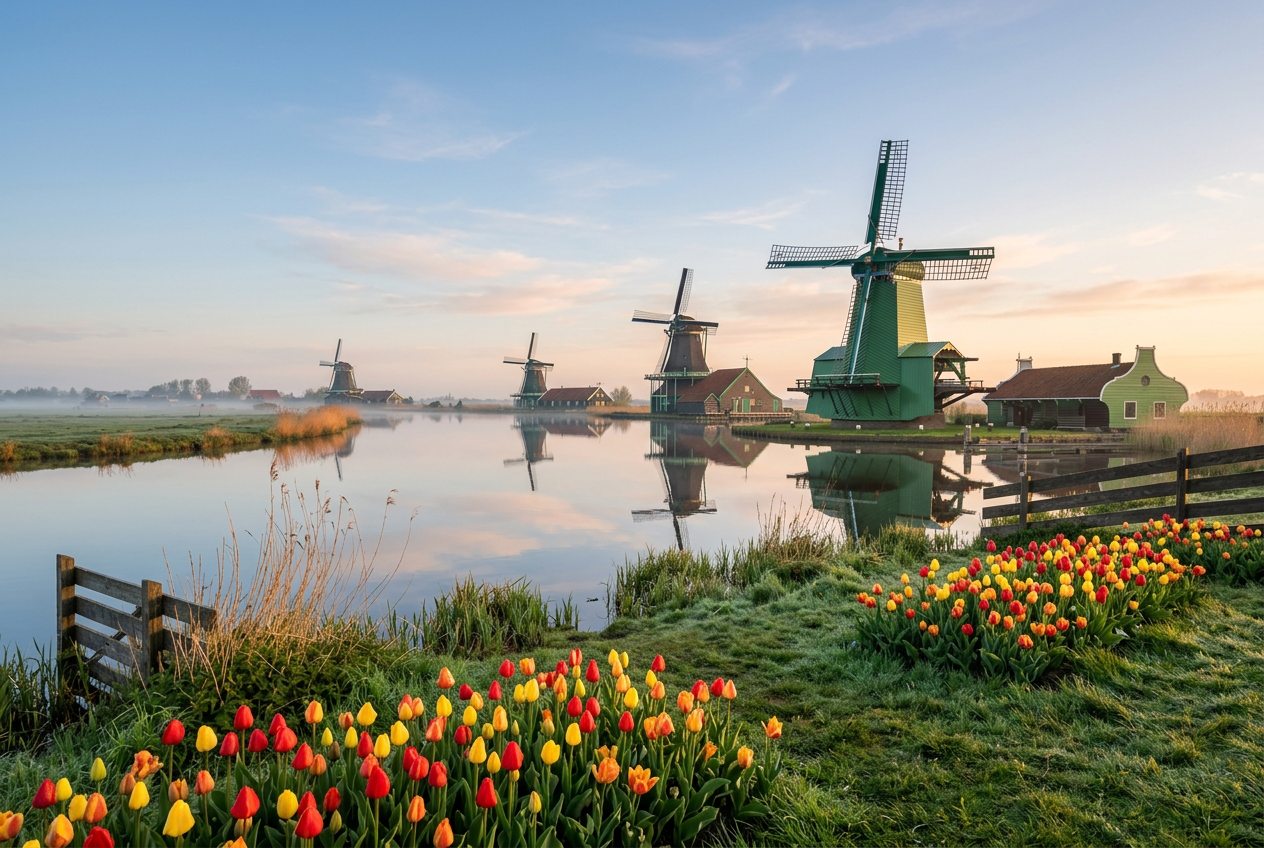
Zaanse Schans is 20 minutes from Amsterdam Centraal by NS train (Zaandam station, then a short walk). Go early — the site opens at 9am and the first tour buses arrive around 10am. If you’re there before 10, you essentially have the windmills to yourself for golden-hour photos.
The windmills are working industrial mills, not decorations — you can go inside some of them (small entry fee per mill, or buy a combination ticket). The Albert Heijn museum house (the original grocery store that became the Netherlands’ biggest supermarket chain) is a small free exhibit inside the site. Pick up Zaanse mosterd (local mustard) and gouda at the cheese farm for a genuinely good souvenir.
Back in Amsterdam for the afternoon. Take the ferry across the IJ waterway (free, runs constantly behind Centraal Station) to Amsterdam Noord — it’s where the locals go for good coffee and an art deco shipyard called NDSM. The industrial-turned-creative space is a world away from the tourist canal belt, in the best way. Have dinner in Noord before heading back.
Fun fact: Zaanse Schans’ windmills weren’t always here — many were moved from their original locations to this concentrated heritage site in the 1950s and 1960s specifically to preserve Dutch windmill culture in one accessible place.
Day 4: Rotterdam — Architecture and Harbour
NS train from Amsterdam Centraal to Rotterdam Centraal takes around 40 minutes (Intercity Direct). Check out of your Amsterdam hotel and check into Rotterdam for the night.
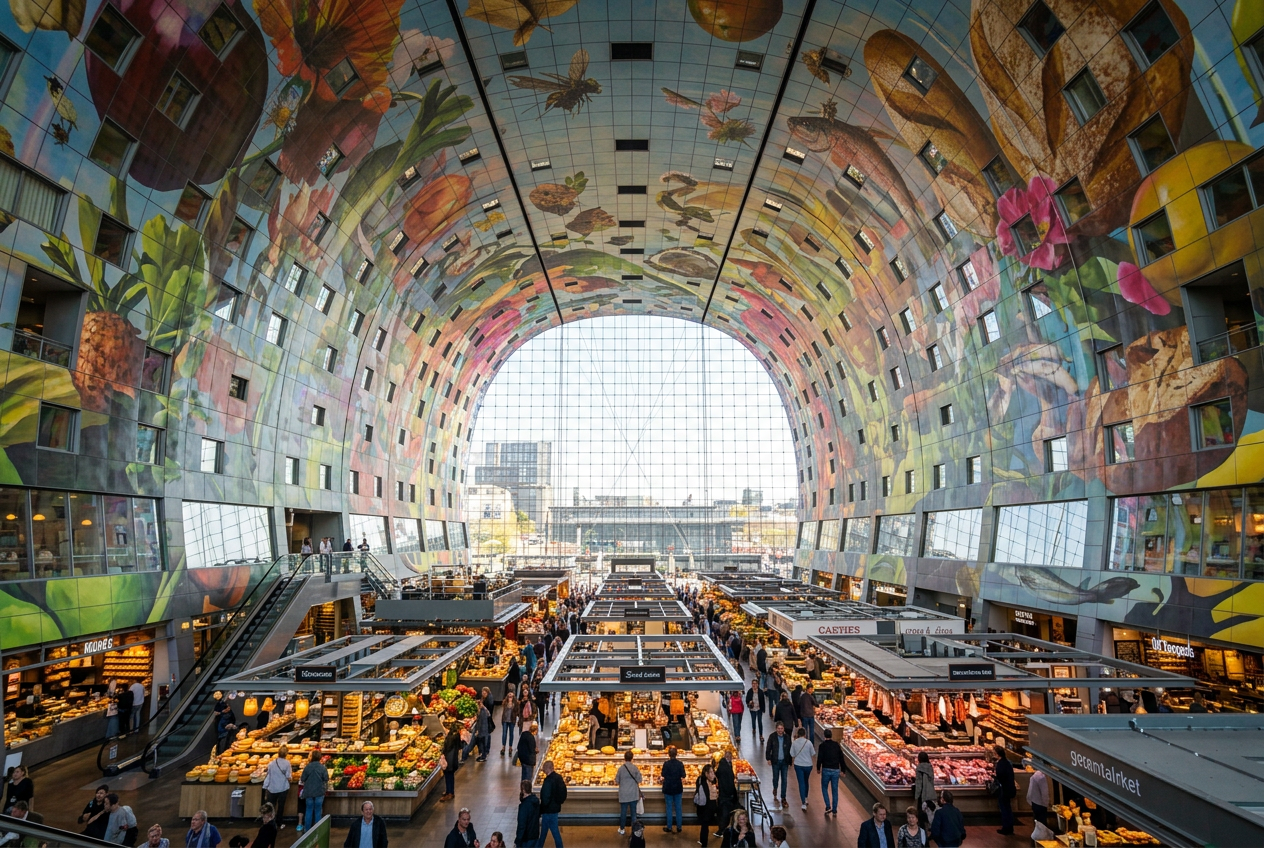
Rotterdam was almost entirely rebuilt after World War II bombing, which gives it an architectural character unlike any other Dutch city — and unlike most European cities full stop. The Markthal is the first stop: a horseshoe-shaped market hall with a spectacular painted ceiling arch and food stalls from all over the world. Buy lunch here (the banh mi is excellent, as is the Dutch cheese-and-charcuterie counter).
Walk to the Cube Houses (Kubuswoningen) — bright yellow cubed homes on stilts that photograph brilliantly. One is open to visitors as a show house for a small fee. Then take the Erasmus Bridge (Erasmusbrug) on foot — the 800m pedestrian crossing over the Maas with views of the entire Rotterdam skyline is one of the best walks in the Netherlands.
In the evening, Rotterdam’s food scene is genuinely excellent. The Witte de Withstraat is lined with restaurants and bars; for Indian-influenced Dutch cuisine, the area around Delfshaven (the old harbour) has interesting options. Rotterdam has a lively nightlife scene — if that’s your interest, it’s the most music-forward city in the Netherlands.
Day 5: Giethoorn — The Village Without Roads
From Rotterdam, take the NS train to Zwolle (about 1.5 hours), then a regional bus or taxi to Giethoorn (another 30–45 minutes). This takes more logistics than the other days, so check NS connections the night before and plan to arrive mid-morning.
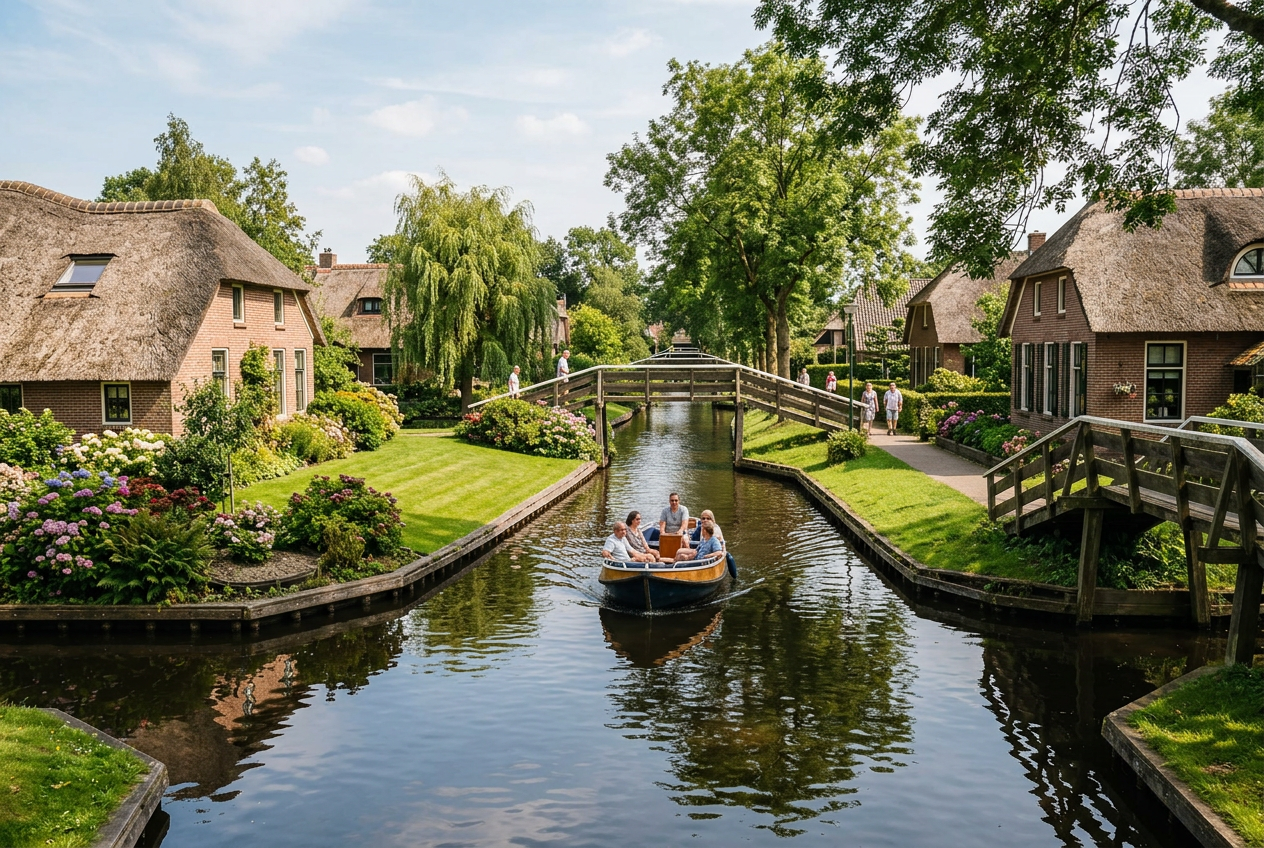
Giethoorn has no paved roads through the main village — just canals, wooden footbridges, and narrow footpaths between the thatched-roof farmhouses. Hire a small electric boat (whisper boat) for 2–3 hours: the most Dutch way to see the village. Rates typically run EUR 15–25 per hour depending on the boat size. Book ahead in spring and summer — it fills up.
The village is small and can feel overrun midday in peak season. Getting out before 11am or after 3pm keeps things considerably quieter. Have lunch at one of the canalside restaurants (the toasted broodje with local cheese is reliably good). By mid-afternoon, work your way back toward the larger towns — stay in Zwolle, which is a genuinely pleasant Dutch provincial city with its own historic centre, or take the train back to Amsterdam.
Honest caveat: Giethoorn is beautiful but runs about 90 minutes of active exploration even with a boat. It works best as a half-day combined with Zwolle or as a day-trip from somewhere with better accommodation options. Plan accordingly.
Day 6: Utrecht — Canals at a Different Pace
Utrecht is 30 minutes from Amsterdam by NS train and is often overlooked by visitors who run out of time. It shouldn’t be. The medieval centre is built around a canal system (the Oudegracht) where the canal level is two stories below the street — unique to Utrecht — and the lower levels are lined with terraced restaurants and cafés carved directly into the old cellar walls.
The Dom Tower (Domtoren) is the tallest church tower in the Netherlands. Climb the 465 steps for a view over the city’s redbrick rooftops and the flat Dutch horizon. Book a guided tour — the tower is not accessible independently. The DOMunder experience, an archaeological tour of the underground ruins beneath the Dom Square, is unusual and worth the hour if you’re interested in Roman history.
Utrecht’s café culture is excellent. The Ledig Erf square is the place for outdoor terrace coffee on a warm afternoon. The area around Voorstraat has independent bookshops, vintage clothing, and design studios. Get dinner at one of the canal-cellar restaurants on the Oudegracht — eating at the waterline in a 14th-century wine cellar is the kind of experience people talk about for years.
Day 7: Keukenhof or Amsterdam Free Day
If visiting March–May: Keukenhof is 40 minutes from Amsterdam Centraal by combined bus-ticket (Conexxion bus 858, buy the combo ticket at Schiphol or Amsterdam Centraal which includes bus + garden entry). The world’s largest flower garden — 32 hectares, 7 million bulbs, over 800 varieties of tulips — is only open for 8 weeks a year, mid-March to mid-May. Go on a weekday and arrive by 9am for the best light and thinnest crowds. The gardens peak in mid-April.
Outside of spring: Use this as a free day in Amsterdam. The Vondelpark on a sunny afternoon is as close as the Netherlands gets to a neighbourhood outdoor festival — people cycle through, buskers play, people picnic on the grass. The FOAM Photography Museum on the Keizersgracht rotates excellent contemporary exhibitions. The Heineken Experience (the original brewery turned interactive tour) is touristy but genuinely fun if you like beer history.
Day 8: Depart from Amsterdam
Amsterdam Schiphol is excellent for a last-morning shop — the airport has proper duty-free and a few brand stores worth checking. Buy Dutch stroopwafels (the Albert Heijn in the airport has a good selection), Delftware ceramics, and Dutch liquorice (drop) for gifts. Leave enough time for Schiphol’s security: aim to be at the airport 3 hours before international departures.
Practical Tips
- Getting around: The NS OV-chipkaart or contactless bank card works on all trains and most trams and buses. The NS app is excellent for real-time journey planning.
- Currency: Netherlands is fully card-friendly — many smaller restaurants and market stalls are card-only. Carry some cash (EUR 50–100) for boats in Giethoorn, small museums, and tips.
- Language: Dutch is the official language but English is spoken fluently throughout the country, including in the smallest villages. No translation issues for Indian travelers.
- Museum cards: The Museumkaart (EUR 69.95 per year) gives free or discounted entry to 400+ Dutch museums. Worth it if you’re visiting 4+ paid museums; otherwise buy individual tickets.
- SIM/Internet: Dutch SIM cards are available at Schiphol from Lebara, Lyca, or Ben for EUR 10–15. eSIM from your Indian provider (Airtel, Jio) often works in the Netherlands if your plan includes Europe — check before you go.
Trip Costs from India
Rough estimates for a mid-range Netherlands trip:
- Flights: INR 55,000–90,000 return from major Indian cities (Delhi, Mumbai, Bangalore), varying significantly with season and advance booking
- Accommodation: EUR 90–180 per night for mid-range hotels in Amsterdam; slightly less in Rotterdam and Utrecht. Budget EUR 700–1,200 for 7 nights across all locations
- Transport within Netherlands: NS trains are comfortable but not cheap. Budget EUR 150–200 for all trains over 8 days
- Food: EUR 40–70 per day per person eating in decent restaurants (not fine dining)
- Museum entry: EUR 15–22 per major museum; Rijksmuseum is EUR 22.50, Van Gogh Museum EUR 22
- Total Netherlands trip cost from India: approximately INR 1,80,000–2,80,000 per person for 8 days (mid-range)
Frequently Asked Questions
Is 7 nights enough for the Netherlands?
Seven nights is comfortable for the main highlights — Amsterdam, Rotterdam, Giethoorn, Zaanse Schans, Utrecht, and Keukenhof. If you want to add The Hague, Haarlem, or Delft, consider 9–10 nights instead.
What is the best time to visit the Netherlands?
April–May for tulips and spring weather. September–October for golden light, lower crowds, and comfortable temperatures. July–August is reliably warm but Amsterdam is at peak tourist volume.
Can I visit Giethoorn as a day trip from Amsterdam?
Technically yes, but it’s a long day: 2+ hours each way. Better as an overnight stay near Zwolle, which also has its own attractions worth seeing.
Is the Netherlands expensive for Indian travelers?
The Netherlands is mid-to-high cost by European standards. Amsterdam hotels are particularly expensive. Food costs range from EUR 10–15 at a simple café to EUR 40–60 at a decent restaurant per person. Budget accordingly — it’s not a cheap destination, but the food, transport, and culture quality justify it.
What is the Netherlands trip cost from India?
A 7-night Netherlands trip from India typically costs INR 1,80,000–2,80,000 per person all-inclusive (flights, accommodation, local transport, food, and activities) at mid-range. Luxury travel will run higher.
Do I need a car in the Netherlands?
No. The NS train network connects all major Dutch cities well, and the smaller towns (Giethoorn, Zaanse Schans) are reachable by train + bus or taxi. A car becomes useful only if you’re exploring rural Friesland or the Wadden Islands, which aren’t in this itinerary.
Plan Your Netherlands Trip with Get Tripped
This itinerary gives you the structure — Get Tripped handles the logistics: flights, hotels, day tours, and local guides who know which side of Zaanse Schans to photograph at dawn and where to get the best kapsalon in Rotterdam. Start planning your Netherlands tour package from India with our travel team.