Netherlands Food Trail: What to Eat in Amsterdam, Rotterdam, Utrecht and Beyond
Dutch food has an unfair reputation — the stereotype of boiled potatoes and grey winter food persists, but it doesn’t survive contact with the actual Netherlands. The country’s history as a global trading empire means its markets overflow with spices, its street food is a multicultural pileup of Indonesian, Surinamese, Turkish and Moroccan influence, and its cheese and stroopwafel traditions alone are worth the trip. This Netherlands food trail covers all six destinations on the main tourist circuit: Amsterdam, Rotterdam, Giethoorn, Zaanse Schans, Utrecht, and Keukenhof — what to eat in each, where to find it, and what not to miss.
A few things that will make sense of everything else on this list:
Stroopwafel — a thin waffle sandwich filled with caramel syrup. Buy one fresh off a griddle at any market; the packaged supermarket version is a pale imitation. The correct way to eat one: balance it over a hot mug of tea or coffee for 60 seconds so the filling softens.
Bitterballen — deep-fried beef ragout balls, served with mustard at brown cafés (bruine kroegen). The national pub snack. The inside is molten hot for longer than it looks, so bite carefully.
Dutch herring (Hollandse Nieuwe) — raw, salt-cured herring, served with raw onion and pickles, eaten by holding it by the tail and tipping your head back. The season runs May to July. It’s milder than it sounds and genuinely good.
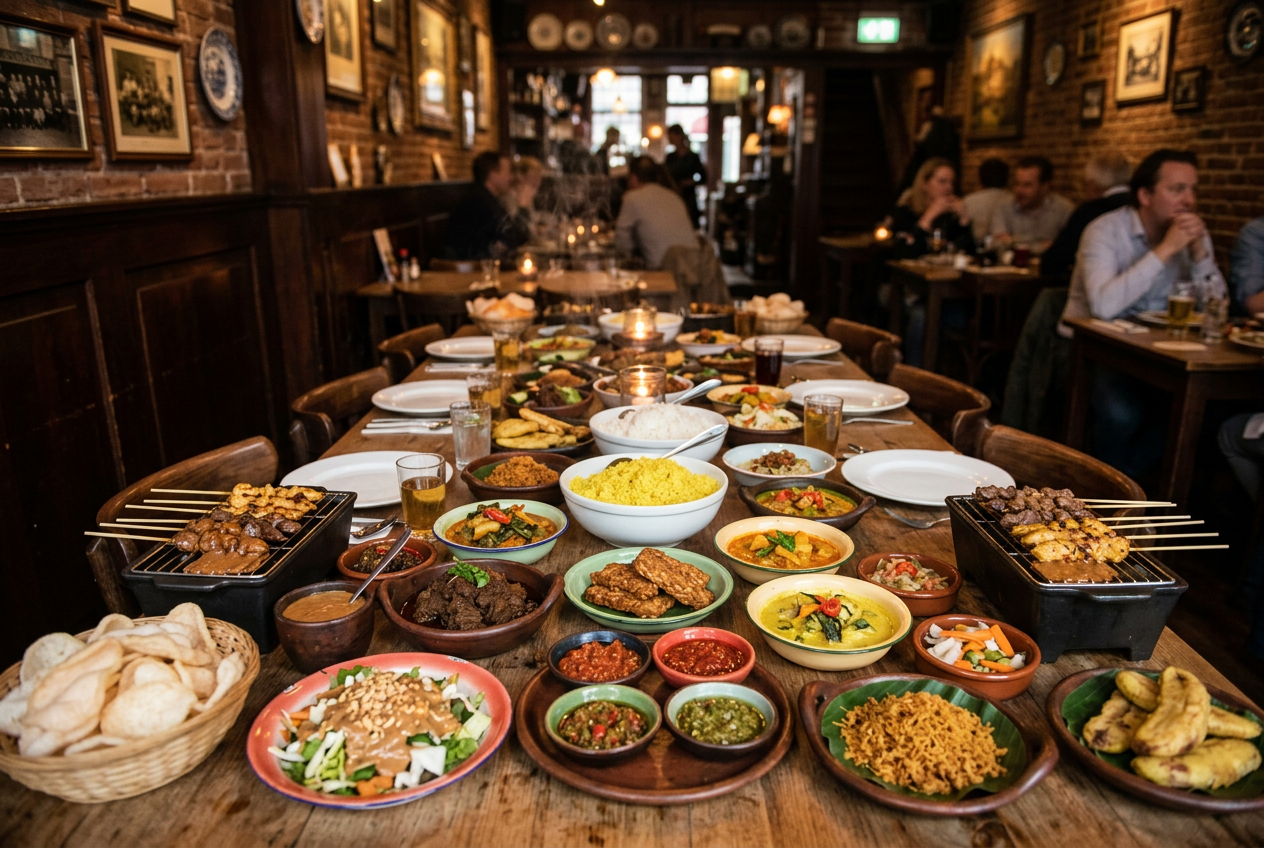
Indonesian rijsttafel — a “rice table” of 10–20 small dishes brought to the table all at once: curries, satay, sambals, tempeh, vegetable dishes. The Netherlands colonised Indonesia for 350 years, and the culinary relationship ran deep. The best rijsttafel restaurants in the Netherlands are some of the best Indonesian food in the world.
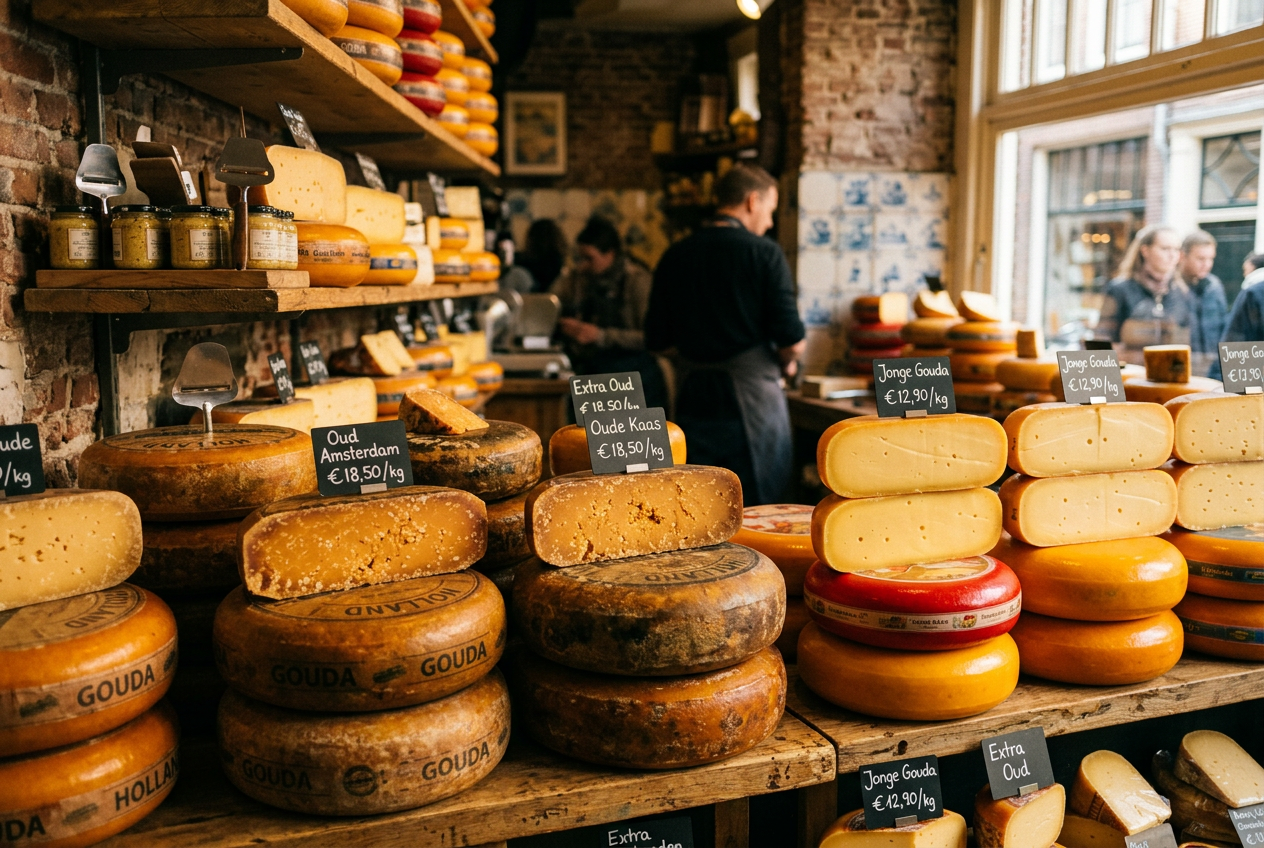
Dutch cheese — Gouda and Edam are the two you’ve heard of, but the actual distinctions are age (young, medium, old, extra-aged) and flavour (some with cumin, some with truffle). Old gouda (Oud Gouda) has a crumbly, almost crystalline texture and a nutty depth that young gouda doesn’t hint at.
Dutch-Indonesian rijsttafel — 20 dishes representing the Netherlands’ 350-year connection with Indonesia
Amsterdam: Cheese, Herring, and the Best Indonesian Food Outside Jakarta
Amsterdam is where the Netherlands food experience is densest. Start at Albert Cuypmarkt (open Monday–Saturday, De Pijp neighbourhood) — the largest outdoor market in the city, where you get a stroopwafel fresh off a griddle for a few euros. This is not a tourist experience; this is how Amsterdammers actually shop.
For herring: Vishandel Volendammer at Albert Cuyp is reliably good, as is any of the herring carts along the Nieuwmarkt. The ones near the touristy waterfront charge more for the same fish.
The best cheese shop in Amsterdam is De Kaaskamer on Runstraat (in the Nine Streets). They have over 300 varieties and will let you taste before buying. Buy a wedge of four-year-old Gouda for the train, and thank yourself later.
For rijsttafel, Kantjil & de Tijger on Spuistraat is the institution — 20 dishes brought in waves, still going after 30 years, and not a tourist trap despite the reputation. For the more modern take, Desa in the Jordaan does an excellent single-plate nasi goreng that’s also good for a quick lunch.
Brown café food: Café ‘t Smalle on the Egelantiersgracht has a canal-side terrace and serves bitterballen from a 300-year-old genever (Dutch gin) distillery. The jenever tasting flight is worth ordering even if you’re not a spirits person — it explains a lot about the Dutch approach to flavour.
Local tip: Avoid the pancake restaurants on the main tourist drag (Damrak/Rembrandtplein). The Dutch pancake (pannenkoek) — large, thin, served sweet or savoury — is excellent when done well. Pannenkoekenhuis Upstairs on the Grimburgwal is two flights up a steep staircase in a 16th-century building and serves the real thing.
Aged Gouda — the four-year-old variety has a crystalline texture nothing like the supermarket version
Rotterdam: The Netherlands’ Most Interesting Food City
Rotterdam is where the Netherlands’ most interesting food scene lives, and it’s not close. The city’s post-war rebuilding brought immigrants from dozens of countries, and the food culture reflects that. The Markthal is the logical starting point: an enormous market hall with 100 food stalls, everything from Dutch cheese to Vietnamese bánh mì to Ethiopian injera.
Fenix Food Factory in the Katendrecht harbour district is better than the Markthal for atmosphere — a converted warehouse with Rotterdam’s best craft brewery (Kaapse Brouwers), a local cheese counter, a wine merchant, and a Dutch meat and charcuterie stall. The weekend lunch crowd is locals, not tour groups.
For dinner, Witte de Withstraat is the main restaurant street. Ter Marsch & Co serves quality burgers using local Dutch beef; Restaurant Fitzgerald does modern European cooking in a converted 1920s bank building. For something more unusual, Bazar in a former church on the Witte de Withstraat has been serving North African and Middle Eastern food for 25 years — the lamb tagine is good, and the space is visually remarkable.
The Surinamese food in Rotterdam deserves its own mention. The city has a large Surinamese community, and the food shows it. A roti from a Surinamese snack bar — flatbread with curried potato, chicken or beans — is one of the best quick meals in the Netherlands and costs about EUR 7. Bojo and the small shops around the Marktplein area are where to find it.
Utrecht: Canal Cellars and an Underrated Coffee Scene
Utrecht’s defining food experience is eating in one of the canal-cellar restaurants lining the Oudegracht. These are literally 14th-century wine storage cellars carved into the stone below street level, now converted into restaurants and cafés — you eat at waterline in a space that smells of old stone. Restaurant LIFE and Polman’s Huis both have excellent canal-terrace settings.
Utrecht has a genuinely good coffee scene for its size. Broei on the Springweg is the most serious — they roast their own beans and care about where they come from. Olivier, a Belgian café on the Achter Clarenburg in a converted church, is better for atmosphere than coffee quality but worth the stop.
The Wednesday and Saturday market on the Vredenburg square is Utrecht’s main outdoor market — good for local produce, stroopwafels, and Dutch cheeses. The Saturday market is the larger of the two.
For dinner in Utrecht, De Rechtbank (a converted courthouse) is the most dramatic space in the city; the food is solid Dutch-French bistro cooking. Gys near the Domplein is smaller and better — creative modern Dutch using seasonal ingredients. Book ahead for either on weekends.
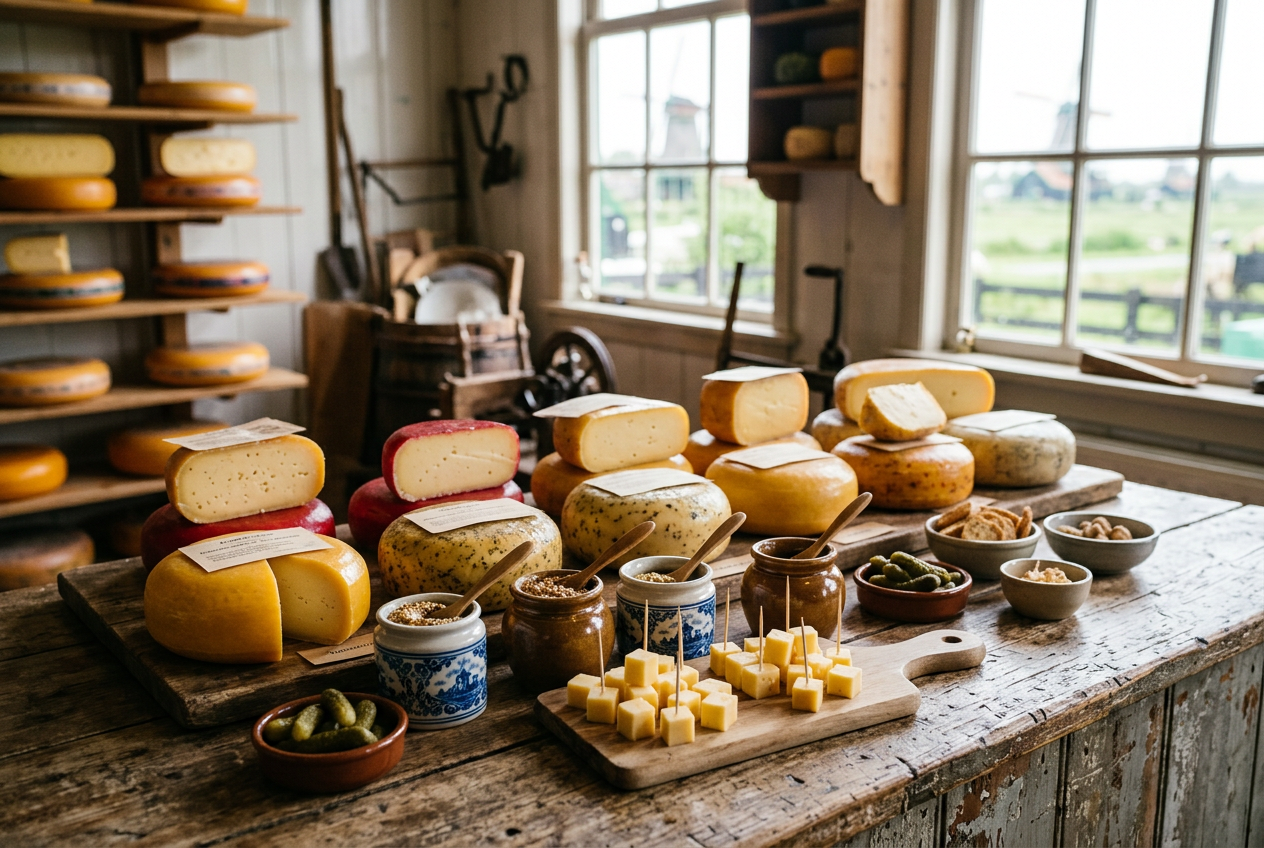
Zaanse mosterd and local cheese at the Zaanse Schans cheese farm
Zaanse Schans: Mustard, Cheese and Windmill-Side Snacks
Zaanse Schans isn’t a food destination in itself, but it has a few specific things worth eating. The Albert Heijn museum house (the original grocery store that became the Netherlands’ largest supermarket chain) has a small exhibit inside the heritage site — interesting context for the food you’ll see later.
The cheese farm at Zaanse Schans offers free cheese tastings — you taste young, medium, and aged gouda, then buy if you want. The cheeses here genuinely are from the region. The Zaanse mustard (Zaanse mosterd) is the other worth-buying item: a grainy, coarse mustard made to a traditional Zaan recipe that’s notably different from the yellow squeeze-bottle variety.
The on-site cafés are priced for tourists, but there’s a decent pannenkoek restaurant near the entrance that isn’t terrible. If you want a proper meal, eat before you arrive or wait until you’re back in Amsterdam.
Giethoorn: What to Eat in the Village Without Roads
Giethoorn has a small handful of restaurants along the main canal, mostly Dutch standards. Het Dwarsgracht is the most reliable for a canalside lunch — toasted broodjes (sandwiches) with local cheese and cold cuts, Dutch pea soup (erwtensoep) in season. The portions are large and the setting is as good as it gets in the village.
The boat hire operators along the main canal often have small terrace cafés attached; a koffie met appeltaart (coffee with apple cake) while your boat bobs outside is completely acceptable as a meal. Dutch apple cake is denser and spiced differently than the British version — worth trying if you haven’t.
Giethoorn is best treated as a morning or afternoon excursion rather than a food destination. Eat a proper lunch in Zwolle (30 minutes away by bus) before or after — Zwolle’s compact old town has a much better restaurant selection.
Keukenhof: Eating Before or After the Tulip Gardens
Keukenhof is open only 8 weeks a year (mid-March to mid-May) and the on-site food options are good for a flower garden but not remarkable in the broader Netherlands context. The Restaurant Oranje inside the gardens is fine for lunch — Dutch standards, reasonable quality, predictably crowded at noon.
The better move is to eat in Lisse, the town outside the gardens, before you go in. De Nachtegaal and the cafés along the main strip in Lisse do a solid pre-visit breakfast or lunch. The Connexxion bus from Amsterdam Schiphol stops in Lisse on the way to Keukenhof — there’s time to stop if you plan for it.
If you’re travelling via Haarlem to reach Keukenhof, that’s a better food stop — Haarlem has a genuinely excellent café and restaurant scene, particularly around the Botermarkt and the streets leading to the Grote Markt.
Food Tips for Indian Travelers
Vegetarian food is available across the Netherlands but requires a little navigation. Full vegetarian and vegan restaurants exist in Amsterdam and Rotterdam; smaller towns have fewer options. The HEMA department store cafeteria (found in most Dutch town centres) is an unlikely but reliable vegetarian-friendly option — their tomatensoep (tomato soup) and broodjes with cheese are genuinely good and cheap.
The Netherlands has a significant Indonesian and Surinamese community, which means curry dishes are mainstream food, not exotic. Many Indonesian restaurants offer full vegetarian rijsttafel. Tempeh (fermented soybean cake, originally from Java) appears frequently and is a good protein option.
Halal food is widely available in Amsterdam and Rotterdam — the Surinamese and Moroccan communities mean halal butchers and restaurants are easy to find. Look for signs in shop windows; it’s not hidden.
Water from the tap in the Netherlands is among the cleanest in Europe — the Dutch drink it without filter jugs and so can you. Ordering tap water at a restaurant is normal and expected; you won’t get a funny look.
Frequently Asked Questions
What is the most famous Dutch food?
Stroopwafel, Dutch herring, Gouda cheese, and bitterballen are the most recognisable Dutch foods. For a full meal, Dutch pancakes (pannenkoeken) and Indonesian rijsttafel are the experiences most food travelers specifically seek out.
Is Dutch food suitable for vegetarians from India?
Partly. Traditional Dutch food is meat and dairy-heavy, but vegetarian and vegan restaurants exist in Amsterdam and Rotterdam. Dutch cheese, pannenkoeken with sweet toppings, and Indonesian vegetarian dishes (tempeh, vegetable curries) make it manageable. Major cities are more vegetarian-friendly than smaller towns.
What should I eat at Albert Cuypmarkt Amsterdam?
Stroopwafel fresh off the griddle is the main event. Dutch herring, raw with onion and pickles, is worth trying if you eat fish. The Dutch cheese stalls let you taste before buying — go for aged Gouda (Oud Gouda) if you want the most flavour.
Is street food popular in the Netherlands?
Yes, particularly herring carts, stroopwafel stands, and frites (Dutch chips) with mayo. Dutch fries (patat) are served with a wider range of sauces than most countries — oorlog (peanut sauce, mayo, onion) and joppiesaus (a yellow curry-flavoured sauce) are the two most distinctly Dutch.
What is rijsttafel and where can I get it?
Rijsttafel (“rice table”) is a Dutch-Indonesian tradition: a spread of 10–20 small dishes representing different Indonesian regions, served communally. Best places: Kantjil & de Tijger in Amsterdam. Good rijsttafel costs EUR 25–35 per person and is a full dinner experience.
Plan Your Netherlands Food Trip with Get Tripped
The Netherlands food trail runs alongside everything else on a standard itinerary — you won’t need to reroute your trip to find good food, because it’s in the same markets, the same canal streets, and the same harbour districts you’re already visiting. Start planning your Netherlands tour package from India with Get Tripped, and we’ll make sure the food stops are built into the experience, not an afterthought.
Albert CuypmarktAmsterdam FoodBitterballenDutch CheeseDutch FoodGouda CheeseIndonesian Food NetherlandsNetherlandsnetherlands food guideNetherlands from IndiaRijsttafelRotterdam FoodstroopwafelUtrecht FoodWhat to Eat Netherlands