Free Things to Do in the Netherlands: Hidden Gems and No-Cost Experiences (2026)
The Netherlands is not a cheap destination. Amsterdam hotel rooms cost what they cost, the Rijksmuseum charges €22.50, and even a kroket from a wall dispenser adds up over a week. But the country is also full of genuinely good things that cost nothing — not “free if you squint” things, but actual quality experiences where the only cost is knowing they exist. This guide covers the best free activities across Amsterdam, Rotterdam, Utrecht, Giethoorn, Zaanse Schans, and Keukenhof, organized by what’s worth your time rather than what fills a list.
Table of Contents
- Amsterdam: The City’s Best Free Experiences
- Rotterdam: Free Activities
- Utrecht: Free Activities
- Giethoorn: Free Things to See
- Zaanse Schans: What You Can See for Free
- Keukenhof Area: Free Tulip Field Viewing
- Free Cultural Events Worth Planning Around
- Markets (All Free Entry)
- Tips for Stretching Your Budget
- FAQs
Amsterdam: The City’s Best Free Experiences
IJ Ferries (Free 24/7)
Four free passenger ferries run from behind Amsterdam Centraal across the IJ waterway to Amsterdam Noord. The Buiksloterweg and Ijplein ferries run every 7–15 minutes around the clock — no ticket, no OV-chipkaart, just walk on. Amsterdam Noord has become genuinely interesting: the EYE Film Museum (building is free to enter, café is good, screenings are ticketed), the A’dam Tower with its rooftop Lookout (ticketed), and the NDSM Wharf — a former shipyard turned creative hub with street art, studios, and pop-up events. The ferry ride itself takes 5 minutes and gives you a decent view of the harbour. Worth doing just for the perspective of seeing central Amsterdam from the water.
Rijksmuseum Gardens
The museum charges €22.50 for entry. The gardens surrounding it don’t. The Rijksmuseum’s outdoor garden — formally known as the Museum Garden — has sculpture installations, manicured lawns, and a view of the museum’s neo-Gothic facade that’s arguably better than anything inside. Open during museum hours. The passage through the museum’s archway is public and leads from Museumplein to the Vondelpark side — walk through it even if you’re not going in.
Vondelpark Open-Air Theatre
From late April to late August, Vondelpark’s open-air theatre (Openluchttheater) runs a free programme of concerts, theatre, dance, and children’s shows most afternoons and some evenings. The 2026 programme includes jazz, Dutch pop, classical music, and circus acts. The park itself is free to enter year-round. On a warm Sunday afternoon, it’s worth timing a park visit around whatever’s on the stage — check openluchttheater.nl for the current schedule.
Concertgebouw Free Wednesday Lunchtime Concerts
The Royal Concertgebouw — one of the best concert halls in the world acoustically — runs free half-hour lunchtime concerts every Wednesday at 12:30 (doors open 12:00). The performances are often by students and emerging artists from the conservatory, but the room is extraordinary and the experience is entirely free. Arrive by 12:00 to get a seat. Located at Concertgebouwplein 10, two minutes from the Rijksmuseum.
Westerkerk Tower View (Exterior)
The Westerkerk (West Church) on Prinsengracht, completed in 1631, is where Rembrandt is buried and where the tower gives one of the best views over Amsterdam’s canal ring. Interior entry to the church is free. The tower climb costs €12.50, but the exterior view from the Prinsengracht bridge in front is worth pausing for — particularly in the late afternoon light. The area around the church is part of the Nine Streets (De Negen Straatjes), which are worth wandering for free.
Begijnhof
Hidden behind a wooden door off Spui square (look for the small brown door), the Begijnhof is a 14th-century enclosed courtyard that once housed a community of Beguines — lay Catholic women who lived in religious community without taking full vows. Today it’s one of Amsterdam’s most peaceful spots, a cluster of historic houses around a courtyard with two chapels. Free to enter, though quietness is expected. The English Reformed Church inside dates to 1607 and is the oldest place of worship in Amsterdam still in regular use.
Albert Cuyp Market
The Albert Cuyp Market in De Pijp (Albert Cuypstraat) runs Monday–Saturday and is the largest open-air market in the Netherlands, free to wander. Over 260 stalls selling Dutch cheese, fresh stroopwafels, fresh haring, herring, produce, clothing, and household goods. The market is a genuine local institution, not a tourist market — the prices reflect it. Buy a fresh stroopwafel hot from the stall (€1–2) and walk the length of the market.
Noordermarkt (Saturday and Monday)
Two markets at Noordermarkt square in the Jordaan: Saturday is the organic farmers’ market (09:00–16:00) and Monday is the flea market / vintage goods market (09:00–13:00). Both are free to browse. The Jordaan neighbourhood surrounding the square is itself excellent for a free walk — small galleries, independent bookshops, the Anne Frank House (ticketed, but the queue viewing from the bridge is free).
Amsterdam City Archives (Stadsarchief)
The city archive at Vijzelstraat 32 occupies a former bank building from 1926 — the main hall alone is worth stepping into. Free exhibitions on Amsterdam history run regularly. The permanent collection of historical maps, photographs, and documents is free to view. Open Tuesday–Friday 10:00–17:00, Saturday–Sunday 12:00–17:00.
Gassan Diamonds Free Factory Tour
Gassan Diamonds (Nieuwe Uilenburgerstraat 173-175) offers free guided tours of their diamond polishing factory, a 17th-century building that was once a steam-powered diamond works. The tour covers diamond cutting, grading, and the history of Amsterdam’s diamond trade (the city dominated global diamond trade for centuries). No purchase required. Tours run every 30 minutes. Register at the entrance. It’s a genuine educational experience, not primarily a sales pitch — though you’ll walk through the showroom at the end.
Hortus Botanicus (Free for Under-6, Reduced Admission)
Not free for adults (€14.50), but worth mentioning: the botanical garden near Artis is one of the oldest botanical gardens in the world (founded 1638) and genuinely beautiful. If you’re traveling with children under 6, they enter free. The palm house and butterfly greenhouse are highlights.
Free Things to Do in the Netherlands: Hidden Gems and No-Cost Experiences (2026)
The Netherlands is not a cheap destination. Amsterdam hotel rooms cost what they cost, the Rijksmuseum charges €22.50, and even a kroket from a wall dispenser adds up over a week. But the country is also full of genuinely good things that cost nothing — not “free if you squint” things, but actual quality experiences where the only cost is knowing they exist. This guide covers the best free activities across Amsterdam, Rotterdam, Utrecht, Giethoorn, Zaanse Schans, and Keukenhof, organized by what’s worth your time rather than what fills a list.
Rotterdam: Free Activities
Markthal Walk-Through (Free)
The Markthal — the giant arched food market — is free to enter and walk through. The ceiling mural (“The Horn of Plenty” by Arno Coenen) covering the inside of the arch is 11,000 square meters of digital art depicting giant fruits, vegetables, and insects. Market stalls inside sell food, cheese, and produce — browsing costs nothing. The building sits in a residential development: apartments wrap the outer ring of the arch. Best visited weekday mornings when it’s less crowded.
Cube Houses (Paalwoningen) Exterior
The yellow cube houses designed by Piet Blom are free to view from outside — they’re right next to the Markthal and Blaak metro station. One cube house is open as a museum for €3.50 if you want to see the tilted interior, but the exterior cluster makes for excellent photos without paying anything.
Erasmusbrug (Bridge Walk)
The Erasmus Bridge across the Nieuwe Maas is free to walk across. From the bridge, you get Rotterdam’s most iconic view: the Euromast, the port cranes in the distance, and the river. The south bank (Feyenoord side) has the Fenix Food Factory and Katendrecht, a gentrified former red-light district with independent restaurants, now one of Rotterdam’s most interesting neighborhoods.
Delfshaven (Historic Quarter)
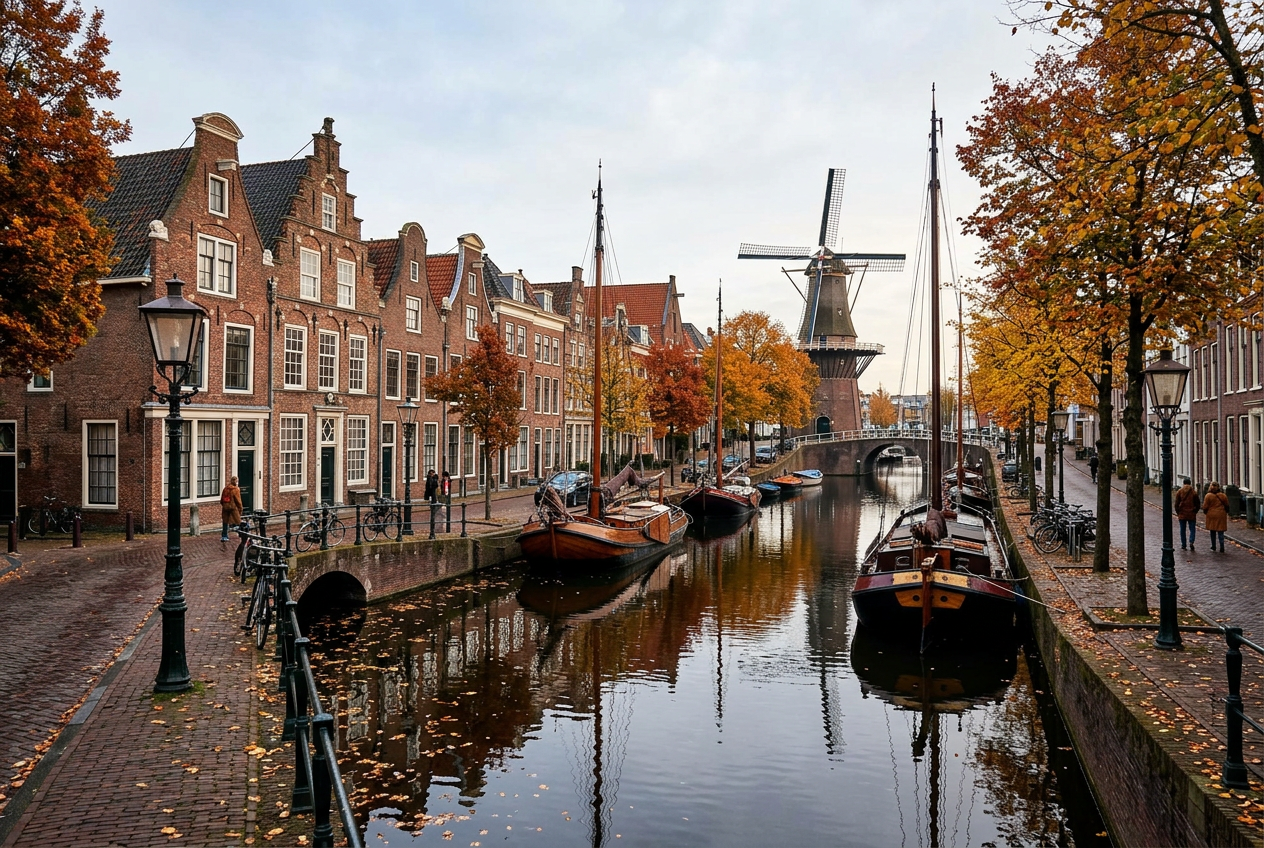
Delfshaven is the only historic neighbourhood of Rotterdam to survive World War II bombing. It has 17th-century canal houses, the Pilgrim Fathers’ Church (from which the Pilgrims departed for America in 1620), and a working windmill. Free to walk through — the whole area takes about an hour and feels completely different from Rotterdam’s modernist centre.
Museum Rotterdam (Free to Browse)
The Museum Rotterdam at Coolsingel (adjacent to the Stadhuis) has a permanent collection documenting Rotterdam’s history that’s free to visit. Exhibitions on the city’s prewar history, the WWII bombing, and the postwar reconstruction. Hours and free access may change — verify on museumrotterdam.nl before going.
Utrecht: Free Activities
Dom Tower Exterior and Cathedral Garden
The Dom Tower (112m, tallest church tower in the Netherlands) charges for the climb (€14). The area around it — Domplein and the Cathedral Garden — is free. The Cathedral Garden (Pandhof) is a medieval cloister garden attached to what remains of the cathedral; the nave was destroyed in a 1674 storm and never rebuilt, leaving the tower separate from the choir. The gap is now a public square. The garden is one of Utrecht’s most tranquil spots.
Museum Speelklok (Free Entry on Museum Free Days)
The Museum Speelklok houses self-playing musical instruments, from street organs to ornate music boxes. Not free all year (normal entry €15), but Utrecht participates in the national Museumweekend (Museum Weekend) in April, when most museums offer free or reduced entry. Keep an eye on museumweekend.nl for 2026 dates.
Oudegracht Canal Walk
Utrecht’s main canal (Oudegracht) is different from Amsterdam’s — it has two levels, with medieval wharves (werven) accessible below street level, now lined with café terraces. Walk the whole length, from Viebrug to Ledig Erf, free. Cross the small bridges, go down to the lower level, and find a terrace for coffee.
Miffy Statue (Dick Bruna Huis Area)
Near the Nijntjepleintje (Miffy Square) in the city centre, there’s a small Miffy statue and a Miffy-themed traffic light — a Utrecht civic institution. The Dick Bruna Huis museum nearby is ticketed (€14), but the square and statue are free. Worth a 10-minute stop if you have children, or if you’re a fan of Dutch design.
Giethoorn: Free Things to See
Giethoorn village has no entry fee. Walk the footpaths along the canals for free — the views of thatched-roof farmhouses reflected in still water don’t cost anything. What you pay for in Giethoorn is boat rental (€15–25/hour for a whisper boat) and restaurant meals. The free experience — walking the 7.5 km of bike/footpaths through the village — is genuinely good, especially in the morning before tour buses arrive (arrive by 09:00 for a quiet first hour). The small church, the bridge views, and the reed fields are free to see.
Zaanse Schans: What You Can See for Free
Zaanse Schans is a heritage village (not a theme park), and walking through it is free. The windmills can be viewed from outside at no cost. What you pay for is:
- Windmill interior climb: €5–7 per windmill
- Cheese farm (Catharina Hoeve): The cheese tasting is free — it’s a sales exercise, but genuinely educational and the cheese samples are good quality
- Clog workshop tour: Small admission fee
You can spend a full hour at Zaanse Schans for free — walk among the windmills, do the free cheese tasting, watch the clog-making demonstration from outside — and the experience is complete. Paying to climb a windmill adds the view from the top, which is worth it if the weather is clear.
Keukenhof Area: Free Tulip Field Viewing
Keukenhof garden itself charges €22 admission (book online; in-person queue is long in peak weeks). But the tulip fields surrounding Keukenhof — the bulb growing region (Bollenstreek) between Haarlem and Leiden — are visible from public roads for free. Cycling through the Bollenstreek in late April is a classic activity: kilometer-long rows of striped color, red-yellow-pink-white, with no entrance fee other than your bike rental.
The town of Lisse (adjacent to Keukenhof) has free flower markets during tulip season. The Bulb District also has the route “Bollenstreek Route” (marked cycling route through the fields) — maps available at tourist offices in Lisse and Haarlem. The route passes through Hillegom, Lisse, Sassenheim, and Rijnsburg — arguably more scenic than the garden itself because it’s agricultural land, not curated display.
Free Cultural Events Worth Planning Around
National Tulip Day (Third Saturday of January)
Every year on the third Saturday of January, Amsterdam’s Dam Square is filled with 200,000 tulips, free for the public to pick. The event runs for a few hours in the morning until the flowers are gone. It marks the official opening of tulip season and draws crowds — arrive early. Free.
King’s Day (Koningsdag) — 27 April
King’s Day is the national birthday celebration for King Willem-Alexander. The entire country turns orange. In Amsterdam, the streets, canals, and Vondelpark fill with outdoor markets, street concerts, boat parties, and general festivity. The canal boat parade is free to watch from the banks. The flea markets (vrijmarkt) that pop up on every street are free to browse. It’s chaotic, joyful, and one of the most memorable days you can have in the Netherlands. Not exactly a hidden free thing — everyone knows about it — but worth planning a trip around if dates align.
Museum Night Amsterdam (November)
Museumnacht (Museum Night) in Amsterdam (usually first Saturday of November) gives access to 50+ museums for a single €25 ticket from 19:00 to 02:00. Not free, but significantly cheaper per museum than normal, and the late-night format is excellent. Some museums offer free events in their gardens or lobbies as overflow events during the night — worth checking.
Open Monument Day (Second Weekend of September)
Open Monumentendag is a European event when hundreds of historic buildings, normally closed to the public, open their doors for free. Palaces, church towers, medieval cellars, 17th-century merchant houses — many with free guided tours. Runs the second weekend of September. openmonumentendag.nl lists participating buildings.
Markets: All Free to Enter
Amsterdam
- Albert Cuyp Market — Mon–Sat, De Pijp. Best for food stalls and local colour.
- Noordermarkt — Monday (antiques/flea) and Saturday (organic). Jordaan.
- Waterlooplein Flea Market — Mon–Sat. Vintage clothing, secondhand books, curious objects.
- Haarlemmerplein Cheese Market — Saturdays in spring/summer. Free cheese tasting offered by vendors.
- Bloemenmarkt (Flower Market) — Singel canal, Mon–Sat. Technically a shopping market, but the floating market stalls are photogenic and free to browse. Bulbs are cheaper here than at Keukenhof gift shop.
Rotterdam
- Markthal Indoor Market — Mon–Sat 10:00–20:00, Sun 12:00–18:00. Free entry.
- Binnenrotte Market — Tuesday and Saturday, largest outdoor market in the Netherlands. Food, clothing, plants. Free.
Utrecht
- Vredenburg Market — Wednesday and Saturday. Central Utrecht. Food and produce. Free.
- Breedstraat Antiques Market — Saturday mornings. Free to browse.
Tips for Getting More Without Paying More
- Museum Card (Museumkaart): At €69.95 for a year (€99.95 for under-18), the card grants free entry to 400+ Dutch museums. For a 7–10 day trip where you’ll visit 5+ museums, it pays for itself. Buy at the first museum you visit (some sell day-1 discounted cards).
- I Amsterdam City Card: Includes public transit, Rijksmuseum, Van Gogh Museum, canal cruise, and 70+ attractions. At €65 for 24 hours, €85 for 48 hours, it’s worth it only if you plan to use all inclusions. Do the math before buying.
- Church interiors: Many of Amsterdam’s historic churches — Westerkerk, Nieuwe Kerk (occasionally, check schedule), Noorderkerk — are free or donation-based to enter. The buildings are genuinely impressive and rarely crowded.
- University libraries: Universiteitsbibliotheek Amsterdam (Singel 425) allows visitors to use reading rooms. The canal-side building is architecturally interesting and the reading room is a nice place to sit.
FAQs: Free Things to Do in the Netherlands
Is Giethoorn free to visit?
The village itself has no entry fee — you can walk the entire canal path network for free. Boat rental and restaurant meals are where the costs are. Budget a half day if you want the full experience including a boat ride.
Can I see tulip fields for free without buying Keukenhof tickets?
Yes. The tulip-growing Bollenstreek region around Lisse has open fields visible from public cycle routes and roads. The free cycling route through the bulb fields is widely considered as scenic as Keukenhof — just not curated. Best from mid-April to early May.
Are Amsterdam canal boat tours free anywhere?
No commercial canal tours are free. The IJ Ferry is free but it’s a utility ferry, not a sightseeing cruise. Some tour operators offer free cancellation if booked in advance online — this means you can book a canal tour as part of planning and cancel if the weather is bad.
What’s the best free thing to do in Rotterdam?
Walking the Erasmusbrug and waterfront costs nothing and gives you the best overview of Rotterdam’s architectural ambition. Add a walk through Delfshaven (30 minutes) and the Markthal visit (free, 20 minutes) and you’ve seen the essential Rotterdam for the price of a coffee.
Are there free museums in the Netherlands?
Some museums have free permanent collections or specific free hours. The Museum Rotterdam has partially free permanent display. Many participate in free-entry days (Museum Weekend in April, Open Monumentendag in September). The Museumkaart at €69.95 is not free but effectively makes 400+ museums free for a year.
Plan Your Netherlands Trip with Get Tripped
A good Netherlands itinerary balances the paid highlights (Rijksmuseum, Keukenhof, Giethoorn boat rental) with the free ones (canal walks, Vondelpark, Delfshaven, the IJ Ferry crossing at dusk). The difference between a rushed trip and a genuinely satisfying one is often knowing what to skip, what to linger at, and what hidden spots to add. Explore Get Tripped’s Netherlands tour packages — or call us on +918080907607 (WhatsApp) if you want a custom itinerary built around your interests and budget.