Netherlands Packing Guide by Season: What to Pack for Every Month
The Netherlands has four distinct seasons and weather that changes within a single day — the classic Dutch experience is sunny morning, sideways rain by noon, clearing by evening. Packing wrong for a Netherlands trip is easy: bring too many winter layers in May and you’ll be hot, bring summer clothes in September and you’ll spend money on a Zara jumper at Schiphol on the way back. This packing guide breaks down what to actually bring, season by season, with specific notes for Indian travelers who may not own European winter gear and are flying from a country where certain items are easier to source than others.
Planning a Netherlands trip from India? Here’s exactly what to pack.
Table of Contents
- Understanding Netherlands Weather
- Spring Packing List (March–May)
- Summer Packing List (June–August)
- Autumn Packing List (September–November)
- Winter Packing List (December–February)
- Always Pack: Items for Any Season
- Notes for Indian Travelers Specifically
- FAQs
Understanding Netherlands Weather
The Netherlands is in the North Sea maritime climate zone — mild, wet, and changeable. Temperatures rarely hit the extremes you’d find in mainland Europe. Summer highs reach 25–28°C most years (occasionally 32°C in a heat wave). Winter lows hover around 0–5°C, with occasional frost but rarely sustained snow. What the Netherlands does reliably is wind and rain — the country is flat, there are no mountains to block Atlantic weather systems, and a clear morning can become an overcast, drizzly afternoon with no warning.
The key packing insight: layers and waterproofing matter more than temperature management. A good rain jacket does more for Netherlands comfort than any heavy winter coat. The Dutch themselves wear relatively light clothing with a waterproof outer layer year-round.
Spring Packing List (March–May)
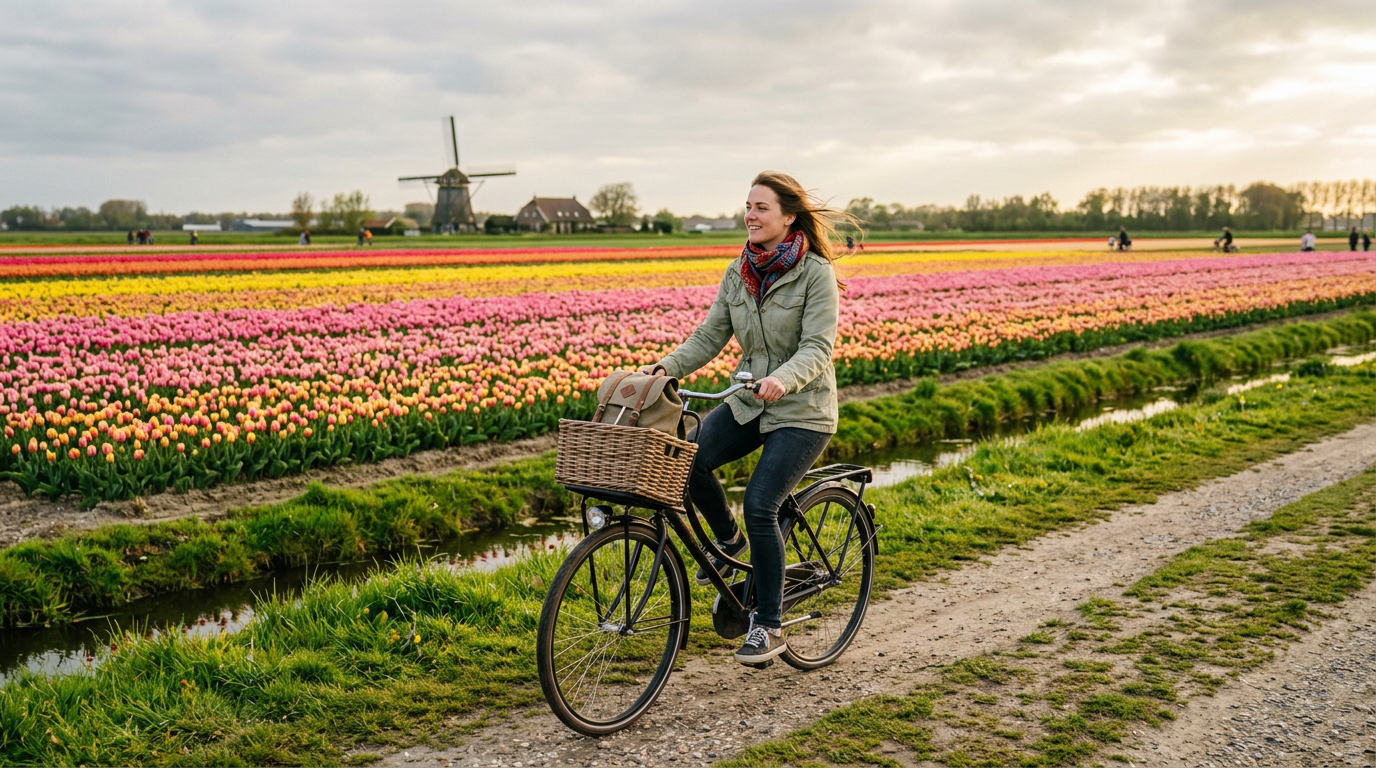
Spring is peak season for a Netherlands trip, particularly April for the Keukenhof tulip gardens. Temperatures range from 8–18°C, with the warmest days in late May. Rain is frequent. Wind can be significant, particularly at Zaanse Schans and near the North Sea coast.
Clothing:
- 3–4 pairs of jeans or trousers (not shorts — it’s too cool for most of spring)
- 5–6 tops/shirts (long-sleeved for cooler days, a few short-sleeved for warm afternoons)
- 1–2 light sweaters or fleece layers
- 1 medium-weight jacket or blazer for evenings
- 1 waterproof rain jacket — this is the single most important item. A proper shell jacket (not a thin fashion anorak) with a hood
- Comfortable walking shoes that can handle wet cobblestones — waterproof if possible, ideally with some ankle support. Amsterdam’s cobblestones in the rain are genuinely slippery
- 1 pair of lighter shoes for evenings out
- A light scarf — useful in wind, doesn’t take much luggage space
Mistake to avoid: Assuming April will be warm because it’s spring. Amsterdam in April averages 10–13°C. Pack like you’re going to a mild autumn in India’s hills, not a beach trip.
Summer Packing List (June–August)
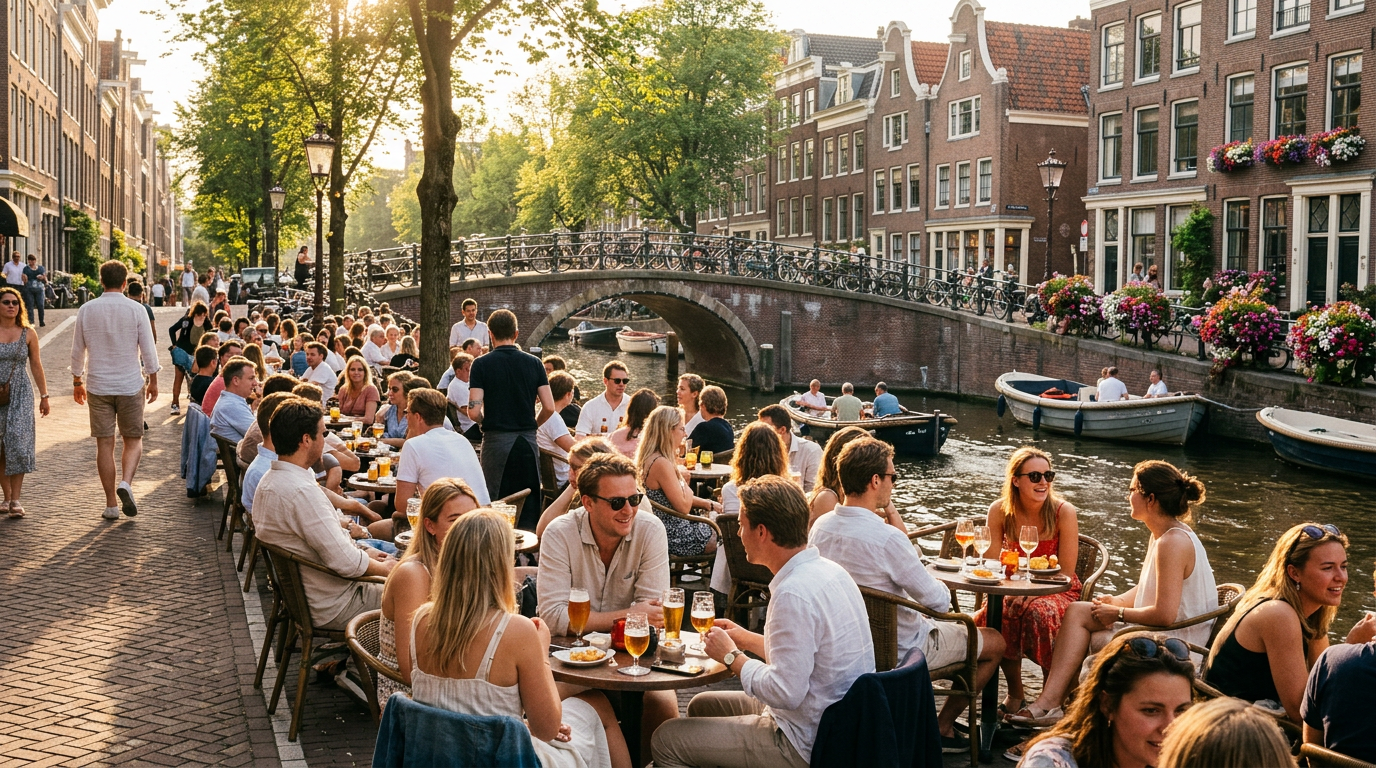
June to August is the warmest and most reliable period, though “reliable” in Dutch terms means you still get rain — just shorter bursts rather than grey all-day drizzle. Temperatures reach 20–26°C, occasionally higher. Amsterdam gets genuinely busy in July and August; accommodation prices peak.
Clothing:
- 3–4 pairs of lighter trousers or jeans plus 1–2 shorts (the Netherlands does get warm enough for shorts in July–August)
- 6–7 tops, mix of short and long-sleeved
- 1 light cardigan or zip fleece — evenings cool down to 15–18°C
- A compact packable rain jacket — still necessary even in summer. Buy one that folds into its own pocket; it takes almost no space and you’ll use it
- Comfortable walking shoes — your feet will log 10–15km a day in Amsterdam. Prioritise comfort over appearance
- 1 pair of sandals or casual shoes for evenings
- Sunscreen (SPF 30+) — the summer sun at this latitude is stronger than it feels
- Sunglasses
Fun fact: The Netherlands averages about 1,700 sunshine hours a year — more than London but less than most of Southern Europe. Summer days are very long (sunset past 10pm in June), giving you exceptional late-light photography opportunities.
Autumn Packing List (September–November)
September and October are arguably the best months to visit — fewer crowds than summer, the light is extraordinary (low-angled golden hour that lasts longer), and temperatures are still comfortable at 12–18°C in September. November turns noticeably grey and cold.
Clothing:
- 3–4 pairs of jeans or trousers
- 5–6 tops, mostly long-sleeved
- 1–2 warmer mid-layers — a heavier fleece or wool sweater for October onwards
- 1 medium-to-warm jacket (down or synthetic insulation works well)
- A waterproof outer shell — even more important in autumn. Wear it over your insulating layer when it rains
- Waterproof walking shoes or boots — cobblestones in October rain are wet
- A warm hat and gloves for November
- A scarf — useful for wind off the canals
September is mild enough that you could get away with spring-weight packing. By November you need proper winter gear.
Winter Packing List (December–February)
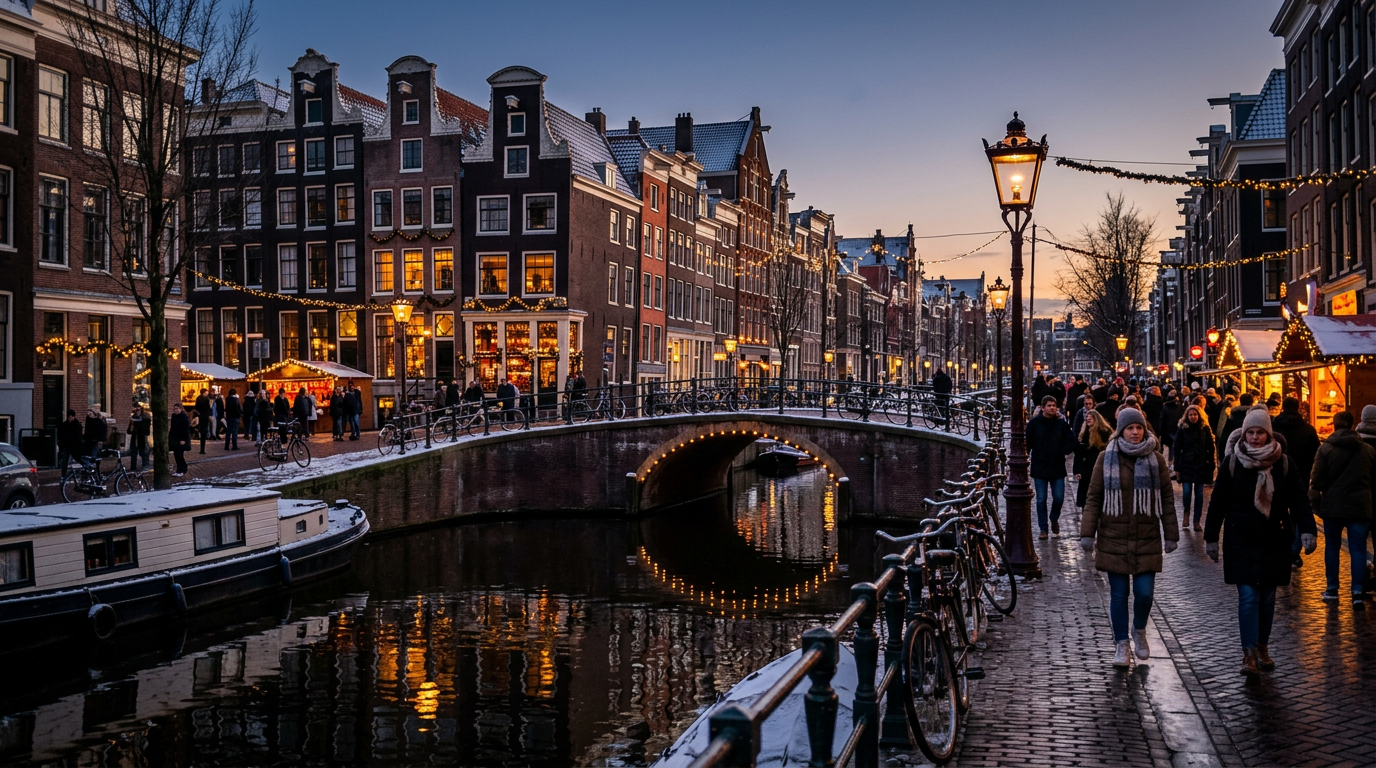
December in the Netherlands means Christmas markets, the Rijksmuseum at its quietest, and very short days (sunset before 4:30pm). Temperatures are 2–8°C with occasional nights below freezing. Snow is rare but possible. Amsterdam in December feels like a Dickens illustration — the canal light at dusk in winter is extraordinary if you embrace the atmosphere rather than fight it.
Clothing:
- Warm base layers (thermal vests and long underwear — genuinely necessary if you’re out all day)
- 3–4 pairs of warm trousers or heavy jeans
- 5–6 tops, all long-sleeved
- 2 wool or heavy fleece sweaters
- A warm, insulated, waterproof coat — the most important item. A down jacket plus waterproof shell is the layered approach; a single good winter coat with waterproofing works equally well. Don’t skimp on this.
- Warm hat (covering ears), gloves, and a scarf — mandatory, not optional
- Warm waterproof boots — your feet will be on cold cobblestones all day
- Wool socks
Honest note: Indian travelers not accustomed to European winter temperatures often underpack. What feels like “enough” layers from an Indian wardrobe may not be sufficient for 4°C with wind chill and rain. Err on the side of more warmth than you think you need.
Always Pack: Items for Any Season
Some items belong on every Netherlands packing list regardless of when you’re going:
- A daypack — small, comfortable backpack for carrying water, a camera, a rain jacket, and museum tickets. The best walking bag in the Netherlands is a slim daypack rather than a crossbody, which fills up quickly
- Portable power bank — for a full day of navigation, photography, and translation
- EU travel adaptor (Type C/F plug, 230V) — the Netherlands uses the same plugs as most of Europe
- A refillable water bottle — Dutch tap water is excellent; refill at any café or public fountain
- Comfortable insoles — the cobblestones of Amsterdam, Zaanse Schans, and the old towns are genuinely tiring on feet. Good insoles in existing walking shoes make a noticeable difference after day 3
- A light scarf — doubles as sun protection, wind protection, and a museum layer for air-conditioned spaces
- Your OV-chipkaart (or plan to buy one at Schiphol on arrival)
- Travel insurance documents (Schengen-compliant, minimum EUR 30,000 medical coverage)
Notes for Indian Travelers Specifically
Rain jackets: Good waterproof rain jackets are harder to source in India than in the Netherlands, but the Netherlands has H&M, Decathlon, and Zara at reasonable prices. If you don’t own one, buying at home in advance is better than scrambling for one on Day 2 in the rain.
Winter coats: If you’re visiting in December–February, a proper winter coat is essential. Indian cities rarely require this, so most Indian travelers don’t own one. Options: buy before leaving (Decathlon India now stocks some, as do imported outdoor brands), or plan to buy in Amsterdam — the Netherlands has good winter clothing retail and you’ll wear the coat for the rest of the trip.
Medication: Bring a full supply of any prescription medication from India plus a copy of the prescription. Dutch pharmacies (apotheek) are good, but prescription medications are only available with a local prescription. Over-the-counter medications for common ailments (paracetamol, antihistamines, antacids) are widely available.
Footwear: Indian-sized narrow-toe shoes sometimes struggle with the width sizing in Dutch shoe shops. If you’re between European shoe sizes or have narrow/wide feet, pack what you need rather than planning to buy in the Netherlands.
Electrical items: The Netherlands uses 230V. Indian appliances rated for 220–240V work without adaptor (just the plug shape changes). Check your device’s rating before packing.
Frequently Asked Questions
What is the weather like in the Netherlands in April?
April averages 10–14°C with frequent rain and some sunny days. Bring layers, a waterproof jacket, and comfortable closed-toe walking shoes. It’s the peak month for tulips at Keukenhof — book accommodation well in advance as the region gets very busy.
Do I need a rain jacket in the Netherlands in summer?
Yes. Even in July and August, rain is common. A compact packable rain jacket that folds into its own pocket is perfect — it barely takes up space and you’ll definitely use it at some point. The Dutch carry one almost year-round.
What shoes should I wear in Amsterdam?
Comfortable walking shoes that can handle wet cobblestones. Amsterdam’s streets and canal bridges are paved with rough cobblestones that are slippery when wet. Prioritise comfort and grip over appearance. Heels are generally impractical in the old city centre.
What should I pack for visiting Keukenhof tulip gardens?
Comfortable walking shoes (the garden covers 32 hectares), a waterproof jacket, a camera or phone with good battery, and layers — April mornings are cool. Arrive early (before 10am) for the best light and thinnest crowds.
What power adaptor do I need for the Netherlands from India?
You need a Type C or F plug adaptor (European standard). The Netherlands uses 230V, which is compatible with Indian appliances rated 220–240V — most modern electronics (phones, laptops, cameras) support this automatically. Check the label on your specific device.
Plan Your Netherlands Trip with Get Tripped
Pack right and the Netherlands becomes easier than its reputation suggests — the weather is manageable, the transport is excellent, and the country is compact enough that you can cover a lot of ground in a week without exhaustion. Start planning your Netherlands tour package from India with Get Tripped, and we’ll handle the booking logistics while you pack the right jacket.