Netherlands Packing Guide by Season: What to Pack for Every Month (2026)
The Netherlands has a reputation for unpredictable weather that’s entirely earned. Amsterdam in April can be sunny at 16°C by noon and raining sideways by 2pm. Rotterdam in July can hit 30°C on a Tuesday and be grey and 18°C by Thursday. The golden rule for packing for the Netherlands: layer, waterproof, and bring less than you think you need of everything except rain protection. This guide breaks down what to pack season by season, with specific notes for the activities most Indian travelers do — tulip season in spring, cycling, canal tours, Christmas markets, and Giethoorn in summer.
Table of Contents
- Netherlands Climate: A Quick Overview
- Spring Packing (March–May): Tulip Season
- Summer Packing (June–August): Best Weather
- Autumn Packing (September–November)
- Winter Packing (December–February): Christmas Markets
- Year-Round Essentials
- Cycling-Specific Gear
- What to Keep in Your Day Bag
- What to Leave at Home
- FAQs
Netherlands Climate: A Quick Overview
The Netherlands has a temperate maritime climate: mild and wet. What this means in practice:
- Spring (March–May): 7–17°C. Variable. Can be beautiful and can be cold and wet, sometimes on the same day. Tulip season peaks mid-April.
- Summer (June–August): 18–26°C average, with occasional hot spells above 30°C (heatwaves are becoming more frequent). Still gets rain — the Netherlands receives rain year-round. Longest days (up to 17 hours of daylight in June).
- Autumn (September–November): 10–18°C dropping to 5–10°C by November. Golden foliage through October. Amsterdam gets atmospheric mist over the canals. November starts to feel genuinely cold.
- Winter (December–February): 2–8°C. Can drop below zero, rarely snows heavily. Christmas markets run December. Canals occasionally freeze (rare — last major freeze was 2012). Indoor and museum season.
Wind is a constant factor the Netherlands is famous for: the country is flat, the North Sea coast is 50km from Amsterdam, and westerly winds travel unobstructed. A day that looks mild at 14°C with 30km/h wind will feel like 7°C. Pack for wind, not just temperature.
Spring Packing: March to May (Tulip Season)
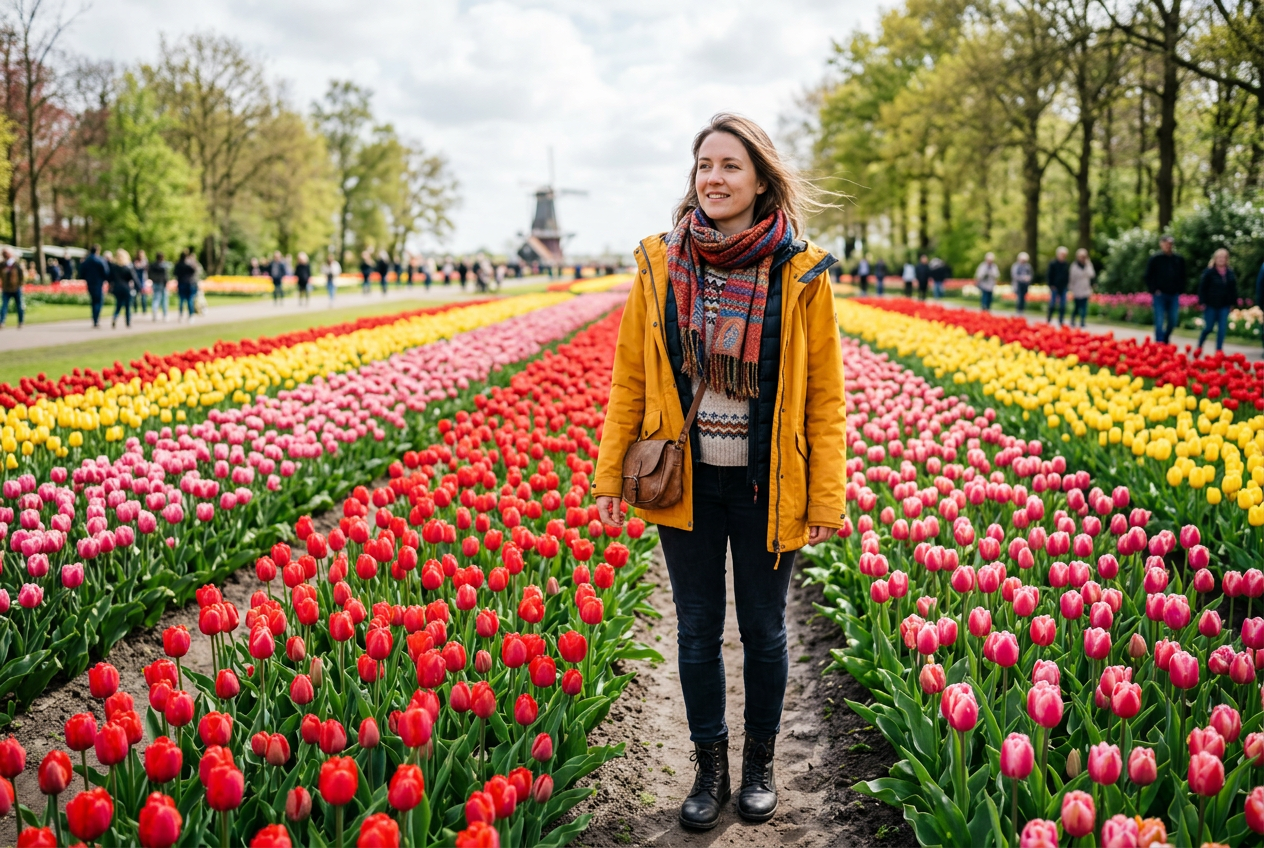
Tulip season is the peak travel period for Indian visitors — Keukenhof, the Bollenstreek fields, Amsterdam in full bloom. The challenge: spring weather is genuinely unpredictable. The week the tulips peak, it may also snow (it happened in April 2021). Pack for warmth and rain as a baseline, with a lighter layer for warm days.
Clothing
- Base layer: 2–3 moisture-wicking full-sleeve tops (merino wool or synthetic — cotton stays wet and cold)
- Mid-layers: 2 lightweight fleece pullovers or knit jumpers — this is what you’ll add and remove most often as the day changes
- Warm layer: 1 medium-weight down or synthetic puffer jacket (not a heavy winter coat, but not a cotton hoodie either)
- Outer shell: A waterproof rain jacket — this is non-negotiable for spring. Must be waterproof (not water-resistant — there’s a difference in a Dutch rainstorm). A packable one that stuffs into its own pocket is ideal; you’ll carry it daily even when it’s not raining
- Trousers: 2 pairs of non-denim trousers (denim stays wet for hours if you get caught in rain). Water-resistant trekking trousers are excellent. Dark-coloured chinos also work. 1 pair of casual trousers for evenings
- Warmer option: 1 pair of thermal leggings if traveling in March or early April — goes under trousers on cold days
- Socks: Wool or wool-blend socks, minimum 4–5 pairs. Dutch walking involves a lot of paved surfaces; cushioned socks make a difference
- Scarves and gloves: 1 lightweight scarf (doubles as protection from wind chill on canal boats and cycling). Thin touchscreen gloves for March–early April
Footwear
- Waterproof walking shoes: The most important item in your bag. Amsterdam’s cobblestones are uneven; Giethoorn’s paths are grassy. Gore-Tex lined trainers or waterproof hiking shoes beat fashionable but non-waterproof choices. Break them in before the trip — blisters on cobblestones are unpleasant
- Evening shoes: 1 pair of slightly smarter shoes for dinners. Must also be reasonably comfortable for walking 3–4km
- No sandals in March–April: The ground is cold and wet. Leave sandals for summer trips
Tulip Season Specific
If visiting Keukenhof or cycling through the Bollenstreek fields: pack an extra set of shoes or at least dry socks in your day bag. Field paths can be muddy after rain. Camera rain sleeve or plastic bag for your phone — the light filtering through tulip fields in soft spring light is excellent photography weather, which often also means overcast and drizzly.
Summer Packing: June to August
June to August is the best weather window for the Netherlands: warmest temperatures, longest days, most outdoor activity. Still bring rain gear — Dutch summer rain is a real phenomenon, not just a planning myth. But you can pack lighter mid-layers and prioritize comfort and ventilation.
Clothing
- T-shirts and short-sleeve tops: 3–4 lightweight tops in breathable fabric. Amsterdam in July can hit 28–30°C on a good day
- Light long-sleeve option: 1–2 light shirts with sleeves — useful for wind on canal tours, air-conditioned museums, and cooler evenings
- Light jacket: A packable rain jacket is still required. Thin, compressible, waterproof. This is the layer that makes the difference between a wet afternoon and a manageable one
- Trousers and shorts: 2 pairs of light trousers (linen or cotton blend) and 1–2 pairs of shorts for the warmest days. Amsterdam is casual; there’s no dress code for most restaurants
- Evening layer: 1 light cardigan or thin sweater — evenings can drop to 14–17°C even in July
- Sun protection clothing: UV-protective long sleeves or a light linen shirt if you’re planning a full day at Keukenhof or cycling the tulip route — the Netherlands gets strong UV in summer and the flat terrain means no shade
Footwear
- Comfortable walking shoes: Trainers or light waterproof walking shoes. Sandals work on dry days but always pack a closed shoe alternative
- Sandals: Fine for summer. Flip-flops are casual; a smarter sandal (Birkenstock style) works for evenings too
Summer Specific
- Sunscreen: SPF 50, more than you think you need. The North Sea UV index is higher than expected for the latitude, and you’ll be outdoors far longer than on a tropical beach holiday (walking 15,000 steps/day is common on a Netherlands city trip)
- Sunglasses: Essential in summer. The canal reflections are bright
- Portable fan or cooling towel: If visiting during a heatwave (30°C+ events are more frequent post-2020). Dutch buildings often have poor air conditioning — this matters in summer
Autumn Packing: September to November
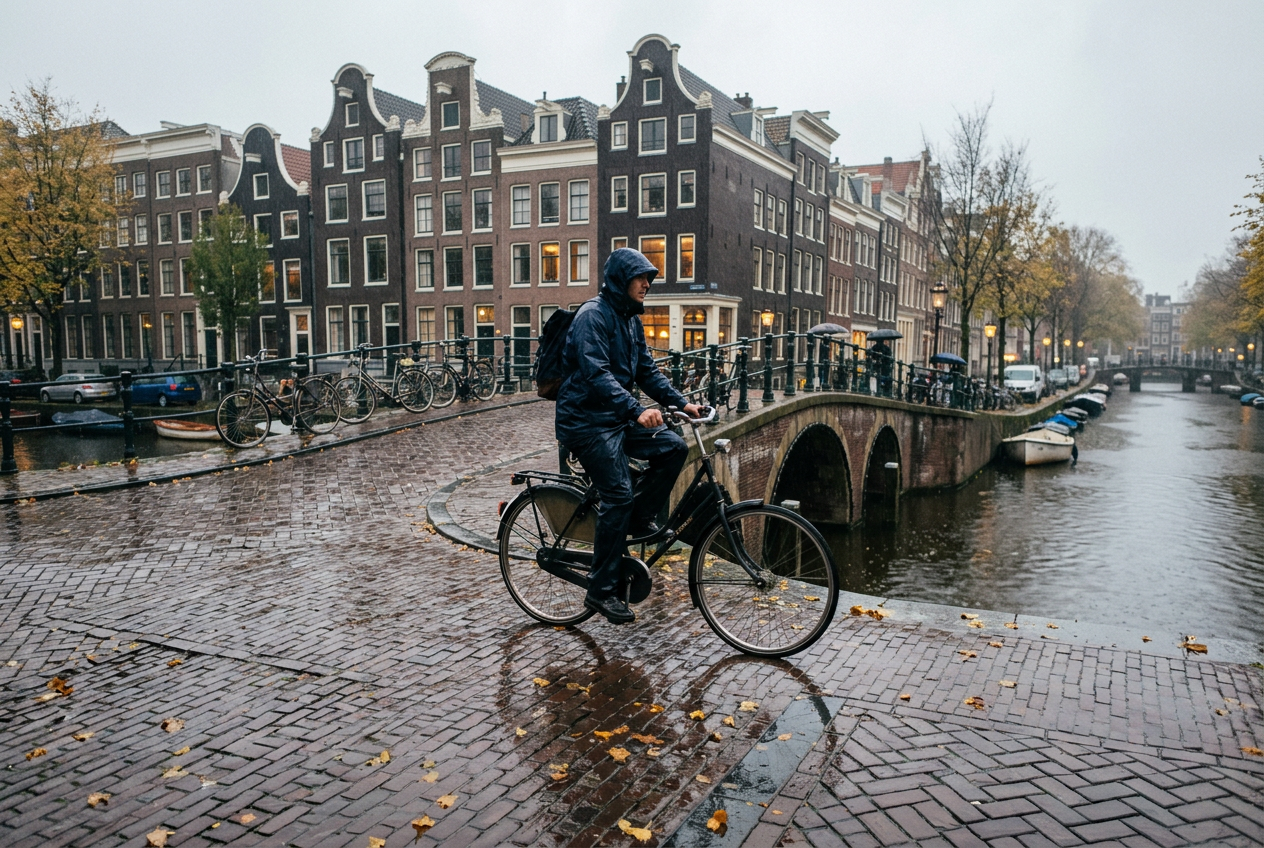
September is often the best month to visit the Netherlands that most visitors don’t consider — the summer crowds have thinned, the light is golden, and temperatures are still comfortable (15–20°C). October brings the classic Dutch atmospheric: mist over the canals, turning leaves, cozy café culture. November turns properly cold (5–10°C) and the city quietens significantly.
Clothing
- Layering is essential: 3–4 layers system: base shirt + mid-layer fleece/jumper + warm outer jacket. September: lighter mid-layer. November: proper insulating mid-layer
- Warm jacket: By October, a medium-weight puffer or wool coat. By November, a proper winter coat (down jacket rated to 0°C). The wind chill in November makes a thin jacket insufficient
- Waterproof rain layer: Same as spring — non-negotiable
- Scarves and gloves: Light scarf for September; proper wool scarf and gloves by November
- Wool socks: Essential from October onwards
- Warm trousers: Heavier fabrics than summer. Corduroy, chinos, or lined trousers for November
Footwear
- Waterproof ankle boots: Autumn is the ideal season for waterproof boots with ankle support — the combination of leaf-covered cobblestones and regular rain makes regular trainers slippery and wet
- Alternative: Waterproof walking shoes if you prefer lower profile
Winter Packing: December to February (Christmas Markets)
December in Amsterdam and Rotterdam is atmospheric: Christmas markets on the squares, ice skating rinks, lights on the canals, and museums far less crowded. It’s also cold, wet, and can be windy. Pack warm and pack layers.
Clothing
- Thermal base layers: Thermal long-sleeved top and thermal leggings — wear under your regular clothes. This is the single most useful addition to a winter packing list
- Heavy insulating mid-layer: Thick fleece or chunky knit sweater
- Winter coat: Down coat rated to -5°C or below. Must also be wind-resistant. A puffer coat that isn’t wind-resistant loses warmth fast in Dutch conditions
- Waterproof outer layer: Consider a 3-in-1 jacket (waterproof shell + detachable insulating layer) instead of separate pieces — it’s versatile and reduces bag weight
- Warm trousers: Lined chinos, wool blend trousers, or fleece-lined leggings. Christmas market visits mean standing outside for hours — your legs need proper warmth
- Wool socks: Multiple pairs. Merino wool is worth the cost — it regulates temperature, wicks moisture, and doesn’t smell after a full day of walking
- Hat and gloves: Wool beanie and proper winter gloves (not thin ones). Consider touchscreen-compatible gloves so you can use your phone without removing them
- Neck warmer/scarf: Essential. A wide scarf that covers the lower face matters when cycling or walking in December wind
Footwear
- Waterproof insulated boots: The most important winter packing decision. Something rated to -5°C with a non-slip sole and waterproofing. Boots that look good but aren’t insulated are inadequate. Amsterdam’s cobblestones, puddles, and canal-side paths in December require real winter footwear
- Hotel slippers/indoor shoes: Most Dutch hotels and many homes have you remove outdoor shoes. Pack thin indoor socks or slippers if staying in budget or Airbnb accommodation
Christmas Market Specific
- Hand warmers (disposable or reusable) — cheap, light, and excellent at Christmas markets
- Compact umbrella with wind resistance — regular umbrellas invert immediately in Dutch wind. Invest in a wind-resistant model
- Thermal flask — coffee from an Amsterdam Christmas market stall is €3–4; fill a flask at your hotel with tea and your morning cost drops to €0
Year-Round Essentials
These items belong in your bag regardless of season:
Documents and Tech
- Passport + printed copy stored separately
- Travel insurance documents (printed + digital)
- Schengen visa (in passport sticker form after approval)
- OV-chipkaart (buy on arrival; keep in a separate pocket from your phone to avoid contactless conflict at transit readers)
- Universal travel adapter (Netherlands uses Type C/F plugs — Europlug compatible)
- Power bank (10,000mAh minimum — a full day of navigation, photos, and Google Maps drains a smartphone completely)
- Offline Google Maps download for Netherlands (essential for areas with poor signal — Giethoorn’s data connectivity is unreliable)
Health and Comfort
- Personal medications (carry in hand luggage, with original packaging and prescription if controlled)
- Basic first aid: plasters for blisters (guaranteed at some point on cobblestone streets), ibuprofen, antihistamines
- Sunscreen (SPF 50 for summer)
- Lip balm (wind chill dries lips fast)
- Reusable water bottle (Dutch tap water is excellent quality and safe to drink — you don’t need to buy water)
Bag Essentials
- Lightweight daypack (20–25L) for daily outings — better than a small handbag for carrying the layer you just removed, a water bottle, camera, and umbrella
- Packing cubes (makes moving between cities with a carry-on significantly easier)
- Small padlock for luggage
- Foldable tote bag (for markets, groceries, shopping — plastic bags are charged in the Netherlands)
Cycling-Specific Gear
If you plan to rent bikes (recommended for at least one day, especially in Amsterdam and around Keukenhof):
- Helmet: Rental shops usually have helmets available but they’re not always the best quality. If you cycle regularly at home, consider a compact foldable helmet that packs flat. Dutch law doesn’t require helmets for adults, but we’d recommend one for first-time cyclists in an unfamiliar city
- Bright or reflective jacket: Amsterdam’s cycle paths are shared with experienced local commuters moving at speed. High-visibility helps in dawn/dusk conditions
- Cycling gloves: For longer rides or cold weather — the handlebar grip on Dutch city bikes is firm and unpadded
- No loose clothing near bike chain: Loose trouser legs caught in a chain are a common issue. Bring trouser clips or tuck your trousers into socks
- Windproof top: Cycling even at 15km/h on a flat path creates significant wind chill. A windproof layer for cycling is different from a waterproof one — lighter and less bulky
What to Keep in Your Day Bag (Daily Essentials)
This changes by season, but a typical Netherlands day out should include:
- Rain jacket (year-round)
- Sunscreen (summer)
- Water bottle (refill at any tap)
- OV-chipkaart (top-up before each day)
- Offline maps downloaded
- Phone charger cable + power bank
- A snack (restaurant prices in Amsterdam tourist areas are high; having trail mix or a chocolate bar reduces the urge to pay €5 for a coffee just for a table to sit at)
- Compact umbrella (spring, autumn, winter)
What to Leave at Home
- Heavy formal wear: Amsterdam and Rotterdam are casual cities. Even upscale restaurants don’t require jacket-and-tie dress. Smart casual suffices everywhere.
- Too many pairs of shoes: Two pairs maximum (walking shoes + evening shoes). Dutch streets are not the place for heels.
- Cotton-heavy clothing in spring/autumn: Cotton absorbs moisture and stays wet. Synthetics and merino wool are smarter choices for variable weather.
- A full-sized umbrella: Dutch wind defeats large umbrellas. A compact wind-resistant model or a rain poncho is better.
- Electrical items without an adapter check: India uses Type D/M plugs; Netherlands uses Type C/F. Bring a European plug adapter.
FAQs: Packing for the Netherlands
Does it rain a lot in the Netherlands?
Amsterdam receives about 850mm of rain per year spread fairly evenly across all months — roughly 70 rainy days per year (days with measurable precipitation, not necessarily full-day rain). Most rain events are short showers rather than sustained downpours. A good rain jacket handles most of it without ruining your day.
What should I wear for a canal boat tour?
Canal boats are open-air. Bring a light jacket even in summer — the wind on the water makes it feel 5–8°C colder than on land. In spring and autumn, treat a canal tour as an outdoor winter activity and layer accordingly.
Can I carry medicines from India?
Yes. Carry medicines in original packaging with the prescription if they’re controlled or prescription medicines. Schengen customs rules apply: check if any of your medicines are controlled substances in the Netherlands (some common Indian medicines contain codeine or other restricted substances). The Dutch customs website (douane.nl) has a medicine checker.
What plug adapter do I need for the Netherlands?
Type C/F (Europlug/Schuko). Your Indian Type D plugs won’t fit directly. Buy a European universal adapter in India before traveling; they’re cheaper and more reliable than airport purchases.
Is it cold in the Netherlands in April?
April averages 10–14°C in the daytime, dropping to 5–8°C at night. During tulip season, you can experience warm sunny days (18°C) and cold wet days (8°C) in the same week. Pack for cold as your baseline and you’ll be comfortable on the warm days too — the reverse doesn’t work.
Should I bring formal clothes for Amsterdam restaurants?
Dutch dining culture is relaxed. Even the city’s finer restaurants are smart-casual. Leave the formal suit and sarees for destinations where they’re more welcome — Amsterdam in a crisp shirt and clean trousers is entirely sufficient for the best restaurants in the city.
Plan Your Netherlands Trip with Get Tripped
Packing well is half the battle for a comfortable Netherlands trip — the other half is an itinerary that makes the most of your days. Whether you’re planning spring tulip season, a summer canal-and-cycling trip, or December Christmas markets, Get Tripped’s Netherlands specialists can build a custom package from India that handles flights, hotels, day trip logistics, and local guides. Explore Netherlands tour packages or message us on WhatsApp at +918080907607.