Netherlands Vegetarian and Vegan Food Guide for Indian Travelers
The Netherlands is one of Europe’s friendlier countries for plant-based eating — particularly in Amsterdam, which has a vegan restaurant scene that would hold its own against any European capital. This guide covers what’s actually available for vegetarians and vegans across the six main stops on a Netherlands trip: Amsterdam, Rotterdam, Giethoorn, Zaanse Schans, Utrecht, and Keukenhof area, with specific restaurant recommendations wherever the research supports them. No invented names, no guesses dressed as recommendations.
Table of Contents
- Dutch Vegetarian Culture: What to Expect
- Amsterdam: Excellent Plant-Based Scene
- Rotterdam: Good Options in a Food-Forward City
- Giethoorn: Limited but Manageable
- Zaanse Schans: Cheese and Market Finds
- Utrecht: Student-City Diversity
- Keukenhof Area: Practical Strategy
- Supermarkets and Self-Catering
- Naturally Vegetarian Dutch Dishes
- Practical Tips
- FAQs
Dutch Vegetarian Culture: What to Expect
The Netherlands has a strong vegetarian tradition going back further than most European countries — the Dutch Vegetarian Society (Nederlandse Vegetariërs Bond) was founded in 1894, one of the oldest in the world. Today, roughly 5% of the Dutch population identifies as vegetarian and another 2–3% as vegan. That translates to real infrastructure: most Dutch supermarkets have extensive plant-based sections, vegetarian menus are standard at most mid-range restaurants, and specialty vegetarian and vegan restaurants exist beyond just Amsterdam.
For Indian travelers, the main differences from Indian vegetarianism to watch for: the Dutch concept of vegetarian may include eggs and dairy but not necessarily exclude fish (pescatarian is sometimes categorized as vegetarian in casual use). When ordering, say “without meat and without fish” (zonder vlees en zonder vis) if you’re strictly vegetarian. Many Indian vegetarians will also want to ask about eggs — Dutch baked goods frequently include eggs.
Amsterdam: One of Europe’s Best Cities for Plant-Based Eating
Amsterdam has a concentration of dedicated vegetarian and vegan restaurants that’s unusual for a city of its size. The list below draws on the iamsterdam.com vegan restaurant guide, updated August 2026.
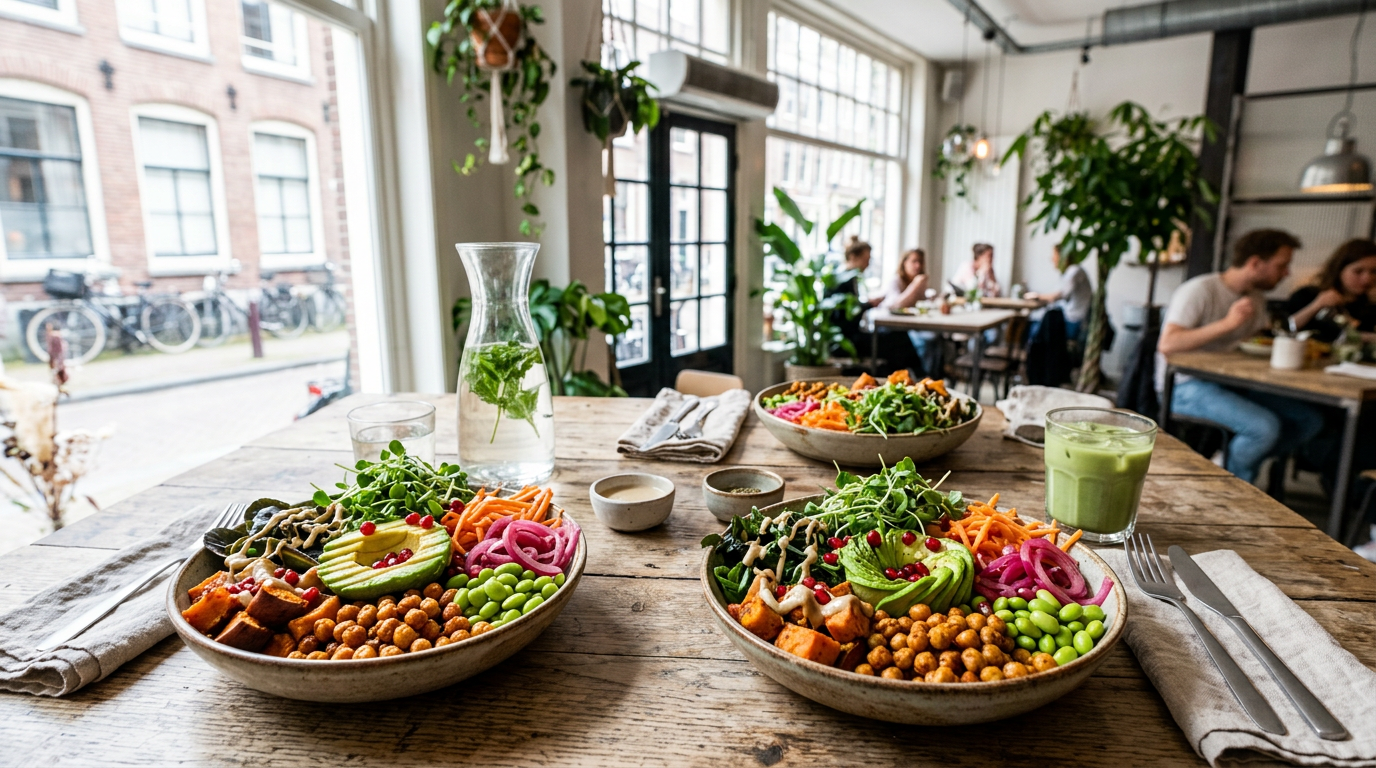
Dedicated Vegan/Vegetarian Restaurants in Amsterdam
Bonboon — Rozenstraat 12, Centrum. Plant-based fine dining with a menu that changes every eight weeks. This isn’t a salad-and-hummus operation; the cooking is technique-driven and the tasting menus take vegetable-forward cuisine seriously. Reservations essential. Website: bonboon.nl/en
Veganees — Wibautstraat 95, Oost. Twenty-five Asian street food dishes, all plant-based. The kitchen draws from Thai, Vietnamese, and Indonesian flavours — which Indian palates may find familiar. Good for a quick, affordable, flavour-packed meal.
Madre — Westerstraat 186, Centrum. Plant-based comfort food with cocktails. The menu reads more American-influenced (burgers, bowls, loaded fries) than European, which works. Located in the Jordaan neighbourhood, a good dinner option after exploring the Nine Streets.
SOIL — Bilderdijkstraat 141, Oud-West. Bowls, salads, and sandwiches in a neighbourhood café format. Casual, quick, and reliably good. Good for lunch.
Men Impossible — Hazenstraat 19H, De Jordaan. 100% plant-based ramen. The broth is made with miso and kombu rather than pork bone, and the toppings are adapted to work without meat. Ramen has become one of Amsterdam’s reliable categories and this one stands out for the plant-based approach.
TerraZen — Sint Jacobsstraat 19HS, Centrum. A Japanese-Jamaican vegan concept that sounds odd but works: plant-based sushi, bowls, and street food with a Caribbean influence. Near Central Station, convenient for early arrivals or transit days.
Yemaya’s Vegan Corner — Reigersbos 3A, Zuidoost. Affordable home-cooking in a non-tourist area of the city. The menu includes saoto soup and other Surinamese-influenced dishes — the overlap with Indian-origin ingredients makes this particularly accessible for Indian travelers. Worth the tram ride.
Vegetarian-Friendly Non-Veg Restaurants
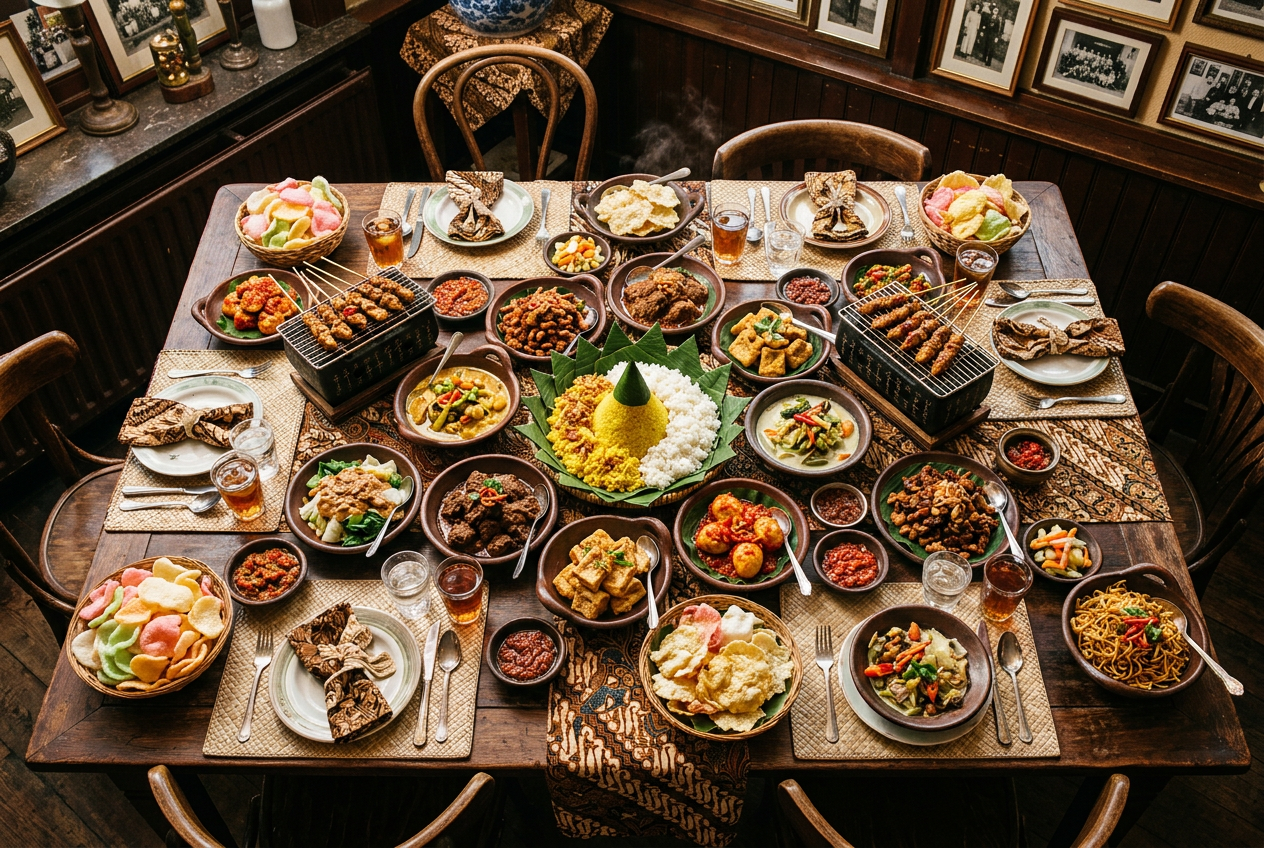
Most Amsterdam restaurants of any quality will have solid vegetarian options on the menu. The Dutch Indonesian restaurants (Blue Pepper on Nassaukade, Tempo Doeloe on Utrechtsestraat) offer vegetarian rijsttafel spreads on request — the vegetable dishes in a rijsttafel are often the highlight anyway.
Rotterdam: Growing Plant-Based Scene
Rotterdam’s food scene has become more diverse and experimental in the last decade. The city doesn’t have the same density of dedicated vegan restaurants as Amsterdam, but it has solid options.
Vegan Junk Food Bar — Meent 92, Centre. A chain that started in Amsterdam and has expanded to Rotterdam. 100% vegan takes on comfort food: burgers, loaded fries, chicken-style sandwiches. Not high-concept cooking, but reliable, filling, and affordable.
Markthal Rotterdam — Dominee Jan Scharpstraat 298. The indoor market hall has stalls with vegetarian and vegan options across different cuisines — falafel, hummus, vegetable sushi, Turkish dishes, fresh juices. It’s the best bet for a vegetarian lunch in central Rotterdam without committing to a sit-down restaurant. Navigate the stalls and mix and match.
Fenix Food Factory — Veerlaan 19D, Katendrecht. This converted warehouse food hall has rotating vendors; the selection changes but consistently includes at least one or two plant-based options. Worth checking what’s on when you visit (instagram.com/fenixfoodfactory for current vendors).
For Indian food in Rotterdam: the Kruiskade area in the city centre has several South Asian restaurants, some with purely vegetarian menus. The Surinamese community in Rotterdam also runs warungs (small eateries) with roti and curry dishes that are vegetarian-friendly.
Giethoorn: Expect Limited Options, Plan Ahead
Giethoorn is a village of under 3,000 people primarily set up for day visitors. The restaurants along the main canal route serve standard Dutch and international menus — most include vegetarian options (Dutch pancakes, salads, cheese dishes) but nothing specifically tailored to vegetarians or vegans.
The practical approach: eat a solid vegetarian lunch before arriving, then have a coffee or small snack in Giethoorn during your visit, and eat dinner back in Amsterdam, Rotterdam, or Utrecht depending on your route. If you do eat in Giethoorn, the sit-down cafés along the main route all serve Dutch pancakes and soup — both commonly vegetarian, though ask about the soup base.
Restaurant De Lindenhof (Beulakerweg 77) can accommodate vegetarians with advance notice — it’s a Michelin-listed restaurant and will work with dietary requirements if you call ahead. Expensive, but the quality justifies it if you want a memorable meal in the area.
Zaanse Schans: Cheese and Market Foods
The food at Zaanse Schans is primarily heritage and tourist-oriented. What works well for vegetarians:
Catharina Hoeve cheese farm — Free cheese tastings of Dutch Gouda at multiple ages. The cheese is vegetarian-friendly (traditional Gouda uses animal rennet, so strict vegetarians should check; the farm can confirm). Buy aged Gouda here rather than at a tourist market in Amsterdam — it’s better quality and more fairly priced.
The bakery museum sells traditional Dutch cookies and spiced breads (ontbijtkoek, speculaas, stroopwafels) — most are vegetarian but check for animal fats. The snack vendors along the main route offer Dutch pancakes, stroopwafels, and poffertjes — all vegetarian.
For a full vegetarian meal, the main restaurant at Zaanse Schans serves standard Dutch options including a Dutch pancake menu. The portions are large and the setting is canal-side. It’s not culinary theatre, but it works.
Utrecht: University City with Real Vegetarian Options
Utrecht’s student population and international university community have created a more diverse food scene than you might expect from a mid-sized Dutch city. There are several dedicated vegetarian options and a large number of vegetarian-friendly restaurants.
Blauw — Springweg 64. This is primarily known for its rijsttafel, and the vegetarian version — a full spread of 15–20 plant-based Indonesian-Dutch dishes — is one of the best in the Netherlands. Advance booking is essential. The vegetarian rijsttafel at Blauw is a genuinely exceptional meal and worth structuring your Utrecht visit around.
Café Orloff — Oudegracht 141. A canal-side café with an international menu and good vegetarian options. The location on the lower canal level (at the wharves) is excellent for a meal by the water.
Superfoods To Go — Choorstraat 10. A fast-casual option in the city centre with bowls, wraps, and salads built around plant-based ingredients. Good for a quick vegetarian lunch on a sightseeing day.
Keukenhof Area: Plan Your Eating Around the Garden
Keukenhof garden has cafés inside (the Oranje Nassau Café and others) with standard tourist menus — sandwiches, soups, salads. Vegetarian options are available but not particularly interesting, and prices are inflated. The queue at peak season can extend to the food service areas as well.
Better strategy: Eat before you arrive. The town of Lisse (a 10-minute bus ride from Keukenhof) has local bakeries and cafés with more reasonable prices and less tourist markup. If coming from Amsterdam Schiphol, the airport terminal has decent food options including vegetarian-friendly chains. Bring fruit, nuts, or a sandwich into the garden — there are picnic areas and outside food is permitted.
The surrounding area near the Bollenstreek (flower district) is farmland rather than a food destination. Don’t plan to eat well around Keukenhof — build that into the Amsterdam portions of your trip.
Supermarkets and Self-Catering for Vegetarians
Dutch supermarkets are outstanding for vegetarians and vegans. The main chains:
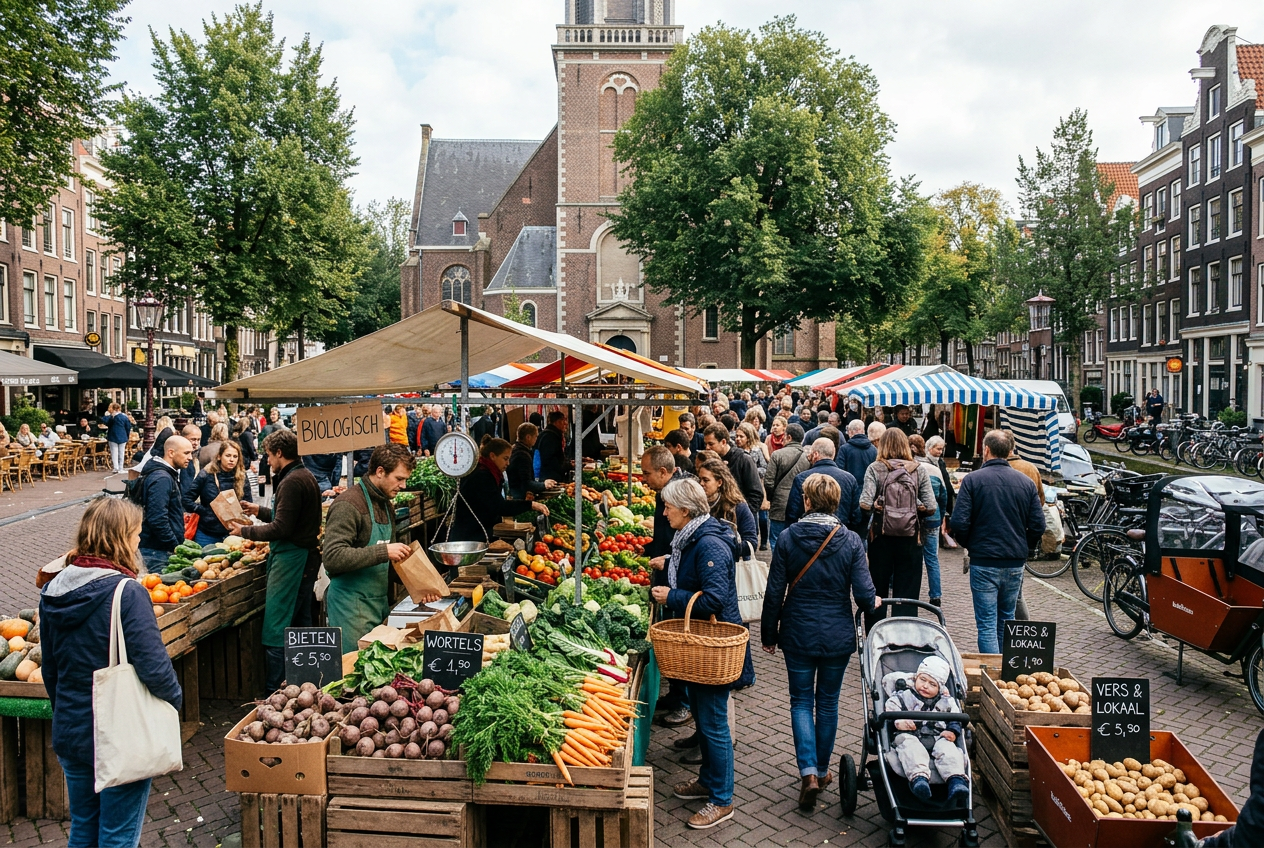
Albert Heijn (AH) — the largest Dutch supermarket chain, with stores at most major train stations including Amsterdam Centraal. The Vegan range (AH Vegan label) is extensive: plant-based cheeses, meat alternatives, dairy-free yogurt, oat milk, vegan baked goods. They also stock Indian-origin ingredients: lentils, chickpeas, coconut milk, various spice mixes.
Jumbo — similar range to Albert Heijn. Good for stocking up on breakfast items (oat milk, plant-based yogurt, fresh fruit, bread) if you’re in a hotel with a kitchenette or minibar.
Lidl and Aldi — lower prices, more limited but still usable vegan sections. Good for snacks, fresh produce, and staples.
The Albert Heijn at Schiphol Airport is open early and late; stock up here on arrival if you’re on an early flight and arriving before restaurants open.
Naturally Vegetarian Dutch Dishes to Order
Many Dutch dishes are naturally vegetarian or easily made so:
- Dutch pancakes (Pannenkoeken) — the base pancake is eggs, flour, milk, and butter. Most vegetarian. Order with cheese, mushroom, apple and cinnamon, or fruit toppings
- Poffertjes — small fluffy pancakes with butter and icing sugar. Vegetarian.
- Appeltaart — Dutch apple pie. Vegetarian and excellent.
- Stroopwafels — the caramel filling is sugar and butter. Vegetarian.
- Dutch cheese (Kaas) — Gouda, Edam, smoked varieties. Traditional rennet-set varieties may use animal rennet; ask if strict vegetarian. Many modern versions use microbial rennet.
- Erwtensoep (Snert) — traditional Dutch pea soup. Usually made with pork — not vegetarian in the traditional recipe. Ask before ordering.
- Stamppot — mashed potato with vegetables. The traditional version often includes rookworst (smoked sausage) — order it without, or ask if the base is vegetarian.
- Indonesian-Dutch vegetable dishes — gado-gado (peanut sauce salad), nasi goreng (fried rice) ordered vegetarian, vegetable tempeh. Widely available at Indonesian restaurants.
Practical Tips for Indian Vegetarians in the Netherlands
Communicate clearly: Dutch is the working language but English is very widely spoken — you’ll rarely encounter a language barrier. “Ik ben vegetarisch” (I am vegetarian) + “geen vlees, geen vis” (no meat, no fish) covers it in Dutch; English works equally well.
Eggs: Dutch vegetarian menus usually include eggs. If you’re egg-free, say “without eggs” (zonder eieren) explicitly.
Onion and garlic: Common in most Dutch and international cooking. If you avoid these, it’s worth mentioning specifically — many Indian vegetarians who don’t eat onion and garlic will find that a strict requirement is best managed by self-catering or at dedicated vegan restaurants where you can explain your requirements carefully.
Carrying snacks: Albert Heijn stores are everywhere and stocked with nuts, dried fruit, plant-based bars, fresh fruit, and bread. Easy to carry provisions if you’re heading to Giethoorn or Zaanse Schans for a day trip.
The rijsttafel option: For Indian palates, an Indonesian vegetarian rijsttafel spread often feels more like home than European vegetarian menus. The spice profiles overlap more than you’d expect, and the variety of a 15-dish spread gives you room to taste a lot. Worth doing in Amsterdam or Utrecht.
FAQs: Vegetarian and Vegan Eating in the Netherlands
Is the Netherlands vegetarian-friendly for Indian travelers?
Amsterdam is excellent — one of the best cities in Europe for plant-based eating. Utrecht and Rotterdam have solid options. Smaller stops like Giethoorn and Zaanse Schans are more limited but manageable for a day visit. Plan your main meals around the larger cities.
Can I find Indian-style vegetarian food in the Netherlands?
Yes, particularly in Amsterdam. Indian restaurants are present in the city centre. The Surinamese food tradition also features Indian-origin dishes (roti, dal, curry) that may feel familiar. Quality varies — the Surinamese options are often better than the Indian tourist restaurants near Leidseplein.
Are Dutch pancakes vegetarian?
Yes, the base pancake is vegetarian (eggs, flour, milk, butter). Order with vegetarian toppings: Dutch cheese, apple and cinnamon, mushroom, or sweet toppings. Very widely available across all Dutch cities and towns.
Is Gouda cheese vegetarian?
Traditional Gouda uses animal rennet. Many modern commercial versions use microbial rennet and are suitable for strict vegetarians. The labelling isn’t always clear — ask at the cheese counter, particularly at specialty shops where the staff will know. At the Catharina Hoeve farm in Zaanse Schans, the staff can confirm the rennet used.
Are there vegan restaurants outside Amsterdam?
Yes. Rotterdam has Vegan Junk Food Bar (Meent 92). Utrecht has vegetarian-friendly options including the vegetarian rijsttafel at Blauw (Springweg 64). Dedicated fully-vegan restaurants are concentrated in Amsterdam, but vegetarian options exist across the country at most mid-range restaurants.
What do I eat if I’m vegetarian in Giethoorn?
Dutch pancakes (pannenkoeken) are available at cafés along the main canal route — always a safe vegetarian option. Cheese-based dishes and salads also appear on most menus. For a more planned meal, Restaurant De Lindenhof accommodates vegetarians with advance notice. The practical approach is to eat well in Amsterdam or Utrecht before/after your Giethoorn visit and treat it as a snack-and-coffee stop rather than a meal destination.
Plan Your Netherlands Trip with Get Tripped
Vegetarian travel planning is about more than just finding food — it’s about knowing your options at each stop before you arrive. If you’d like a Netherlands itinerary built around your dietary requirements, with hotel selections that have good breakfast options for vegetarians and restaurant recommendations built into the day plan, Get Tripped can design it. Explore Netherlands tour packages or message us on WhatsApp at +918080907607.