Turn off Orchard Road onto Emerald Hill and the traffic noise drops almost immediately. One minute you’re walking past the glass front of a flagship mall with a queue for bubble tea spilling onto the pavement; the next you’re on a quiet, tree-lined lane of century-old Peranakan shophouses, their shutters painted in mismatched pastels, with barely another tourist in sight. Most visitors never make the turn. They do ION Orchard, maybe Takashimaya, and call it done.
That’s not wrong, exactly — Orchard Road’s malls are genuinely good malls. But treating Orchard Road as only a shopping strip misses the older, odder layer sitting just off the main road: conserved shophouse streets, a terrace of outdoor restaurants that’s been a fixture for decades, and small concept stores doing something more interesting than another designer flagship. Here’s what’s worth finding beyond the obvious stretch of Orchard Road.
Table of Contents
- Emerald Hill Road — Peranakan Shophouses a Minute Off the Main Drag
- Cuppage Terrace — Old-School Outdoor Dining
- Nearby: Dempsey Hill and Tanglin, If You Have More Time
- Small Concept Stores Instead of the Flagships
- Eating Well Without a Mall Food Court
- Practical Tips for Exploring
- Who This Suits
- FAQs
Emerald Hill Road — Peranakan Shophouses a Minute Off the Main Drag
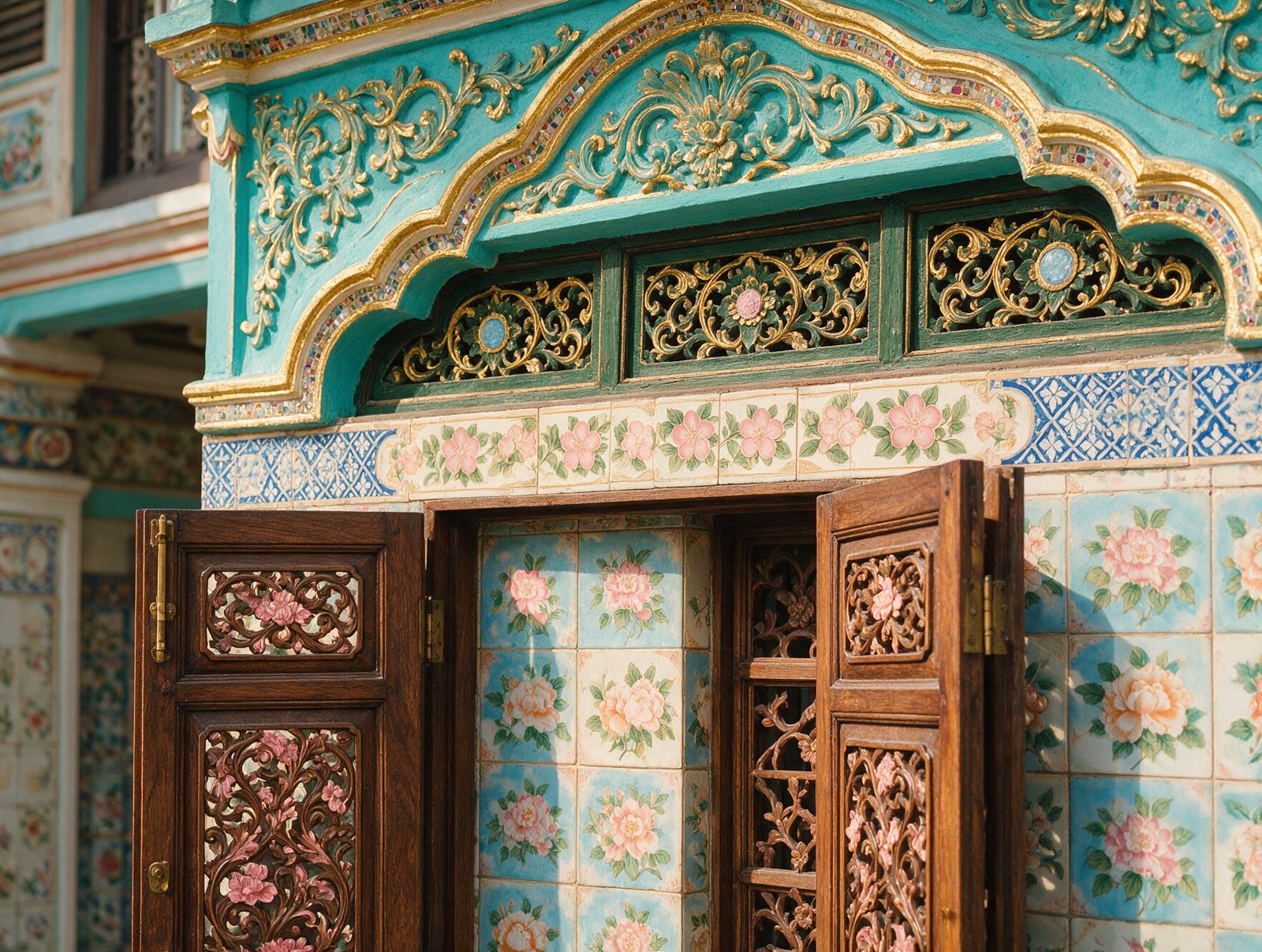
Emerald Hill Road runs just off Orchard Road, directly opposite Centrepoint, and it’s one of the best-preserved stretches of Peranakan architecture left in Singapore — a row of conserved terrace houses built mostly in the early 20th century for wealthy Straits Chinese families, with ornate carved timber shutters, colourful ceramic tile work, and decorative plasterwork that rewards slowing down to actually look at. It’s a conservation area, so the facades are protected even as the ground floors of several houses have become bars and small restaurants.
The honest caveat: by day it’s a quiet, almost residential street, good for photos and a slow walk. By night, a handful of the bars tucked into these old houses get genuinely lively, which is a slightly surreal contrast against the heritage architecture — worth knowing before you go, so you’re not expecting either a museum or a nightlife strip and getting the other.
A little background makes the street more interesting to walk, not less: the Peranakans, also called Straits Chinese, are descendants of early Chinese immigrants who settled in Singapore, Malacca, and Penang and intermarried with local Malay communities, producing a culture with its own language (Baba Malay), its own cuisine, and its own distinctive decorative style — the tile work and carved shutters you’re looking at on Emerald Hill are a direct expression of that hybrid identity, not generic “old Singapore” decoration. The street itself was developed mainly between the 1900s and 1930s as the Peranakan merchant class grew wealthy on the trade economy, and it survived the redevelopment that flattened similar streets elsewhere in the city mostly because it was gazetted for conservation in 1989.
Numbers 39 and 45 Emerald Hill are two of the most photographed facades on the street, with particularly elaborate pintu pagar — the low swinging saloon-style doors in front of the main entrance that let air circulate while keeping the house private from the street. You don’t need a guide to appreciate these details, but it helps to know what you’re looking at rather than just snapping a photo and moving on.
Nearby: Dempsey Hill and Tanglin, If You Have More Time
If Orchard Road’s retail feels too mall-heavy and Emerald Hill has you wanting more of the same slower pace, Dempsey Hill is a short taxi or ride-share away and worth the detour. It’s a former British military barracks converted into a cluster of restaurants, antique dealers, and design showrooms set among rain trees, with a noticeably different, more open-air feel than anything on Orchard Road itself. It’s not walkable from Orchard — budget 10 to 15 minutes by car — but it pairs naturally with an Emerald Hill morning if you’re building a slower, less mall-centric day around this part of the city.
Cuppage Terrace — Old-School Outdoor Dining
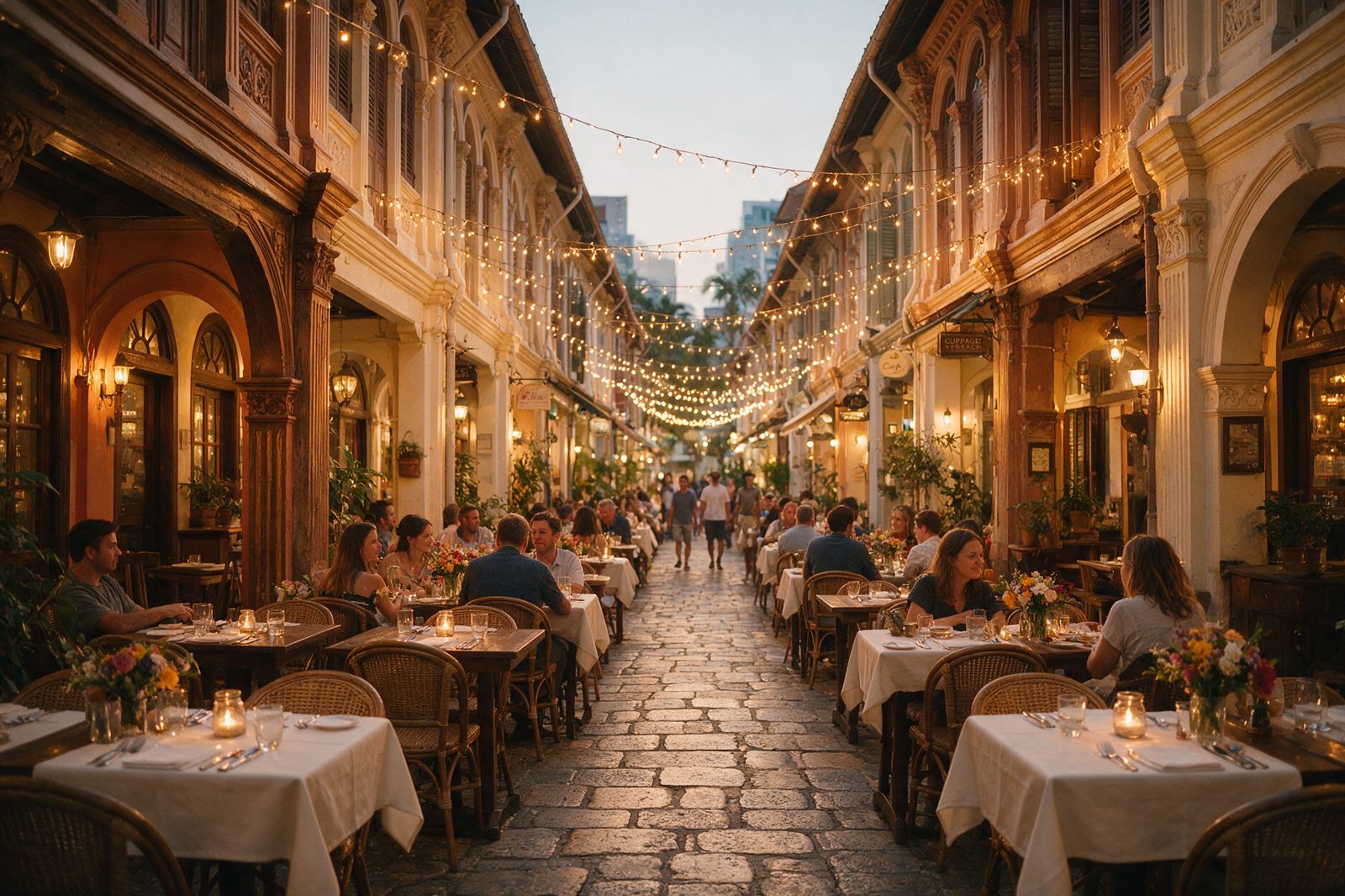
A short walk from Emerald Hill, Cuppage Terrace is a row of al fresco restaurants and bars set along a quiet lane behind the old Cuppage Market building, strung with lights and shaded by trees. It’s been a fixture of this part of Orchard for a long time, and while it’s not undiscovered exactly, it’s consistently overlooked by visitors who don’t realise anything exists behind the main road’s mall frontage. It’s a good option for an evening that isn’t a food court but also isn’t a formal, reservation-only restaurant — casual outdoor tables, a mix of Western and Asian menus, and a pace that invites sitting for a while rather than eating and moving on.
Small Concept Stores Instead of the Flagships
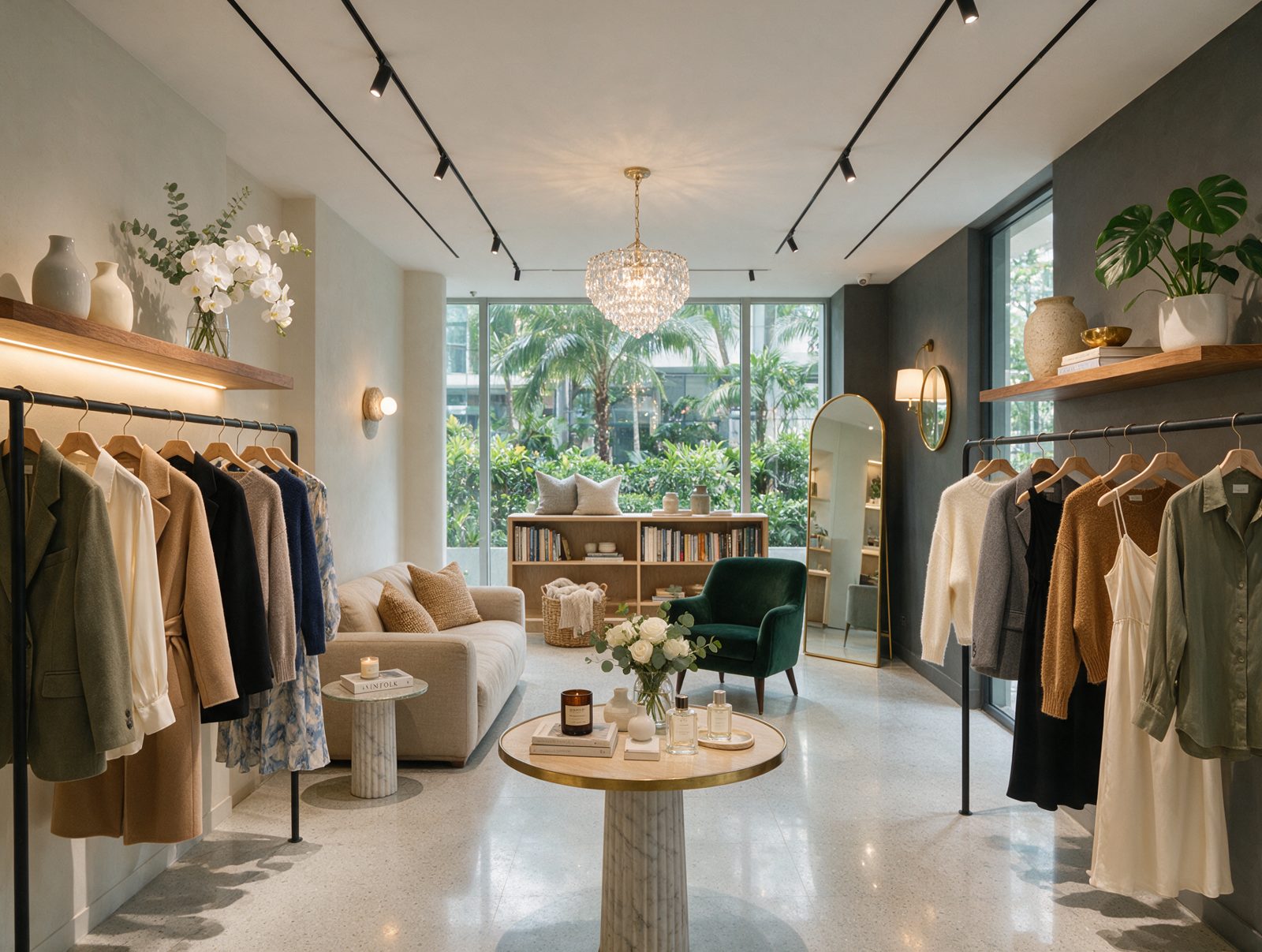
ION Orchard, Paragon, and Takashimaya cover the big international names well, and there’s no reason to skip them if that’s what you’re after. But the side streets and smaller buildings around Orchard and Somerset also hold independent concept stores — curated multi-label shops mixing local Singaporean design with imported pieces, small-batch homeware, and a slower, more editorial style of retail than a department store floor. These rotate more than the malls do, so part of the appeal is simply not knowing exactly what you’ll find; it’s a better fit for travellers looking for something to bring home that isn’t available in every other Southeast Asian capital.
Eating Well Without a Mall Food Court
Orchard Road’s malls all have reliable food courts, and there’s nothing wrong with them for a quick, cheap meal between shopping stops. But if you want a proper sit-down meal that reflects Singapore’s food culture rather than a generic mall basement, Cuppage Terrace is your first stop for something casual and outdoors. For an actual sit-down Peranakan (Nyonya) meal — a Straits Chinese-Malay fusion cuisine that’s genuinely distinct from both Chinese and Malay food elsewhere in the city — Violet Oon Singapore at ION Orchard and Bonding Kitchen at Orchardgateway on Orchard Road itself are both legitimate, well-regarded options without needing to leave the immediate area. Violet Oon in particular is one of the better-known names in Singaporean Peranakan cooking and a reasonable introduction if you’ve never had the cuisine before; expect dishes like ayam buah keluak, laksa, and kueh pie tee.
A mistake worth avoiding: don’t assume anything labelled “Asian fusion” in a mall food court is Peranakan food. It’s a specific, technique-heavy cuisine with real history behind it, and it’s worth seeking out properly rather than settling for an approximation because it was the closest counter.
Practical Tips for Exploring
Somerset MRT station is the best stop for this whole area — it puts you within a few minutes’ walk of Emerald Hill, Cuppage Terrace, and the Centrepoint/313@Somerset cluster of malls. Orchard MRT, one stop away, is better if ION Orchard and the malls further up the road are your priority. Wear shoes you can comfortably walk in for a couple of hours; Orchard Road is long, and the interesting side streets are easy to miss if you’re moving too fast between mall entrances with your head down.
A genuine mistake to avoid: don’t try to “do” Emerald Hill at midday in direct sun expecting a lively scene — it’s at its best either in soft morning light for photos, when the street is nearly empty, or in the early evening once the bars start opening and the temperature drops. Midday, it’s mostly quiet residences and closed shutters.
Who This Suits
For couples, an evening that starts with a slow walk down Emerald Hill and ends at a table at Cuppage Terrace is a nice change of pace from a mall-heavy day. For families, the Emerald Hill walk is short, flat, and interesting enough for older kids without demanding much; save the bars for after they’re settled for the evening. For shoppers specifically looking for something distinct rather than duty-free electronics or international flagship stores, the concept stores around Orchard and Somerset are worth building in extra time for.
Frequently Asked Questions
Is Emerald Hill Road free to visit?
Yes, it’s a public street — you can walk its length at any time, though the private residences aren’t open to the public and should be respected as homes, not photo backdrops to walk into.
What’s the best time of day to visit Emerald Hill?
Morning for photography and a quiet walk; early evening if you want to see the bars starting to open without the later, louder crowd.
Is Cuppage Terrace only open at night?
Most of the outdoor restaurants here operate through lunch and dinner, though the atmosphere is noticeably better once the lights come on in the evening.
How far is Emerald Hill from the main Orchard Road malls?
It’s directly across from Centrepoint mall, so it’s a two to three minute walk from the main Orchard Road strip, not a separate trip.
Which MRT station is best for this part of Orchard Road?
Somerset MRT station is closest to Emerald Hill and Cuppage Terrace. Orchard MRT is better positioned for ION Orchard, Paragon, and Takashimaya.
Is Peranakan food easy to find elsewhere in Singapore?
It’s available in pockets across the city, including stronger concentrations in Joo Chiat and Katong, but Violet Oon at ION Orchard and Bonding Kitchen at Orchardgateway mean you don’t need to leave the Orchard Road area to try it well.
Is Dempsey Hill walkable from Orchard Road?
No, it’s a short drive or ride-share of around 10 to 15 minutes, not a walking distance destination, so budget it as a separate stop rather than an extension of an Orchard Road walk.
What does “Peranakan” or “Straits Chinese” actually mean?
It refers to descendants of early Chinese immigrants to the Malay Archipelago who intermarried with local Malay communities, producing a distinct hybrid culture with its own language, cuisine, and decorative style — visible in the architecture along Emerald Hill.
The Orchard Road Most Visitors Skip
Orchard Road rewards a second look. The malls are the headline, but the quieter streets running off them hold a different, older Singapore — one with its own architecture, its own food, and its own pace. Give yourself an extra hour beyond the shopping list and you’ll see a side of this part of the city most itineraries leave out entirely.
For the rest of what to do in Singapore, see our Singapore destination guide and 7 nights, 8 days Singapore itinerary. New to planning the trip itself? Start with our Singapore visa guide for Indian travelers and Singapore public transit guide.
Get Tripped builds custom Singapore itineraries that go beyond the standard shopping-and-skyline circuit — get in touch and we’ll help you find the corners of the city most visitors miss.