We watched a couple at the Jungfraujoch ticket counter get quoted a wait time that made them visibly deflate — nearly two hours just to board the train up, on a day when the summit was socked in cloud anyway. Twenty minutes away by train, we sat alone on a bench above Lake Brienz with a coffee and a view most of that queue would never see. Switzerland’s famous sights are famous for a reason. But the country’s real advantage — a rail network that reaches almost everywhere, reliably, without a rental car — means the alternative to the queue is rarely more than an hour away.
This isn’t an anti-Switzerland piece. It’s the version for the second or third-time visitor, or the first-timer willing to trade one crowded box on the checklist for something quieter and, more often than not, better. Five places, plus the logistics of actually getting to them from India.
Table of Contents
- Before You Go: Visa, Flights, and Timing From India
- Appenzell and Gonten — Switzerland Without the Alps Crowd
- The Lavaux Vineyard Terraces — A UNESCO Site Almost Nobody Queues For
- Rosenlaui Valley — The Gorge Between Meiringen and Grindelwald
- Val Bavona and Vallemaggia — Switzerland’s Italian-Speaking Secret
- Stein am Rhein — A Medieval Town Reached by Boat
- Getting Around Without a Rental Car
- A Mistake to Avoid and a Fun Fact
- FAQs
Before You Go: Visa, Flights, and Timing From India
Switzerland requires a Schengen visa for Indian passport holders, applied for through VFS Global Switzerland centres. Budget for the visa fee of roughly EUR 90 plus VFS service charges — around ₹9,000–10,500 total — and apply at least three to four weeks ahead; standard processing runs about 15 working days, but summer months can stretch to four to eight weeks given demand, so don’t leave this for the last minute regardless of when you’re travelling. You’ll need a passport valid well beyond your trip with blank pages, confirmed flight and accommodation bookings, travel insurance with a minimum EUR 30,000 medical coverage, and financial documentation showing you can fund the trip.
Air India and SWISS both fly nonstop from Delhi and Mumbai to Zurich, in the 8-9 hour range — the more comfortable option if your dates align, since one-stop routings through Dubai, Doha, Istanbul, or Frankfurt push total travel time to 12-16 hours. Round-trip economy fares typically range from roughly ₹65,000 to ₹1,50,000 depending on season, with April-May and September-October offering better value than the June-August peak or the Christmas period. Those shoulder months are also, not coincidentally, the best time to see everything in this piece — walking trails are open, lake water is still swimmable into early autumn, and hotel rates ease off from summer highs.
Appenzell and Gonten — Switzerland Without the Alps Crowd
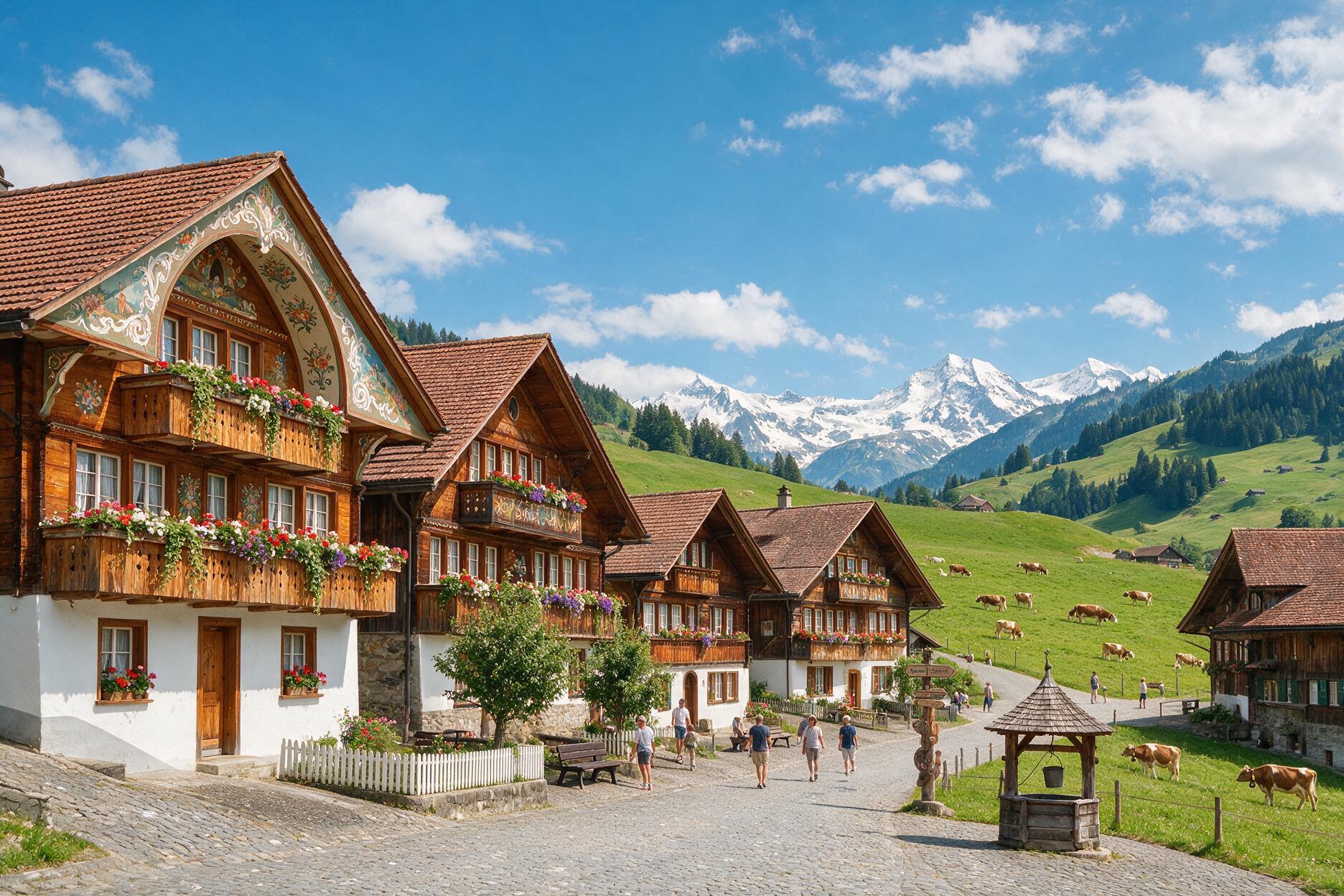
Appenzell, in Switzerland’s northeast, is the kind of region that barely registers on a first-timer’s itinerary and probably should. It’s traditional rural Switzerland — painted farmhouses, cheese dairies you can actually visit, hiking trails that see a fraction of the Interlaken traffic. The village of Gonten, specifically, has built a genuinely good family offering: a barefoot sensory trail through meadow and forest terrain, a toboggan run and zip-line park on the Kronberg, and hiking routes graded gently enough for a family with young kids or older relatives who’d struggle on a steeper Bernese Oberland trail. It’s reachable by train from Zurich in under two hours, with a scenic narrow-gauge stretch in the final approach that’s a small trip highlight on its own.
The Lavaux Vineyard Terraces — A UNESCO Site Almost Nobody Queues For
Between Lausanne and Montreux, the Lavaux terraces climb the slopes above Lake Geneva in tightly stacked rows of vines that have been farmed, in some sections, since the 11th century — a UNESCO World Heritage site since 2007, and one of the least-crowded UNESCO listings we’ve sent travellers to anywhere in Europe. Walk any stretch of the Lavaux wine trail on a clear afternoon and the view stacks Lake Geneva, the French Alps across the water, and terraced vineyard in one frame, with maybe a handful of other walkers in sight. Stop in one of the small villages along the route — Rivaz, Saint-Saphorin, Épesses — for a tasting; this is Switzerland’s Chasselas grape country, and the wine genuinely doesn’t travel far outside the region, which is exactly why it’s worth drinking here rather than looking for it back home.
Rosenlaui Valley — The Gorge Between Meiringen and Grindelwald
Tucked between two towns everyone’s heard of, Rosenlaui gets skipped by almost everyone rushing between Meiringen and Grindelwald on the way to bigger-name Bernese Oberland sights. That’s the appeal. A dramatic glacial gorge, reachable partly by postal bus, opens onto quiet alpine meadow trails with none of the Grindelwald foot traffic. It’s an easy half-day add-on if you’re already routing through the region, and one of the better “why did nobody tell us about this” moments we hear back from travellers who make the detour.
Val Bavona and Vallemaggia — Switzerland’s Italian-Speaking Secret
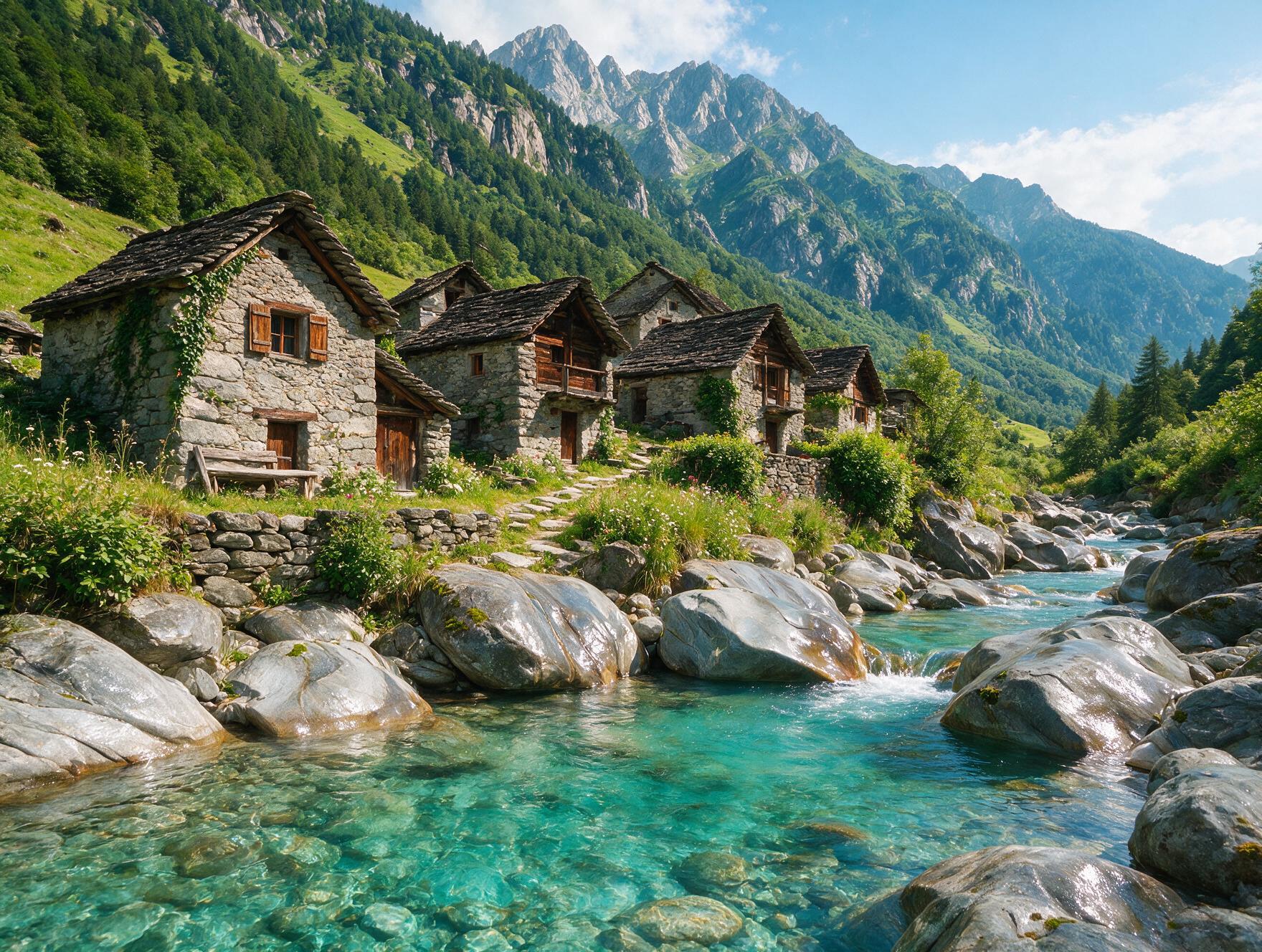
Ticino, Switzerland’s Italian-speaking southern canton, already feels like a different country — palm trees around Lake Maggiore, espresso culture, a slower pace. Push further into Val Bavona and Vallemaggia and you get stone-built hamlets that look barely touched since the 19th century, alongside a crystal-clear river with natural swimming pools that locals treat as their summer beach. It’s a genuinely different register of Swiss scenery — warmer light, granite rather than limestone, riverside rather than glacial — and worth two or three days on its own if your itinerary has room, based out of Ascona or Locarno on Lake Maggiore. The stone hamlets scattered through the valley were built by generations of farming families who moved livestock between the valley floor and higher summer pastures with the seasons — a rhythm of life still visible in the terracing and the scattered stone barns you’ll pass on any walk here, even though most are no longer in active use. A handful have been carefully restored as small guesthouses, which is about as close as modern travel gets to actually staying inside that older, slower version of Switzerland rather than just photographing it.
Stein am Rhein — A Medieval Town Reached by Boat
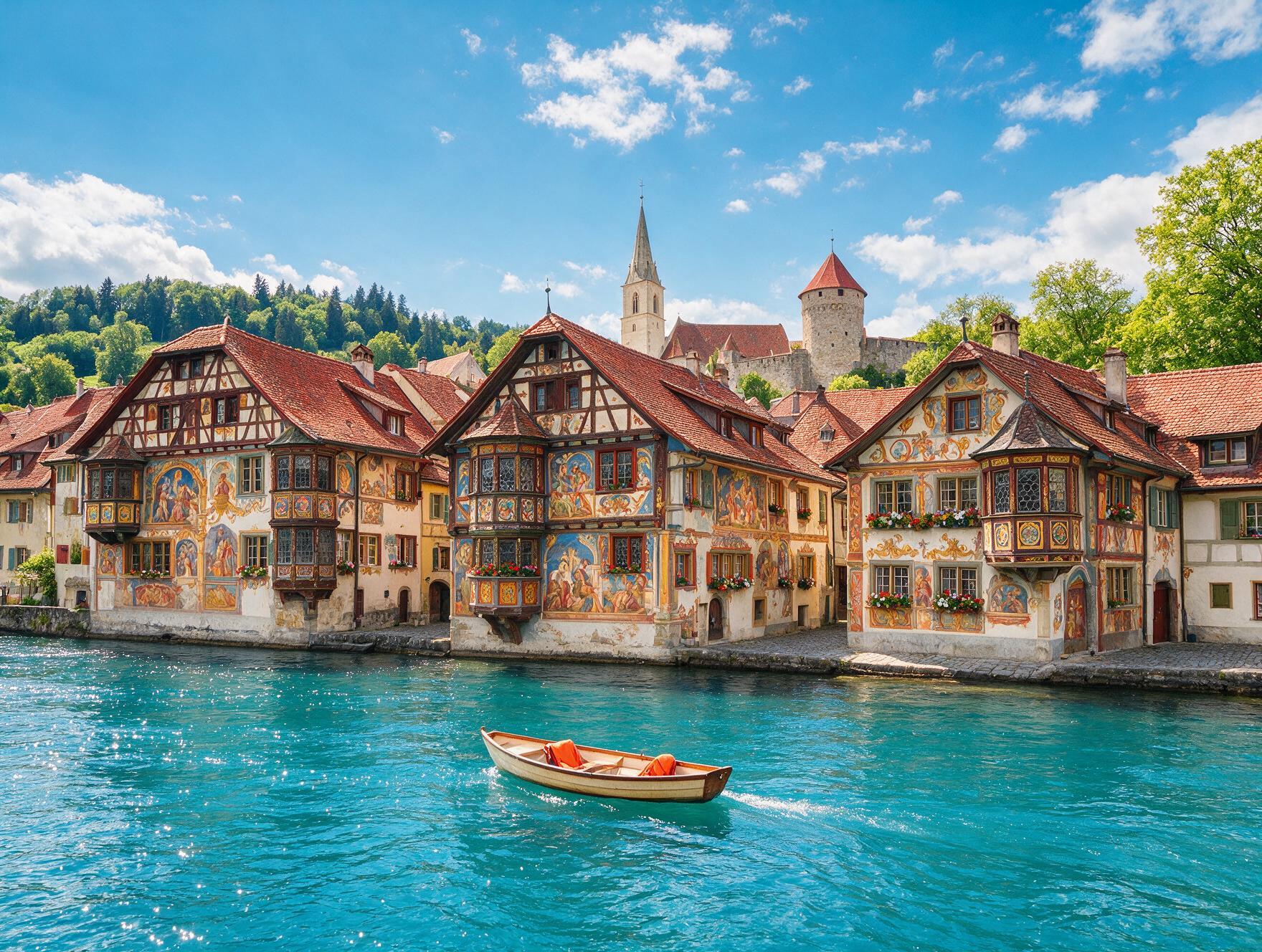
Near Lake Constance, close to the German border, Stein am Rhein’s old town is a genuine surprise the first time you see it — building facades covered edge to edge in centuries-old frescoes, oriel windows, and painted signage, all still standing around a compact, walkable medieval core. The nicest way in is by boat along the Rhine rather than by train or car; the approach by water, with the town’s towers coming into view gradually, is worth the slightly longer journey. Combine it with a stop at Kartause Ittingen, a former monastery turned hotel and working vineyard a short drive away, for lunch or an overnight.
Food, Cheese, and a Note on Payments
Each of these regions has its own food identity worth building a meal around. Appenzell is cheese country — Appenzeller cheese, made under strict regional rules, pairs with the local Biberli spiced biscuits at almost any village café. Lavaux and the Chasselas wine trail are best paired with perch fillets from Lake Geneva, a genuine local specialty at lakeside restaurants in Saint-Saphorin and Rivaz. Ticino leans Italian — expect polenta, risotto, and considerably better coffee than the Swiss-German regions, alongside grotti, the rustic granite-walled taverns built into the hillside that serve regional cold cuts and local wine at long communal tables. Cards are accepted almost everywhere in Switzerland, including small cafés in these quieter regions, though it’s worth carrying some Swiss francs in cash for the smallest village stalls and self-service honesty boxes for farm produce, which are common in Appenzell and genuinely charming to use.
For luxury travellers, both Lavaux and Ticino offer a different register of high-end stay than the ski-chalet luxury most people associate with Switzerland — think a converted monastery vineyard property or a lakeside Ticino villa rather than an alpine lodge. For couples, Lavaux’s vineyard trail at golden hour is arguably a stronger romantic setting than anything in the Interlaken triangle, with none of the crowd. Solo travellers will find all five destinations easy and safe to navigate alone, with Switzerland’s transport precision removing most of the usual solo-travel friction around timing and connections.
Getting Around Without a Rental Car
Every place in this piece connects by Switzerland’s train, bus, and boat network — the country’s public transport is genuinely one of its underrated luxuries, precise enough that you can build a multi-stop day around printed timetables without much margin for error. A Swiss Travel Pass is worth pricing against your specific route; for a trip touching four or five of these regions, it usually pencils out cheaper than individual tickets, and it removes the friction of buying a fresh ticket at every stop.
A Mistake to Avoid and a Fun Fact
The mistake: trying to fit two or three of these into one rushed day because “it’s Switzerland, everything’s close.” Distances on a map are deceptive once you factor in mountain train schedules and connection windows — pick two, maybe three, of these five and give each a proper half-day rather than racing through all of them and remembering none of them clearly. The fun fact, for anyone who doubts the Lavaux terraces are worth a special trip: some sections of these vineyard walls were built and are still maintained using drystone techniques essentially unchanged since medieval times, with individual plots small enough that some vineyard parcels have been passed down and worked by the same families for multiple generations.
Frequently Asked Questions
Is it worth skipping Jungfraujoch entirely for these alternatives?
Not necessarily — Jungfraujoch is a genuinely spectacular high-altitude experience and worth doing once. The suggestion here is to pair it with at least one or two quieter destinations rather than spending your entire trip in the Interlaken-Jungfrau-Grindelwald triangle, where every sight comes with a queue.
How many days do I need to cover a few of these hidden gems?
Comfortably, budget 7-9 days for a Switzerland trip that includes 2-3 well-known sights and 2-3 of the places above, moving at a relaxed pace with train travel factored in rather than trying to compress everything into 4-5 days.
Do I need to speak French, German, or Italian to get around these regions?
No — English is widely understood in tourist-facing businesses across all of Switzerland’s language regions, though a few polite words in the local language (French in Lavaux, Italian in Ticino, German-Swiss dialect in Appenzell) are always appreciated.
Is Switzerland expensive compared to other European destinations?
Yes, meaningfully so — Switzerland is one of Europe’s costlier destinations across food, accommodation, and transport. The upside is consistency: quality is reliably high, and the Swiss Travel Pass and off-peak shoulder-season timing both help manage cost without compromising the experience.
What’s the best base for exploring Lavaux and Appenzell in the same trip?
They’re on opposite sides of the country, so treat them as separate legs rather than day trips from one base — Lausanne or Montreux for Lavaux, and Zurich or St. Gallen for Appenzell, connected by a scenic train journey of roughly 2.5-3 hours across the country’s midsection.
Are these destinations suitable for families with young children?
Very much so, particularly Gonten in Appenzell, which is specifically built around family activities, and the natural swimming spots in Vallemaggia, which kids tend to love. Rosenlaui’s gorge trail and Stein am Rhein’s flat old town are both manageable with a stroller or younger walkers.
Conclusion
Switzerland’s headline sights earn their reputation — but the country’s real luxury is a rail network precise enough to make its quieter corners just as reachable. Trade one queue for a train ticket, and you’ll come home with the photo everyone else has and at least one that nobody else does.
Plan Your Switzerland Trip With Get Tripped
Get Tripped’s Switzerland itineraries are built to balance the icons with exactly this kind of detour — Lavaux one afternoon, Jungfraujoch the next morning, no rushed connections in between. Get in touch with our Switzerland specialists to build a route around the pace and mix that fits your trip.