A Day in Amman
The call to prayer from the Husseini Mosque was still echoing off the hills when the baker at Salaheddin handed me a still-steaming ka’ak — a sesame-crusted ring of bread — without my having said a word. I’d been in twice before. That’s Amman in one gesture: a city built across seven hills that somehow still runs like a neighborhood, where the guy behind the counter remembers you by your second visit and nobody’s in a hurry to rush you out the door.
Most Get Tripped clients treat Amman as a one-night pit stop before Petra and Wadi Rum — check in, sleep, drive south at dawn. That’s a mistake. Give the city one real day and it earns its place on the itinerary in its own right: Roman ruins you can actually climb over rather than view from behind a rope, a downtown food trail that rivals Beirut’s, and a hilltop neighborhood of cafés that feels more like a European art district than anything the Middle East is usually sold as. Here’s how to spend that day well, from sunrise to the last shisha coal going cold on a rooftop.
The day, hour by hour:
- Morning: The Citadel and the view nobody photographs correctly
- Mid-morning: Down into the Roman Theatre
- Midday: The downtown food crawl
- Afternoon: Jabal al-Weibdeh’s slow café culture
- Early evening: Rainbow Street
- Night: Dinner on a rooftop, and where the city actually lights up
- Getting to Amman from India
- Visa, money, and other practical details
- If you have a second day
- FAQs
Morning: The Citadel and the View Nobody Photographs Correctly
Start at Jabal al-Qal’a — the Amman Citadel — by 8am, before the tour buses from the cruise-ship crowd in Aqaba make the drive up. It sits on the highest of Amman’s hills, and the ruins here span an absurd amount of history stacked on top of itself: Bronze Age fortifications, the pillars of a Roman Temple of Hercules with a single carved hand the size of a dinner table, an 8th-century Umayyad palace with a domed audience hall that still has traces of the original stucco. You don’t need a guide to appreciate it, but a good local one (arrange this through your hotel the night before, expect around JOD 25-35 for a couple of hours) will point out details you’d otherwise walk past — the Umayyad cistern’s water-channel engineering, the reused Roman column drums in the palace walls.
The view is the real reason to come this early, though. Amman is a city with no real center — it sprawls across hills in a way that makes the skyline look like a topographic map, cream and sandstone buildings climbing every slope in sight, with the green dome of King Abdullah Mosque breaking the pattern in the middle distance. Photograph it side-on, not straight ahead — the light around 8:30-9am rakes across the hills and actually shows you the layers of the city instead of flattening them into one beige wall, which is what most midday shots of this view end up looking like.
Mid-Morning: Down Into the Roman Theatre
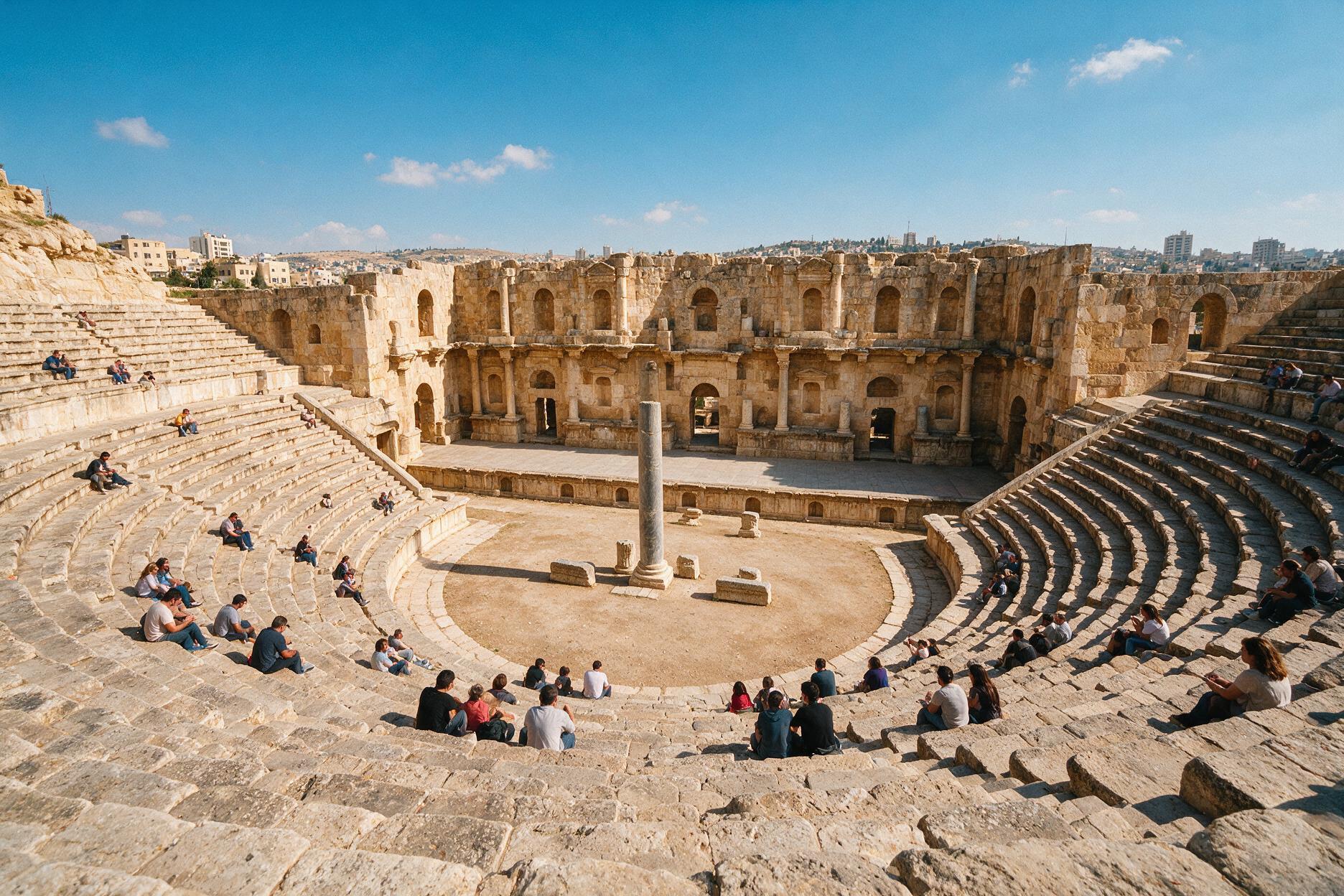
Walk or taxi down the hill (it’s steep — a 10-minute walk downhill, longer and less pleasant back up) to the Roman Theatre, a 6,000-seat amphitheater cut into the hillside around the 2nd century AD, still structurally sound enough that Amman occasionally hosts concerts here. Climb to the top row. The acoustics are the trick everyone does — stand center-stage and speak at a normal volume, and it carries clearly to someone sitting at the very top, no shouting required, which is a strange thing to feel in your chest the first time you try it.
Next to the theater, the small Jordan Folklore Museum and Museum of Popular Traditions are easy to skip if you’re short on time, but the folklore museum’s mosaic collection is worth the ten minutes if Petra and Jerash mosaics are on your itinerary later in the trip — it’s a useful preview of what you’ll be looking at with more context.
Midday: The Downtown Food Crawl
This is where Amman stops being a stopover and starts being a destination. Downtown — al-Balad — is dense, loud, and built for eating your way through on foot.
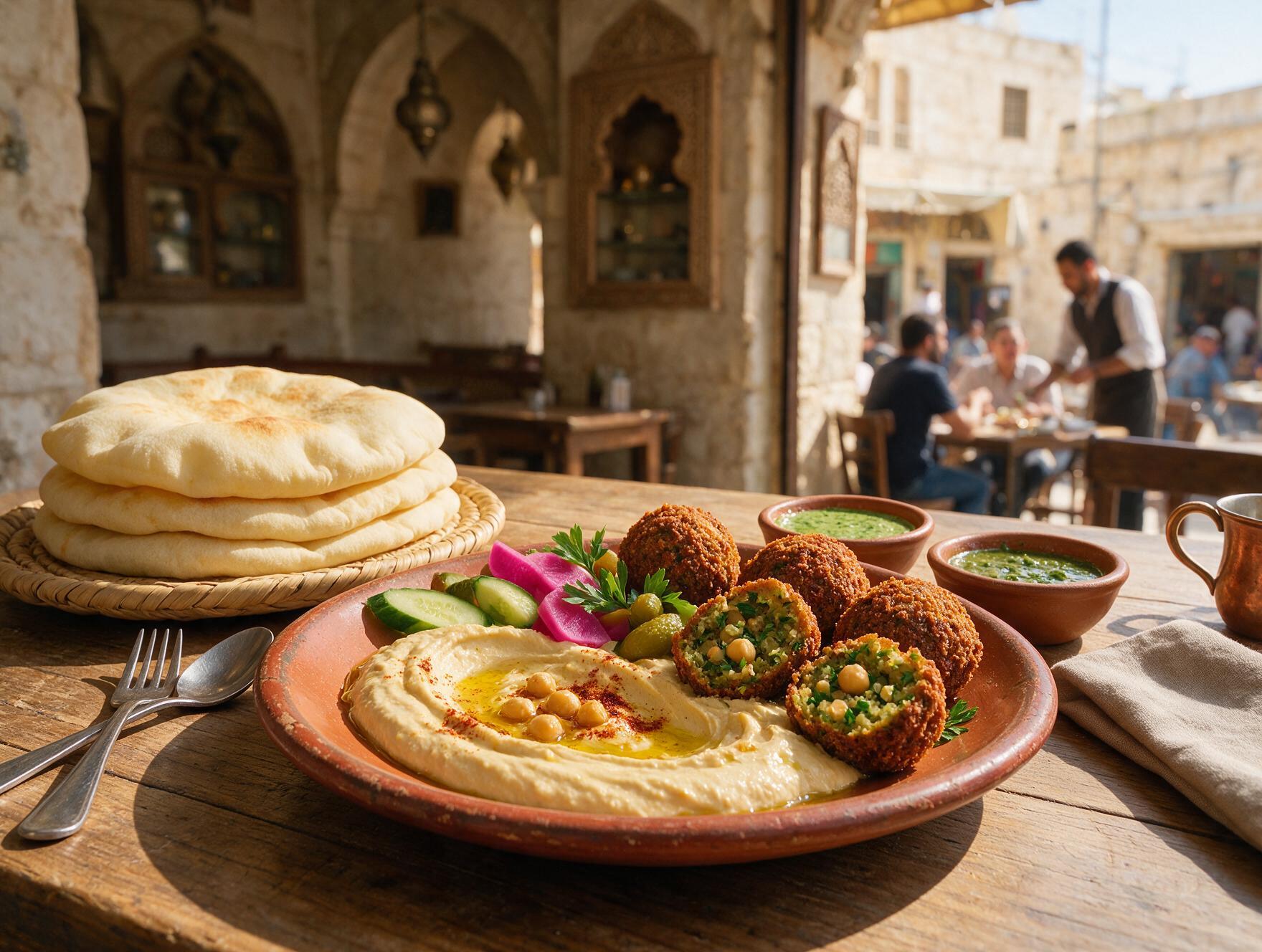
Start with Hashem Restaurant, no menu, no sign worth reading, just a stretch of outdoor tables that’s been serving falafel, hummus, and ful medames (stewed fava beans) since the 1950s to everyone from backpackers to the late King Hussein, by local reputation. It’s cheap enough that ordering too much barely registers on the bill. Follow it with a wedge of knafeh — the orange, cheese-and-syrup dessert — from Habibah Sweets a few minutes’ walk away; go to the original branch rather than the newer one if you can, and eat it standing at the counter while it’s still warm, because knafeh that’s cooled down is a different, lesser dessert.
For lunch proper, Al Quds Restaurant and a handful of similar downtown spots do a mansaf-adjacent set menu at lunchtime that’s a gentler introduction to Jordan’s national dish (lamb cooked in fermented dried yogurt, jameed, over rice) than the full ceremonial version you might get at a Bedouin camp near Wadi Rum later in the trip. Cap it off with a sesame-and-za’atar roll from Salaheddin Bakery, one of the city’s oldest, tucked into the downtown grid — ask for it fresh from the oven rather than one that’s been sitting in the display case.
A caveat worth having: downtown Amman is not built for slow, leisurely photography. It’s crowded, the traffic doesn’t fully stop for pedestrians the way it should, and vendors will wave you toward their stalls. That’s part of its character, not a flaw to route around — but if you’re traveling with young kids or anyone who finds dense markets overwhelming, do this crawl earlier in the morning when it’s quieter.
Afternoon: Jabal al-Weibdeh’s Slow Café Culture
Taxi up to Jabal al-Weibdeh for a total change of pace — this is Amman’s old diplomatic and artistic quarter, all Ottoman-era stone houses being slowly reclaimed as galleries, design studios, and unhurried cafés. It’s the neighborhood locals point to when they say Amman is “coming back” as a creative city, and it’s a genuinely pleasant place to just sit for an hour with no agenda. Shams El Balad does organic, locally sourced Jordanian food with a rooftop that looks back toward downtown — good for a late lunch if the food crawl left room, or just a mint lemonade and a break from the sun.
If it’s a Friday, time this for Souk Jara on Rainbow Street just downhill — a summer weekend souk (running roughly May through September) of local crafts, small-batch olive oil, handmade jewelry, and street food stalls that’s a far better souvenir stop than anything aimed at tour groups near the Citadel.
Early Evening: Rainbow Street
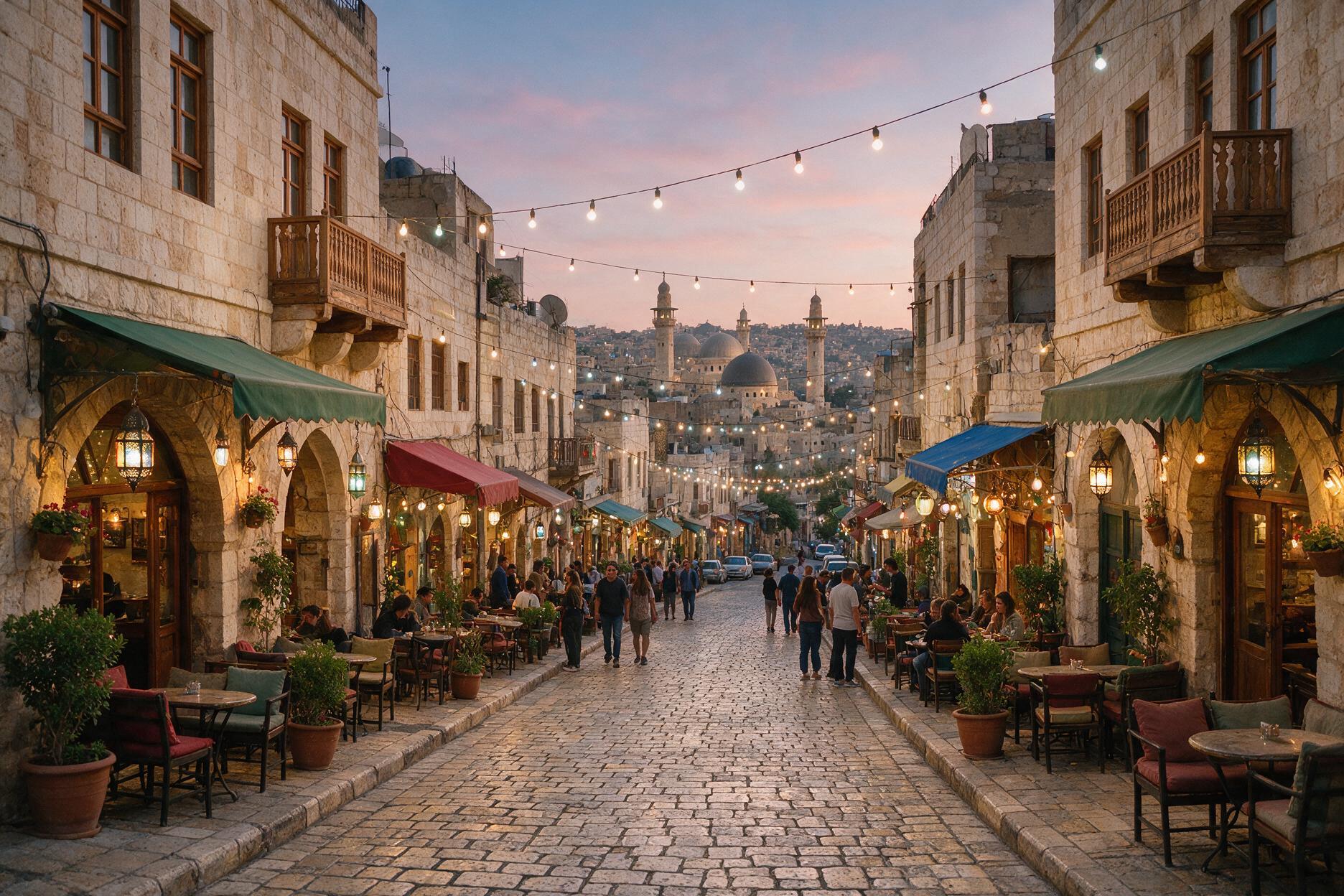
Rainbow Street itself — Amman’s best-known pedestrian strip — is worth the stroll for people-watching and window shopping rather than any single must-see stop: bookshops, concept stores, ice cream places doing Arabic-inflected flavors like pistachio-rosewater. Grab a falafel sandwich from Falafel Al-Quds, sesame bun, all tahini, no apology for the mess it makes. If you’d rather sit down properly, Sufra occupies a restored heritage house just off the street and does an elevated, still-authentic take on Jordanian classics — the kofta bi tahini and the sajieh chicken (cooked in a clay pot with tomato and chili) are both worth ordering.
Night: Dinner on a Rooftop, and Where the City Actually Lights Up
Book a rooftop table with a Citadel view for after dark — several restaurants along the Weibdeh-Rainbow Street corridor angle their terraces toward the floodlit ruins, and the hill lighting up gold against a dark sky is a better version of the daytime view you got that morning. Order slow. Amman doesn’t really do rushed dinners, and a plate of mixed grill with Arabic coffee and, if you’re inclined, a shisha to close out the night is a completely normal way to spend two unhurried hours here. This is also, honestly, the best part of the day for couples — Amman’s rooftop-dinner-with-a-view scene punches well above what most travelers expect from a “stopover city,” and it’s a nice contrast to Petra and Wadi Rum’s more rugged, daytime-adventure register later in a Jordan itinerary.
Getting to Amman From India
Amman got meaningfully easier to reach from India recently: Royal Jordanian resumed direct flights connecting Amman with both Mumbai and Delhi after more than a decade without a nonstop option, which used to mean routing through Dubai, Doha, or Abu Dhabi and adding several hours to the journey. A direct flight changes the calculus for exactly the kind of one-day-in-Amman stopover this guide is built around — it’s now genuinely easy to fly in, spend a full day in the city, and continue on to Petra and Wadi Rum without feeling like you burned a travel day getting there.
Visa, Money, and Other Practical Details
Indian passport holders can get a Jordan e-visa online in advance (roughly JOD 40, about ₹6,400 with service charges, processed in 0-3 business days via Jordan’s official portal) or visa on arrival at Queen Alia International Airport and a few other entry points for a similar fee, paid in cash. If Petra is on your itinerary — and it should be — look at the Jordan Pass instead: it bundles the visa fee waiver with Petra entry (single, two-, or three-day options) for a total that usually works out cheaper than paying separately, provided you’re staying at least three nights in the country.
The Jordanian dinar (JOD) is a strong currency — worth noticeably more than the US dollar, which surprises first-time visitors — and cards are widely accepted at hotels and mid-range-to-upscale restaurants in Amman, though downtown food stalls and taxis run on cash. Pick up a local eSIM or a physical SIM (Zain and Orange both have airport counters) for the trip; you’ll want maps working reliably for the hill-and-valley street layout, which confuses even ride-share drivers occasionally.
If You Have a Second Day
Jerash, the astonishingly intact Roman provincial city about 45 minutes north of Amman, deserves a half-day on its own if your schedule allows it — it’s a different, larger-scale experience than the Citadel and Roman Theatre, with a hippodrome, colonnaded streets, and two full amphitheaters. Combine it with a Dead Sea afternoon (about an hour southwest) for a full day that bookends the desert lowlands against the city hills, then head south toward Petra the following morning.
Frequently Asked Questions
Is one day really enough to see Amman?
For the Citadel, Roman Theatre, and a proper food crawl through downtown and Rainbow Street, yes — this itinerary is built around exactly that. It’s not enough to also fit in Jerash or the Dead Sea; add a second day if those are priorities.
Do Indian travelers need a visa for Jordan?
Yes. Indian passport holders need either an e-visa arranged in advance or a visa on arrival at major entry points — there’s no visa-free entry. If Petra is part of your trip, the Jordan Pass is usually the better value than paying for the visa separately.
Is Amman safe to walk around, including at night?
Amman is generally considered one of the safer capital cities in the region for tourists, including for solo travelers and women walking Rainbow Street and Jabal al-Weibdeh in the evening. Standard city precautions apply, and downtown’s crowded market streets are more about pickpocket awareness than any serious safety concern.
What’s the best time of year for this itinerary?
September through November and March through May offer the most comfortable temperatures for a day of walking between hills — expect roughly 18-30°C in Amman during these shoulder months, with the brutal mid-summer heat mostly confined to July and August.
Can I do this day trip if I’m mainly flying in for Petra and Wadi Rum?
Yes, and you should. With Royal Jordanian’s direct Mumbai and Delhi flights, it’s easy to land in Amman, spend a full day in the city as described here, and continue south the next morning without losing meaningful time from the rest of the Jordan itinerary.
Is Amman a good stop for solo travelers?
Very much so. The downtown food crawl and Jabal al-Weibdeh’s café scene are both easy and comfortable to do alone, and Amman’s compact, walkable core (helped along by taxis for the steeper hill climbs) makes it low-friction to explore solo compared to larger, more spread-out capitals.
Before You Fly South
Amman gets treated as a layover with a hotel attached, and that undersells a city that’s genuinely worth a full day of its own — Roman ruins you can wander through rather than view from a distance, a downtown food scene with more personality than most capital cities twice its size, and a rooftop-and-hilltop-café culture that catches most first-timers off guard. Give it the day before Petra takes over the rest of your trip.
If you’d rather not stitch together the Citadel, the food crawl, and the right rooftop table yourself, our Jordan itineraries build this exact day in — plus the Jerash and Dead Sea add-on if you’ve got a second one to spare. Talk to Get Tripped about a Jordan trip and we’ll fit it around your Petra and Wadi Rum dates.