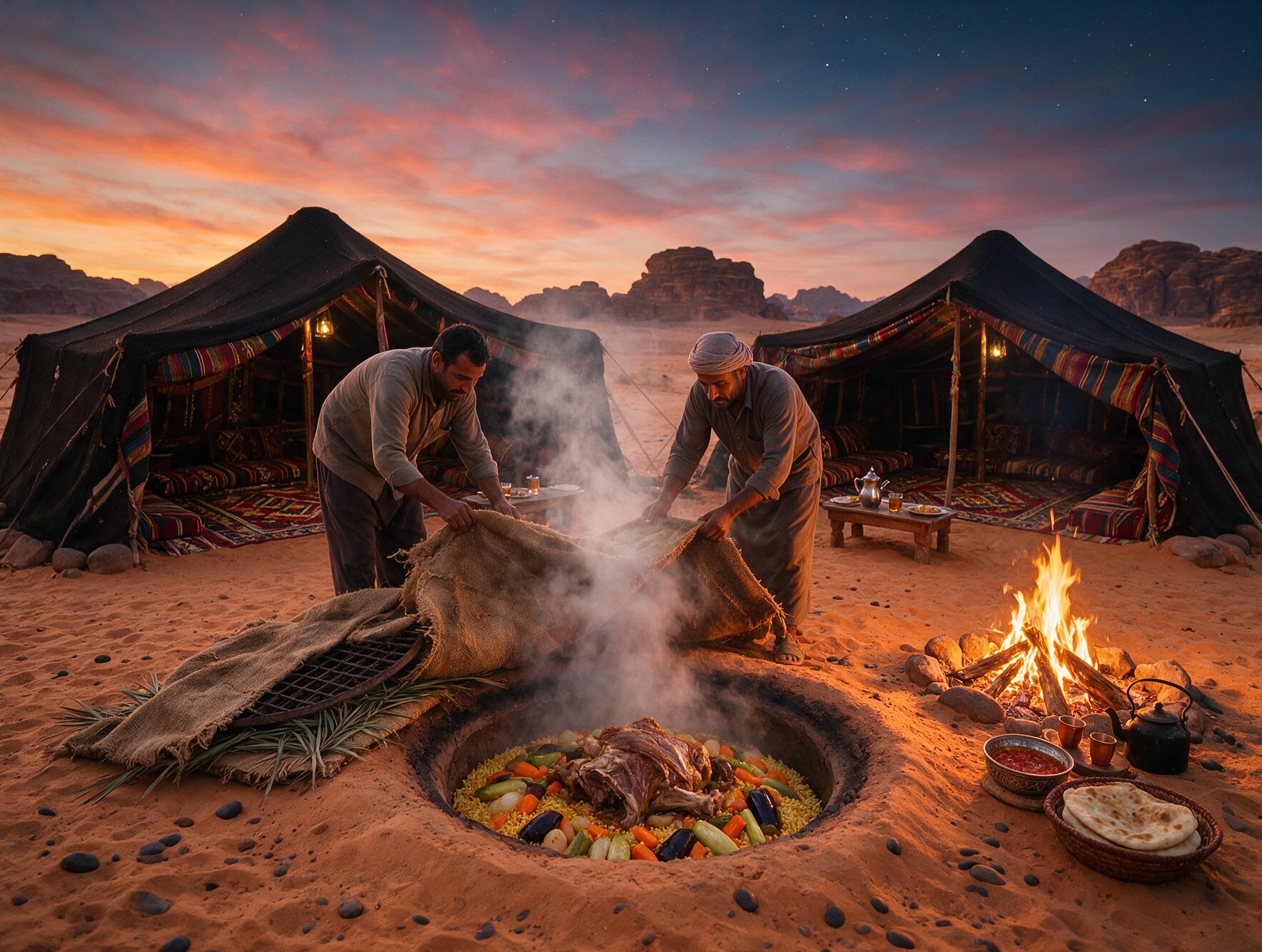
Jordanian food doesn’t get the attention Lebanese or Turkish cuisine gets outside the region, and that’s a genuine shame, because the best meal of my last trip wasn’t in a restaurant at all — it was a zarb dinner in a Wadi Rum camp, lamb and vegetables buried under hot coals and sand for hours, unwrapped at a long communal table while the temperature dropped and the stars came out properly for the first time all trip. Jordan’s food culture runs on big shared plates, slow-cooked meat, bread used as a utensil, and a sweet tooth that produces some of the best knafeh anywhere in the Levant.
This is a trail through what to actually eat across Amman, Petra, Wadi Rum, Aqaba, the Dead Sea, and the quieter Dana Biosphere Reserve — the coffee, the late-night food, the dish everyone insists you try, and where it’s genuinely worth seeking out rather than just eating whatever’s closest to your hotel.
Table of Contents
- The dishes to know before you go
- Amman: the food capital of the trip
- Petra / Wadi Musa: fuel for a long day of walking
- Wadi Rum: the zarb, and why it’s not a gimmick
- Dead Sea: resort dining and the one local gem nearby
- Aqaba: seafood on the Red Sea
- Dana Biosphere Reserve: simple, local, slow
- Coffee culture, properly explained
- A mistake to avoid
- FAQs
The dishes to know before you go
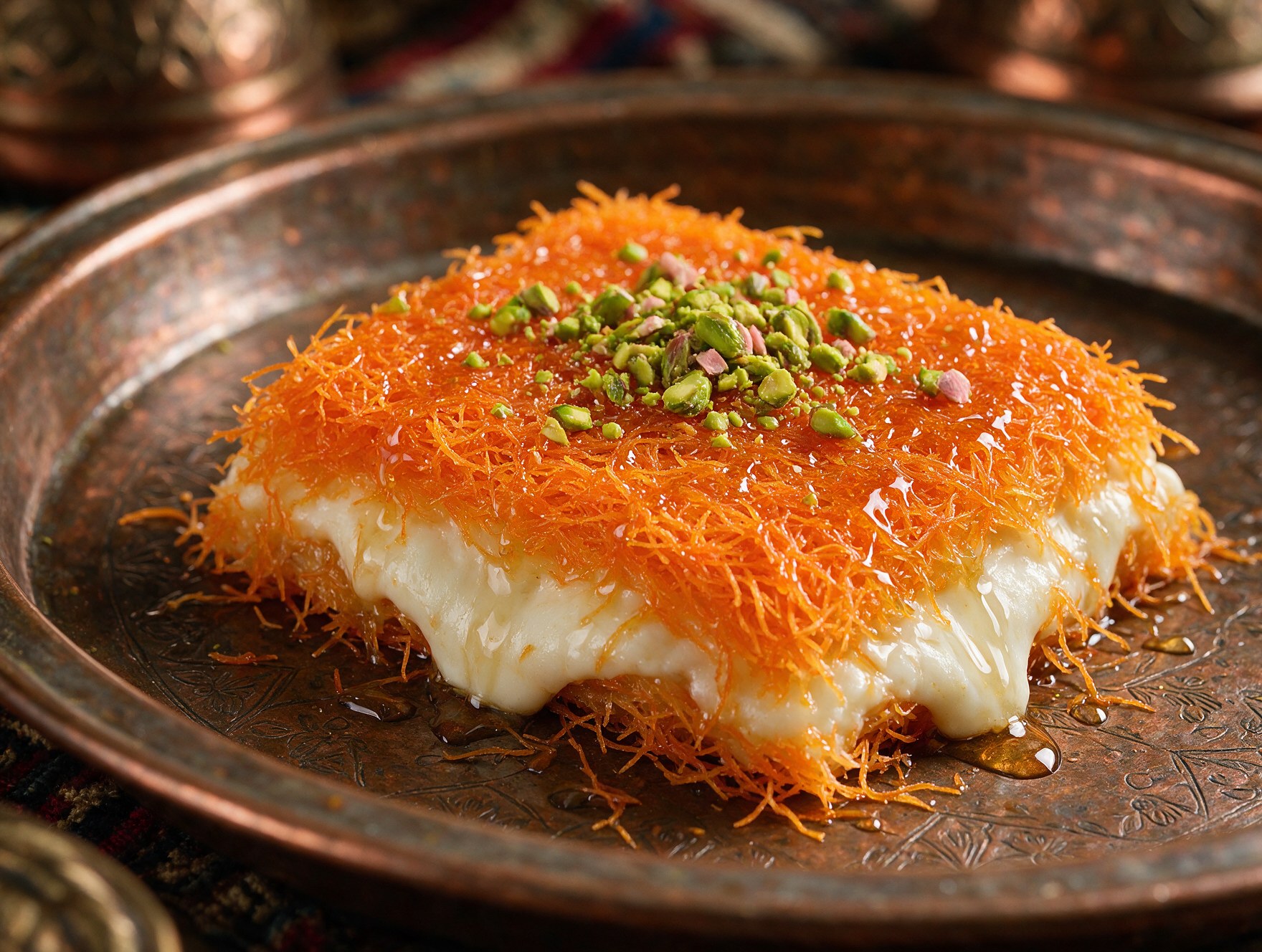
Mansaf is the national dish and the one to eat at least once properly — lamb cooked in fermented dried yogurt (jameed), served over rice and flatbread, traditionally eaten with your right hand, formed into small balls. Mezze culture runs through every meal here: hummus, mutabbal (smoky eggplant dip, sometimes better than the hummus), baba ghanoush, and warm flatbread that keeps arriving whether you ask for more or not. Maqluba (“upside-down”) is a layered rice, meat and fried vegetable dish flipped out of its pot at the table — order it if you see it on a menu, since it’s less common outside home kitchens and family restaurants. And knafeh, the warm, cheese-and-syrup dessert with the bright orange shredded pastry top, is worth having more than once; Amman’s versions vary more than you’d expect between bakeries.
Amman: the food capital of the trip
Start at Hashem, downtown near the Al Balad souks, a no-frills institution running since 1952 that does falafel and hummus so well it’s stayed essentially unchanged for over seventy years — plastic chairs, shared tables, a line that moves fast. It’s also entirely vegetarian, which is unusual to find in a city this meat-forward, and worth knowing even if you’re not vegetarian yourself. For something a step up, Sufra does Jordanian classics in a restored villa with an open terrace; the mutabbal here is one of the better versions in the city. Shams El Balad, in a historic downtown building with rooftop seating, leans farm-to-table with a mostly meat-free menu and genuinely creative plates — it’s the kind of place that quietly proves Jordanian food can be more than mansaf and mezze.
For late-night eating, Hashem again (it runs well past midnight) or Jafra, tucked into an old archway off Amman’s main downtown strip, popular with locals rather than tour groups, which is usually the tell you want.
Petra / Wadi Musa: fuel for a long day of walking
Most of Wadi Musa’s restaurants cluster near the Petra visitor center and the main hotel strip, and the food here is built around one thing: feeding people who’ve just walked 15,000 steps through a canyon. Mezze platters are the move — big, shareable, and exactly what your legs want after a Monastery hike. A genuinely useful tip: carry snacks into Petra itself. There are a couple of basic cafés inside near the Treasury and the Basin restaurant further in, but prices are tourist-site prices and the better food is back in town.
Wadi Rum: the zarb, and why it’s not a gimmick
Almost every Bedouin camp in Wadi Rum serves a zarb dinner — a mix of lamb or chicken and vegetables slow-cooked for hours in a sealed pit underground, buried under sand with hot coals beneath. It sounds like a tourist-camp routine until you actually taste how evenly and gently it cooks the meat; there’s no char, no dryness, just slow heat doing its job for hours while you’re out on a jeep tour. It’s typically served buffet-style at a long communal table, which also means it’s one of the easier places on this trip to eat a big vegetarian plate, since the vegetable side of a zarb is cooked the same way and is never an afterthought.
Dead Sea: resort dining and the one local gem nearby
Most Dead Sea dining happens inside the resort you’re staying at — Kempinski, Hilton, Mövenpick — and it’s generally good, international-leaning buffet food built for a destination that’s really about the water and the mud, not the restaurants. If you want something more local, the small town of Sweimeh nearby has simple grill restaurants serving mixed grills and mezze at a fraction of resort prices, worth a detour if you’re staying more than one night and want a change of pace from buffet dinners.
Aqaba: seafood on the Red Sea
Aqaba is the one stop on this trail where seafood, not lamb, is the headline — fresh grilled fish and prawns along the corniche, often simply prepared with lemon, garlic and local spices rather than heavily sauced. It’s also noticeably more relaxed in dress and atmosphere than Amman, a beach town in both food and feel, and a good place to end a trip if your route includes a coastal day before flying home.
Dana Biosphere Reserve: simple, local, slow
Food here is a different register entirely — the RSCN-run Dana Guest House and the nearby Feynan Ecolodge both serve simple, home-style Jordanian meals (lentil soup, fresh bread, seasonal vegetables, mansaf on request) cooked for the small number of guests staying that night rather than a tourist-volume menu. If you’ve spent four days eating increasingly elaborate mezze spreads, Dana’s quieter food is a genuinely nice reset, and it’s one of the few places on this route where your dinner was very likely sourced from within a few kilometers of where you’re eating it.
Coffee culture, properly explained
Jordanian coffee comes in two very different registers and it’s worth knowing which is which before you order. Arabic coffee (qahwa) is cardamom-forward, served in small handleless cups, often at the start of a social visit or meal as a gesture of hospitality rather than a caffeine hit — don’t fill the cup to the brim if you’re pouring for someone else, it’s considered impolite. Turkish-style coffee, thick and unfiltered, settling at the bottom of the cup, is what you’ll get at most downtown Amman cafés if you just ask for “coffee.” Rainbow Street and the Lweibdeh neighborhood in Amman have the best concentration of genuinely good modern cafés if you want a flat white instead — this part of the city has a real specialty-coffee scene that most first-time visitors don’t expect.
Markets and street food worth seeking out
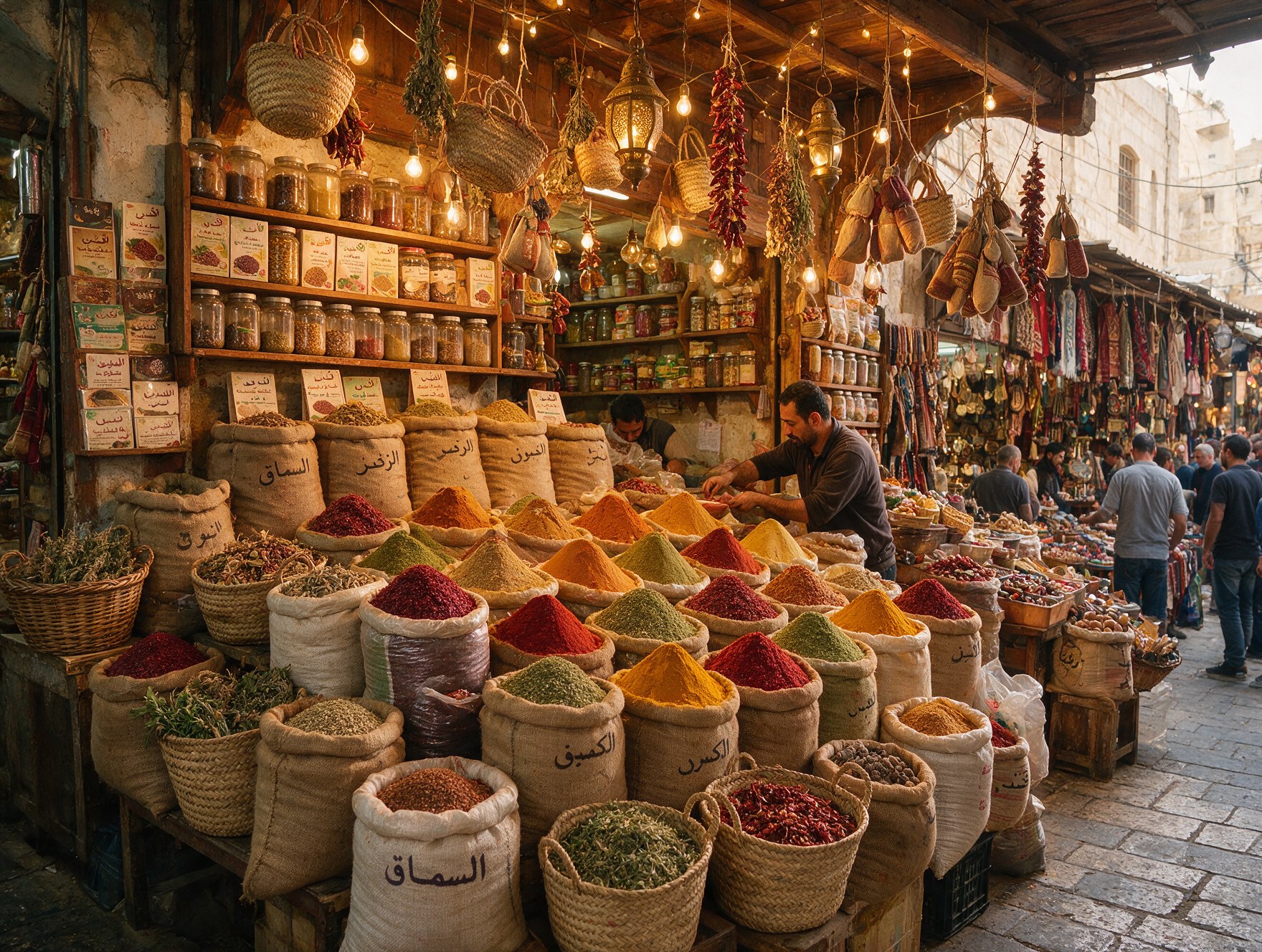
Amman’s downtown souks are as much a food experience as a shopping one — fresh-squeezed pomegranate and orange juice stands along the main strip, nut and dried-fruit vendors selling by the hundred grams, and the smell of fresh knafeh being cut to order at Habibah Sweets, a downtown institution that’s arguably more famous locally than any sit-down restaurant on this list. Buy a small portion to eat standing at the counter, the way regulars do, rather than taking it back to your hotel to eat cold. In Wadi Musa, a small produce and spice market near the main street is worth a wander the evening before your Petra day, mostly for the atmosphere rather than anything you’ll carry home.
Notes for different kinds of travelers
Solo travelers will find Jordanian food culture unusually easy to eat alone in — mezze-style restaurants expect single diners to order two or three small plates rather than one large meal, which is both normal and genuinely satisfying, not a consolation version of the group experience.
Couples should book the zarb dinner night at whichever Wadi Rum camp they choose in advance if a specific seating or private setup matters, since some camps offer a quieter two-person table option away from the main communal spread for a small supplement.
Families traveling with kids will find mezze-style eating genuinely convenient — it’s easy to find something a fussy eight-year-old will touch across ten different small plates, more so than trying to get them through a single unfamiliar main course.
Luxury travelers should ask their hotel or operator about private chef experiences, now offered at a few boutique Petra properties and some Wadi Rum camps, where a home cook prepares a full mansaf meal with the yogurt sauce done properly and slowly rather than the faster tourist-strip version.
A food photography tip
Shoot the mezze spread before anyone starts eating and before the bread arrives and gets torn into — the full, untouched table of small dishes is genuinely the best-looking version of the meal, and it only lasts about ninety seconds once everyone’s hands are in it.
A mistake to avoid
Don’t eat your first mansaf at a tourist-strip restaurant right outside Petra’s gates expecting it to be representative — it’s often a thinner, faster version made for volume. Save it for Amman, where a sit-down restaurant has time to do the jameed yogurt sauce properly, or ask your driver where their family eats; Jordanian hospitality culture means this question almost always gets a real answer, not a brush-off.
Beyond coffee: tea, juice and what to drink with dinner
Sweet mint tea follows meals here almost as reliably as coffee precedes them, often poured strong and sugared without asking whether you want it that way — say so upfront if you’d rather have it plain. Fresh-squeezed juice stands are everywhere in Amman’s busier streets, and pomegranate juice in season (roughly October through December) is worth seeking out specifically, noticeably better than anything bottled. Jordan does produce a small but genuine wine industry around towns like Rummana in the north, and a few higher-end Amman restaurants and Dead Sea resorts carry it if you’re curious; it’s not going to rival established wine regions, but it’s an interesting footnote for anyone who assumed the Middle East was universally dry on this front.
FAQs
What is the national dish of Jordan?
Mansaf — lamb cooked in a fermented dried yogurt sauce (jameed), served over rice and flatbread, traditionally eaten by hand.
Is Jordanian food spicy?
Not typically. It leans on warm spices like cumin, sumac and cardamom rather than chili heat, so it’s generally approachable even for travelers sensitive to spice.
What should I eat in Wadi Rum?
A zarb dinner — meat and vegetables slow-cooked underground in a sealed sand pit, almost universally served at Bedouin desert camps.
Where is the best food in Amman?
Hashem for an institution-level falafel experience, Sufra or Shams El Balad for a sit-down Jordanian meal with real atmosphere, and the cafés around Rainbow Street for coffee.
Is street food safe to eat in Jordan?
Generally yes at busy, high-turnover stalls (that’s exactly what makes Hashem and similar spots reliable) — stick to places with visible crowds and fresh turnover rather than food sitting out for hours.
What’s a good vegetarian option if I don’t want to cook at a desert camp?
Most camps, including Wadi Rum zarb dinners, serve a generous vegetable side cooked the same slow way as the meat, so vegetarians eat well even at camps without a dedicated menu — see our full vegetarian and vegan guide to Jordan for specifics by location.
Before you go
Food is one of the easiest ways to feel like you actually understand a place rather than just photographed it, and Jordan rewards that more than most Middle East itineraries give it credit for. See our full Jordan travel guide for where this trail fits into a complete itinerary, or get in touch and we’ll build the stops around it.