The smoke hits you before the smell does. Jalan Alor at 7 PM is a wall of woks going off at once — a hundred metres of open-air kitchens set up on plastic stools and folding tables, satay grills lined up like a runway, someone shouting order numbers in three languages at once. I’d planned to eat at one stall. I ate at four, standing up, moving down the street the way everyone else seemed to already know to do, and I still didn’t get to the durian guy at the end before he sold out.
Kuala Lumpur doesn’t get talked about the way Bangkok or Bali does in Indian travel conversations, which is a little strange given how easy it is to get to and how much there is to actually do in a single, well-planned day. This is that day — the version built around eating your way through the old town, catching the Petronas Towers at the hour they photograph best, and ending, appropriately, back on a plastic stool with a beer and someone else’s leftover skewers.
Table of Contents
- Morning: Batu Caves Before the Heat
- Midday: Petaling Street and Chinatown
- Afternoon: KLCC and the Towers
- Evening: The Jalan Alor Food Trail
- Getting There and Visa
- Getting Around, Money, and SIM
- Where to Stay
- Notes for Different Travelers
- A Mistake to Avoid
- FAQs
Morning: Batu Caves Before the Heat
Start early — not for spiritual reasons, though the 42.7-metre golden statue of Lord Murugan at the base does stop most first-time visitors mid-step, but because Batu Caves gets genuinely uncomfortable by late morning, both in temperature and in crowd density. The 272 steps up to the main Temple Cave are steep and, depending on the day, shared with the resident macaques, who are confident, food-motivated, and not shy about it — hold your bag closed and don’t make eye contact with the ones eyeing your breakfast.
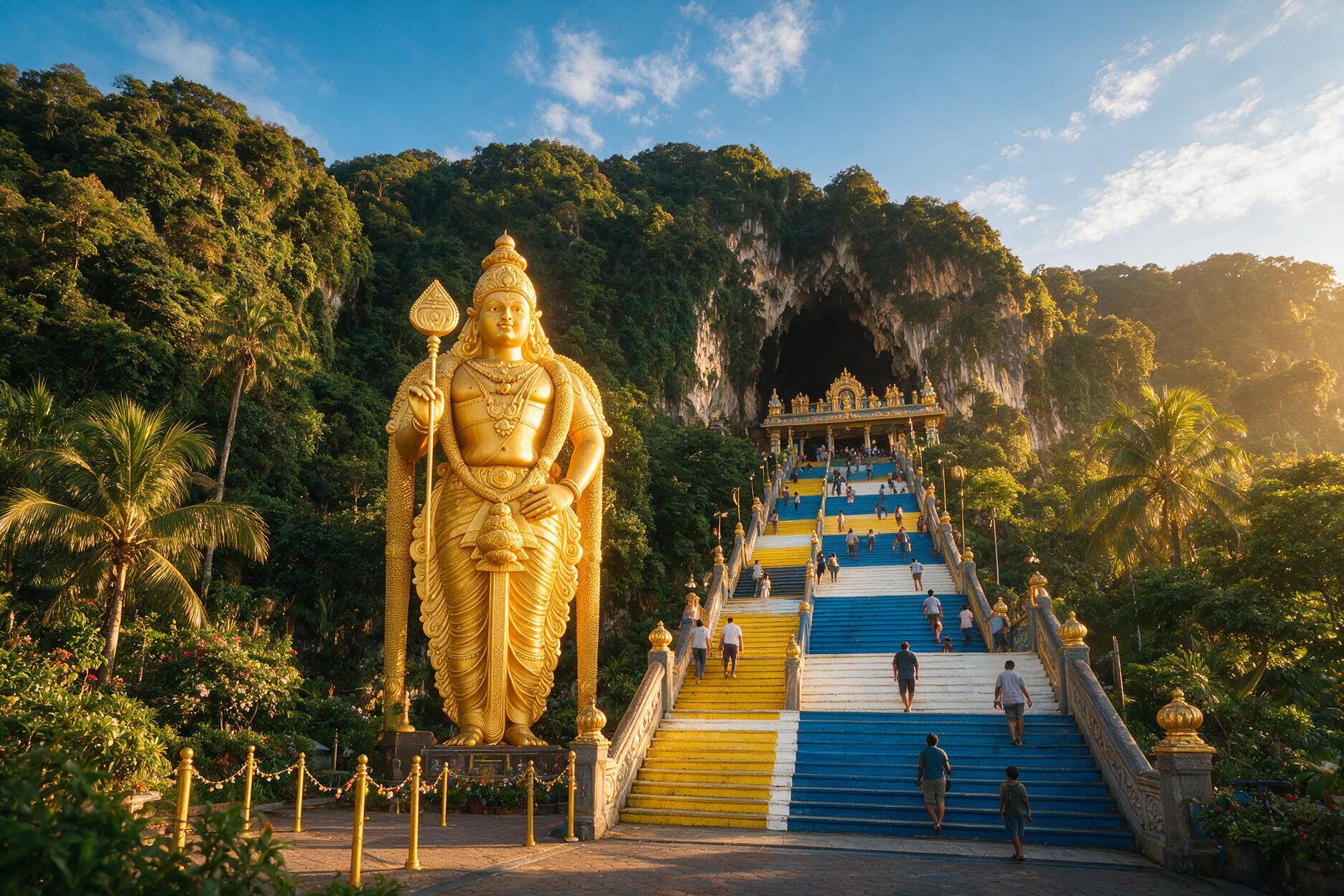
The cave itself is a genuinely enormous limestone cavern with light falling through a natural opening in the roof, and it’s worth the climb even if you’re not there for the Hindu shrines inside. Go before 9 AM and you’ll have the steps mostly to yourself; arrive after 11 and you’re sharing them with several tour buses’ worth of people. It’s a 40-minute KTM Komuter train ride from central KL (Kuala Lumpur Sentral station), and the train itself is part of the experience — cheap, clean, and a good preview of how easy the city’s public transport actually is.
Midday: Petaling Street and Chinatown
Petaling Street is KL’s Chinatown, and it’s louder and messier than its reputation as a shopping strip suggests, in the best way. Under the covered arcade, stalls selling everything from counterfeit watches to fresh lychees sit next to genuinely old kopitiams (coffee shops) that have been serving the same three dishes since before the market got its roof. Skip the bargaining-heavy souvenir stalls near the entrance and head toward the back, where Sin Seng Nam Restaurant and a handful of unmarked noodle counters serve some of the best wonton mee in the city for less than what a coffee costs back home.
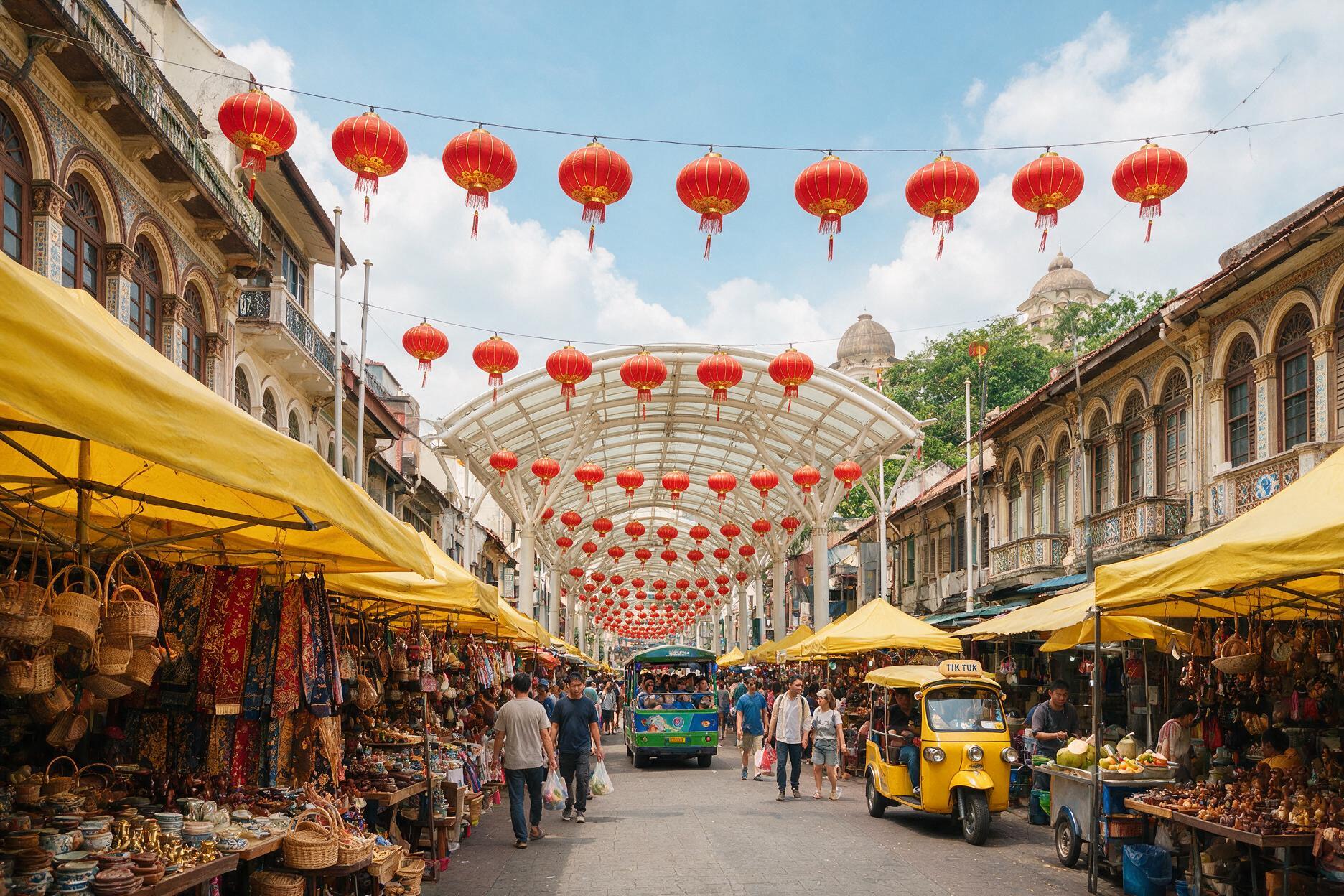
Central Market, a few minutes’ walk away, is a calmer stop if the street’s chaos gets to be too much — an Art Deco building full of local crafts, batik, and a food court that’s a reasonable backup if you’re not ready to commit to street stalls yet. The Guan Di Temple and Sri Mahamariamman Temple both sit within the same few blocks, and popping into either takes ten minutes and gives you a sense of just how layered — Malay, Chinese, Indian, colonial British — this particular stretch of the city actually is.
Afternoon: KLCC and the Towers
Take the monorail or a Grab across town to KLCC in the early afternoon, while the Petronas Towers’ Skybridge and observation deck tickets (book these online in advance — same-day walk-up slots do sell out, especially on weekends) still have decent visibility before the late-day haze sometimes rolls in. The Skybridge connects the two towers at the 41st and 42nd floors; the observation deck near the top gives you the wider skyline view. Either is worth doing once, but if you have to pick, the observation deck view is the more dramatic of the two.
KLCC Park, the green space at the towers’ base, is where you want to be back by early evening — the fountain show runs at set intervals after dark, and the towers lit up against the sky is a genuinely better photo than anything you’ll get during the day. Suria KLCC mall underneath is air-conditioned relief if the afternoon heat has caught up with you, and it’s a reasonable spot for a late lunch if you’re pacing yourself before the evening’s food trail.
Evening: The Jalan Alor Food Trail
This is the part of the day everything else was building toward. Jalan Alor turns into a full open-air food street from around 5 PM, and it runs late into the night. Take the KL MRT to Bukit Bintang station and leave via Exit F — it’s a five-minute walk from there, and honestly half the fun is following your nose the last stretch of the way.
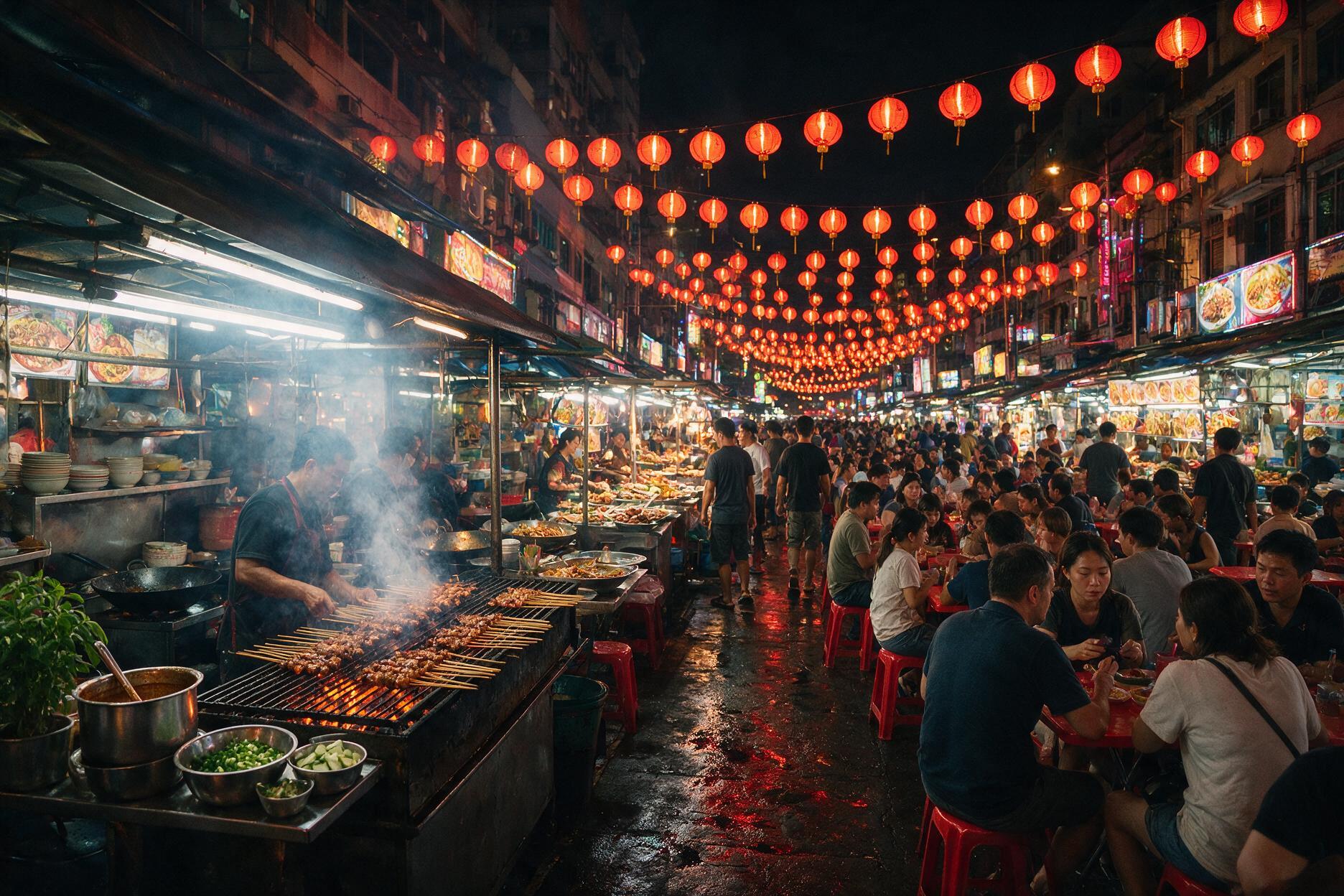
Go early, around 5:30–7 PM, if you want photos of the stalls without the peak crowds; go 7–10 PM if you want the full, loud, elbow-to-elbow atmosphere, which is genuinely part of the appeal once you’ve accepted you’re not getting a quiet table. Satay is the obvious start — chicken, beef, or mutton skewers, usually sold in batches of fifteen or more, at roughly RM1.5–2 per skewer. From there, work down the street: dim sum and lok lok (skewered items you cook yourself in communal hotpots) for a couple of ringgit an item, takoyaki, apam balik (a folded peanut-and-sweetcorn pancake that’s better than it sounds), and fresh coconuts for when the chilli catches up with you.
The durian stalls are impossible to miss — you’ll smell them before you see the sign — and going in without any preconceptions is honestly the right approach. It’s polarising for a reason. If you’d rather skip it, Restoran Mon nearby does a beef roti for about RM6 that’s a safer bet and still genuinely good. One honest note: the flower sellers who work the street can be persistent, and pickpocketing, while not common, does happen in the denser crowd sections — keep valuables zipped and don’t set your phone down on the table while you’re focused on food.
Getting There and Visa
Malaysia has extended visa-free entry to Indian passport holders for stays of up to 30 days, provided you complete the Malaysia Digital Arrival Card (MDAC) online before you fly — it’s free, takes a few minutes, and needs to be done within three days of your arrival date, not weeks in advance. This exemption is currently in place through the end of 2026, so it’s worth double-checking the window hasn’t shifted by the time you’re booking, since these arrangements do get extended or revised.
Flights connect Delhi, Mumbai, Bengaluru, and Chennai to Kuala Lumpur with a mix of direct and one-stop options on AirAsia, Malaysia Airlines, IndiGo, and Air India, with round-trip fares commonly falling in the ₹18,000–₹30,000 range depending on season and how far ahead you book. Flight time direct from Delhi runs a little under six hours — short enough that a long weekend genuinely works, which is part of why KL makes sense as a one-day showcase rather than requiring a full week to justify the trip.
Getting Around, Money, and SIM
KL’s public transport — the LRT, MRT, and monorail lines together — covers most of the places in this itinerary well, and it’s genuinely one of the easier Southeast Asian capitals to navigate without a private driver. Grab fills the gaps for anything the train network doesn’t reach directly, and it’s cheap enough that splitting a ride across a group barely registers as a cost.
The Malaysian ringgit (RM) is the local currency; cards are widely accepted in malls and sit-down restaurants, but the street-food stalls that make Jalan Alor worth visiting run on cash, so pull out enough ringgit before you head there for the evening. A local eSIM (U Mobile and Maxis both offer easy online options) or an airport SIM counter will get you connected on arrival — KLIA and klia2 both have counters right past immigration, so there’s no need to arrange this before you land unless you’d rather not deal with it on arrival.
Where to Stay
Bukit Bintang is the obvious base for this particular day — it puts you within walking distance of Jalan Alor for the evening and close to the monorail for everything else, with a strong range of properties from solid four-stars to genuinely luxury options. If you’d rather wake up looking at the towers themselves, the KLCC area has that view built in, at a slightly higher nightly rate. Either works well; the real deciding factor is whether you’d rather end your night a five-minute walk from dinner or a five-minute walk from the towers lit up after dark.
Notes for Different Travelers
Couples: The KLCC Park fountain show after dark, followed by a rooftop bar looking back at the towers, is a genuinely good evening even before you factor in the food. Look at the bars along Changkat Bukit Bintang for that.
Families: This exact itinerary works with kids, but budget more time at Batu Caves for the monkeys (they will want to stay longer than you planned) and consider the KLCC aquarium as an air-conditioned midday break instead of pushing straight through to the towers in peak heat.
Solo travelers: KL is genuinely comfortable to navigate alone, and Jalan Alor’s communal stool-and-table setup makes solo dining feel completely normal rather than conspicuous — nobody there is eating alone at a two-top expecting company.
A Mistake to Avoid
Don’t try to fit the Batu Caves–Petaling Street–KLCC–Jalan Alor sequence into a day that also includes a half-day trip to the Genting Highlands or the Perdana Botanical Gardens. This itinerary is full on its own, KL’s traffic between the caves and downtown is genuinely unpredictable at certain hours, and rushing the food trail at the end defeats the point of the whole day. Give this one day to itself and save the rest of the city for a return trip — because there will likely be one.
Frequently Asked Questions
Do Indians need a visa for Malaysia?
Indian passport holders currently get visa-free entry for stays up to 30 days, provided you complete the Malaysia Digital Arrival Card (MDAC) online within three days before arrival. This exemption is confirmed through the end of 2026 — worth reconfirming closer to your travel date.
Is one day really enough to see Kuala Lumpur properly?
One well-planned day covers the highlights in this itinerary comfortably, but KL rewards a second or third day if you have it — the Batu Caves dark cave tours, a day trip to Melaka, and the Bukit Bintang shopping and nightlife scene are all worth the extra time.
Is Jalan Alor safe to eat at?
Yes — it’s one of the most tourist-frequented streets in the city and the stalls turn over food fast, which generally means freshness. Standard street-food sense applies: eat where the queue is, and keep an eye on your belongings in the crowd.
Do I need to book Petronas Towers tickets in advance?
Strongly recommended, especially for weekends — same-day tickets are limited and do sell out, particularly for the popular late-afternoon and evening slots.
What’s the best way to get from the airport to Bukit Bintang?
The KLIA Ekspres train to KL Sentral, followed by a short monorail or Grab ride, is faster and more predictable than a taxi during peak traffic hours.
Is KL vegetarian-friendly?
Better than most people expect — the city’s large Indian and Chinese-Buddhist communities mean genuine vegetarian and Jain-friendly options exist, particularly around Brickfields (Little India), though Jalan Alor itself leans heavily toward meat and seafood stalls.
The Bottom Line
Kuala Lumpur works as a one-day city in a way few Southeast Asian capitals do — the caves, the old town, the towers, and the food street all sit close enough together that you’re not losing half the day to transit. It’s also, thanks to the visa-free entry and a short direct flight from Delhi, one of the easier weekend-length trips to actually commit to instead of leaving on a list. Get Tripped’s Malaysia itineraries can build this day into a longer Kuala Lumpur–Penang or Kuala Lumpur–Langkawi trip — reach out to plan yours.