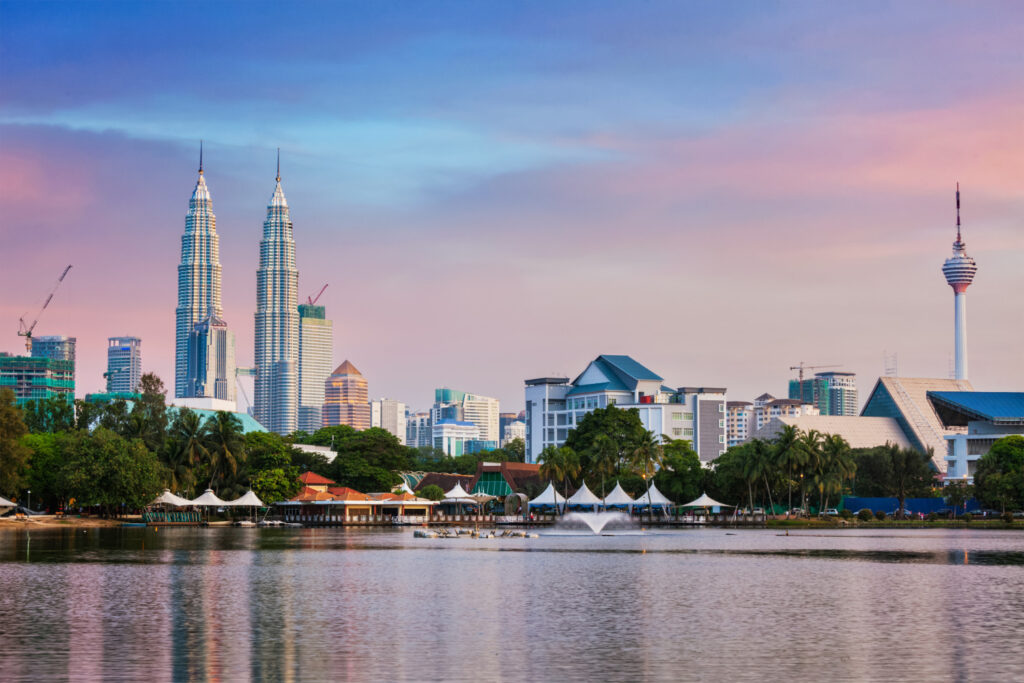
I got asked, twice in one week, whether Malaysia “still needs a visa” by two different friends who were both about to book flights they weren’t sure they could use. That confusion is the whole reason this post exists. The answer is straightforward — no visa, until the end of 2026 — but the amount of outdated blog content still floating around telling people to apply for an eVisa is doing real damage to people’s trip timelines.
Here’s what’s actually true right now, and what a trip built around it could look like.
Table of Contents
- The Visa-Free Extension, Explained Properly
- The Digital Arrival Card: The One Thing You Actually Have to Do
- Best Time to Go
- How Many Days You Need
- A Kuala Lumpur–Langkawi–Penang Route That Works
- Where to Stay
- Getting There and Getting Around
- What It Actually Costs
- Food You Should Actually Plan Around
- Money, SIM Cards, and Small Practical Things
- A Mistake to Avoid
- FAQs
- Final Word
The Visa-Free Extension, Explained Properly
Malaysia’s immigration department has extended the visa exemption for Indian and Chinese passport holders through December 31, 2026. Under it, Indian travellers can enter for tourism, business, social visits, or transit and stay up to 30 days without applying for a visa in advance — no consulate visit, no fee, no processing wait. The extension is deliberately timed: 2026 is Malaysia’s year as ASEAN Chair and also its “Visit Malaysia 2026” tourism push, so there’s real government motivation behind keeping this policy running rather than letting it lapse quietly the way some visa waivers do.
Two things this exemption does not cover, and they trip people up: if you’re travelling for work or study, you still need a proper visa arranged before you fly. And it’s specific to short visits — this isn’t a long-stay or residency pathway. For the standard “we want a week in Malaysia” trip, though, it removes the one piece of friction that used to make Malaysia a slightly more effortful booking than, say, Thailand.
The Digital Arrival Card: The One Thing You Actually Have to Do
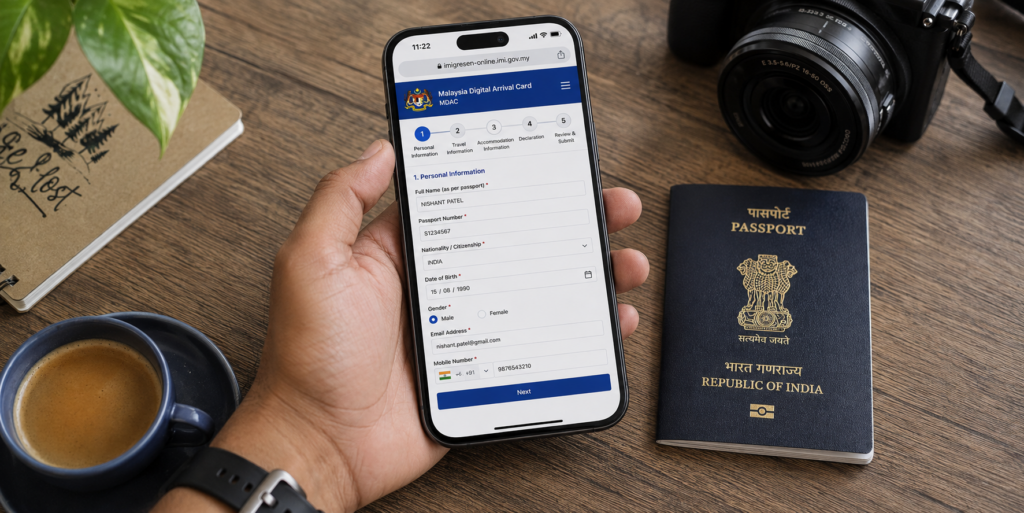
No visa doesn’t mean no paperwork. Every traveller, including infants, has to submit a Malaysia Digital Arrival Card (MDAC) before entry. It’s free, it takes about ten minutes, and you do it online at the official immigration portal — not through some third-party agent charging a “processing fee” for a form that costs nothing.
The timing window matters: you can only submit it within 72 hours of your arrival, not weeks in advance the way you might expect from a visa application. Fill it in too early and the portal simply won’t accept it. You’ll need your passport details, flight number, and where you’re staying on the first night. Once it’s submitted, there’s no printout to carry — immigration checks it electronically against your passport at the counter.
If you’re travelling as a family, each person, including kids, needs their own MDAC filed separately under their own passport. Do this the evening before you fly, not while you’re standing in the departure lounge with patchy airport WiFi.
Best Time to Go
Malaysia’s west coast — which is where Kuala Lumpur, Langkawi, and Penang all sit — runs a dry season from roughly November through March, with December to February generally considered the best window: sunny, humid but not brutal, average highs around 33°C, and Langkawi in particular gets noticeably drier and calmer seas for island-hopping.
The catch is that this is also peak season, so hotel rates in Langkawi and KL climb and popular beach resorts book out earlier than people expect. April through September is the shoulder window — still warm, occasional short downpours that clear fast, and meaningfully better hotel pricing. October is the one month I’d actively steer people away from; it’s when the west coast sees its heaviest rainfall of the year, and it’s not the kind of rain that adds character to your trip photos.
How Many Days You Need
Seven to nine days is the sweet spot if you want KL, Langkawi, and Penang without the trip feeling like a series of airport transfers. If you’re short on time, KL plus one of the other two (Langkawi for beach time, Penang for food and heritage architecture) works fine as a five- or six-day trip. Trying to do all three in under a week means you’ll spend more of your holiday in transit than you’d like.
A Kuala Lumpur–Langkawi–Penang Route That Works
Days 1–3: Kuala Lumpur. Land, settle in, and don’t try to cram everything into day one — jet lag from India is mild (2.5 hours ahead) but the humidity still gets people. The Petronas Towers skybridge is worth the early-morning booking slot specifically to avoid both the heat and the queues. Batu Caves is better done as a half-day out rather than a rushed morning stop — climb the 272 steps before 9am if you want photos without a hundred other people in them. Set aside one evening for Jalan Alor, KL’s night food street, and one afternoon for Kampung Baru, a old Malay village neighbourhood that’s survived right in the middle of the modern skyline — genuinely one of the more interesting contrasts in the city and something most first-time visitors miss entirely because it’s not on the standard tourist map.
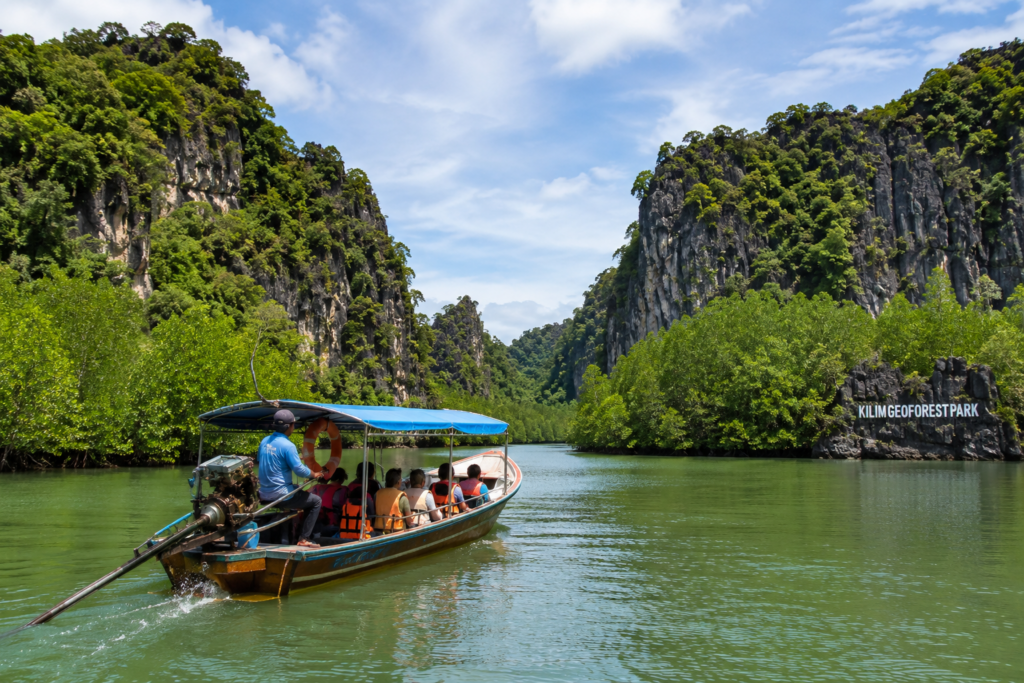
Days 4–6: Langkawi. A 55-minute flight from KL. This is where the trip slows down — island time, boat trips through the Kilim Geoforest mangroves, and the cable car up to Gunung Mat Cincang if you’re not afraid of heights (the SkyBridge at the top is not for anyone with a fear of exposed walkways, and I’d skip it entirely if that’s you rather than push through it). Pulau Payar’s coral reef is a solid day-trip for snorkelling, though go early — the boats get crowded by late morning and visibility drops once too many fins have stirred up the sand.
Days 7–9: Penang. Fly or take the ferry from Langkawi. George Town’s UNESCO-listed core is best explored on foot early morning, before the heat and the tour groups both arrive — the street art trail is charming but genuinely secondary to just wandering the shophouse streets and clan jetties. This is also, unambiguously, where you eat the best food of the entire trip, and I’ll get to that below.
Where to Stay
Kuala Lumpur has strong options across the board — the KLCC area puts you walking distance from the Towers and Suria KLCC mall, while Bukit Bintang is livelier and better for nightlife and shopping. Mid-range four-star hotels in both areas run comfortably, and KL has a genuinely excellent luxury tier if you want a proper five-star stay without the price tag of a similar hotel in Singapore or Tokyo.
Langkawi is where it’s worth spending more, if your budget allows — the beachfront resorts along Pantai Cenang and Pantai Tengah range from solid mid-range to serious luxury, and a few nights in an overwater or beachfront villa is the kind of splurge that actually justifies itself here. Penang’s George Town has a distinctive option most first-timers don’t know about: restored heritage shophouses converted into boutique hotels, which cost more than a standard hotel room but come with genuine character you won’t get from a chain property.
Getting There and Getting Around
Direct flights connect Delhi, Mumbai, Bengaluru, and Chennai to Kuala Lumpur, running around four to five hours. Chennai and Kolkata routes tend to run cheaper than Delhi or Mumbai on the same dates, worth checking if your travel dates are flexible. Within Malaysia, domestic flights link KL to both Langkawi and Penang in under an hour, and KL itself has a genuinely good public transit system — the LRT and MRT cover most tourist areas, and Grab (Southeast Asia’s rideshare app) is the easiest way to get anywhere the metro doesn’t reach.
What It Actually Costs
A mid-range trip — four-star hotels, a mix of taxis and Grab, proper meals rather than cutting corners, entry fees and a couple of guided experiences — runs somewhere in the ₹80,000–₹1,20,000 per person range for a seven- to nine-day trip including flights from India. Add a few nights in a genuinely nice Langkawi beach resort or opt for private transfers and guided tours throughout, and it moves comfortably into the ₹1,50,000–₹2,50,000+ bracket. Round-trip flights from India typically run ₹18,000–₹30,000 depending on your departure city and how far ahead you book — book six to eight weeks out for the better fares, especially if you’re travelling in the December–February peak window.
Food You Should Actually Plan Around

Penang’s food scene isn’t a side note to the trip — for a lot of returning travellers, it’s the actual reason to come back. Char kway teow cooked over a wok that’s clearly seen decades of use, Nyonya laksa with a broth that takes real skill to get right, and Assam laksa (a completely different, tamarind-sour cousin of the coconut-based version most people know) are all things worth building a meal around rather than treating as a quick bite between sightseeing stops. In KL, Jalan Alor at night is the obvious starting point, but the food courts inside places like Lot 10 Hutong give you a curated cross-section of Malaysia’s Malay, Chinese, and Indian culinary traditions side by side, which is honestly a useful primer if you’re only in the country for a week and want to understand what makes Malaysian food distinct from its neighbours.
One genuinely useful practical note: Malaysia is a majority-Muslim country, and halal food is the default in most places, which makes it easy for travellers keeping halal. It also has a large ethnic Indian population and correspondingly excellent Indian food if you want a familiar meal partway through the trip — Brickfields in KL, sometimes called Little India, is worth a visit for exactly this reason even if you’re not craving home food, because the neighbourhood itself has its own character.
Money, SIM Cards, and Small Practical Things
The Malaysian Ringgit (MYR) is the currency, and cards are widely accepted in KL, Penang, and Langkawi’s resort areas, though smaller hawker stalls and local eateries often run cash-only — keep small ringgit notes on hand rather than assuming you can tap everywhere. Prepaid tourist SIMs are available at KLIA on arrival and are inexpensive; eSIMs work well too if your phone supports one and you’d rather sort connectivity before you land.
A Mistake to Avoid
The one I’d actually warn a friend about: don’t try to do Langkawi as a rushed two-night add-on at the end of a KL-heavy trip. It’s an island built for slowing down, and arriving exhausted with one full day before you have to fly home means you’ll spend more time in transit than you will on a boat or a beach. If your schedule is tight, it’s genuinely better to cut Penang than to shortchange Langkawi to the point where it stops being worth the domestic flight.
Frequently Asked Questions
Do Indians need a visa for Malaysia in 2026?
No — under the current exemption, Indian passport holders can enter visa-free for stays up to 30 days for tourism, business, or social visits, through December 31, 2026. You still need to submit a free Digital Arrival Card before you fly.
How many days should I spend in Malaysia?
Seven to nine days lets you comfortably cover Kuala Lumpur, Langkawi, and Penang. Five to six days works if you’re combining KL with just one other destination.
What is the Malaysia Digital Arrival Card and is it the same as a visa?
No, it’s not a visa. The MDAC is a free entry declaration, similar in spirit to an immigration form, that every traveller submits online within 72 hours of arrival. It doesn’t require approval in the way a visa application does.
Is Malaysia safe for Indian travellers, including solo travellers and families?
Yes, broadly — Malaysia is one of the more straightforward Southeast Asian destinations for first-time travellers, with good infrastructure, English widely spoken, and standard city-travel precautions (watch belongings in crowded night markets, use registered taxis or Grab) covering most of what you need to know.
Final Word
The visa-free extension doesn’t change what Malaysia is — it changes how much friction stands between deciding to go and actually landing at KLIA. For a country that already does beaches, food, and a genuinely walkable capital city well, removing the visa step is the kind of thing that turns a “someday” trip into a “let’s book it for next quarter” one.
Thinking about when to go? Get Tripped’s Malaysia packages cover KL, Langkawi, and Penang with the hotel and transfer planning already handled — worth a look before you start piecing the trip together yourself.