Malaysia Is Visa-Free for Indians Through 2026 — Here’s Exactly What Changes for Your Trip
Our visa desk used to spend the better part of three working days processing eNTRI applications for clients flying to Kuala Lumpur. Fill the form, wait for approval, print the note, carry it to the airport. That queue is gone. Since December 2023, Indian passport holders have been able to fly to Malaysia without applying for a visa at all — and in January 2026, the Henley Passport Index’s annual update confirmed what regular travelers to Malaysia already knew: this isn’t a temporary pilot anymore. The Malaysian government extended the exemption through 31 December 2026, timed deliberately to Visit Malaysia Year 2026 and the country’s stint as ASEAN chair.
That’s the headline. But “visa-free” doesn’t mean “paperwork-free,” and that’s the part most of the recent coverage skips past. You still need to file something before you fly — it’s just free, takes ten minutes, and isn’t a visa. Get that part wrong and you can still be turned away at the counter. Get it right and Malaysia becomes one of the easiest premium Southeast Asian trips to book from India this year, easier than it’s been in a decade.
This piece walks through what actually changed, what the Digital Arrival Card is and isn’t, what you need to show at immigration, and how we’d build a trip around it — Kuala Lumpur, Langkawi, Penang, in whatever combination suits how many days you’ve got.
Table of Contents
- What Actually Changed: Malaysia’s Visa-Free Status for Indians in 2026
- eNTRI vs. Now: How Entry Actually Got Simpler
- The Digital Arrival Card (MDAC): What You Actually Have to Do
- Proof of Funds and What Else to Carry
- Getting There: Flights from India to Kuala Lumpur
- Best Time to Visit
- How Get Tripped Would Package This
- Where to Stay in Kuala Lumpur
- A Few Real Recommendations
- Money, SIM Cards, and Everyday Logistics
- FAQs
What Actually Changed: Malaysia’s Visa-Free Status for Indians in 2026
Malaysia first dropped the visa requirement for Indian and Chinese nationals on 1 December 2023, under what the Home Ministry called its Visa Liberalisation Plan — a deliberate push to bring back the tourist numbers Malaysia lost during the pandemic years, when countries like Thailand and Vietnam were quicker to reopen and simplify entry. The original exemption was meant to run through the end of 2024. In December 2024, Malaysia’s Home Ministry secretary-general extended it — five more years for Chinese nationals, and through 31 December 2026 for Indian nationals, explicitly linked to Visit Malaysia Year 2026.
Then, in mid-January 2026, the Henley Passport Index’s annual ranking update reflected the practical result: India climbed to 80th globally, with 55 destinations now reachable visa-free or via visa-on-arrival, up from a shakier position the year before. Malaysia’s inclusion wasn’t new information to anyone who’d flown there in the past two years, but the Henley report is what pushed the story into mainstream Indian travel coverage — which is likely why you’re reading about it now, in September, rather than when it actually took effect.
A few specifics worth being precise about, because most of the pickup articles blur them:
- Stay duration: up to 30 days per visit, on a Social Visit Pass issued on arrival — not a visa, and not extendable from inside Malaysia.
- Purpose: tourism and social visits only — meetings, conferences, contract signings, sports events, and general holiday travel qualify; work and study do not.
- Validity window: the exemption itself is guaranteed through 31 December 2026. No extension has been confirmed beyond that as of this writing, so if you’re planning travel into early 2027, it’s worth checking the Malaysian Immigration Department’s site closer to the date rather than assuming it rolls over automatically.
- Kazakhstan was the other country added to India’s visa-free list around the same reporting cycle, while India lost visa-free or eased access to Iran, Bolivia, Senegal, and Ethiopia — which is the trade-off that kept the net destination count at 55 rather than pushing it higher.
eNTRI vs. Now: How Entry Actually Got Simpler
If you or anyone in your travel party went to Malaysia before December 2023, you probably remember eNTRI — the Electronic Travel Registration & Information system that was, for years, the only fast-track option for Indian travelers. It’s easy to assume the current system is just eNTRI with a new name. It isn’t, and the differences matter for how you plan.
| eNTRI (old system) | Visa exemption + MDAC (current, through Dec 2026) | |
|---|---|---|
| Stay allowed | Maximum 15 days, no extension | Up to 30 days |
| Do you need to apply in advance? | Yes — a formal application, approved before travel | No — the exemption applies automatically to eligible passport holders |
| Entry points | Limited to specific airports (KLIA, KLIA2, Penang, Langkawi, Melaka, Senai, Kuching, Miri, Kota Kinabalu, Labuan) and a handful of land checkpoints | Any legal port of entry into Malaysia |
| Cost | Had an application fee | Free |
| What you still submit | The eNTRI application itself | The Digital Arrival Card (MDAC) — separate, free, and not the same thing as the old eNTRI form |
The eNTRI page is still technically live on the Immigration Department’s site, but it’s a legacy reference at this point, not the active pathway most Indian travelers use — the visa exemption plus MDAC has effectively replaced it. If you see an old blog post or a travel agent still quoting 15-day eNTRI rules, that’s outdated information; don’t let it shorten your itinerary by half without checking first.
The Digital Arrival Card (MDAC): What You Actually Have to Do
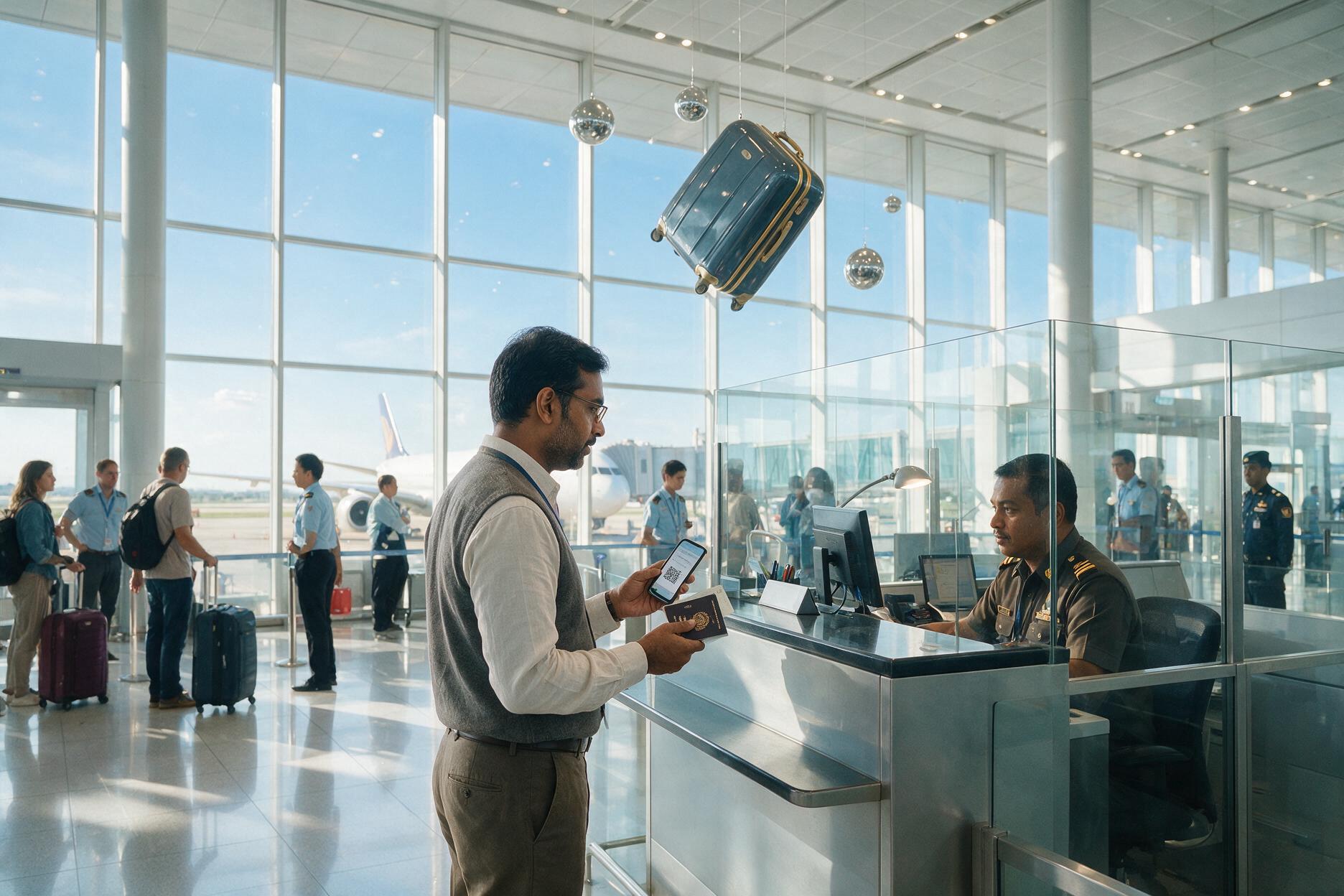
This is the part people skip past when they read “visa-free” and assume it means no paperwork. It doesn’t. The Malaysia Digital Arrival Card is a mandatory pre-arrival declaration for almost every foreign traveler, Indian nationals included, regardless of the visa exemption. It’s not a visa — it’s closer to the arrival card you used to fill out on paper on the plane, just digitized and required in advance.
Here’s how it actually works:
- Where: the only official portal is imigresen-online.imi.gov.my/mdac/main. Bookmark that exact address — there are third-party sites that look official and charge USD 40–80 to “process” what is a completely free government form. If a site asks for a card payment to submit your MDAC, close the tab.
- When: you can only submit it within 3 days (72 hours) of your arrival in Malaysia — not earlier. The portal rejects early submissions, which trips up a surprising number of travelers who try to get it done a week ahead out of habit.
- What it asks for: passport details exactly as they appear in your passport (this is where name-mismatch rejections happen — double check spelling and don’t abbreviate), your flight number and arrival date/time, the address of your first night’s accommodation in Malaysia, and your purpose of visit.
- How long it takes: genuinely 5–10 minutes if you have your passport and hotel confirmation open. You’ll get a QR code by email — save it offline, since airport WiFi at KLIA is not something to rely on the moment you land.
One more practical note that catches Indian travelers off guard: Malaysia’s autogate (e-Gate) at KLIA is not open to Indian passport holders. It’s currently restricted to a shortlist of nationalities that includes the US, UK, Japan, and South Korea. That means you’ll be in the standard manned immigration queue regardless of how smoothly your MDAC and visa exemption go — budget extra time after a long-haul arrival, especially if you’re landing alongside two or three other wide-bodies from the Gulf.
Proof of Funds and What Else to Carry
Malaysian immigration officers have discretion to ask for evidence that you can support yourself for the trip, and recent reporting around the 2026 extension has pointed to roughly ₹40,000–₹50,000 in accessible funds as a reasonable benchmark — bank statements, a forex card balance, or credit card with adequate limit all work. It’s not usually demanded at the counter for straightforward tourist arrivals with a return ticket and a hotel booking, but it’s a document you want available on your phone or in a folder, not something you’re improvising at immigration.
Alongside that, carry:
- Passport valid for at least 6 months from your date of entry
- A confirmed return or onward ticket — an open-ended one-way ticket is one of the more common reasons for extra questioning
- Proof of accommodation for at least your first few nights (this doubles as what you’ll need for the MDAC form anyway)
- A rough itinerary, even informally, if asked
Mistake to avoid: treat the 30-day limit as firm, not a suggestion. It genuinely cannot be extended from within Malaysia — the Social Visit Pass you get on arrival isn’t renewable. Overstaying carries fines starting around RM 1,000 per day, and can escalate to detention and an entry ban of anywhere from one to five-plus years. If your trip might run long, the honest fix is booking 28–29 days instead of exactly 30, giving yourself a buffer against a delayed or cancelled return flight.
Getting There: Flights from India to Kuala Lumpur
Kuala Lumpur is genuinely well-connected from India — better than most Southeast Asian capitals — with both full-service and low-cost carriers running the route. As a rough guide from search fares at the time of writing (always recheck closer to your dates, since fuel surcharges and seasonality move these fast):
- Delhi–Kuala Lumpur: direct flights on Air India and Malaysia Airlines/AirAsia, roughly 5–5.5 hours, fares from around ₹20,000 one-way in economy during non-peak windows
- Mumbai–Kuala Lumpur: direct and one-stop options, similar flight time, fares from roughly the same band depending on how far out you book
- Chennai–Kuala Lumpur: one of the shorter, more frequently served routes given Chennai’s Southeast Asia traffic, direct flights on Air India and Malaysia-based carriers, fares often starting a little higher than Delhi/Mumbai in the ₹25,000+ range for economy
- Bengaluru–Kuala Lumpur: a mix of direct and one-stop (often via Singapore or Kuala Lumpur itself for onward Indian cities), with fares ranging widely — sub-₹15,000 deals show up on low-cost carriers, but expect ₹25,000–₹38,000 for more convenient timings and full-service options
If Langkawi or Penang is your actual endpoint rather than KL, it’s usually cheaper and faster to fly into Kuala Lumpur and connect domestically — AirAsia, Malaysia Airlines, and Batik Air all run frequent KL–Langkawi and KL–Penang hops, around an hour in the air, rather than hunting for a rare direct charter from India.
Smart-spending tip: book the KL leg and the domestic connector as separate tickets only if you’re comfortable managing your own transfer — if your dates are tight, a single itinerary booked through one agent (or through us) protects you if the international leg runs late, since airlines aren’t obligated to rebook a missed domestic connection on a separate ticket.
Best Time to Visit
Malaysia sits close enough to the equator that there’s no dramatic “season” the way there is further north — expect heat and humidity year-round, with afternoon showers a genuine possibility on any given day. That said, the west coast — where Kuala Lumpur, Langkawi, and Penang all sit — has a noticeably drier window from December through February, which is also when the east coast (Perhentian, Redang, and similar islands) is hit by the Northeast Monsoon and effectively shuts down for tourism. So if your trip is KL plus Langkawi and/or Penang, December–February is the safest bet for consistent sunshine, followed by a reasonably good shoulder window from June to August.
The stretch to be more cautious about is late September through November, when the monsoon transition brings heavier, more frequent rain even on the west coast — not a dealbreaker, since Malaysia’s rain tends to be short and intense rather than daylong, but worth knowing if you’re planning beach days in Langkawi specifically.
How Get Tripped Would Package This
A 30-day allowance is generous, but almost nobody actually needs 30 days — what it does is remove the pressure to cram everything into a rushed week. Here’s how we’d typically structure it, depending on who’s travelling.
Kuala Lumpur + Langkawi (7–9 days) — Couples and Honeymooners
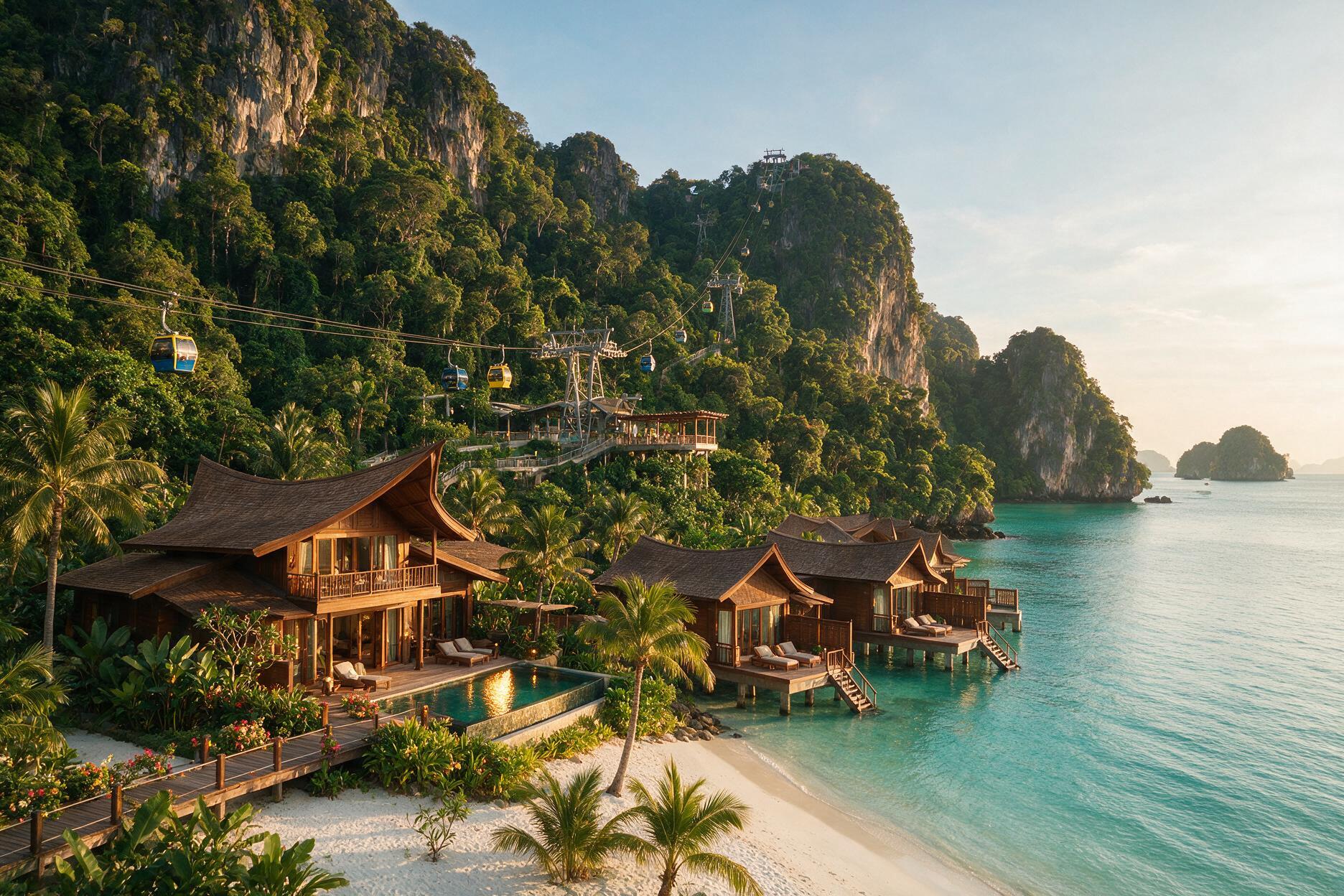
Two to three nights in KL to handle the culture, food, and skyline, then straight to Langkawi for four to six nights of actual slowing down — private villas or beachfront suites, sunset cruises through the mangroves, a cable car ride up to the Sky Bridge with the Andaman Sea underneath you. Langkawi is also a duty-free island, which is a genuinely nice bonus for couples doing a bit of unhurried shopping without KL’s crowds. We’d build this with a private airport transfer on both ends and a driver in KL rather than relying on public transport for a honeymoon pace.
Kuala Lumpur + Penang (6–8 days) — Food-Forward and Family Trips
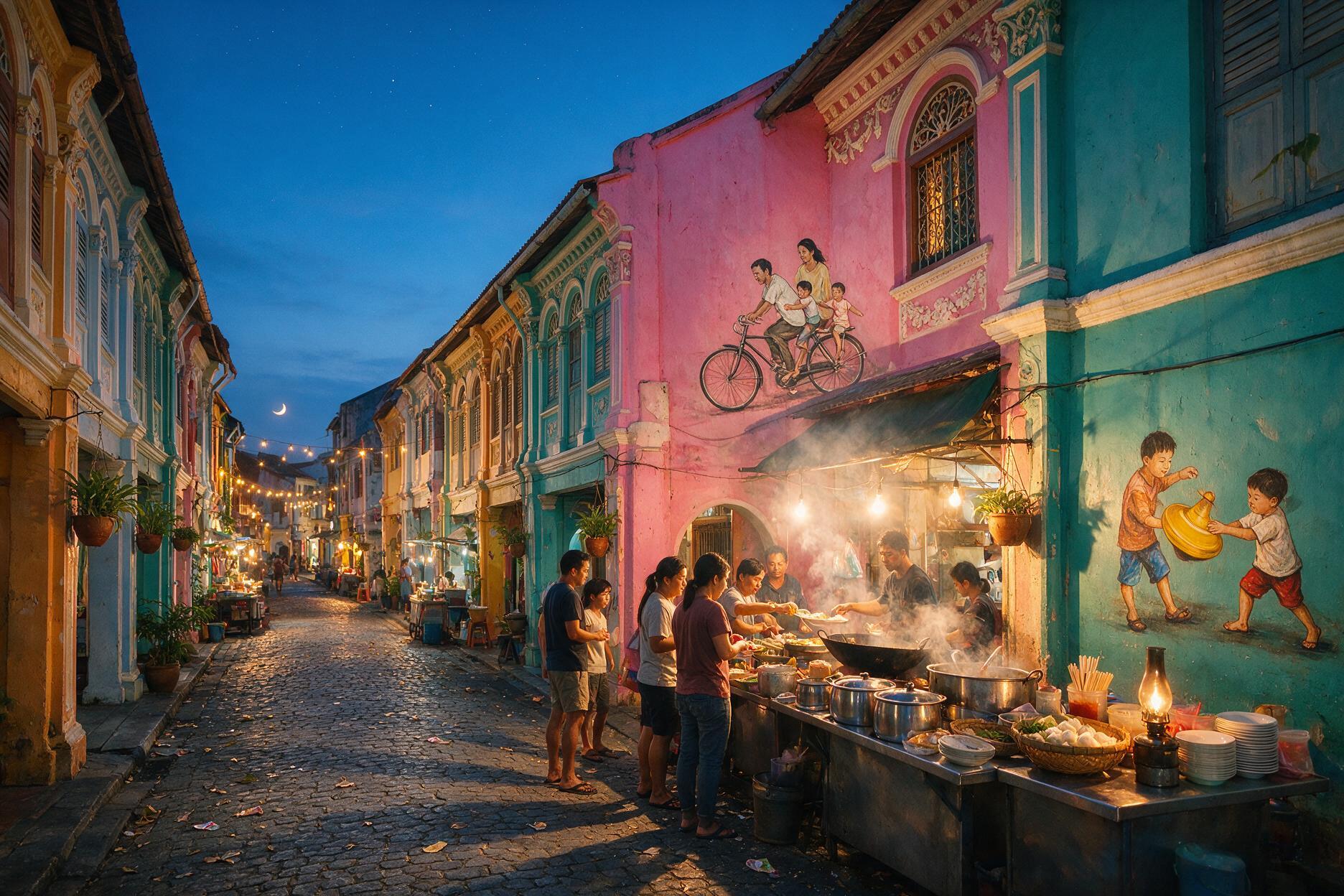
If food is the actual point of the trip, Penang earns its reputation. George Town’s UNESCO-listed old town works well for families too — it’s walkable, the street art turns sightseeing into something kids actually enjoy hunting for, and the hawker culture means everyone can order what they want rather than negotiating one restaurant everyone agrees on. Pair 3 nights in KL with 3–4 in Penang. If you want the Kuala Lumpur food side of this mapped out in more granular, street-by-street detail, we’ve already walked through it in our Kuala Lumpur food trail piece — worth reading alongside this one if food is the priority.
The Full Loop (10–12 days) — Multi-Generational or First-Time Malaysia
KL, then Langkawi, then Penang (or Penang before Langkawi, depending on flight timing), with a private driver or pre-booked domestic connections handling the moves. This is the version that actually uses the extra runway the 30-day exemption gives you, and it’s the one where booking through a single operator earns its keep — coordinating three cities, multiple hotel check-ins, and domestic flight timing for a family of six is exactly the kind of thing that goes sideways when it’s self-booked across four different apps.
Where to Stay in Kuala Lumpur
- KLCC (around the Petronas Towers): the obvious choice for a first visit, and worth the slight premium — waking up to the towers lit up, or from a rooftop pool at dusk, is a genuinely different experience than seeing them from a taxi window. Grand Hyatt Kuala Lumpur and Banyan Tree Kuala Lumpur both sit in this bracket.
- Bukit Bintang: KL’s shopping and nightlife core, dense with mid-range boutique hotels and better positioned if you want to walk to dinner rather than book a car every night.
- Bangsar: quieter, more residential, popular with longer-staying expats — a good pick if you’re in KL for four-plus nights and want café culture and a slower pace between day trips, rather than being in the middle of the tourist density the whole stay.
A Few Real Recommendations
Hidden gem: skip the obligatory rooftop bar everyone photographs and walk instead to KLCC Park in the early morning, before 8am, when the joggers have the reflecting pool to themselves and the Petronas Towers are mirrored in still water with none of the evening crowd. It’s free, it’s five minutes from the towers themselves, and almost nobody does it because it means being up early on holiday.
Fun fact: the Petronas Towers were the tallest buildings in the world from 1998 to 2004, and they’re still the tallest twin towers on earth — the connecting Skybridge sits on the 41st and 42nd floors and was, for a while, the highest bridge of its kind anywhere.
Mistake to avoid: don’t visit Batu Caves at midday. It’s an active Hindu temple site up 272 rainbow-painted steps, genuinely worth seeing, but the heat by noon combined with zero shade on the staircase turns it from a highlight into an ordeal — go by 9am, or go late afternoon when the light through the cave mouth is better for photos anyway.
Smart-spending tip: use Grab (the regional ride-hailing app) rather than airport taxi counters — it’s transparent on price upfront, widely used, and typically cheaper than a counter taxi for the KLIA-to-city run, without the haggling.
Photography tip: for Penang, head to Armenian Street in George Town in the early morning for the street art — the “Children on a Bicycle” mural and its neighbors get mobbed by tour groups from around 10am, and the soft early light works better on the wall paintings anyway.
Local food to actually seek out: Kimberley Street in George Town turns into a night hawker market after dark — char kway teow cooked over a wok that’s clearly seen forty years of service, and a rojak stall that’s usually got a line of locals rather than tourists, which is generally the tell that it’s worth the wait.
Money, SIM Cards, and Everyday Logistics
Currency: the Malaysian Ringgit (MYR). Cards are widely accepted in KL, Penang, and at Langkawi resorts, and Touch ‘n Go — Malaysia’s e-wallet — is used everywhere from toll roads to convenience stores, but hawker stalls and smaller shops still often run cash-only, so keep some ringgit on hand rather than assuming card-everywhere the way you might in Singapore.
SIM/eSIM: Digi, Maxis, and Celcom all sell tourist SIMs at the airport with reasonable data packages, or you can pre-book an eSIM through providers like Airalo before you fly, which saves the arrivals-hall queue if you land late.
Safety: Malaysia is broadly safe for tourists, including solo women travelers, with the usual city-travel precautions around bag-snatching in crowded markets. Tap water is treated but not commonly drunk straight from the tap by locals either — bottled or filtered water is the norm, and worth doing given how much walking-and-heat is involved in a KL/Penang day. Dengue is present in the region, so basic mosquito repellent in the evenings is a sensible habit, not paranoia.
FAQs
Do Indians need a visa for Malaysia in 2026?
No — Indian passport holders can enter visa-free for stays of up to 30 days, for tourism or social visits, under an exemption that’s confirmed through 31 December 2026. You do still need to submit the free Digital Arrival Card (MDAC) before you fly.
Is the MDAC the same thing as a visa?
No. The MDAC is a mandatory pre-arrival declaration, similar to an old-style paper arrival card, not a visa. It’s free, submitted online within 3 days of arrival, and required alongside the visa exemption, not instead of it.
How much money do I need to show to enter Malaysia?
Roughly ₹40,000–₹50,000 in accessible funds is the commonly cited benchmark, though it’s not routinely demanded at the counter for tourists with a return ticket and confirmed accommodation. Have bank statements or a forex/credit card available just in case.
Can I extend my 30-day stay once I’m in Malaysia?
No. The Social Visit Pass issued on arrival is not extendable from within the country. If you need more time, you’d have to exit and re-enter, which isn’t guaranteed and isn’t something to plan around.
Is eNTRI still a thing?
Not in practice. eNTRI was the older, 15-day, application-required system used before December 2023. It’s been superseded by the visa exemption plus MDAC, which allows longer stays, more entry points, and no advance application. Some older blog posts and agents still reference eNTRI’s rules — treat that as outdated.
Do I need the MDAC if I’m just transiting through Kuala Lumpur airport?
If you’re not clearing immigration — staying airside for a connecting flight — you typically don’t need it. If you’re leaving the airport for any reason, even a short layover hotel stay, you do.
Can Indian travelers use the autogate/e-Gate at KLIA?
No, not currently. Indian passport holders use the standard manned immigration counters, so budget extra time on arrival, particularly if multiple long-haul flights land around the same time.
What happens if I overstay my 30 days?
Fines start at around RM 1,000 per day, and repeated or longer overstays can lead to detention and an entry ban ranging from one to five-plus years. Book your return with a few days’ buffer rather than cutting it to exactly day 30.
The Trip This Actually Unlocks
The visa change is the headline, but it’s not really the story — the story is that Malaysia just became one of the lowest-friction premium trips available from India: direct flights under six hours from most major cities, a beach-and-city combination that used to require two separate visa processes, and thirty days to actually spend it instead of racing a fifteen-day clock. Whether that’s a week in KL and Langkawi for a honeymoon, or a longer multi-city loop for a family that’s never done Southeast Asia together, the paperwork is no longer the reason to put it off.
If you want the MDAC handled, flights and transfers coordinated, and a KL–Langkawi–Penang route built around how many days you actually have, get in touch with Get Tripped Travels and we’ll put together a proposal — no obligation, just a plan you can look at and decide from there.