The rice terrace everyone photographs in Bali is in Tegalalang, and by 9 a.m. it comes with a ticket queue, a row of rented swings, and roughly forty other people standing in the exact spot you wanted for your own picture. An hour and a half east, in a village called Sidemen, there’s a similar view — arguably a better one, with Gunung Agung rising behind the paddy fields instead of a parking lot — and most mornings you’ll have it to yourself. Same island, same crop, completely different trip.
That’s really the whole argument for skipping the well-worn Ubud–Seminyak–Canggu triangle on your next Bali trip, or at least not stopping there. Those three places earned their reputation honestly — Ubud’s culture, Seminyak’s restaurants, Canggu’s surf and cafés are genuinely good. But they’re also the version of Bali that’s been photographed, ranked, and listicled to death, which means the crowds, the markup, and the queue for a coffee with a view have all caught up. This guide skips that circuit almost entirely and points you instead toward the villages, waterfalls, coastline, and food that Bali’s regulars — long-stay expats, dive instructors, drivers who’ve worked the island for twenty years — actually recommend to each other. Think East Bali’s rice country, the cool hills of the north, and a stretch of coast most tourists never see because it’s a twenty-minute walk downhill to get there.
In This Guide
- Best Time to Go — and Why Shoulder Season Wins Here
- Getting to Bali and the Visa Situation for Indian Travellers
- Sidemen: East Bali’s Rice Country, Minus the Queue
- Munduk: The Cool-Climate Village Everyone Drives Past
- Amed and Tulamben: The Quiet Coast
- The Bukit Peninsula’s Other Beaches
- A Food Trail That Skips the Beach Club Menu
- Money, Costs, and the One Scam Worth Knowing About
- A Few Practical Notes Before You Go
- Who This Trip Actually Suits
- FAQs
Best Time to Go — and Why Shoulder Season Wins Here
Bali’s dry season runs roughly April to October, and July–August is peak — warmest, driest, and busiest, with kite season on the beaches and every villa in the south fully booked. If your whole plan is hidden gems, though, peak season works against you a little: even the quiet places get less quiet when the island as a whole is full. May, June, and September are the better call. You still get dry, reliable weather (24–35°C, lower humidity than the wet months) without the July crowds, and prices on villas in places like Sidemen and Munduk soften noticeably.
November through March is Bali’s wet season, and it’s not a write-off — the rain tends to arrive as short, heavy downpours rather than an all-day grey wash, and the rice terraces are genuinely greener. But Munduk, up in the hills, gets wetter and cooler than the rest of the island in this window, so if a north-Bali waterfall trek is the point of your trip, aim for May–September instead.
Fun fact: August is Bali’s driest month and also its windiest, which is exactly why you’ll see traditional bamboo kites — some the size of small cars — flying over rice fields on weekends. It’s a local pastime, not a tourist show, and if you’re driving through East Bali on a Sunday afternoon in August you’ll likely catch one without trying.
Getting to Bali and the Visa Situation for Indian Travellers
There’s no direct flight from India to Denpasar yet, so every route involves a stop — usually Singapore, Kuala Lumpur, or Bangkok, occasionally Jakarta. Total travel time from Mumbai or Delhi lands around 8–12 hours depending on the layover, and round-trip fares typically run ₹25,000–45,000 from the major metros, with Chennai and Bengaluru sometimes coming in cheaper and with shorter layovers. Worth building a few hours of buffer into a Singapore or KL connection rather than booking the tightest possible layover — Southeast Asian hub airports are efficient, but a delayed first leg can chew through a short connection fast.
For the visa: Indian passport holders get a Visa on Arrival, and the smarter version of it is the e-VOA, which you apply for online before you fly. It costs IDR 500,000 (roughly ₹2,800–3,000), takes anywhere from a few hours to three working days to process, and once approved you print the confirmation and clear immigration faster than the on-arrival queue. It’s valid for a 30-day stay and can be extended once for another 30 days through an immigration office in Bali if you’re staying longer. You’ll need a passport valid for six-plus months, a passport photo, proof of onward travel, and accommodation details to apply — apply through Indonesia’s official evisa portal, not a third-party site that charges a “service fee” on top for something you can do yourself in ten minutes.
Separately — and this trips up a lot of first-time visitors — Bali charges a one-time Tourism Levy of Rp 150,000 (about $9.50) per international visitor, unrelated to the visa. Pay it either online in advance at the official government portal or at counters in the arrival hall using a card (no cash accepted there). More on the scam version of this fee below, because it’s the single most common thing that catches new arrivals off guard.
Sidemen: East Bali’s Rice Country, Minus the Queue
Sidemen sits in the hills of East Bali, technically only about an hour from Ubud but often closer to two or three once you factor in Bali’s traffic — which, honestly, is part of what keeps it quiet. It’s rice terrace country, but instead of one famous viewpoint with a ticket booth, the terraces wrap around the whole village, so you get the view from your villa balcony, from the road, from a warung table, without paying for the privilege or sharing it with a tour bus.
If you want one specific vantage point, Bukit Cinta (“Love Hill”) is about 45 minutes north of the village and is the spot locals go for sunrise — Gunung Agung, Bali’s highest and most sacred volcano, is usually visible before the clouds roll in around mid-morning, which is your actual deadline for getting up there. For a shorter outing, walk from Warung Makan Iseh through the surrounding paddy — there’s no single “best” photo spot; it’s more that almost anywhere you point a camera works.
Two other things worth building a half-day around: Tukad Cepung Waterfall, where water drops through a narrow canyon lit by a gap in the rock overhead — it photographs unusually well around midday (entrance is a modest 30,000 IDR); and Telaga Waja River rafting, a genuinely good half-day of Class II–III rapids through jungle for about 500,000 IDR (~$25) per person. Neither gets anywhere near the crowds of Ubud’s rafting circuit.
Where to stay: This is where Get Tripped would point couples toward something like Nivriti Bali or Wapa Di Ume Sidemen — boutique, valley-facing, the kind of place where breakfast happens on a private deck looking at the terraces rather than a shared restaurant. Sidemen doesn’t really do beach-club energy; it does quiet, and the accommodation matches that.
Mistake to avoid: people budget half a day for Sidemen as a drive-through stop on the way to Lempuyang or Besakih temple. Give it at least one full night, ideally two — the point of Sidemen is the slow morning and the empty viewpoint at 6:30 a.m., and you lose both if you’re rushing through by lunch.
Munduk: The Cool-Climate Village Everyone Drives Past
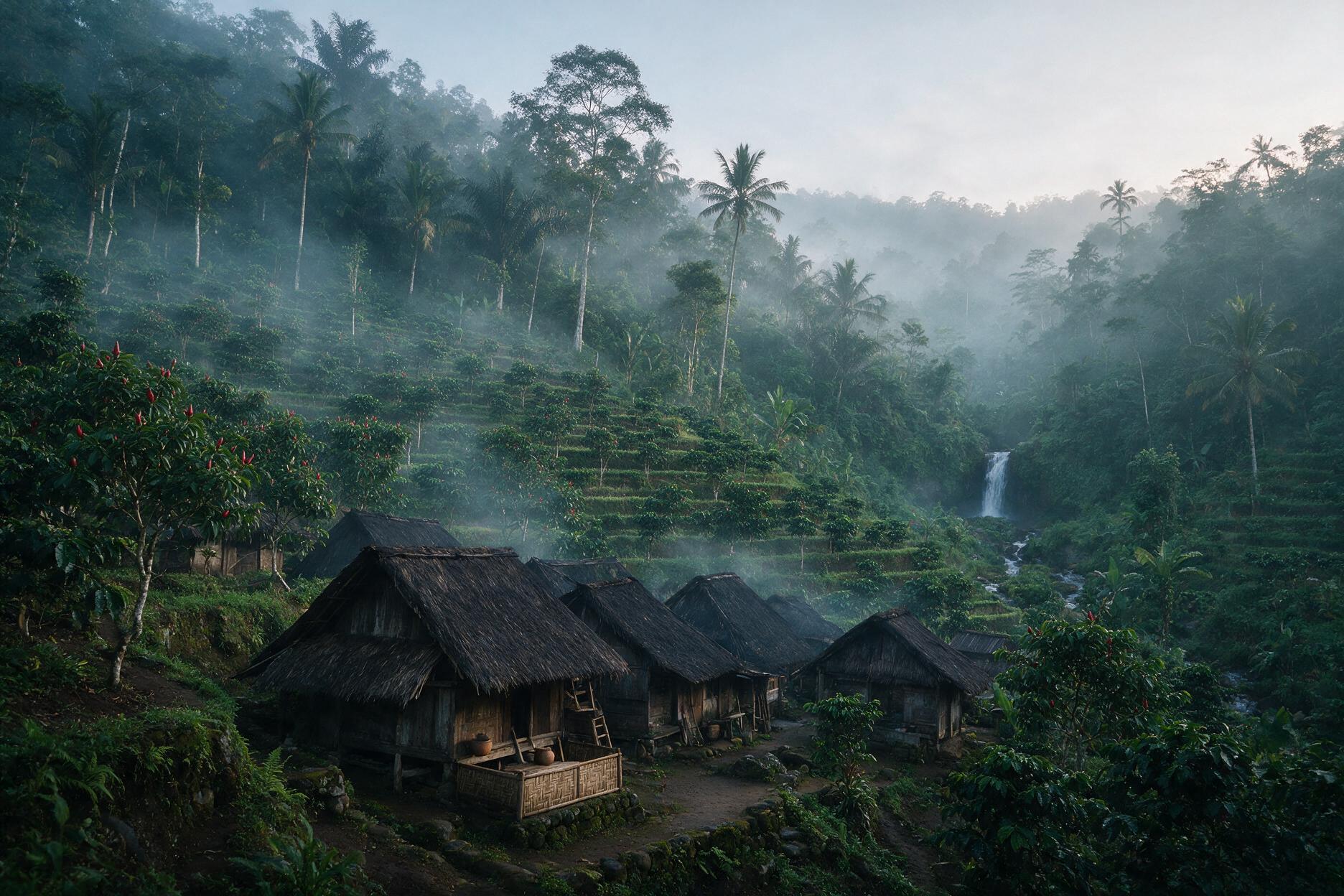
Most visitors experience North Bali as a single long day trip to the Lovina dolphins or Sekumpul Waterfall and back. Munduk, the village in between, gets skipped entirely — which is a shame, because it’s the one part of Bali that feels genuinely different in temperature and mood, not just scenery. Sitting at altitude in the hills of Buleleng regency, about 1.5 hours from Ubud, Munduk runs noticeably cooler than the coast — pack a light jacket, because mornings can be properly chilly, which is not a sentence anyone expects to write about Bali.
The village is surrounded by clove and coffee plantations and a scattering of waterfalls, several of which stay quiet simply because they’re not the one Instagram has decided is “the” Bali waterfall. Banyumala Twin Waterfall (50,000 IDR) has a swimmable pool at the base and rarely feels crowded even midmorning. Golden Valley Waterfall (20,000 IDR) is smaller and less visited still. Sekumpul, Bali’s tallest at around 80 metres, is spectacular but also the one everyone’s heard of — go early or skip it if crowds are the whole point of your trip.
Munduk Moding Plantation runs walking tours through its coffee and clove terraces that explain how Balinese arabica actually gets processed — worth doing if you want the coffee-plantation experience without the civet-cage tourist-trap version some other plantations lean on. Stay there or at Munduk Cabins if you want the boutique jungle-lodge version of the village; both lean into infinity-pool, misty-hillside romance rather than beach glamour, which makes Munduk a genuinely different kind of Bali night than anything in the south.
Photography tip: the light in Munduk is best in the hour after sunrise, when mist still sits in the valleys below the village — by 9 a.m. it’s usually burned off. If you’re staying overnight, set an alarm; it’s worth it here in a way it often isn’t for beach sunrises.
Amed and Tulamben: The Quiet Coast
East Bali’s coastline — a string of black-sand fishing villages running from Amed down toward Tulamben — is where you go if Uluwatu’s cliff views sound great but the crowd at sunset does not. These villages never had the surf-tourism boom that shaped the Bukit and Canggu, so they stayed working fishing towns first, destinations second. You’ll see traditional outrigger jukung boats lined up on the black volcanic sand every morning, and locals still mend nets on the beach rather than posing for one.
Amed itself is really a loop of small bays — Jemeluk being the most swimmable — with decent snorkeling straight off the beach and a noticeably slower pace than anywhere in South Bali. A little further along, Tulamben is built almost entirely around one thing: the USAT Liberty, a WWII-era US Army cargo ship torpedoed offshore in 1942 and pushed onto the reef by a 1963 volcanic eruption, now sitting in 5–30 metres of water just off the beach. It’s one of the most accessible wreck dives in the world — you can walk in from the shore — and it’s covered in soft coral and reef fish after eight decades underwater. Even non-divers can snorkel the shallow end of it.
Hidden gem within a hidden gem: skip the dive operators clustered right at the main Tulamben entry point and ask your villa or driver for a smaller local outfit a few hundred metres down the coast — same wreck, same reef, a fraction of the crowd in the water with you, and often cheaper.

The Bukit Peninsula’s Other Beaches
Uluwatu, on the Bukit peninsula’s western edge, is stunning and also exactly as crowded at sunset as its reputation suggests. What most visitors don’t realise is that the same peninsula has a handful of beaches that see a fraction of the traffic, purely because getting to them takes effort most people skip.
Nyang Nyang and Nunggalan sit on the same stretch of coastline in the Pecatu area, split into western and eastern halves. Getting down is the filter: it’s a 20–30 minute walk over steep, rocky terrain, unshaded on the Nyang Nyang side, with a vendor selling water and hats about halfway down — bring your own supplies regardless, especially for Nunggalan, which has no facilities on the beach at all. Parking is a token 2,000 IDR. The payoff for the walk is a wide stretch of sand that stays close to empty even when Bingin and Padang Padang, twenty minutes away, are packed — Nunggalan even has its own small shipwreck sitting just offshore.
Mistake to avoid: doing the hike down at midday in the dry season. The rock is exposed and there’s minimal shade on the way — go early morning or late afternoon, and wear actual shoes, not sandals, because the path is loose scree in places.
A Food Trail That Skips the Beach Club Menu
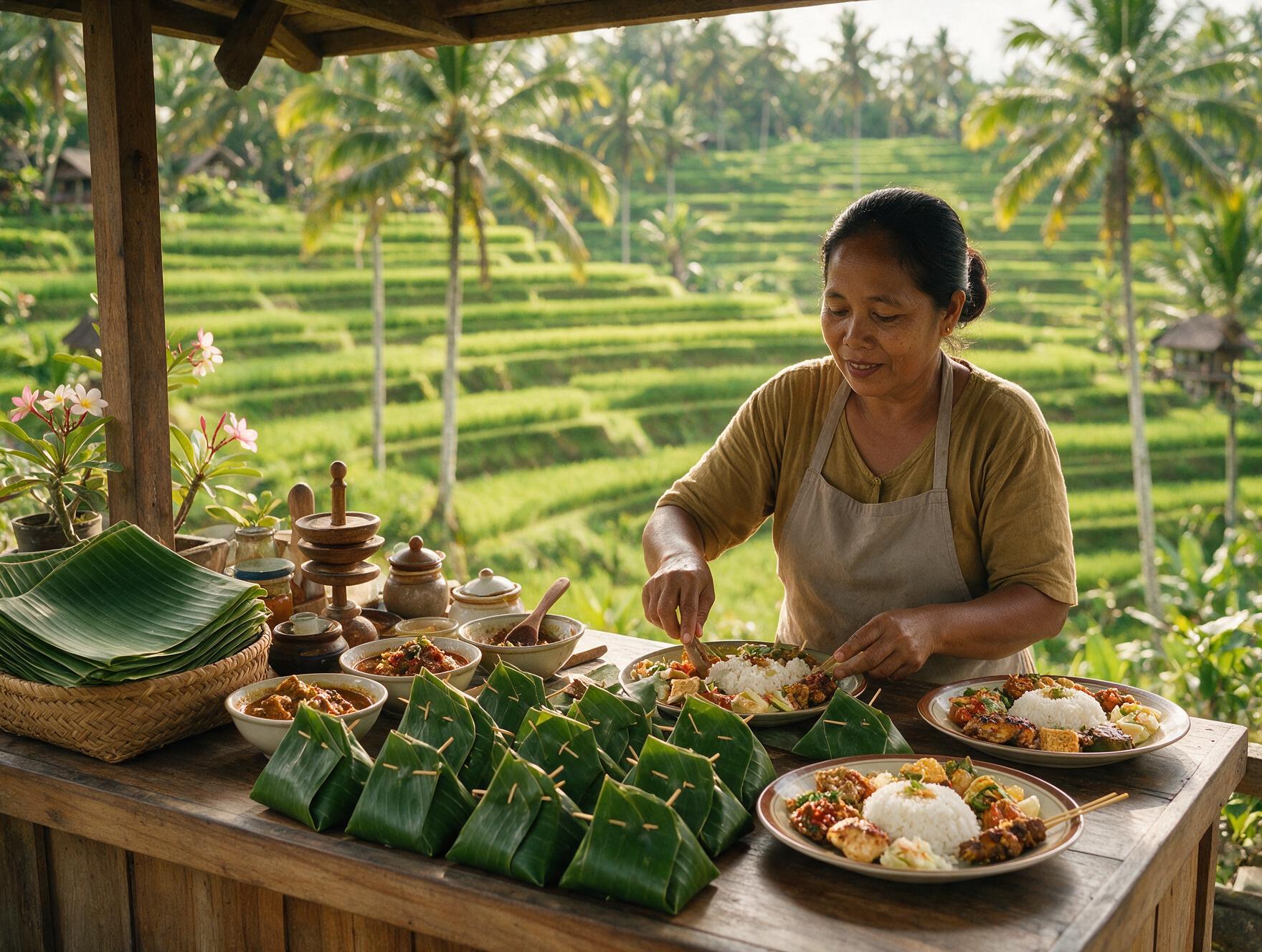
The best Balinese food isn’t at the beach clubs — it’s at warungs that have been cooking the same three or four dishes well for years, often run by one family. In Sidemen, Warung Makan Iseh and Warung Tirta Unda both serve unfussy East Bali home cooking — nasi campur with whatever vegetables and protein are in season that week — at a fraction of what you’d pay for a similar plate in Ubud. La Montagne, also in Sidemen, is the closer-to-café version if you want good coffee with the rice-terrace view rather than a full meal.
Babi guling — Balinese spit-roasted pork, seasoned with a paste of turmeric, galangal, and chili and stuffed inside the pig before roasting — is the dish worth actively seeking out rather than ordering off a resort menu, where it’s often a pale version of the real thing. Ask your driver where they’d eat it; East Bali towns like Gianyar have warungs that sell out by early afternoon because they only cook one batch a day, which tells you everything about how it’s meant to be eaten — fresh, at lunch, not reheated for a dinner crowd.
Smart-spending tip: a full meal at a proper local warung generally runs 25,000–50,000 IDR (roughly ₹130–260) per person, versus 150,000–300,000 IDR for a broadly similar dish at a South Bali beach club or resort restaurant. You’re not trading down on flavour — often the opposite — you’re just not paying for the ocean view and the DJ.
Money, Costs, and the One Scam Worth Knowing About
Indonesia runs on the Rupiah, and cards are widely accepted in villas, restaurants, and dive shops, but warungs, parking attendants, and small waterfall entry counters are cash-only. QRIS — Indonesia’s unified QR payment system — is increasingly common even at small vendors and works with some Indian UPI apps now linked through cross-border partnerships, but don’t rely on it outside the bigger towns. Carry cash for East Bali and Munduk specifically; ATMs thin out once you’re off the main tourist corridor, and running low in Sidemen at 8 p.m. is not a fun errand.
For getting around, a private driver is the sensible option here — the villages are far enough apart, and the roads windy enough, that self-drive scooters make less sense than they do for a Canggu-based trip. Expect roughly IDR 650,000–800,000 ($45–55) for a full 10–12 hour day with driver, fuel, and parking included, or IDR 500,000–650,000 for a half day; entrance fees and tolls are separate. For a multi-day loop through Sidemen, Munduk, and the east coast, book one driver for the whole route rather than arranging fresh transport at each stop — it’s noticeably cheaper than day-hire each time.
The scam worth knowing about, specifically: Bali’s official Tourism Levy is Rp 150,000, paid only through lovebali.baliprov.go.id or the official counters at the airport. Fake sites with similar names — often ending in .com or .net rather than the real .go.id — charge double or triple that. Taxi drivers or hotel staff who offer to “handle it for you” for a fee are also worth declining; it takes about four minutes to do yourself, and the only legitimate confirmation is a QR code from that one official domain.
A Few Practical Notes Before You Go
Pack for two climates in one trip — light, breathable clothes for the coast and Sidemen, plus one layer for Munduk’s cooler evenings. Bring proper closed shoes if you’re doing the Bukit hikes or any waterfall trekking; flip-flops on wet rock are how most minor injuries in Bali actually happen. eSIMs are the easy call for connectivity — most major providers cover Bali well, and it’s simpler than hunting for a local SIM on arrival. And book any temple visits (Besakih, Lempuyang) with a guide who knows the current sarong/sash rules and photo-queue system at Lempuyang’s “Gate of Heaven” — it changes periodically, and turning up without the right dress code means you’re renting one at the gate anyway.
Who This Trip Actually Suits
For couples and honeymooners, this is arguably a stronger itinerary than the standard South Bali loop — a night or two in a Sidemen valley villa, a cool, quiet evening in Munduk, then two or three days back on a beach (Nusa Dua or a quieter Bukit clifftop stay) to close the trip out. It reads less like a checklist and more like an actual getaway, and the pace suits it — nobody’s rushing between beach clubs.
For solo travellers and small groups who want a more textured, less scripted Bali than the digital-nomad-café circuit, East Bali and Munduk give you real village life, better prices, and conversations with drivers and warung owners who have time for you precisely because you’re not one of forty people at their table that hour. It’s also simply easier to find a good driver-guide who’ll shape the day around your interests when you’re not competing with a tour bus’s schedule.
FAQs
Is Bali overrated?
The famous parts can feel that way if you only see them at peak hours — Tegalalang at 10 a.m., Uluwatu at sunset, Canggu’s main strip on a Saturday. The island itself isn’t overrated; the itinerary most people run is just repetitive. Sidemen, Munduk, and the east coast are the same island with almost none of the crowd.
What’s the best hidden beach in Bali?
For sheer emptiness relative to quality, Nyang Nyang on the Bukit peninsula is hard to beat — wide, clean sand, a proper hike as a natural filter, and a fraction of the crowd at nearby Bingin or Padang Padang. For a completely different, working-fishing-village feel, Amed’s black-sand bays are the pick.
How many days do you need to see Bali beyond the tourist trail?
Five to seven days works well if this is layered onto a broader Bali trip — two nights in Sidemen, one or two in Munduk, two or three on the east coast or a quieter Bukit stay. It can be done faster with a private driver, but you lose the slow-morning payoff that’s the actual point.
Is Sidemen or Munduk better for a honeymoon?
Both work, and pairing them is better than choosing one — Sidemen for rice-terrace romance and warm evenings, Munduk for a cooler, misty, almost hill-station feel that’s a genuine change of pace from the rest of a Bali trip.
Do I need a 4×4 or can any car reach these places?
A standard car with driver handles Sidemen, Munduk, and the main roads into Amed and Tulamben without issue — the roads are paved, just narrow and winding in the hills. You don’t need anything specialised; you need a driver who knows the route well, since GPS can be unreliable in the mountains.
Is the USAT Liberty wreck dive suitable for beginners?
Yes — it’s one of the most accessible wreck dives anywhere, with the top of the wreck at around 5 metres and shore entry, no boat needed. Even snorkelers can see a meaningful part of it from the surface.
Is it safe to hike down to Nyang Nyang or Nunggalan beach alone?
Generally yes in daylight, but go with proper shoes, water, and ideally not right at midday when the exposed rock gets brutally hot. It’s remote enough that there’s no lifeguard or facilities, so it suits a confident, prepared traveller more than a casual afternoon wander.
What’s the biggest mistake first-time visitors make chasing “hidden gems” in Bali?
Trying to cram too many of them into one day. Sidemen, Munduk, and the east coast are each worth slowing down for — the whole value of these places is the unrushed morning, and driving three hours between two of them in a single day undoes exactly the thing you came for.
Before You Go
Bali’s most photographed sights earned their fame, but fame is precisely what’s made them crowded, marked up, and a little flattened by repetition. Sidemen’s rice terraces, Munduk’s cool hills, the black-sand coast around Amed and Tulamben, and the Bukit’s harder-to-reach beaches are the same island working exactly as well without the queue. The trade-off is honest: you’ll drive a bit more, you’ll need cash in your pocket more often, and nobody’s going to hand you a laminated map with the best photo spot circled. That’s rather the point.
If you’d rather not stitch this together yourself — routing between Sidemen, Munduk, and the coast with the right driver, the right villas, and none of the usual tourist-trap detours — Get Tripped’s Bali specialists can build the itinerary around exactly this trip. Get in touch and we’ll put together a route that matches how many days you have and what kind of trip you’re actually after — honeymoon, slow solo trip, or somewhere in between.