What actually changed in July 2026
Bali tightened tourist screening at its major entry points and top destinations starting July 28, 2026 — increased checks at the airport and popular sites, part of a broader 2026 push toward what the provincial government is calling “quality tourism.” It’s the latest step in a rulebook that’s been getting more detailed since the tourism levy launched back in 2024 and the unified All Indonesia Arrival Card replaced three separate immigration forms.
Here’s the useful, slightly less alarming context: a stricter proposed regulation — one that would have made proof of funds and detailed itinerary checks mandatory for every Visa on Arrival traveler — has not actually passed Bali’s provincial legislature as of this writing, and would need national government sign-off before becoming binding. So the July enforcement bump is real and worth preparing for, but it’s not yet the sweeping overhaul some headlines made it sound like. Immigration officers already have discretion to ask for proof of funds or onward travel at any international border, Bali included, and that discretion is being used more visibly right now than it was a year ago.
What that means practically: come prepared as if you might be asked, because you increasingly might be, even though it’s not a guaranteed checkpoint for every traveler.
Bali visa for Indian passport holders: the current rules
Indian citizens need a Visa on Arrival (VoA) or an e-VoA applied for in advance — there’s no visa-free entry to Indonesia for Indian passport holders.
- Cost: IDR 500,000, roughly ₹2,900–₹3,000.
- Validity: 30 days, extendable once for another 30 days.
- e-VoA process: Apply through the official portal (evisa.imigrasi.go.id) 1–2 weeks before travel. Upload your passport bio page (valid 6+ months) and a photo, pay online, and you’ll get a QR-coded e-VoA by email within 24–72 hours. This is worth doing ahead of time rather than queueing for VoA on arrival — it’s the same price, and it skips the airport line entirely.
- Extension: If you want the extra 30 days, you’ll need your passport, the original VoA stamp, a return ticket, your hotel address, another IDR 500,000, and biometrics at an Indonesian immigration office — budget 3–5 working days for processing.
- A quiet warning worth repeating: stick to the official government portal. Third-party sites charging inflated “service fees” for something that costs the same IDR 500,000 either way are common, and some don’t deliver a valid e-VoA at all.
The All Indonesia Arrival Card, explained
Every international visitor now completes the All Indonesia Arrival Card (AIAC) online, which merged what used to be three separate forms — customs declaration, health pass, and immigration details — into one. Fill it out within 72 hours before you land; it’s free, done entirely online, and there’s no paper version to carry. Keep the confirmation on your phone (screenshot it — don’t rely on having signal the moment you land).
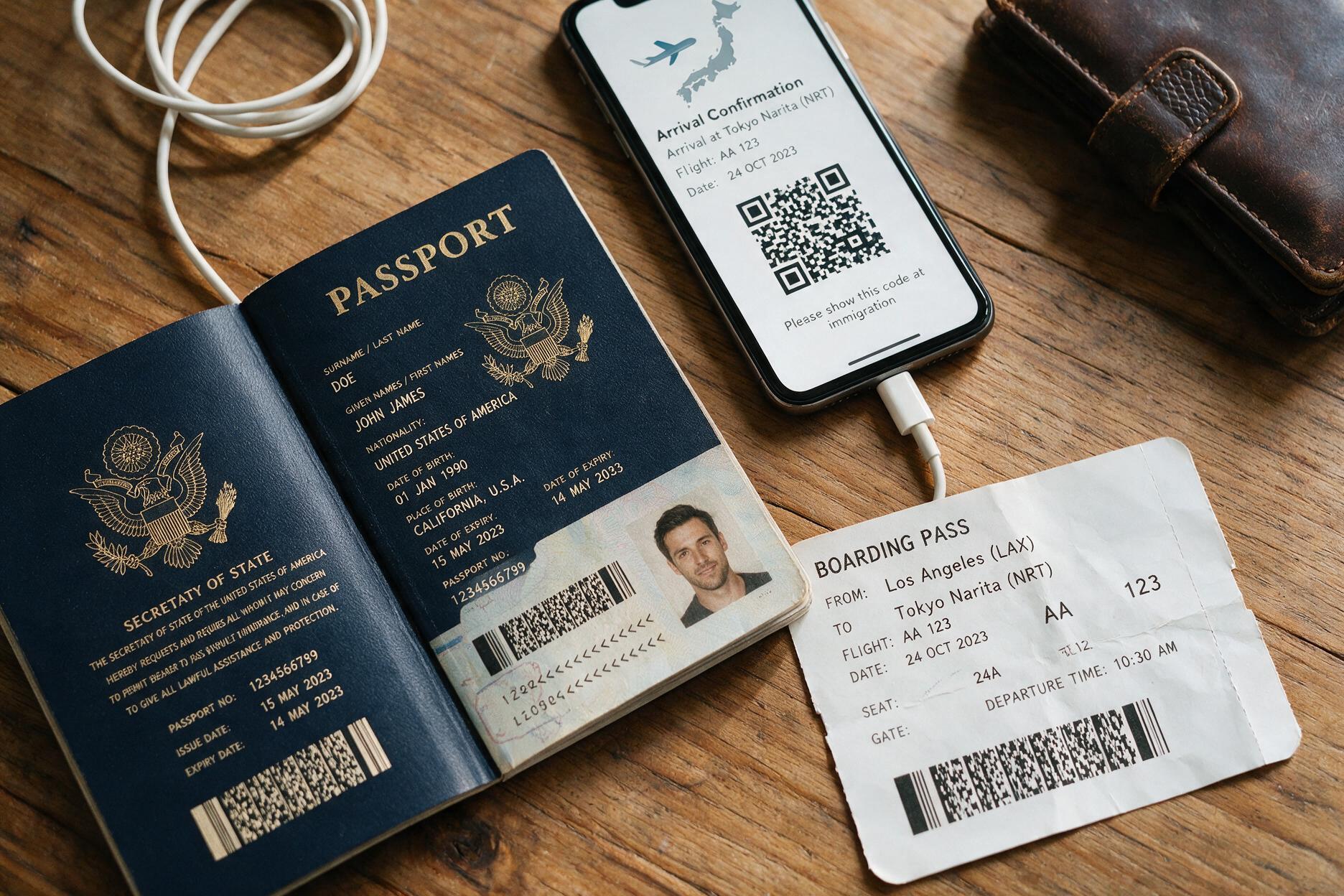
Alongside the arrival card, you’ll pay the Bali Tourism Levy: IDR 150,000, about ₹800–₹850 per person, one-time, valid for the whole trip regardless of length. Pay it online in advance through the official portal, or at a designated counter on arrival — the QR voucher gets spot-checked more often in 2026 than it used to, so keep it accessible rather than assuming nobody will ask.
Proof of funds: what you actually need to carry
This is the part that generates the most anxious searching, so here’s the straight version: proof of funds is discretionary for VoA travelers right now, not a guaranteed checkpoint. But “discretionary” means an officer can ask, and if you’re unprepared in that moment, it’s a genuinely bad way to start a holiday.
The practical fix is simple — carry printed or easily-accessible-offline proof of:
- Confirmed accommodation for your full stay (not just night one)
- A return or onward flight ticket
- Bank statements or a credit card showing you can reasonably cover $800–$1,200 USD for the trip
- Your completed AIAC confirmation and the tourism levy receipt
None of this is unusual by international standards — it’s closer to what most countries could ask for at any border. The difference is Bali’s been checking it more often since late July, so “I’ll figure it out at the airport” is a riskier plan this year than last.
Best time to visit Bali from India
Bali’s dry season runs roughly April to October, and within that, May, June, and September are the sweet spot — good weather, meaningfully thinner crowds, and better rates than the July–August and late-December peaks. July and August bring European summer holidays and Indian school vacations onto the island at the same time, which pushes villa prices to their annual high and makes popular spots in Seminyak, Canggu, and Ubud genuinely crowded. September gets you nearly the same weather with noticeably more breathing room.
Rainy season (November–March) isn’t a write-off — rain tends to arrive in short, intense bursts rather than all-day washouts, and it’s the cheapest, quietest time to visit if flexibility matters more to you than guaranteed sun.
Getting there: flights and costs
From Delhi, there are direct nonstop flights to Bali (around 5 hours 25 minutes), with Air India running fares from roughly ₹48,000–₹50,000 round-trip depending on season and how far ahead you book.
From Mumbai, there’s currently no direct route — you’ll connect via Singapore, Kuala Lumpur, or Bangkok, with total travel time around 8–10 hours including the layover. Return fares from major Indian cities generally land in the ₹18,000–₹35,000 range when booked with reasonable lead time, though Delhi’s direct option often costs more than a one-stop from elsewhere — worth comparing both before assuming direct is cheaper.
How many days, and where to base yourself
Five to seven days is comfortable for a first trip covering more than one area. A workable split:

Ubud (2–3 days): rice terraces, temples, the cooler inland climate. Base yourself slightly outside the main Monkey Forest Road strip if you want quiet mornings.
Uluwatu or Canggu (2–3 days): Uluwatu for cliffside views and a more low-key pace, Canggu if you want beach clubs, surf, and a livelier food scene. They’re different enough in character that picking based on what kind of few days you want matters more than which is “better.”
Seminyak (1–2 days), optional: more polished resorts and restaurants if you want a couple of nights of full luxury before flying home.
If you have more time, add Sidemen — a rice-terrace region east of Ubud that gets a fraction of Ubud’s tourist traffic while offering essentially the same scenery, plus views of Mount Agung.
What it costs, per day
For a comfortable mid-range trip — good villa or resort, sit-down meals mixing local warungs and nicer restaurants, some paid activities and a driver for day trips — realistic budgeting is ₹6,000–₹11,000 (roughly $70–$130) per person per day. Push into private-pool villas, spa days, and higher-end dining and you’re comfortably into ₹15,000+ per day. Flights, visa, and the tourism levy sit outside this daily number.
Food and where to eat
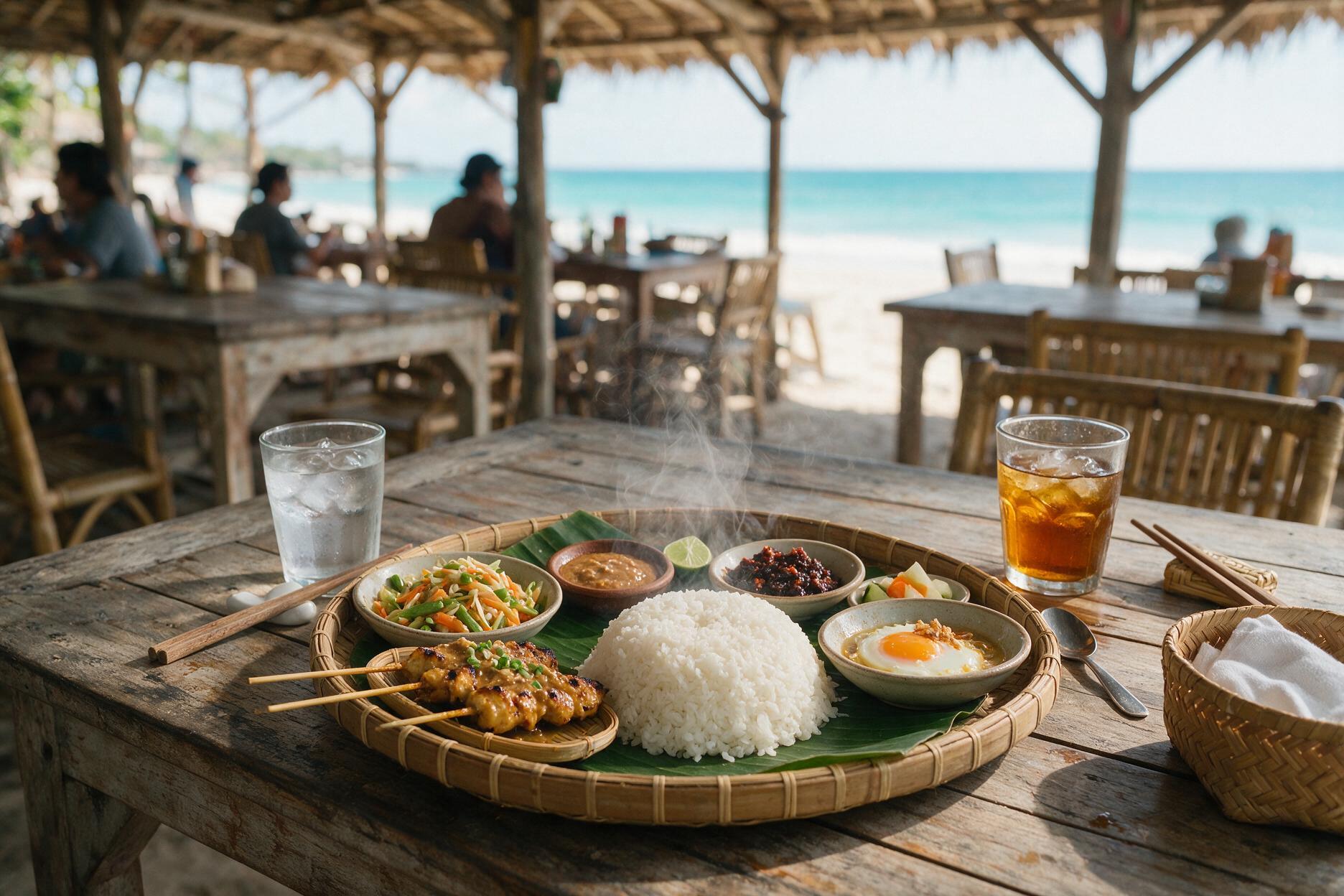
Skip the restaurant strips built entirely for tourists in central Seminyak and Ubud’s main road if you want food that actually represents Bali rather than a generalized “Southeast Asian” menu aimed at foreigners. Warungs — small, family-run local eateries — are where the real cooking happens: nasi campur (rice with a rotating mix of small dishes), babi guling (spit-roasted pork, though skip it if you’re not eating pork, obviously, since it’s genuinely everywhere on menus), and satay lilit, minced spiced fish or chicken wrapped around a lemongrass stalk. In Ubud specifically, warungs tucked down alleys behind the main road — the kind that open onto rice-field views rather than a street — tend to be both better and considerably cheaper than the visible strip.
Places worth the detour
- Nyang Nyang Beach, about 10 minutes from Uluwatu Temple but requiring a genuine trek down to reach — which is exactly why it stays quiet. A long, mostly untouched stretch of sand that never gets the crowd its more famous neighbors do.
- Sidemen, east of Ubud — rice terraces, the Telaga Waja River, and views of Mount Agung, all with a fraction of Ubud’s visitor traffic.
- West Bali National Park, at the island’s remote northern tip, for travelers who want Bali’s nature side without any resort infrastructure nearby.
- Warungs down side alleys in Ubud rather than the main strip — ask your villa host or driver for their actual favorite, not the one with the biggest sign.
Culture, etiquette, and a mistake to avoid
Bali is predominantly Hindu, distinct from the rest of Muslim-majority Indonesia, and that shows up everywhere — daily offerings (canang sari) placed outside homes and shops, temple ceremonies that can close roads with little warning, and a genuine expectation that visitors dress modestly (shoulders and knees covered, a sarong provided or rented at most temple entrances) when entering religious sites.
The mistake worth flagging: renting a scooter without an international driving permit and without real experience riding one. Scooter accidents are consistently one of the most common ways tourists get seriously hurt in Bali — Bali’s roads mix fast, aggressive local traffic with visitors who’ve often never ridden a two-wheeler before, and insurance frequently won’t cover injuries from unlicensed riding. Hire a driver for the day instead; at Bali’s price point, it’s not a meaningful cost difference, and it removes the single biggest safety risk of the trip.
Money, SIM cards, and connectivity
Bali runs on the Indonesian Rupiah. Cards are accepted at hotels, resorts, and established restaurants, but warungs, market stalls, and beach vendors often want cash — carry a mix of smaller notes since breaking a large bill at a small warung can be genuinely difficult. When paying by card, always choose to be charged in IDR rather than your home currency; the “convenience” of home-currency billing usually hides a 5–7% markup.
For SIM and data, Telkomsel offers the best overall coverage across the island, with tourist eSIM packages (around ₹550/$6.50 for 10GB over 30 days) available to activate before you even land — genuinely the easiest option if your phone supports eSIM. If buying a physical SIM, stick to official telco stores or your hotel rather than unofficial airport vendors, who are known for overpricing tourist SIMs that turn out to have limited or fake credit.
Safety and common scams
Bali is broadly safe, but a few patterns are common enough to know in advance: ATM skimming (use machines inside bank branches — BCA, Mandiri, BNI — rather than standalone street units), money-changer scams (stick to well-reviewed, licensed changers, not the unusually good rate offered by a random storefront), and the scooter-accident risk already mentioned. Overcharging on unmetered transport and casual “guide” offers near temples are common low-stakes annoyances rather than serious dangers — agree on a price before you get in a vehicle or accept help, and you’ll avoid most of it.
FAQs
Do Indians need a visa for Bali? Yes. There’s no visa-free entry — Indian passport holders need a Visa on Arrival or e-VoA, both costing IDR 500,000 for a 30-day stay.
What changed with Bali’s entry rules in 2026? Screening and enforcement at the airport and top destinations increased from July 28, 2026 onward, as part of a broader “quality tourism” push. A stricter proposed regulation mandating proof-of-funds checks for every traveler has not yet been formally approved.
Do I need to show proof of funds to enter Bali? It’s discretionary, not guaranteed — but immigration officers can ask, and it’s become more common since late July 2026. Carry proof of $800–$1,200 in accessible funds along with your accommodation and return flight details, just in case.
What is the All Indonesia Arrival Card? A single online form combining customs, health, and immigration declarations, completed within 72 hours before arrival. It’s free and replaces what used to be three separate paper forms.
Is Bali expensive for Indian travelers? Not particularly — a comfortable mid-range trip runs roughly ₹6,000–₹11,000 per person per day, excluding flights and visa costs.
When is the best time to visit Bali? May, June, and September, within the April–October dry season — good weather with noticeably fewer crowds than the July–August and late-December peaks.
Final word
None of Bali’s 2026 changes are a reason to avoid the trip — they’re a reason to arrive slightly better prepared than you might have a year ago. Apply for the e-VoA ahead of time, fill out the arrival card within the 72-hour window, keep proof of funds and your accommodation details easy to pull up, and the actual holiday is unaffected: the rice terraces, the beach clubs, the warungs down the side alleys are all exactly what they’ve always been.
Planning a Bali trip? This is exactly where a fully arranged trip earns its keep — Get Tripped can pre-organize your itinerary documentation, accommodation proof, and arrival paperwork so none of this becomes a last-minute scramble at Ngurah Rai Airport. Get in touch to start planning.