Air India’s flight AI187 pushed back from Delhi at 1:45 AM on August 1, 2026, and landed in Toronto nine and a half hours later without touching down in Vienna. That’s the whole headline, really — for the first time, there’s a genuine nonstop between India and Canada’s largest city, flying every single day, on a brand-new Boeing 787-9 with a business cabin that folds into a fully flat 79-inch bed. If you’ve been putting off a Canada trip because the routing was brutal, this is the moment that argument stopped holding up.
I want to be upfront about something before we get into logistics: Canada is not a visa-free hop the way Southeast Asia or the UAE is for Indian passport holders. You still need a Temporary Resident Visa, and it still takes weeks, sometimes longer. The flight got dramatically easier. The paperwork didn’t. This guide covers both — the new route in detail, what the visa process actually involves right now, and how to spend a week or two in Toronto and Niagara Falls (with a note on stretching to Banff) timed for Ontario’s fall colour season, which is arguably the best reason to book this specific trip for September through November 2026.
Table of Contents
- What Changed: Air India’s New Delhi-Toronto Route
- Economy, Premium Economy, or Business — What’s Actually Worth It
- Best Time to Go: Why Fall 2026 Is the Window
- The Canada Visa Reality Check for Indian Passport Holders
- How Many Days to Plan and a Sample Itinerary
- Where to Stay in Toronto
- Niagara Falls from Toronto: Day Trip or Overnight
- Extending to Banff and the Rockies
- Money, SIM Cards, and Practical Details
- Where to Actually Eat (Not the Top-10 List)
- Safety Notes for Indian Travelers
- FAQs
What Changed: Air India’s New Delhi-Toronto Route
Until August 1, 2026, the westbound Delhi-Toronto flight refuelled in Vienna — not a layover with a lounge, but an operational fuel stop that added close to three hours to an already long flight. Total time, air and ground: pushing 20 hours. Air India has now pulled that stop out entirely and upgraded the route from five flights a week to daily.
Here’s the schedule as it stands:
| Flight | Route | Departs | Arrives | Flight Time |
|---|---|---|---|---|
| AI187 | Delhi (DEL) → Toronto (YYZ) | 1:45 AM | 9:30 AM (same day) | ~17 hours |
| AI188 | Toronto (YYZ) → Delhi (DEL) | 12:30 PM | 2:05 PM (next day) | ~16 hours |
The aircraft is a Boeing 787-9 Dreamliner, three-class: 238 seats in economy, 28 in premium economy, 30 in business. The premium economy cabin matters more than it sounds — this is the first time Air India has put premium economy on any India-Canada route, and on a 16-17 hour sector, the gap between economy and premium economy (38-inch pitch, wider seat, real recline) is the difference between landing wrecked and landing functional. Business class gets Air India’s newer Elevate Ascent suites, 1-2-1 layout, 79-inch flat-bed seats, and a deeper entertainment library than the older 777s still flying some of the airline’s other long-haul routes.
CEO Campbell Wilson framed the upgrade around the diaspora, calling Toronto “one of Air India’s most important international gateways” — not marketing spin, given the GTA has one of the largest Indian-origin populations outside India. (Source: Air India Newsroom.)
One honest caveat: westbound is still the longer leg, roughly 17 hours, because you’re flying against the jet stream. If you’re picky about which direction gets the better sleep, book the outbound leg in premium economy or business if budget allows — you’ll actually use the extra recline.
Economy, Premium Economy, or Business — What’s Actually Worth It
For a flight this long, I’d steer most travelers toward at least premium economy if the fare difference is reasonable. The honest logic: 16-17 hours in a standard economy seat with a 31-32 inch pitch is doable, plenty of people do it, but you land needing a full day to recover before you’re any good for sightseeing. Premium economy buys real recline for a fraction of the business fare jump.
Business class suits a couple celebrating something, or a family with an older parent who needs to lie flat. Fares are seasonal, but as a rough benchmark, Air India business has been pricing around ₹2.3-2.5 lakh one-way, with round-trip often landing near ₹4.5-5 lakh depending on how far out you book — fall fares run a bit higher than the December-June window, so booking early actually saves money, not just seats. Economy has been showing up from roughly ₹63,000-75,000 one-way in early listings, putting a round trip near ₹1.2-1.5 lakh before taxes, though these numbers move week to week. Check live fares before you plan around one.
Smart-spending tip: if you’re flexible on the exact week, price out late September against mid-October and early November separately — Ontario’s fall colour season spans nearly six weeks region by region, so you have real room to chase a cheaper fare without missing peak foliage entirely.
Best Time to Go: Why Fall 2026 Is the Window
Toronto has a genuinely nice window from September through early November — daytime temperatures generally sit in the 10-20°C range, the humidity of summer is gone, and Ontario’s maple forests do the thing they’re famous for. But “fall foliage” isn’t one date, it’s a rolling wave that moves south as the weeks go on:
- Late September-early October: Algonquin Park and the far north peak first. Algonquin is roughly a 3-hour drive from Toronto — a legitimate add-on with a car and an extra two days, not a casual afternoon trip.
- First two weeks of October: Muskoka and Haliburton, Ontario’s cottage country, hit peak.
- Mid-to-late October: Toronto’s own ravines, High Park, and the Niagara Escarpment turn — the sweet spot if you don’t want to leave the city much.
- Late October-early November: Niagara Parkway and the Niagara Falls region peak last, which means you can time a Niagara day trip right when its colours are at their best, even after missing peak in Toronto proper.
The mechanism behind good colour: cool nights below 5°C paired with warm, sunny days produce the vivid reds people photograph. A warm, cloudy September mutes everything toward yellow instead. Peak dates shift five to ten days year to year with frost timing, so build a few days of flexibility into flights booked months out. Ontario Parks publishes a weekly fall colour report from mid-September that’s worth checking once you’re within a month of travel.
A mistake to avoid: don’t schedule your only Niagara Falls trip for the first week of October expecting peak colour there — you’ll get Toronto’s colour, not Niagara’s, which peaks three to four weeks later. If Niagara’s foliage specifically is the priority, aim for the very end of October into the first week of November.
The Canada Visa Reality Check for Indian Passport Holders
This is the section I’d read first, because it’s the one thing that can quietly wreck a trip if you leave it too late. Canada does not offer visa-free entry or visa-on-arrival to Indian passport holders, and Indians are not eligible for Canada’s eTA either — you need a full Temporary Resident Visa (TRV), applied for online through the IRCC portal before you travel.
Here’s what that involves in 2026:
- Fees: CAD 100 for the application plus CAD 85 for biometrics, roughly CAD 185 (approximately ₹12,600) per adult. Families applying together pay CAD 100 per person, but biometrics cap at CAD 170 total per family.
- Biometrics are mandatory. After submission you’ll get a Biometric Instruction Letter and need a VFS Global appointment — eleven centres across India — within 30 days. Processing doesn’t formally start until biometrics are done.
- Processing time is genuinely unpredictable right now. IRCC’s India estimates swung from around 88 days in January 2026 down to roughly three weeks by mid-2026. Budget anywhere from three weeks to twelve-plus weeks. For a fall trip, apply by July at the latest — ideally earlier — rather than assuming a best-case turnaround.
- Documents: valid passport (six-plus months remaining), bank statements (three to six months), income tax returns (two to three years), an employment letter, a travel itinerary, and evidence of ties to India.
- Validity: most approved visas are multiple-entry, valid up to ten years or until passport expiry, with each entry typically allowing up to six months’ stay (set by the border officer on arrival).
None of this is unusual for a country like Canada — broadly similar to a UK or US visitor visa — but it’s a different process from, say, Dubai or Thailand, and I’ve seen travelers assume “it’s basically visa-on-arrival now” and get caught out. It isn’t. Start the visa process the same week you book flights, not after.
How Many Days to Plan and a Sample Itinerary
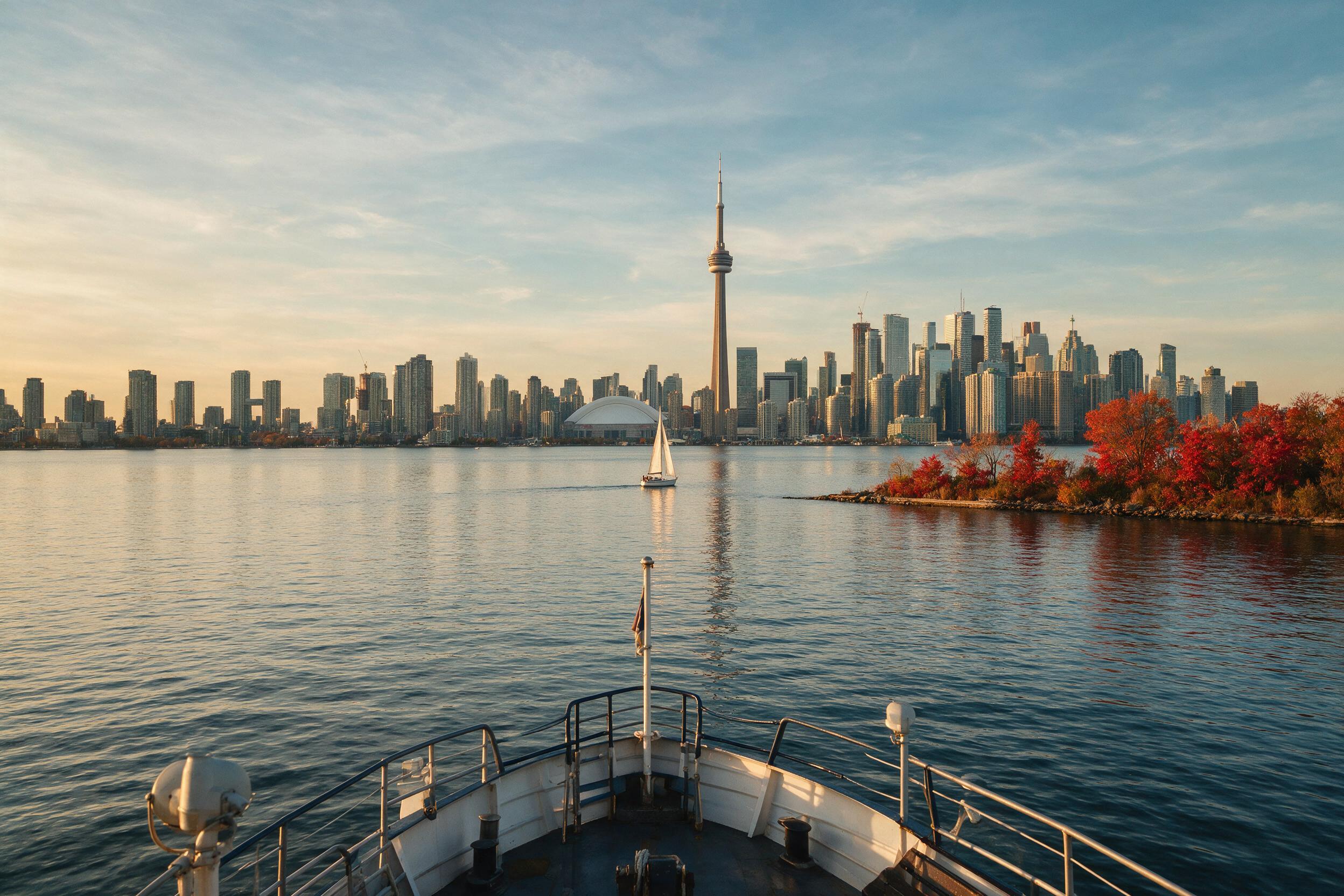
With a nonstop flight, you can now do a proper Toronto-plus-Niagara trip in 8-10 days including travel, stretching to 12-14 if you add Banff. A workable frame:
- Days 1-2: Land, recover (Toronto is 9.5 hours behind Delhi, so jet lag runs in the more forgiving direction), and ease into downtown — the harbourfront, the Distillery District’s cobblestone lanes, a walk through Kensington Market.
- Days 3-4: Neighborhoods, the Toronto Islands ferry for a skyline view without the CN Tower queue, a day built around food rather than checklist sightseeing.
- Days 5-6: Niagara Falls, as a long day trip or one night over — more below.
- Days 7-8: More Toronto (Casa Loma, the Beaches, a day trip north to Muskoka if timing allows) or start the journey home.
- Optional days 9-11: Fly to Calgary and drive into Banff for the Rockies.
For a couple, weight this toward Days 3-4 and 5-6 — a slower pace, then Niagara at golden hour. For a family with kids, Niagara works well as a single satisfying day trip, and the direct flight itself is the bigger win — no Vienna layover with tired children is worth a lot on its own.
Where to Stay in Toronto
Skip generic airport-adjacent hotels and pick a neighborhood based on how you want to spend your days:
- Downtown/Financial District: best for first-timers — walkable to the harbourfront and Distillery District. The Fairmont Royal York, by Union Station, is the classic upscale choice and puts you steps from the GO Transit trains to Niagara.
- Yorkville: Toronto’s most polished shopping-and-dining pocket, quieter at night, good for couples wanting a boutique-hotel feel.
- King West/Entertainment District: better if nightlife and a livelier street scene matter — more restaurants and bars within walking distance.
Expect roughly CAD 250-450/night for a solid mid-range-to-upscale hotel in September-October, rising on weekends — Toronto doesn’t really have an off-season discount, since fall is a strong tourism month here too.
Niagara Falls from Toronto: Day Trip or Overnight
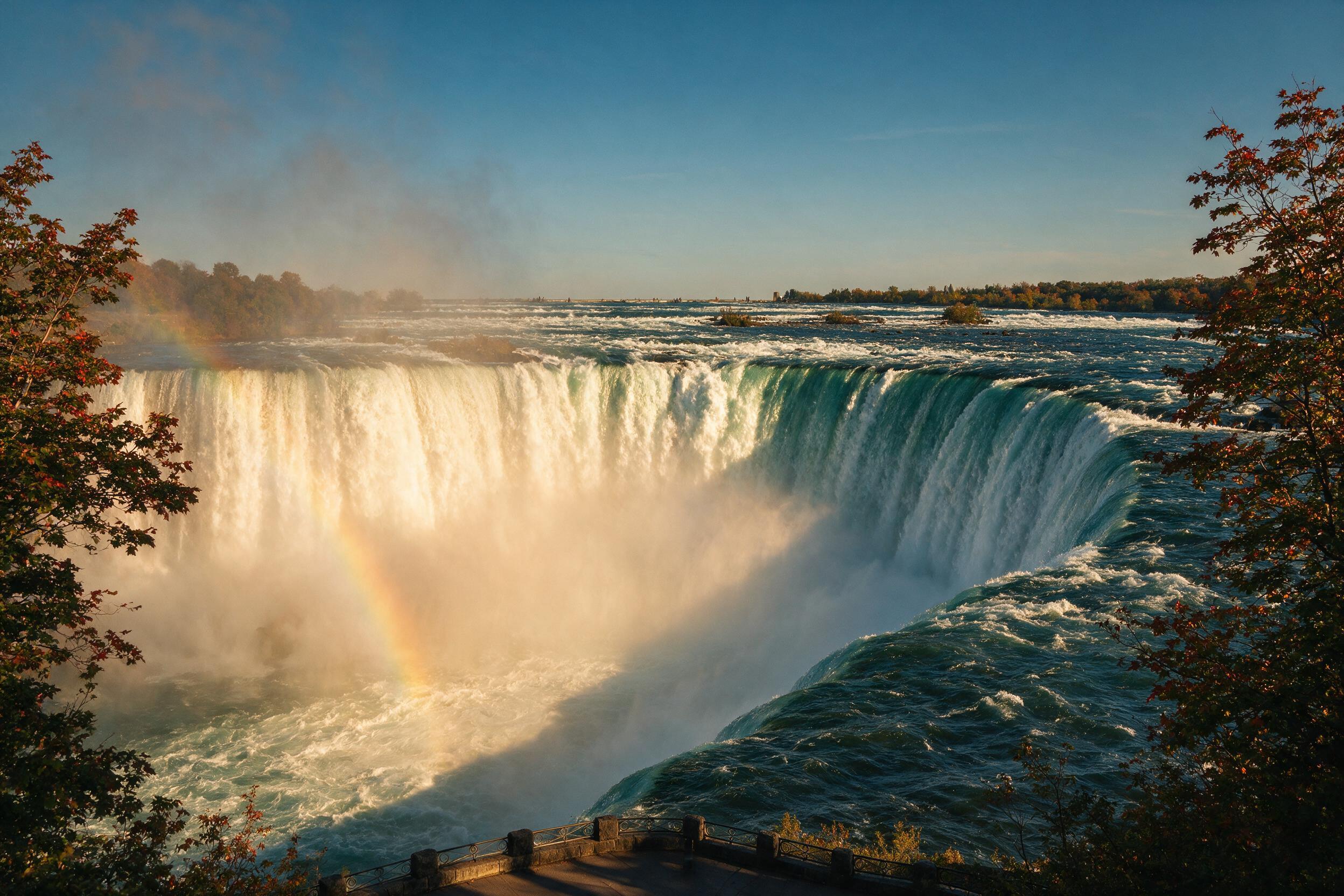
Niagara Falls is 128 km from Toronto — genuinely close, which is part of what makes this pairing so easy compared to most “flight plus add-on” itineraries.
- By car: 1.5-2 hours via the QEW. Most flexible, and worth it if you want to detour along the Niagara Parkway, one of the prettier drives in the region once fall colour along the river gets going in late October.
- By GO Transit (train/bus combo from Union Station): around 2-2.5 hours, roughly CAD 18 round trip including a WEGO local bus pass — good value, no parking to deal with.
- By VIA Rail: about CAD 35, roughly 2 hours, but only one direct departure a day (around 8:20 AM).
- By bus (Megabus/Flixbus): cheap and frequent, 1 hour 45 minutes to 3.5 hours depending on stops.
A day trip is genuinely enough to see the falls properly — the boat ride to the base (currently running as The Hornblower), the Journey Behind the Falls tunnels, and the promenade cover the essentials if you start early. An overnight makes sense mainly if you want the falls illuminated at night, a genuinely different experience from the daytime spray-and-rainbow version.
Honest caveat: the touristy strip along Clifton Hill — arcades, wax museums, giant fudge shops — is exactly what it looks like, a carnival built to separate visitors from money. You can see the falls perfectly well without spending much time there. Walk past it to the actual promenade and parkway instead.
Extending to Banff and the Rockies
Banff is a legitimate extension, but be clear about the scale: this is not a road trip add-on. Toronto to Calgary is roughly a four-hour domestic flight, then about a 1.5-hour drive (or shared shuttle) into Banff — closer to six hours door-to-door, which only makes sense with three or four full days once you arrive. The Icefields Parkway, Lake Louise, and Banff townsite are worth dedicated time, not a rushed 48 hours bolted onto a Toronto trip.
For most first-time visitors, I’d say: do Toronto and Niagara properly this time, and treat Banff as its own future trip, possibly timed for winter. With 12-plus days, it’s a workable combination — just budget the internal flight cost and time honestly.
Money, SIM Cards, and Practical Details
Currency and payments: Canada runs on the Canadian dollar (CAD), and tap-to-pay is close to universal — contactless cards work almost everywhere, including transit (Toronto’s PRESTO system now accepts contactless bank cards directly). There’s no UPI equivalent, so carry an international debit or credit card, or a forex card loaded with CAD. Cash is genuinely optional in most of Toronto — useful for farmers markets or small stalls, but you won’t be caught out without it.
SIM and eSIM: Canadian mobile data is notoriously expensive bought the way a local would. Easier to grab an eSIM before you land — Airalo, Saily, and Nomad sell Canada data packages from around USD 5-7, and you’re online the moment you land. For a longer stay, physical prepaid SIMs from Chatr, Public Mobile, or Freedom Mobile are available at airport kiosks and downtown convenience stores.
Fun fact: the 787-9 is built substantially from carbon-fibre composite rather than aluminum, which lets Dreamliners maintain cabin pressure equivalent to a lower altitude than older aircraft — passengers generally report less fatigue on long-haul 787 flights for exactly this reason, which matters more than usual on a 16-17 hour sector.
Where to Actually Eat (Not the Top-10 List)
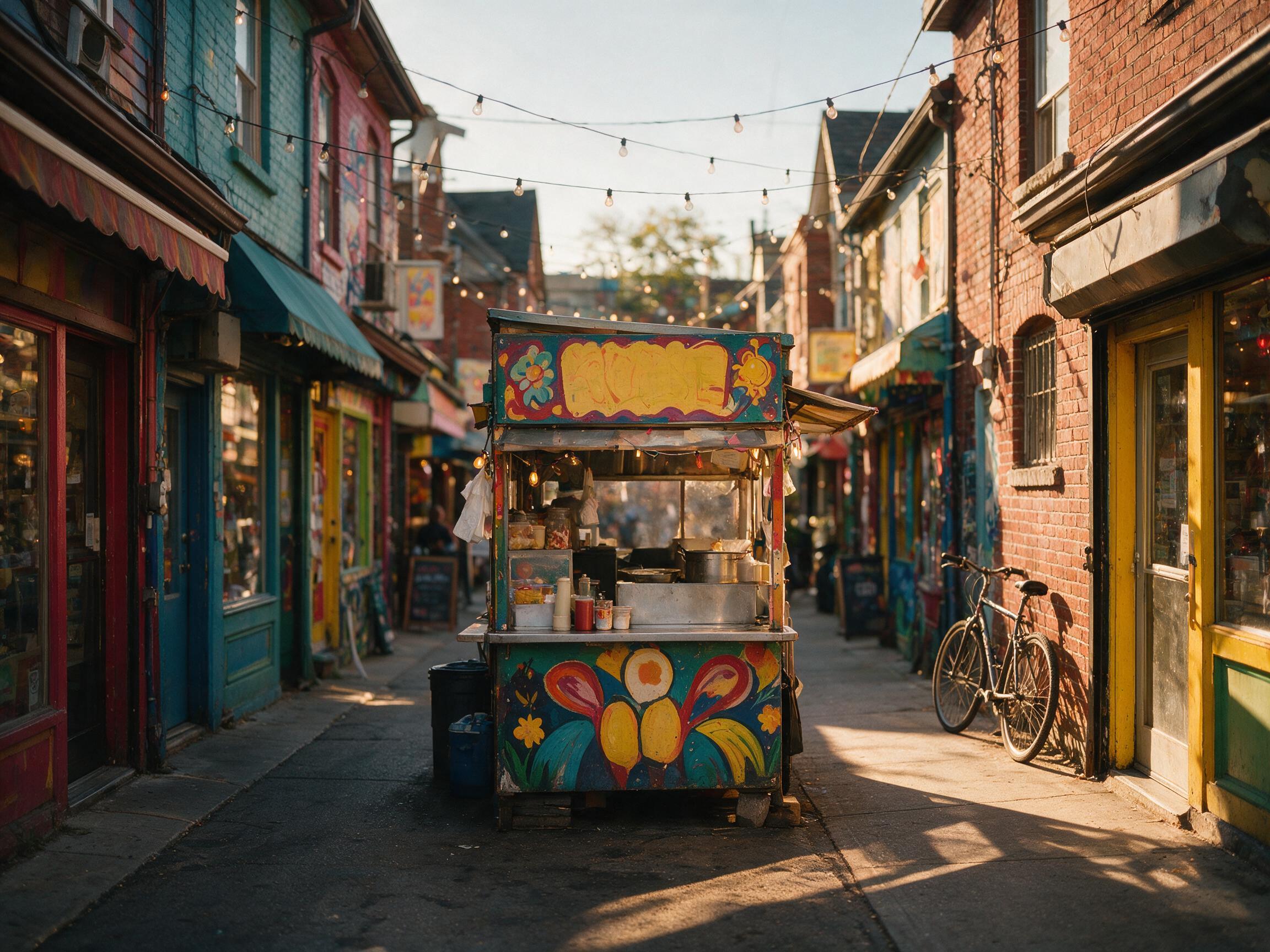
Toronto’s food scene is genuinely one of the most diverse in North America, and the interesting eating happens in neighborhoods rather than downtown tourist strips.
- Kensington Market rewards an unhurried walk more than any single restaurant — vintage shops, a Venezuelan arepa counter tucked between record stores, Jamaican patty spots, all within a few blocks that feel more like a street market than a mall.
- Gerrard Street East (“Little India”) is a genuine slice of the diaspora community Air India’s expansion is banking on — Lahore Tikka House is a longtime favorite for cafeteria-style South Asian food in big portions, and the surrounding blocks have sari shops and sweet stalls that feel closer to a market street back home than anything else in the city.
- Leslieville, east of downtown, has quietly become one of the better brunch neighborhoods — an Egyptian spot called Maha’s on Greenwood Avenue does a Cairo-style breakfast platter worth the streetcar ride out.
- The Distillery District is touristy by daylight but genuinely nice for an evening walk — restored Victorian industrial architecture and enough good small restaurants tucked into the old buildings that it’s worth eating there once, not just photographing it.
Local tip: book two or three days ahead for anywhere well-reviewed, especially fall weekends when the city is busy with both tourists and colour-chasing locals from elsewhere in Ontario.
Safety Notes for Indian Travelers
Toronto and the wider Niagara/Ontario region are, in practical terms, low-risk for tourists — violent crime affecting visitors is rare. Standard precautions cover most of it: don’t leave bags visible in a parked rental car (Niagara lots see opportunistic break-ins), watch belongings on crowded transit, use licensed taxis or rideshare apps. Solo travelers, including solo women, generally report feeling comfortable in central Toronto neighborhoods, with the usual late-night common sense applying as it would anywhere.
Keep a photo of your passport and visa separate from the originals, and note that the Consulate General of India in Toronto handles passport and emergency services for Indian nationals in Ontario — worth saving before you fly, not looking up in an actual emergency.
Frequently Asked Questions
Is the new Air India Toronto flight really nonstop, or does it still stop somewhere? AI187 (Delhi to Toronto) and AI188 (Toronto to Delhi) are both genuinely nonstop as of August 1, 2026, with the Vienna fuel stop removed on the new Boeing 787-9. Flight time is roughly 17 hours westbound and 16 hours eastbound.
Do Indians need a visa to visit Canada, or is it visa-on-arrival now? You need a full Temporary Resident Visa (TRV) applied for online before travel. Indian passport holders are not eligible for Canada’s eTA or any visa-on-arrival option. Budget several weeks to a few months for processing.
How much does the Canada visitor visa cost for Indians? Roughly CAD 185 per adult (CAD 100 application fee plus CAD 85 biometrics fee), which works out to approximately ₹12,600 at current exchange rates. Family groups pay a capped biometrics fee of CAD 170 total.
How long does Canada visa processing take in 2026? It varies significantly — recent estimates have ranged from about three weeks up to 88 days depending on when you apply and processing backlogs. Apply at least two to three months before your planned travel dates to be safe.
What’s the best month to see fall colours near Toronto? Toronto’s own ravines and the Niagara Escarpment typically peak mid-to-late October. Algonquin Park and the far north peak earlier (late September-early October), while the Niagara Falls region itself peaks latest, late October into early November.
Can I do Niagara Falls as a day trip from Toronto? Yes — it’s 128 km and about 1.5-2.5 hours each way by car, GO Transit, or train, and the main attractions (the boat ride, Journey Behind the Falls, the promenade) fit comfortably into a single day if you start early.
Is Toronto expensive compared to other international trips from India? It’s a premium-city price point — expect CAD 250-450/night for a good mid-range-to-upscale hotel, and meals out running CAD 25-60 per person depending on the restaurant. It’s comparable to a trip to London or a major US city, not a budget destination.
Should I fly economy, premium economy, or business on a flight this long? For a 16-17 hour sector, premium economy is a meaningfully better experience than economy for a moderate fare increase, and worth it if your budget allows. Business class makes sense for couples or families traveling with someone who needs to lie flat.
Conclusion
The honest way to think about this route is that Air India didn’t just add a flight — it removed the single biggest reason Canada felt like a harder trip to plan than, say, London or Singapore. A 17-hour nonstop on a new aircraft with an actual premium economy option changes the math on whether Toronto and Niagara Falls belong on a realistic shortlist rather than a someday list. The visa process still needs real lead time, and Canada is still priced like the developed-world city it is, not a bargain. But if you’ve been waiting for a reason to finally plan this trip, a daily nonstop landing you in Toronto in time for peak fall colour is about as good a reason as you’ll get.
Ready to plan your Toronto and Niagara Falls trip around Air India’s new nonstop? Get Tripped’s travel specialists can build the full itinerary — flights, visa documentation support, hotels by neighborhood, and a Niagara Falls day trip or overnight that’s actually timed to the colour, not just the calendar. Get in touch and we’ll put together a plan around your dates.