Ask ten people what French food means and you’ll get ten different answers depending on which region they actually visited — someone who spent a week in Lyon will tell you it’s about quenelles and red wine sauces, someone who did the Riviera will talk about socca and niçoise salad, and someone who only ever did Paris will insist it’s all about the boulangerie down the street from their hotel. They’re all right, which is the whole point. France’s food identity is regional first and national second, and a proper France food trail means eating differently in each place rather than assuming Paris is a stand-in for the whole country.
This guide moves city by city — Paris, Nice, Lyon, Strasbourg, Normandy, and Mont Saint-Michel — covering the coffee-and-pastry routine, the dish worth planning a meal around, and where to find something decent after 10pm when everyone else has closed the kitchen.
Table of Contents
- Paris: pastries, bistros, and the 24-hour boulangerie problem
- Nice: socca, salade niçoise, and gelato on the Promenade
- Lyon: France’s actual food capital
- Strasbourg: choucroute, flammekueche, and vin chaud
- Normandy: cider country, cheese, and seafood
- Mont Saint-Michel: the famous omelette
- FAQs
Paris: pastries, bistros, and the 24-hour boulangerie problem
Start every Paris morning the way locals actually do — a small espresso standing at the counter, not a table, and a croissant from whichever boulangerie is closest to where you’re staying rather than the famous one across town with the queue. Paris has genuinely excellent bakeries on nearly every block; chasing the “best” one usually means a worse croissant that’s gone cold in your bag by the time you’ve walked there.
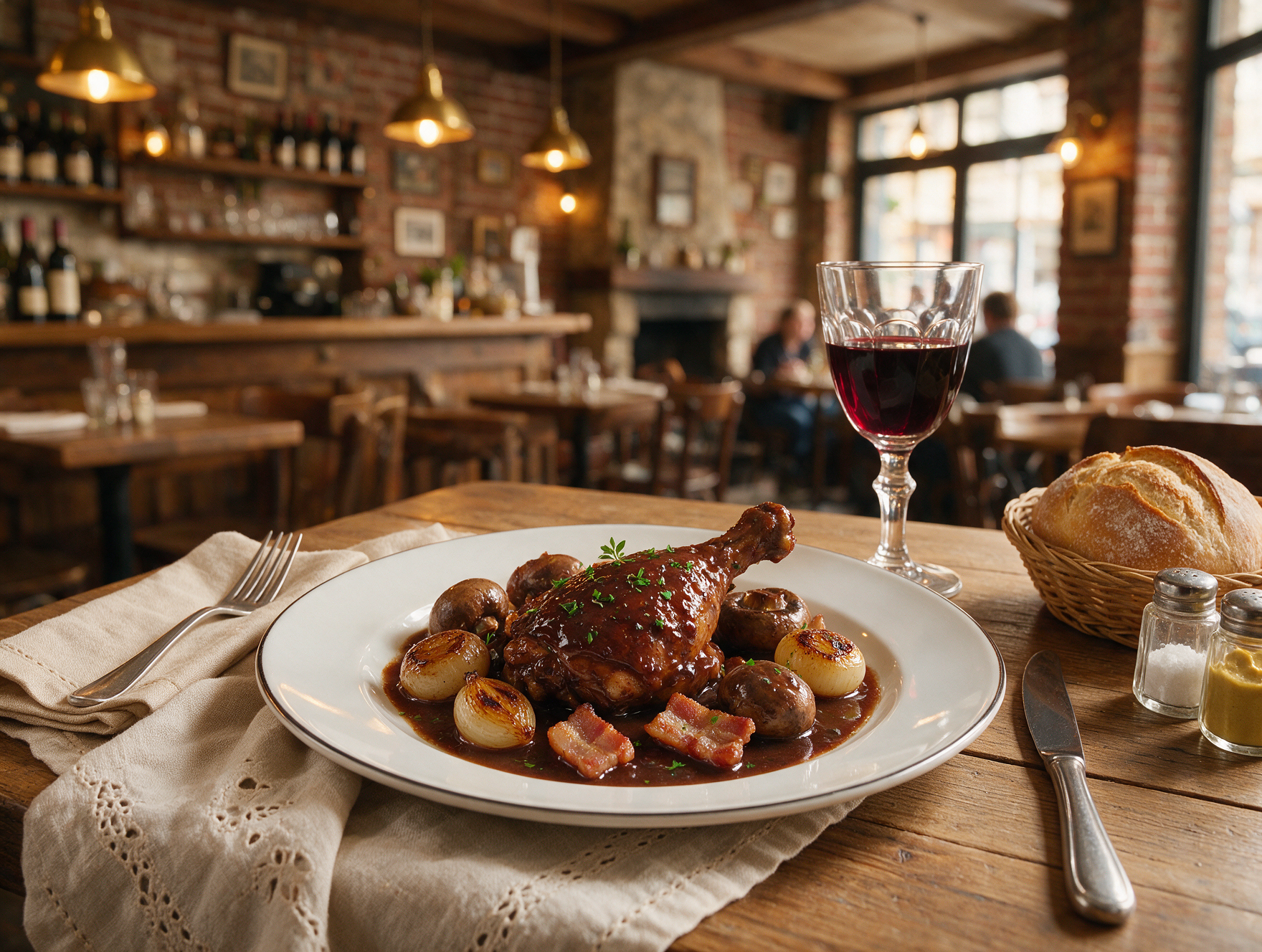
For a proper sit-down meal, a neighbourhood bistro beats a tourist-zone restaurant every time — look for a place with a chalkboard menu that changes daily, which usually signals they’re cooking with what’s actually fresh rather than reheating a laminated menu. Coq au vin, duck confit, and steak frites are the reliable order almost anywhere decent. Macarons are worth trying from a proper patisserie rather than a supermarket version — the texture difference is real, not marketing.
Late at night, Paris isn’t a 24-hour food city in the way Bangkok or New York is, but the area around Les Halles and parts of the Marais keep kitchens open past midnight, and crêpe stands stay open later than sit-down restaurants if you just need something in your hand while walking home.
One honest caveat about Paris specifically: the sheer density of cafés means quality varies more than people expect from a city with this reputation. A café with tables spilling onto a busy tourist corner is optimising for turnover, not for the coffee — if the espresso tastes burnt or thin, that’s not a fluke, it’s a business model. Walking one block off the main boulevard usually fixes it.
Nice: socca, salade niçoise, and gelato on the Promenade
Nice’s food identity leans Mediterranean and distinctly its own — socca, a thin chickpea-flour pancake cooked on a huge round griddle and sold hot off the pan from street stalls around Cours Saleya market, is the single dish to eat here that you won’t find done properly anywhere else. Pair it with a genuine salade niçoise, which — contrary to what most restaurants outside Nice serve — traditionally has no cooked vegetables and no boiled potatoes; the classic local version is raw vegetables, olives, anchovies, and hard-boiled egg.
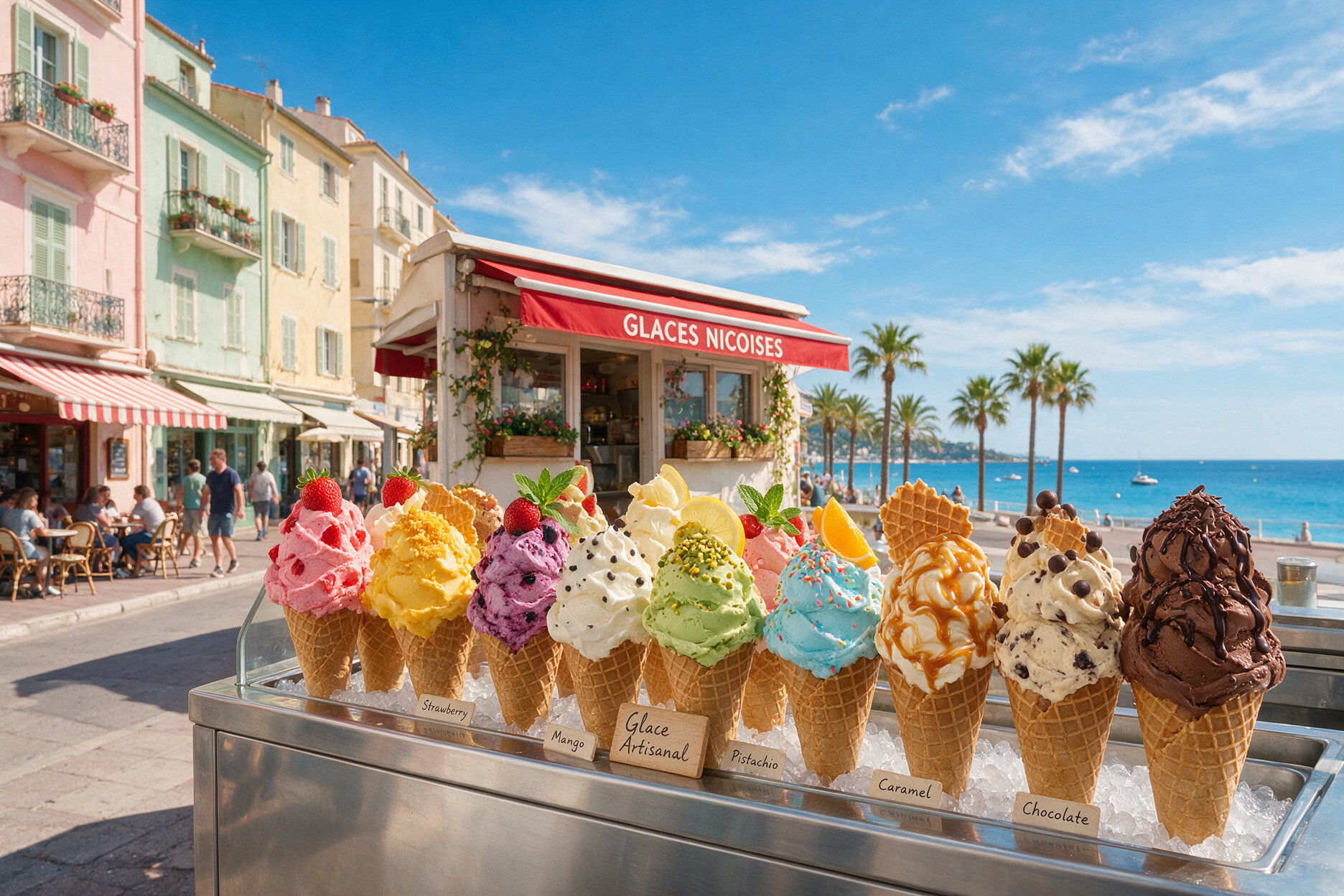
Coffee culture on the Riviera runs a little slower than Paris — sitting at a café table facing the sea for an hour is entirely normal and not something staff will rush you through. For dessert, walk the Promenade des Anglais in the evening and stop at one of the gelaterias along the front; it’s touristy in the least offensive way possible, and genuinely good.
Lyon: France’s actual food capital
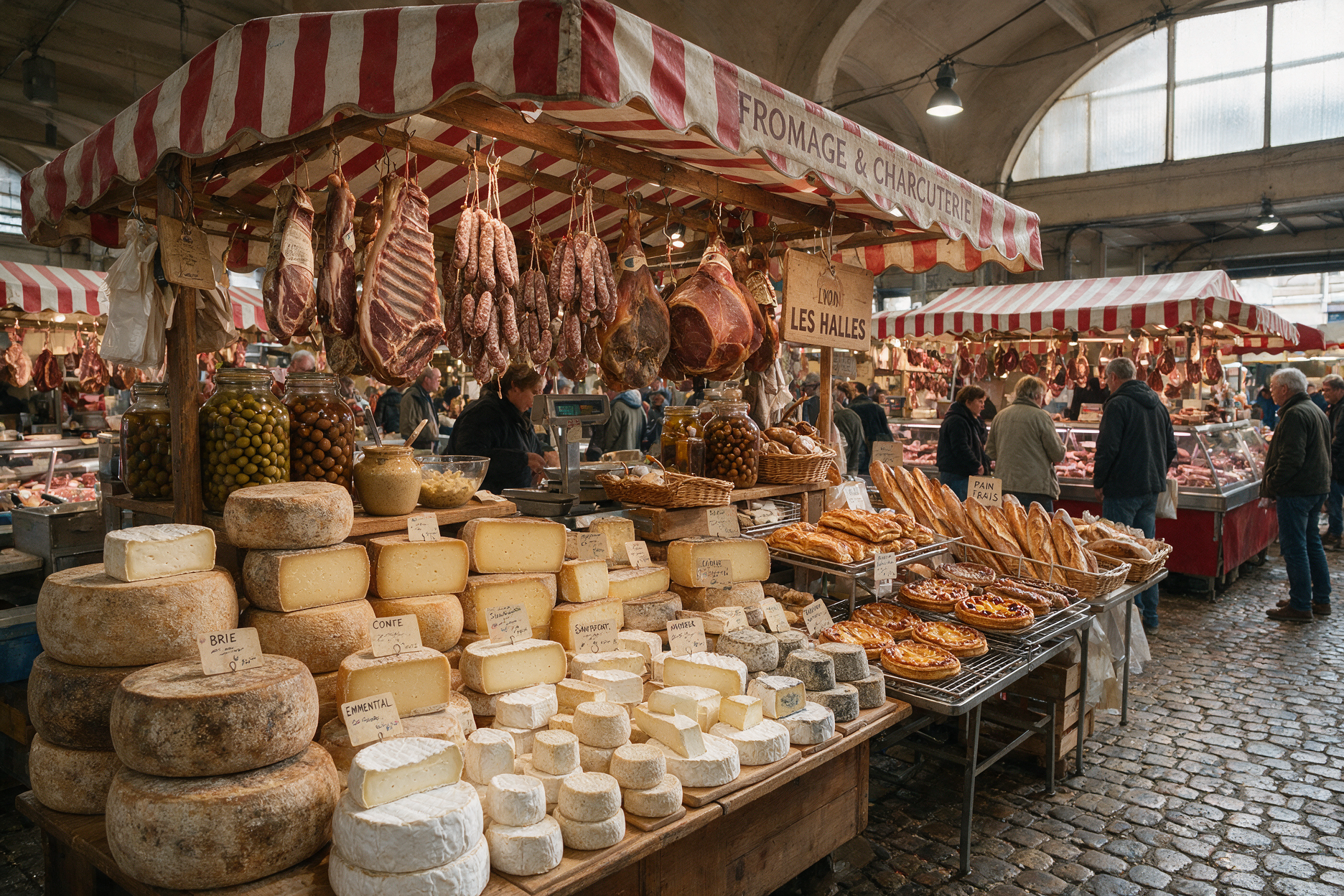
Ask a French person which city has the country’s best food and a surprising number will say Lyon, not Paris — the city’s bouchons (small traditional taverns) serve hearty, unfussy dishes like quenelles (a light dumpling in a rich sauce), andouillette for the adventurous, and praline tart for dessert, which turns out to be a genuinely striking shade of pink from crushed candied almonds and is worth trying even if it sounds strange. Les Halles de Lyon Paul Bocuse — the city’s covered food market — is the single best hour you can spend in Lyon if you care about food at all: cheese stalls, charcuterie hanging in rows, and enough sample tastings to count as a light lunch.
Lyon’s coffee culture is quieter than Paris’s café-terrace scene but the third-wave coffee shops that have opened around Croix-Rousse and the Presqu’île are genuinely good if you want a break from espresso-only options. Late-night eating is more limited than Paris — plan dinner for a normal European hour here rather than assuming you can eat at 11pm.
Strasbourg: choucroute, flammekueche, and vin chaud
Strasbourg sits in Alsace, right on the German border, and its food shows it — this is the one part of France where you’ll eat things that feel genuinely different from the rest of the country. Choucroute garnie (Alsatian sauerkraut piled with sausages, ham, and sometimes pork knuckle) is the signature dish, and flammekueche — a thin, crisp flatbread topped with crème fraîche, onions, and lardons, distantly related to pizza but its own thing entirely — is the one to order for a lighter meal or to share.
If you’re visiting between late November and December, Strasbourg’s Christmas market is one of Europe’s oldest and most atmospheric, and vin chaud (mulled wine) from one of the market stalls is close to mandatory in the cold. Outside the market season, the winstubs (traditional Alsatian wine taverns) scattered through the old town, Petite France, are the best place for an evening meal with a glass of local Riesling or Gewürztraminer.
Normandy: cider country, cheese, and seafood
Normandy doesn’t drink much wine by regional tradition — it’s cider and calvados (apple brandy) country instead, and both are worth seeking out over the usual glass of red. Camembert genuinely comes from here, and a proper Norman cheese board is one of the better ways to spend an hour before dinner. Given the coastline, seafood is reliably good along the Normandy coast — moules-frites (mussels and fries) shows up on nearly every menu, and it’s worth ordering at least once.
Buckwheat galettes — savoury crêpes made from buckwheat flour rather than wheat, traditionally filled with ham, egg, and cheese — are a Normandy and Brittany staple and happen to be a genuinely good option if you’re travelling with anyone vegetarian, since a cheese-and-vegetable galette is on almost every crêperie menu without needing to ask.
Coffee here is more of a functional stop than a cultural ritual compared to Paris or Nice — small-town Normandy cafés serve a decent espresso but the region’s real specialty drink is its cider, and a proper Norman cider tasting at a farm just outside Bayeux or along the D-Day beaches route is a genuinely worthwhile detour if you have a car and an afternoon free.
Mont Saint-Michel: the famous omelette
Eating on the island itself is more about the experience than variety — there are a handful of restaurants along the Grande Rue, and most lean into the tourist crowd rather than culinary ambition, which is a fair trade-off given the setting. The one genuinely famous food stop is La Mère Poulard, whose fluffy, wood-fire-cooked omelette has been a Mont Saint-Michel institution since the 19th century; it’s a novelty as much as a meal, and worth doing once even at tourist pricing, mostly for the theatre of watching it made. If you want a fuller, better-value meal, Normandy’s mainland towns just off the island — Pontorson or Avranches — tend to serve better food for less.
A fun fact worth knowing before you go
France has more Michelin-starred restaurants than any other country, but the Michelin Guide itself started in 1900 as a booklet handed out by a tyre company to encourage more road trips — and, not coincidentally, more tyre wear. It’s a strange origin story for what became the world’s most influential restaurant rating system, and it’s part of why so many of France’s best-regarded restaurants are outside Paris, scattered along the countryside routes the original guide was mapping.
A smart-spending tip that applies everywhere
The single best food-budget move across all six of these cities is the same: eat your main meal at lunch, not dinner. Most French bistros and even a fair number of nicer restaurants run a fixed-price lunch menu (formule or menu du jour) — usually a starter and main, or main and dessert — for noticeably less than the equivalent dishes cost à la carte at dinner. It’s not a budget-travel trick so much as how a lot of French professionals actually eat on a weekday, and there’s no reason a visitor can’t do the same and put the savings toward a nicer dinner later in the trip.
A mistake worth flagging: don’t assume every restaurant near a major landmark is worth eating at just because of the location. The streets immediately around the Eiffel Tower, the Louvre, and Nice’s Promenade have a fair number of places coasting on foot traffic rather than food quality — walk two streets back and the kitchens tend to improve noticeably, with locals actually eating there instead of only tourists.
FAQs
What’s the one dish I shouldn’t leave France without trying?
If we had to pick one, it’s coq au vin done well at a proper bistro — but honestly the more interesting answer is to eat regionally: socca in Nice, quenelles in Lyon, and flammekueche in Strasbourg all tell you something about France that Paris alone doesn’t.
Is French food expensive for tourists?
A sit-down bistro dinner with wine typically runs €35-60 per person in Paris and slightly less outside the capital, which is comparable to a mid-range restaurant meal in most major world cities — not cheap, but not the shock some travellers expect either. Market food and bakery lunches are genuinely affordable everywhere.
Are portions in France actually small?
Formal multi-course meals are paced rather than small — each course is reasonably sized, but you’re not meant to rush through five of them. Bistro mains and market food are normal-sized by most standards.
What should vegetarians know about the food scene?
Traditional French cuisine leans heavily on meat and dairy, but every city on this list has solid vegetarian and vegan options if you know where to look — see our dedicated vegetarian and vegan food guide for France for specific restaurant names in each city.
Do restaurants in France take walk-ins?
Casual bistros generally do, but popular restaurants in Paris and Nice fill up on weekend evenings, so a reservation — even made that morning — removes the risk of being turned away.
Eat your way through it properly
Food is one of the best reasons to slow down and spend real time in each French region rather than rushing the checklist — it’s a big part of why our France itinerary is built around depth over breadth. Our France travel guide has more on where to stay near the best food neighbourhoods in each city, and our team is always glad to build a trip around specific culinary priorities — get in touch and tell us what you want to eat.