What’s Actually in This Guide
- Day 1: Arrival and Dubai Marina
- Day 2: Downtown Dubai — Burj Khalifa and Dubai Mall
- Day 3: Old Dubai and Dubai Creek
- Day 4: Desert Safari
- Day 5: Palm Jumeirah
- Day 6: Jumeirah Beaches and the Coastline
- Day 7: Marina Sunset Cruise and Alserkal Avenue
- Day 8: Departure
- What This Trip Actually Costs
- Best Time to Visit Dubai
- Is 7 Nights Actually the Right Length
- FAQs
The first time I stood at the base of Burj Khalifa and looked straight up, I didn’t feel the scale of it until a jet cut across the top third of the frame and looked smaller than my thumbnail. That’s the moment Dubai actually clicks for a lot of first-time visitors — not the mall, not the fountain show, just standing there doing the math on how something this tall stays standing in a desert. If you’re building a Dubai 7 days itinerary — or in this case, 7 nights and 8 days, which is the sweet spot for covering the city properly without racing the clock — this is the version I’d actually hand a friend, not a copy-paste of every “top things to do in Dubai” list already online.
Get Tripped runs custom Dubai trips built around six areas that between them cover almost everything worth your time: Downtown, Palm Jumeirah, Dubai Marina, Jumeirah, Old Dubai, and Dubai Creek. You can see how we frame the destination on our Dubai destination page, and this itinerary walks through all six, plus a full day in the desert, in an order that doesn’t have you crossing the city back and forth for no reason.
One honest note before we start: Dubai rewards travelers who plan a little. Restaurant bookings, Burj Khalifa slots, and desert safari pickup times all get tighter from December through February, and a rushed version of this trip (3-4 days) means you see the landmarks but miss the city underneath them — the creek, the souks, the coffee culture in the old art district. Eight days lets you do both.
Day 1: Arrival and Dubai Marina
Most Indian flights land at Dubai International (DXB) or Al Maktoum (DWC) between late morning and early evening — Emirates, Air India, Air India Express, IndiGo, and flydubai all run this route, and from Mumbai it’s a genuinely short hop, around 3 hours 10 minutes nonstop, with close to 70 flights a week across carriers combined. Delhi and Bengaluru add roughly 20-40 minutes to that. Immigration at DXB moves fast if you’ve filled in the UAE’s advance passenger information correctly; budget 45 minutes to an hour from landing to curb.
Base yourself in Dubai Marina for the first two nights. It’s the easiest area to land into jet-lagged and still feel like the trip has started — walk the Marina Promenade at dusk and you’ll see the towers lit up on both banks of the canal, dhow cruise boats loading up for dinner runs, and joggers who clearly live here doing laps past tourists taking photos. Mid-range stays here run AED 450-750/night (roughly ₹10,000-17,000) at properties like Address Dubai Marina or Radisson Blu Residence; for a Get Tripped-level splurge, the InterContinental Dubai Marina or Grosvenor House give you private beach access and skyline views worth the upgrade.
For dinner, skip the marina-facing chain restaurants with the identical menus and walk two minutes inland to Pier 7 — seven floors of restaurants stacked above the marina, each with a different view angle. Get there by 7pm if you want a window table without a wait.
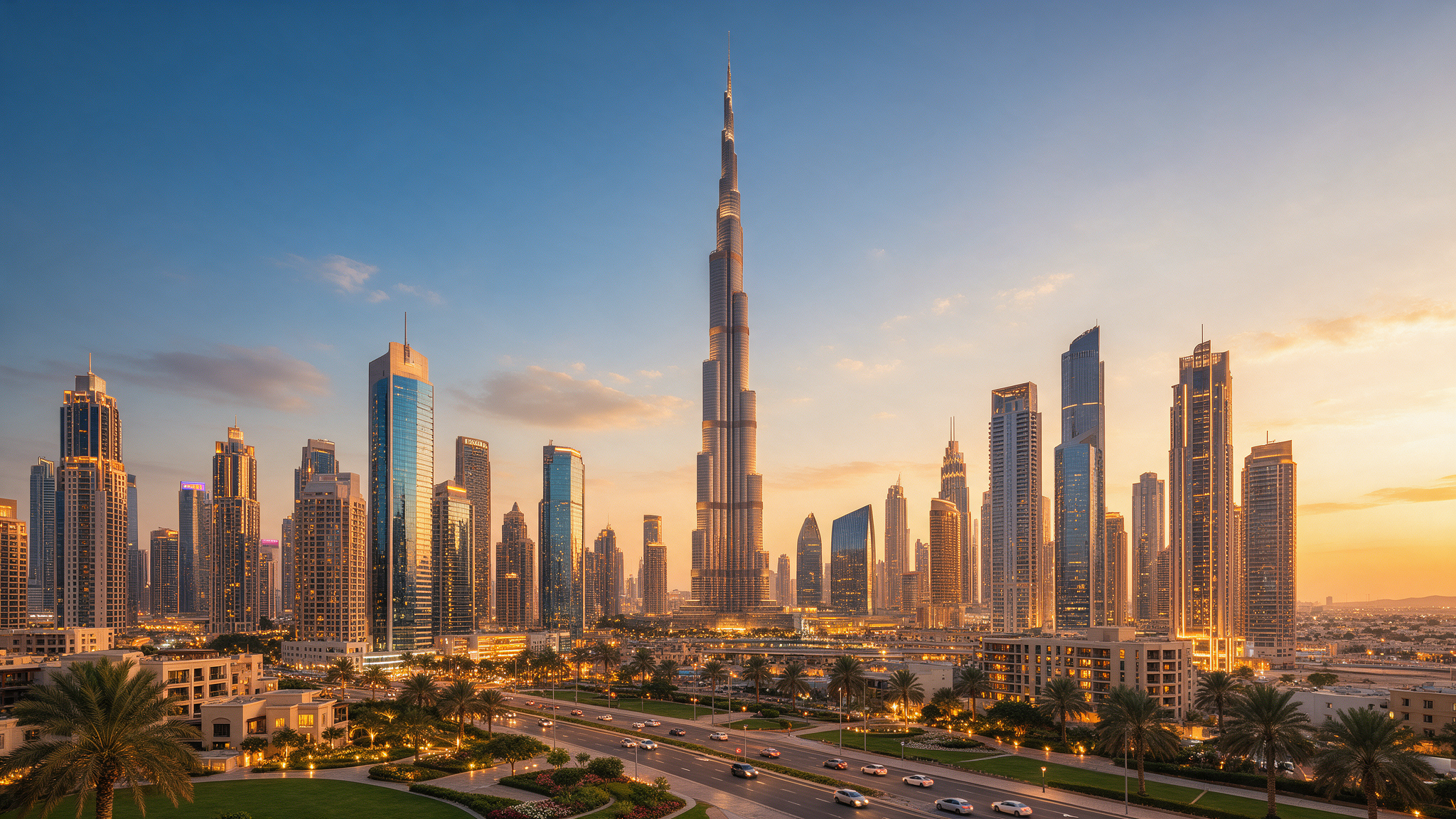
Day 2: Downtown Dubai — Burj Khalifa and Dubai Mall
Downtown is the district built around a single building, and it’s worth giving it a full day rather than squeezing it into an evening. Book your Burj Khalifa “At the Top” slot in advance — tickets start around AED 169 (roughly ₹3,800) for the 124th/125th floor observation deck, and prices climb from there for the SKY level on 148, which is worth it if you want the deck mostly to yourself and a shorter queue. Book directly through Visit Dubai or the official Burj Khalifa site rather than a reseller — non-prime morning slots (before 1pm) are noticeably cheaper and the light for photos is better anyway, since the afternoon haze that sits over the city softens visibility by mid-afternoon most of the year.
Downstairs, Dubai Mall isn’t just a shopping stop — the aquarium tunnel, the ice rink, and the waterfall sculpture are worth twenty minutes even if you don’t buy anything. Time your visit so you’re at the lakeside promenade for the Dubai Fountain show, which runs every 30 minutes in the evening. Mistake to avoid: don’t try to watch it from directly below the Burj — walk out onto the Burj Park bridge instead, where you get the fountain and the tower in the same frame without three rows of phones in front of you.
For food, the ground floor of The Dubai Mall has a proper food hall, but if you want something with more character, cross to Souk Al Bahar next door — Arabian courtyard architecture, and restaurants with unobstructed Burj views without the mall crowd. Photography tip: the Burj lights up with a coordinated LED show most evenings after the fountain — check timing at the concierge desk, since it changes seasonally.
Day 3: Old Dubai and Dubai Creek
This is the day that makes people rewrite their idea of what Dubai actually is. Move to a hotel in or near Old Dubai for this leg, or day-trip it by taxi (20-30 minutes from Downtown, roughly AED 40-60). Start at Al Fahidi Historical Neighbourhood — wind-tower architecture, narrow lanes, and the Dubai Museum inside Al Fahidi Fort. Stop for breakfast at XVA Café, tucked into a converted heritage courtyard house, if you want Turkish eggs and mint lemonade somewhere quiet before the day gets busy.
From there, walk to the creek and take an abra — the small wooden ferries that have crossed Dubai Creek for decades — across to Deira. It costs one dirham. That’s not a typo; it’s the cheapest thing you’ll do all trip and arguably the most memorable five minutes, since you’re sitting at water level watching dhows unload cargo the same way they have for generations. On the Deira side, the Gold Souk and Spice Souk are worth an hour of wandering even if you’re not buying — the smell of the spice souk alone (saffron, dried lime, frankincense) is worth the walk.
Lunch options here run from ultra-casual to properly good: Ravi Restaurant, running since 1978, does Pakistani kebabs and biryani that regulars have been eating for two generations. For something more refined, book a table at the Arabian Tea House back in Al Fahidi for an Emirati-focused menu — try the balaleet if it’s on the menu, a sweet vermicelli-and-egg breakfast dish that most visitors never hear about.
Fun fact: Dubai Creek is the reason the city exists at all — before oil, before the skyscrapers, this saltwater inlet was the pearling and trading harbor that built the original economy. Everything else in this itinerary is, in a sense, downstream of this one waterway.

Day 4: Desert Safari
Move back toward Downtown or Marina for the rest of the trip, and dedicate today to the desert — it’s the one experience on this list that has nothing to do with the six city areas, and it’s non-negotiable for a first Dubai trip. An evening desert safari (AED 210-499 per person depending on operator and inclusions) typically means hotel pickup by mid-afternoon, dune bashing in a 4×4 for 45 minutes to an hour, a stop for photos as the sun drops, then a desert camp with a BBQ buffet, shisha, and a Tanoura or belly dance show. Morning safaris exist too (from around AED 104) and skip the dinner and entertainment, which suits families with younger kids or an early flight the next day.
Honest caveat: dune bashing is genuinely rough — if anyone in your group gets carsick easily, ask the driver to go easier before you start, most will. And book with an operator that uses licensed, insured vehicles rather than the cheapest quote you find; this is one category where the price difference usually reflects real safety standards, not just marketing.
For couples, ask about the overnight safari option (from AED 716) — private tented camps away from the group dinner circuit, with a proper night under a sky with far less light pollution than the city fifty kilometers behind you.
Day 5: Palm Jumeirah
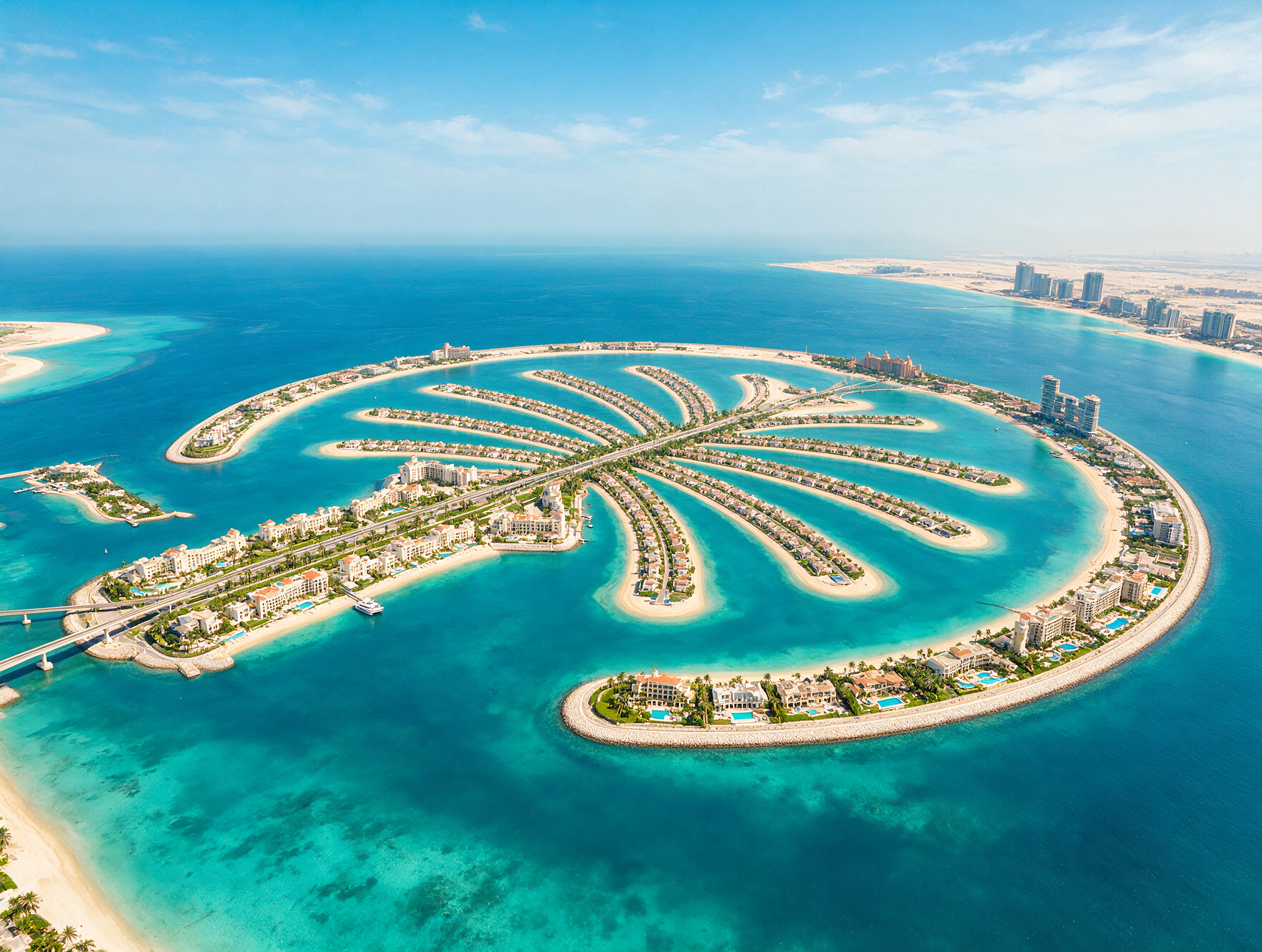
Check into Palm Jumeirah for two nights — this is where an 8-day Dubai trip starts to feel like a proper holiday rather than a sightseeing sprint. The Palm is a man-made island shaped like its name, and staying on it (rather than just visiting for lunch) is the point: Atlantis The Palm and Atlantis The Royal anchor the tip of it, but there are quieter mid-range options along the fronds too, like the Rixos The Palm or Dukes The Palm, both with private beach access for AED 900-1,600/night.
Spend the morning at Aquaventure Waterpark if you’re traveling with kids, or book a couples’ spa afternoon if you’re not — both hotels’ spa facilities are genuinely excellent, not just a hotel amenity checkbox. For the best photo of the Palm’s actual shape, you need altitude: a helicopter tour (around AED 500-700 for 12-17 minutes) or a seaplane transfer gives you the view every postcard is selling, since from ground level the island just looks like a very long road.
Dinner tip: book a table on the West Beach side for sunset over the Arabian Gulf rather than the marina-facing side of the island — the light is better and it’s less crowded since most day-trippers cluster near Atlantis.
Day 6: Jumeirah Beaches and the Coastline
Jumeirah sits between Downtown and the Marina geographically and functions as Dubai’s quieter, more residential luxury stretch — this is where you go to slow down after five fairly packed days. Start at Jumeirah Mosque, one of the only mosques in Dubai open to non-Muslim visitors for a guided tour (modest dress provided if needed, small entry donation) — genuinely worth it for the calligraphy and architecture explanation alone.
Kite Beach is the local favorite here over the more famous JBR beach — wider sand, food trucks instead of beach clubs, and a clean view of Burj Al Arab from the shoreline without paying for a table at one of its restaurants. Rent a paddleboard or just walk the boardwalk; either way, this is the day to not have plans. If you want the Burj Al Arab experience properly, afternoon tea at Skyview Bar (inside the hotel) runs a few hundred dirhams per person and is the accessible way to see the interior without booking a room that starts around AED 5,000+/night.
Mistake to avoid: don’t try to photograph Burj Al Arab from the public beach at midday — the sun sits directly behind it and every shot comes out as a silhouette. Late afternoon, facing slightly northeast, is when the building actually shows its detail.
Day 7: Marina Sunset Cruise and Alserkal Avenue
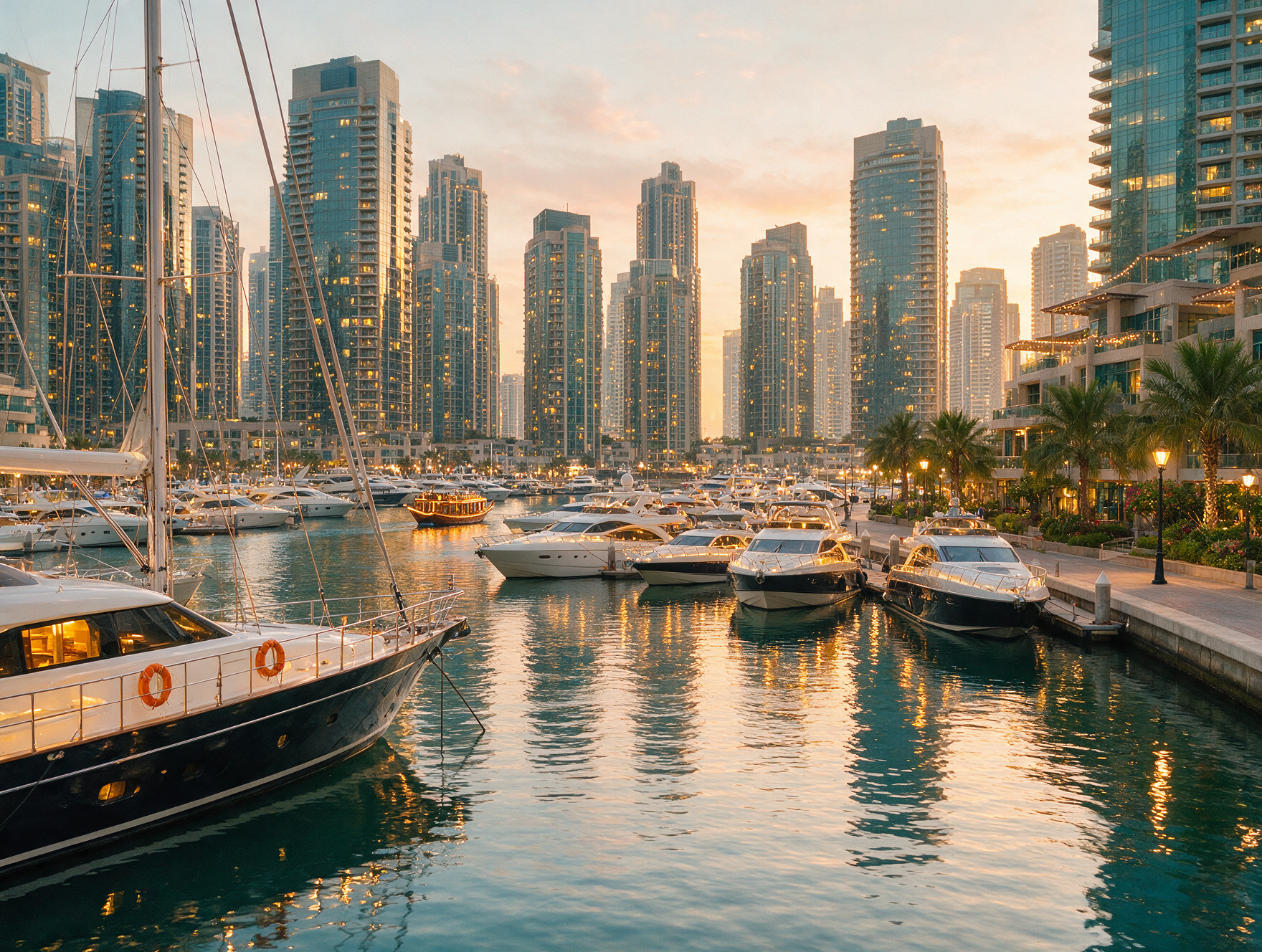
Your last full day loops back to Dubai Marina for something you skipped on day one: a proper dhow cruise at sunset, ideally a smaller boat rather than the giant tourist dinners that circle the marina like clockwork. A two-hour cruise with dinner runs AED 150-350 depending on the boat size and cuisine; go for one that does the marina loop rather than the creek route, since the skyline lighting at this specific stretch is the reason people come to Dubai for the photo in the first place.
Spend the earlier part of the day at Alserkal Avenue instead of another mall — a converted industrial warehouse district turned into Dubai’s actual contemporary art scene, galleries, independent coffee roasters, and none of the mall-food-court sameness. It’s the closest thing Dubai has to a genuine “locals hang out here” neighborhood, and most first-time visitors never make it here because it isn’t on the standard tour bus route. That’s exactly why it’s worth the detour.
Day 8: Departure
Keep this half-day light. If your flight is in the evening, a last stop at Dubai Frame (AED 50 for adults) gives you a fast, framed view over both old and new Dubai from a single structure — old Deira on one side, the modern skyline on the other, literally through the same 150-meter frame. It’s a 45-minute visit, easy to slot before an airport run, and a genuinely good closing image for the trip.
What This Trip Actually Costs
Round-trip economy flights from India run roughly ₹18,000-28,000 from Mumbai, ₹20,000-32,000 from Delhi, and ₹22,000-35,000 from Bengaluru in regular season — expect those numbers to climb to ₹35,000-55,000 in the December-January peak, so book 6-8 weeks out if your dates are fixed around that window.
For the ground portion of a Dubai trip cost from India across 7 nights, here’s a realistic range:
Mid-range: Hotels averaging AED 450-750/night (₹10,000-17,000), food at AED 150-250/person/day (₹3,400-5,700), and activities (Burj Khalifa, desert safari, one cruise, metro/taxi transport) around AED 300-450/day (₹6,800-10,200). All-in, budget roughly ₹1.4-2 lakh per person for the full 8 days including flights.
Luxury: Palm Jumeirah or Downtown five-star stays at AED 1,500-4,000+/night, private guides instead of group tours, a helicopter transfer, and fine dining most evenings pushes the daily ground cost to AED 1,500-3,000+/day. A luxury version of this same itinerary runs ₹3.5-6 lakh+ per person, and that’s before considering suite categories at properties like Atlantis The Royal.
Getting around adds up less than people expect: a Nol card (AED 25, refundable) covers Dubai Metro, bus, and tram, with single-zone fares around AED 3-7.50 and a 7-day unlimited pass at AED 110. The Metro is clean, air-conditioned, and connects Marina, Downtown, and the airport directly — genuinely one of the better urban metro systems in the region, per the RTA. That said, Palm Jumeirah and parts of Jumeirah aren’t metro-served, so budget for taxis or your hotel’s shuttle on those days.
Best Time to Visit Dubai
The honest answer to best time to visit Dubai is November through March, and it’s not close. Daytime temperatures sit in the 15-25°C range, evenings are pleasant enough for outdoor dining and dhow cruises, and this window overlaps with Dubai’s fullest events calendar, including Global Village (October-April) if you want a seventh area to explore beyond the six above. The tradeoff is that this is also peak season for pricing and crowds — Burj Khalifa slots and desert safari pickups both need booking further ahead.
April-May and September-October are shoulder season: still warm, noticeably fewer crowds, better hotel rates, but you’ll want to structure outdoor activities (desert safari, beach time) for morning or evening rather than midday. June through August is genuinely rough — temperatures push past 40°C and regularly hit 45°C, and this itinerary’s outdoor-heavy days (desert, Palm, Jumeirah beaches) don’t work as well. If you’re traveling then, this trip is doable but needs re-sequencing toward indoor time — malls, the aquarium, Museum of the Future, indoor ski at Ski Dubai — with outdoor stops compressed to early morning.
Is 7 Nights Actually Enough
For this specific six-area itinerary, yes — 7 nights and 8 days is close to the minimum for doing all six areas without feeling rushed, and it’s also close to the point of diminishing returns for most travelers unless you’re adding Abu Dhabi as a day trip (about 90 minutes by road, and genuinely worth one extra day if you have it). A 5-day version means dropping either Old Dubai/Creek or one of the beach days, which is where most rushed itineraries go wrong — they keep every landmark and cut the day that actually shows you the city’s history. If you only have 5 days, keep Downtown, Marina, and the desert safari as non-negotiable, and choose one of Palm Jumeirah or Old Dubai depending on whether you’re traveling for the beach or the history.
Frequently Asked Questions
Do Indian passport holders need a visa for Dubai?
Yes, but it’s straightforward — Indian nationals can apply for a UAE visa on arrival if they hold a valid US visa, UK residence, or EU residence meeting certain conditions, or apply for a standard tourist e-visa in advance through an airline, travel agent, or the UAE’s official channels. Processing typically takes a few working days; apply at least a week before departure to be safe, and always verify current requirements directly with the UAE’s official visa portal or your airline before booking, since rules do get updated.
Is Dubai safe for tourists?
Is Dubai safe for tourists is one of the most searched questions about the city, and the short answer is yes, unusually so — low street crime, strict enforcement, and a genuinely tourist-friendly police presence, including dedicated tourist police in major malls and attractions. The bigger things to actually watch for are UAE-specific laws around public behavior, alcohol consumption (only in licensed venues), and photography of government buildings or people without consent — read up on local etiquette before you go rather than after.
What’s a realistic Dubai trip cost from India for a family of four?
For a mid-range 8-day trip, expect roughly ₹5.5-8 lakh total for a family of four including flights, a two-bedroom or connecting rooms, meals, and activities — desert safaris and Aquaventure both have family package pricing that works out cheaper per person than booking individually.
Can this itinerary work as a Dubai honeymoon?
Very well, actually — swap the family-oriented stops (Aquaventure, kid-friendly desert safari timing) for the overnight desert camp, a private yacht at sunset instead of a group dhow cruise, and a Palm Jumeirah suite with a Burj Al Arab or sea view. Most of our Dubai honeymoon packages from India use this same six-area structure with the swaps built in.
How do I get around Dubai without renting a car?
The Dubai Metro covers Downtown, Marina, and the airport well; taxis (metered, plentiful, and not expensive by international standards) fill the gaps, especially to Palm Jumeirah and parts of Jumeirah that the metro doesn’t reach. Ride-hailing apps work the same way they do in Indian cities. Renting a car only makes sense if you’re also doing a day trip to Abu Dhabi or the mountains.
What should I pack, and does Dubai have a dress code?
Dubai is more relaxed than people expect for beach and hotel areas, but modest dress (shoulders and knees covered) is expected in malls, mosques, and government buildings. Pack light layers — malls and the metro run cold air conditioning even when it’s 40°C outside.
Is 4 nights or 7 nights better for a first Dubai trip?
If this is a genuine Dubai weekend escape tacked onto a layover or business trip, 3-4 nights covers Downtown and Marina reasonably well. For anyone asking about a proper Dubai 5 days itinerary or longer, 7 nights is where the trip stops feeling like a highlight reel and starts feeling like you actually understand the city’s layout.
Let Get Tripped Build This For You
Everything above is a starting framework, not a fixed script — the right version of this trip depends on whether you’re traveling as a couple, with kids, or chasing a proper Dubai luxury travel packages experience with private transfers and suite upgrades throughout. That’s the actual value of working with a travel company rather than assembling seven separate bookings yourself: someone who’s sequenced this exact loop before catches the timing conflicts (a Friday closure, a fully booked safari slot, a hotel switch that adds an hour of transit you didn’t account for) before they become your problem mid-trip.
If you’d rather hand this off than book eight days of it yourself, get in touch and we’ll build a custom Dubai itinerary around your dates, budget, and the areas that actually interest you — whether that means more time on the Palm and less in the souks, or the other way around.