Every guide to Dubai mentions the Creek in passing — usually as a stop on the way to the Gold Souk, or a line about “where Dubai’s story began.” That’s true, but it undersells the place. The Creek is the reason Dubai exists at all: a natural saltwater inlet that let pearl divers and trading dhows settle here long before oil, skyscrapers, or any of the rest of it. Once you’ve done the standard dhow cruise and abra crossing, there’s a genuinely different side of the Creek worth the extra hour.
Table of Contents
- Beyond the Standard Dhow Cruise
- Al Seef After Dark, Away From the Main Strip
- The Deira Side Most Visitors Skip
- Dubai Creek Harbour, the Newer Story
- Walking the Creek at Dawn
- Practical Notes for Dubai Creek
- FAQs
Beyond the Standard Dhow Cruise
The classic evening dhow dinner cruise from Al Seef is genuinely worth doing once — a slow float past the old town skyline with dinner on board — but it’s also the single most-booked experience on the Creek, which means it’s rarely a quiet one. If you want the same water and a similar view with a fraction of the crowd, the daytime historical cruise option covers the same stretch of water without the dinner-buffet production, and costs less. It won’t give you the illuminated night skyline, but it does let you actually hear your guide over the water instead of a live band.
Al Seef After Dark, Away From the Main Strip
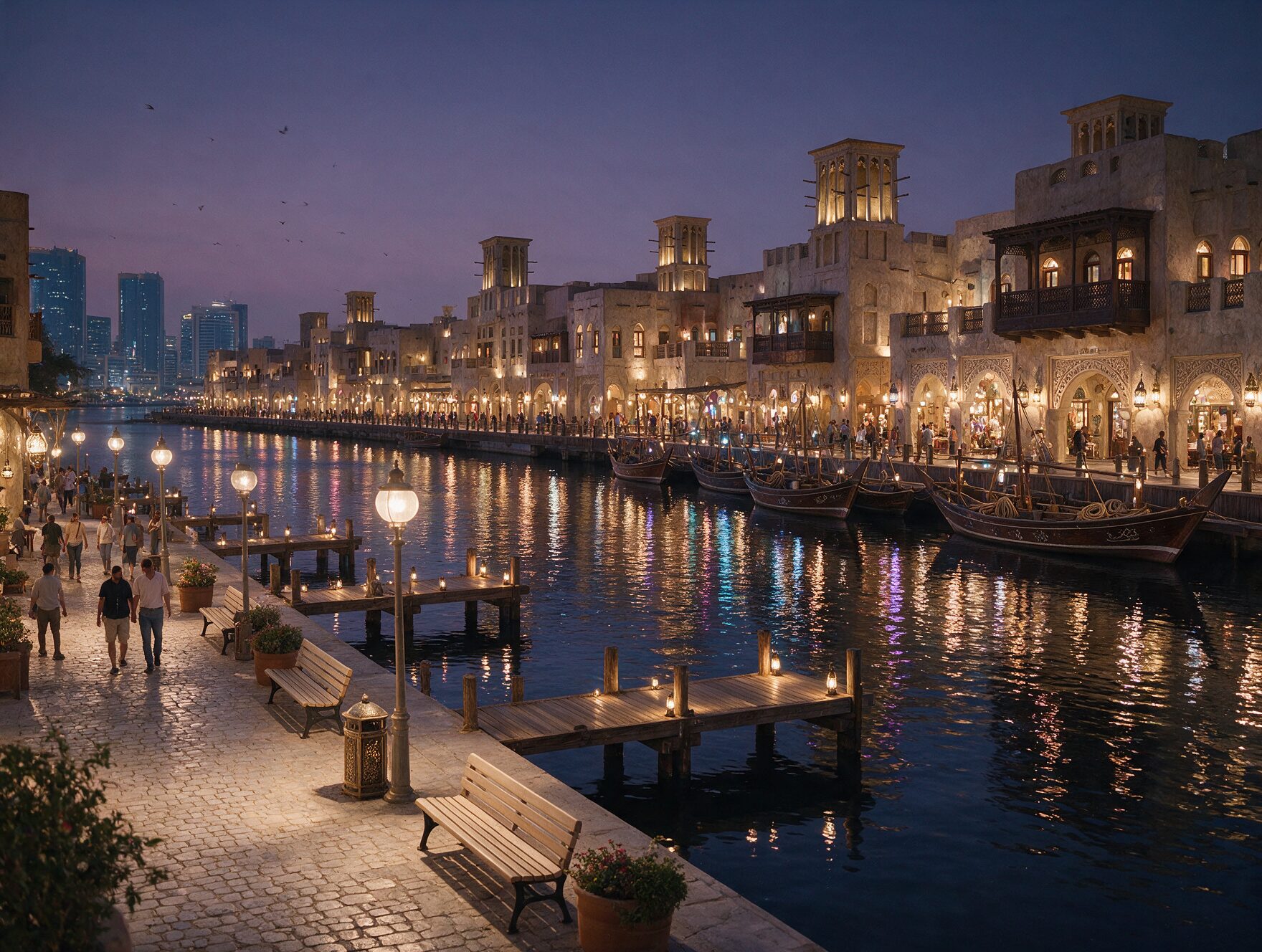
Al Seef’s main promenade — heritage-style architecture built specifically for cafés, restaurants, and boutiques — gets busy and, frankly, a little staged in the early evening when every dinner cruise group disembarks at once. Walk fifteen minutes further along the waterfront path, past the main cluster of restaurants, and it thins out considerably. You get the same illuminated waterfront and old-town silhouette with room to actually sit somewhere quiet.
The Deira Side Most Visitors Skip
Most Creek visits stick to the Bur Dubai side, since that’s where Al Fahidi and Al Seef sit. Cross over to Deira and you get a genuinely different texture — a dense, working commercial district where the Gold and Spice Souks operate less as a tourist attraction and more as an actual trading hub, the way they have for decades. It’s less polished than Al Seef, and that’s the point. Go in the late afternoon when the souks are busy with actual commerce rather than tour groups.
Dubai Creek Harbour, the Newer Story
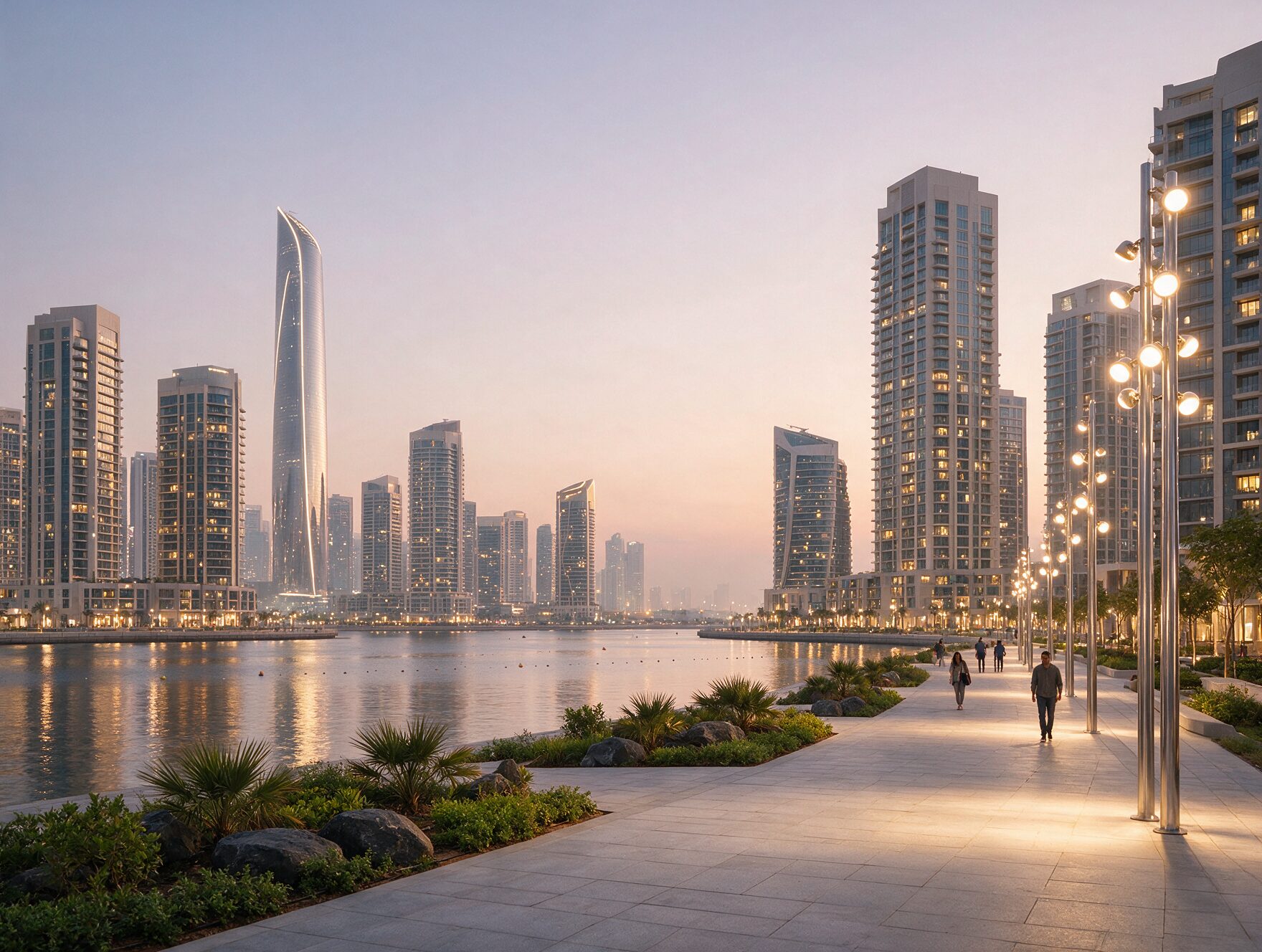
A few kilometres from the historic stretch, Dubai Creek Harbour is the Creek’s modern chapter — a newer waterfront development built around views of the wider creek and, eventually, a planned tower intended to rival the Burj Khalifa in height. It’s a genuinely different mood from the old town: wide promenades, newer restaurants, families out for an evening walk rather than tourists on a dhow. Worth an hour if you want to see how the same waterway that built old Dubai is being built on again, this time on a very different scale.
Walking the Creek at Dawn
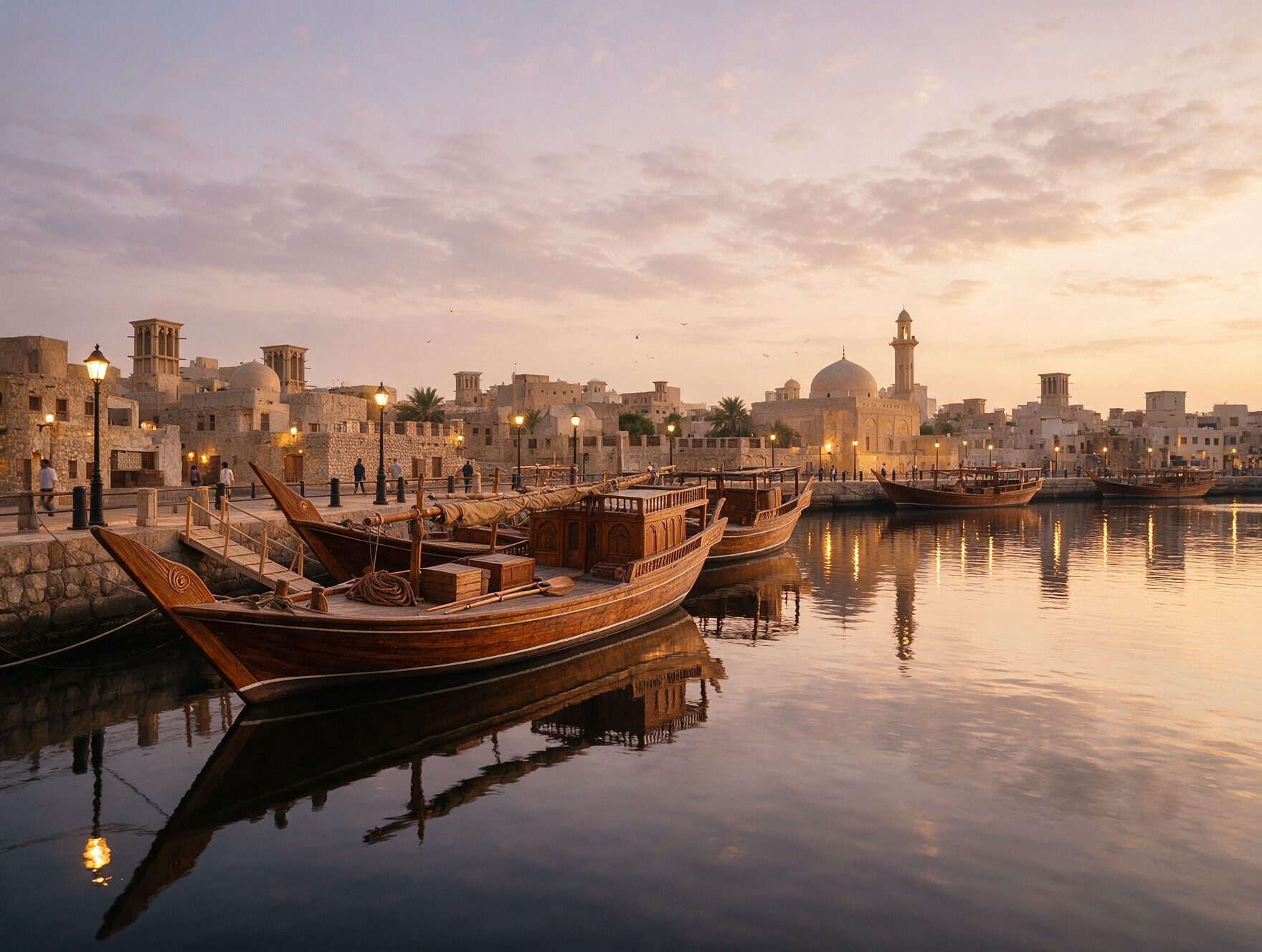
If you’re an early riser, walk the Bur Dubai creekside promenade around 6:30–7am, before the dhow operators and abra crossings pick up for the day. The dhows moored overnight are still tied up, the water is flat and quiet, and the light does something to the old wooden boats and the Deira skyline behind them that the busy midday version of the same view simply doesn’t. It’s a genuine photography tip, not a generic one: bring a slightly longer lens if you have one, since the interesting detail here is often across the water rather than right in front of you.
Where to Stay Near the Creek
Al Seef and the surrounding Bur Dubai side have a small but growing cluster of heritage-style and mid-range hotels that put the dawn walk and evening waterfront within a five-minute stroll — worth considering if the Creek is a priority rather than a half-day add-on to a Downtown or Marina stay. Deira’s hotels tend to run more budget-to-mid-range and put you closer to the working souks than the polished Al Seef side.
A Fun Fact Worth Knowing
Dubai Creek was declared a UNESCO World Heritage Site candidate as part of the wider Al Fahidi and historic Dubai nomination, recognising it as the natural feature that shaped the city’s original pearling and trading economy — long before oil was ever part of the story, the Creek’s depth and shelter from the open Gulf is the entire reason a settlement grew here in the first place.
A Mistake to Avoid
Don’t book the evening dhow dinner cruise as your only Creek experience and skip the daytime side entirely — the illuminated night cruise is beautiful, but it’s also the version everyone does, and pairing it with even a short dawn walk or a daytime Deira souk visit gives you the fuller, more honest picture of how this waterway actually functions day to day.
Smart-Spending Tip
Compare a handful of dhow cruise operators before booking — prices for a broadly similar dinner-cruise experience can range from around AED 150 to well over AED 350 depending on the operator and boat quality, and the cheaper options are often perfectly good for the view-and-dinner experience most travellers actually want.
For Solo Travellers, Couples, and Families
Solo travellers will find the dawn walk one of the best quiet, reflective activities in this entire guide — safe, atmospheric, and requiring no booking or company. Couples should prioritise the evening dhow cruise or a quiet Al Seef dinner table away from the main crowd for a genuinely romantic evening on the water. Families do well with the daytime historical cruise option, shorter and less late-night than the dinner version, plus the Deira souks for an engaging, sensory afternoon with kids.
How This Fits Into a Longer Dubai Trip
The Creek pairs naturally with an Old Dubai morning, since Al Fahidi, the souks, and the Creek itself all sit within the same compact old-town area — a single well-planned day can realistically cover both without feeling rushed, provided you start with the dawn walk or early abra crossing rather than a mid-morning start. For anyone building a custom Dubai itinerary around cultural depth rather than just the skyline, this is usually the day that ends up being the most memorable one people mention afterward.
Practical Notes for Dubai Creek
The Creek area is served by the Green Line Metro (Al Ghubaiba, Al Ras, and Baniyas Square stations cover different stretches of the waterfront), making it an easy add-on to an Old Dubai morning rather than a separate trip. A taxi from Downtown or the Marina takes roughly 20–35 minutes depending on which side of the Creek you’re heading to.
Dhow dinner cruises typically run in the AED 150–350 range depending on the operator and meal tier, while the abra crossing remains around AED 1. Best time to visit for the atmosphere described here is either early morning (dawn walk) or just after sunset (Al Seef and the dhow cruises) — midday on the Creek is functional but not particularly atmospheric.
A Note on the Creek’s Two Moods
It’s worth naming directly: the Creek genuinely feels like two different places depending on when you visit. The pre-dawn version is still, working, almost monochrome in the early light. The evening version, once Al Seef’s lights come on and the dhow cruises start departing, is warmer, busier, and more performative in a good way — built for an audience rather than just function. Neither is the “real” Creek and the other a tourist version; they’re both true, and seeing both in the same trip gives you a rounder sense of the place than picking just one.
Connectivity, Payments, and Safety Along the Creek
Mobile data coverage is strong on both the Bur Dubai and Deira sides, useful for comparing dhow cruise operators or booking a last-minute abra-adjacent water taxi. Cash is essential for the abra crossing (about AED 1) and useful for smaller Deira souk purchases; card works fine for dhow cruise bookings and Al Seef’s restaurants. The Creek area is safe to walk at all the times recommended in this guide, including the pre-dawn walk, though as with any quiet waterfront at that hour, sticking to the lit promenade rather than unlit side paths is sensible.
FAQs
Is the Dubai Creek dhow cruise worth it?
Yes, especially the evening version for the illuminated skyline — but it’s also the most crowded option. A daytime historical cruise covers similar water with fewer people and a lower price.
What’s the difference between the Bur Dubai and Deira sides of the Creek?
Bur Dubai holds Al Fahidi’s heritage neighbourhood and the newer Al Seef development; Deira is the denser, more working commercial side with the Gold and Spice Souks operating as an actual trading hub rather than a curated tourist stop.
Is Dubai Creek Harbour the same as the historic Dubai Creek?
They’re connected by the same waterway, but Dubai Creek Harbour is a newer development a few kilometres from the historic old-town stretch, with a very different, modern atmosphere.
How do I get across Dubai Creek?
The traditional abra ferry (about AED 1, cash only) is the classic option; there are also modern water taxis and, further inland, road bridges connecting both banks.
What’s the best time to photograph Dubai Creek?
Early morning, around 6:30–7am, before the day’s dhow and abra traffic picks up, or just after sunset when Al Seef and the waterfront light up.
How much does a Dubai Creek dhow dinner cruise cost?
Typically in the AED 150–350 range depending on the operator, boat quality, and meal tier — it’s worth comparing two or three options before booking.
Is Dubai Creek Harbour worth visiting alongside the historic Creek?
If you have the extra hour, yes — it’s a genuinely different, modern contrast to the historic old-town stretch and shows a different side of how the city is still growing along the same waterway.
Can I combine Dubai Creek and Old Dubai in the same day?
Yes, easily — they sit in the same part of the city, and a well-paced day starting with the dawn Creek walk and finishing with an evening dhow cruise comfortably fits an Al Fahidi and souk visit in between.
Do I need to book the dhow cruise in advance?
Advance booking is recommended, particularly for weekend evenings and peak season (November–March), when popular operators sell out same-day slots.
Dubai Creek rewards exactly the kind of curiosity that pulls you fifteen minutes past the main tourist strip, whether that’s the far end of Al Seef’s promenade or the working souks on the Deira side. If you’d like this woven properly into a longer Dubai stay — old town in the morning, modern skyline by night — that’s precisely what we build into a custom Dubai trip at Get Tripped. Get in touch and we’ll map the Creek into your days the way it actually deserves.