The gold souk shutters were still half down when I got off the abra at Deira Old Souq station, and the guy running the karak stall next to the dock had already sold out of the first batch. He poured the second round straight from a dented steel kettle, heavy on the cardamom, and handed it over in a small glass for two dirhams. That five-minute boat crossing over Dubai Creek, tea in hand before 7am, is a better introduction to a Dubai food trail than any restaurant list — because Dubai’s food story was never really about one glamorous meal. It’s about how many different kitchens are running at once, ten minutes apart, in a city where more than 200 nationalities cook for a living.
This guide moves through all six of Dubai’s signature areas — Old Dubai, Dubai Creek, Downtown, Dubai Marina, Palm Jumeirah, and Jumeirah — because eating your way through just one neighborhood tells you almost nothing about the rest. A machboos lunch in a Bastakiya courtyard and a sushi counter on the 122nd floor of the Burj Khalifa are both “Dubai food,” and neither one is the whole picture. Along the way: where the qahwa actually gets poured properly, where the ice cream is worth the queue, what’s open at 2am, and the one mistake that costs first-timers the most money for the least memorable meal.
Table of Contents
- Old Dubai: Souks, Wind-Tower Cafés, and Breakfast Like a Trader
- Dubai Creek: The Abra Crossing and What’s Waiting on the Other Side
- Downtown: Burj Khalifa Views and a Sushi Counter Worth the Splurge
- Dubai Marina: Waterfront Tables and the Late Sunset Shift
- Palm Jumeirah: Resort Dining Without Leaving the Island
- Jumeirah: Beach Cafés That Skip the Crowd
- Coffee and Qahwa: Dubai’s Two Coffee Cultures
- Ice Cream, Luqaimat, and Everything Sweet
- Late-Night Eats: Dubai Doesn’t Stop for Dinner
- A Mistake to Avoid
- A Fun Fact
- FAQs
- Final Word
Old Dubai: Souks, Wind-Tower Cafés, and Breakfast Like a Trader
Old Dubai is split across the Creek — Deira to the north, Bur Dubai to the south — and this is where the emirate’s actual culinary history sits, mostly ignored by anyone doing a two-day layover between the mall and the beach.
Start at Al Ustad Special Kabab on Al Rigga Road, a cash-only Iranian kebab house that’s been grilling koobideh (spiced minced lamb, pressed flat on skewers) since 1978. The room is plastic chairs and old photographs on the wall, not a design concept. Order the koobideh with joojeh (saffron chicken), a mound of buttery rice, and a whole grilled tomato that’s turned soft and slightly charred. A full meal runs around AED 40–60 per person, and regulars order without looking at a menu.
In the Bastakiya Quarter — Bur Dubai’s wind-tower neighborhood, all sand-colored walls and narrow shaded lanes — Arabian Tea House serves proper Emirati home cooking: machboos (spiced rice layered with meat or fish, cooked in one pot with black lime and a baharat blend of cardamom, cinnamon, and cloves) and luqaimat for dessert, in a courtyard with ceiling fans and low tables. It’s touristy in the sense that everyone eventually finds it, but the food doesn’t feel like it’s been adjusted for that.
Nearby, Al Khayma Heritage Restaurant does harees — wheat and shredded chicken cooked down for hours into something closer to a thick, comforting porridge than a dish you’d expect to love on paper — alongside more machboos, in a setting built to look like a traditional majlis.
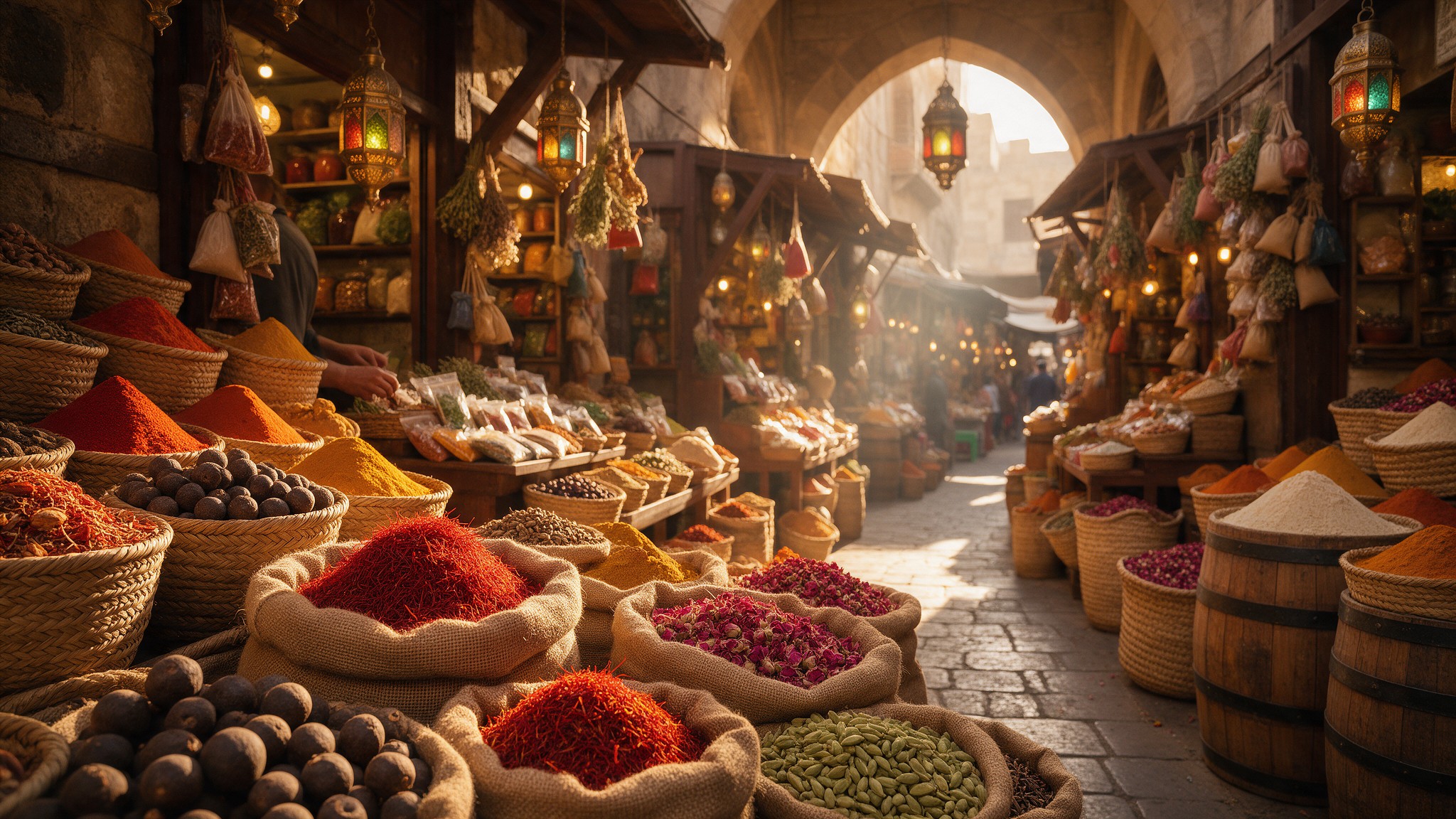
Walk the Spice Souk before the day heats up — saffron, dried limes (the same loomi that gives machboos its sourness), cardamom, and rose petals sit in open sacks, and the smell hits you a full alley before the shops do. The Gold Souk in Deira anchors the same stretch, and between the two, Iranian bakeries pull flatbread straight from stone ovens each morning, sold with butter and date syrup for a breakfast that costs less than a coffee back home.
Dubai Creek: The Abra Crossing and What’s Waiting on the Other Side
Dubai Creek is where the city started, before the marina or the Palm existed even as blueprints, and the abra — the small wooden motor boat that’s run this crossing for generations — is still the best AED 1 you can spend in the entire emirate. It takes about five minutes, no schedule, no booking, you just wait for the boat to fill.
The food angle here is less about sit-down restaurants and more about what’s clustered at each dock. On the Bur Dubai side, near Meena Bazaar, the smell of South Asian cooking takes over — samosas, chai stalls, small Kerala and Pakistani canteens serving thalis and biryani to dock workers and traders on lunch break, at prices that would embarrass a food court back home. On the Deira side, closer to the old dhow wharfage where wooden cargo boats still load everything from tyres to televisions bound for East Africa and Iran, grilled fish stalls do brisk business through the evening — a whole hammour or kingfish, split and grilled over charcoal, served with little more than lemon and bread.
The Al Seef promenade, on the Bur Dubai bank, is the tidied-up version of this same waterfront — heritage-style buildings, cafés with Creek views, and a much easier place to sit for an hour with a coffee and actually look at the boats rather than dodge them. It’s a good spot to end the crossing rather than start it; go do the abra and the wharfage first, then reward yourself with a proper seat.
Downtown: Burj Khalifa Views and a Sushi Counter Worth the Splurge
Downtown is where Dubai performs its biggest scale — the Burj Khalifa, the Dubai Mall, the Fountain — and the food here is built for that same performance, for better and occasionally for worse.
The genuine highlight is 99 Sushi Bar at Address Downtown, a Michelin-recognised Japanese kitchen doing an omakase that earns its price with actual technique — the fish is flown in properly, the rice is seasoned with restraint, and the Fountain view through the window is a bonus rather than the point. Book ahead; walk-in tables barely exist.
For something looser, Parker’s in Dubai Mall does creative comfort food with a Fountain-side terrace, and its viral Matilda-style chocolate cake is exactly as rich as the internet says. Masti, inside the Dubai EDITION, reframes Indian food as something colourful and modern rather than a buffet-line steam tray — useful context if you’ve only had Indian food at home and assume you already know what a Dubai version would taste like. Belcanto, up on the Dubai Opera rooftop, does Italian with house-made pasta and dry-aged steaks against a genuinely dramatic skyline at night.
The honest caveat: a huge share of Downtown’s restaurants exist purely to sell a Burj Khalifa or Fountain view, and the food is often the least considered part of the bill. Pick one splurge meal here with a real kitchen behind it — 99 Sushi, or Belcanto, or one of the Address Sky View rooftop spots if you want the skyline with dinner — and treat everywhere else in walking distance as scenery, not a food destination.
Dubai Marina: Waterfront Tables and the Late Sunset Shift
Marina Walk is built for exactly one kind of evening: a table by the water, boats drifting past, and dinner that runs long because nobody’s rushing you out. Pier 7 is the easiest starting point — seven restaurants stacked over seven floors, from Mediterranean small plates at La Serre to a livelier scene higher up, and the building itself is designed so every level gets a marina view.
For a proper occasion, Coya at Four Seasons Jumeirah does Peruvian-Latin fusion — ceviche cured tableside-sharp, grilled meats, a room that’s loud in a good way by 9pm — while Dubai Marina Yacht Club keeps things calmer with fresh seafood and yacht-lined views that suit a slower, quieter dinner. If you just want good grilled fish without the production, Fisherman’s Hub is smaller, less polished, and noticeably cheaper, which is its own kind of relief after a week of view-tax pricing.
What actually makes Marina worth the trip, food-wise, is timing: come for a 7:30pm table and you’ll get the sunset over the water as your appetizer arrives. Come at 6pm sharp and you’ll be eating in daylight glare with nothing to look at yet — a small thing, but it changes the whole evening.
Palm Jumeirah: Resort Dining Without Leaving the Island
The Palm doesn’t really have a walkable food street — it’s built around resorts, and the food scene lives almost entirely inside them, which is fine once you accept it and plan around it rather than expecting a stroll-and-graze evening like the Marina.
Atlantis The Royal and Atlantis The Palm carry most of the island’s headline names, including Nobu, which does exactly what Nobu does everywhere — black cod miso, yellowtail jalapeño, a room that photographs well — but here it comes with a private-beach and Palm-view setting that’s genuinely part of the draw, not just decoration. It’s expensive by any measure, and worth doing once rather than building a whole trip’s dining budget around it.
Beyond the flagship names, most Palm resorts run at least one beachfront grill or Mediterranean terrace open to non-hotel-guests for lunch — worth checking ahead, since access policies change resort to resort and by season. The honest take: come to the Palm for one big, planned meal and the views that come with it, not for spontaneous wandering between courses. That’s a Marina thing, not a Palm thing.
Jumeirah: Beach Cafés That Skip the Crowd
Jumeirah is the quieter cousin — beach clubs, low-rise villas, and a café scene that trades the Marina’s energy for something closer to an actual neighbourhood hangout. SALT, the beachfront kiosk at Kite Beach, is the local reference point for a good smashed burger and shake eaten barefoot in the sand, no table service, no pretense — just a walk-up counter that’s been copied by half the beach food trucks in the city since.
Further along, La Mer’s beachfront strip does casual all-day dining with sea views and considerably less scale-and-spectacle than Downtown or the Palm — a good place for a family lunch that doesn’t require a reservation made three weeks out. What Jumeirah does better than almost anywhere else in the city is the slow café morning: shaded terraces, good coffee, and enough space between tables that nobody’s rushing you off it for the next booking. If Downtown is Dubai showing off and the Marina is Dubai at night, Jumeirah is Dubai actually relaxing.
Coffee and Qahwa: Dubai’s Two Coffee Cultures
Dubai runs on two entirely separate coffee traditions that happen to coexist within a five-minute walk of each other, and it’s worth trying both rather than defaulting to whichever one looks more familiar.
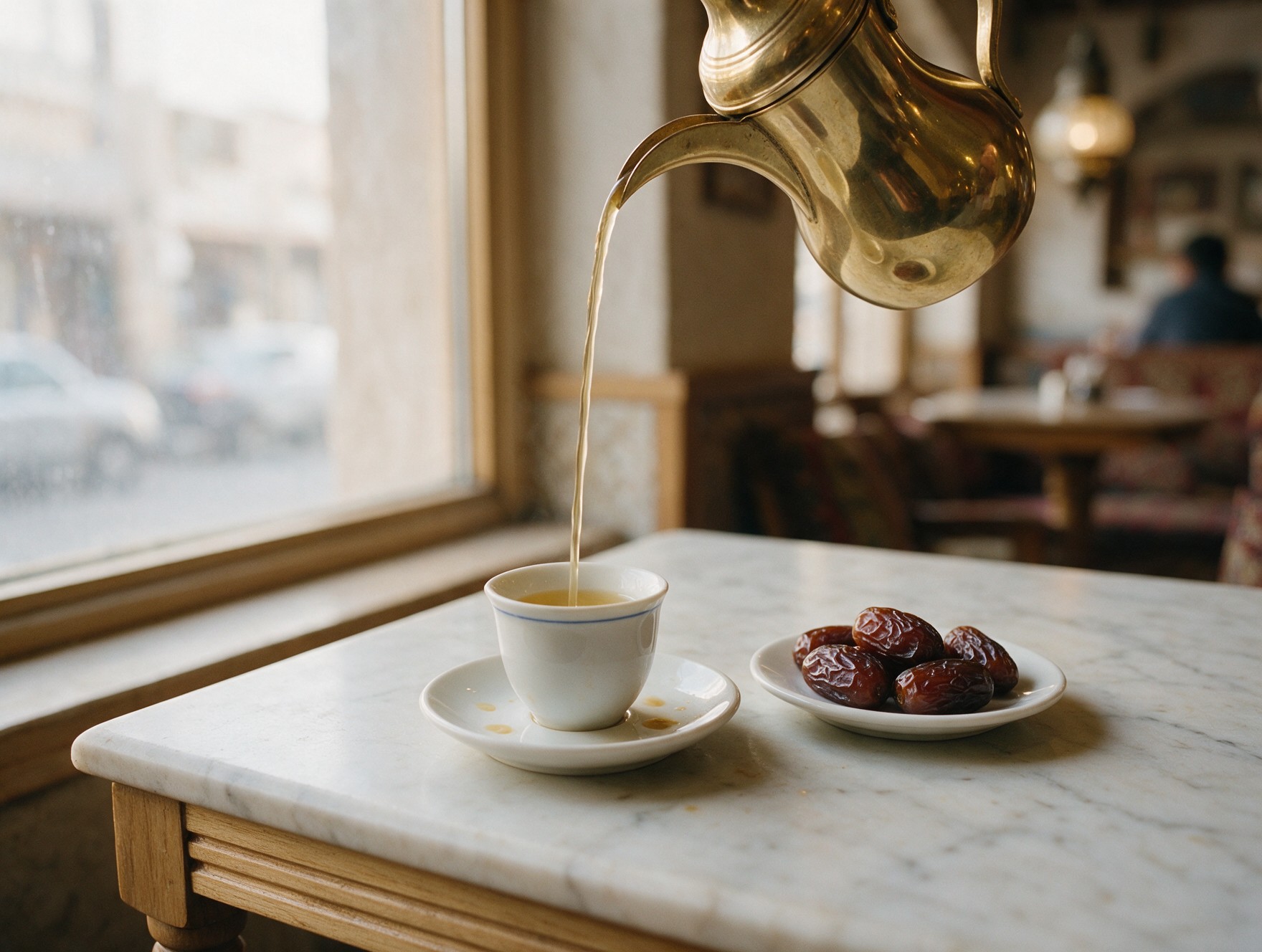
Arabic coffee — qahwa — is the older one: pale gold, unsweetened, brewed with cardamom and sometimes saffron or cloves, poured from a long-spouted dallah pot into small handleless cups, and served alongside dates as a gesture of hospitality rather than a caffeine transaction. It’s meant to be strong, slightly bitter, and sipped in small amounts — you’re supposed to shake your cup gently when you’ve had enough, or the host keeps refilling it. The Coffee Museum in Bastakiya is the best place to actually learn the tradition properly, in a restored courtyard house, for around AED 25 for a full tasting — genuinely one of the better-value experiences in Old Dubai.
The specialty coffee scene is the newer layer, and it’s a serious one — Dubai’s café culture has grown fast enough that it now supports its own map of independent roasteries. Arabica and Arto Coffee, both in Dubai Mall, do the flat-white-and-specialty-bean version for the Downtown crowd, while smaller independent roasters have spread through Al Barari, Al Quoz, and the Marina in the past few years. A flat white or specialty pour-over typically runs AED 20–35 — not cheap, but in line with any global city with a real coffee scene, and a fair bit less than a similar cup in a London or Singapore third-wave café.
The honest comparison: qahwa is a ritual, not a drink to grab and go — budget fifteen unhurried minutes for it, ideally with dates on the side, rather than treating it like an espresso shot.
Ice Cream, Luqaimat, and Everything Sweet
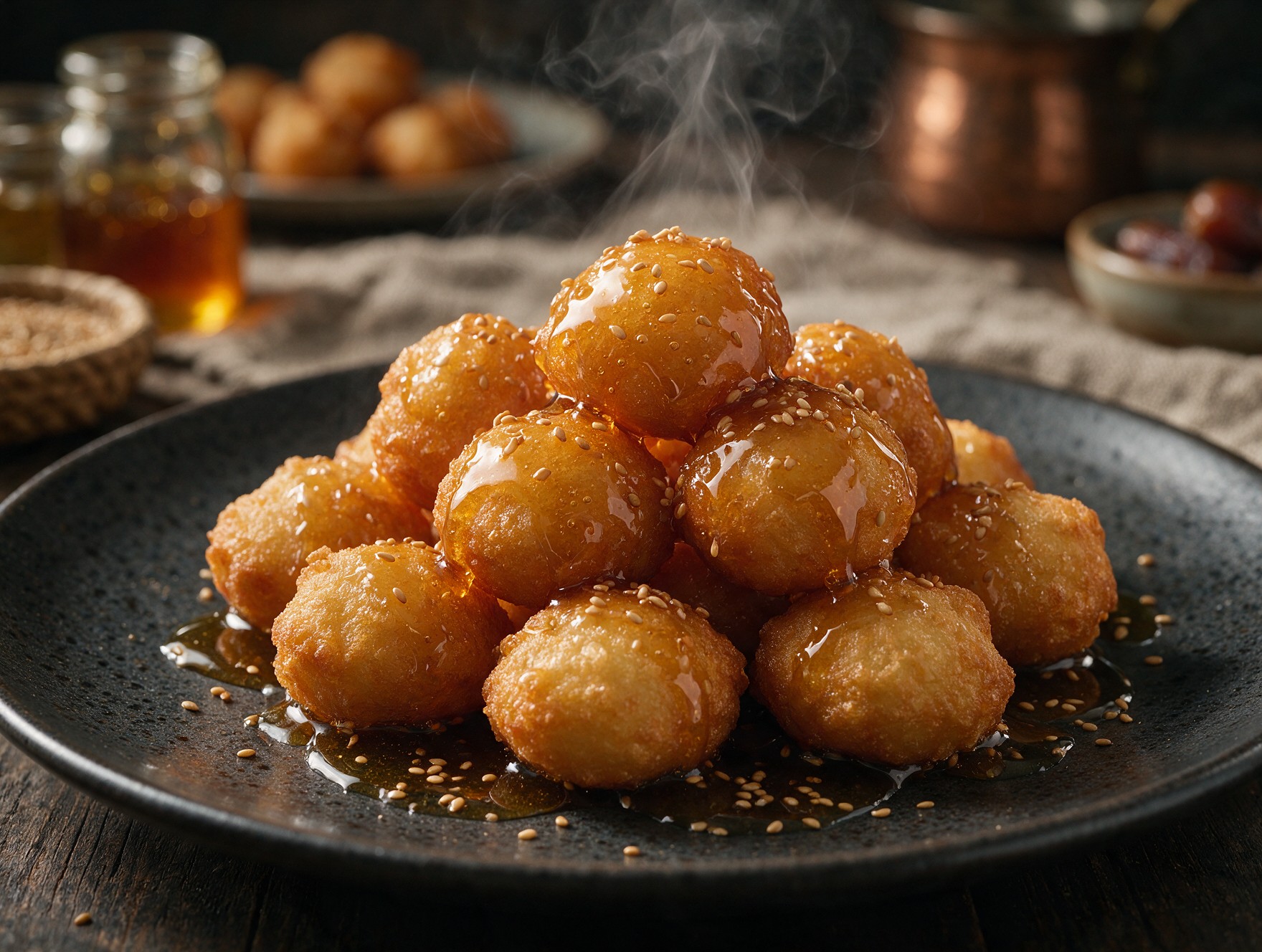
Start with the traditional end of the spectrum: luqaimat, small deep-fried dumplings — crisp outside, pillowy inside — drenched in date syrup (dibs) and sometimes sesame. Every Emirati restaurant in Old Dubai serves a version, and it’s worth eating one hot, straight from the fryer, rather than the room-temperature plate that shows up twenty minutes into a slow meal.
For the modern dessert scene, Dubai doesn’t do anything by halves. Bachir, a Lebanese ice cream house running since 1936, does mastic-scented ice cream rolled in crushed pistachios at City Walk — the lemon-mint and rose-loukoum combination is the one worth the short queue. Amorino shapes its gelato into little rosettes, and the pistachio macaron sandwich is a genuinely good version of a gimmick that’s usually just a photo op. Scoopi, over at Time Out Market, does liquid-nitrogen ice cream with a salted caramel and popcorn flavour that holds up even against the novelty of watching it get frozen table-side.
For something distinctly Dubai rather than imported, Yuki No Hana out at Last Exit Al Khawaneej does Japanese-Korean shaved ice — kakigori and bingsu — with flavours that swing from charcoal soft serve to, oddly, Cerelac instant cereal, which sounds like a joke until you try it and realise it actually works as a dessert. Expect AED 20–60 per person across most of these, ice cream in Dubai being one of the few categories where the mid-range price and the luxury price aren’t that far apart.
Late-Night Eats: Dubai Doesn’t Stop for Dinner
This is where Dubai’s food scene genuinely earns its reputation. Between the shift-work economy and a climate that makes late-evening the most comfortable time to be outdoors for half the year, proper 24-hour food is common rather than a novelty.
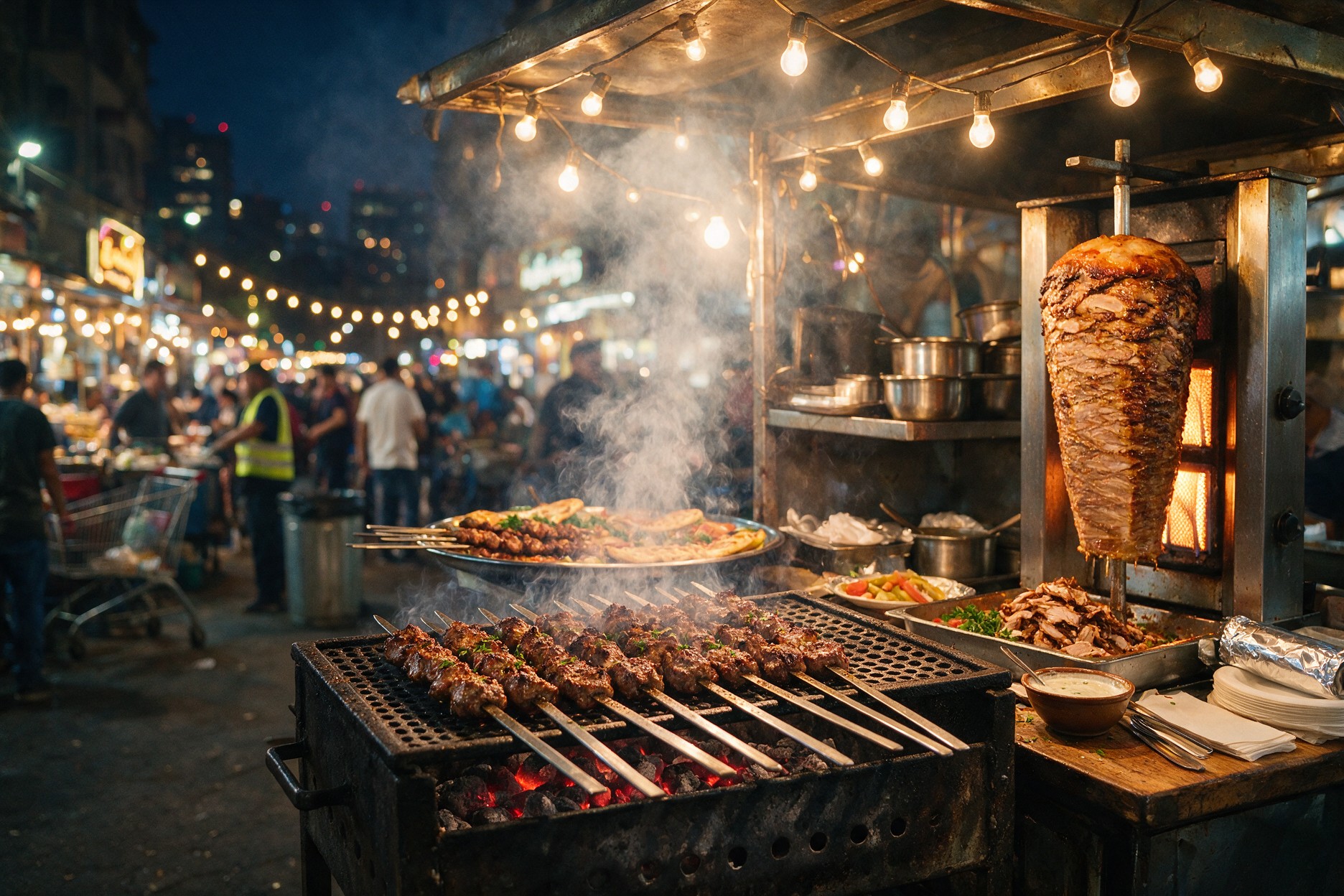
Zaroob does Levantine street food — shawarma, manakish, foul, falafel wraps — around the clock at several branches, AED 15–50 a plate, loud open kitchens and communal seating that feels more like a Beirut street corner transplanted whole than a themed restaurant. Operation: Falafel on The Walk in JBR runs the same 24/7 model with a tighter, cheaper menu focused on falafel and hummus bowls. In Satwa, Al Mallah and Ravi Restaurant are the old-guard names — Lebanese shawarma at the former, Pakistani karahi and naan at the latter — both cheap, both reliably busy at 1am with taxi drivers and night-shift workers, which is as good a quality signal as any review site. Aroos Damascus in Deira runs Syrian mezze and grilled meats from 7am to 4am, and Huqqabaz at Mall of the Emirates does a genuine 24-hour Turkish breakfast spread if you find yourself hungry at an hour when breakfast shouldn’t logically be an option.
The pattern worth remembering: late-night Dubai food skews toward the Levant, Iran, and South Asia rather than the fine-dining names that fill up early and close by midnight. If you want a proper meal after 1am, head for Satwa or Deira, not Downtown or the Marina.
A Mistake to Avoid
Do not eat your one big meal of the trip at whichever restaurant sits closest to the Burj Khalifa Fountain or a Dubai Mall entrance purely because it’s convenient. These spots know foot traffic guarantees turnover regardless of food quality, and pricing reflects that — a mediocre pasta with a partial Fountain view can run the same as a genuinely excellent meal ten minutes away. Walk one block further, or book the one Downtown restaurant that’s actually known for its kitchen (99 Sushi, Belcanto), rather than the one that’s known for its window.
A Fun Fact
The dallah — the long-spouted pot Arabic coffee is traditionally poured from — is significant enough to Emirati identity that a giant sculpture of one stands as a landmark roundabout marker in Abu Dhabi, and smaller versions show up on UAE currency and government insignia. Coffee here isn’t just a drink; it’s baked into how hospitality itself gets symbolised.
FAQs
Is Dubai safe for tourists when it comes to food and water?
Yes. Dubai Municipality enforces strict food hygiene inspections, and tap water is treated to a high standard, though most residents and visitors still drink bottled water out of habit rather than necessity. Street food from busy, high-turnover stalls is generally safe — the same rule that applies anywhere: eat where the queue is long and the food is cooked fresh in front of you.
Is Dubai food halal?
The overwhelming majority of restaurants in Dubai are halal-certified, including most international chains and fine-dining venues. Alcohol is served in licensed hotel restaurants and bars but not in standalone street-level restaurants, so don’t expect wine with dinner outside a hotel setting.
What does a typical meal cost in Dubai?
A casual meal (Zaroob, Ravi, Al Ustad) runs AED 30–60 per person (roughly ₹700–1,400). A solid mid-range sit-down dinner is AED 150–300 per person (₹3,400–6,900). A tasting menu at a name like 99 Sushi or Nobu can run AED 600–1,200 per person. Budgeting a mixed week of street food, mid-range dinners, and one splurge meal is a realistic way to plan a Dubai trip cost from India.
Do I need to tip in Dubai?
Tipping is appreciated, never mandatory. Many hotels and higher-end restaurants add a 10% service charge automatically — check the bill before adding more. Where no charge is added, 10–15% is generous at sit-down restaurants; AED 5–10 in cash is a fair gesture at cafés and casual counters.
What are the must-try Emirati dishes?
Machboos (spiced rice with meat or fish), harees (a slow-cooked wheat and chicken porridge), and luqaimat (fried dough dumplings in date syrup) are the three to prioritise. All three are widely available in Old Dubai’s heritage restaurants and increasingly on mainstream restaurant menus across the city.
Is there vegetarian food available?
Easily. Dubai’s large Indian and South Asian population means proper vegetarian and Jain-friendly restaurants are common, especially around Bur Dubai and Karama, and most mainstream restaurants carry clearly marked vegetarian sections.
What’s the best time to visit Dubai for a food-focused trip?
November through March is the best time to visit Dubai generally — mild enough to eat outdoors at Marina Walk or a beach café without the summer heat forcing everything indoors. If your trip overlaps with Ramadan, note that many restaurants shift hours and some don’t serve food publicly during daylight fasting hours, though hotel restaurants generally continue as normal.
Can this food trail work for families or is it better for couples?
Both, with different pacing. Families do well with Jumeirah’s beach cafés, Downtown’s casual mall dining, and Marina’s early-evening tables; couples get more out of a splurge dinner on the Palm or a late reservation at 99 Sushi. A custom Dubai itinerary built around meals rather than just sights tends to suit both without much friction.
Final Word
Six areas, six completely different food personalities — Old Dubai’s cash-only kebab houses have almost nothing in common with a Nobu terrace on the Palm, and that gap is the actual point of a Dubai food trail. Most first-time visitors eat in one or two neighbourhoods and assume they’ve seen the food scene; they haven’t. The souk stalls, the abra-dock tea, the Marina sunset table, and the quiet Jumeirah café morning are all part of the same city, and skipping any one of them flattens the trip.
If you’d rather have someone else handle the logistics of getting between all six — timing the Marina dinner for sunset, booking the Palm splurge, working an Old Dubai morning in before the heat sets in — that’s exactly the kind of detail we build into a Get Tripped Dubai trip, whether you’re looking at family holiday packages, a tighter luxury itinerary, or timing a visit around the Dubai Shopping Festival. Tell us how you eat and we’ll build the route around it.