Free Things to Do in Dubai: 12 Experiences Worth Building Into Any Itinerary
The first time I stood on the Dubai Mall waterfront waiting for the 9pm fountain show, a family next to me had paid AED 20 for boardwalk access twenty feet closer to the water. I hadn’t paid anything, and I still felt the bass from the speakers in my chest. That’s the thing people miss about free things to do in Dubai: this isn’t a city where “free” means “lesser.” Some of its best moments — a five-minute water show set to music, a one-dirham boat crossing on a 300-year-old trade route, a gallery walk through converted warehouses — cost nothing or next to nothing, and they hold their own against anything on the paid attraction list.
Dubai’s reputation runs toward superlatives you pay for: the tallest building, the biggest mall, the only seven-star hotel (a title the hotel itself never actually claimed, for what it’s worth). But the city’s free layer is just as considered. Someone designed that fountain choreography. Someone restored those wind-tower houses in Al Fahidi. None of it feels like a consolation prize. Below are twelve experiences, grouped by area, that are free or cost next to nothing — worth slotting into a long weekend or a two-week trip regardless of what else is on your itinerary.
Table of Contents
- 1. Watch the Dubai Fountain Show (Downtown Dubai)
- 2. Walk the Dubai Mall Waterfront Promenade
- 3. Cross Dubai Creek by Abra (Old Dubai & Deira)
- 4. Wander the Gold, Spice and Textile Souks
- 5. Get Lost in Al Fahidi Historical Neighbourhood
- 6. Spend a Morning at Jumeirah Open Beach or Kite Beach
- 7. Take In Jumeirah Mosque (and the Near-Free Guided Tour)
- 8. Browse the Galleries at Alserkal Avenue
- 9. Walk The Pointe Boardwalk on Palm Jumeirah
- 10. Stroll Dubai Marina Walk and JBR Beach
- 11. See the Dubai Frame From Zabeel Park
- 12. Bonus: Free Museum Day and the Dubai Water Canal Boardwalk
- A Mistake to Avoid, a Fun Fact and a Photography Tip
- FAQs
1. Watch the Dubai Fountain Show (Downtown Dubai)
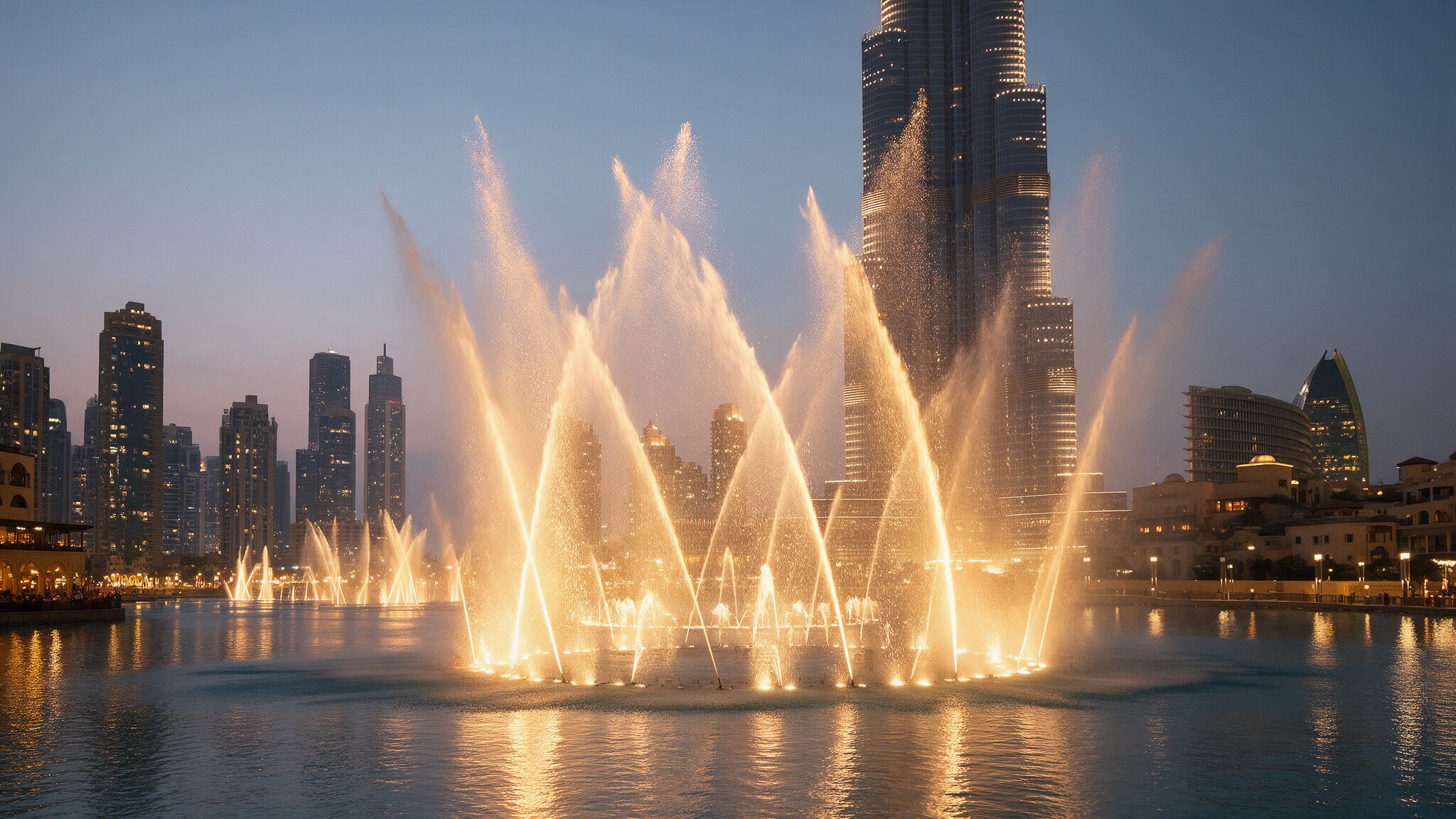
This is the one every list leads with, and it earns the spot. The Dubai Fountain sits on the 12-hectare Burj Khalifa Lake and runs daily, 365 days a year, whether it’s Ramadan, a public holiday, or a random Tuesday. Evening shows start at 6:00pm and repeat every 30 minutes until 11:00pm — eleven performances a night, each about five minutes, each set to a different track. There are also unlit daytime shows without music, at 1:00pm and 1:30pm Saturday to Thursday, and 1:30pm and 2:00pm on Fridays.
Here’s the honest caveat: the 6:00pm and 6:30pm slots get slammed, especially November through March when the weather’s good and everyone times their Dubai Mall visit around sunset. If you can, go for the 9:00pm or 9:30pm show instead — same choreography, noticeably thinner crowds, and in summer (June to September) it’s also when the heat has actually let up enough to stand outside comfortably.
You don’t need to pay for anything to watch it properly. The Dubai Mall waterfront promenade gives you the classic frontal view with Burj Khalifa behind the water. The Souk Al Bahar terrace, across the lake, gives a more lateral angle that photographers tend to prefer and it’s usually far less congested. If you do want to pay, the boardwalk (AED 20) puts you nine metres from the nozzles with mist and vibration you can feel, and a traditional abra cruise on the lake itself runs about AED 100 for thirty minutes — both are genuinely worth it if it’s a special occasion, but neither is necessary to enjoy the show.
2. Walk the Dubai Mall Waterfront Promenade
Before or after the fountain show, the waterfront promenade around Burj Khalifa Lake is worth a slow lap on its own. It’s shaded in patches, lined with cafés (you don’t have to buy anything to sit on the public benches), and gives you the best straight-up photo angle of Burj Khalifa without paying for the At the Top observation deck. Go in the late afternoon, an hour or so before the first fountain show, and you get soft light on the building’s glass facade before the crowds arrive for the evening performances.
3. Cross Dubai Creek by Abra (Old Dubai & Deira)
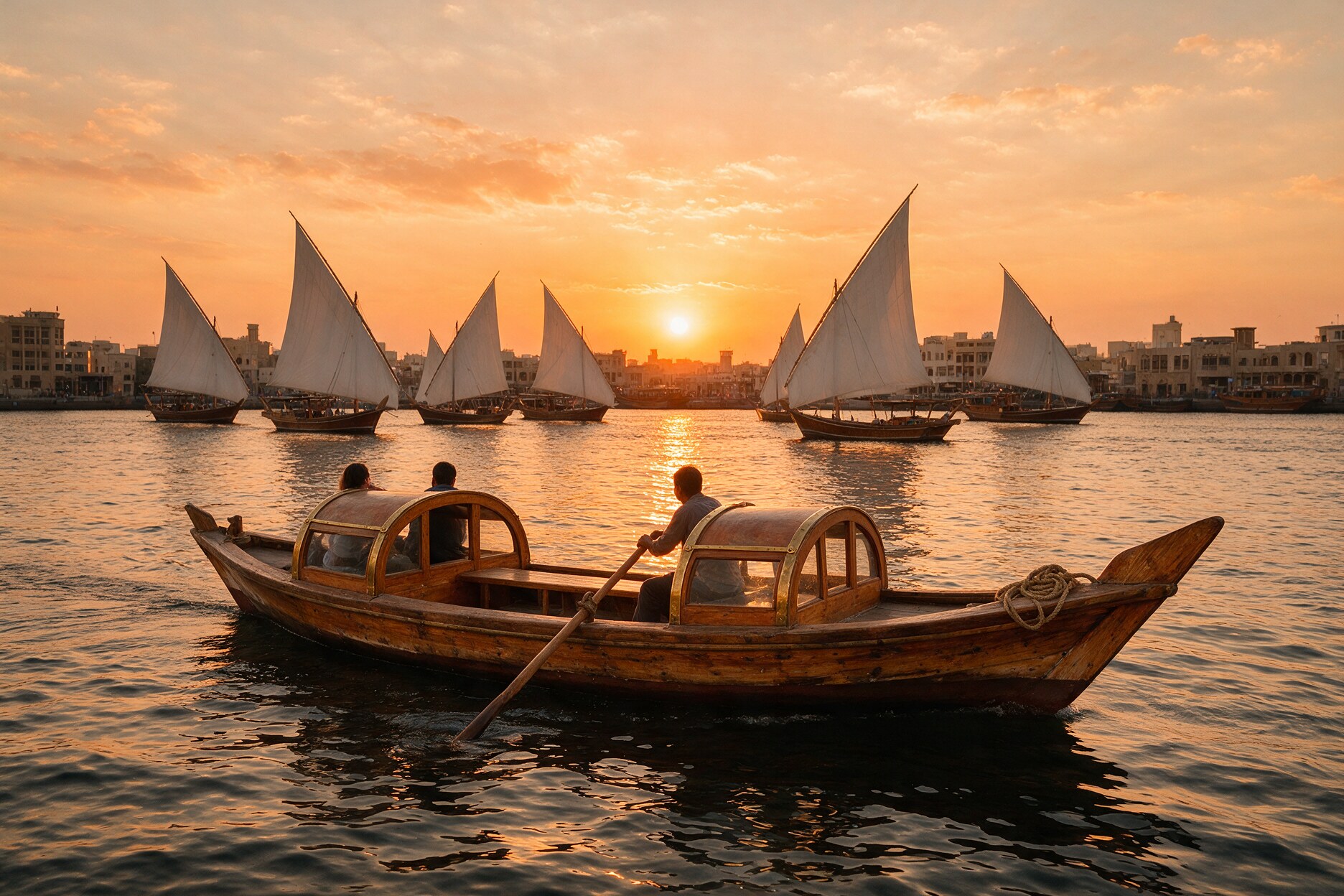
Technically this isn’t free, but at roughly AED 1 per person for the standard motorised abra (closer to AED 2 for the air-conditioned version), it’s near enough that it belongs on this list. The abras run the short crossing between the Bur Dubai abra station and the Deira Old Souk abra station, and they’ve been doing this same route for decades, long before any of the glass towers went up. The boats are open wooden vessels, packed shoulder to shoulder with a mix of tourists and locals actually commuting to work, and the crossing takes about five minutes.
Do it right around sunset if you can time it — the light on the water and the older low-rise skyline of the creek is completely different from the polished Downtown postcard shot, and it’s a genuinely local moment, not a staged one. If you want more time on the water, a private abra charter runs about AED 120 for an hour, which is worth it for photography but not necessary for the experience itself.
4. Wander the Gold, Spice and Textile Souks
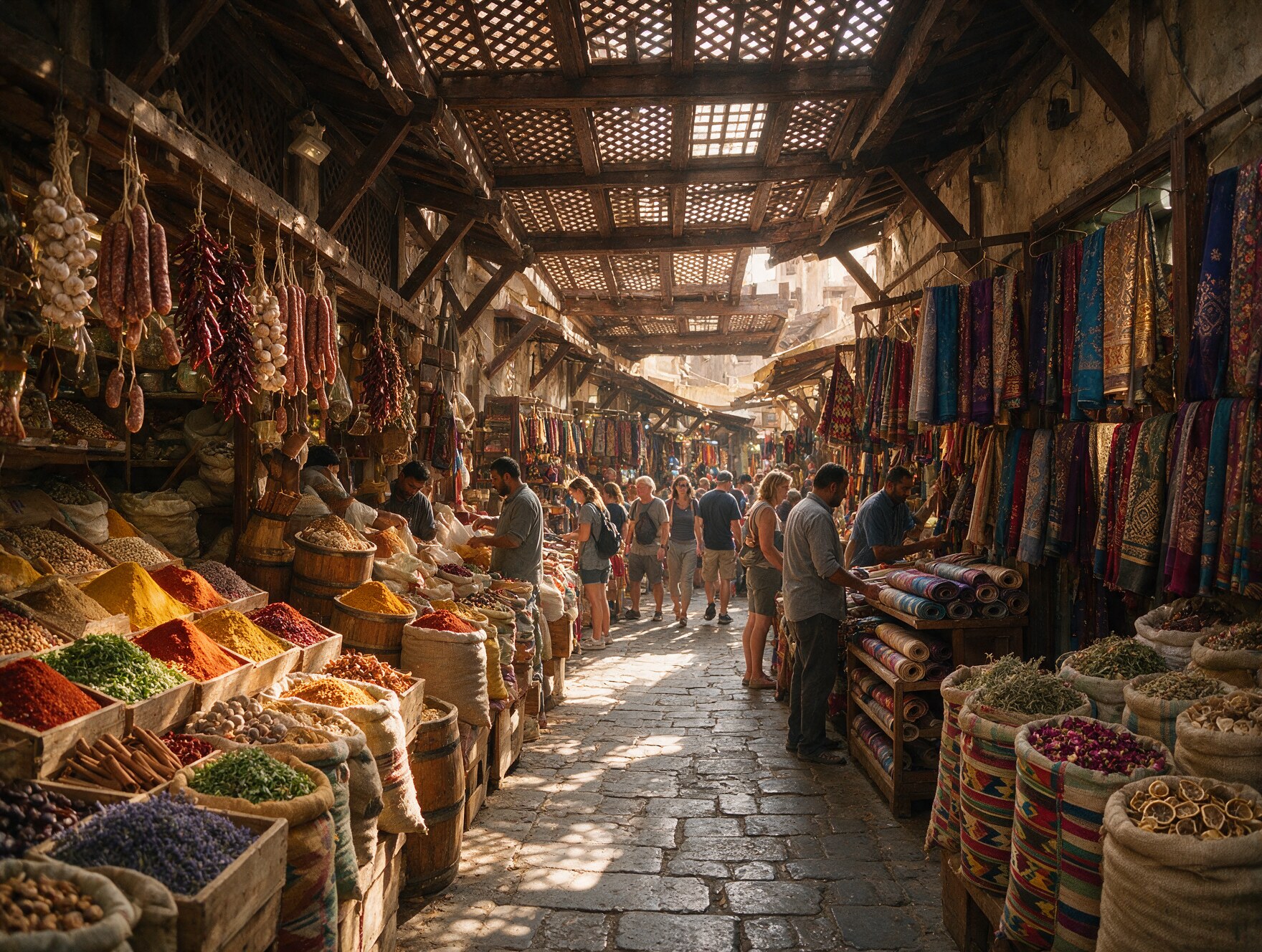
On either side of the creek, the old souks are free to walk through and don’t require you to buy anything (though the spice sellers will absolutely offer you saffron at “special price for you”). The Gold Souk in Deira is a covered market of small shops with window displays of gold jewellery stacked to the ceiling — more spectacle than shopping trip unless you actually know how to negotiate by weight. A few streets over, the Spice Souk smells like cardamom and dried lime before you’ve even turned the corner, and the Textile Souk on the Bur Dubai side is where you go for fabric, pashminas, and a much calmer pace of haggling.
Go in the early evening, around 6 to 8pm, when the day’s heat has broken and the shopkeepers are more relaxed than at midday. Mornings before 10am tend to be quiet to the point of feeling closed. None of this costs anything to browse, and it’s one of the few places in Dubai where the sensory experience — the smell, the noise, the light through the wooden lattice ceilings — matters more than any single thing you could buy.
5. Get Lost in Al Fahidi Historical Neighbourhood
Just inland from the Bur Dubai abra station, Al Fahidi (also called Bastakiya) is Dubai’s oldest surviving residential quarter — a grid of narrow lanes between coral-and-gypsum houses topped with wind towers, the pre-air-conditioning cooling system that gives the whole district its distinctive skyline. Walking the alleys costs nothing, and at 8am, before the tour groups arrive, you can hear your own footsteps against the walls, which almost never happens anywhere else in this city.
The Sheikh Mohammed Centre for Cultural Understanding runs a small paid cultural breakfast and Q&A session inside the district (worth doing if you have specific questions about Emirati culture and etiquette), but simply walking through, ducking into the free art spaces and courtyards along the way, costs nothing.
6. Spend a Morning at Jumeirah Open Beach or Kite Beach
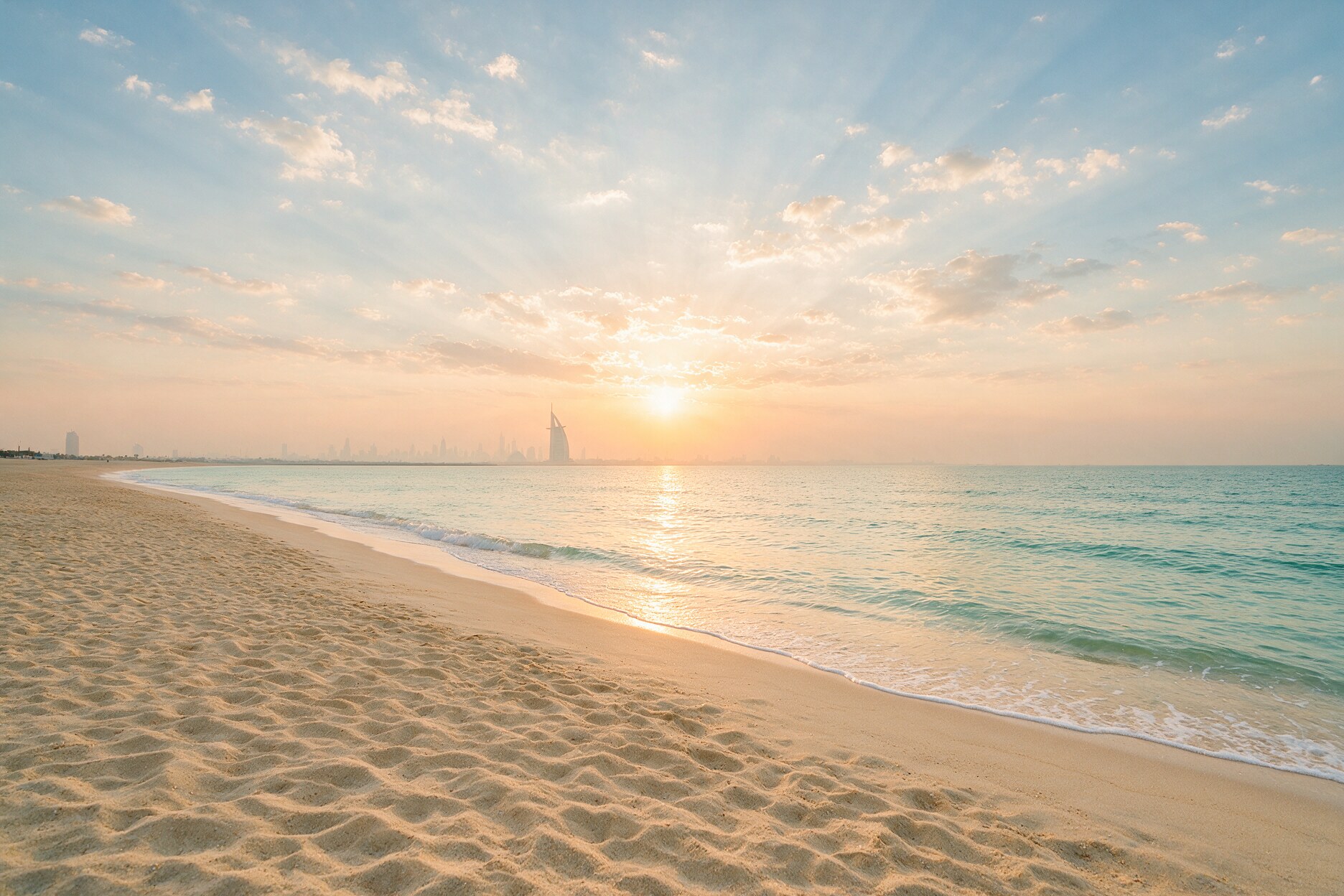
Dubai’s public beaches are genuinely public — no entry fee, no minimum spend, showers and changing rooms provided by the municipality. Jumeirah Open Beach (sometimes just called Jumeirah Public Beach) runs along Jumeirah Beach Road with a straight sightline to the Burj Al Arab, and it’s the beach locals actually use on weekends, not just tourists. Kite Beach, a bit further along, has a boardwalk with food trucks and rental stalls (kite surfing gear, paddleboards — those cost extra, the sand and water don’t) and a view back toward Burj Al Arab and the city skyline that’s become one of the most photographed beach shots in the country.
Go before 9am if you want the beach closer to empty, or after 5pm for the golden-hour version with a much cooler breeze. Midday between June and September is genuinely uncomfortable — not a vibe issue, an actual heat issue, so plan around it rather than fighting it.
7. Take In Jumeirah Mosque (and the Near-Free Guided Tour)
Jumeirah Mosque is one of the only mosques in the UAE that welcomes non-Muslim visitors inside, and it’s arguably the most photogenic building in the city that isn’t a skyscraper — twin minarets, Fatimid-style stone carving, floodlit at night. Viewing and photographing the exterior from the surrounding public road and park area costs nothing and is worth doing at dusk when the building is lit.
The guided interior tour, run by the Sheikh Mohammed Centre for Cultural Understanding, costs AED 55 per person — not free, but modest for what you get: a genuinely candid, no-question-off-limits session about Islam and Emirati culture, plus light Emirati refreshments. Sessions run at 10:00am and 2:00pm, Saturday to Thursday (closed Fridays), and you don’t need to book ahead — just register at the Majlis 30 minutes before your chosen session. Modest dress is expected; the mosque provides an abaya for anyone who needs one at the entrance, so this isn’t a reason to skip it if you didn’t plan your outfit around it.
8. Browse the Galleries at Alserkal Avenue
Alserkal Avenue, tucked into the Al Quoz industrial district about fifteen minutes from Downtown, is Dubai’s contemporary art hub — more than twenty galleries built into converted warehouse units, most with free admission. Galleries generally run Tuesday to Saturday, 10am to 7pm, though hours vary by venue, so check what’s actually open before you go if you’re set on a specific gallery. The one paid exception worth knowing about is Cinema Akil, the independent cinema on-site, which charges AED 40 to 60 for screenings.
If your dates line up, “First Thursdays” bring extended gallery hours and a genuinely festive atmosphere across the whole strip — worth checking the current month’s calendar for. Late afternoon into early evening, October through April, is the most comfortable time to walk the outdoor sections between galleries; midsummer here means moving quickly between air-conditioned buildings rather than lingering outside.
9. Walk The Pointe Boardwalk on Palm Jumeirah
The Pointe, at the base of Palm Jumeirah, is a free waterfront boardwalk with a direct view across to Atlantis The Palm — and, most nights, a choreographed fountain and light show of its own, running on a similar every-30-minutes pattern in the evening. You don’t pay to walk the boardwalk, watch the show, or sit on the public benches facing the water. Go around sunset; the light hits Atlantis’s arch directly from the west and it’s one of the better free photo opportunities on the whole peninsula.
10. Stroll Dubai Marina Walk and JBR Beach
Dubai Marina Walk is a seven-kilometre promenade tracing the artificial waterway lined with high-rises on both sides, and it’s free to walk end to end, day or night. On the seaward side, JBR Beach (Jumeirah Beach Residence) is another free public beach with a longer, livelier boardwalk (The Beach) behind it, full of restaurants and shops you can browse without spending anything. The Marina at night, lit up and reflecting off the water, is arguably more striking than during the day — worth the walk even if you’ve already done the beach earlier.
11. See the Dubai Frame From Zabeel Park
Going up inside the Dubai Frame costs a ticket, but the structure itself — a 150-metre gold-clad frame straddling old and new Dubai — is a genuinely striking sight from ground level in Zabeel Park, and you can walk right up to its base and photograph it for free. Zabeel Park itself charges a nominal entry fee (around AED 5), which is closer to a formality than a real barrier, and gives you green space, shade, and a clean sightline to the Frame with the older Karama district behind it and Downtown’s towers in the distance.
12. Bonus: Free Museum Day and the Dubai Water Canal Boardwalk
Two smaller ones worth knowing about. First, the Dubai Water Canal boardwalk, which extends from Business Bay out toward Jumeirah, is free to walk any time and quieter than the more famous promenades — a good option if you want a Dubai skyline photo without the crowd. Second, keep an eye on International Museum Day each May 18th, when Etihad Museum and Dubai Museum, along with several other cultural venues, have historically opened with free entry for the day — not something to build a whole trip around, but worth checking the current year’s dates if your visit happens to land in mid-May.
A Mistake to Avoid, a Fun Fact and a Photography Tip
The mistake: Showing up to the Dubai Fountain at 5:45pm expecting to get a good waterfront spot for the 6pm show. So does everyone else who read the same three blog posts you did. Either commit to being there 45 minutes early, or skip the first show entirely and go for 9pm or later — you’ll get a materially better view for zero extra cost.
The fun fact: The Dubai Fountain’s jets can shoot water up to 152.4 metres into the air — roughly the height of a 50-storey building — and the whole system is choreographed to more than two dozen musical tracks that rotate through the nightly lineup, so no two visits in a row necessarily look identical.
The photography tip: For the fountain, skip the ground-level waterfront crowd shot and head to the Souk Al Bahar terrace instead — the elevated, angled view gives you Burj Khalifa and the water arcs in the same frame without fifty phones in your foreground. For the abra crossing, shoot from the boat itself rather than the dock; the low angle across the water with the old creek-front buildings behind makes for a far more atmospheric shot than the standard skyline photo everyone else takes from Downtown.
FAQs
What is the best time to visit Dubai for good weather and fewer crowds?
November through March is the sweet spot — daytime temperatures in the pleasant mid-20s to low-30s Celsius, comfortable enough for beaches, souks and outdoor walks without rushing between air-conditioned spaces. December and January are peak season with holiday crowds and higher hotel rates; if you want similar weather with fewer people, aim for late February or early March instead.
Is Dubai safe for tourists?
Yes, consistently one of the safer major cities for visitors, with low violent crime and a strong police presence, including at tourist sites and along the beaches and walkways mentioned above. The usual precautions apply — watch belongings in crowded souks and metro carriages — but nothing beyond normal city awareness.
How much does a Dubai trip typically cost from India?
Round-trip flights from major Indian cities generally run in the AED 800–1,800 range (roughly INR 18,000–40,000) depending on season and how far ahead you book, with mid-range hotels adding INR 6,000–12,000 per night. Free and near-free experiences like the ones above are a genuinely useful way to stretch a trip’s itinerary without inflating the daily budget, especially if you’re also budgeting for paid highlights like Burj Khalifa’s observation deck or a desert safari.
Do Indian passport holders need a visa for Dubai?
Yes, Indian nationals need a UAE visa, arranged either through an airline, a travel agent, or directly online before departure — it is not a visa-on-arrival situation for Indian passports, so this needs sorting before you fly. Processing is usually quick, but always confirm current requirements with an authorised visa service or your airline before booking, since entry rules do get revised.
Can families do most of these free things to do in Dubai with young children?
Yes — the fountain show, the beaches, the abra ride and The Pointe boardwalk are all comfortably manageable with kids, and most have shaded seating or nearby cafés for breaks. The souks are more hit-or-miss with very young children given the crowds and heat; late afternoon visits work better than midday for a family group.
Is a Dubai weekend escape from India realistic, or do you need a full week?
A long weekend (three to four days) is enough to comfortably cover a mix of free experiences from this list — say, the fountain, the creek and souks, one beach morning, and Alserkal or the Marina — alongside a couple of paid highlights. A full week gives you room to add day trips (Abu Dhabi, the desert) without feeling rushed, but it’s not a requirement.
What should I wear when visiting Jumeirah Mosque or the souks?
Modest clothing is expected at the mosque — shoulders and knees covered for the guided tour, and an abaya is provided on-site if you didn’t plan for it. The souks don’t enforce a dress code, but breathable, modest clothing works better in practice given the heat and the more conservative, everyday character of Old Dubai compared to Downtown or the Marina.
Are these free experiences enough to build a custom Dubai itinerary around, or do I need paid attractions too?
They work best woven between paid highlights rather than replacing them entirely — the free experiences above cover culture, atmosphere and city character extremely well, while the paid list (Burj Khalifa’s deck, desert safaris, Atlantis Aquaventure) covers the big-ticket adrenaline and view moments. A well-built custom Dubai itinerary usually mixes both.
Bringing It Together
None of this is filler content to pad a budget itinerary — it’s simply an honest account of what’s actually free or near-free in a city that gets typecast as expensive by default. A five-minute fountain show, a one-dirham boat crossing, a gallery walk through a converted warehouse district: these hold up next to anything you’d pay for, and they’re worth building into a trip whatever your overall budget looks like. If you’re planning a Dubai visit and want these woven properly into a custom Dubai itinerary alongside the paid experiences that make sense for your group — family, couple, or solo — that’s exactly the kind of planning our team at Get Tripped does daily. Reach out and we’ll build the trip around what you actually want to see, not a generic checklist.