Dubai Public Transport Guide 2026: Metro, Tram, Taxis and Getting Around
The first time I rode the Dubai Metro out to Terminal 3, I watched a woman in an abaya sitting next to a backpacker in flip-flops, both scrolling their phones, both perfectly at ease in a train car that was colder than most Indian offices in June. That’s the honest starting point for a Dubai public transport guide: this city built one of the most efficient, driverless metro systems in the world almost from scratch, and getting around Dubai today is far easier than the “you need a car here” reputation suggests — though it comes with real gaps you should know about before you land, especially if Palm Jumeirah or a quiet corner of Old Dubai is on your list.
This guide covers what actually works in 2026: the Nol card system, Dubai Metro’s Red and Green Lines (and where the new Blue Line stands), the tram, buses, abras across Dubai Creek, taxis versus Careem, airport transfers from both DXB and DWC, and a practical breakdown of how to reach each of Dubai’s six signature areas. If you’re mapping out a Dubai trip for the first time, or you’ve been before and just want the current fares, this should cover it — and Visit Dubai’s own transport overview is a good companion read for official service updates.
Table of Contents
- The Nol Card, Explained
- Dubai Metro: Lines, Stations and 2026 Fares
- Dubai Tram
- RTA Buses
- Abras and Water Taxis Across Dubai Creek
- Taxis and Ride-Hailing Apps
- Airport Transfers: DXB and DWC
- Driving and Car Rental for Indian Tourists
- How to Reach Dubai’s 6 Signature Areas
- A Mistake to Avoid
- A Fun Fact
- FAQs
The Nol Card, Explained
Nol (Arabic for “fare”) is the tap card that runs Dubai’s entire public transport network — metro, tram, buses, the RTA water bus, and now the Palm Monorail too. You cannot pay cash on the metro or tram, so this is the first thing to sort out after you land, ideally at the airport metro station itself.
There are four card types, and picking the right one matters more than it sounds:
- Red Ticket — a paper card meant for occasional riders. It costs AED 2 plus the fare, is valid for 90 days, and can hold up to 10 trips. Good if you’re only taking the metro two or three times.
- Silver Nol Card — the standard plastic card for tourists and residents, sold for AED 25 (that’s AED 19 of usable credit plus a AED 6 card fee). This is what most visitors should get. It’s reusable, works everywhere, and you top it up at any station kiosk or the RTA app.
- Gold Nol Card — same network access, but it gets you into the Gold Class cabin on the metro (the front carriage, quieter, guaranteed forward-facing seats) at roughly double the Silver fare.
- Blue Nol Card — a concessionary card for students, seniors (60+), and People of Determination, giving a 50% discount on fares. It requires ID verification, so it’s not something a short-term tourist can casually get.
Top-ups work in multiples of AED 5 at station machines, and the balance never expires as long as you tap at least once every 90 days. One honest tip: buy the card at the airport metro station rather than your hotel — some hotel concierges add a markup for “convenience.” For the current card fees and top-up channels straight from the source, the RTA’s official site keeps its Nol pricing page updated.
Dubai Metro: Lines, Stations and 2026 Fares
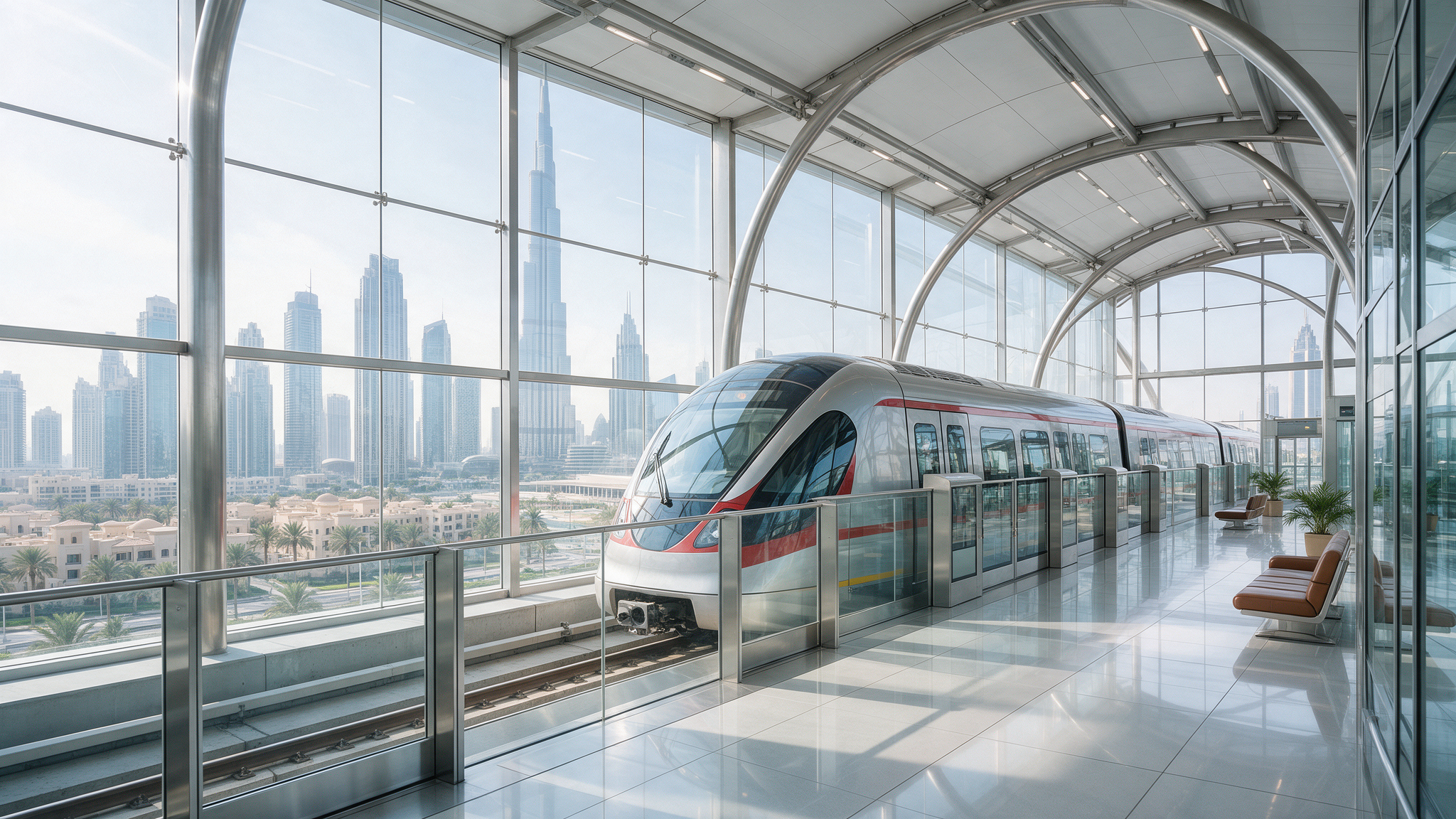
The Dubai Metro runs two operational lines. The Red Line is the one tourists use most — it runs roughly parallel to Sheikh Zayed Road from Rashidiya in the east through Deira, Union, Downtown (BurJuman and Business Bay stations), Dubai Mall, Financial Centre, and out to Dubai Marina and Jebel Ali. The Green Line loops through Deira and Bur Dubai — the older, denser parts of the city — with useful stops near the Gold Souq, Spice Souq, and Dubai Creek.
Fares are calculated by zone, not distance in kilometres, and Dubai is divided into seven zones. Most tourist journeys stay within one or two zones. As of 2026, the fare structure on a Silver Nol card is:
- 1 zone: AED 3
- 2 adjacent zones: AED 5
- 3 or more zones: AED 7.50
On a Gold card, double those numbers. There’s also a daily fare cap — once you’ve spent AED 14 (Silver/Blue) or AED 20 (Gold) in a single day, every additional ride is free. If you’re doing a metro-heavy sightseeing day, that cap is genuinely useful and easy to forget about.
A few practical notes: the metro runs from roughly 5 AM to midnight on weekdays, with slightly later closing on Thursday and Friday nights, and shorter Sunday morning hours (starting later, around 8-9 AM at some stations). Trains are fully air-conditioned and driverless — there’s no cab, which means the front window seat is genuinely the best view in the house, especially crossing the Business Bay bridge. And yes, it’s clean; eating, drinking, and chewing gum on board can get you fined, and RTA does enforce it.
One thing to know before you plan an itinerary: the Blue Line is under construction, not open yet. RTA has been building it out to connect Dubai Creek Harbour, Silicon Oasis, International City, and Academic City to the existing network, with construction progressing through 2026 toward a later opening. For now, don’t expect it — plan around Red and Green only.
Dubai Tram
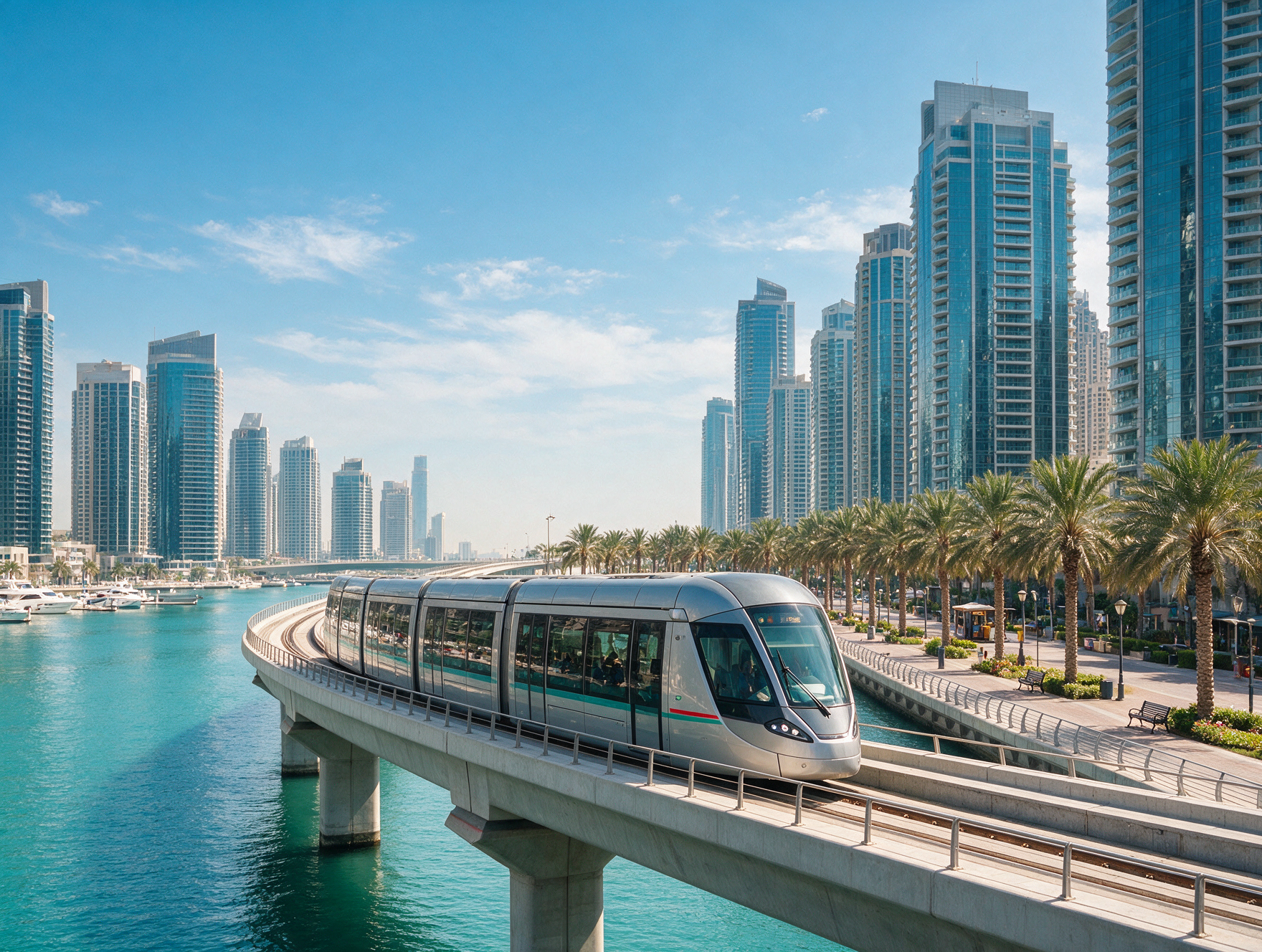
The Dubai Tram is a separate, shorter system that covers about 10.6 km along the coast from Dubai Marina and Jumeirah Beach Residence (JBR) out to Al Sufouh, with 11 stops including Dubai Marina Mall, Media City, and a stop right by the Palm Jumeirah tram station (a short walk from the Palm Monorail entrance). It runs every 9 minutes at peak and 14 minutes off-peak, roughly 6 AM to 1 AM Monday to Saturday, starting later (9 AM) on Sundays.
Fares are flat regardless of distance, since the whole tram sits in a single fare zone: AED 3 on Silver, AED 6 on Gold, AED 4 on a Red Ticket. It connects to the metro at DMCC station (near Jumeirah Lakes Towers) and Sobha Realty station (near Dubai Marina) — useful if you’re staying in Marina and want to reach JBR’s beach or the Media City office towers without a taxi.
Worth knowing: the tram doesn’t connect directly into Downtown or Old Dubai. It’s a Marina/JBR/Al Sufouh-area system — good for getting around that specific stretch of coastline, not a citywide substitute for the metro.
RTA Buses
Buses fill in the gaps the metro and tram leave — and there are a lot of gaps, since the metro network, however good, only really covers a north-south spine. RTA buses run on the same Nol card and same zone-based fares as the metro, and they’re the only public option for reaching some neighbourhoods, older residential pockets of Jumeirah, and (relevant if you’re museum-hopping) Al Fahidi Historic District’s quieter lanes.
They’re a genuinely fine option if you’re not in a hurry and have Google Maps or the RTA app pulled up for live timings — but honestly, most visitors staying under two weeks will use buses only occasionally, as a connector to a metro or tram station rather than a main mode. Air conditioning is standard, and the low-floor buses accommodate strollers and wheelchairs.
Abras and Water Taxis Across Dubai Creek
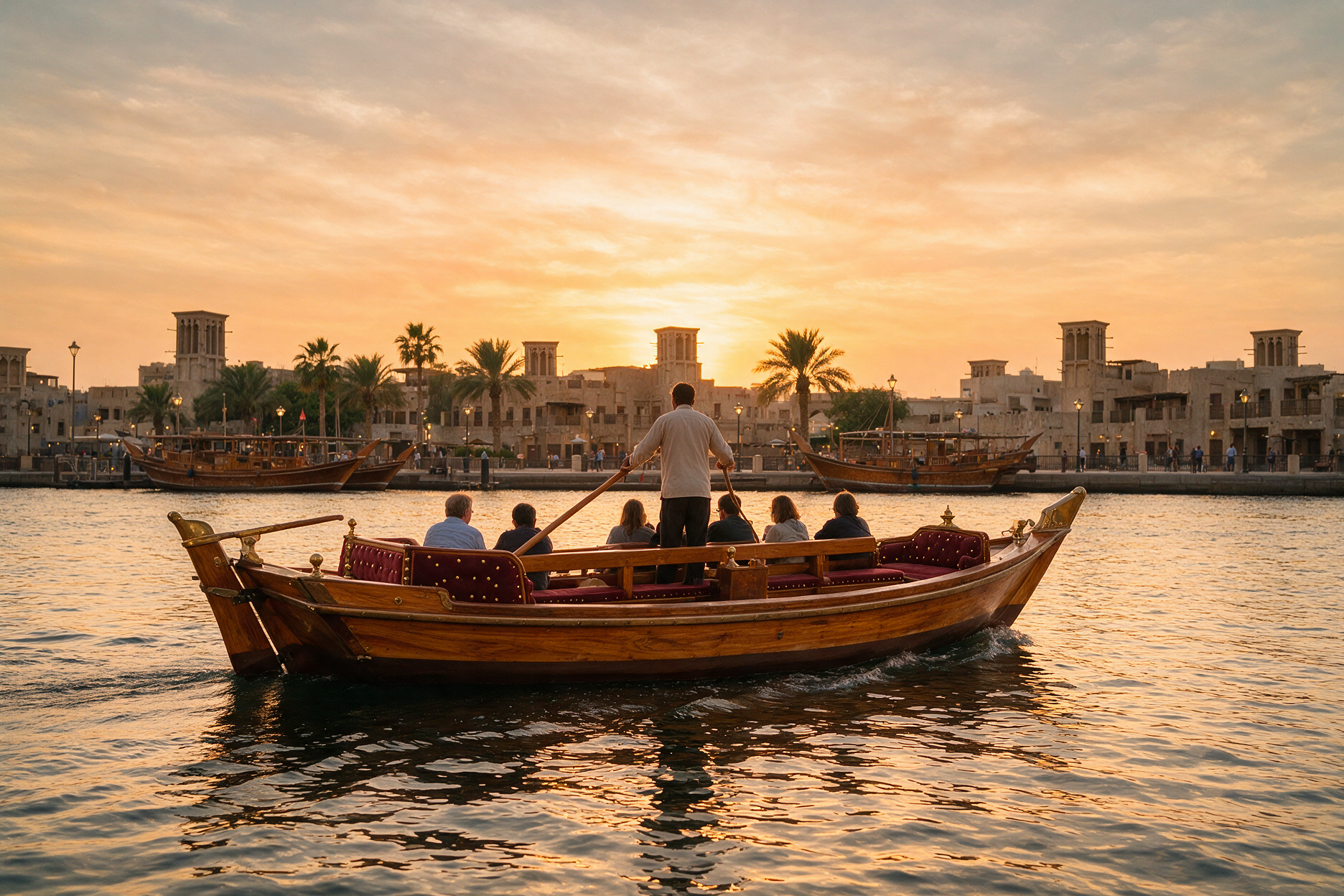
This is the transport experience I’d actually put on a must-do list, not just a logistics note. The abra — a small wooden motorboat — has been ferrying people across Dubai Creek between Deira and Bur Dubai for longer than the metro has existed, and it’s still the fastest, cheapest way to cross if you’re near the old souks.
The traditional motorised abras (the open-air wooden ones, standing room mixed with narrow benches) cost AED 1 per person for the short crossing between stations like Bur Dubai Abra Station and Deira Old Souq, or Al Sabkha and Dubai Old Souq. There are also air-conditioned, enclosed abras on some routes for AED 2 per person, and you can charter a private abra for about AED 120 an hour if you want a slower loop past the dhow wharves at your own pace.
For something more comfortable and further-reaching, RTA also runs a proper water taxi network — air-conditioned, faster boats that cover Dubai Marina to Bluewaters and JBR (around AED 7 a ride), Dubai Water Canal routes (AED 50-70), and longer runs out to Palm Jumeirah and Atlantis (AED 75-210, depending on route and group size). It’s not cheap compared to the metro, but on a hot afternoon with the skyline as backdrop, it’s one of the better ways to see Dubai from the water without booking a dedicated dhow cruise.
One honest caveat: the abra crossing is barely five minutes, and on a first visit that can feel almost anticlimactic after you’ve built it up in your head. Go anyway — it’s still worth it at sunset, when the wind towers of Bastakiya catch the light and the water traffic slows down.
Taxis and Ride-Hailing Apps
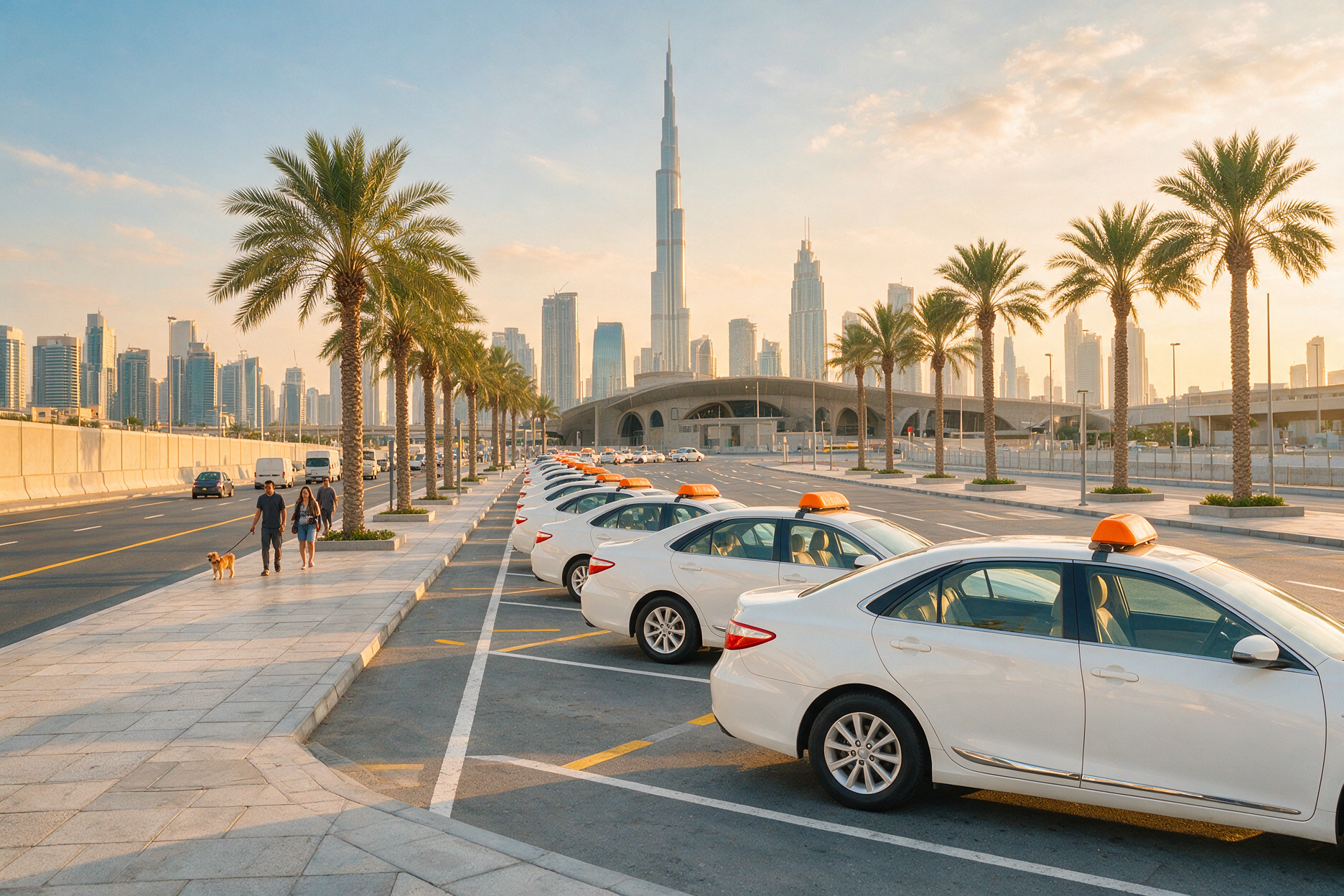
RTA-licensed taxis are cream-coloured with coloured roof markings by fleet, metered, and genuinely reliable — Dubai’s official taxis are regularly ranked among the more affordable in the world for a city this developed. Daytime fares (6 AM-10 PM) start the meter at AED 5 plus about AED 2.26 per kilometre; night fares (10 PM-6 AM) start slightly higher at AED 5.50. There’s a minimum fare of around AED 12-15 depending on time of day, so very short hops cost more per kilometre than longer ones.
Careem and Uber both operate in Dubai and are widely used by tourists and residents alike — RTA actually regulates Careem’s ride-hailing service under its own S’hail framework, so pricing is broadly comparable to metered taxis, sometimes a touch higher for the convenience of upfront pricing and no language friction with the driver. App-based bookings typically start around AED 12 plus the same per-kilometre rate. Both apps work with Indian phone numbers and international cards without issue, and English is standard throughout.
A genuine opinion: for late-night airport pickups, or anywhere off the main tourist grid, I’d take Careem over a street-hailed taxi every time — you get a driver name, a car, a fixed fare estimate, and no need to explain the address out loud.
Airport Transfers: DXB and DWC
Most Indian travellers land at Dubai International Airport (DXB), and this is where the metro genuinely earns its reputation: Terminal 1 and Terminal 3 both have their own Red Line metro stations built directly into the terminal buildings, so you can walk off a flight and onto a train with a Nol card in under ten minutes, no shuttle bus required. From either terminal, it’s roughly a 30-40 minute ride to Downtown or Business Bay, and closer to 45-55 minutes out to Dubai Marina.
The catch — and this trips people up constantly — is Terminal 2, used mostly for budget and regional carriers, which has no metro station at all. If you land there, it’s taxi, Careem, or a connecting bus to the nearest metro stop. Check your terminal before assuming you’ll walk straight onto a train.
A metered taxi from DXB starts at a higher airport flagfall (around AED 25 plus roughly AED 2.43 per kilometre), and typically runs AED 60-90 to Downtown or AED 90-130 out to Marina or Palm Jumeirah, depending on traffic and time of day. With luggage, jet lag, or a late arrival, that’s money well spent over hauling suitcases through a metro interchange.
Al Maktoum International Airport (DWC), used by some low-cost and charter routes, sits much further out — closer to Jebel Ali, about 45 km from Downtown. There’s no metro connection at all here; it’s taxi, pre-booked private transfer, or an RTA bus route into the city, and journey times run 45-70 minutes depending on traffic on Sheikh Zayed Road. If your flight lands at DWC, budget extra time and, ideally, arrange a transfer in advance rather than hunting for a ride at the curb.
Driving and Car Rental Notes for Indian Tourists
Indian driving licences are not valid on their own in the UAE. To drive — whether it’s a rented car or a friend’s — you need an International Driving Permit (IDP) issued in India before you travel, carried alongside your original Indian licence. With both documents, you can legally drive for up to 30 days or the length of your visit, whichever is shorter. Driving without the IDP is a genuine legal violation, not just a technicality, so get it sorted at an RTO or the Automobile Association of India before you fly, not after.
Rental agencies will typically ask for your Indian licence, your IDP, your passport with the UAE entry stamp, and a credit card for the security deposit. Given Dubai’s excellent metro-taxi-Careem combination, I’d only recommend renting a car if you’re planning day trips outside the city — Hatta, Abu Dhabi, or a desert self-drive route — rather than for getting around Dubai itself, where parking and Salik toll gates add friction a rental doesn’t solve.
How to Reach Dubai’s 6 Signature Areas
Here’s the practical breakdown for the neighbourhoods most first-time visitors build an itinerary around:
- Downtown Dubai (Burj Khalifa, Dubai Mall) — the easiest area in the city by metro. Burj Khalifa/Dubai Mall station on the Red Line sits a short covered walkway from the mall entrance. No taxi needed for this one.
- Dubai Marina — Sobha Realty and DMCC stations on the Red Line put you within walking distance, and the tram runs right through the neighbourhood for hopping between the Marina Walk, JBR beach, and Marina Mall.
- Palm Jumeirah — the one honest gap in the network. The Metro doesn’t reach the Palm directly; you take the Red Line or tram to Al Sufouh/DAMAC stations, then switch to the separate Palm Monorail (Nol-compatible now, single trips from AED 5, day pass AED 35) for the run out to Atlantis and Aquaventure. Budget an extra 20-30 minutes for the connection, or just take a taxi straight there if you’re short on time.
- Jumeirah (Jumeirah Beach, La Mer, Kite Beach) — no metro line runs directly along Jumeirah Road. Buses cover it, but a taxi or Careem is the realistic choice for most visitors, especially with beach gear in tow.
- Old Dubai (Al Fahidi, Bastakiya, the souks) — well served by the Green Line, with Al Fahidi and Al Ghubaiba stations both close to the historic quarter. This is the one area where walking plus a short abra ride beats any wheeled transport anyway.
- Dubai Creek (Deira waterfront, Gold and Spice Souks) — Green Line stations (Baniyas Square, Al Ras) sit a few minutes’ walk from the water, and the abra itself is the way to move along and across the Creek once you’re there.
A Mistake to Avoid
Don’t assume every part of Dubai is metro-accessible just because the system feels comprehensive once you’re using it. First-timers regularly build a day plan around three or four stops, only to realise Palm Jumeirah or a specific Jumeirah beach club needs a taxi leg the metro map doesn’t show. Check the actual walking distance from the nearest station on a map before you commit a whole afternoon to it — fifteen minutes in Dubai’s summer heat is a different fifteen minutes than back home.
A Fun Fact
The Dubai Metro holds the Guinness World Record for the longest driverless metro network on the planet — and it was built astonishingly fast, with the initial Red Line going from groundbreaking to opening in under five years. The trains have no driver’s cab at all, which is why the front carriage window seat is free entertainment for the whole ride.
FAQs
Is Dubai walkable?
In pockets, yes — Downtown’s boulevard, the Marina Walk, and Old Dubai’s lanes are genuinely pleasant on foot. But Dubai overall is built at a car-and-highway scale, with wide roads between districts that aren’t meant to be crossed on foot. Plan on combining walking within a neighbourhood with metro, tram, or taxi between them.
Is the Dubai Metro air-conditioned and safe?
Yes to both. Every carriage and platform is fully air-conditioned (station platforms are climate-controlled too, not just the trains), and the system is heavily monitored with CCTV and station staff. It’s widely considered one of the safest metro systems anywhere, and is a large part of why Dubai consistently comes up when people ask is Dubai safe for tourists.
Can women travel alone safely on Dubai’s public transport?
Generally yes. The metro has a dedicated Women and Children’s cabin (usually the second carriage from the front, marked pink on the platform floor and doors) where solo women often prefer to sit, and enforcement of harassment laws in the UAE is strict. Late-night solo travel is common and unremarkable, though the usual common-sense precautions apply anywhere.
Do I need a car to see Dubai’s main attractions?
No — Downtown, Dubai Marina, JBR, and Old Dubai are all metro or tram-reachable. A car (or Careem) becomes genuinely useful for Jumeirah’s beaches, day trips to the desert, or Abu Dhabi, but not for a standard city-based Dubai 5 days itinerary covering the main sights.
What’s the best value Nol card for a short trip?
For most visitors staying 4-7 days, the Silver Nol card at AED 25 is the sweet spot — reusable, works everywhere, and easy to top up. A Red Ticket only makes sense if you’re taking two or three rides total, which is rare on any real Dubai itinerary.
How much should I budget for transport on a Dubai trip?
For a couple doing a mix of metro and the occasional taxi over five days, AED 150-250 total is realistic — a small slice of overall Dubai trip cost from India, which is driven far more by hotels and experiences than by getting around. Add more if Palm Jumeirah, desert safaris, or late-night taxis feature heavily.
Is public transport enough for a family with young children?
It works, but taxis or Careem are usually easier with strollers, nap schedules, and beach bags — especially for a Dubai family holiday where flexibility matters more than saving a few dirhams. Metro stations do have lifts, and low-floor buses take strollers, so it’s not impossible, just less convenient at peak times.
Wrapping Up
Dubai’s public transport system is one of the more pleasant surprises of visiting the city — cheap, clean, cold, and genuinely fast between the districts it covers. The gaps (Palm Jumeirah’s monorail switch, Terminal 2’s missing metro stop, Jumeirah’s beach stretch) are real, but they’re all solvable with a bit of planning rather than deal-breakers. Whether you’re stitching together a quick Dubai weekend escape or a longer trip covering the desert and Abu Dhabi as well, knowing which mode fits which leg saves you both time and money.
If you’d rather not think about Nol cards, terminal numbers, or which station connects to which monorail, that’s exactly the kind of detail we handle on every Get Tripped Dubai trip — airport pickup, transfers between hotels and experiences, and a day-by-day plan that already knows where the metro stops and where it doesn’t. Browse our Dubai tour packages from India and we’ll take the logistics off your plate.