Vegetarian & Vegan Food in Dubai: A Guide for Indian Travelers
The first time we sat down to plan a vegetarian and vegan food trail through Dubai for a group of Mumbai clients, we expected the usual scramble — a couple of hotel buffets, some Lebanese mezze, and a lot of “just the vegetable curry, please.” What we actually found was a Bikanervala counter inside The Dubai Mall doing a steady lunchtime queue of families, a Michelin-recognized tasting menu on Palm Jumeirah built entirely around vegetables, and three separate branches of a South Indian chain doing better filter coffee than some places in Chennai. Dubai’s vegetarian scene is not a workaround here. It’s a real, well-fed corner of the city, built by decades of Gujarati, Tamil, Sindhi, and Punjabi families who settled and never stopped cooking.
This guide walks through all six of Dubai’s signature areas — Downtown, Palm Jumeirah, Dubai Marina, Jumeirah, Old Dubai, and Dubai Creek — and names actual restaurants in each, not generic “look for the veg symbol” advice. If you’re mapping out things to do in Dubai alongside where you’ll actually eat, or building a custom Dubai itinerary that needs to work for a Jain grandparent and a vegan teenager in the same group, this is the practical version.
On this page
- Downtown Dubai: Burj Khalifa & Dubai Mall
- Palm Jumeirah
- Dubai Marina
- Jumeirah
- Old Dubai: Bur Dubai & Karama
- Dubai Creek & Deira
- Jain Food in Dubai
- How to Ask for What You Actually Eat
- The Mistake Almost Everyone Makes
- A Fun Fact
- FAQs
Downtown Dubai: Burj Khalifa & Dubai Mall
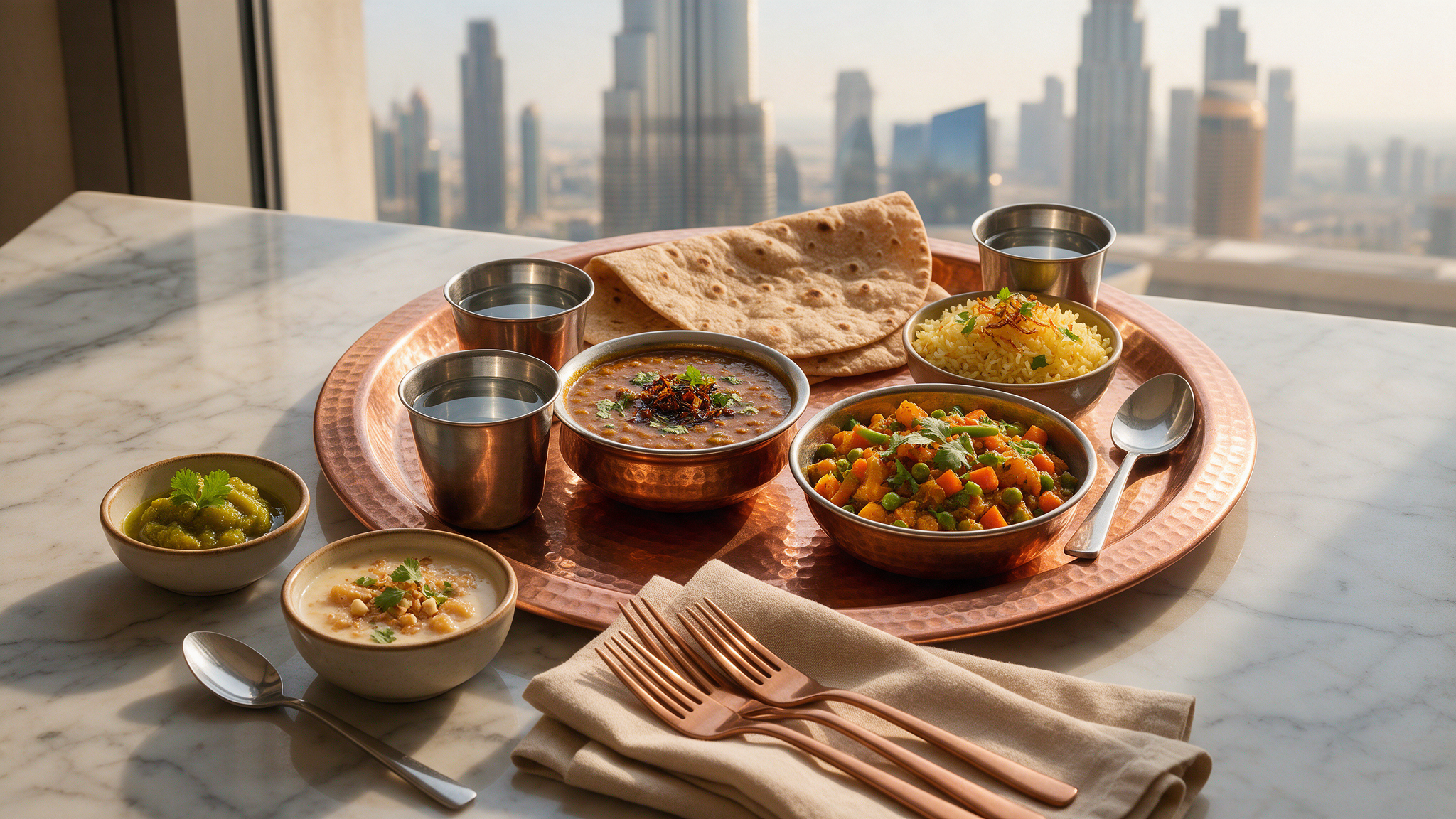
Everyone budgets a day around the Burj Khalifa and the Dubai Fountain, and the good news is you don’t have to leave the mall complex to eat properly. Bikanervala, inside The Dubai Mall, is a pure-vegetarian Indian chain that’s been feeding homesick NRIs for years — go for the chaat counter and the thali rather than the mithai case alone, though the kaju katli is worth the extra calories. Expect AED 40–90 per head. It gets loud and cafeteria-bright at lunch, which is exactly the point; nobody’s precious about ambience here, they’re precious about the pav bhaji being right.
For something calmer and plant-based rather than Indian, Wild & The Moon on Sheikh Mohammed Bin Rashid Boulevard does cold-pressed juices, buckwheat bowls, and raw desserts in a bright, plant-filled space that’s genuinely vegan (not just “has a salad”). It’s a better fit for breakfast or a post-fountain-show snack than a full dinner — the portions run light for anyone expecting a filling Indian-style meal. Budget AED 60–120 per person.
Palm Jumeirah
Palm Jumeirah is where the resort budget goes up and the vegetarian options get more interesting rather than more limited. Tresind Studio, at Nakheel Mall, holds three Michelin stars and runs a dedicated vegetarian tasting menu of around 16 courses — expect things like medu vada reimagined, corn curry, and charred white asparagus plated the way a normal restaurant plates meat. It’s a splurge (think AED 600+ per head with the tasting format) and needs a reservation well ahead, but it’s one of the only places in the world where an all-vegetarian tasting menu carries three Michelin stars, not as an afterthought menu.
For something less formal, Khyber Restaurant on the 15th floor of Dukes The Palm does North Indian food with a proper vegetarian spread — shahi kofta, vegetable seekh kebab, reshmi broccoli — alongside sweeping sea views. It’s a good landing spot if half your table wants meat and half doesn’t; the kitchen clearly hasn’t treated the veg menu as an afterthought.
Dubai Marina
Marina Walk is dense with restaurants, but most of the waterfront names are seafood-and-steak places where “vegetarian” means a side salad. The one that actually gets it right is Saravanaa Bhojan Shala, tucked into the Marina Pearl Building just off Al Seba Road — a pure-veg South Indian spot doing dosas, idli-vada combos, and a full South Indian thali for AED 25–60. It’s not a view restaurant; it’s a proper neighborhood eatery that happens to sit a five-minute walk from the Marina promenade, which makes it the easiest fix when you’ve spent the day walking the boardwalk and want something familiar and filling rather than another shisha café menu.
Jumeirah
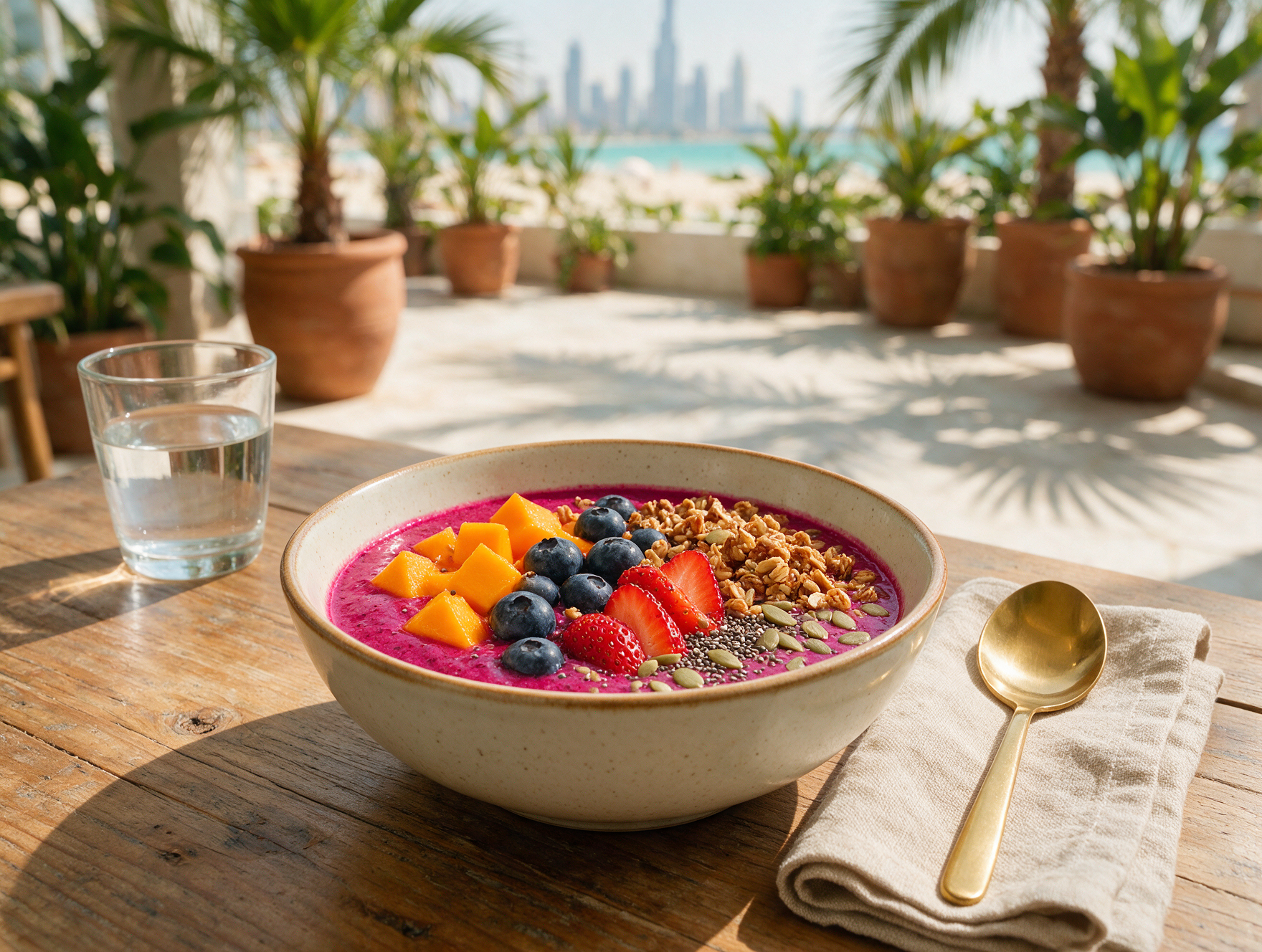
Jumeirah is quieter and more residential than the Marina or Downtown, and its vegetarian anchor is Govinda’s in Umm Suqeim, run by the local ISKCON community. It’s fully vegetarian, no onion-and-garlic options are clearly marked (relevant if you’re travelling with anyone observing a satvik or Jain diet), and the thali is generous — AED 35–55 gets you a full plate plus dessert. The room itself is simple, more community-hall than restaurant, and that’s part of the charm; it’s one of the few places in the city where the food, not the design budget, is doing all the talking. It’s a short taxi ride from the public beach at Kite Beach if you’re spending the day by the water.
Old Dubai: Bur Dubai & Karama
This is, honestly, the best-kept secret for vegetarian food in the whole city, and it’s the area most first-time visitors skip entirely in favor of the newer districts. Karama and Bur Dubai have been home to a large South Asian community for decades, and the vegetarian restaurants here weren’t built for tourists — they were built for people who wanted proper food at home prices. Sukh Sagar in Al Karama is a long-running North Indian vegetarian spot known for its pani puri, dosas, and thick lassis; it’s the kind of place where the waiter will tell you honestly if a dish is heavier than it sounds. Saravanaa Bhavan has branches in both Al Karama and Mankhool (Bur Dubai) — the same reliable South Indian chain you’ll find across India and Southeast Asia, doing filter coffee that actually tastes like filter coffee. Both are budget-friendly, AED 20–50 a head, cash-and-card, and busiest at Sunday brunch when Indian and Sri Lankan families turn out in force.
Dubai Creek & Deira
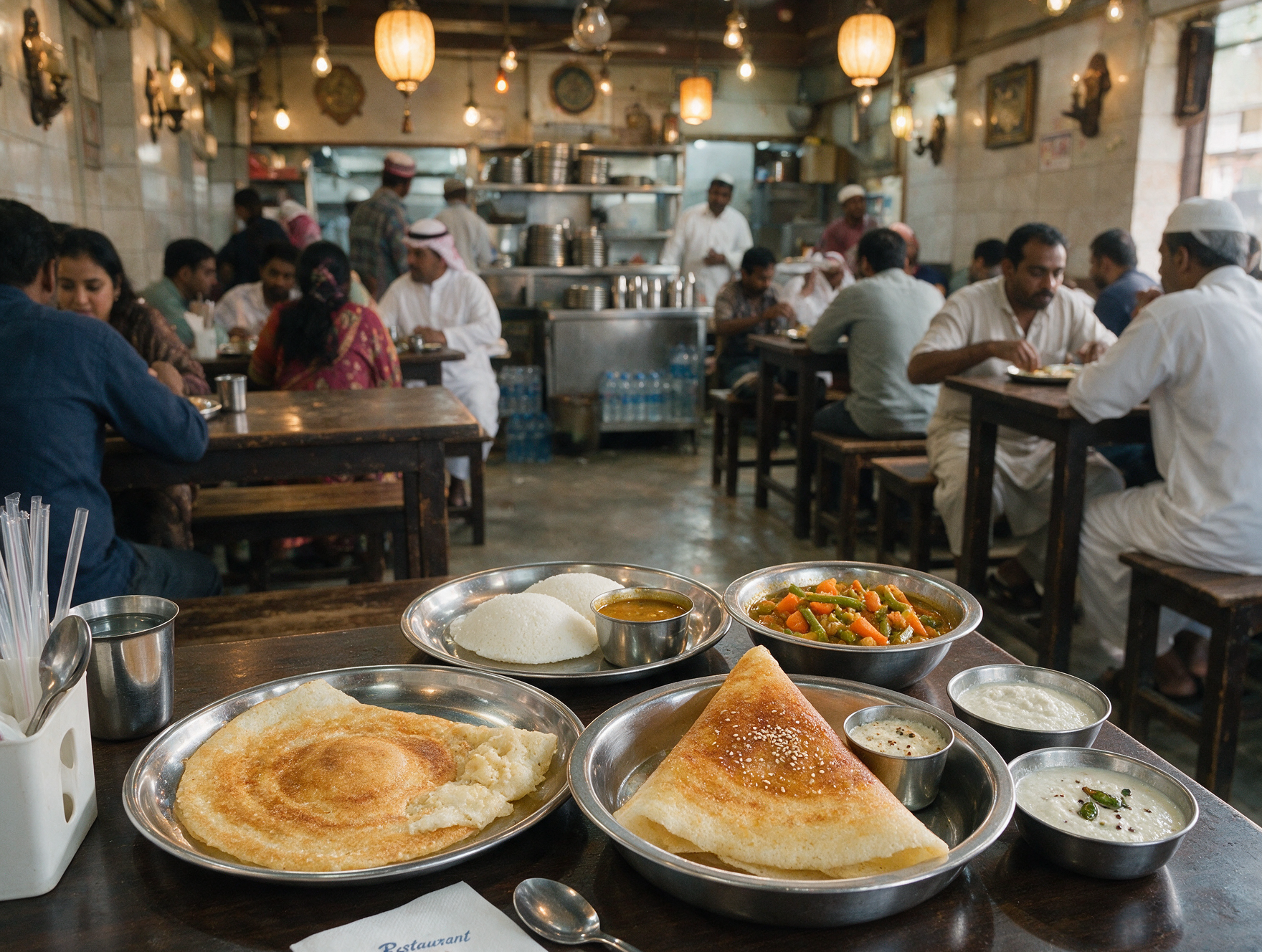
Take the abra across the Creek from Bur Dubai to Deira and you land in the old trading quarter — spice souk, gold souk, and a grid of streets that still feel like the Dubai from before the skyscrapers. Saravanaa Bhavan’s Deira branch, on Al Mateena Street, is the easiest sure bet after a morning at the souks. For something more local to the neighborhood, Madras Vegetarian Restaurant (with locations in Al Rigga and Hor Al Anz, both a short walk or cheap taxi from the Creek) does dosas and thalis in a no-nonsense, strip-mall-style setup — not a place you go for atmosphere, but exactly the place you go when you want a filling, cheap, unmistakably vegetarian meal between two rounds of haggling for spices. Expect AED 20–45 per person at either spot.
Jain Food in Dubai
Dubai handles Jain requests better than most Indian travelers expect, mostly because so many of the vegetarian restaurants above already cater to a Gujarati and Marwari customer base that asks for the same thing daily. Govinda’s, Sukh Sagar, and the Saravanaa Bhavan branches will all do a no-onion, no-garlic version of most dishes if you ask when ordering — it’s rarely on the printed menu as a separate section, so you do need to say it out loud rather than assume the “vegetable” dish already qualifies. Root vegetables like potato and carrot are usually fine unless you specify otherwise; if your Jain diet excludes those too, say so specifically, because most kitchens won’t guess. None of this is guaranteed at hotel buffets or international restaurants, so for Jain travelers, the neighborhood vegetarian spots above are a safer bet than a five-star brunch spread.
How to Ask for What You Actually Eat
English works everywhere in Dubai’s restaurant scene, which helps, but the phrasing matters. “No onion, no garlic” gets a clearer response than “Jain food” from staff who may not know the term — pair the two if you can. “Pure vegetarian, no egg” is the clearest way to rule out mayonnaise and some breads, since “vegetarian” alone is sometimes read loosely enough to include egg-based dishes. For vegans, specify “no ghee, no cream, no honey” — a dish labelled “vegetable” or even “vegan” on some casual menus can still arrive with a ghee tempering or a paneer garnish added out of habit.
Delivery apps are genuinely useful here: Zomato, Talabat, and Deliveroo all operate widely across Dubai and let you filter for “pure veg” restaurants, which is an easy way to scout a neighborhood before you commit to a taxi ride. It’s worth checking a restaurant’s app listing even if you plan to eat in — reviews there tend to flag onion-garlic slip-ups faster than the restaurant’s own menu will admit to them.
The Mistake Almost Everyone Makes
Don’t assume a dish with “vegetable” in the name is automatically vegetarian-safe by Indian standards, and don’t assume dairy items are vegan just because they’re not meat. Vegetable biryani at a non-vegetarian restaurant is very often cooked in the same stock or on the same tawa as the meat versions unless the kitchen is fully separate — ask directly rather than reading the menu at face value. On the flip side, “vegan” labels on some casual Dubai menus have been applied loosely enough that a dish still shows up with a ghee-based sauce or a dollop of yoghurt; it’s not malicious, it’s just a market where “vegetarian,” “vegan,” and “healthy” get used somewhat interchangeably by non-specialist kitchens. When in doubt, ask.
A Fun Fact
Dubai’s vegetarian restaurant scene didn’t really start with the tourism boom — it started with Bur Dubai and Karama’s trading community decades before Downtown or the Marina existed as districts at all. Some of the vegetarian restaurants recommended above have been serving the same Gujarati and Tamil families since well before the Burj Khalifa was more than a construction site, which is part of why the food in Old Dubai tends to taste more like home cooking than hotel cooking.
FAQs
Is it hard to find vegetarian food in Dubai?
No — Dubai has one of the larger concentrated vegetarian restaurant scenes outside India, thanks to its South Asian population. It’s easier in Karama, Bur Dubai, and Deira than in newer tourist-facing districts, where you may need to search a bit more or ask staff directly.
Is Jain food available in Dubai restaurants?
Yes, at most dedicated vegetarian restaurants, though it’s rarely printed as a separate menu section. Ask for “no onion, no garlic” explicitly when ordering.
Are food delivery apps in Dubai vegetarian-friendly?
Zomato, Talabat, and Deliveroo all cover Dubai extensively and let you filter listings for pure-vegetarian restaurants, which is genuinely useful for scouting before you travel to a neighborhood.
Do UAE restaurants meet good food safety standards?
Dubai Municipality enforces food safety inspections and star ratings that are displayed at restaurant entrances, and standards at the sit-down restaurants named in this guide are generally solid — a reasonable part of why Dubai is considered safe for tourists in most everyday respects, food included.
What’s the best time to visit Dubai for a food-focused trip?
November through March brings cooler, walkable weather, which matters more for outdoor souk visits and abra crossings than for the restaurants themselves, which are air-conditioned year-round.
How much does a vegetarian meal cost in Dubai?
A thali or dosa meal at a Karama or Deira vegetarian restaurant runs AED 20–60 per person. A tasting-menu experience like Tresind Studio runs considerably higher, upward of AED 600 per head.
Can vegans get dairy-free milk and desserts easily in Dubai?
Yes, at plant-based cafés like Wild & The Moon and increasingly at mainstream coffee chains, though traditional Indian sweet shops still lean heavily on dairy — ask before ordering mithai if you’re strictly vegan.
Before You Go
Six areas, six very different vegetarian personalities — a mall food court chain in Downtown, a Michelin tasting menu on the Palm, a no-frills thali counter in Karama that’s been open longer than most of the skyline. That range is the actual story of vegetarian food in Dubai: it isn’t a niche you have to hunt for, it’s a parallel city that’s been quietly, consistently good for a long time. If you’d rather have someone map the eating alongside the sightseeing — figuring out which areas to base yourself in, how many days to give the Creek versus the Marina, and what a realistic Dubai trip cost from India looks like for your group — that’s exactly the kind of custom Dubai itinerary planning we do at Get Tripped. Reach out and we’ll build one around how you actually eat, not just what’s on the standard tour list.