Strasbourg sits close enough to the German border that it’s spent centuries flipping between French and German rule, and the city never fully picked a side — which is exactly what makes it interesting. Half-timbered houses that wouldn’t look out of place in Bavaria line canals that are pure French provincial charm, the local language (Alsatian) is a German dialect, and the food leans heavily toward choucroute and tarte flambée rather than anything you’d call classically French. Living like a local here for a day or two means embracing that in-between identity rather than looking for one or the other.
This isn’t a checklist of monuments — it’s how Strasbourg actually works day to day, from where locals actually eat to when the city empties out and when it fills up, for anyone building Strasbourg into a longer France trip.
In This Guide
- Petite France: living with the canal, not just photographing it
- Eating like a local: the winstub, not the brasserie
- Strasbourg’s Christmas season, if your dates line up
- Daily rhythms: markets, cycling, and the cathedral bell
- FAQs
Petite France: Living With the Canal, Not Just Photographing It
Every visitor photographs Petite France’s half-timbered houses reflected in the canal, and rightly so — it’s genuinely one of the prettiest corners of France. But the quarter used to be Strasbourg’s tanning, milling, and fishing district (the name has nothing to do with actual French identity; it references a 15th-century hospital for syphilis patients, a fact most tour guides skip). Locals use it as a cut-through on the way to work, sit on the canal steps with a coffee rather than a camera, and know which bridge gives the best light at which hour — generally the Ponts Couverts in late afternoon, when the light comes in low and warm across the water.
Honest caveat: Petite France gets genuinely crowded by mid-morning in summer. Walk it at 8am with a coffee in hand and you’ll have entire stretches of canal nearly to yourself, a completely different experience from the same streets three hours later.
Eating Like a Local: The Winstub, Not the Brasserie
A winstub is Strasbourg’s answer to the Parisian bistro or the Lyonnais bouchon — small, wood-paneled, family-run, and built around Alsatian wine rather than Bordeaux or Burgundy. Order tarte flambée (a thin, crisp flatbread with crème fraîche, onions, and lardons, nothing like Italian pizza despite the shape) as a starter, then choucroute if you want the full regional experience: sauerkraut piled with sausages, ham, and sometimes duck confit, a dish built for cold weather and a glass of Riesling.
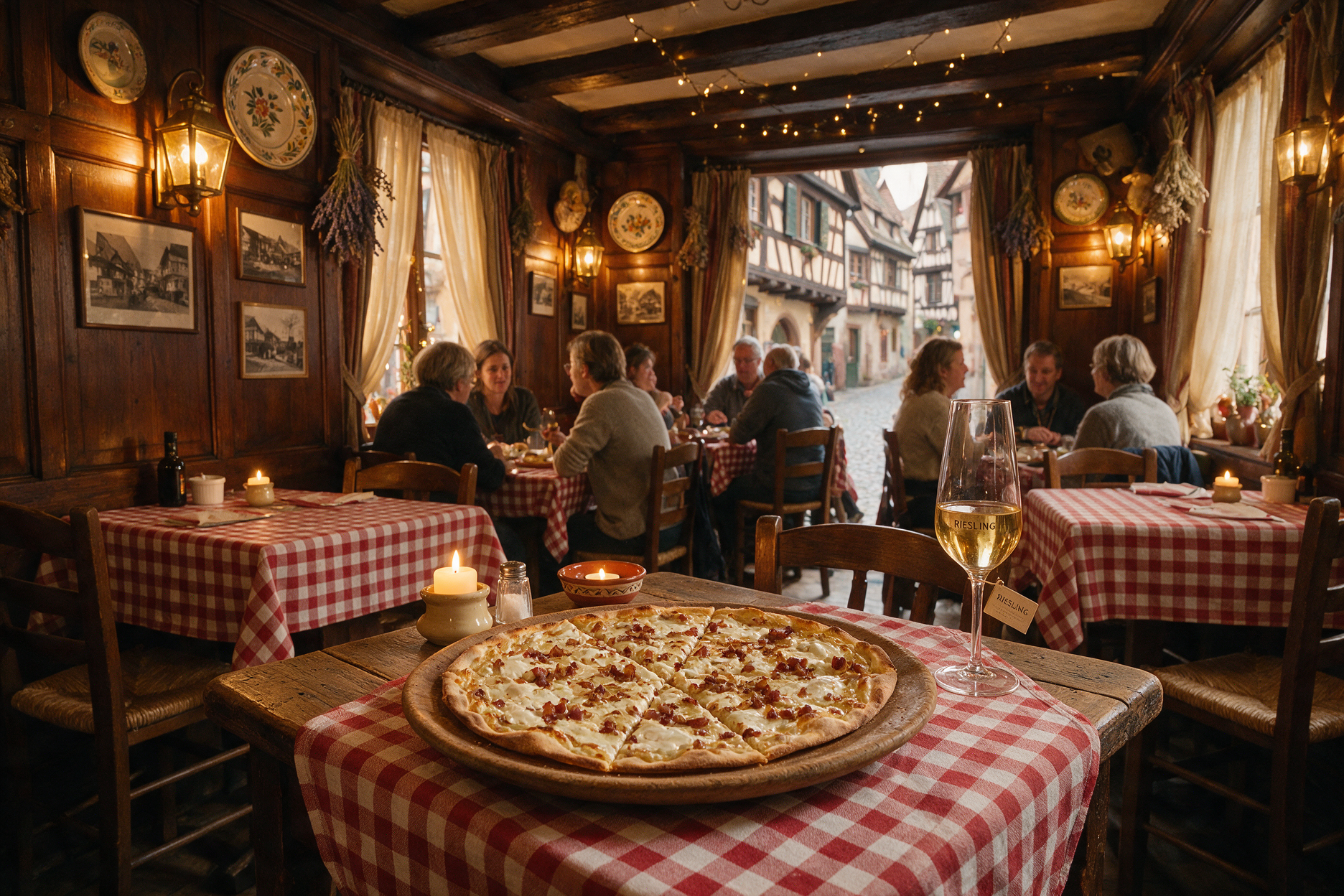
A mistake visitors make: ordering choucroute for two people to “share,” thinking it’s a light dish. It isn’t — portions are large and the dish is rich, so pace the rest of your meal accordingly, and skip dessert unless you genuinely have room. Locals often end a winstub meal with a small glass of eau de vie instead of anything sweet.
Strasbourg’s Christmas Season, If Your Dates Line Up
Strasbourg has called itself the Capital of Christmas since the market at Place Broglie began in 1570, making it one of the oldest Christmas markets in Europe still running. If your trip lands between late November and December 24th, the city transforms: eight separate markets spread across Place Broglie, the cathedral square, Place Kléber (with a towering illuminated tree and a nightly light show), and Petite France’s own Benjamin Zix Square, each with a slightly different character — Place Kléber for the big tree photo, Petite France for the more intimate, canal-side version.
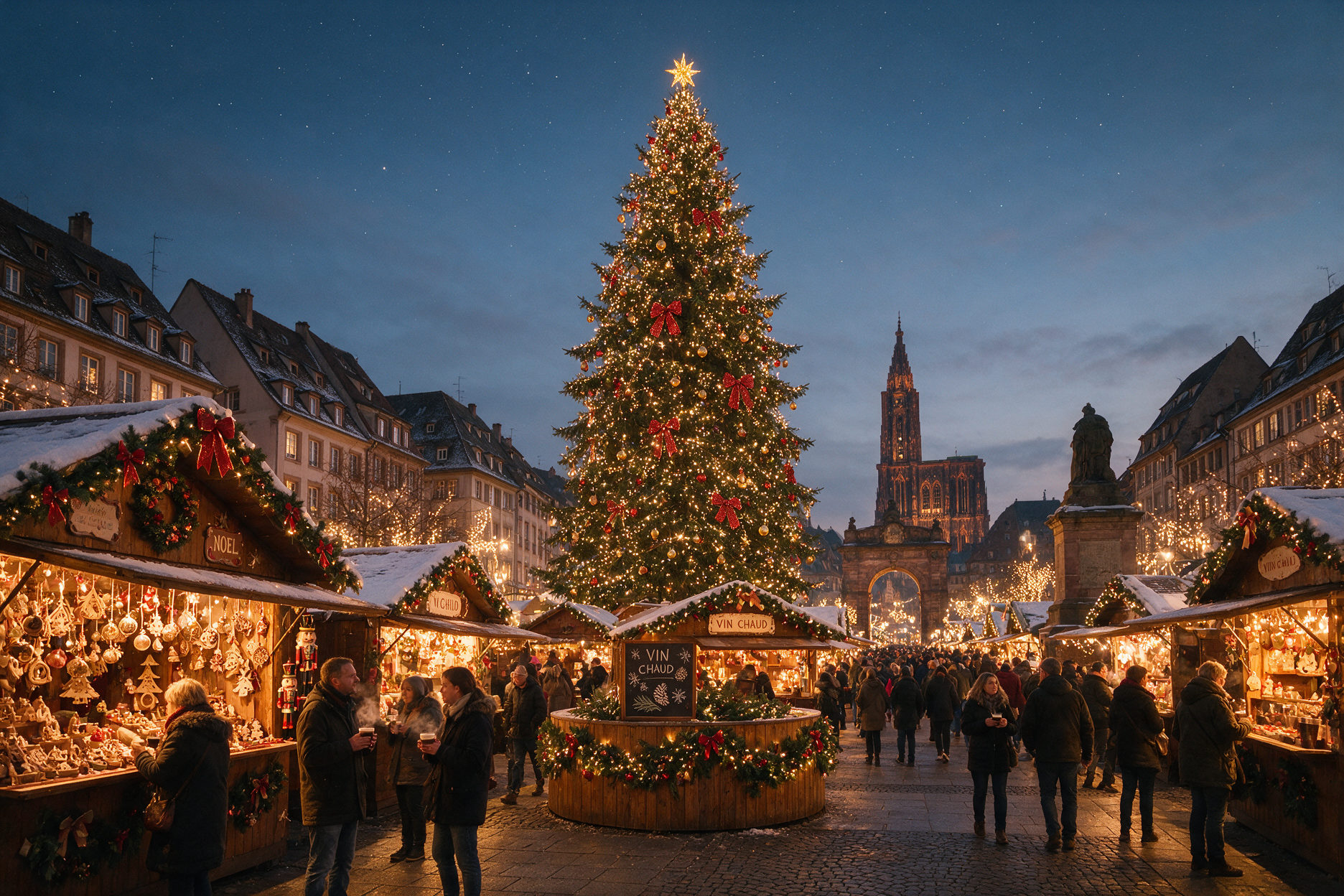
Try bredele cookies, kougelhopf (a yeasted, almond-studded cake), and vin chaud (mulled wine) from the stalls, and go on a weekday evening rather than a weekend if crowds are a concern — the difference in foot traffic between a Tuesday and a Saturday in December here is dramatic.
Daily Rhythms: Markets, Cycling, and the Cathedral Bell
Strasbourg is one of the most cycling-friendly cities in France, with a dedicated bike-share system (Vélhop) that locals use for genuine daily transport rather than tourist novelty. Renting a bike for a morning is a legitimately good way to cover more ground than walking allows, particularly out toward the European Quarter, where the European Parliament building sits, a reminder that Strasbourg carries real political weight well beyond its size.
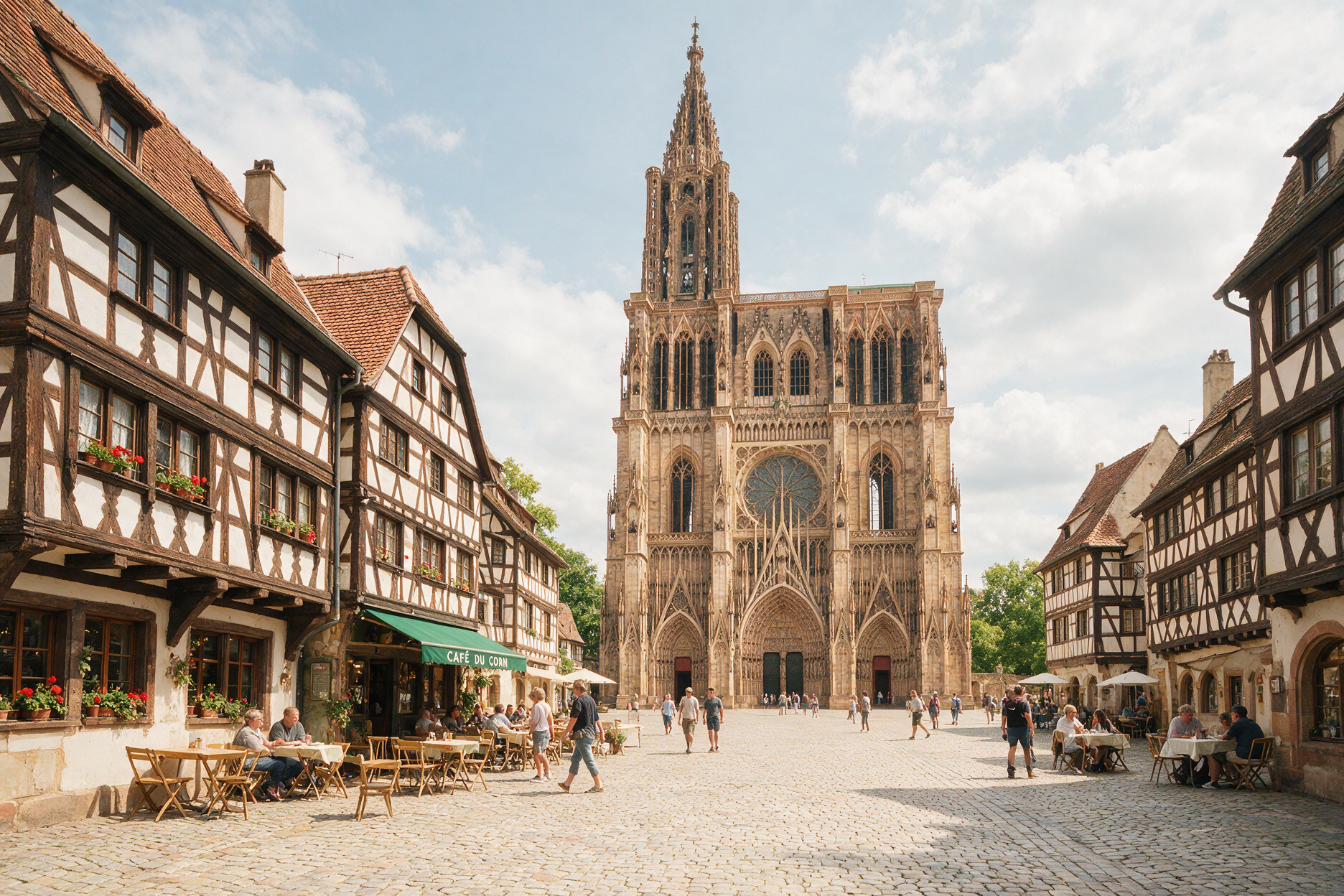
The cathedral’s astronomical clock strikes at 12:30pm daily with a small mechanical show that draws a modest, mostly local crowd rather than the tour-bus scale you’d see at a similar attraction in Paris. Standing in the cathedral square at that hour, coffee in hand, watching locals glance up out of habit rather than novelty, is as close as you’ll get to the actual rhythm of the city in a single moment.
The European Quarter: A Different Side of the City
Beyond the postcard old town, Strasbourg is home to the European Parliament, the Council of Europe, and the European Court of Human Rights — a genuine concentration of European institutions that gives the city outsized political weight for its size. The European Quarter itself is modern and architecturally distinct from the half-timbered old town, worth an hour’s walk if you want to see the other half of what makes Strasbourg what it is, particularly the striking, circular Council of Europe building. It’s a 20-25 minute walk or a short tram ride from the cathedral, and locals who work in or around these institutions form a genuinely international slice of the city’s daily life that’s easy to miss if you never leave Petite France.
Where to Stay in Strasbourg
The old town, particularly the streets around Petite France and the cathedral, puts you within walking distance of everything covered here, though it carries a price premium, especially during Christmas market season when rooms book out months ahead. The Neustadt district, a German-built 19th-century quarter just outside the old town’s core, offers a good mid-range alternative with wide boulevards and slightly lower rates, still an easy walk from the cathedral. If you’re visiting for the Christmas markets specifically, book accommodation as early as possible — this is one of the most in-demand periods for hotels anywhere in France.
Costs and Getting Around
Strasbourg runs comparably to other mid-sized French cities for food and accommodation, generally cheaper than Paris. A winstub meal for two with wine typically runs €50-70; a Vélhop bike rental costs a few euros for a half-day and is often the most efficient way to see both the old town and the European Quarter in one outing. The tram network is clean, frequent, and easy to navigate even without French, with clear digital signage at every stop.
Who This Is For
Couples and families both do well here — Strasbourg is unusually manageable with kids thanks to the flat, walkable old town and the canal boat tours that double as sightseeing and entertainment. It’s also a strong choice for a Honeymoon in France itinerary during the Christmas season specifically, when the market lights and canal reflections do a lot of the romantic heavy lifting on their own.
FAQs
Is Strasbourg worth visiting outside of Christmas market season?
Yes — Petite France, the cathedral, and the winstub food culture are all excellent year-round, and you’ll have considerably more breathing room without the December crowds. Christmas season adds a specific, memorable layer, but it’s not required to enjoy the city.
How many days should I spend in Strasbourg?
Two full days covers the essentials comfortably — one for Petite France and the old town, one for the European Quarter, a bike ride, and a slower food-focused day. It fits naturally as a 2-3 night stop on a longer France 7 days travel itinerary.
Is Strasbourg more German or French in feel?
Genuinely both, which is the point. Expect German-influenced architecture and food alongside French civic life and language — most locals speak French day to day, with Alsatian as a heritage language rather than the primary one.
Do I need to know French to get by?
Basic French phrases help, as everywhere in France, but Strasbourg’s proximity to Germany and its role hosting EU institutions mean English and German are both commonly spoken in tourist-facing businesses.
What’s the best neighborhood to stay in?
Petite France or the old town center puts you within walking distance of everything in this guide. It’s more expensive than staying further out, but for a short stay, the walkability is worth the premium.
How do I get to Strasbourg from Paris?
The TGV Est connects Paris to Strasbourg in under 2 hours, making it an easy add-on rather than a destination requiring a dedicated flight. Direct flights also exist for travelers combining Strasbourg with a wider France and Germany route.
Can I visit Strasbourg as a day trip from Paris?
It’s technically possible given the fast train connection, but it shortchanges the city — a rushed day trip means missing the slower rhythm that makes Strasbourg worth visiting in the first place. An overnight stay of at least one or two nights is a better use of the journey.
Photography Tip
Petite France’s canal reflections are strongest in the hour after sunrise, when the water is stillest and the light hits the half-timbered facades at a low, warm angle — by mid-morning, boat tours and foot traffic on the bridges disturb the water enough to soften those reflections considerably. If you’re visiting during Christmas season, the illuminated Place Kléber tree photographs best just after dusk rather than in full darkness, when there’s still enough ambient blue in the sky to balance against the warm market lights.
Smart Spending: Where to Splurge and Where to Save
Save on food by eating where the locals do — a tarte flambée and a glass of house Riesling at a genuine winstub costs a fraction of what a tourist-zone restaurant near the cathedral charges for the same dish. Spend on a Christmas-season stay if your dates allow it, even though rates climb considerably in December; the market atmosphere is genuinely once-a-year and worth the premium for travelers who can time their trip around it.
A Mistake Worth Avoiding
Treating Strasbourg as a half-day add-on to a Paris trip is the most common way to shortchange it. The city has enough genuine texture — food, architecture, daily rhythm — to reward a proper overnight stay or two, not just a train-station photo stop on the way to somewhere else.
A Fun Fact for the Road
Strasbourg’s cathedral was, for over two centuries after its 1439 spire was completed, the tallest building in the world — a fact that’s easy to forget standing in its shadow today, but worth remembering when you look up at that spire from the square below. The city’s historic center, the Grande Île, was also the first entire city center in France to be listed as a UNESCO World Heritage Site, back in 1988, recognition of just how much of the medieval and Renaissance fabric survived intact.
Shopping and Markets Beyond Christmas Season
Outside of December, Strasbourg’s covered market, Marché Couvert, and the smaller neighborhood markets scattered through the old town run year-round, worth a browse for local Alsatian wine, foie gras, and the region’s distinctive pottery and textiles. The city’s boulangeries also lean into a genuinely Alsatian identity — look for bretzels (proper Alsatian pretzels, denser and less sweet than what you’d find elsewhere) and kougelhopf sold fresh rather than as a tourist-season novelty item.
Where This Fits Into Your Trip
Strasbourg connects well to a broader Alsace region trip or as an eastern add-on to a Paris-based France travel guide itinerary, particularly if your dates allow for the Christmas market season. Sort your Schengen paperwork early — Get Tripped’s France visa guide for Indian travelers covers the current process, and our France food trail has more on Alsatian specialties beyond tarte flambée and choucroute. Get Tripped can build Strasbourg into a custom multi-region France itinerary, Christmas market timing included — reach out and we’ll plan the rest around it.