Normandy doesn’t have a nightlife scene in any conventional sense, and it doesn’t need one. What it has instead is some of the most dramatic coastline in France, a history that sits heavy and close to the surface, and an evening light along the Channel coast that turns beaches most people associate with a single day in 1944 into something quieter and more contemplative once the day-trip buses have gone. This is a guide to Normandy after 5pm — not a party guide, but an honest one about where the region is at its best once the crowds thin out.
If Normandy is part of your France route, most visitors treat it as a single long day from Paris and miss the evening entirely. That’s the gap this guide fills.
In This Guide
- Why evening changes how the D-Day beaches feel
- 3 real evening spots along the Normandy coast
- What to expect emotionally, and practically
- Who this is for
- FAQs
Why Evening Changes How the D-Day Beaches Feel
By midday, Omaha Beach and the American Cemetery see a steady flow of coach tours, and there’s nothing wrong with that — it’s how most people, understandably, choose to see this history. But arrive in the last two hours before sunset, once the tour buses have left for their return drive to Paris or Bayeux, and the beach empties into something closer to what it actually is: a wide, quiet stretch of sand with the tide pulling out, gulls overhead, and a stillness that does more of the emotional work than any guide’s narration could. This isn’t a suggestion to treat the beaches as a scenic backdrop — it’s the opposite. The quiet is what makes the weight of the place register properly.
1. Omaha Beach at Golden Hour — Best for Reflection
Time your visit for the two hours before sunset, when the light comes in low and gold across the sand and the American Cemetery’s rows of white crosses on the bluff above catch the last of the day. The sculpture Les Braves, installed on the beach itself for the 60th anniversary of the landings, is worth sitting with rather than photographing and moving on — it’s meant to be experienced slowly.
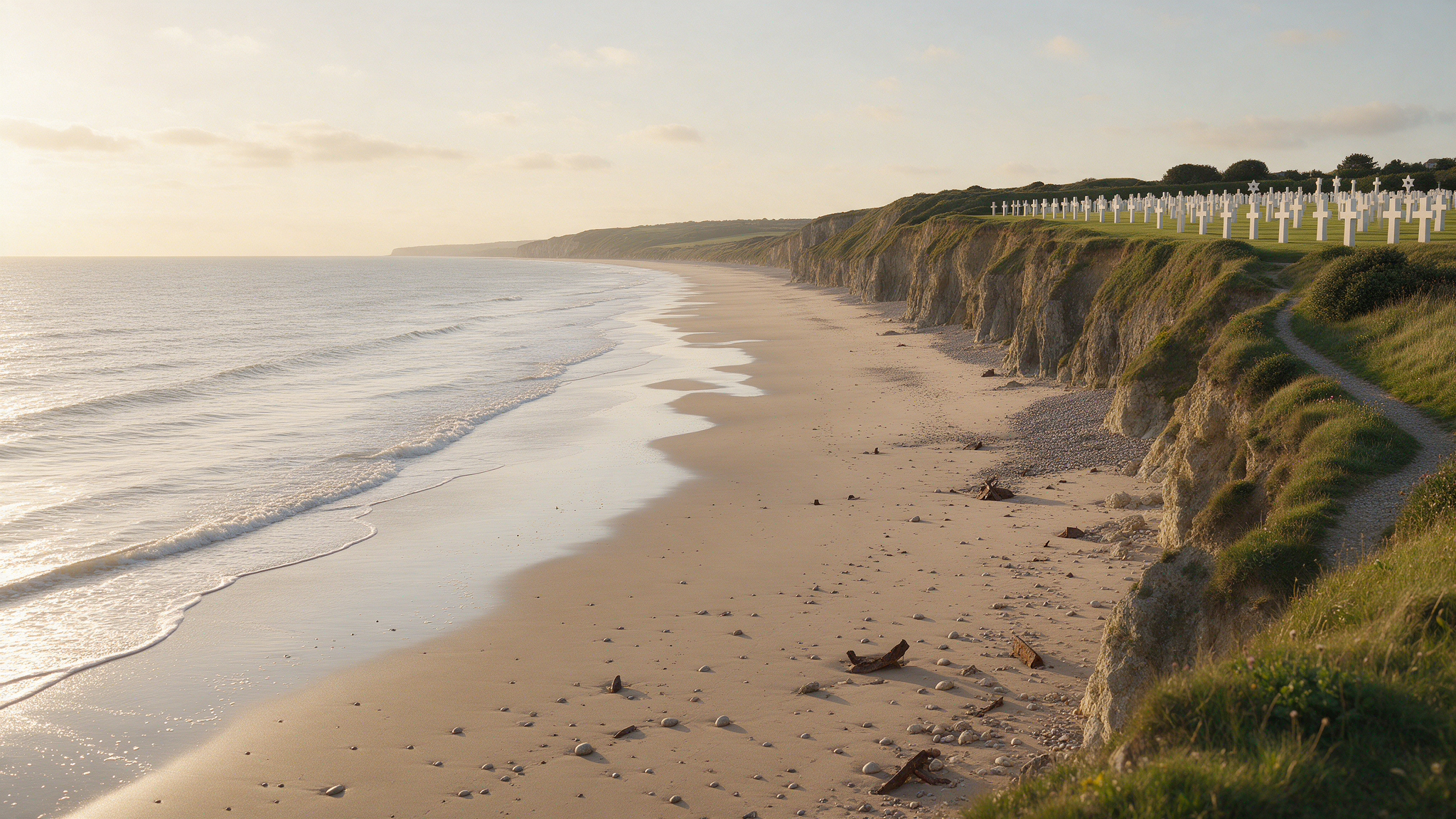
Honest caveat: most museums along the coast, including the D-Day Experience and the various local memorials, close by 6 or 6:30pm, and some shut entirely for parts of January and February. Plan museum visits for earlier in the day and reserve the golden-hour window purely for the beach and cemetery, not indoor sites.
2. Arromanches, Low Tide at Sunset — Best for Something Visually Unlike Anywhere Else
At low tide, the rusted remains of the Mulberry Harbor — an enormous artificial port towed across the Channel and assembled here in June 1944 to supply Allied troops without a captured deep-water port — sit exposed on the sand, and catching that combination at sunset is genuinely one of the more striking sights on this coast. The scale only becomes clear once you’re standing next to one of the concrete caissons; photographs undersell how large they actually are.
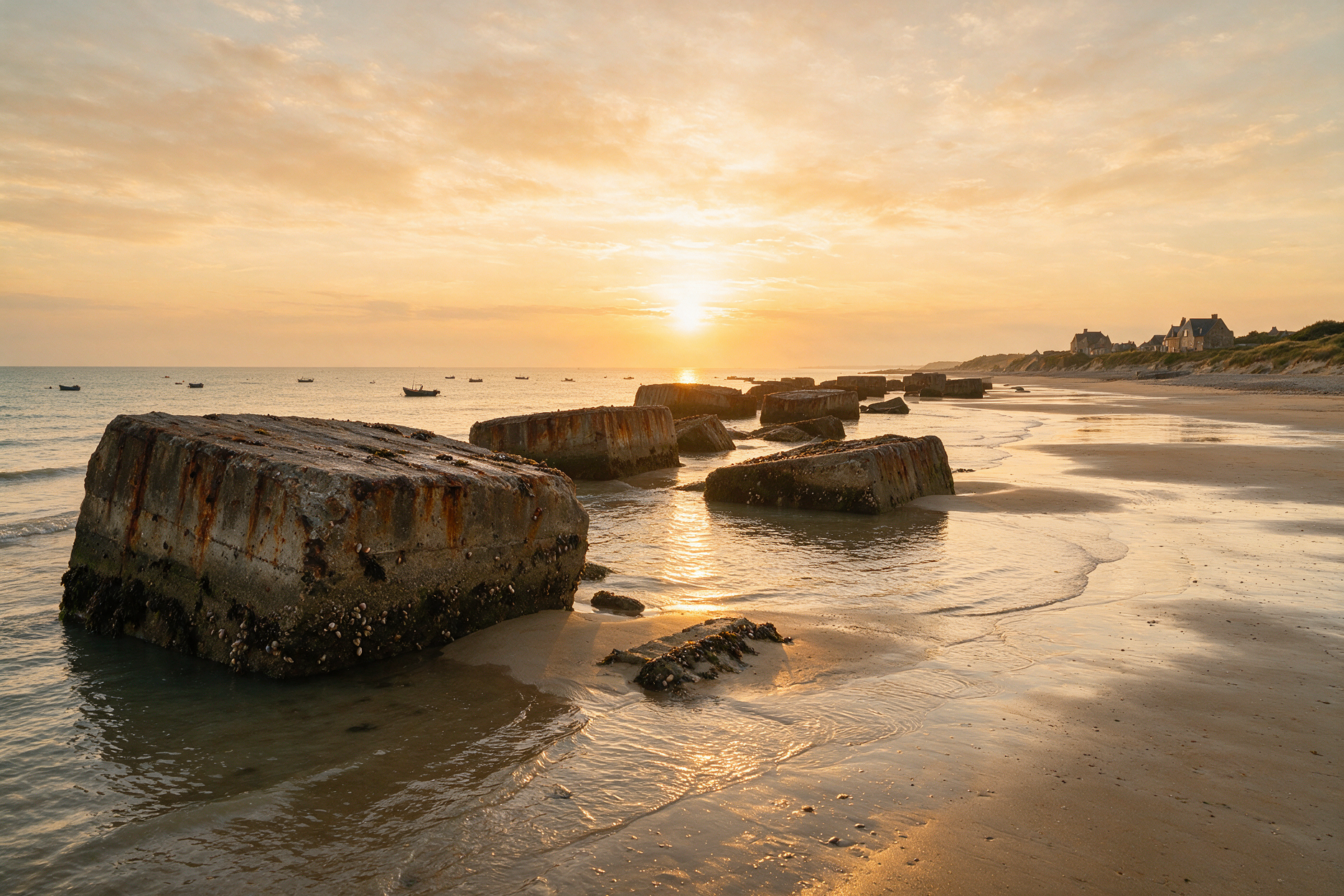
Check tide tables before you go; this only works properly at low tide, and Normandy’s Channel tides swing dramatically enough that a poorly timed visit means the wrecks are mostly submerged. The Arromanches 360 cinema and museum both close by early evening, so this is purely an outdoor, beach-level stop after museum hours.
3. Étretat’s Cliffs at Golden Hour — Best for Pure Coastal Drama
A little further along the coast from the landing beaches, Étretat’s chalk cliffs and natural arch draw a different, less history-focused crowd, but the evening light argument applies here just as strongly. The clifftop path above the arch gets genuinely crowded by midday in summer; the same walk at 6 or 7pm, with the light turning the white chalk gold and the crowds thinned to a fraction, is a completely different experience of the same place.
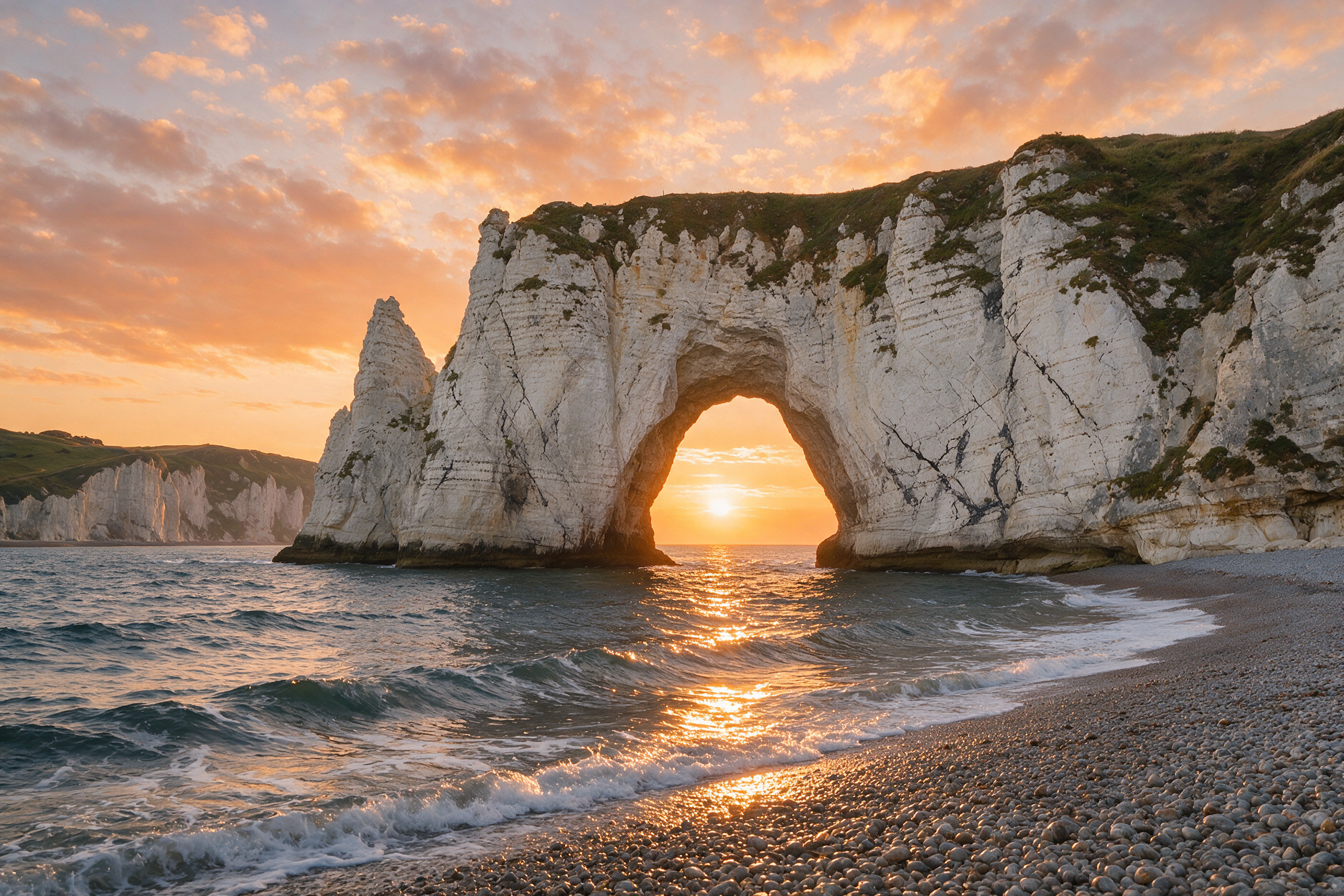
A fun fact: Étretat’s cliffs and arch were painted repeatedly by Claude Monet and Gustave Courbet in the 19th century, and the light that drew them here is the exact same low, coastal light you’ll see on a well-timed evening visit today.
Beyond Omaha: The Other Landing Beaches
Omaha and Arromanches (on Gold Beach) anchor this guide because they pair best with evening light and low-tide timing, but the full stretch of D-Day coastline runs across five beaches in total. Utah Beach, further west, has an open-air museum and is generally considered the most approachable stop for anyone visiting with children. Juno Beach, the Canadian sector, has its own dedicated museum and a slightly different, less-visited feel. Sword Beach, the easternmost, pairs well with a stop at the Pegasus Memorial. If your schedule allows more than the three spots detailed here, spreading a full day or two across all five sectors gives a fuller picture of how the landings unfolded across nearly 80 kilometers of coast simultaneously.
Where to Stay: Bayeux as a Base
Bayeux is the practical choice for a Normandy coast stay — centrally located to reach all five landing beaches, Arromanches, and Étretat within a reasonable drive, and home to its own genuinely worthwhile sight in the Bayeux Tapestry, an 11th-century embroidered account of the Norman conquest of England. The town itself largely escaped the bombing that damaged much of the surrounding region during the war, so its medieval center and cathedral remain intact, giving you a good base with its own attractions rather than just a convenient dot on the map. Caen, a larger city with its own Peace Memorial Museum, is a reasonable alternative if you want more restaurant and hotel variety.
What to Expect Emotionally, and Practically
Visiting the D-Day beaches is not a typical sightseeing experience, and it’s worth going in prepared for that. Most visitors find the American Cemetery’s 9,387 aligned white crosses more affecting in person than photos suggest, and the quiet, respectful atmosphere locals and staff maintain is worth matching — this isn’t a spot for loud conversation or casual photos with peace signs. Practically: rent a car if at all possible, since public transport along this stretch of coast is infrequent and evening timing especially depends on your own schedule rather than a bus timetable. Bayeux makes the most convenient overnight base for reaching all three spots in this guide within a reasonable drive.
Who This Is For
This suits travelers who want a meaningful, unhurried experience of the Normandy coast rather than a checklist day trip — couples and small groups get the most out of the quiet, reflective pace, and it’s a genuinely good addition for anyone with a family connection to the landings, Indian or otherwise, who wants time to sit with the history rather than rush through it. It’s less suited to a fast-paced, single-day Paris round trip, which is how most tour operators package Normandy and part of why the evening version of this coast remains relatively undiscovered.
FAQs
Is Normandy safe to visit for Indian tourists?
Yes — this is a rural, low-crime region of France, and the concerns most travelers researching Is France safe for Indian tourists raise (pickpocketing, crowded transit) are far less relevant here than in central Paris. The main practical risk is tide timing at Arromanches, not personal safety.
How many days should I plan for Normandy?
Three to five days covers the D-Day beaches, Bayeux, and a stop at Étretat or Mont Saint-Michel properly, though a rushed single day from Paris is possible if that’s genuinely all your schedule allows.
Do I need a guide to visit the D-Day beaches?
Not required, but a guide adds meaningful historical context that’s easy to miss reading plaques alone, particularly around the different national sectors (American, British, Canadian) and their distinct stories. Independent visits work well if you’ve done some reading beforehand.
What’s the best time of year for this?
Late spring through early autumn gives the longest daylight for evening timing to work, and drier weather generally. Winter visits are possible and considerably quieter, but several museums reduce hours or close in January and early February.
Can I combine this with Mont Saint-Michel?
Yes, and many travelers do — see Get Tripped’s guide to Mont Saint-Michel beyond the common spots for how the two combine well on a Normandy-focused stretch of a longer France trip.
How do I get to Normandy from Paris?
Trains run from Paris to Bayeux or Caen in roughly 2-2.5 hours, though a rental car is genuinely more useful once you’re there, since the landing beaches, Arromanches, and Étretat are spread across a stretch of coast that public transport covers infrequently. Most travelers pick up a car either in Paris or on arrival in Caen or Bayeux.
Should I visit with children?
Utah Beach’s more approachable, open-air museum format tends to work better for families than the heavier emotional weight of Omaha and its cemetery. Use judgment based on your children’s ages and interest in the history — this is a meaningful trip for older kids and teenagers with some context beforehand, less so for very young children who won’t grasp the significance.
What should I read or watch before visiting?
A little context goes a long way here. Even a short overview of the different national sectors and the broader strategic picture, read the night before, makes the memorials and museums land with far more weight than arriving cold. Most of the on-site museums also do this work for you if you’d rather absorb the history in person rather than beforehand.
A Mistake Worth Avoiding
The most common misstep is the single-day Paris-to-Normandy-and-back coach tour, which typically arrives at Omaha Beach around midday, spends 30-40 minutes there, and leaves before the light or the crowds change at all. If the D-Day beaches matter enough to visit, they’re worth an overnight in Bayeux and the evening timing described here — the difference in experience is substantial.
A Fun Fact for the Road
The Normandy landings on June 6, 1944 involved nearly 7,000 vessels and close to 12,000 aircraft in a single coordinated operation — still considered the largest amphibious invasion in military history, a scale that’s genuinely difficult to grasp standing on a quiet beach decades later with only the concrete remnants at Arromanches to suggest what once happened here.
Photography Tip
At Arromanches specifically, shoot the Mulberry Harbor remains with the sun low and behind you rather than into it — the wet sand at low tide reflects the sky beautifully when the light source is behind the camera, which is the opposite of the instinct most photographers have at a coastal sunset spot.
Culture and Etiquette Notes
Beyond the memorial sites themselves, Normandy’s small towns run on a slower, more traditional French rhythm than Paris — expect shorter shop hours, a proper Sunday closure for most businesses outside the main tourist sites, and a genuine appreciation for a simple “bonjour” before launching into a question, even in English. This is dairy and cider country as much as it is D-Day country; Norman cheeses like Camembert and Pont-l’Évêque, and the region’s cider and Calvados apple brandy, are worth building into any evening that isn’t centered on the coast itself.
Where This Fits Into Your Trip
Normandy works best as a dedicated 3-5 day stretch of a longer France travel guide route, ideally with your own car and a Bayeux base, rather than a single rushed day from Paris. Check Get Tripped’s France 7 nights, 8 days itinerary for how a Normandy stretch fits against the rest of a trip, and sort your Schengen visa early with our France visa guide for Indian travelers. Get Tripped can build a custom Normandy-focused itinerary with the right car hire and Bayeux stay — reach out and we’ll plan the rest around your dates.