France has a reputation for being an expensive destination, and in plenty of ways it is — but Paris in particular runs one of the more generous free-culture programmes of any major European capital, largely because the city treats access to art and history as something closer to a public good than a luxury. Between permanently free museums, monthly free-entry windows at the big national collections, and simply extraordinary architecture you can walk up to for nothing, it’s entirely possible to spend two or three genuinely rich days in Paris without paying a single entry fee.
This guide covers the real, current free things to do in France — mostly concentrated in Paris, where the free-culture infrastructure is richest, with a shorter section covering Nice, Lyon, and Strasbourg.
Table of Contents
- Paris’s 14 permanently free museums
- Free first Sundays at the major national museums
- Free entry by age, and other windows
- Free churches and monuments
- Parks, gardens, and walking routes
- Free things to do beyond Paris
- FAQs
Paris’s 14 permanently free museums
The City of Paris operates a network of 14 municipal museums (the Paris Musées network) whose permanent collections are free, every single day, no catch — you only pay if you want to see a temporary exhibition, which typically runs €12-15 separately. The standouts: Petit Palais, a genuinely serious fine art collection including Rembrandt, Monet, and Cézanne, set in a beautiful Belle Époque building with a free garden café courtyard; Musée Carnavalet, spanning Parisian history across two Marais mansions with over 600 rooms; and Maison de Victor Hugo, the writer’s actual apartment overlooking Place des Vosges.
The rest of the network — Cognacq-Jay (18th-century decorative arts), Musée de la Vie Romantique (an artist’s home with a wisteria-covered tearoom garden), Musée d’Art Moderne (Matisse and Dufy), Musée Bourdelle and Musée Zadkine (sculptors’ studios with garden installations), Musée Cernuschi (East Asian art), Maison de Balzac (with genuinely good Seine views), the WWII-focused Mémorial Leclerc and Musée de la Libération de Paris, Cité de l’Architecture, and the Crypte archéologique beneath Notre-Dame’s forecourt — round out a list that alone could fill several days of a trip.
Free first Sundays at the major national museums
From November through March, the first Sunday of each month brings free entry to several of France’s biggest-name national museums — a window that includes the Musée d’Orsay and Musée de l’Orangerie, Musée Rodin, Musée Picasso, Musée de Cluny (medieval art and the Cluny thermal baths), Musée Guimet (Asian art), and the smaller Musée Delacroix and Musée Gustave Moreau. That’s seven free Sundays a year covering some of the most significant art collections in the world — worth timing a winter trip around if your dates have any flexibility.
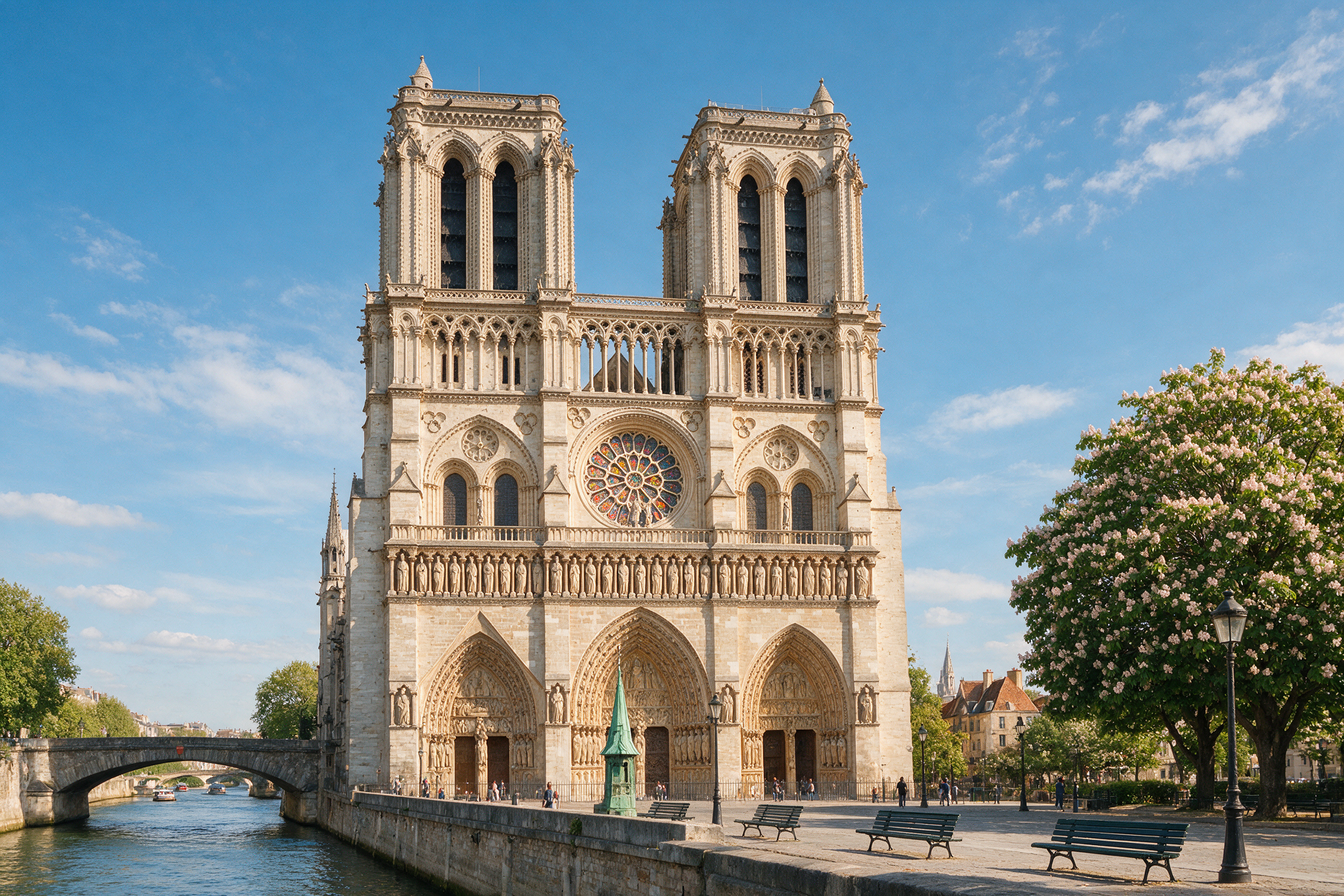
The Louvre and Notre-Dame are conspicuously not part of this particular scheme, but both have their own free-access routes covered below.
Free entry by age, and other windows
Anyone under 18, regardless of nationality, gets free entry to all national museums, every day — useful if you’re travelling with teenagers. EU residents aged 18-25 get the same with valid ID, though this doesn’t extend to Indian nationals outside that residency. A few other windows worth knowing: the Bourse de Commerce (Pinault Collection) is free the first Saturday of each month from 5-9pm; Lafayette Anticipations is always free; the Musée des Arts et Métiers is free every Thursday after 6pm year-round; and the Louvre itself offers free entry on the first Friday of the month after 6pm, though that specific window is restricted to under-26s.
On Bastille Day (14 July), most national museums waive admission entirely for the day — the Louvre, Orsay, Orangerie, Sainte-Chapelle, Conciergerie, Arc de Triomphe, the Panthéon, Rodin, Picasso, and Cluny among them. If your trip happens to land on it, it’s one of the best-value single days you can plan around in European travel generally.
Free churches and monuments
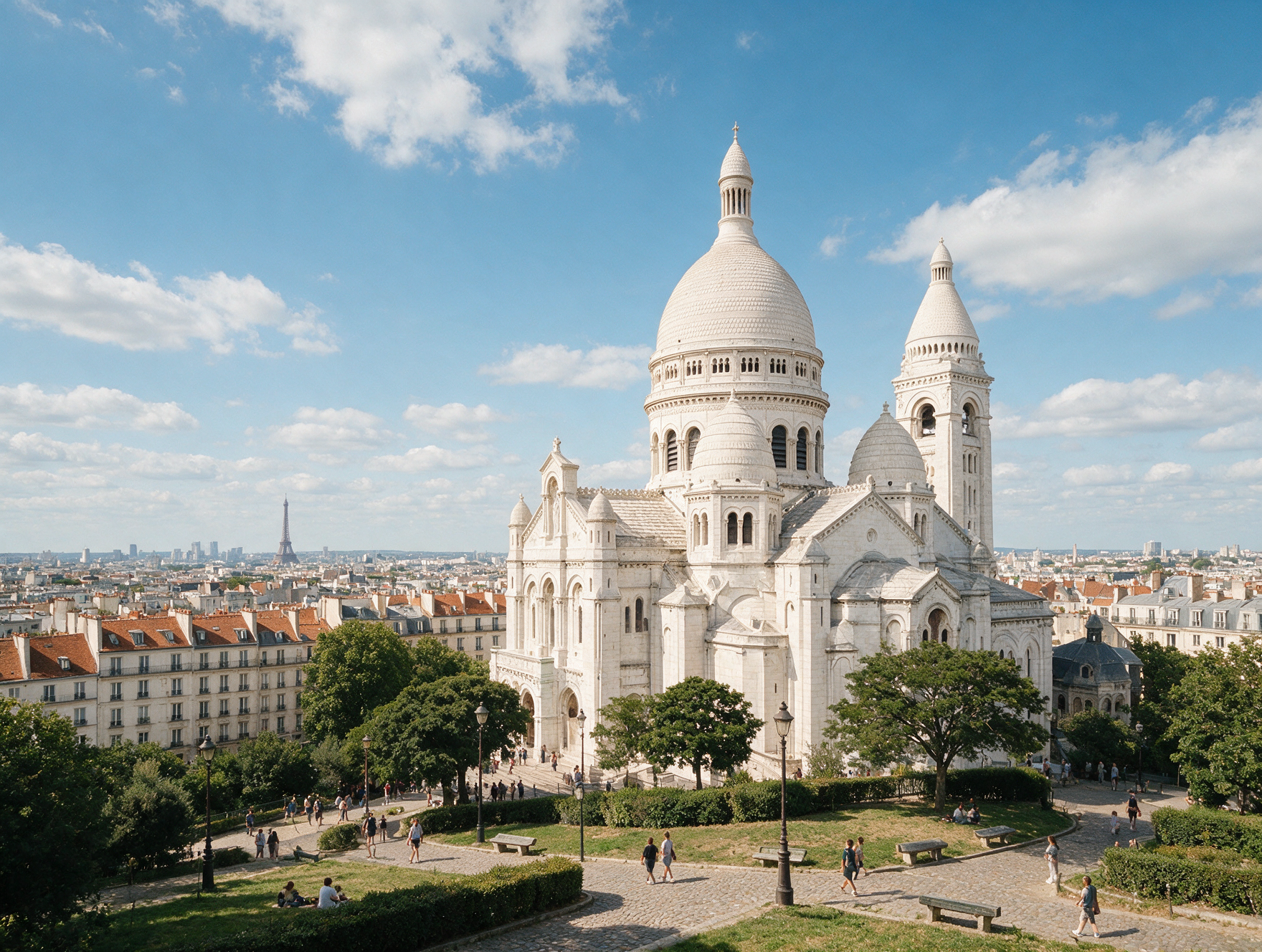
Paris’s major churches cost nothing to walk into. Notre-Dame’s interior is accessible via a free timed reservation post-restoration, though the tower climb is paid; Sacré-Cœur’s nave is free (only the dome costs extra), and the view over Paris from the basilica’s front steps is arguably better than the view from inside the dome anyway. Saint-Sulpice, Saint-Eustache, La Madeleine, and Saint-Germain-des-Prés are all free and genuinely worth stepping into, even for a few minutes between other plans — Saint-Sulpice in particular has a scale and quiet grandeur that surprises people who assume it’s a minor stop compared to Notre-Dame.
Parks, gardens, and walking routes
The Tuileries, Luxembourg Gardens, Champ de Mars (right beneath the Eiffel Tower), Parc Monceau, and Buttes-Chaumont are all free, well-maintained, and each has a genuinely different character — Luxembourg’s formal French gardens versus Buttes-Chaumont’s hilly, almost English-park informality make an interesting contrast if you visit both. The larger Bois de Boulogne and Bois de Vincennes on the city’s edges are worth a half-day if you want genuine green space and fewer tourists. Versailles’s gardens, notably, are free to enter on most weekdays even though the palace interior requires a paid ticket — a detail a lot of visitors miss.
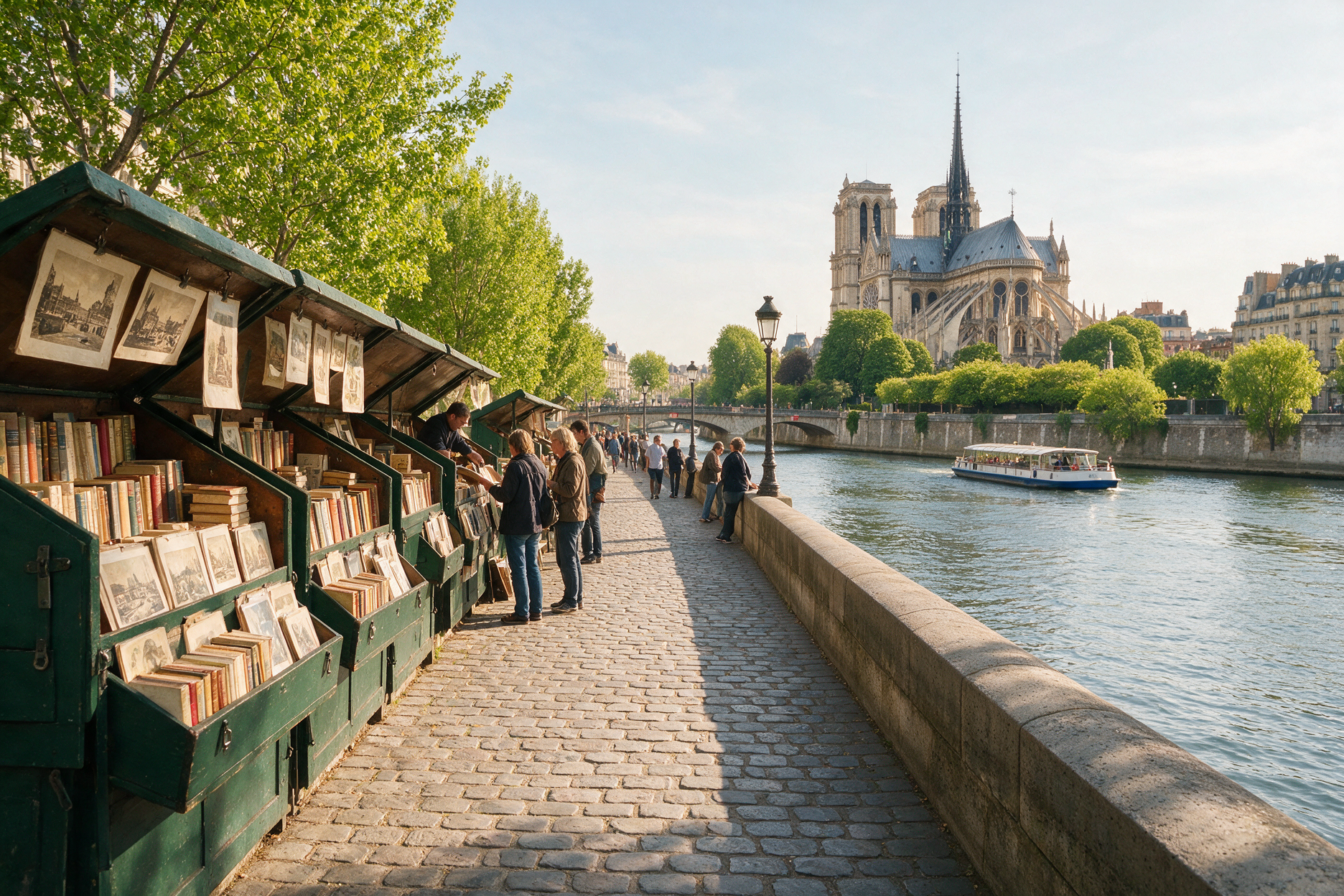
For walking routes with a bit more narrative interest: the Promenade Plantée, a 4.7km elevated park built along a disused railway viaduct in the 12th arrondissement, predates New York’s High Line by over a decade and is far less crowded; the Petite Ceinture, an abandoned railway loop with several accessible walking sections in the 15th and 16th arrondissements, gives a genuinely different, slightly overgrown view of the city; and a slow walk along the Seine past the green bouquiniste book stalls — a 200-year-old, UNESCO-recognised tradition of secondhand booksellers along the riverbank — is one of the simplest, most Parisian things you can do for free.
One small, easily missed detail: Paris has around 108 free public drinking-water fountains, the ornate green cast-iron Wallace Fountains dating back to the 1870s, scattered across the city. Refilling a bottle at one is both practical and, in its own small way, a nice bit of Paris history to be part of.
Free things to do beyond Paris
Nice’s beaches are technically split between paid private beach clubs and free public sections — the free stretches are genuinely good and the water quality is the same regardless of which side of the rope you’re on, so there’s no real need to pay for beach access unless you specifically want loungers and service. The Promenade des Anglais itself, of course, costs nothing to walk, and Nice’s old town market at Cours Saleya is free to wander even if you don’t buy anything, with the flower stalls alone worth the detour for photographs.
In Lyon, the climb up to the Basilica of Notre-Dame de Fourvière is free and gives the best panoramic view of the city, river confluence included, without paying for any observation deck — go at golden hour if you can time it, since the view over the Saône and Rhône rivers meeting is genuinely one of the better free viewpoints in France. Vieux Lyon’s traboules, the covered passageways that once let silk workers move goods across the city without the weather getting to them, are free to explore during daylight hours, though a few are only open at specific times, so a bit of research (or a local walking guide) helps you find the ones actually open when you arrive.
In Strasbourg, simply wandering Petite France’s canals and half-timbered streets costs nothing, and the cathedral’s nave is free to enter, much like Paris’s major churches — the astronomical clock inside does require a small paid ticket to view up close during its daily animation, but the cathedral itself and its famous facade cost nothing to admire.
Making free days actually work
A few practical notes that make the difference between a smooth free day and a frustrating one. Most of the permanently free Paris Musées network museums are genuinely under-visited compared to the Louvre or Orsay, which means you can usually walk straight in without a queue on a weekday morning — Musée Carnavalet in particular rarely has a line even in peak season, purely because it isn’t on the standard tourist checklist. The free first-Sunday museums, by contrast, do get crowded specifically because everyone knows about the free window, so arriving within the first hour of opening makes a real difference to the experience.
A mistake to avoid: don’t assume “free” means “no booking required” across the board. Notre-Dame’s free interior access still runs on a timed-entry reservation system post-restoration, and turning up without one can mean being turned away or facing a long standby queue — check the cathedral’s official booking page a few days ahead rather than assuming you can walk straight in.
It’s also worth building at least one full free day into a longer Paris stay rather than scattering free activities as filler between paid ones — a day built entirely around Marais walking, the free museums there, and an evening along the Seine has its own unhurried rhythm that a day chopped up between ticketed time slots doesn’t. For families travelling with children, this also tends to be the easier pace, since free museums generally don’t require the timed-entry planning that the Louvre or Eiffel Tower do.
FAQs
Is the Eiffel Tower free to see?
Going up costs money, but seeing it — including from genuinely excellent vantage points like Trocadéro across the river or the Champ de Mars gardens beneath it — is entirely free, and honestly how most people end up taking their best photo of it anyway.
Do I need to book free museums in advance?
For the always-free Paris Musées network, generally no, though it’s worth checking each museum’s site for any timed-entry requirements during busy periods. The free first-Sunday windows at major national museums can get crowded, so arriving early is a good idea.
Is the Louvre ever free?
Only on the first Friday of the month after 6pm, and only for under-26s — otherwise it’s a paid museum, and one of the only major Paris institutions not covered by the free-Sunday scheme.
Are Paris’s free museums actually good, or just the minor collections?
Genuinely good — Petit Palais and Musée Carnavalet in particular hold their own against most paid museums in other major cities. Free in Paris doesn’t mean lesser here; it reflects a deliberate municipal policy rather than a quality gap.
What’s the best single free thing to do in Paris?
If we had to pick one: an evening walk along the Seine from Notre-Dame past the bouquinistes toward the Louvre, timed to catch the sunset. It costs nothing, takes about 45 minutes at an easy pace, and captures more of what makes Paris Paris than most paid attractions do.
Free days, planned properly
The best trips mix paid highlights with these free windows rather than treating them as separate budgets — a free-Sunday morning at Orsay followed by a paid Eiffel Tower evening slot makes for one excellent, well-balanced day. Our France itinerary builds days this way by default, and our France travel guide has more on timing a trip around these free-entry calendars. Reach out to our France specialists if you want a custom itinerary that makes the most of both.