Lyon has a habit of getting skipped. It sits between Paris and the south of France on paper, but on most itineraries it barely gets a train-station stopover, which is a genuine loss — this is a UNESCO World Heritage old town with a network of secret indoor passageways running through it, and France’s most serious food culture outside Paris, tucked into a fraction of the crowds either of those cities pulls. The passageways alone are reason enough to give Lyon a full day rather than a layover.
These are called traboules — covered walkways that cut through building courtyards, originally built so silk workers could move fabric between workshops and the river without the weather getting to it. Several hundred still exist across the city, roughly forty of them open to the public, and most visitors to France have never heard of them. Here are five specific hidden corners of Lyon worth building a day around.
In This Guide
- What a traboule actually is, and the etiquette for visiting
- 5 hidden gems, from secret staircases to a Michelin-starred bouchon
- Getting between them
- Who this is for
- FAQs
What a Traboule Actually Is, and the Etiquette for Visiting
A traboule is a passage that cuts straight through a building or a block of buildings, connecting one street to another via internal courtyards and stairwells rather than going around. They were built from as early as the 4th century and expanded heavily during Lyon’s silk-weaving boom in the Renaissance, when getting bolts of fabric from workshop to warehouse without exposure to rain mattered commercially. Today they’re mostly residential entrances that happen to be historic monuments, which means real people live behind these doors — keep voices down, don’t linger in doorways, and expect some to be locked if residents have had enough noise for the day. Opening hours run roughly 7am to 7pm, and there’s no fee to walk through the publicly accessible ones.
1. Cour des Voraces, Croix-Rousse — Best Single Staircase in the City
Enter from 9 Place Colbert or 29 Rue Imbert Colomès, and you’ll find one of Lyon’s most dramatic pieces of architecture hiding in what looks like an unremarkable courtyard: a soaring, multi-story stone staircase, sometimes called the oldest reinforced staircase in the city, rising through six floors of a building that once housed the canuts — the silk-weaving workers whose 1831 and 1834 uprisings against wage cuts were partly coordinated through passages exactly like this one.
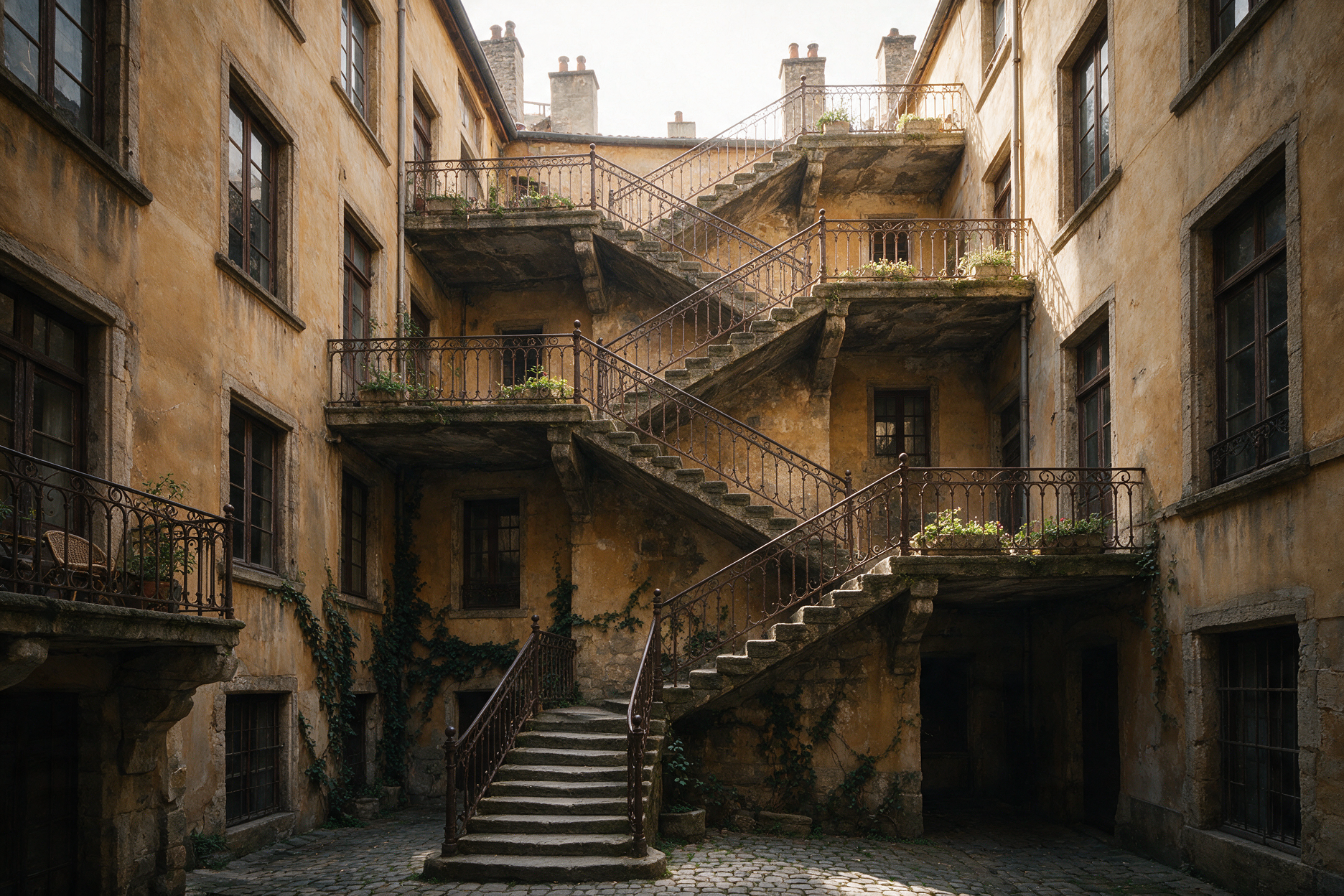
Honest caveat: it’s not wheelchair accessible and the stairs are genuinely steep, so this isn’t a stop for anyone with mobility concerns. Wear real shoes, not sandals.
2. The Longest Traboule, Vieux Lyon — Best for a First-Timer
Running between 54 Rue Saint-Jean and 27 Rue du Bœuf, this is the traboule most guidebooks lead with, and it earns the spot — it’s the longest publicly walkable passage in the old town, cutting straight through several linked courtyards. Ô Passage, a small café near the Rue du Bœuf end, has windows looking directly into the passage if you want to sit with a coffee and watch other visitors discover it.
A fun fact: Vieux Lyon’s traboules are largely unmarked and unsigned, unlike the Croix-Rousse ones, which have clear directional plaques. Getting slightly lost here is part of the experience rather than a failure of navigation.
3. Passage Mermet, La Croix-Rousse — Best for Photography
Between 25 Rue René Leynaud and 25 Rue Burdeau sits a steep, uncovered traboule built around a painted staircase — the Escalier Mermet — that’s become one of the most photographed corners of the neighborhood without being remotely crowded. The paintwork changes over time as the building is maintained, so what you see may differ slightly from older photos online, which is part of its charm rather than a disappointment.
4. Fourvière Viewpoint, Above Vieux Lyon — Best Wide View to Orient Yourself
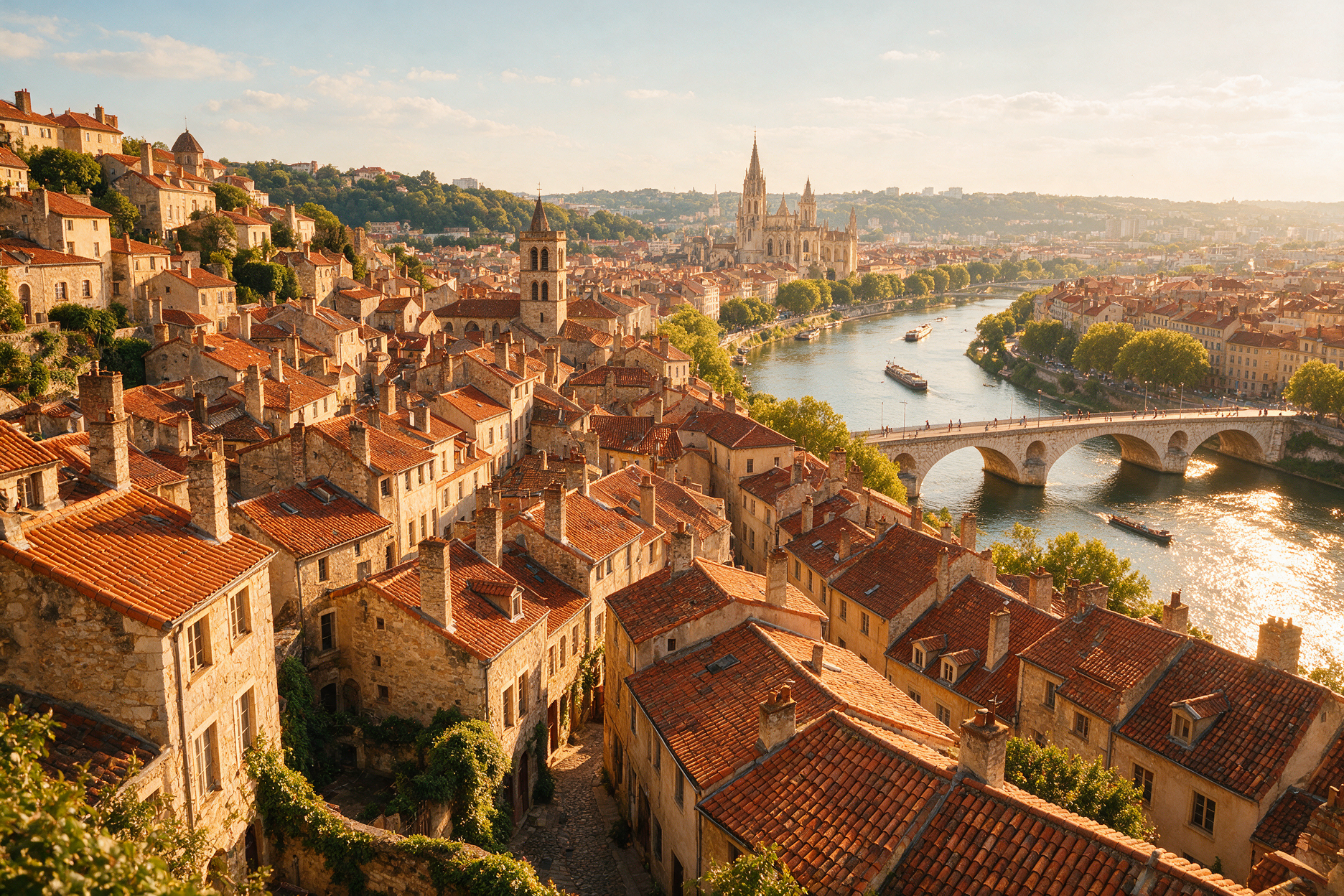
Take the funicular up to Fourvière before or after your traboule walk for the view that makes sense of everything you’ve just seen at street level: the terracotta rooftops of Vieux Lyon, the Saône winding below, and Lyon’s cathedral spires rising above the old town. It’s not a hidden gem in the traboule sense, but pairing it with the passages below gives you both the intimate, secret version of Lyon and the postcard version in the same afternoon.
5. A Bouchon Lunch, Vieux Lyon — Best Way to Taste the City
No hidden-gems list of Lyon is complete without a bouchon — the city’s specific style of traditional restaurant, usually small, red-checkered-tablecloth affairs serving quenelle (a poached dumpling, usually pike, in a rich sauce), andouillette if you’re adventurous, and a Beaujolais or Côtes du Rhône by the pot rather than the bottle. Look for the official “Les Bouchons Lyonnais” plaque in the window, which marks genuine, vetted establishments rather than tourist-trap imitations that have multiplied in recent years.
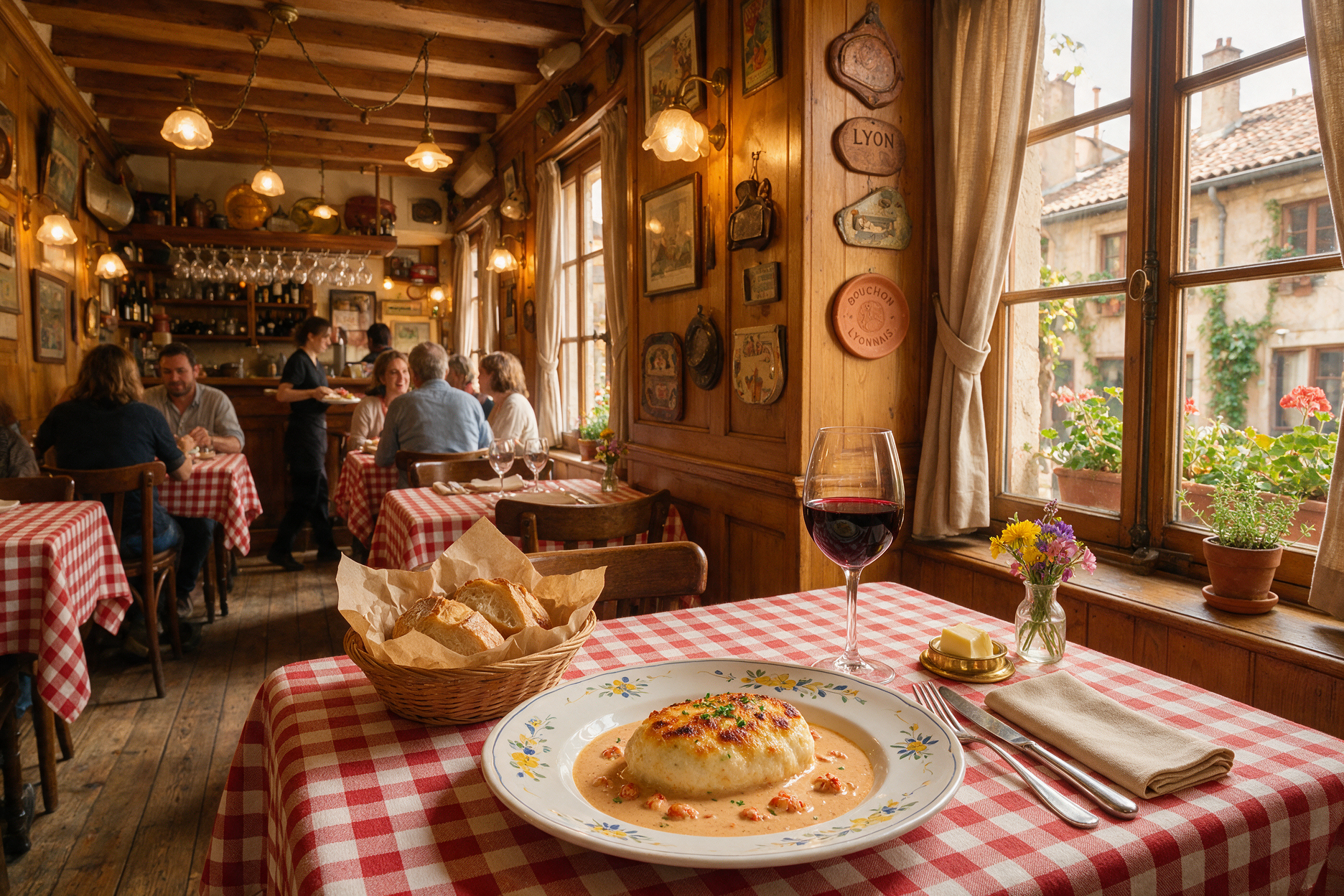
Honest caveat: bouchon portions are large and the food is rich, so this is a lunch that will slow your afternoon down considerably. Plan the traboule walking for the morning and treat the bouchon as the day’s centerpiece, not a quick bite between stops.
A Sixth: Traboule des Voraces’ Neighbor, the Croix-Rousse Market
If your timing allows a morning start, pair the Croix-Rousse traboules with the neighborhood’s own market on Boulevard de la Croix-Rousse, running most mornings except Monday. It’s a proper local market rather than a tourist one — cheese, charcuterie, and produce stalls with none of the souvenir-shop clutter you’ll find near the more famous sights, and a genuinely good place to assemble a picnic if you’d rather eat outdoors than sit down for a full bouchon lunch.
Where to Stay in Lyon
Vieux Lyon and the Presqu’île (the peninsula between the Rhône and Saône rivers) both put you within easy walking distance of everything in this guide. The Presqu’île tends to have a slightly better spread of mid-range hotels, while Vieux Lyon leans toward smaller boutique properties in genuinely historic buildings — sometimes with a traboule of their own built into the structure. Croix-Rousse is quieter and more residential, a good choice if you want to feel like you’re staying in a real neighborhood rather than a tourist zone, at the cost of a slightly longer walk to the old town’s core sights.
Costs and Practical Notes
Lyon runs noticeably cheaper than Paris for food and mid-range accommodation, which is part of why it’s worth more than a rushed stopover. A bouchon lunch with wine typically costs €20-30 per person; a proper sit-down dinner at a slightly more upscale bistro runs €35-50. The city’s metro and funicular system is efficient and affordable, and a day pass is worth buying if you’re planning to move between Vieux Lyon, the Presqu’île, and Croix-Rousse more than twice in one day.
Getting Between Them
Everything on this list sits within Vieux Lyon and Croix-Rousse, both walkable from each other in about 20 minutes, or a short hop on Lyon’s excellent metro (Line D for Vieux Lyon, Line C for Croix-Rousse). Comfortable shoes matter more here than in most French cities — between the traboule stairs and Fourvière’s hill, you’ll cover more elevation change than a flat city stroll.
Who This Is For
This works well for couples and curious independent travelers who like a bit of a treasure hunt built into their sightseeing. Families with older kids will enjoy the staircase-hunting aspect, though the steep, dim passages aren’t ideal with a stroller or very young children. It’s less suited to anyone needing step-free access, given the terrain.
FAQs
Do I need a guide to see the traboules?
No, though a guided tour (widely available through Lyon’s tourist office) adds historical context, particularly around the silk-weaving uprisings, that’s easy to miss walking through on your own. Independent exploration works fine with a decent map and the addresses listed here.
Are the traboules free to visit?
Yes, there’s no admission fee for the publicly accessible traboules, though remember these are residential buildings — respectful, quiet visiting is the unwritten cost of entry.
Is Lyon worth visiting if I only have a few days in France?
If your route already runs between Paris and the south, yes — Lyon sits directly on that TGV line, and a single day here (or even a well-organized half day) adds a genuinely different texture to a France 7 days travel itinerary that might otherwise be all Paris and Riviera.
What’s the best time of year for this?
Spring and early autumn give you good walking weather without Lyon’s occasionally intense summer heat, which the sheltered stone traboules can actually make more bearable than the open street, incidentally — they stay noticeably cooler than direct sun.
Is Lyon expensive compared to Paris?
Generally more affordable, particularly for food. A full bouchon lunch with wine typically costs less than a comparable sit-down meal in central Paris, which is one more reason it’s worth the detour.
How do I get to Lyon from Paris or the Riviera?
The TGV connects Lyon to Paris in under 2 hours and to Nice or Marseille in a similar window, which is exactly why it works so well as a stopover rather than requiring a dedicated flight or long drive. Lyon’s Part-Dieu station sits centrally enough that you can walk into the Presqu’île in under 20 minutes from your arrival platform.
Is Lyon suitable for vegetarian travelers?
Traditional bouchon cuisine leans heavily on meat and offal, so vegetarian travelers should look slightly beyond the classic bouchon list — Lyon’s broader restaurant scene, particularly around the Presqu’île, has a good and growing range of vegetarian options. Get Tripped’s France vegetarian and vegan food guide has specific Lyon recommendations.
A Mistake Worth Avoiding
Trying to see every traboule in one afternoon is the most common way to burn out on what should be a relaxed, curious walk. Pick three or four, pair them with the Fourvière view and a proper bouchon lunch, and let the rest of the day breathe rather than treating this like a checklist to clear.
A Fun Fact for the Road
Lyon’s historic center — Vieux Lyon, Fourvière, the Presqu’île, and Croix-Rousse — was inscribed as a UNESCO World Heritage Site in 1998, specifically citing the traboules and the city’s continuous urban development from Roman times through the Renaissance silk trade as reasons for the listing. Lyon also has a legitimate claim to being the birthplace of cinema: the Lumière brothers, who invented the cinematograph, were Lyon residents, and their family home and factory now house a museum dedicated to the earliest days of moving pictures, a short tram ride from the Presqu’île if film history interests you beyond the traboules and the food.
Photography Tip
The traboules photograph best with a wide-angle lens or your phone’s widest setting, given how narrow most of the passages are — and the contrast between the dark stone corridors and the bright courtyard light at the far end is the shot worth chasing, rather than trying to capture the whole passage in even lighting. Cour des Voraces’ staircase looks best shot from the ground floor looking straight up, which exaggerates the height and drama of the space.
Where This Fits Into Your Trip
Lyon connects easily to both Paris and the south by direct TGV, making it a natural stopover on a longer France travel guide-style route rather than a destination requiring a special detour. Check Get Tripped’s France 7 nights, 8 days itinerary for how a Lyon stop fits against Paris and the Riviera, and our France food trail for more on what to eat here beyond the bouchon classics. Get Tripped can build Lyon into a custom multi-city France itinerary — reach out and we’ll work out where it fits best against the rest of your trip.